May 23, 1852

Preach

Sunday May 23d  Mr Rogers of Canton preached to day

I did not like him any better than Mr Whitwell

Alson Mother & Helen came home with us

at noon.  Oakes A carried Miss Foss to the 

sing and home  Ellen H & Rebecca White went

with them  Mr Ames & self made a long call

at Mr Swains  Mr Rogers made a short call

as he was going to church

Robert P. Rogers, the Unitarian pastor from Canton, led the service in Easton today, presumably switching places with the regular minister, William Whitwell, as the clergy often did in those days. Rogers was only twenty-seven or twenty-eight years old; his post in Canton was his very first.  As yet unmarried, and certainly younger and less seasoned than Mr. Whitwell, Rogers did not impress Evelina. He paid her the compliment of making “a short call” before church, but she was partial to the Whitwells.

Young Mr. Rogers would soon leave Canton for a pulpit in Gloucester where he would serve as minister for the remainder of his ministerial life.  He must have done well there, or they wouldn’t have kept him around for so long. Decades later, however, Mr. Rogers would return to Canton to live out his last days.

Between and after today’s services, folks were moving around town quite a bit. Old Oliver noted that it was “some cloudy” but also “pritty warm,” so it was pleasant to visit.  The dry roadbeds, though dusty, would have been relatively smooth. Evelina brought her brother and mother home after the morning service, Oakes Angier carried three young women to a sing after church, and Evelina and Oakes went over to see John and Ann Swain in the late afternoon. Everyone socialized.


May 16, 1852

lclapp-1

1852

Sunday 16th May Mr Whitwell preached a funeral sermon

and very good  At noon mother Henrietta

and self spent at Mr Whitwells  After meeting

Mr Ames Susan & I rode to Mr Clapps made

quite a long call  he has but a very few 

flowers in blossom, pansys were very pretty

Have engaged a trellis of him

The last formal recognition of the death of fourteen year old George Witherell took place in the Unitarian church this Sunday when the minister “preached a funeral sermon.”  Different from the ritual text that probably defined the graveside service just three days earlier, the sermon was presumably a collection of thoughts about death in general and the death of the young man in particular.  Reverend Whitwell knew the family well and, being an articulate and thoughtful wordsmith, must have offered the family some personal comfort and consolation.

Evelina appeared to be recovering her strength. With her husband and daughter, she rode to Stoughton after church to visit Lucius Clapp, where they made “quite a long call.” Evelina discussed flowers and a trellis. Was this trellis ordered in place of the one at the front door that was being built only ten days earlier?  Or was this a new trellis entirely, designed perhaps for the garden?  Was this the year of the trellis?

One imagines that Oakes Ames offered less direction about the trellis than his wife.  What he might have preferred to discuss with Lucius Clapp was their shared interest in the Whig party, or their mutual respect for temperance.  According to one nineteenth century historian, Mr. Clapp was a “kind-hearted”* man with a “modest and retiring nature.”* His politics were informed and liberal:

Formerly a Whig, Mr. Clapp has been identified with the most progressive political creeds. He was one of the original Free Soilers, and chairman of the first Free-Soil meeting held in Stoughton. Since its organization he has supported the Republican party. He has been [a] member of school committees several years, and selectman of Stoughton seven years, and now (1883) holds that position. He has always been pronounced in advocacy of temperance, and has been connected with every movement for the betterment and advancement of his native town. He is an attendant and supporter of the Methodist Episcopal Church.”*

Mr. Clapp and Mr. Ames would have had much to talk over.


*D. Hamilton Hurd, History of Norfolk County, Massachusetts, 1884, pp. 424-425

May 13, 1852

DSCF1683small

Thursday May 13th  Worked in the garden about an hour

this morning  Assisted about putting George into the 

coffin, put in some geraniums leaves feverfew

blossoms and wild flowers  Has rained very hard

all day.  funeral at three Oclock  Mrs Lovell &

son brought Mrs Witherell and Mr & Mrs Brown came

beside a few neighbors.  Mr. Whitwell spoke well

On this cold, stormy spring day, George Oliver Witherell was laid to rest. Although he is now buried in the Village Cemetery in North Easton, he was initially buried elsewhere near his father, Nathaniel Witherell; his little brother, Channing; and his grandmother, Susannah Angier Ames and a few other Ames relatives. Only after the Unitarian Church was built in 1875 were the remains of all moved to the cemetery behind the new church.

Evelina helped place her nephew George in his coffin and added what could almost be described as a potpourri of geranium leaves, feverfew and wild flowers that would have provided a sweet, masking scent. Feverfew, an aromatic member of the daisy family, was also commonly used as an herbal medicine. Gardener and housewife that she was, Evelina would have had these dried leaves and petals on hand.

The service for George would have begun at the house and moved to the graveside, rain or no rain. A memorial sermon would follow the next Sunday, but this day Reverend Whitwell spoke over the coffin in a heartfelt service for family and close friends. Besides the Ames clan, who would have been there in full force, George’s paternal grandmother, Mrs. Witherell, was brought down from Boston to attend. To no one’s surprise, “Mr. Whitwell spoke well.”

April 28, 1852

Unitarian Church, Bridgewater, Mass

1852

Wednesday April 28  Have been to the ordination of

Mr Ballou of W Bridgewater with Oakes A & 

Sister Sarah, Mr H Ballou, Briggs of Plymouth

Brigham [illegible] Ballou of Stoughton &c

Mrs Witherell dined at old Mrs Ames, the

rest of us at Mr Thomas Ames.  On my return 

stoped at Augustus’.  Oakes A came to tea

Miss S Lincoln Rachel Augusta & Abby here

It was the middle of a work week, but the Unitarian ministry was busy. In Bridgewater, (or West Bridgewater) a Mr. Ballou was ordained as minister. The name Ballou was associated with many late 18th and 19th century men of the cloth, particularly with Hosea Ballou, an early leader of the Universalist Church. Today’s Mr. Ballou wasn’t he, but may have been a relative.

Why were the Ameses invited to this ordination? Why did they attend? What was the connection? Were they related to the Ballous? They were distantly related to various Ameses in the area, including Thomas Ames, a 52 years-old farmer, who kindly had them to dine.

On this special occasion, as the Unitarians in Bridgewater were honoring ritual and perpetuating their ilk, a forward-looking and entirely new event took place in Boston. The first electric fire alarm in the world “was rung from what is now Box 1212 for a fire on Causeway Street. Created by Dr. William Channing and Moses Farmer, the system consists of forty miles of wire, forty-five signal boxes, and sixteen alarm bells. Police officers and members of the Boston Night Watch are given keys to the locked boxes to enable them to turn in alarms.”* What’s particularly amazing is that “[p]art of the system is still in use today.”*

*Jim Vrabel, When in Boston, 2004, p. 160

April 11, 1852

article-2606221-1D23CB0C00000578-490_964x613


Sunday April 11th  Mr Whitman of E Bridgewater preached

He gave us two good sermons but he is very dull and

I was very sleepy. Came home at noon  Alson & wife

came to Augustus’ After meeting went into Edwins

Augustus & E Andrews came there.  Susan staid

at home from everything  It has been very pleasant

In the tradition of their Puritan ancestors, Evelina and her family did not celebrate Easter. No hidden eggs or little bunnies or even new bonnets appeared in the Unitarian homes of Easton on Easter Sunday, 1852. Many of the Catholic families in town, however, would have celebrated this significant Christian holiday, further underscoring the strong cultural differences between the new Irish and the old Yankees of Massachusetts.

Other parts of the country celebrated this holiest of Christian remembrances. It was the German community of the mid-Atlantic states, better known as the Pennsylvania Dutch who, some say, introduced the Easter bunny to America in the 1700s. The rabbit and the egg were symbols of the Germanic fertility goddess Eostre, whose pagan festival was eventually taken over by early Christians as a celebration of Christ’s death and resurrection.

It being Sunday, the Ameses went to meeting, at least, for both an afternoon and a morning service. Reverend Whitwell, the usual minister, was replaced today by Mr. Whitman from East Bridgewater who was, unfortunately, “very dull.” Evelina struggled to stay awake.


March 31, 1852

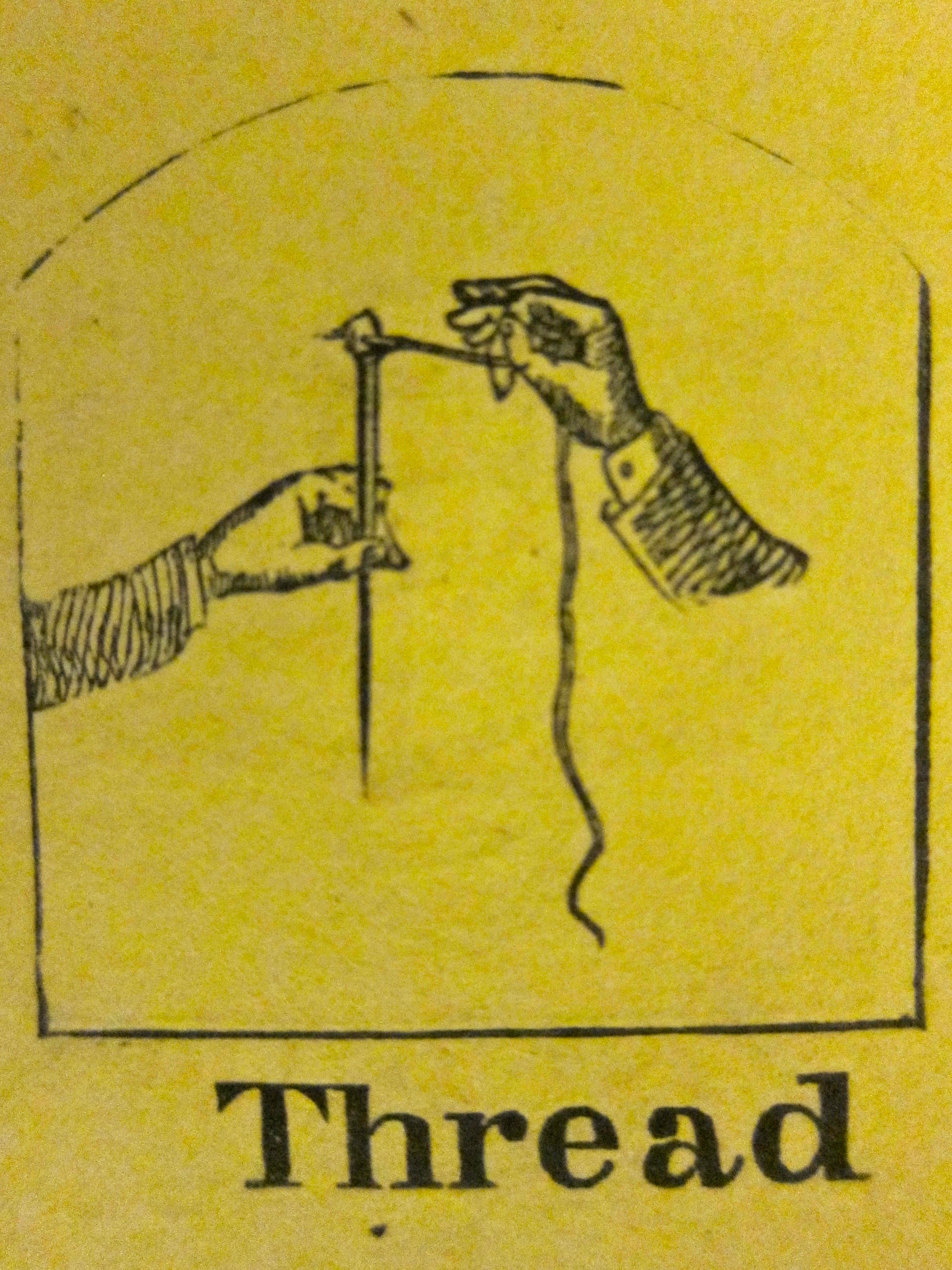
Thread

1852

March 31st Wednesday  Have been to the sewing circle

at Mr Harrison Pools.  Mrs S Ames & Augusta

went and we took Orinthia with us from Mrs Howard

Mother Henrietta Lavinia Rachel Mrs Nahum & Horace Pool

& Ann Pool were there   It rained very fast as we were

coming home  I left two shirts to be made that I

put in the circle last fall

The Sewing Circle was back.  Female parishioners from the Unitarian Church had begun once again to meet on a monthly basis to sew. Like other sewing circles around the country, they met for fellowship, guidance from the local clergy, and the sewing of clothes and linens for one another or others. They hadn’t met – officially, anyway – since December.

On this weekday the group met at the home of Mary and Harrison Pool in southeastern Easton. From North Easton came Evelina, Sarah Lothrop Ames, and Augusta Pool Gilmore, the young bride who was returning to the area of town where she had grown up. The women stopped en route at Nancy and Elijah Howard’s to pick up Orinthia Foss. Hostess Mary Pool, who had three young children underfoot, welcomed them. Others who attended included Evelina’s mother, Hannah Lothrop Gilmore; Henrietta Williams Gilmore, Lavinia Gilmore, Rachel Gilmore Pool, Lidia Pool, Abby Pool and Ann Pool. It was a veritable family reunion.  Except for Orinthia Foss, every women present was related by blood or marriage to at least one other woman there.

Such a gathering must have been good amusement, with less formality than the social calls that some of the women had paid the day before. But spirits may have been dampened by the “very fast” rain that pummeled the carriages when the meeting ended and the women returned home.

March 14, 1852


Preach

1852

March 14th Sunday  Amelia & self went to hear

Willard Lothrop preach as he calls it

at this methodist meeting house but he

was not able to make out much  We called

at Mr Torreys & Augustus’ at noon

Edwin & wife were here to supper but

went home before dark.  Have read the

white Rover in Gleasons pictorial


With the factory shut or, in this case, with the carpenters away, Sunday was a quiet day in North Easton. This particular Sunday “was cloudy all day + in the evening + night there was considerable rain – wind north east.”* The Ames family usually went to church at a meeting house in Easton Center, but on this Sunday Evelina did something different.

Her family may have gone to the usual Unitarian service with Reverend Whitwell, but Evelina and her sister-in-law, Amelia Gilmore, stayed in the village and attended a service at the Methodist meeting house. This tiny church, since moved to another location, sat in an intersection of North Easton now known at The Rockery. So small was it that one visiting preacher declared he could “spit into the gallery from the pulpit.** Its intimate dimensions were just right for another session of Spiritualism with Willard Lothrop, who preached in his own personal way.

Evelina and Amelia may have been motivated to try to communicate with departed family members, but they came away disappointed. Lothrop failed “to make out much.”  Although Lothrop and others in Easton continued to advocate for their belief, Evelina pulled away from it. This is her final entry on the topic of Spiritualism.


*Oliver Ames, Journal, Stonehill College Archives, Arnold Tofias Collection

**William L. Chaffin, Oakes Ames, Easton, early 20th c., p.3

February 2, 1852

grhog

1852

Monday Feb 2d  Worked about house untill about twelve

and went into Olivers to dine with my whole family

and mother.  Alson came this afternoon & carried

mother home.  All took tea at Olivers.  Mrs S Ames

Oliver Fred & self passed the evening at Mr Swain

Worked some on flannel skirt this afternoon […]

carried Susans stocking to Mr Swains.


We know about February 2; it’s Groundhog’s Day.  In 1852, it was no such thing, at least not in New England. In the Pennsylvania Dutch communities of the mid-Atlantic states, however, some folks had begun to claim that the behavior of a groundhog on this date could prognosticate the weather for the remainder of the winter. This practice was first formally celebrated in 1887, in Punxsutawny, Pennsylvania, and continues today.

More common for this date was the celebration of Candlemas, a holy day in the Christian Church that honored the presentation by Mary of Jesus at the temple. Roman Catholics called it the fourth Joyful Mystery of the Rosary. Unitarians had no name for it because Unitarians, like some other Protestant sects, didn’t acknowledge ecclesiastical feast days.

Yet there was a saying regarding this time of year that New England farmers – Old Oliver, a Unitarian, included – would have been familiar with:

“Half your wood and half your hay, You should have on Candlemas Day”

Candlemas falls between winter solstice and vernal equinox. It’s a day that turns the corner on winter, and heads for spring. It’s a day to take stock and hope you have enough wood left to keep warm and enough hay remaining to feed your animals for the rest of the winter.


January 15, 1852

330px-Charles_Wentworth_Upham

Charles Wentworth Upham

(1802 -1875)

1852

Jan 15 Thursday  Spent some time this forenoon in reading

the papers and fixing Susans work & pasted some pictures on

a mahogany box.  Called on Mr Whitwell, Reed & 

Howard with Mrs S Ames.  Evening to a lecture on

education by Mr Upham of Salem at the meetinghouse

hall. a very good lecture and a goodly number

present for a snowy evening.  Had two tripes from father.

The guest lecturer at the meetinghouse was, presumably, Charles Wentworth Upham. A minister and politician from Salem, on the north shore of Boston, Upham had traveled no small distance to deliver a “lecture on education.”  Well spoken and well read, he had written, some years before, a history of the witch trials in Salem. Lately, however, Upham had been speaking on the progress of normal schools, which were schools that taught teachers. Education was on his mind.

Also on Upham’s mind was politics. He was a Whig, which may have been his connection to the Ames family and Unitarian congregation in Easton. Previously Upham had been a member of the Massachusetts State Senate, and within the year would become Mayor of Salem. From 1853 to 1855, he would be a representative to the U.S. Congress, but would fail to be reelected.

Upham was married to Ann Holmes, a sister of Oliver Wendell Holmes, Sr. He had been at Harvard with Ralph Waldo Emerson with whom he corresponded later in life.  Their friendship faltered, however, over Transcendentalism, which Upham disliked. Upham also famously acted against Nathaniel Hawthorne, leading the local fray in getting Hawthorne, a Democrat, fired from his politically-appointed job at the Salem Custom House.

Some disliked Upham; Charles Sumner called him “that smooth, smiling oily man of God.”* What did the Ameses think?


*Carlos Baker, Emerson Among the Eccentrics, New York, 1996.

January 10, 1852

Oakes_Ames_-_Brady-Handy

 Portrait of Oakes Ames by Matthew Brady 

1852

Jan 10th Saturday  Mr Whitwell & Ames have not met again

to day  Mr W called just as Augusta Helen Susan

& self were in the sleigh to take a ride  We have

called at mothers  Mr Horace & John Pool, Edwin

& wife here to tea  Swept the parlor this morning

and put the house in order partially frosted a loaf of cake

for Augusta having made one of hers carried the frosting

over and made her a call while heating it

The boys presented their Father a gold pen & pencil

Oakes Ames turned 48 years old today, as did the local Unitarian minister, William Whitwell.  Last year and again this year, Evelina was unsuccessful in getting the two men together to celebrate. Oakes Angier and Frank Morton gave their father a gold pen and pencil to mark the occasion, a fine gesture.

As Oakes closed in on the half-century mark, he presumably began to look beyond the confines of the work he and his brother Oliver Jr. did for the shovel company. The next generation, in fact, was being groomed to run O. Ames & Sons; Oakes Angier, as eldest son of the eldest son, was on deck to superintend the company whenever Oakes and Oliver Jr. decided to step down. He was learning every aspect of the manufacturing process. Oliver (3) and Fred Ames were at college, Oliver presumably honing the skills he would need to take over his father’s role in managing sales, while Fred was on a path to being the financial clerk or CFO we might say today. Frank Morton Ames was learning a variety of skills, too, although he was seen more as a spare man waiting to step in should his cousin or either older brother fail somehow.

What could Oakes do with his tremendous talent and energy? Clearly, the roiling politics of the day interested him. By 1860, his gregarious nature, quick comprehension and thirsty ambition led him to accept the nomination and election to Massachusetts Governor Andrew’s Council as representative from Bristol County. Two years later, by “a large popular vote,”* Oakes Ames was then elected to the Thirty-Eighth U. S. Congress, where he would serve for four terms.

In 1872, according to circumspect historian, Reverend William L. Chaffin, Oakes “declined a renomination.”* He died in May, 1873, shortly after the conclusion of Credit Mobilier, a national political scandal for which many held Oakes culpable. At the time, his natural candor and fearlessness worked against him and he was unable to dodge the political manuevering that placed most of the blame on him. That same brave honesty, coupled today with calmer, historical perspective, has since served to cast Oakes Ames in a better light.

William L. Chaffin, History of Easton, Massachusetts, 1886, p. 654