January 9, 1852

Cake

1852 Friday Jan 9th

[…]Have had about 30 here this evening and

quite a pleasant time though the weather not

pleasant.  Lavinia came here with Augustus last

night and we ladies have had a nice time making

cake and getting ready for them  Helen & Lavinia

made the bed in the front chamber to suit themselves

Oakes and Evelina Ames hosted a wedding reception at their house for newlyweds Edwin and Augusta Pool Gilmore, attended by members of the extended Gilmore and Pool families who traveled through inclement weather to get there. The celebration, complete with cake and tea – but no wine – was “quite a pleasant time.” What a special occasion for a cold, dark time of year.

The preparations for the party had been fun, too.  Lavinia Gilmore, sister of the groom, had been driven back to Evelina’s, carried by her brother Augustus Gilmore, to help with the cake. More cake! Helen Angier Ames had walked over from next door, again. The two young unmarried women had a sleep-over at their Aunt Evelina’s.

What might the cake have been made of? Sarah Josepha Hale offers up quite a recipe for a wedding cake in her 1841 The Good Housekeeper:

Take two pounds and a half of dried and sifted flour, allow the same quantity of fresh butter washed with rose water, two pounds of finely pounded loaf sugar, three pounds of cleaned and dried currants, one pound of raisins stoned, one nutmeg grated, half a pound of sweetmeats cut small, a quarter pound of blanched almonds pounded with a little rose water, and twenty eggs, the yolks and whites separately beaten.  

The butter must be beaten by hand till it becomes like cream; then add the sugar, and by degrees the eggs; after these, the rest of the ingredients, mixing in at last the currants, with nearly a tea-cupful of rose or orange flower water.  This mixture must be beaten together rather more than half an hour, then put into a cake-pan, which has previously been buttered and lined with buttered paper; fill it rather more than three quarters full.  It should be baked in a moderate oven for three hours, and then cooled gradually, by at first letting it stand some time at the mouth of the oven.

If you fear the bottom of the cake may burn, put the pan on a plate with saw-dust between.”*

*Sarah Josepha Hale, The Good Housekeeper, 1841, p. 100

January 4, 1852

cdn-media.nationaljournal

1852

Sunday Jan 4th

Another stormy day and no one been to meeting

Mr Swain called & got some of Harpers Magazines

I have spent the day as I perhaps ought not in looking

over my accounts.  Have been taking off the boys accounts

for the last year and Susans.  Mr Ames gave me

one hundred dollars.  It has been a long dull day

with me  Mr Ames has been in part of the time

Evelina focused on money today, as she “perhaps ought not” to have done. It was Sunday, after all, and reviewing one’s personal account was too much like doing work on the day of rest. But she couldn’t get to church because of the weather, so she found a useful way to spend time in an otherwise “dull” day.

The gift (or allowance?) that Oakes Ames gave Evelina may have provided the impetus to examine the family finances. The $100 was most likely given in the form of specie, or coins. At this period in American finance, gold and silver coins contained their exact value in metal. Thus Evelina would have received precisely $100 in gold or silver, at least for the time being. That equation of value would soon change, as the influx of gold from California was upsetting the market. Gold prices would go down and silver would go up.

Paper money at this time was limited to bank notes, and the government-issued $100 “greenback” in the illustration above would only come into existence during the Civil War, when the U.S. needed to generate cash to fund the Union Army.  That $100 bill, controversial in its day, laid the foundation for a permanent U. S. currency not based on a silver or gold standard.


January 2, 1852

Tea


1852

Jan 2d Friday  Seated myself quite early this morning to work

on Susans hood & finished item about ten Oclock

then ripped my old blue hood and washed the

lining & turned the outside have got it nearly done

We all went into the other part of the house to tea

Mr & Mrs Oliver & Helen there  Frank has a sore

ankle as [sic] does not go to the shop  Dr Swan called there

to see Helen & left Jane some medicine

The family gathered for tea today in “the other part of the house,” meaning that Evelina, Oakes, and their children, Oakes Angier, Frank and Susan went into the southern half of the shared house where Old Oliver and his widowed daughter, Sarah Witherell, lived with her two children, George and Emily. Joining them was the family next door: Oliver Ames, Jr, his wife Sarah and their daughter, Helen Angier Ames, who made an appearance despite being home from school with a cold. Other than missing Oliver (3) and Frederick Lothrop, the sons who were off at college, the group was a normal configuration for a gathering at the homestead.

Evelina’s grandson, Winthrop Ames, would one day describe such a family gathering from less than a decade later, by which time daughters-in-law and grandchildren had arrived:

“Supper, always called Tea, at seven, was the sociable occasion. It usually consisted of cold meats, hot biscuits, preserves and cakes – an easy menu to expand for unexpected guests.  Every week at least, and usually oftener, one household would invite the others and their visitors to tea; and the whole Ames family might assemble, even infant children being brought along and tucked into bed upstairs.  Fifteen or twenty was not at all an unusual gathering.”*

The family was as tightly-knit as any of Evelina’s knitted worsted hoods.

One other note about today’s entry: Dr. Swan left some medicine off for Jane McHanna, the servant, who had been ailing for much of the fall and winter. What did she suffer from?

* Winthrop Ames, The Ames Family of Easton, Massachusetts, privately printed, 1937, p.128


December 31, 1851

Dismiss


Wednesday Dec 31st  This morning sit down early to knitting

my hood  Have it all finished ready for the lining.  About ten 

Oclock went into the school with Mrs. Witherell.  Mr Brown

has closed his school to day.  Passed the afternoon & evening at Olivers

Mr & Mrs Wm Reed  Mr & Mrs J Howard, Whitwell & A Gilmore were there.

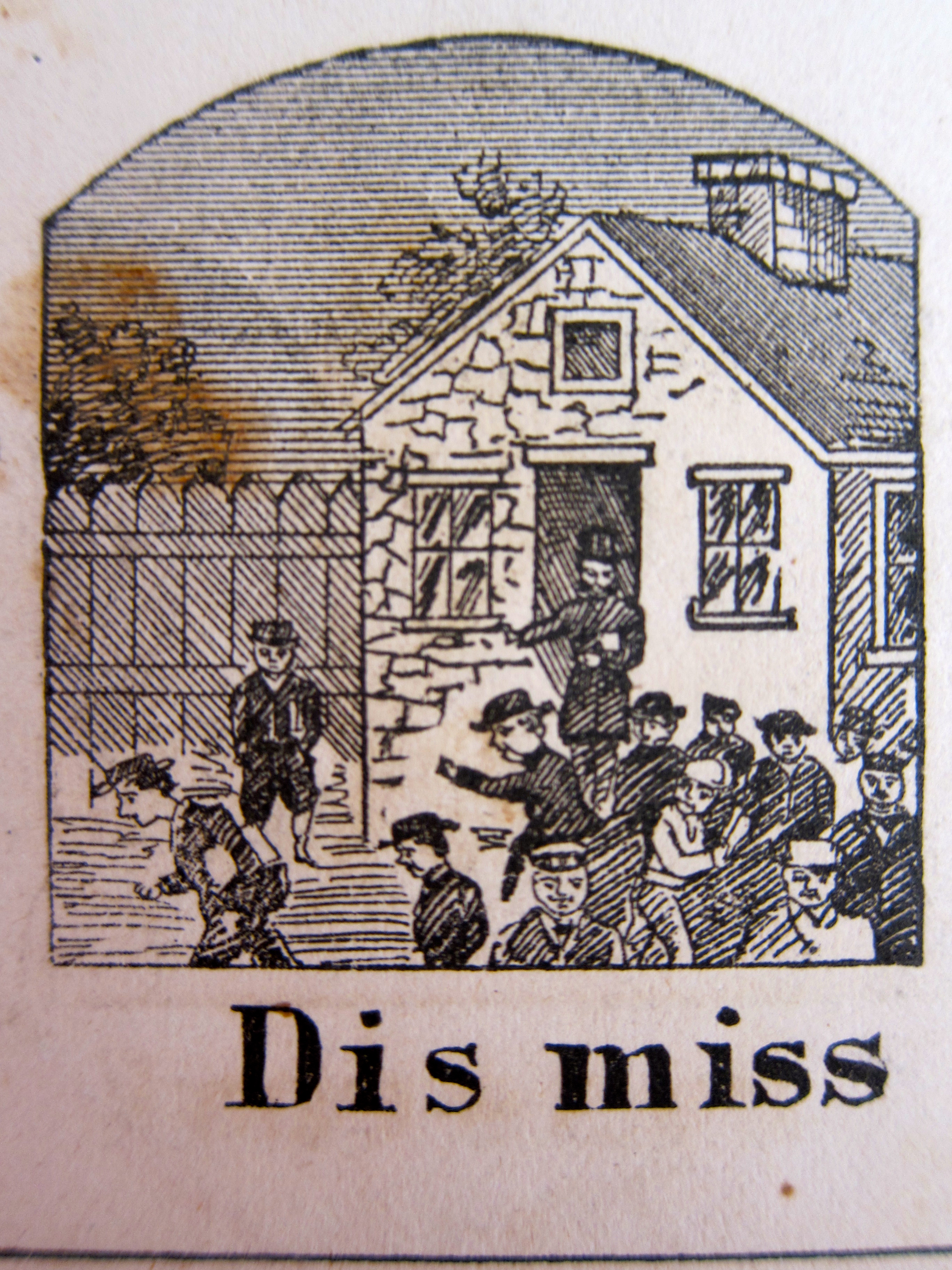
Susie Ames and Emily Witherell may have been happy today to reach the end of their school term. Class, dismissed!  1851, dismissed!

Just how the Ames family celebrated the departure of the old year and arrival of the new, we don’t know. Old Oliver, with his usual terse assessment of the day, merely noted that “this was a cloudy day and some cooler + misty + foggy.” The cool mist he saw would develop into a huge rain storm over night, preventing folks from moving around much.

A group of friends and relatives gathered for tea next door at the home of Oliver Ames, Jr. and his wife Sarah Lothrop Ames. Besides Evelina and Oakes, at the party were Reverend William Whitwell and his wife Eliza, Reverend William Reed and his wife Abigail, Jason Guild Howard and his wife Martha, and Evelina’s brother Alson Gilmore and his wife Henrietta.  In just a few more years, a group like this might have sung the beloved  Auld Lang Syne to mark the occasion. In fact, a version of Auld Lang Syne, written in 1855 and called Song of the Old Folks would become “the tradition of the Stoughton Musical Society to sing […] in memory of those who had died that year.”*

Out with old, in with the new. What a year it would be for the Ames clan.

http://www.americanmusicpreservation.com/SongoftheOldFolks.htm

December 25, 1851

Turnstile


Dec 25th Thursday  The Irish are expecting to have a great

time to day Jane went to the meeting house about

eight but the priest did not come she stoped an

hour. Carried my knitting into Olivers awhile this

forenoon. This afternoon have been to mothers

with Mr Ames & Frank as they were going to West

Bridgewater.  Finished knitting the front & back of

my hood  Made a present to Lavinia of Turnpike Dividend $800

Christmas Day! But as Evelina points out, the Irish Catholics in town would be celebrating, but the Ames family wouldn’t. Jane McHanna left the house to attend a Christmas mass for which, unfortunately, the priest was either late or didn’t show up at all.  Jane returned home to prepare dinner. Evelina, meanwhile, visited Sarah Lothrop Ames next door, knitting in hand.

After dinner Evelina rode along with her husband and youngest son as they went on an errand to West Bridgewater.  They dropped her off to see her mother at the family farm. There may have been some recognition of the holiday in this gesture, although Evelina makes no mention of gift-giving, with one significant exception. Evelina gave an $800 dividend to her niece Lavinia Gilmore.

The dividend came, somehow, from proceeds from the Taunton and South Boston Turnpike, a road that had run through part of Easton since the early 1800s, between “‘Taunton Green, so called, to the Blue Hill Turnpike,'” according to town historian William Chaffin.* Its origin was controversial and involved a long-standing disagreement with the Town of Raynham, but its impact on the Gilmore family was generally positive, as various Gilmores, including Evelina’s father and brother, served as toll-gate keepers. As Chaffin points out, however, “[t]he toll-gate naturally became unpopular.” It was closed in October of 1851.

How Evelina came to possess $800 from the road is unclear. Was this a regular dividend that Evelina received, or was the family compensated for the road’s discontinuance? That Evelina passed this money on to her niece, however, is a clear demonstration that for all her economical instincts, Evelina was capable of great generosity.


*William L. Chaffin, History of Easton, Mass, 1866, pp. 454 – 458.

December 21, 1851

Toasted rice blancmange


Sunday Dec 21st  My cough and cold is much better but not

well enough for me to go to meeting  Oliver is sick

with the rheumatism there was no one to meeting

from there  All the rest went.  I spent the forenoon

in making ice cream, blanc mange &c  have written

a letter to Brother John & wife.  About 8 Oclock went

into the office with Mr Ames   Mr Swains brother came 

in awhile  Checked over our account since May

A “pritty cold,” quiet Sunday, which Evelina spent productively. She missed church; her cold was better, but her cough wasn’t.  Next door, her brother-in-law Oliver Ames, Jr., was ill with rheumatism.

Evelina had some milk or cream on hand that she needed to use up, so she made not one but two dairy desserts: Ice cream, which seems ill-calculated to please on such a cold day, and blancmange, which was also served chilled.  Blancmange is a traditional, simple dessert made with milk, flour and sugar, poured into a mold to set. Sometimes used medicinally for sore throats, it was a popular treat in the 19th century.

Once the desserts were put away in the coldest area of the house (the shed? the buttery?), Evelina went to her desk and wrote a letter to her oldest brother, John Gilmore, and his wife, Eliza.  She hadn’t seen them since their brief visit back in June.

In the evening, Evelina walked across the yard to the office, where her husband and his brother usually met in the evening to go over the day’s business. On this occasion, however, with Oliver, Jr., under the weather, Oakes Ames was likely there by himself. Husband and wife sat together in rare, private companionship before being joined by an acquaintance.


December 20, 1851

unnamed Dec 20 Saturday  Have been very busy all day working

on different articles  Mended some clothes

for Frank, the stockings and mended the

places that were cut & bound the end of

some pieces of carpeting Jane finished the 

second robin that she has made for Frank

Mr Ames brought home some marble rubber

and lining & ribbon for Susans bonnet   ”


[T]his was a fair day and not verry cold” was the weather report from Old Oliver Ames. It was a normal Saturday at the Ames’s house in all respects. Evelina mended clothes, darned socks and repaired some carpeting.  Jane McHanna sewed, too, having recovered from an acute indisposition caused by coal the day before. She finished a “robin” (which one reader suggests was a kind of tough work pants) for Frank Morton Ames, Evelina’s youngest son.

Oakes Ames went into Boston, as usual, for a weekly check-in with shovel customers, after which he went shopping for his wife. From a list Evelina must have given him, he made his way along Washington Street and around Faneiul Hall, probably knowing just which shop to go to for such-and-such ribbon or a well-priced bolt of flannel. He returned to North Easton laden with parcels wrapped in paper and tied with string.

December 13, 1851

$(KGrHqJHJFMFJusCVdz8BSe+hz0oG!~~60_35

Sat Dec 13th  Have tried my lard cleaned hogs head

and fat and the meat ready choped & seasoned 

for filling  Have been to work all day on them

together with Jane & Mary.  Have 78 lbs meat

Mr Ames & Augustus have been to Boston.

Augustus got me some worsteds for hood

Frank & Oakes chopped my meat & Sarahs, she

had 28 lbs.

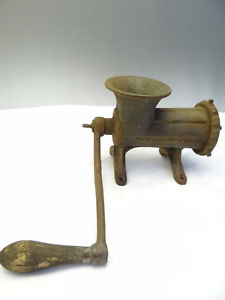
Sarah Witherell and Evelina Ames, sisters-in-law bent on taking care of some pork fresh from the slaughter of a few Ames hogs, had 106 pounds of pork between them to be turned into sausage. In addition to the capable hands of servants Jane McHanna and Mary, they had help from Evelina’s sons Oakes Angier and Frank Morton, who chopped the meat, and probably the fat, too,  into manageable chunks. Together with other ingredients – see below – the meat was forced into a grinder like the one pictured above.

Most likely, the women didn’t need to follow a recipe to make the sausage, having made it countless times before.  But if they did, they could have turned to Sarah Josepha Hale’s instructions in The Good Housekeeper.  They would have had to multiply the recipe times thirty or so:

“TO MAKE SAUSAGE MEAT. — Chop two pounds of lean with one of fat pork very fine – mix with this meat five teaspoonfuls of sale, severn of powdered sage, two of black pepper, and one of cloves.  You can add a little rosemary, if you like it”*

And sausage wasn’t the only product from the pork that Evelina, Sarah, Jane and Mary worked on.  They made lard and dressed a hog’s head. It was a most productive day in the Ames kitchen.

*Sarah Josepha Hale, The Good Housekeeper, Boston, 1841

December 11, 1851

Unpack

Dec 11th Thursday.  Have had a bad head ache and

very bad cold  Called into the other part of the

house with Mrs S Ames.  Mrs Witherell had bound

the quilt that we quilted yesterday  Mrs R Pool

called & I went into Edwins house with her.  She & her

husband have spent the day at Augustus  I varnished

store room stairs & porch.  Mr Ames came from New York

Mr Clarke put the inside windows in sitting room

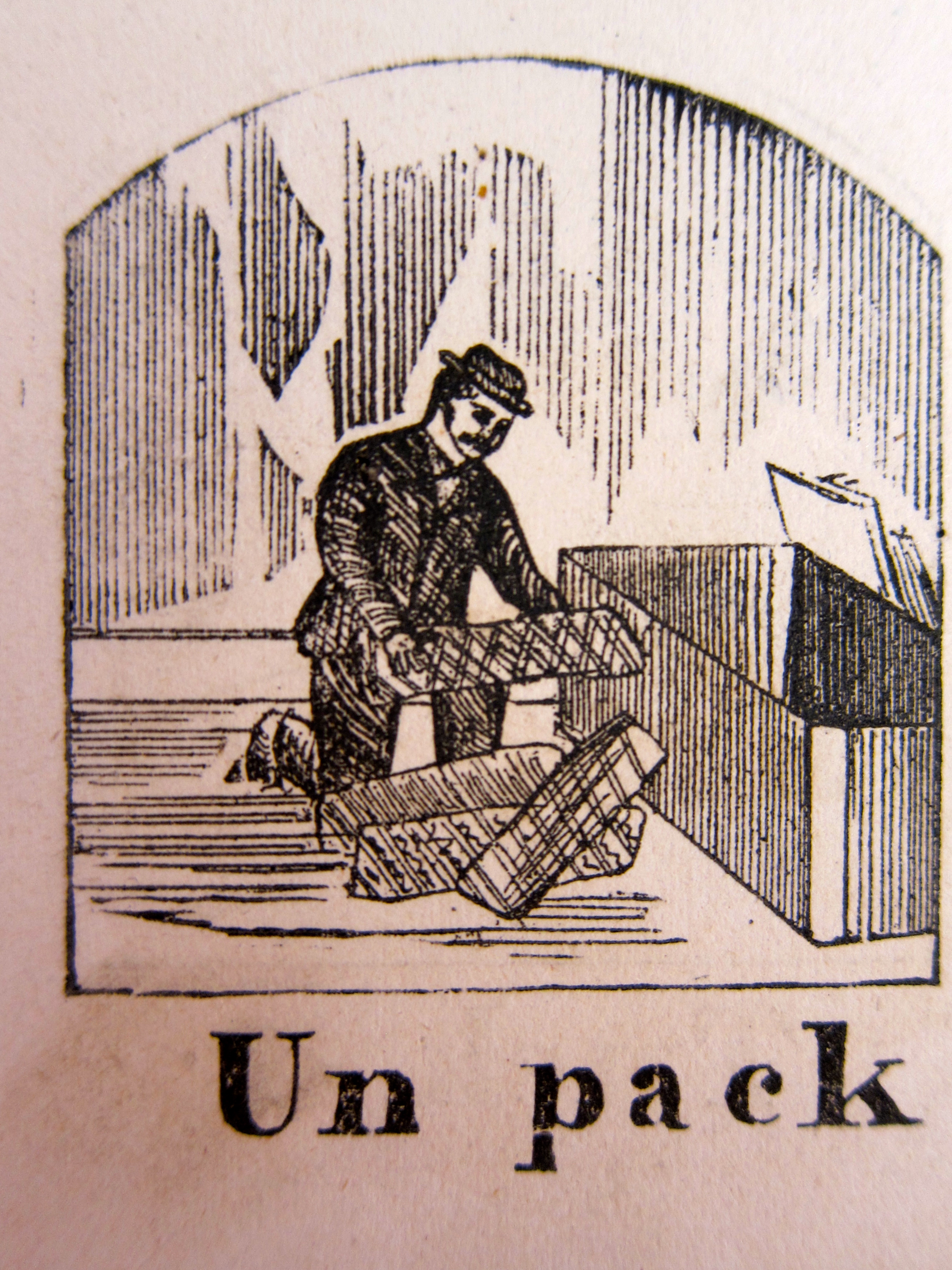
Both Evelina and Old Oliver noted that Oakes Ames “came from New York” today after having been away eight days. He was probably glad to be home; he confessed late in his life that he didn’t enjoy travel. And family dynamics, if they had altered at all in his absence, would have reverted to normal once his “stalwart and rugged”* self returned to his own place as the head of the household.

Evelina’s cold, which had been hovering since Sunday, finally landed with vehemence, although Evelina continued to be up and around. She sat with both sisters-in-law, Sarah Ames and Sarah Witherell, and went over to Edwin Gilmore’s new house with her niece (and Edwin’s sister) Rachael Gilmore Pool. In addition to socializing, Evelina varnished her porch and storeroom stairs. The strong smell from the varnish wouldn’t have helped her “bad head ache,” at all; in fact, it probably made it worse. What was she thinking? Was she too economical to let Mr. Scott complete the job? And did she know that she was spreading her cold everywhere she went?

*William L. Chaffin, Oakes Ames, 1804/1873, Easton Historical Society, North Easton, 1996, p. 1


December 10, 1851

Thread


Dec 10th  Wednesday.  Mrs S Witherell S Ames and

self have spent the day quilting at Mrs Reeds

on a quilt that belongs to the sewing circle  Have

had a fine time.  Met quite a number of

ladies there. Had a taste of Mrs Howards mince

pie  We stopt the evening.  Mrs Witherell

J R Howard & Mr Harrison Pool came  We carried

Mrs Elijah Howard home

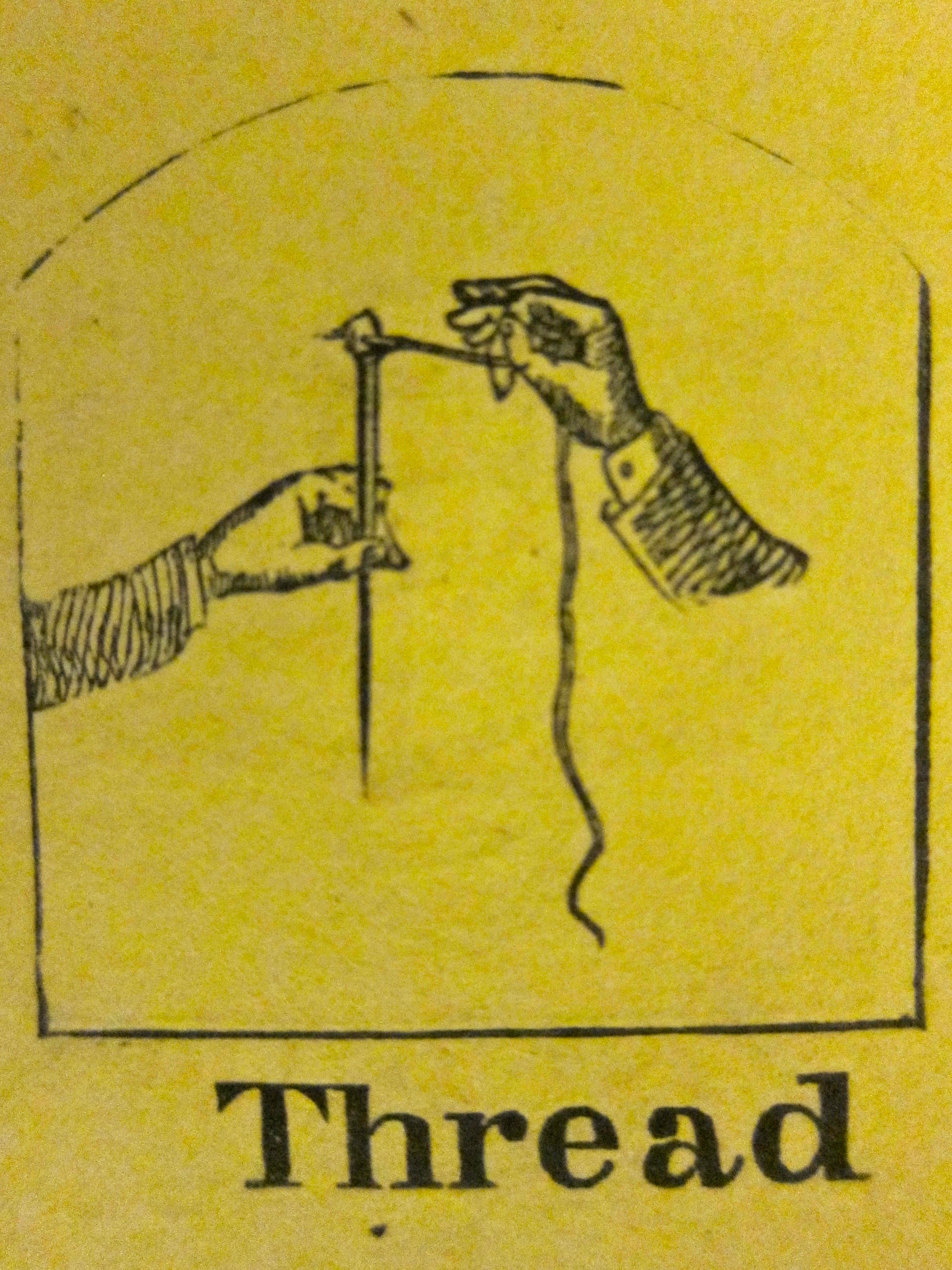
Although Evelina had reported the conclusion of the Sewing Circle season on November 5, today “quite a number” of Unitarian women met again to work on a quilt. They worked all day and into the evening, making the event even more sociable than usual.  Caroline Howard and Nancy Howard were among Evelina’s friends who attended and enjoyed tea and mince pie.

In New York City, meanwhile, Oakes Ames would have been wrapping up his business affairs and preparing to return home, having been away since the 3rd of the month.  Surely, not every moment of his trip had been devoted to shovels. He was no drinker, so the bartenders in the city wouldn’t have poured him any whiskey, but, like his wife, he was sociable.  He might have joined friends or clients for dinner. He also might have done favors for family or friends from home.

Rev. William Chaffin tells us that Oakes once searched out some socks in New York for his father’s coachman, Michael Burns, whom Chaffin described as “an Irishman of the old style.” Not long after Michael had emigrated to Massachusetts, “his mother, still alive in Ireland, knit him several pairs of socks, and sent them over by a friend of Michael’s.  She supposed that anyone coming over would necessarily ‘see my son Michael.’ But the friend found on landing at New York that he was two hundred miles away.  He wrote Michael telling him that he would leave the socks at a certain address.”

Michael approached Oakes “and asked him if he wouldn’t hunt up the socks and bring them home. It was just the sort of kindness Mr. Ames delighted in, and so when he went to New York he hunted up the socks with some difficulty and brought them to the overjoyed Michael.”*

*William L. Chaffin, “Oakes Ames 1804/1873”, Easton Historical Society, North Easton, 1996, pp. 6-7