October 28, 1852


Stage

Thursday Oct 28th  Miss Alger dined in the other

part of the house and myself and family

have been there to tea  Helen came home

in the stage and Oliver & family were there

also.  Oliver Miss A Susan and Augusta called

with me this evening at Mr Torreys & Augustus

Made half bushel more of barberries

A rather docile day, this was, “a pritty warm day for the season,”* according to Old Oliver. Evelina cooked more barberry preserves but otherwise was mostly occupied in social activity. She and the extended family took tea in the other part of the house at her father-in-law’s table, under the management of his daughter, Sarah Ames Witherell. Afterwards, Evelina and a group called on her brother-in-law, Col. Torrey, in the village.

Helen Angier Ames returned home from boarding school; her brother Fred had just come back, too, from Harvard.  He took the train to Stoughton while she rode in the stage coach. His mode of transportation was the way of the future, hers of the past.

Like the Erie Canal, the stagecoach was on its way out. A mode of transportation that had been imported from England, early American stagecoaches were not much more than sturdy passenger wagons. As the need for travel conveyances increased, the stagecoach evolved, improved in comfort and efficiency and became widespread. In 1827, in the middle of what is considered the “Golden Age” of the stagecoach, the Abbott and Downing Company of New Hampshire built the first of an eventual 700 Concord stagecoaches. A Concord stagecoach was considered to be the best of the breed, “a cradle on wheels,” as Mark Twain described it. Pulled by a good team of horses or mules, a Concord stagecoach could travel from 6 to 8 miles per hour.

In remote areas, especially in the less well settled areas of the Wild West, the stagecoach remained important, but it couldn’t beat the faster and far more efficient railroad. Passengers trains had arrived and were growing exponentially. In 1847, Abbott and Downing ceased operations, although its famous stagecoaches remained in use for a few decades yet.


*Oliver Ames, Journal, Stonehill College Archives, Arnold Tofias Collection


October 21, 1852


Sarah Emily Witherell                                           Susan Eveline Ames French

Emily Witherell                                                                                   Susan Ames


1852

Thursday Oct 21st  Miss Alger came to day to give

her fifth lesson and Susan is now as far

as Emily but unless she takes more

interest it will be very hard for her

to keep up with her.  Mrs Witherell feels

to blame Miss Alger that she does not

give Emily longer lessons


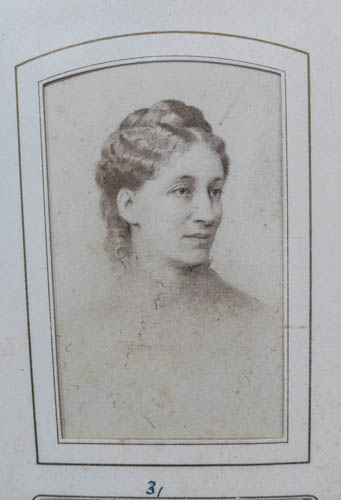
Relationships among the females who lived under the roof of the Ames homestead were becoming strained. Susie Ames wasn’t much interested in learning to play the piano, while Emily Witherell was. Yet the cousins took their lessons together, yoked into learning side by side. Emily was facile and wanted more challenging fare, but was slowed down by Susie’s reluctant participation. The disparity in the girls’ interest and ability was no doubt challenging for poor Miss Alger. The situation wasn’t helped by the mothers hovering over the girls as they took their lessons.

The two mothers had their own set of expectations. Sarah Witherell, who had endured so much loss in her life, had nourished hope that her daughter would develop a taste and talent for music. Evelina probably felt the same way, hoping to see her daughter become “accomplished.” Sarah was unhappy that Miss Alger wasn’t giving Emily enough to do, and, also, was surely displeased with Susie holding Emily back. Evelina had to be disappointed by Susie’s disinterest, nervous, perhaps, that she had made an expensive mistake in buying a piano. Evelina was learning, probably not for the first time, that a parent can have aspirations for a child that the child doesn’t share or follow.

All was not lost, however. For all the initial struggle, both girls eventually learned to play piano with some credibility, yet neither grew up to be a great pianist. They never outshone their older cousin, Helen Angier Ames, who had started earlier and, evidently, concentrated harder on perfecting her skill. Family historian Winthrop Ames, who was a first cousin once-removed of the three pianists, noted that by 1861, at the “Unitarian meeting-house […] Helen, Emily and Susan took turns in playing the reed organ, though Helen was acknowledged to be the best performer.”*


Winthrop Ames, The Ames Family of Easton, Massachusetts, 1938, p. 130


October 10, 1852

Daniel_Pierce_Thompson

Daniel Pierce Thompson

(1795 – 1868)

Sunday Oct 10th  It is quite unpleasant to day and

as mother & Mrs Mower was not going to meeting

I staid with them  Mrs Ames Oakes A & Frank

went this forenoon, and Mr Ames returned alone

this afternoon  I have been reading some in

the Rangers Torys Daughter and writing

Helen came in and played on the piano

this evening  Mrs Witherell & Ames came in a while

Evelina skipped church to stay home with her mother and houseguest, not minding too much because of poor weather, which Old Oliver described as  “cloud[y] damp + verry warm wind.”

The women did not sew, but they probably chatted a bit and read a lot. Evelina was reading The Rangers: Or, The Tory’s Daughter: A Tale Illustrative of the Revolutionary History of Vermont and the Northern Campaign of 1777, by Daniel Pierce Thompson. Mr. Thompson was a famous writer in the period before the Civil War, especially in New England. His novels were as well-known as Nathaniel Hawthorne’s, but his turgid prose, popular in its day, has caused him to fall far out of fashion. He was also a political figure in Vermont and an active abolitionist, but his novels are not much remembered.

The first two sentences of the book that Evelina was reading illustrate his dated style:

Towards night, on the twelfth of March, 1775, a richly equipped double sleigh, filled with a goodly company of well dressed persons of the different sexes, was seen descending from the eastern side of the Green Mountains, along what may now be considered the principal thoroughfare leading from the upper navigable portions of the Hudson to those of the Connecticut River. The progress of the travellers was not only slow, but extremely toilsome, as was plainly evinced by the appearance of the reeking and jaded horses, as they laboured and floundered along the sloppy and slumping snow paths of the winter road, which was obviously now fast resolving itself into the element of which it was composed.

In the evening Evelina put down the book – which must have been slow going – and whatever letters she was writing, and the whole family listened as Helen Angier Ames played the new piano.


October 9, 1852

imgres-1

Piano scales

Sat Oct 9th  Miss Alger came to day to give her second

lesson. Mother Amelia Henrietta & Louisa

J Mower spent the day came about eleven

Henrietta went to Augustus to tea  Mother & Louisa

will stop here untill she returns to Maine

Oakes A returned from his journey & Helen

came with him. Have baked in the brick oven

Oakes Angier Ames came home today from points south. He had been on a business trip with his father to New York and New Jersey, but his father had returned several days earlier. What had Oakes Angier been doing? Was he meeting customers and delivering shovels, all on his own? And why was his cousin Helen Angier Ames with him? Perhaps he came back by way of Boston where Helen – and her friend, Catherine Hobart – were at school.

The day was cloudy and cool and the ladies who came to visit with Evelina must have sat inside. Two Gilmore sisters-in-law, Amelia, young widow of Joshua, Jr., and Henrietta, wife of Alson, were there along with the elderly Hannah Lothrop Gilmore and a guest from Maine, Louisa J. Mower. The latter two women would spend the night.

The girls of the house, meanwhile, had another piano lesson today. The sound of Susie and Emily practicing their scales would have been background sound for the chatter in the parlor.

October 1, 1852

Wax candle


Oct 1st  Friday   Went to Boston with Mrs Witherell to

see our pianos.  Miss Kinsley was going to the 

city and we asked her to try them for us.  She

thinks they are fine toned  Mrs S Ames also went

with us and Helen & Miss Hobart after school

Miss C Hobart is a very pleasant girl

I bought some wax candles at 62 per lb

Mrs Mower & Norris came home with us


Despite last night’s frost, this Friday proved to be “fair” and “pritty warm.”*  Evelina and her sisters-in-law, Sarah Ames Witherell and Sarah Lothrop Ames, took advantage of the pleasant weather to trip into Boston “to see our pianos” and do some shopping. Meeting them at the music store was Lucy Adelaide Kinsley (soon to become Mrs. Francis Howard Peabody) from Canton. A pianist herself, she approved of the purchases.

Joining the sisters-in-law later in the day, after school was over, were teen-agers** Helen Angier Ames and her friend Catharine Hobart. Evelina was growing fond of Helen’s friend; did she imagine that “Miss C Hobart” would one day be her daughter-in-law and mother of her grandchildren?

The two mothers were excited about the pianos. We can imagine that at least one or two of the expensive wax candles that Evelina bought were destined to be placed in candlesticks – or candelabra – near the new instrument. The old homestead was growing more elegant by the week. And it was back to that homestead that the women headed at the end of the day. Ordinarily, they would have stayed over in the city but instead, they returned to North Easton with houseguests in tow.

*Oliver Ames, Journal, Stonehill College Archives, Arnold Tofias Collection

** Teenager was not a term that Evelina would have used – it didn’t become a word until the 20th century.

September 25, 1852

Music stool


Sat Sept 25th Louisa has a swelling on the back of

her hand which troubles her & she left this

morning and I have got Catharine Middleton

to stay untill next Wednesday when I expect

a new girl  Catharine made some squash

pies and finished the ironing. It has been about

most all the week  Helen & I have been to N Bridgewater

She had a tooth extracted  I got a Piano stool

Evelina was still spending money. In North Bridgewater (today’s Brockton) she bought a music stool to go with the new piano that was coming soon to her parlor. With her was niece Helen Angier Ames; the fifteen-year-old had a less enjoyable errand to accomplish: getting a tooth pulled. It’s interesting that Helen’s aunt, Evelina, and not her mother, Sarah Lothrop Ames, accompanied the girl to the dentist.

In the servant department, the new girl, Louisa McAvoy, departed today, having not even worked a full week. Evelina was really struggling to keep a household staff together. Catherine Middleton agreed to stay on and was helpful with the baking and ironing, the latter of which had taken “most all the week” to complete. We might wonder if Evelina ever missed Jane McHanna, the one servant who had been steady, if occasionally ill – the one whom Evelina had fired in June. Evelina had yet to really settle on a dependable replacement.


September 23, 1852

IMG_2471

Sarah Lothrop Ames

(1812 – 1890)


Thursday Sept 23th [sic] Have not sewed at all to day Starch

the clothes and ironed some fine shirts

Lavinia washed the clothes that Oliver brought

from Providence & Mr Rathbourne from 

Providence came this afternoon to visit […]

Oliver  He went to Stoughton after him

Mrs Holmes & sister came after some plants


It’s unusual to read of Evelina and her servants doing a wash on a Thursday, but so it was. Son Oliver (3) had returned from a trip to Providence with dirty laundry in tow and, more than that, a houseguest headed their way. Evelina had to finish up the laundry and prepare for company. She evidently had help from her twenty-year-old niece, Lavinia Gilmore, who, by washing the clothes of her twenty-one-year-old cousin, demonstrates not only the strict division of labor of the day, but the then-unexamined destiny of spinster daughters and nieces to serve the men of their family.

Next door, Sarah Lothrop Ames celebrated her 40th birthday which, in those times, was the front door to old age. It was her destiny to grow up in Easton, the only daughter of the Honorable Howard Lothrop and his wife, Sally Williams Lothrop. She had nine brothers, which makes us wonder if she, as a singleton girl, was doted on, or depended on, or both. On June 11, 1833, Sarah married Oliver Ames, Jr., third son of Old Oliver and Susannah Angier Ames. In social terms, it was a marriage between two of the town’s important families. The couple moved into their own house, built for them by Old Oliver, next door to the family homestead. They would eventually tear that house down and build a grander one, known to us as Unity Close.

Sarah and Oliver Jr had only two children, Frederick Lothrop and Helen Angier, at a time when a larger family was more typical. We can’t know if their decision to stop at two was happenstance, voluntary, or imposed by medical circumstances. Fred, they raised to go into the family shovel business, much as Oakes and Evelina did with their three sons. Fred was given a full college education, however, as his cousins were not. Helen and her younger cousin, Susan, meanwhile, were raised to be proper young ladies with fine dresses, piano lessons, and good schooling. It is doubtful that Helen ever had to wash her brother’s clothes. There were servants for that.

Like her sisters-in-law Evelina and Sarah Ames Witherell, Sarah Lothrop Ames was a regular church-goer and a conscientious neighbor. She did her duty with the elderly and infirm in the village, and she was a loving daughter to the end with her parents. Her mother, once widowed, developed dementia and incontinence, yet Sarah cared for her until her death. She was close to her children and grandchildren, of whom she had five.

A widow herself by 1877, Sarah would live until 1890, outlasting her husband, brothers-in-law, sisters-in-law and all but one brother, Cyrus, to whom she left the use of Unity Close for his lifetime. After his death, it passed to her eldest grandson, Oliver Ames (1865-1929).


September 22, 1852

Piano

Wednesday Sept 22d Have been to Boston with Mrs

Witherell to get a Pianno  Have got to have

them made  Mrs Kinsley called to see them with

us  Met Mrs Wilson at Lintons to go to select

them. Dined at Mr Orrs while Mrs Witherelll

called on Mrs Dorr  Bought a Piano cloth

and gold thimble for Mrs Ames & C Hobart

and a ring for Helen  Oliver came from Providence


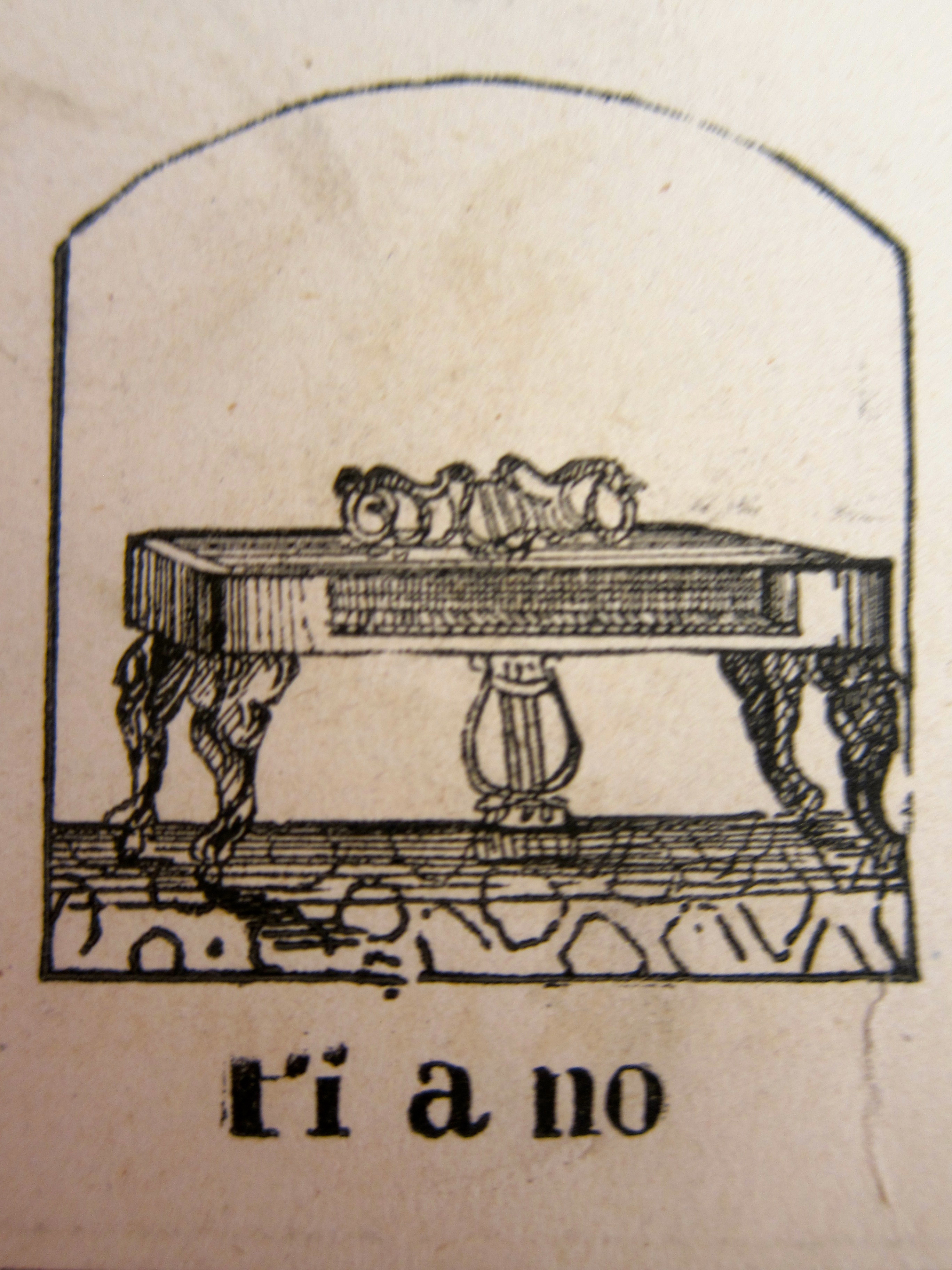
A piano! And not one piano, but two, one for each side of the house. Both Susan Ames and Emily Witherell would be learning to play the instrument. Each girl would have her own piano to practice on. What luxury. What gentility. What fun.

With advice from friends such as Louisa Kinsley, Evelina and Sarah Ames Witherell selected and ordered the instruments in a Boston store. Spending money liberally, Evelina went on to purchase gifts. For her other sister-in-law, Sarah Lothrop Ames, she bought a cloth to go on top of the piano that those Ameses already owned. For Catharine Hobart, a young family friend who had caught the eye of her son Oakes Angier Ames, she bought a gold thimble. And for her niece Helen Angier Ames – Catharine’s classmate – she bought a ring.

Did her husband Oakes know that Evelina was spending so much money? Did her father-in-law? While her husband must have given his approval, it’s unlikely that Old Oliver would have approved of such a spree. Yet both those men were often generous within the family; in that respect, Evelina was just following suit.

We note today, too, that Oliver (3) returned from a few days at a fair in Providence, where he no doubt saw friends and former classmates from his two semesters at Brown University. We might imagine that he was missing school.


September 17, 1852

Brig

*

Friday Sept 17  Mrs Stevens has done some ironing to

day and I have been busy about house ironing

and one thing and another & have seen but very

little of her since she came  It has been hurry

burly all the time  We were at tea at Olivers

Abby came here but as we were there she

stopt & in the evening Mr Torrey came

Mrs S Ames has gone to watch with Mrs Savage

With the help of Mrs. Stevens, a houseguest, ironing continued, along with Evelina’s usual choring and “one thing and another.” According to Evelina’s misspelled expression, the household was all hurly-burly, full of commotion and tumult.  Later in the day, the two women – and other family members, presumably – enjoyed tea next door with Sarah Lothrop and Oliver Ames Jr. And even later, Col. Torrey stopped in for another visit.

In a California newspaper, there was an article about a missing ship, the Schooner Penelope. The vessel bore no direct relation to the Ames family (although an Ames relative, Cyrus Lothrop, would eventually own ships, including one named for Helen Angier Ames), but the article’s conclusion that the ship had been lost at sea was very much indicative of the perils of travel at the time. The Penelope had last been seen the year before by a sister ship as both headed into a bad storm.

Newspapers in coastal cities like San Francisco or Boston often carried such reports of ships that set sail and were never heard of again, much as our modern television and internet news sources carry coverage of airline disasters like the Malaysian flight that went missing over the Pacific. We may have our own disasters in the air and at sea, but the latter hazards were naturally more common in the 19th century, and the means of discovering, much less communicating, the fates of the vessels that disappeared were limited. After a certain amount of time had passed with no word of a particular ship, people had to assume the worst, and know that their sailor sons or husbands, or passengers for whom they waited, had drowned. The following from the Daly Alta California in San Francisco conveys the demise of the Penelope:

The American schooner Penelope, Capt. Austin K. Dodge, cleared from this port on the 14th of October, 1851, for San Juan del Sud, with 40 passengers. It is believed that she sailed the next day. Capt. Mann, of the brig Lowell, which sailed from this port on the same day, reports having seen the Penelope about the 5th of November, off Cape St. Lucas, just previous to a terrific hurricane, which lasted but a quarter of an hour. After the driving mist which accompanied the gale had lighted up, the Penelope was not visible. Capt Mann felt confident at the time that the vessel had foundered.

After arriving at San Juan he remained there some weeks, but received no tidings as to her fate. As nothing has yet been heard of her there is every reason to apprehend that she was lost at that time, and every soul on board perished. […]

Both the Penelope and Lowell were fitted out and sailed from Pacitic Wharf. Captain A. K. Dodge, of Beverly, Mass.; 1st mate, F. H. Choate; 2d mate, Thomas J. Fisher; the first mate from Salem, Mass., and the second from Boston. W. H. Nicolsen’ cook, from New York, aud James Brickley, John Smith, Manuel Silva, Joseph Frank and George Covell, seamen.**

The relatives of anyone who went to sea always had to worry.


*A brigantine is a type of schooner, distinguished by its sail configuration.


**http://www.maritimeheritage.org/ships/Schooner-Penelope-1852


September 16, 1852

Flatiron

1852

Thursday Sept 16  Watched with Mrs Savage last night

came home at half past five went to bed

and laid untill past eight  Starched some

more shirts that were washed yesterday  We

have 20 fine shirts this week in the wash

Miss Elizabeth Capen called & Mrs Stevens was

with Mrs Witherell to tea  I was ironing & did not go

Oakes A went to carry Helen & C Hobart to Bridgewater

Today we have proof positive that Oakes Angier Ames, back from his recuperative rest in Vermont, was spending time with Catherine Hobart, the girl who would become his wife. For several days, Catherine had been staying next door with her classmate, Helen Angier Ames, but the time had come to return home to Bridgewater. Whether Oakes Angier volunteered to carry the girls or was assigned the duty, we don’t know, but we can believe that he enjoyed the trip. Was Evelina aware of their mutual attraction? Did Helen stay for a visit with Catherine, or did she return to Easton? Did the two girls discuss Oakes Angier after he left them off?

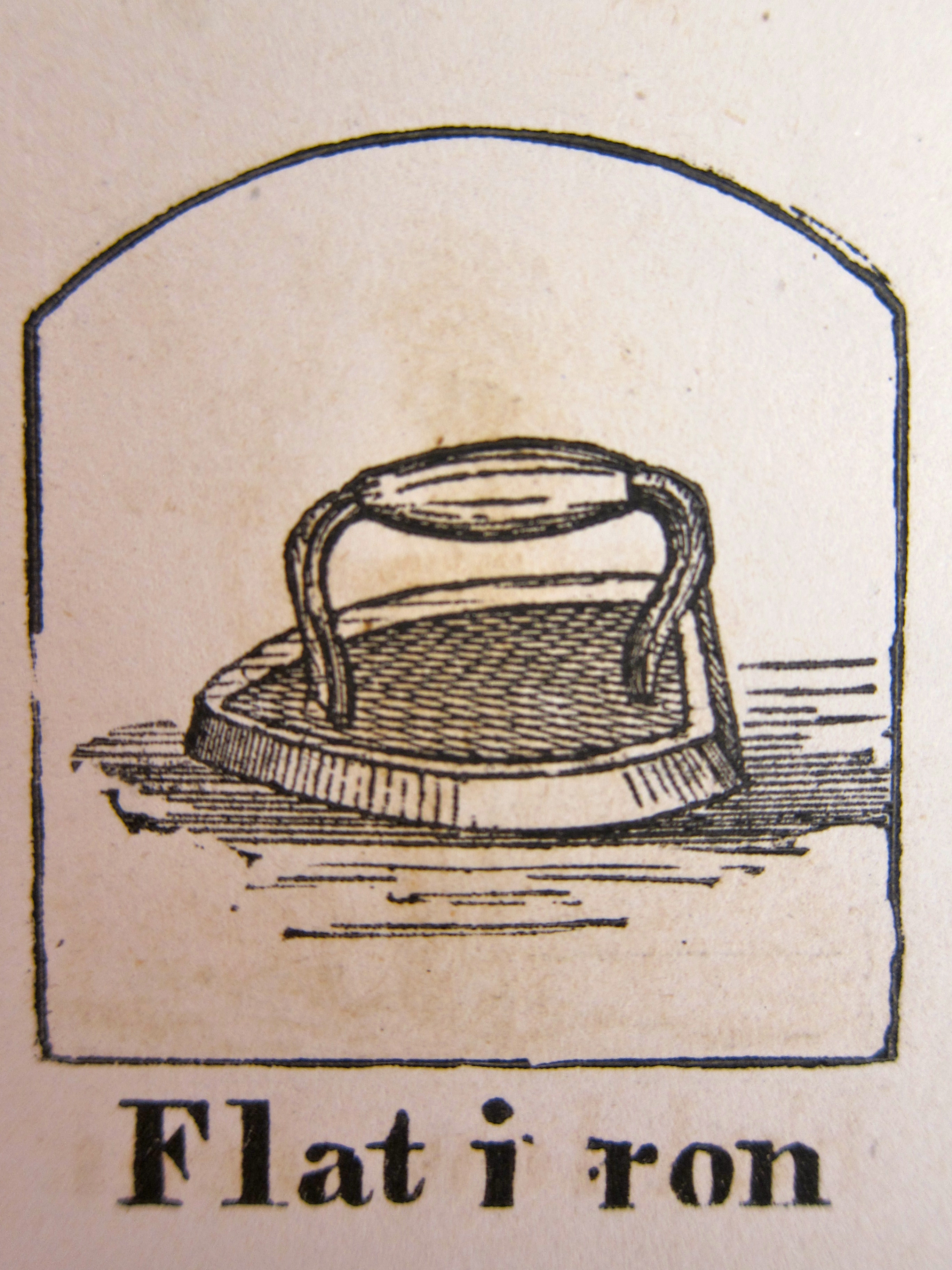
Evelina may have been too busy with all the shirts that needed starching and ironing to attend to her eldest son’s romantic inclination. Having spent most of the night before sitting up with Hannah Savage, she was only operating on three hours sleep. She positioned herself at the kitchen or dining table and covered it with a protective blanket and sheet, kept “on purpose for ironing.”* Using thick cloth to protect her hand from the hot handle, she lifted and pushed the heavy implement across each one of those new cotton shirts. Back and forth, back and forth, putting away one iron when it cooled to pick up another one that had heated up. It was hot, heavy work. She didn’t break her stride, either, not even for tea in the other part of the house.

* Lydia Maria Child, The American Frugal Housewife, 1832, p. 11