April 11, 1852

article-2606221-1D23CB0C00000578-490_964x613


Sunday April 11th  Mr Whitman of E Bridgewater preached

He gave us two good sermons but he is very dull and

I was very sleepy. Came home at noon  Alson & wife

came to Augustus’ After meeting went into Edwins

Augustus & E Andrews came there.  Susan staid

at home from everything  It has been very pleasant

In the tradition of their Puritan ancestors, Evelina and her family did not celebrate Easter. No hidden eggs or little bunnies or even new bonnets appeared in the Unitarian homes of Easton on Easter Sunday, 1852. Many of the Catholic families in town, however, would have celebrated this significant Christian holiday, further underscoring the strong cultural differences between the new Irish and the old Yankees of Massachusetts.

Other parts of the country celebrated this holiest of Christian remembrances. It was the German community of the mid-Atlantic states, better known as the Pennsylvania Dutch who, some say, introduced the Easter bunny to America in the 1700s. The rabbit and the egg were symbols of the Germanic fertility goddess Eostre, whose pagan festival was eventually taken over by early Christians as a celebration of Christ’s death and resurrection.

It being Sunday, the Ameses went to meeting, at least, for both an afternoon and a morning service. Reverend Whitwell, the usual minister, was replaced today by Mr. Whitman from East Bridgewater who was, unfortunately, “very dull.” Evelina struggled to stay awake.


March 23, 1852

SurvChain

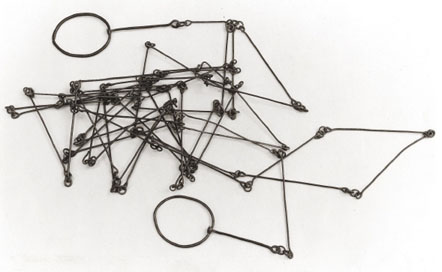
 Gunter’s Chain**

March 23

1852 Tuesday. Alson and wife dined here and spent

the afternoon at Edwins  He has been running

out lines for Edwin & Melvin Randall  Orinthia

went home with them.  Was at tea in Edwins

& this evening with Augusta at Augustus’

Augustus has gone to New York.  Susan is staying

there to night went just after dinner.  Oliver & wife

went to Boston this morning   Rained untill early night.

The Gilmore clan was moving around today. Evelina’s nephew, Alson “Augustus” Gilmore, was headed for New York City on business for his boot company or the Ames shovels, or both. Evelina’s brother (and Augustus’s father), Alson Gilmore, and his wife, Henrietta Williams Gilmore, had midday dinner at the Ames house. Alson was in the village helping another son, Edwin Williams Gilmore, and an Easton man, Melvin Randall, run out lines.

The phrase “running out lines” is open to interpretation (ice fishing is a possibility!), but the most likely meaning is that ground was being measured, perhaps for the new factory buildings soon to be built. A running measure is the cumulative distance in a straight line from a fixed point. The standard instrument used to get a running measure, at least in the 18th and 19th centuries, was a Gunter’s chain. It was used in conjunction with a compass and a transit (for establishing straight lines) to measure ground.

Invented by an English clergyman and mathematician, Edmund Gunter, around 1620, the Gunter’s chain “played a primary role in mapping out America.”** The Army Corps of Engineers would have owned such chains in bulk. The chain’s 100 lines measure 4 poles, or 66 feet, or 22 yards, depending on how you care to count it. Eighty chains equal one mile.

The Gunter’s chain, however, helpful as it was, was apt to be hand-made and thus subject to variation. It was eventually replaced by the more accurate surveyor’s tape.

By the way, for those readers who follow the game (or watch Downton Abbey), the length of a cricket pitch is exactly one chain.

*Thank you, Frank Mennino, for your assistance on today’s blog.

**Image from Colonial Williamsburg, courtesy of http://www.history.org

February 25, 1852

Cart

1852 Feb 25 Wednesday Was at work about the house untill

about ten and had just got seated at my sewing

when Mother & Alson came  They were here to 

dinner and this afternoon mother & self spent

at Willards. The young folks had company

Oakes & Frank are there this evening and were

having a lively time when we came away  Elizabeth

Williams was here this forenoon.  She & Susan went to

Emeline Haleys party this afternoon & evening


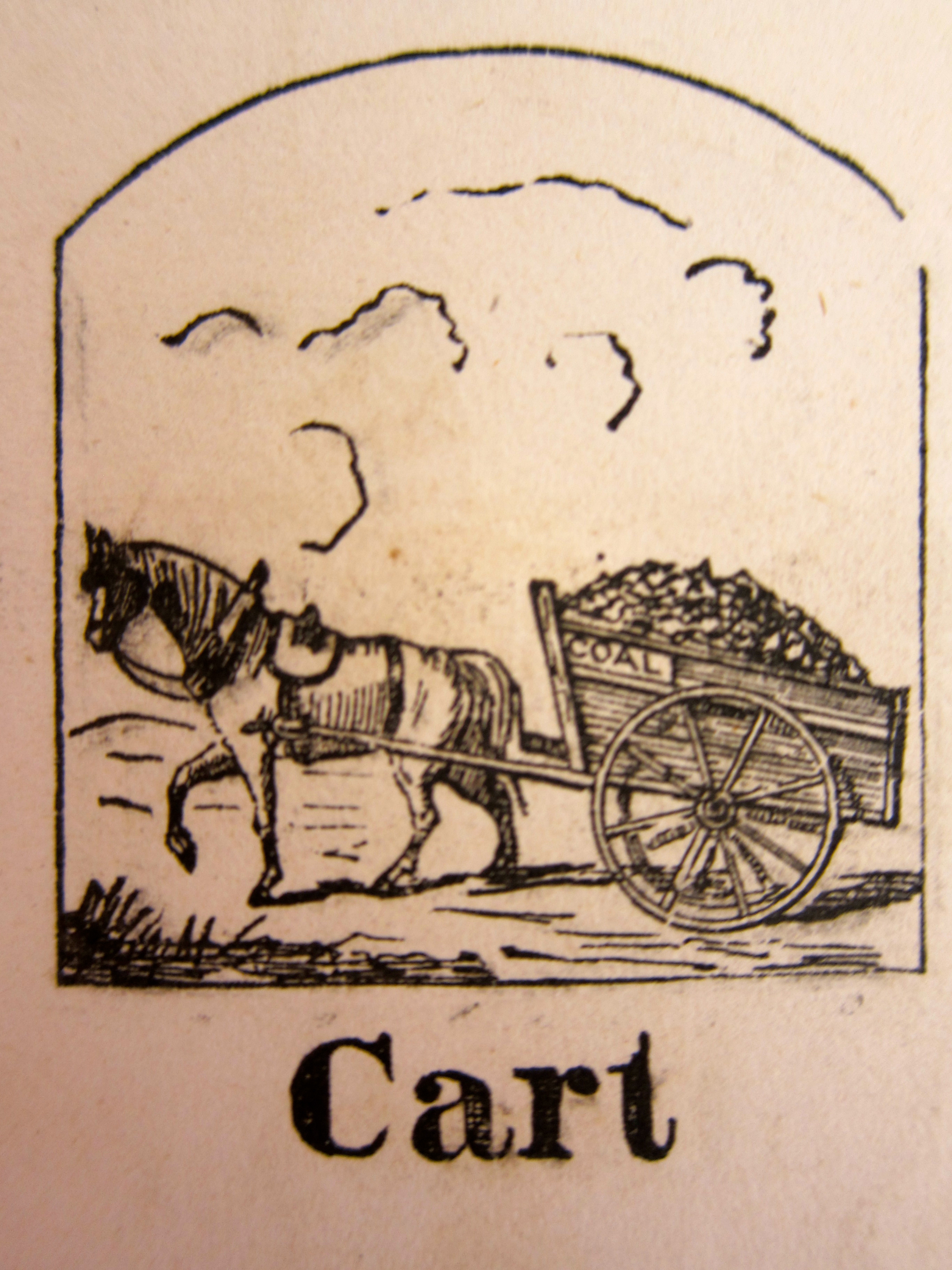
“[T]his was a warm day and thawd so much that it made the carting bad,” grumbled Old Oliver in his daily journal.  Despite the soft road bed, however, Evelina’s brother Alson Gilmore traveled by wagon or carriage to bring their mother into town from the family farm. The two came to midday dinner at the Ames’, after which Alson presumably went on his way. Mother and daughter went on to visit Willard Lothrop – Evelina had been seeking his company quite a bit lately. Under his influence, was she becoming a Spiritualist?

While the notion of communicating with the dead intrigued her, Evelina’s interest in Willard Lothrop may have been more sociable than religious.  She comments on the “young folks,” – her sons Oakes Angier and Frank Morton Ames among them – “having a lively time.” All ages seemed to be moving around today attending various gatherings that must have helped dispel some mid-winter gloom. Never mind the mud; the hint of warmth in the air must have been preferable to more snow.

February 4, 1852

8mmIdeas_instagram

Mending

1852

Wednesday 4th Feb  Have been mending shirts and have

done up some collars & sleeves &c This evening

have been to Alsons with Mr Ames, met the 

Pools Mr & Mrs A Howard & Harvey  had a 

pretty lively time.  Edwin & Augustus with their

wives were also there  It is a beautiful moonshiny

night and have had a pleasant ride.  O A & Oliver

went to a ball to Canton.

Evelina sat with her sewing and mending for most of the day, catching up on some of the more ordinary aspects of keeping her family well-clothed. She was motivated in part by the need to prepare her son Oliver (3)’s clothes for his return to college.  Her diligence was rewarded; she got a lot of work done, and at the end of the day she and Oakes went out for the evening. Right next door, in the other part of the house, Oakes’s youngest brother William Leonard was visiting, yet Evelina doesn’t mention him.

She and Oakes rode south to her brother’s farm, where they met with family and friends for “a pretty lively time.” They saw some of the Pools, an extended family in the area, and Asa and Henrietta Howard, another farming family. (A year earlier, Evelina had sewn a shroud for one of the Howard’s children.) The Harveys, from whom Evelina bought butter, were present as well.

The beautiful moon, not quite full, shone down from a starry sky on other winter gatherings.  Oliver Ames (3) turned 21 years old today, after all; he celebrated the occasion with his older brother, Oakes Angier, by attending a dance in Canton. One imagines that they had a good time, too.


February 2, 1852

grhog

1852

Monday Feb 2d  Worked about house untill about twelve

and went into Olivers to dine with my whole family

and mother.  Alson came this afternoon & carried

mother home.  All took tea at Olivers.  Mrs S Ames

Oliver Fred & self passed the evening at Mr Swain

Worked some on flannel skirt this afternoon […]

carried Susans stocking to Mr Swains.


We know about February 2; it’s Groundhog’s Day.  In 1852, it was no such thing, at least not in New England. In the Pennsylvania Dutch communities of the mid-Atlantic states, however, some folks had begun to claim that the behavior of a groundhog on this date could prognosticate the weather for the remainder of the winter. This practice was first formally celebrated in 1887, in Punxsutawny, Pennsylvania, and continues today.

More common for this date was the celebration of Candlemas, a holy day in the Christian Church that honored the presentation by Mary of Jesus at the temple. Roman Catholics called it the fourth Joyful Mystery of the Rosary. Unitarians had no name for it because Unitarians, like some other Protestant sects, didn’t acknowledge ecclesiastical feast days.

Yet there was a saying regarding this time of year that New England farmers – Old Oliver, a Unitarian, included – would have been familiar with:

“Half your wood and half your hay, You should have on Candlemas Day”

Candlemas falls between winter solstice and vernal equinox. It’s a day that turns the corner on winter, and heads for spring. It’s a day to take stock and hope you have enough wood left to keep warm and enough hay remaining to feed your animals for the rest of the winter.


January 1, 1852

OLYMPUS DIGITAL CAMERA

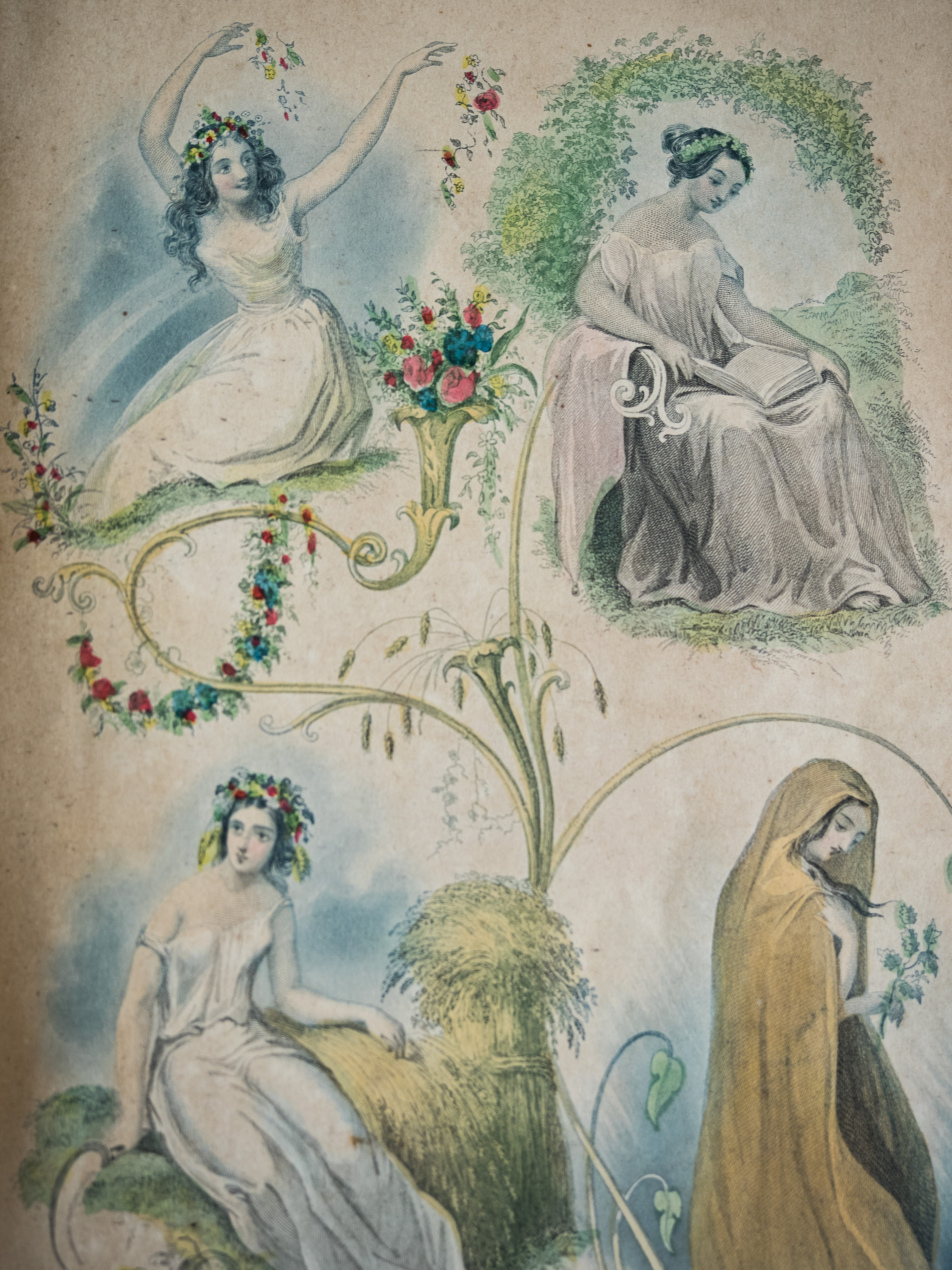
The Four Seasons, from Godey’s Lady’s Book, 1851

1852

Jan 1st Thursday.  It being very stormy last night Alson &

wife came home with us from Olivers & spent the night

and forenoon.  Cooked a turkey for dinner.

Went with them to Augustus this afternoon and 

evening called on Mrs J C Williams, found her

making some shop shirts for Oakes Angier.  The weather

is very warm & unpleasant


The new year began with rain and high water in the ponds, pleasing Old Oliver Ames.  He may have been retired from the shovel shop, but he kept close watch on how the business was doing, and how the business was doing depended heavily on how the water power was running. Evelina herself found the rain “unpleasant.”

Evelina and her family marked the day with a turkey dinner, making it an occasion. Evelina’s brother, Alson Gilmore, and his wife, Henrietta, had stayed the night, unable to get back to their farm in the driving rain. They were rewarded with a feast. After the midday meal ended, Evelina went with them to see Alson’s eldest son, Alson Augustus Gilmore, and his young family.

Back in the village, Evelina visited a seamstress about making shirts for her son, Oakes Angier Ames. Mrs. Williams, who was probably a widow, would sew a number of work or shop shirts for the Ames men over the course of the year.  Evelina herself had sewn multiple shirts the previous spring, a task that took her weeks to finish. Much as she enjoyed sewing, she must have been thrilled to pass the chore on to someone else. This would free her up to concentrate on dresses and accessories, as well as tend to the mending basket that always had work in it.

December 31, 1851

Dismiss


Wednesday Dec 31st  This morning sit down early to knitting

my hood  Have it all finished ready for the lining.  About ten 

Oclock went into the school with Mrs. Witherell.  Mr Brown

has closed his school to day.  Passed the afternoon & evening at Olivers

Mr & Mrs Wm Reed  Mr & Mrs J Howard, Whitwell & A Gilmore were there.

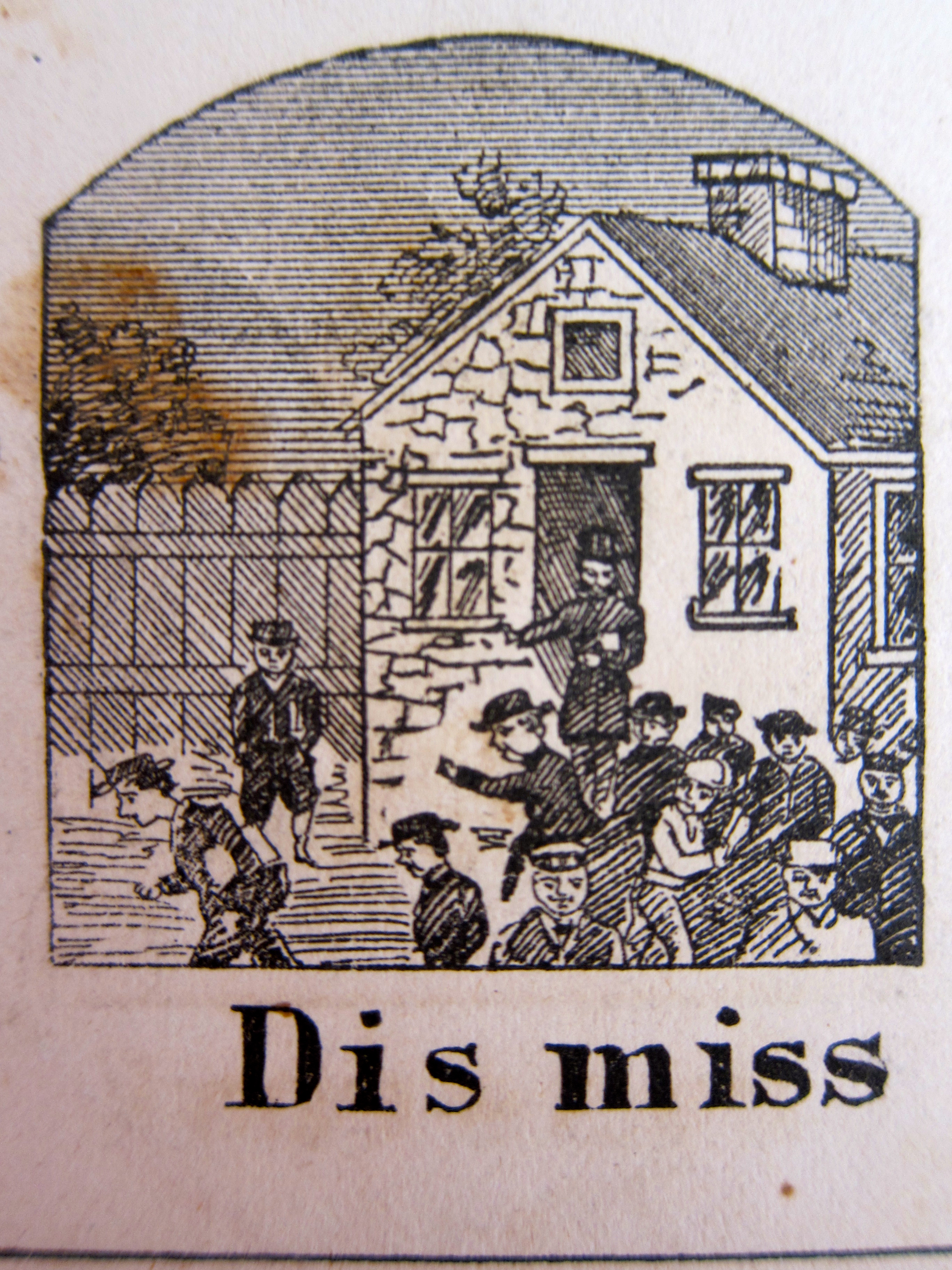
Susie Ames and Emily Witherell may have been happy today to reach the end of their school term. Class, dismissed!  1851, dismissed!

Just how the Ames family celebrated the departure of the old year and arrival of the new, we don’t know. Old Oliver, with his usual terse assessment of the day, merely noted that “this was a cloudy day and some cooler + misty + foggy.” The cool mist he saw would develop into a huge rain storm over night, preventing folks from moving around much.

A group of friends and relatives gathered for tea next door at the home of Oliver Ames, Jr. and his wife Sarah Lothrop Ames. Besides Evelina and Oakes, at the party were Reverend William Whitwell and his wife Eliza, Reverend William Reed and his wife Abigail, Jason Guild Howard and his wife Martha, and Evelina’s brother Alson Gilmore and his wife Henrietta.  In just a few more years, a group like this might have sung the beloved  Auld Lang Syne to mark the occasion. In fact, a version of Auld Lang Syne, written in 1855 and called Song of the Old Folks would become “the tradition of the Stoughton Musical Society to sing […] in memory of those who had died that year.”*

Out with old, in with the new. What a year it would be for the Ames clan.

http://www.americanmusicpreservation.com/SongoftheOldFolks.htm

December 25, 1851

Turnstile


Dec 25th Thursday  The Irish are expecting to have a great

time to day Jane went to the meeting house about

eight but the priest did not come she stoped an

hour. Carried my knitting into Olivers awhile this

forenoon. This afternoon have been to mothers

with Mr Ames & Frank as they were going to West

Bridgewater.  Finished knitting the front & back of

my hood  Made a present to Lavinia of Turnpike Dividend $800

Christmas Day! But as Evelina points out, the Irish Catholics in town would be celebrating, but the Ames family wouldn’t. Jane McHanna left the house to attend a Christmas mass for which, unfortunately, the priest was either late or didn’t show up at all.  Jane returned home to prepare dinner. Evelina, meanwhile, visited Sarah Lothrop Ames next door, knitting in hand.

After dinner Evelina rode along with her husband and youngest son as they went on an errand to West Bridgewater.  They dropped her off to see her mother at the family farm. There may have been some recognition of the holiday in this gesture, although Evelina makes no mention of gift-giving, with one significant exception. Evelina gave an $800 dividend to her niece Lavinia Gilmore.

The dividend came, somehow, from proceeds from the Taunton and South Boston Turnpike, a road that had run through part of Easton since the early 1800s, between “‘Taunton Green, so called, to the Blue Hill Turnpike,'” according to town historian William Chaffin.* Its origin was controversial and involved a long-standing disagreement with the Town of Raynham, but its impact on the Gilmore family was generally positive, as various Gilmores, including Evelina’s father and brother, served as toll-gate keepers. As Chaffin points out, however, “[t]he toll-gate naturally became unpopular.” It was closed in October of 1851.

How Evelina came to possess $800 from the road is unclear. Was this a regular dividend that Evelina received, or was the family compensated for the road’s discontinuance? That Evelina passed this money on to her niece, however, is a clear demonstration that for all her economical instincts, Evelina was capable of great generosity.


*William L. Chaffin, History of Easton, Mass, 1866, pp. 454 – 458.

December 18, 1851

62834-004-ED8B9BE0


A Delaine Sheep

Dec 18 Thursday  Finished the back of Susans hood

and finished the blue and orange deLaine

for self that Julia cut a new waist for last spring

Mary left this morning said she was going

to Bridgewater for her clothes   It is bitter cold and 

I fear she will suffer  Jane has finished two

prs of cotton flannel drawers for me that she

has been sewing on since she was sick

Another “fair cold day;”* not an ideal time for the servant, Mary, to travel from North Easton to her home in Bridgewater.  Whether she rode or walked, she must have been quite exposed and have become sick, for she didn’t return to the Ames household for the rest of the winter. She only reappears in Evelina’s diary the next July, working by that time for Alson and Henrietta Gilmore at their farm.  What prompted her departure?  Was she homesick for family in Bridgewater, or tired of working at the Ames’s house?

Sewing was today’s occupation of choice for Evelina and her remaining servant, Jane McHanna. Evelina picked up an unfinished project from the previous spring, one that she had nearly finished with help from local dressmaker, Julia Mahoney.  It was a “blue and orange deLaine,” meaning that it was a print or plaid, fine-weave, challis-like wool dress, one that would be of service in this cold weather. The wool itself came from a type of Merino sheep known as a Delaine (as in, “of wool” in French.) Jane, meanwhile, sewed some flannel underclothes for Evelina, who would be warmly dressed once these articles were finished.

Next door, in the other part of the house, a man named Holman Johnson, probably visiting on shovel business, stayed the night.

*Oliver Ames Journal, Stonehill College Archives, Arnold Tofias Collection


December 8, 1851


381-1233891708GdW7


Dec 8th Monday.  Another unpleasant windy day

and we could not put our clothes out

Alson came after Mother this afternoon

and it has cleared off quite pleasant.  he is

better but is not able to work yet.  I have been

cutting out some cotton flannel for Jane to work on

last week she worked for herself.  It is three

weeks since she has been able to work much

Another Monday morning with weather too “unpleasant” to hang the wash out to dry. It rained in the morning, and “took the snow all of[f]” according to Old Oliver. The newest servant, Mary, possibly with the help of the still-recovering Jane McHanna, must have resorted to hanging wet articles over various registers around the house to dry.

Besides the weather being crummy, Evelina’s husband, Oakes, was still away; her brother Alson, though improved, couldn’t yet work his farm; her servant, Jane McHanna, hadn’t fully recovered from an illness of three weeks running and she, herself, was coming down with a cold. Evelina’s week was off to a poor start; she must have been anxious by this time to have her husband return home. On the bright side – perhaps – she saw her mother, Hannah Lothrop Gilmore, return to the family farm, where the elderly woman was always the most comfortable.

The weather “cleared off” in the afternoon, bringing back the sunshine. Did the full moon that night cheer Evelina up with its wintry light or keep her awake worrying about various domestic aggravations?