January 16, 1852

image


1852

Jan 16th Friday  Made the bed in the front chamber and 

put the room in order swept the stairs &c &c

worked on Susans morino hood  Mrs Wm Reed &

Mrs Hall called  Augusta & Edwin here to tea and

spent most of the evening  Edwin put the casters

on my hourglass table and I nearly finished putting

on the cover  Mrs S Ames called a few moments.

In between the day’s activities of choring, sewing and finishing up a project for newlyweds Edwin and Augusta Gilmore, Evelina received several callers, including Abigail Reed, wife of the elderly William Reed, and a Mrs. Hall. Evelina had called on Mrs Reed the day before; Mrs Reed returned the courtesy today. Paying calls was an intrinsic part of social life in the nineteenth century, especially among women and especially in cities, but also in smaller country towns such as Easton. Social exchange, which in the country had been a somewhat relaxed occurrence based on an informal combination of need, opportunity and desire, was becoming ritualized.

As of 1850, social visits were beginning to follow a proscribed pattern, like the one described in The Art of Pleasing,* written about this time. On the topic of “Receiving Visitors”:

“To receive visitors with ease and elegance, and in such a manner that everything in you, and about you, shall partake of propriety and grace, – to endeavor that people may always be satisfied when they leave you, and be desirous to come again, – such are the obligations of the master, and especially of the mistress of a house.

“Everything in the house ought, as far as possible, to offer comfort and grace. Perfect, exquisite neatness and elegance, which easily dispense with being sumptuous, ought to mark the entrance of the house, the furniture, and the dress of the lady.”

In a cautionary paragraph, the author goes on to advise against sewing when company calls: “If a lady who receives a half ceremonious visit is sewing, she ought to leave off immediately, and not resume it except at the request of the visitor.”  That stricture may have been a difficult one for Evelina to follow, given how incessantly she sewed. But she and her sisters-in-law would have striven to be au courant with the etiquette of the day.

Before many more years went by, the phenomena of calling cards would be introduced, creating “an increasingly complex etiquette which determined the length and frequency of calls, whether a call should be returned or not and the sorts of people to whom a family was, or was not, ‘at home.’ Families connected by kinship, business and politics interchanged calls and invitations, but ranked and classified their acquaintances in ever more precise grades of social acceptability.”** These new rules would apply particularly to the next generation of Ameses.

H. M. Rulison, The Art of Pleasing, Cincinnati, 1853, pp. 27-28

** Jack Larkin, The Reshaping of Everyday Life, 1988, p. 265


January 15, 1852

330px-Charles_Wentworth_Upham

Charles Wentworth Upham

(1802 -1875)

1852

Jan 15 Thursday  Spent some time this forenoon in reading

the papers and fixing Susans work & pasted some pictures on

a mahogany box.  Called on Mr Whitwell, Reed & 

Howard with Mrs S Ames.  Evening to a lecture on

education by Mr Upham of Salem at the meetinghouse

hall. a very good lecture and a goodly number

present for a snowy evening.  Had two tripes from father.

The guest lecturer at the meetinghouse was, presumably, Charles Wentworth Upham. A minister and politician from Salem, on the north shore of Boston, Upham had traveled no small distance to deliver a “lecture on education.”  Well spoken and well read, he had written, some years before, a history of the witch trials in Salem. Lately, however, Upham had been speaking on the progress of normal schools, which were schools that taught teachers. Education was on his mind.

Also on Upham’s mind was politics. He was a Whig, which may have been his connection to the Ames family and Unitarian congregation in Easton. Previously Upham had been a member of the Massachusetts State Senate, and within the year would become Mayor of Salem. From 1853 to 1855, he would be a representative to the U.S. Congress, but would fail to be reelected.

Upham was married to Ann Holmes, a sister of Oliver Wendell Holmes, Sr. He had been at Harvard with Ralph Waldo Emerson with whom he corresponded later in life.  Their friendship faltered, however, over Transcendentalism, which Upham disliked. Upham also famously acted against Nathaniel Hawthorne, leading the local fray in getting Hawthorne, a Democrat, fired from his politically-appointed job at the Salem Custom House.

Some disliked Upham; Charles Sumner called him “that smooth, smiling oily man of God.”* What did the Ameses think?


*Carlos Baker, Emerson Among the Eccentrics, New York, 1996.

January 14, 1852

il_340x270.670708305_2grg

Jan 14th Wednesday  Have been to work some on a 

morino hood for Susan to wear to school  Augusta called 

this forenoon and I went home with her to assist her in

cutting her cake to send to her friends  This afternoon

have been to N. Bridgewater and called on Miss Foss

with Mrs S Ames Emily & Susan  bought Edwin a clock

Called at Edwins and staid till about eight Oclock this

evening spent the rest of it at Olivers

Orinthia Foss is back.  “Miss Foss,” as Evelina calls her, more formally than usual, had taught school in Easton the previous year, living part of that time with the Ames family.  Although twenty years younger than Evelina, the two women had become close friends, often sewing, gardening and socializing together. When Orinthia left to go back to her family in Maine, Evelina had missed her. Now, Orinthia had returned and was teaching in North Bridgewater (today’s Brockton).

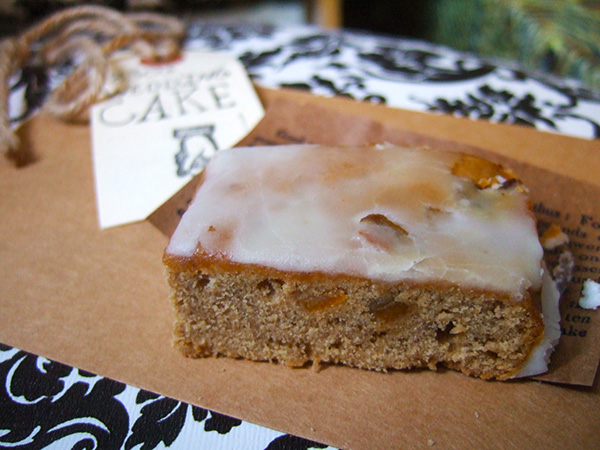
Evelina, Sarah Lothrop Ames, and the girls Susie and Emily rode to Bridgewater to call on Orinthia, a reunion that was presumably happy and animated.  The women also did some shopping.  Evelina, feeling pleased, bought a gift for her nephew Edwin Gilmore, despite having made a table for him and his bride, Augusta.  She had been over at the newlyweds’ home earlier in the day, in fact, showing Augusta how to cut up the wedding cake that she herself had made.  Pieces of the cake would be sent out to friends and relatives as a keepsake.  Wedding cakes were meant to bring luck to the new couple.

Back in Easton, Old Oliver noted that “we kild a yoke of oxen I bought at randolph for 125$ one of them weighd 1359 + the other 1277 one of their hyde weighd 116 lb and the other 104 pounds”.  There would be beef and tripe headed for Evelina’s kitchen.


January 13, 1852

images-1


Jan 13 Tuesday  Have not done much work to day

can scarcely tell what I have been doing  Have

been trying to fix Susan some work to learn her to sew

Have got out an apron and commenced a stocking

for her to knit.  This afternoon called on Mrs Richards

Holmes, Torrey Savage & Hannah  Spent the evening with

Augustus and wife at Olivers.  Mrs Witherell been to Dr Washburns

& had her teeth out.  Mrs S Ames George & Emily went with her.  Father

& Oliver dined here & the others when they came back from Bridgewater

This was not Sarah Witherell’s best week. Limping from a bad burn on her foot, she kept an appointment with a dentist, Dr. Nahum Washburn, to have her teeth pulled. Dr. Washburn had his office in Bridgewater, in an historic building known as “the Tory House.”  It was the same office that Evelina had been to several months earlier to have her own teeth worked on.

Modern historian Jack Larkin has noted that “[h]undreds of thousands of Americans had at least some of their teeth badly rotted, a source of chronic pain and foul breath to many, with extraction its only cure […] Dentistry, which most rural American physicians practiced, was by far the most effective form of surgery; extraction was a decisive and relatively safe procedure (although infection always posed some risk).”*

While Sarah Witherell suffered today, her family united to support her. Her children and sister-in-law accompanied her to the dentist’s office.  Evelina (with Jane McHanna in the kitchen, of course) fed the entire family, which made for twelve around the dining table. Old Oliver, whose midday meal was usually prepared by Sarah Witherell, came over from the other part of the house. The Ameses from next door were there, too. Everyone came together for Sarah Witherell.

Evelina managed to socialize today, too.  She called on various friends and relatives around town, perhaps sharing the news of poor Sarah’s painful dentistry.


*Jack Lardin, The Reshaping of Everyday Life, 1988, pp. 92 – 93

January 12, 1852


 Plate

Jan 12 Monday  Susan washed the dishes this morning

and I went to work on my plants making some frames

for them and was to work on them and about the

house all the forenoon.  This afternoon have been

mending pants for Oakes Angier.  Have put a new

pocket into one pair  Jane washed and has been to see

Mrs Savage  Carried Augusta’s cake over to her and

Called a few minutes on Mrs Sarah Ames  Very cold


After breakfast each morning, a stack of dishes awaited washing in the Ames kitchen, numbering approximately seven plates, seven cups, seven saucers, 14-21 pieces of cutlery, various serving platters and bowls and serving spoons, plus the pots and pans used in preparation.

Hot water would be boiled and poured into a bucket or perhaps a basin set inside a dry sink. Using a cake of homemade soap, either chipped into the water or swirled by hand, Susie Ames or Jane McHanna or Evelina herself from time to time, washed each item with a washrag, rinsed the piece in a separate pan of clean water and placed it on a rack to dry or be wiped dry with a dish towel. The chore could take 30 to 45 minutes, and had to be repeated at dinner and tea.  It wasn’t as convenient as hand-washing dishes today – no liquid soap, no faucet spray – and it certainly wasn’t like loading the dishwasher.

Inventors, in fact, were trying to develop a machine that would wash dishes; the first such patent was filed in 1850. It wasn’t until 1886, however, that a wealthy woman named Josephine Garis Cochrane would make the first successful dishwashing machine. She didn’t wash dishes herself, but her servants did and often chipped the ceramic plates in the process.  Impatient with the damage, as well as the length of time it took to wash all the dishes after the many dinner parties she gave, she decided to make a machine to do the work.

Mrs. Cochrane  contrived a wire rack shaped for various specific dishes to fit inside a wheel inside a copper boiler. “A motor turned the wheel while hot soapy water squirted up from the bottom of the boiler and rained down on the dishes.”* The dishwasher was born. It went on to be displayed at the 1893 Columbian Exposition in Chicago, where it won a prize.  The Garis-Cochrane Company was formed and manufactured dishwashers until bought by KitchenAid, which in turn is owned by Whirlpool.

All this was a far cry from nine-year old Susie Ames washing up the breakfast dishes, plate by plate.


* Wikipedia, “Josephine Cochrane”, January 10, 2015

January 11, 1852


images-1


Jan 11  Sunday  Have been to meeting although it has

been stormy  Mrs Witherell did not go which is

unusual  Henrietta Mrs Clarke & self called on

Mrs Witherell at noon.  She burned her foot and

cannot go out but it is getting better.  Have written

a letter to Oliver this morning and have been reading

Sarah Witherell burned her foot and couldn’t go to church, probably because she couldn’t put her shoe on. How had she burned it?  Fallen against a coal stove? Stepped on a live ember? Spilled hot tea or scalded it stepping into a tub? If the possible sources of the burn are multiple, so were the potential remedies.

“Cotton wool and oil are the best things for a burn,” declared Lydia Maria Child in The American Frugal Housewife.* Dusting a burn with flour and wrapping it in cotton flannel was another common practice. Like today, the application of a salve was soothing.  We might apply cold water; they might have applied butter, assuming they had any on hand to spare. Home treatments for minor burns are still variable, despite today’s over-the-counter ointments and sprays.

Sarah Witherell, we learn here, always went to meeting.  Her absence today surprised even Evelina, who came back from church at intermission to check on her sister-in-law.  Evidently reassured that Sarah would be fine, Evelina settled into her more normal routine for Sunday, which included reading after church and, today, writing a letter to her middle son, Oliver, who was away at college.


*Lydia Maria Child, The American Frugal Housewife, 1846, p. 17

January 10, 1852

Oakes_Ames_-_Brady-Handy

 Portrait of Oakes Ames by Matthew Brady 

1852

Jan 10th Saturday  Mr Whitwell & Ames have not met again

to day  Mr W called just as Augusta Helen Susan

& self were in the sleigh to take a ride  We have

called at mothers  Mr Horace & John Pool, Edwin

& wife here to tea  Swept the parlor this morning

and put the house in order partially frosted a loaf of cake

for Augusta having made one of hers carried the frosting

over and made her a call while heating it

The boys presented their Father a gold pen & pencil

Oakes Ames turned 48 years old today, as did the local Unitarian minister, William Whitwell.  Last year and again this year, Evelina was unsuccessful in getting the two men together to celebrate. Oakes Angier and Frank Morton gave their father a gold pen and pencil to mark the occasion, a fine gesture.

As Oakes closed in on the half-century mark, he presumably began to look beyond the confines of the work he and his brother Oliver Jr. did for the shovel company. The next generation, in fact, was being groomed to run O. Ames & Sons; Oakes Angier, as eldest son of the eldest son, was on deck to superintend the company whenever Oakes and Oliver Jr. decided to step down. He was learning every aspect of the manufacturing process. Oliver (3) and Fred Ames were at college, Oliver presumably honing the skills he would need to take over his father’s role in managing sales, while Fred was on a path to being the financial clerk or CFO we might say today. Frank Morton Ames was learning a variety of skills, too, although he was seen more as a spare man waiting to step in should his cousin or either older brother fail somehow.

What could Oakes do with his tremendous talent and energy? Clearly, the roiling politics of the day interested him. By 1860, his gregarious nature, quick comprehension and thirsty ambition led him to accept the nomination and election to Massachusetts Governor Andrew’s Council as representative from Bristol County. Two years later, by “a large popular vote,”* Oakes Ames was then elected to the Thirty-Eighth U. S. Congress, where he would serve for four terms.

In 1872, according to circumspect historian, Reverend William L. Chaffin, Oakes “declined a renomination.”* He died in May, 1873, shortly after the conclusion of Credit Mobilier, a national political scandal for which many held Oakes culpable. At the time, his natural candor and fearlessness worked against him and he was unable to dodge the political manuevering that placed most of the blame on him. That same brave honesty, coupled today with calmer, historical perspective, has since served to cast Oakes Ames in a better light.

William L. Chaffin, History of Easton, Massachusetts, 1886, p. 654


January 9, 1852

Cake

1852 Friday Jan 9th

[…]Have had about 30 here this evening and

quite a pleasant time though the weather not

pleasant.  Lavinia came here with Augustus last

night and we ladies have had a nice time making

cake and getting ready for them  Helen & Lavinia

made the bed in the front chamber to suit themselves

Oakes and Evelina Ames hosted a wedding reception at their house for newlyweds Edwin and Augusta Pool Gilmore, attended by members of the extended Gilmore and Pool families who traveled through inclement weather to get there. The celebration, complete with cake and tea – but no wine – was “quite a pleasant time.” What a special occasion for a cold, dark time of year.

The preparations for the party had been fun, too.  Lavinia Gilmore, sister of the groom, had been driven back to Evelina’s, carried by her brother Augustus Gilmore, to help with the cake. More cake! Helen Angier Ames had walked over from next door, again. The two young unmarried women had a sleep-over at their Aunt Evelina’s.

What might the cake have been made of? Sarah Josepha Hale offers up quite a recipe for a wedding cake in her 1841 The Good Housekeeper:

Take two pounds and a half of dried and sifted flour, allow the same quantity of fresh butter washed with rose water, two pounds of finely pounded loaf sugar, three pounds of cleaned and dried currants, one pound of raisins stoned, one nutmeg grated, half a pound of sweetmeats cut small, a quarter pound of blanched almonds pounded with a little rose water, and twenty eggs, the yolks and whites separately beaten.  

The butter must be beaten by hand till it becomes like cream; then add the sugar, and by degrees the eggs; after these, the rest of the ingredients, mixing in at last the currants, with nearly a tea-cupful of rose or orange flower water.  This mixture must be beaten together rather more than half an hour, then put into a cake-pan, which has previously been buttered and lined with buttered paper; fill it rather more than three quarters full.  It should be baked in a moderate oven for three hours, and then cooled gradually, by at first letting it stand some time at the mouth of the oven.

If you fear the bottom of the cake may burn, put the pan on a plate with saw-dust between.”*

*Sarah Josepha Hale, The Good Housekeeper, 1841, p. 100

January 8, 1852

OLYMPUS DIGITAL CAMERA

*

1852

Jan 8th Thursday

Frosted the cake over the second time

this morning and it was quite dry at three when

Edwin took it away  they are married this evening

Have invited their parents uncles aunts and cousins

here tomorrow. Have presented them with an hour

glass table  Mr & Mrs Reed have passed the afternoon

in the other part of the house  Two shovel handlers from

Maine to spend the night here

Had a quarter of Beef of fathers  The

Ox weighed over 14 hundred

Edwin Williams Gilmore and Augusta Pool were married today in what would have been a small ceremony, probably at the home of Augusta’s parents, Lavarna and John Pool, Jr. Presided over by a minister – Reverend William Whitwell, most likely – the event would have been attended only by close family members. The couple took no honeymoon or “bridal tour,” but moved right into the new house that Edwin had built in the village, barely a stone’s throw away from the Ames compound.

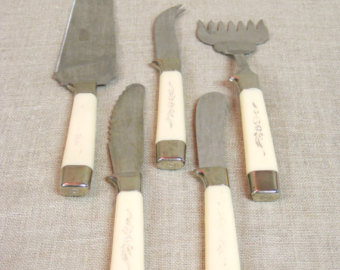
The new house had been furnished not only by Edwin, but also by Augusta herself, who probably brought along household goods as part of what was called her “marriage portion.” Items such as dishes, cutlery, and linens would have been at least some of what Augusta and her new sister-in-law, Lavinia, had labored to put into place over the last two days.

Evelina spent her time preparing for the party she was giving the next day for members of the Gilmore and Pool families.  Her domestic routine wasn’t too overwhelmed, however; she was still able to cope with more pedestrian matters, such as accommodating two shovel handlers from Maine for an overnight visit, even as she set up for thirty guests.


Currier & Ives, The Marriage, 1847


January 7, 1852

weddinga_cake1

*

/52

Wednesday Jan 7th

Heat the brick oven baked a loaf

of brown bread two loaves of fruit cake for

Augusta & mince pies  A & L were at Edwins

this forenoon. This afternoon have sewed for me on 

Susans dress.  I have been making frosting for

the cake  Helen has been in and the girls have had

a nice time over it  Frank carried them home


Augusta Pool and Lavinia Gilmore were once again helping Lavinia’s Aunt Evelina. Helen Angier Ames, too, came over from next door, and the young maidens had “a nice time over it.” They did a little sewing for Evelina – that must have pleased her – and helped prepare frosting for Augusta’s wedding cake, which Evelina had kindly undertaken to make, along with all the regular baking she was doing for her family. Augusta was to be married the next day to Evelina’s nephew, Edwin Williams Gilmore.

If the women were following the instructions of Sarah Josepha Hale, they would have made “Iceing for Cakes,” according to the following instructions:

Beat the whites of four eggs to a stiff foam, and add gradually three quarters of a pound of the best double-refined loaf sugar, pounded and sifted; mix in the juice of half a lemon, or a tea-spoonful of rose water.  Beat the mixture till very light and white; place the cake before the fire, pour over the iceing, and smooth over the top and sides with the back of a spoon.”**

When it got late, Frank Morton Ames took Augusta and Cousin Lavinia back to their respective families in the countryside. The light of a full moon guided them along in a sleigh over snow that was “now about a futt deep.”***

* Image of 19th century wedding cake courtesy of http://www.fourpoundsflour.com

**Sarah Josepha Hale, The Good Housekeeper, 1841, p. 101

***Journal of Oliver Ames, Courtesy of Stonehill College Archives