April 10, 1852

hand_washing

1852

April 10th  Saturday  Worked in the chambers all the forenoon

Mr Colwell came after Orinthia she will commence her school Monday.

Have been painting some spots in the dining room  Made a call in

Olivers  Julia is at work there for Helen.  I have engaged her the 

last of the week.  Heard that Mrs Brett is dangerously sick

Eveline Brett, wife of George Brett, a bootmaker, was a twenty-year-old who had recently given birth.  The baby had survived – at least so far – but she herself was “dangerously sick.”  She likely had come down with childbed fever.

Childbed fever, known medically as puerperal fever, is a postpartum, streptococcal infection of the mother’s reproductive tract. The fever was often fatal. For much of the 19th century, it was usually, if inadvertently, caused by attending doctors. At the time, doctors had no knowledge of germs and didn’t believe in hand washing. The prevailing attitude, as expressed by one Philadelphia obstetrician, Dr. Charles Meigs, was “Doctors are gentlemen, and gentlemen’s hands are clean.”*

It took a Hungarian physician named Ignaz Semmelweis to realize that women with home births had fewer cases of the fever than those women who gave birth in maternity wards. He determined “that washing hands with an antiseptic solution before a delivery reduced childbed fever fatalities by 90%.“*  Publication of his findings was not well received by the medical community, but he was right.

* Puerperal infections  Wikipedia, accessed March 24, 2015
 

April 9, 1852

images-1

April 9th Friday  Have made the skirt of my Delaine

dress and Orinthia has been sewing on her own

clothes most of the day  I have done but very

little sewing this spring.  Have had some one staying

here for the last few weeks and have been upon the

go a great deal of the time.  Abby came about four

this afternoon and spent the evening

Evelina was trying to catch up on her sewing today, admitting that she had been distracted by “someone staying” at the house for several weeks. She had been “upon the go” with visits from her sister-in-law Amelia Gilmore, her mother, and her former boarder, Orinthia Foss. As a consequence, her sewing had suffered. It was time to get busy.

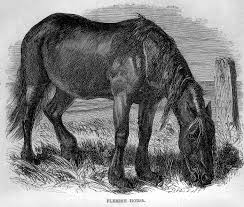
Her father-in-law, Old Oliver, was busy, too. After noting that“it was cloudy all day wind north east + snowd a little,” he went on to report the purchase of several animals.  “[W]e bought 12 pigs to day that weighd 2041 lb at 7 ½ cents a lb – paid 143=00 cents for them [and] we bought a black hors[e] to day of Mr Feild of North Bridgewater which he cald 5 years old for 125$ if he proves good we are to pay 25$ more for him”

A few days ago it was oxen, today it was pigs and a horse.  Old Oliver was filling the barn.


April 8, 1852

slide3_4


1852

April 8th Thursday  Fast day  Orinthia & Frank went to meeting

and at four oclock to a sing at the meeting house

hall.  Mr Ames has been to work all day the same

as usual  I have been very busy at work on

one thing and another have sewed on Susans

apron have it nearly done which makes the fifth

that I have made this spring

Evelina made note that today was a Fast Day, an annual event intended to be spent in fasting, prayer and supplication to the Almighty for a good growing season. The practice originated with the Puritans and evolved over time.  By 1852, it was a fading custom. Frank Morton Ames and Orinthia Foss went to church and to a “sing” afterwards, but both Evelina and Oakes Ames worked “as usual.” No one appeared to fast or spend the day in church.

A different long-standing custom of the country – slavery – needed to fade and disappear, yet hadn’t. It would only disappear with bloodshed, because the untenable social and cultural practice could not be resolved in a practical, orderly and non-violent way. War would be required, and soon.

On this day in 1852, a state court in Missouri decided against Dred Scott, a one-time slave who had sued his former owner’s estate for freedom. Scott and his wife, Harriet, had once been owned by the late Dr. John Emerson. The narrative of the case was complicated, but was based mainly on the Scotts having resided for a period of time in the free state of Illinois while working for the Emersons.  Scott believed that he and his wife should have been freed. But Dr. Emerson’s widow, Irene, kept the couple as her slaves, and wouldn’t even allow Scott to purchase his freedom. Scott sued and won in a lower court, but lost his case in the Supreme Court of Missouri.*

Scott and his lawyer appealed the case, which would go on to the U.S. Supreme Court in 1857. In one of the Court’s most infamous decisions, Chief Justice Roger B. Tanney, a Jacksonian Democrat who believed in states’ rights and a slaveholder who had manumitted his own slaves, would nonetheless declare that the Negro had no rights. An “originalist” group, Tanney’s court determined that the Constitution as originally written had made no provision for the citizenship of Negroes. For Tanney, slavery was an issue to be decided at the state level.

The Dred Scott case was one more irrevocable step in the path to civil war. The U. S. government essentially abdicated federal jurisdiction over slavery, which only accelerated the sectional divisions and conflicts. Bloody Kansas burst open, and within a decade, unprecedented conflict would convulse the nation.


*”Decision in a Slave Case,” article from the Washington National Intelligencer, April 8, 1852, courtesy of http://hd.housedivided.dickinson.edu/node/25809 


April 7, 1852

images-2

Five Dollar Gold Piece, 1850

1852

April 7th  Mother is 80 years old this day and notwithstanding

the snow banks have been down to see her and made

her a present of a five dollar gold piece.  She is

not very smart to day but is generaly very well and

capable for one of her years.  Orinthia Abby & Augusta

went with me and we have had a very pleasant visit

Augustus stoped the evening here  Helen came

home this afternoon with her father.

Evelina’s mother, Hannah Lothrop Gilmore, turned 80 years old. She was the grandmother of Oakes Angier, Oliver (3), Frank Morton and Susan Eveline Ames – among other grandchildren –  and first cousin-once-removed of Sarah Lothrop Ames. She was born in Bridgewater in 1772, the fifth child and only daughter of Daniel and Hannah (Howard) Lothrop.  Her mother died soon after she was born and her father remarried two times more and had six additional children.

In 1789, at age 17, Hannah married Joshua Gilmore of Easton. They had a large family, too, producing eight children, of whom Evelina was seventh. By this 80th birthday in 1852, Hannah was a widow with only three offspring still alive. As we have seen, she lived on a farm with a son, Alson Gilmore, but often visited her daughter, Evelina.

Beyond these genealogical facts, little is known of the life of Hannah Lothrop Gilmore. When she was barely twenty, however, and already a mother of her first baby, John, she walked on a trail one day with her husband in an area of Easton known at the Great Cedar Swamp. Town historian William Chaffin recorded the tale:

“There was then no road through Cedar Swamp. Trees were however felled, and on these by hard work pedestrians at certain seasons could pick their way through from Easton to Raynham, or return.

“In 1792 […] Raynham had petitioned the Court of General Sessions for Bristol County to require Easton to build a road through the swamp to connect the two towns. The advantages of such a road were obvious. But Easton stood aghast at the prospect of incurring the expense of building a causeway such a distance and in such depths of mire.  The difficulty is illustrated by the fact that as Joshua Gilmore was going on the footpath through the swamp one day with his wife, carrying a little child in his arms, Mrs. Gilmore was speaking of the difficulty of the passage, and her husband replied that some day the child would ride through the swamp in a carriage; and the idea struck her as so essentially preposterous that she had a hearty laugh over it. However, the Court of Sessions did not, it would seem, share her skepticism, for it ordered Easton to construct the road.”*

The road, known then as the Turnpike Road or Street, was built, and Hannah Gilmore lived to ride it in a carriage.

*William L. Chaffin, History of Easton, Massachusetts, 1886, pp. 454-455

April 6, 1852

330px-Harriet_Beecher_Stowe_c1852

Harriet Beecher Stowe

(1811 – 1896)

1852

April 6th  Tuesday  We have had one of the driving

snow storms of the season  the snow is very

much banked.  We have been reading Uncle

Toms Cabin  Susan has read to us most of the

time  have been sewing & mending.  Orinthia hemmed

a black cravat for O Angier and sewed some

on Susans pink apron.  Have made a little needle

book for mother

Yesterday, Evelina and Orinthia had been in Evelina’s garden planting flowers. Today the two women sat indoors “sewing & mending” because the unstable spring weather had brought on “one of the driving snow storms of the season.” According to Old Oliver, the snow “was all in heaps and the wind blowing verry hard from northeast” *

Yet the women weren’t disconsolate. While they sewed, Evelina’s daughter Susan read aloud to them from Uncle Tom’s Cabin, a popular new novel. Originally published in serial form in the National Era, an abolitionist periodical out of Washington, D. C.,  the full book had just been published in Boston by John P. Jewett and was on its way to becoming the best selling work of fiction of the 19th century.

Written by Harriet Beecher Stowe, Uncle Tom’s Cabin, or a Tale of Life Among the Lowly tells the story of two Kentucky slaves, Tom and Eliza, who are forced to leave their home plantation and make their way in a hostile society, one sold south, the other escaping north. It was a tale that gripped readers north and south, within the country and abroad, and provoked various imitations, interpretations and theatrical iterations. It has never been out of print.

Mrs. Stowe was not only an author, mother of seven children and wife of a Biblical scholar and educator; she and her husband were also active abolitionists. For a number of years they had lived in Cincinnati, Ohio, an active depot for escaping slaves, where they were participants in the Underground Railroad and personally helped hide slaves on the run. When the Fugitive Slave Act was enacted in 1850, Mrs. Stowe was distraught. She wrote Uncle Tom’s Cabin in protest.

How might Evelina have liked Uncle Tom’s Cabin?  Very much, one suspects. Though hardly an active abolitionist, Evelina was sympathetic to the slaves. After the Civil War, she even tried to hire some freed black women to come work for her but, according to her grandson Winthrop Ames, the plan never worked out.

*Oliver Ames Journal, Stonehill College Archives, Arnold Tofias Collection

April 5, 1852

images-4


1852

April 5th Monday  Went into the garden this morning and

found my tulips were coming up through the coal

scraped it off and set out a few that I got in

Olivers garden.  Went with Orinthia to Edwin

Manlys garden about three Oclock. he had gone

to Mr Clapps.  We rode there and met him on

the way stoped awhile and had a chat on plants

in general  The school commenced this morning

by Mr Brown & C Clark

Tulips! How welcome was the sight of the curl of green shoots “coming up through the coal.”

Forget the laundry.  Never mind the sweeping and dusting. Someone else could do the breakfast dishes. Without so much as a glance at her sewing workbox or the pile of mending, Evelina was in her garden.

She scraped the coal covering away and “set out a few” more plants. After midday dinner, she and Orinthia headed to Edwin Manley’s nursery north of the village only to find that Mr. Manley had himself headed out to look at plants at the home of Lucius Clapp in Stoughton. The two women rode on and finally came across Mr. Manly en route. With carriage and on horseback, the three avid gardeners paused in the roadway and “had a chat about plants.” Spring had truly begun.

April 4, 1852

Crucifix


1852

April 4th Sunday.  Orinthia and self went to the

Catholic meeting this forenoon after waiting more than

an hour the priest came and driveled over a mess

of nonsense in latin, they distributed palm as they called

it being nothing more than cedar & pine twigs.

Sat there three tedious hours, came home and

went to our church in the afternoon. since have

written a letter to Sister H. &c  Susan went over to Anna.

Evelina’s ill-tempered condescension continued today when she and her sidekick, Orinthia Foss, attended a morning service at the little Catholic church on Pond Street. It was Palm Sunday. Father Thomas was late – not unusual for an itinerant priest – and the service was in Latin, a language that Evelina didn’t understand, all for a holy day that Unitarians didn’t acknowledge. Most vexing of all, perhaps, was that the palms weren’t even real.

By her own account, Evelina was better satisfied by a service in the afternoon at her own church. The question is, why did Evelina attend the Catholic service to begin with? Out of curiosity? Out of respect for her own Catholic servant, Jane McHanna? Was this Orinthia’s idea?

Whatever her motive, Evelina came away from her “three tedious hours” as anti-Catholic as ever. Such feelings would not have been encouraged by her husband, Oakes, who was more welcoming of the Irish newcomers. But Evelina would have found reinforcement at home from her father-in-law, Old Oliver, who was no fan of the Irish Catholics in Easton, for all the work they did at the shovel shops.

In Easton, in Boston and all over New England, differences between the old Puritan customs and the transplanted Irish culture were pronounced and, for many, unyielding. In strictly religious terms, Unitarians couldn’t imagine a religion that kowtowed to a foreign leader, as they deemed the pope, while Catholics were incredulous that Protestants could just shake off the time-honored and revered practices of the original church. The melding of the two cultures would be a long time coming, and in some circles is still a work in progress.

April 3, 1852

Tablespoon

1852

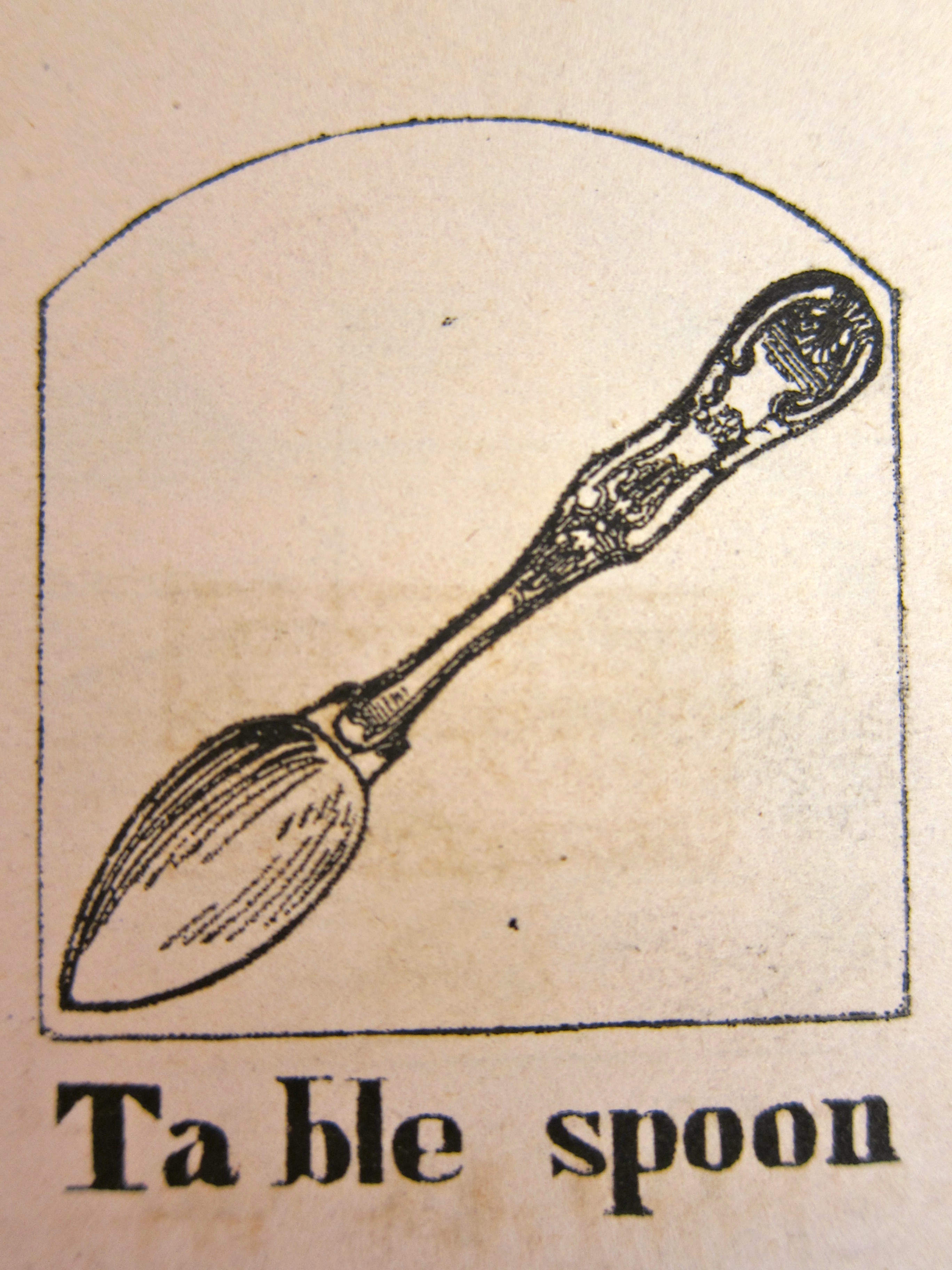
March [sic] 3rd Saturday  Have made a ribbon head

dress for sister Amelia  Orinthia & self went into

Edwins this noon for some fish chowder.  She gave us

some platters and a great iron spoon to eat with and we

had to wait upon ourselves. We excused her knowing

she was a young housekeeper and knew no better.  She

ought to come here and learn politeness  Called on Mrs

Brett.  her babe is nearly two weeks old. she is not very

comfortable  Called on Abby  Hannah & Mrs J. C. Williams

Young neighbor Augusta Pool Gilmore invited Evelina and Orinthia Foss to midday dinner. This was a sweet gesture, perhaps intended to thank Evelina for her many kindnesses in welcoming Augusta to the village. The young bride may have been excited to debut her skills as a hostess.

However well-meant the invitation was, Augusta still had a lot to learn about entertaining. Evelina, a matron who had welcomed many guests to her dinner table over the years, saw much to judge wrong and in her diary took a snide swipe at the young woman. She criticized Augusta’s faux pas in laying out the wrong cutlery and failing to serve them properly.

While Evelina forgave Augusta her missteps, because the young bride “knew no better,” she also condescendingly noted that Augusta needed to spend time with the Ameses to “learn politeness.” Such scorn was perhaps exacerbated by the presence of Orinthia, who was always looking for ways to laugh. Innocent, inept Augusta was an easy target.

Evelina’s natural empathy returned in the afternoon. She visited other friends and called on another young woman in the neighborhood, Eveline Brett, who was doing poorly after having given birth.

April 2, 1852

Ox

1852 March [sic] 2d Friday  Have been mending pants for Frank

Made a long call on Mrs S Ames in the morning

Have been sweeping and dusting.  Mrs S Ames dined

in the other part of the house  I carried my sewing

in there a couple of hours this afternoon  Oakes A

went to Mr Howards after Orinthia this evening

Frank is not well and did not go  Have

written a letter to Mrs Norris  Augusta here this evening

After yesterday’s April Fool’s fun, Evelina resumed her domestic routine. She swept, dusted, mended, sewed and wrote a letter to a friend. Same old, same old. Her son Frank Morton, however, was under the weather, but her oldest son, Oakes Angier, was fine and even went out for the evening after work.

Old Oliver Ames, meanwhile, also resumed some of his routine, most of which had been disrupted by the shovel shop fire a month earlier. He was occupied by planning for the new stone factory buildings, but as he listened to the rain fall, he knew it was almost planting time. The farmer in him was getting ready for a new growing season. Perhaps in recognition of that, he “bought a yoke of oxen to day of Samuel Clap for $117-50.”*


April 1, 1852

140

*

1852 April 1st  Thursday.  Another April fool day and I don’t 

know of a bigger one than myself except Orinthia

She made some beet & pepper pies for the boys but instead of

making a fool of them she made one of herself for they would not taste them

Oakes A carried Orinthia & self to Mr Elijah Howards on his way

to N Bridgewater & spent the evening there  Orinthia will spend the

night We went into Augustas this forenoon to fool her  

Her sister Emeline is there


Evelina enjoyed April Fool’s Day, or All Fools Day, as people often called it at the time. The previous year she had played a prank on her sisters-in-law; this year, she tried to trick her young neighbor, Augusta Gilmore. And this time, it would seem that someone played a trick on her, as “she didn’t know a bigger fool..” than herself. But she stifled her embarrassment, deflecting it off onto her friend, Orinthia Foss, whose trick on the Ames boys failed. They wouldn’t eat her trick pies, making Orinthia the greater fool of the day.

There were a few guidelines that most people understood about jokes played on April 1st. They had to be harmless pranks, for one.  The jokes were meant to embarrass, not to injure or insult. They lacked the menace that pranks later played on Halloween typically carried, for instance. They were meant as fun, the only cost of which was someone else’s dignity.

Another, more particular rule was that tricks could only be played in the morning. After the clocks had struck noon, the pranks were no longer fair play. Anyone playing a prank in the afternoon was considered foolish, and one playground retort to anyone who tried it was: “April’s gone and May’s come; You’re a fool and I’m none!”**Orinthia’s trick on the Ames boys would have happened right at midday and, with the clock striking twelve, she missed the morning window.

Part of the rationale behind the half-day rule may be as simple as people being more susceptible to the pranks at the start of the day, when they weren’t focused on the April date. They were easier to surprise then. Yet the genesis of the half-day rule may also have been based in the long history of the holiday. One modern historian has suggested that: “[t]here’s probably an element of ancient folk belief lurking behind the rule. April Fool’s Day honors the spirit of Folly, which is a powerful force. And as such, it needs to be contained within strict temporal limits, lest it overspill its boundaries and cause chaos throughout the rest of the year.”**

*Image courtesy of http://www.gutenberg.org **British journal Notes and Queries (Aug 11, 1855), from http://www.hoax.org, accessed March 23, 2015