January 25, 1852

Ice

1852

Jan 25  Sunday  Have had a lovely day although it is somewhat

cold.  The first pleasant sabbath we have had for

a long while  We have all been to church except

Mrs Witherell who still stays at home on account

of her teeth being out. Mother came with us

from church to night. We have had fine sleighing

for a long time  Mr Whitwell gave us a fine 

sermon this afternoon

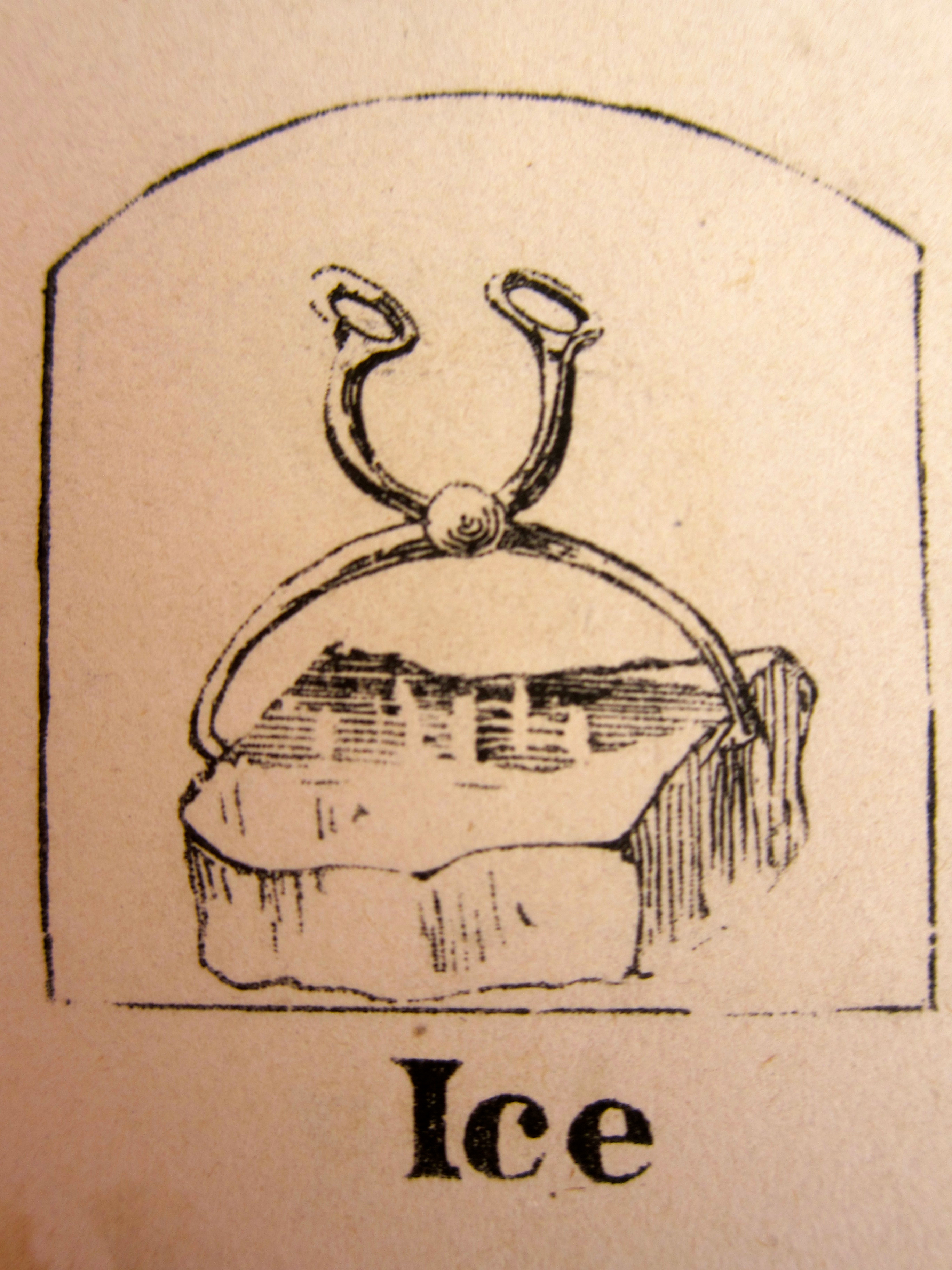
Old Oliver, too, appreciated today’s weather: “this is a fair pleasant day wind south west + thaws some   it is the first fair Sunday we had for a long time…” He also noted with satisfaction that “we began to fill our new ice hous yesterday,”* much of it with the ice that his grandsons Oliver (3) and Fred Ames had harvested on Friday.

The ice house was built right next to the pond** from which the ice was harvested. It was probably lined with sawdust for insulation; when the ice was removed, block by block, the sawdust absorbed some of the moisture and kept the building cool.  Even if the temperature outside rose, the temperature inside stayed relatively low. The ice was crucial to the storage and preservation of food in those days before refrigeration.

Today’s fair weather enticed everyone to church except Sarah Ames Witherell, who preferred to remain somewhat hidden while she recovered from recent dentistry.  The group drove the sleigh (or sleighs) to the meeting house, which was a couple of miles south of their family compound. Evelina sat in the family pew and enjoyed herself; she always liked hearing what Reverend Whitwell had to say.  She and her family brought her mother, Hannah Lothrop Gilmore, home for a visit.

*Oliver Ames, Journal, Stonehill College Archives, Arnold Tofias Collection

** Thanks to information from James Carlino, Dwight MacKerron and John Ames, we believe the ice pond in question may be Monte Pond, on the north side of Elm Street, just east of Rte. 138 in the northeastern corner of Easton. John also remembers an ice house next to French Pond on Union Street, also just east of Rte. 138, north of and parallel to Elm Street.  He bought some old ice tools there in the 1970s that he used in making sculpture.

January 15, 1852

330px-Charles_Wentworth_Upham

Charles Wentworth Upham

(1802 -1875)

1852

Jan 15 Thursday  Spent some time this forenoon in reading

the papers and fixing Susans work & pasted some pictures on

a mahogany box.  Called on Mr Whitwell, Reed & 

Howard with Mrs S Ames.  Evening to a lecture on

education by Mr Upham of Salem at the meetinghouse

hall. a very good lecture and a goodly number

present for a snowy evening.  Had two tripes from father.

The guest lecturer at the meetinghouse was, presumably, Charles Wentworth Upham. A minister and politician from Salem, on the north shore of Boston, Upham had traveled no small distance to deliver a “lecture on education.”  Well spoken and well read, he had written, some years before, a history of the witch trials in Salem. Lately, however, Upham had been speaking on the progress of normal schools, which were schools that taught teachers. Education was on his mind.

Also on Upham’s mind was politics. He was a Whig, which may have been his connection to the Ames family and Unitarian congregation in Easton. Previously Upham had been a member of the Massachusetts State Senate, and within the year would become Mayor of Salem. From 1853 to 1855, he would be a representative to the U.S. Congress, but would fail to be reelected.

Upham was married to Ann Holmes, a sister of Oliver Wendell Holmes, Sr. He had been at Harvard with Ralph Waldo Emerson with whom he corresponded later in life.  Their friendship faltered, however, over Transcendentalism, which Upham disliked. Upham also famously acted against Nathaniel Hawthorne, leading the local fray in getting Hawthorne, a Democrat, fired from his politically-appointed job at the Salem Custom House.

Some disliked Upham; Charles Sumner called him “that smooth, smiling oily man of God.”* What did the Ameses think?


*Carlos Baker, Emerson Among the Eccentrics, New York, 1996.

January 10, 1852

Oakes_Ames_-_Brady-Handy

 Portrait of Oakes Ames by Matthew Brady 

1852

Jan 10th Saturday  Mr Whitwell & Ames have not met again

to day  Mr W called just as Augusta Helen Susan

& self were in the sleigh to take a ride  We have

called at mothers  Mr Horace & John Pool, Edwin

& wife here to tea  Swept the parlor this morning

and put the house in order partially frosted a loaf of cake

for Augusta having made one of hers carried the frosting

over and made her a call while heating it

The boys presented their Father a gold pen & pencil

Oakes Ames turned 48 years old today, as did the local Unitarian minister, William Whitwell.  Last year and again this year, Evelina was unsuccessful in getting the two men together to celebrate. Oakes Angier and Frank Morton gave their father a gold pen and pencil to mark the occasion, a fine gesture.

As Oakes closed in on the half-century mark, he presumably began to look beyond the confines of the work he and his brother Oliver Jr. did for the shovel company. The next generation, in fact, was being groomed to run O. Ames & Sons; Oakes Angier, as eldest son of the eldest son, was on deck to superintend the company whenever Oakes and Oliver Jr. decided to step down. He was learning every aspect of the manufacturing process. Oliver (3) and Fred Ames were at college, Oliver presumably honing the skills he would need to take over his father’s role in managing sales, while Fred was on a path to being the financial clerk or CFO we might say today. Frank Morton Ames was learning a variety of skills, too, although he was seen more as a spare man waiting to step in should his cousin or either older brother fail somehow.

What could Oakes do with his tremendous talent and energy? Clearly, the roiling politics of the day interested him. By 1860, his gregarious nature, quick comprehension and thirsty ambition led him to accept the nomination and election to Massachusetts Governor Andrew’s Council as representative from Bristol County. Two years later, by “a large popular vote,”* Oakes Ames was then elected to the Thirty-Eighth U. S. Congress, where he would serve for four terms.

In 1872, according to circumspect historian, Reverend William L. Chaffin, Oakes “declined a renomination.”* He died in May, 1873, shortly after the conclusion of Credit Mobilier, a national political scandal for which many held Oakes culpable. At the time, his natural candor and fearlessness worked against him and he was unable to dodge the political manuevering that placed most of the blame on him. That same brave honesty, coupled today with calmer, historical perspective, has since served to cast Oakes Ames in a better light.

William L. Chaffin, History of Easton, Massachusetts, 1886, p. 654


January 8, 1852

OLYMPUS DIGITAL CAMERA

*

1852

Jan 8th Thursday

Frosted the cake over the second time

this morning and it was quite dry at three when

Edwin took it away  they are married this evening

Have invited their parents uncles aunts and cousins

here tomorrow. Have presented them with an hour

glass table  Mr & Mrs Reed have passed the afternoon

in the other part of the house  Two shovel handlers from

Maine to spend the night here

Had a quarter of Beef of fathers  The

Ox weighed over 14 hundred

Edwin Williams Gilmore and Augusta Pool were married today in what would have been a small ceremony, probably at the home of Augusta’s parents, Lavarna and John Pool, Jr. Presided over by a minister – Reverend William Whitwell, most likely – the event would have been attended only by close family members. The couple took no honeymoon or “bridal tour,” but moved right into the new house that Edwin had built in the village, barely a stone’s throw away from the Ames compound.

The new house had been furnished not only by Edwin, but also by Augusta herself, who probably brought along household goods as part of what was called her “marriage portion.” Items such as dishes, cutlery, and linens would have been at least some of what Augusta and her new sister-in-law, Lavinia, had labored to put into place over the last two days.

Evelina spent her time preparing for the party she was giving the next day for members of the Gilmore and Pool families.  Her domestic routine wasn’t too overwhelmed, however; she was still able to cope with more pedestrian matters, such as accommodating two shovel handlers from Maine for an overnight visit, even as she set up for thirty guests.


Currier & Ives, The Marriage, 1847


December 31, 1851

Dismiss


Wednesday Dec 31st  This morning sit down early to knitting

my hood  Have it all finished ready for the lining.  About ten 

Oclock went into the school with Mrs. Witherell.  Mr Brown

has closed his school to day.  Passed the afternoon & evening at Olivers

Mr & Mrs Wm Reed  Mr & Mrs J Howard, Whitwell & A Gilmore were there.

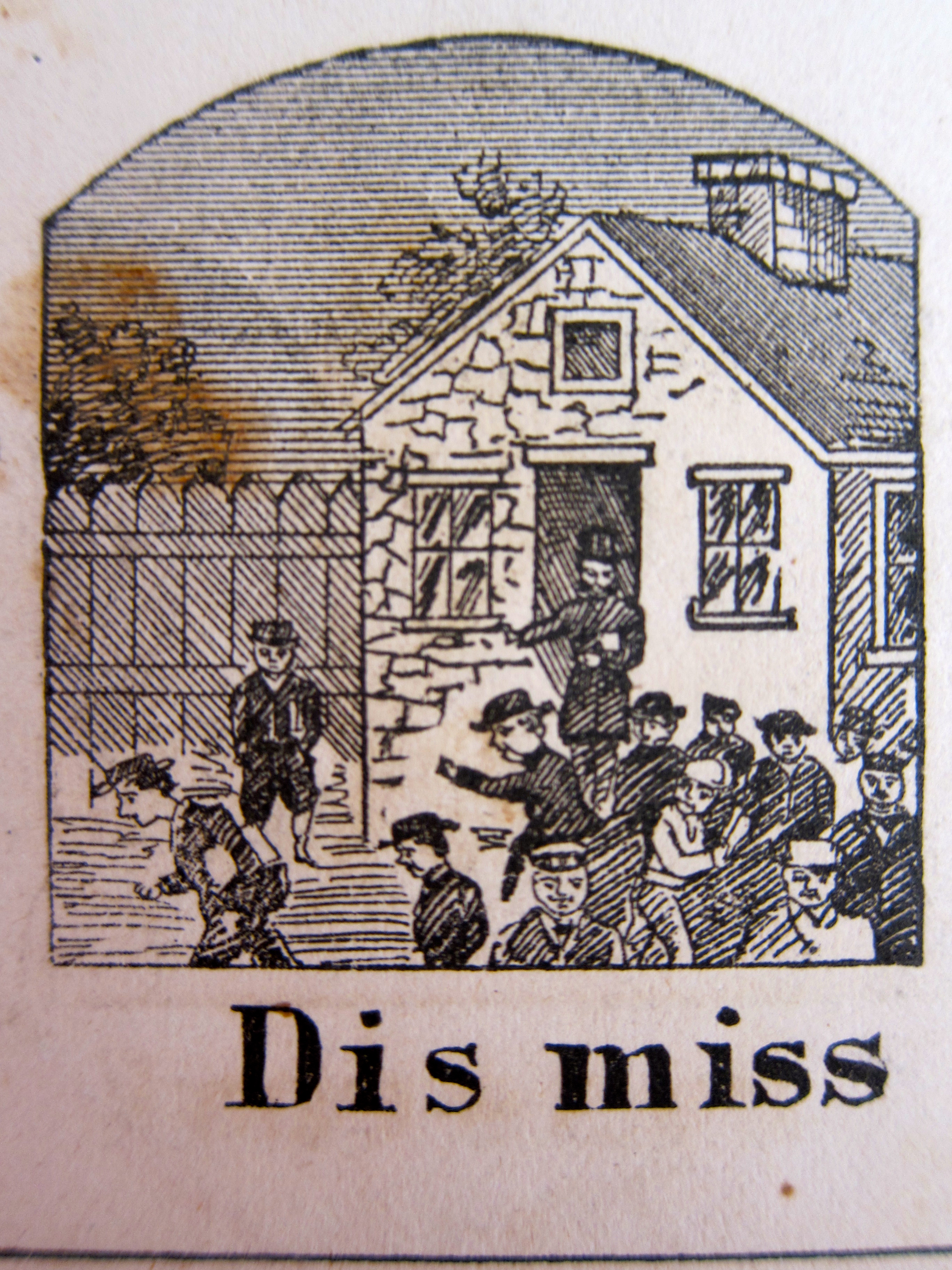
Susie Ames and Emily Witherell may have been happy today to reach the end of their school term. Class, dismissed!  1851, dismissed!

Just how the Ames family celebrated the departure of the old year and arrival of the new, we don’t know. Old Oliver, with his usual terse assessment of the day, merely noted that “this was a cloudy day and some cooler + misty + foggy.” The cool mist he saw would develop into a huge rain storm over night, preventing folks from moving around much.

A group of friends and relatives gathered for tea next door at the home of Oliver Ames, Jr. and his wife Sarah Lothrop Ames. Besides Evelina and Oakes, at the party were Reverend William Whitwell and his wife Eliza, Reverend William Reed and his wife Abigail, Jason Guild Howard and his wife Martha, and Evelina’s brother Alson Gilmore and his wife Henrietta.  In just a few more years, a group like this might have sung the beloved  Auld Lang Syne to mark the occasion. In fact, a version of Auld Lang Syne, written in 1855 and called Song of the Old Folks would become “the tradition of the Stoughton Musical Society to sing […] in memory of those who had died that year.”*

Out with old, in with the new. What a year it would be for the Ames clan.

http://www.americanmusicpreservation.com/SongoftheOldFolks.htm

December 22, 1851

100793

*

Monday Dec 22d  Washed the dishes with Susan, made

the beds &c and then went to work on the hour glass

table got it made about the middle of the afternoon

Mr Ames went to Canton this afternoon  Mrs Mc

Hanna to Mr Savages  Spent the evening at 

Augustus  Went with Oakes Angier in the sleigh

as he was going to Mr Whitwells  They went this

afternoon to the funeral of Lewis Keith

Domestic chores and neighborhood errands reigned on this winter solstice, the darkest day of the year. Jane McHanna did laundry, little Susie helped wash dishes, and Evelina made the beds. Evelina had a special project, too, that she worked on: an hourglass table she was making to give to her nephew, Edwin Gilmore, and his bride-to-be, Augusta Pool.  She made major progress on it, but what was it?  Does any reader know about the design and/or purpose of an hourglass table?

In the afternoon, after the midday dinner, family members rode out in various directions. Under a cold, cloudy sky, Oakes Ames went north to Canton, to the family works there or perhaps to the Kinsley’s. Oakes Angier drove a sleigh south to the minister’s house in order to attend the funeral of a local farmer, Lewis Keith.  Evelina rode along with her son but stopped to visit her nephew, Augustus Gilmore.  Jane McHanna, meanwhile, went out on foot to see William and Hannah Savage, who lived in the village.  Mrs. Savage was poorly.

Did anyone tell a ghost story tonight after dark fell? Such tales were customary for some families at winter solstice.  On her way home from her nephew’s, was Evelina able to see Orion in the night sky through the clouds?

*Image courtesy of http://www.dreamviews.com


December 2, 1851

 FillmorePresident Millard Fillmore

Dec 2d  Tuesday.  It has been cold to day but not near as

cold at yesterday or as windy  Mary has put

her clothes out.  Jane has ironed some shirts

for Mr Ames & I have ironed some collars

cuff & handkerchiefs &c for self  Mother & self

have passed the afternoon at Mr Whitwells

Mr & Mrs John R Howard were there.  Had

a pleasant visit

While the servant Mary – whose last name we never learn – put out most of yesterday’s wet laundry to dry, Jane McHanna rose from bed to iron some of Oakes Ames’s shirts.She had spent part of yesterday placing them in a tub of starch. Evelina took to ironing as well, looking after her own collars, cuffs and handkerchiefs. Ironing, which required a small fleet of flatirons being kept warm on a hot stove, was a welcome chore on a cold day. We don’t often read of Evelina doing the ironing herself.

In Washington, D. C., President Millard Fillmore’s State of the Union address was delivered in writing to Congress.  His speech was quite literal, full of specific details about foreign policy, exports, mining, gold in California, the acquisition of Texas and the surveying and improvements necessary for the territories and frontier.  He lauded the importance of agriculture, noting that “four fifths of our active population are employed in the cultivation of the soil,” and argued for a Bureau of Agriculture.

Fillmore also could not help but write of the growing differences between North and South and the 1850 legislation that was designed to address various aspects of the problem of slavery. He began his address optimistically, writing “the agitation which for a time threatened to disturb the fraternal relations which make us one people is fast subsiding…” but later admitted “that it is not to be disguised that a spirit exists, and has been actively at work, to rend asunder this Union which is our cherished inheritance from our Revolutionary fathers.”

In closing, Fillmore urged patience and reconciliation.  He counseled his countrymen to honor the Compromise of 1850.  “Wide differences and jarring opinions can only be reconciled by yielding something on both sides,” he cautioned.

November 20, 1851

OLYMPUS DIGITAL CAMERA

Thursday Nov 20  I had to get breakfast again this 

morning and do most of the housework  Jane

assisted some and ironed three fine shirts &

washed the dishes after dinner  Mrs Whitwell

came with Mr Brown when he came to school

and staid untill about three and Mr Whitwell

came for her,  after she left I prepared the

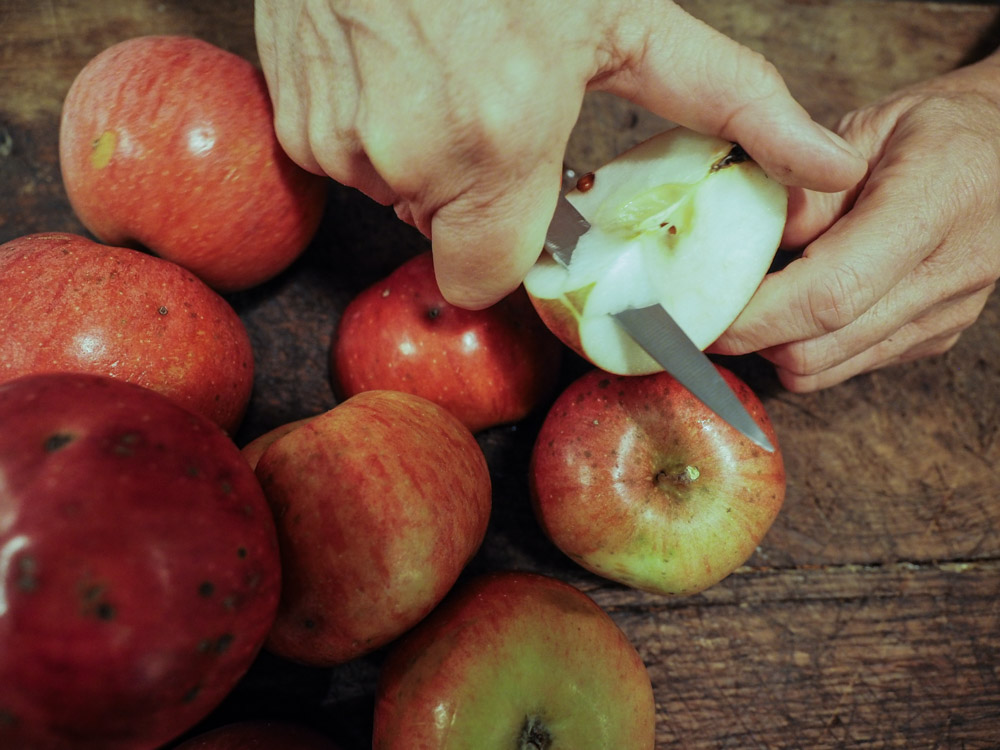
mince for pies  Jane chopped the apple

With Jane McHanna continuing to feel poorly, Evelina again cooked breakfast. As her grandson, Winthrop Ames later pointed out, “family breakfasts were promptly at six – and no sketchy affairs of orange juice and a bit of toast either, but substantial meals of mill-ground cereals, eggs and often meat.”* Evelina was cooking for five people, not counting Jane or any other help. She also would have had to prepare the main meal at midday, and tea later on. Today’s tea may have been a simple affair.

Jane felt a bit better as the day wore on and managed to iron shirts, wash dishes and chop apples for baking.  When Evelina wasn’t sitting with her afternoon visitors, Eliza Whitwell and Erastus Brown, she worked in the kitchen on her mincemeat. Thanksgiving Day was only one week away, and the preparing of food for the feast had begun. Pie time!


**Winthrop Ames, The Ames Family of Easton, Massachusetts, privately printed, 1937, p. 128

November 19, 1851

Barberries

Wednesday Nov 19th  Jane is not as well  I got the breakfast

this morning and have been scalding my barbaries

and put more apples to them and have been

about house all day  Painted some mustard

boxes &c  Mrs Wales & Williams called

Mr Whitwell called but I was busy up stairs

and he found no one below and he went

away without seeing any one

Evelina made breakfast as Jane McHanna, usually in the kitchen preparing coffee and the morning meal,  was ailing. Evelina stayed in the cook room for much of the day, “scalding my barbaries” to be put away.  Barberry was a common, woody, hedge shrub with a couple of domestic applications. Cultivated in the 17th, 18th and early 19th centuries, the fruit made “an agreeable, refreshing jelly,”** and the stems could also be used to make a yellow dye.  Evelina wouldn’t have needed the dye; she bought all her textiles.  But she used the fruit for jelly and pies.

Once Evelina got out of the kitchen, she picked up a paint brush to freshen up some mustard boxes. These were small to medium-sized wooden boxes for her pantry. Spices and other kitchen ingredients would have been stored in them. Evelina seemed to be getting her kitchen in perfect order for the Thanksgiving rush.

*Image of barberries courtesy of http://www.womenfitness.net/barberries.htm

** Mrs M. Grieve, A Modern Herbal, courtesy of http://www.botannical.com

November 12, 1851

IcePond-732701

*

Wedns Nov 12th  Painted the closets in the sitting

room chamber which with other things has taken

me most of the day.  Susan has passed the 

afternoon at Mr Swains  Mr Whitwell called

this afternoon. I felt very sorry to stop my work as

I was very much engaged at the time  Have not

sewed at all to day  This evening have felt too much

fatigued


According to Old Oliver, “this was a fair cold day wind north west. the factory pond was frozen over this morning”  It was a good day to stay indoors, which Evelina did.  She still hadn’t completed all the refurbishments on the house, so she spent the day painting the shelves in the closet in the sitting room; the shelves in the parlor were already finished.  By evening, she was “too fatigued” even to sew.

Daughter Susie spent the day at the home of Ann and John Swain, perhaps playing with Ann’s niece, Ellen Meader.  Reverend William Whitwell braved the north west wind and paid a call on Evelina.  Much as she liked him and admired his Sunday sermons, she was less than pleased to set aside her painting for his visit.

And “the factory pond” – probably Shovel Shop Pond – had skim ice, at least, all the way across it.  What did that do to shovel production?  How did the dams, flumes, and wheels work when the water began to ice up?


*Photo courtesy of Kenneth Aisawa, http://www.theboundsofcognition.blogspot.com