January 19, 1852

d44daf6476649bfb638e3038c8f2221c

Fashion illustration from Godey’s Lady’s Book, 1850


1852

Jan 19th Monday  Susan washed the dishes and after doing

my usual mornings work commenced sewing some pieces

of fur that was taken off my cloak for Susan a muff

to carry to school.  Finished it before dark and in

the evening made over her best muff and it looks

as well if not better than when new. feel very well

satisfied with my days work  Very cold.


The snow continued today. According to Old Oliver Ames, “it snowd all last night + more than half the day to day and it was a verry cold storm – it did not snow fast any part of the time and all that has come now will not measure more than 6 inches on a level. it drifted considerable and is dry + light.”*

Susan Ames probably would appreciate the muff that her mother was making for her to keep her hands warm.  She already had one for “best” to wear to church, but this one would be for everyday. Made from recycled pieces of fur off her mother’s cloak, Susie would be making quite a fashion statement for a nine-year-old school child, most of whose classmates would likely have worn mittens.  Even Meg and Jo March had to walk to their jobs without muffs, holding instead warm popovers fresh from the oven to keep their fingers from numbing up.

At day’s end, Evelina was “very well satisfied” with the muffs she had reworked.  The household today appears to have been running well which would have amplified Evelina’s happy mood. Jane McHanna must have worked some magic to get the laundry done despite the snow storm.

*Oliver Ames, Journal, Stonehill College Archives, Arnold Tofias Collection

January 18, 1852

$T2eC16JHJHQE9nzEyP!zBRVGZ!!IT!~~60_35

/52

Jan 18 Sunday  Has snowed quite hard all day.  The

gentlemen all went to meeting & Mrs S Ames & Emily,

Mrs Witherell staid at home because she looks so bad

& Susan & self on account of a cold & cough  Have

read The Vale of Cedars by Grace Aguilar & have

written a letter to Pauline Dean.  Made a long

call in the other part of the house this evening.  Mrs

S Ames there with me

Feeling under par, Evelina and her daughter stayed home from church today while the men of the house pushed through the “fine cold dry snow”** to get to meeting. Sarah Witherell stayed home, too, still recovering from having had her teeth pulled.  It was a luxurious opportunity for Evelina – and Susie and Sarah, perhaps – to sit and read in relative quiet.

Evelina’s choice (which she probably read in serialized form in a periodical, as the tale wasn’t published in book form until 1853) was The Vale of Cedars or The Martyr’s Tale by Grace Aguilar. It was a tale of a Jewish father and daughter trying to hide from the Spanish Inquisition in 1479. The “Vale of Cedars” was their hideout. Eventually discovered and imprisoned, the daughter resisted the church’s demand that she convert to Catholicism.  Thus, the “Martyr’s Tale.”  The dramatic plot with its medieval overtones, exotic location, and anti-catholicism probably captivated Evelina, just as the author meant it to. Aguilar included these words from Byron’s [Oh! Weep for Me] in her introduction to the book:

“The wild dove hath her nest – the fox her cave –

Mankind their country – Israel but the grave.”

George Gordon, Lord Byron

**Oliver Ames, Journal, Stonehill College Archive, Arnold Tofias Collection

January 12, 1852


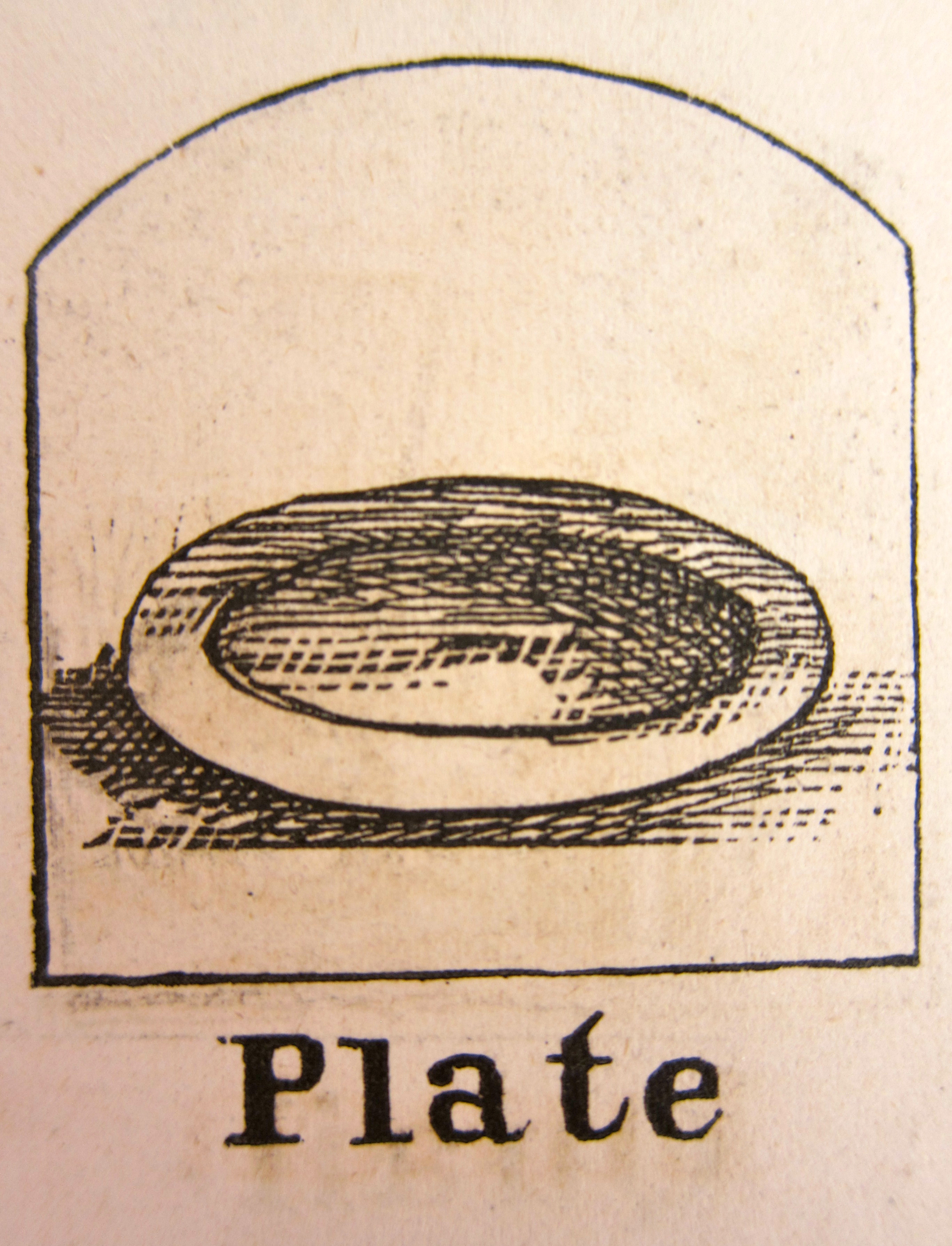
 Plate

Jan 12 Monday  Susan washed the dishes this morning

and I went to work on my plants making some frames

for them and was to work on them and about the

house all the forenoon.  This afternoon have been

mending pants for Oakes Angier.  Have put a new

pocket into one pair  Jane washed and has been to see

Mrs Savage  Carried Augusta’s cake over to her and

Called a few minutes on Mrs Sarah Ames  Very cold


After breakfast each morning, a stack of dishes awaited washing in the Ames kitchen, numbering approximately seven plates, seven cups, seven saucers, 14-21 pieces of cutlery, various serving platters and bowls and serving spoons, plus the pots and pans used in preparation.

Hot water would be boiled and poured into a bucket or perhaps a basin set inside a dry sink. Using a cake of homemade soap, either chipped into the water or swirled by hand, Susie Ames or Jane McHanna or Evelina herself from time to time, washed each item with a washrag, rinsed the piece in a separate pan of clean water and placed it on a rack to dry or be wiped dry with a dish towel. The chore could take 30 to 45 minutes, and had to be repeated at dinner and tea.  It wasn’t as convenient as hand-washing dishes today – no liquid soap, no faucet spray – and it certainly wasn’t like loading the dishwasher.

Inventors, in fact, were trying to develop a machine that would wash dishes; the first such patent was filed in 1850. It wasn’t until 1886, however, that a wealthy woman named Josephine Garis Cochrane would make the first successful dishwashing machine. She didn’t wash dishes herself, but her servants did and often chipped the ceramic plates in the process.  Impatient with the damage, as well as the length of time it took to wash all the dishes after the many dinner parties she gave, she decided to make a machine to do the work.

Mrs. Cochrane  contrived a wire rack shaped for various specific dishes to fit inside a wheel inside a copper boiler. “A motor turned the wheel while hot soapy water squirted up from the bottom of the boiler and rained down on the dishes.”* The dishwasher was born. It went on to be displayed at the 1893 Columbian Exposition in Chicago, where it won a prize.  The Garis-Cochrane Company was formed and manufactured dishwashers until bought by KitchenAid, which in turn is owned by Whirlpool.

All this was a far cry from nine-year old Susie Ames washing up the breakfast dishes, plate by plate.


* Wikipedia, “Josephine Cochrane”, January 10, 2015

January 10, 1852

Oakes_Ames_-_Brady-Handy

 Portrait of Oakes Ames by Matthew Brady 

1852

Jan 10th Saturday  Mr Whitwell & Ames have not met again

to day  Mr W called just as Augusta Helen Susan

& self were in the sleigh to take a ride  We have

called at mothers  Mr Horace & John Pool, Edwin

& wife here to tea  Swept the parlor this morning

and put the house in order partially frosted a loaf of cake

for Augusta having made one of hers carried the frosting

over and made her a call while heating it

The boys presented their Father a gold pen & pencil

Oakes Ames turned 48 years old today, as did the local Unitarian minister, William Whitwell.  Last year and again this year, Evelina was unsuccessful in getting the two men together to celebrate. Oakes Angier and Frank Morton gave their father a gold pen and pencil to mark the occasion, a fine gesture.

As Oakes closed in on the half-century mark, he presumably began to look beyond the confines of the work he and his brother Oliver Jr. did for the shovel company. The next generation, in fact, was being groomed to run O. Ames & Sons; Oakes Angier, as eldest son of the eldest son, was on deck to superintend the company whenever Oakes and Oliver Jr. decided to step down. He was learning every aspect of the manufacturing process. Oliver (3) and Fred Ames were at college, Oliver presumably honing the skills he would need to take over his father’s role in managing sales, while Fred was on a path to being the financial clerk or CFO we might say today. Frank Morton Ames was learning a variety of skills, too, although he was seen more as a spare man waiting to step in should his cousin or either older brother fail somehow.

What could Oakes do with his tremendous talent and energy? Clearly, the roiling politics of the day interested him. By 1860, his gregarious nature, quick comprehension and thirsty ambition led him to accept the nomination and election to Massachusetts Governor Andrew’s Council as representative from Bristol County. Two years later, by “a large popular vote,”* Oakes Ames was then elected to the Thirty-Eighth U. S. Congress, where he would serve for four terms.

In 1872, according to circumspect historian, Reverend William L. Chaffin, Oakes “declined a renomination.”* He died in May, 1873, shortly after the conclusion of Credit Mobilier, a national political scandal for which many held Oakes culpable. At the time, his natural candor and fearlessness worked against him and he was unable to dodge the political manuevering that placed most of the blame on him. That same brave honesty, coupled today with calmer, historical perspective, has since served to cast Oakes Ames in a better light.

William L. Chaffin, History of Easton, Massachusetts, 1886, p. 654


January 7, 1852

weddinga_cake1

*

/52

Wednesday Jan 7th

Heat the brick oven baked a loaf

of brown bread two loaves of fruit cake for

Augusta & mince pies  A & L were at Edwins

this forenoon. This afternoon have sewed for me on 

Susans dress.  I have been making frosting for

the cake  Helen has been in and the girls have had

a nice time over it  Frank carried them home


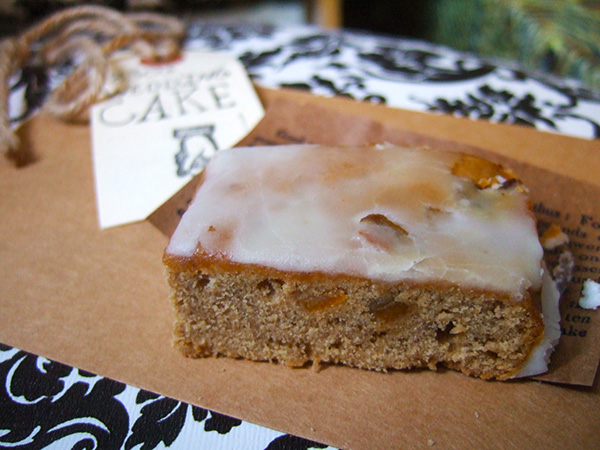
Augusta Pool and Lavinia Gilmore were once again helping Lavinia’s Aunt Evelina. Helen Angier Ames, too, came over from next door, and the young maidens had “a nice time over it.” They did a little sewing for Evelina – that must have pleased her – and helped prepare frosting for Augusta’s wedding cake, which Evelina had kindly undertaken to make, along with all the regular baking she was doing for her family. Augusta was to be married the next day to Evelina’s nephew, Edwin Williams Gilmore.

If the women were following the instructions of Sarah Josepha Hale, they would have made “Iceing for Cakes,” according to the following instructions:

Beat the whites of four eggs to a stiff foam, and add gradually three quarters of a pound of the best double-refined loaf sugar, pounded and sifted; mix in the juice of half a lemon, or a tea-spoonful of rose water.  Beat the mixture till very light and white; place the cake before the fire, pour over the iceing, and smooth over the top and sides with the back of a spoon.”**

When it got late, Frank Morton Ames took Augusta and Cousin Lavinia back to their respective families in the countryside. The light of a full moon guided them along in a sleigh over snow that was “now about a futt deep.”***

* Image of 19th century wedding cake courtesy of http://www.fourpoundsflour.com

**Sarah Josepha Hale, The Good Housekeeper, 1841, p. 101

***Journal of Oliver Ames, Courtesy of Stonehill College Archives


January 5, 1852

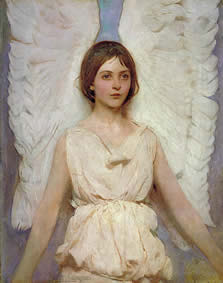
Abbott H. Thayer, Angel, 1887, oil Smithsonian American Art Museum Gift of John Gellatly

Abbott H. Thayer, Angel, 1887, oil
Smithsonian American Art Museum
Gift of John Gellatly


/52

Monday Jan 5 th

Another stormy Monday and we have not been 

able to put our clothes out  Susan washed the

dishes this morning and Jane has done the rest

of the work.  I have finished Susans hood and 

it looks very nice  Mrs Witherell came from

Boston to night  Mr Witherell died about six

yesterday morning


Old Oliver was keeping track of the stormy weather, noting that “it raind + snowd all last night. the snow fell about 2 inches deep + is a snowing now wind north east but it does not blow so hard as it did yesterday. it snowd untill about 3 O clock but was cloudy all day.” One imagines that he had his face close to the window panes of his sitting room – or accounting office, perhaps – as the snow fell outside.

Sarah Witherell returned from Boston in that same snow and wind, having managed to reach her father-in-law’s bedside before he passed away. She would gather her children and return to the city for the funeral.

Evelina, meanwhile, sewed and supervised household chores. “Another stormy Monday” meant that wet laundry was dried in the kitchen and around the house, near heat registers and the air tight stove that helped keep Evelina’s plants from freezing. Parts of the house were draped with white sheets and garments, the floors or carpets wet beneath them. Susie Ames helped some by doing the dishes, a chore that was becoming her regular responsibility. Jane McHanna, of course, bore the lion’s share of the work, with the laundry and “the rest.”


January 3, 1852

OLYMPUS DIGITAL CAMERA

*

1852

Jan 3d Saturday 

Finished my old hood and ripped Susans

old one & washed the lining and have partly quilted

it once again  Have spent all the afternoon in 

mending Franks shop coat.  Sewed this evening

untill nearly ten have not read at all

Mrs Witherell received news last night that her

father Witherell is not expected to live and she has gone

to see him.

Three-and-a-half years earlier, Sarah Ames Witherell had lost her husband, Nathaniel Witherell, Jr.  Now, she had the sad duty of traveling to Boston to say goodbye to her husband’s father, Nathaniel Witherell, Sr. Someone must have written a letter to tell her he was ill and, ever dutiful, Sarah Witherell responded quickly to the news.  Off she went.

Better news was that today was the birthday of one of Evelina’s many nieces, Mary “Melvina” (or “Malvina” as Evelina spelled it) Torrey. The youngest daughter of Evelina’s late older sister, Hannah Howard Gilmore Torrey, Melvina turned 11. Her father was Col. John Torrey, a high-profile personage in North Easton, of whom Evelina often writes. Melvina and her sister, Abby Torrey, were great favorites of Evelina; Melvina is the niece to whom Evelina gave a bloomer hat the previous summer.

In another ten years, Melvina would marry an older man, Sanford Blake Strout, who also lived in the village of North Easton, on Center Street. She would bear two sons, Byron Howard Strout and Havilen Torrey Strout.


Illustration from Godey’s Lady’s Magazine, 1851


January 2, 1852

Tea


1852

Jan 2d Friday  Seated myself quite early this morning to work

on Susans hood & finished item about ten Oclock

then ripped my old blue hood and washed the

lining & turned the outside have got it nearly done

We all went into the other part of the house to tea

Mr & Mrs Oliver & Helen there  Frank has a sore

ankle as [sic] does not go to the shop  Dr Swan called there

to see Helen & left Jane some medicine

The family gathered for tea today in “the other part of the house,” meaning that Evelina, Oakes, and their children, Oakes Angier, Frank and Susan went into the southern half of the shared house where Old Oliver and his widowed daughter, Sarah Witherell, lived with her two children, George and Emily. Joining them was the family next door: Oliver Ames, Jr, his wife Sarah and their daughter, Helen Angier Ames, who made an appearance despite being home from school with a cold. Other than missing Oliver (3) and Frederick Lothrop, the sons who were off at college, the group was a normal configuration for a gathering at the homestead.

Evelina’s grandson, Winthrop Ames, would one day describe such a family gathering from less than a decade later, by which time daughters-in-law and grandchildren had arrived:

“Supper, always called Tea, at seven, was the sociable occasion. It usually consisted of cold meats, hot biscuits, preserves and cakes – an easy menu to expand for unexpected guests.  Every week at least, and usually oftener, one household would invite the others and their visitors to tea; and the whole Ames family might assemble, even infant children being brought along and tucked into bed upstairs.  Fifteen or twenty was not at all an unusual gathering.”*

The family was as tightly-knit as any of Evelina’s knitted worsted hoods.

One other note about today’s entry: Dr. Swan left some medicine off for Jane McHanna, the servant, who had been ailing for much of the fall and winter. What did she suffer from?

* Winthrop Ames, The Ames Family of Easton, Massachusetts, privately printed, 1937, p.128


December 31, 1851

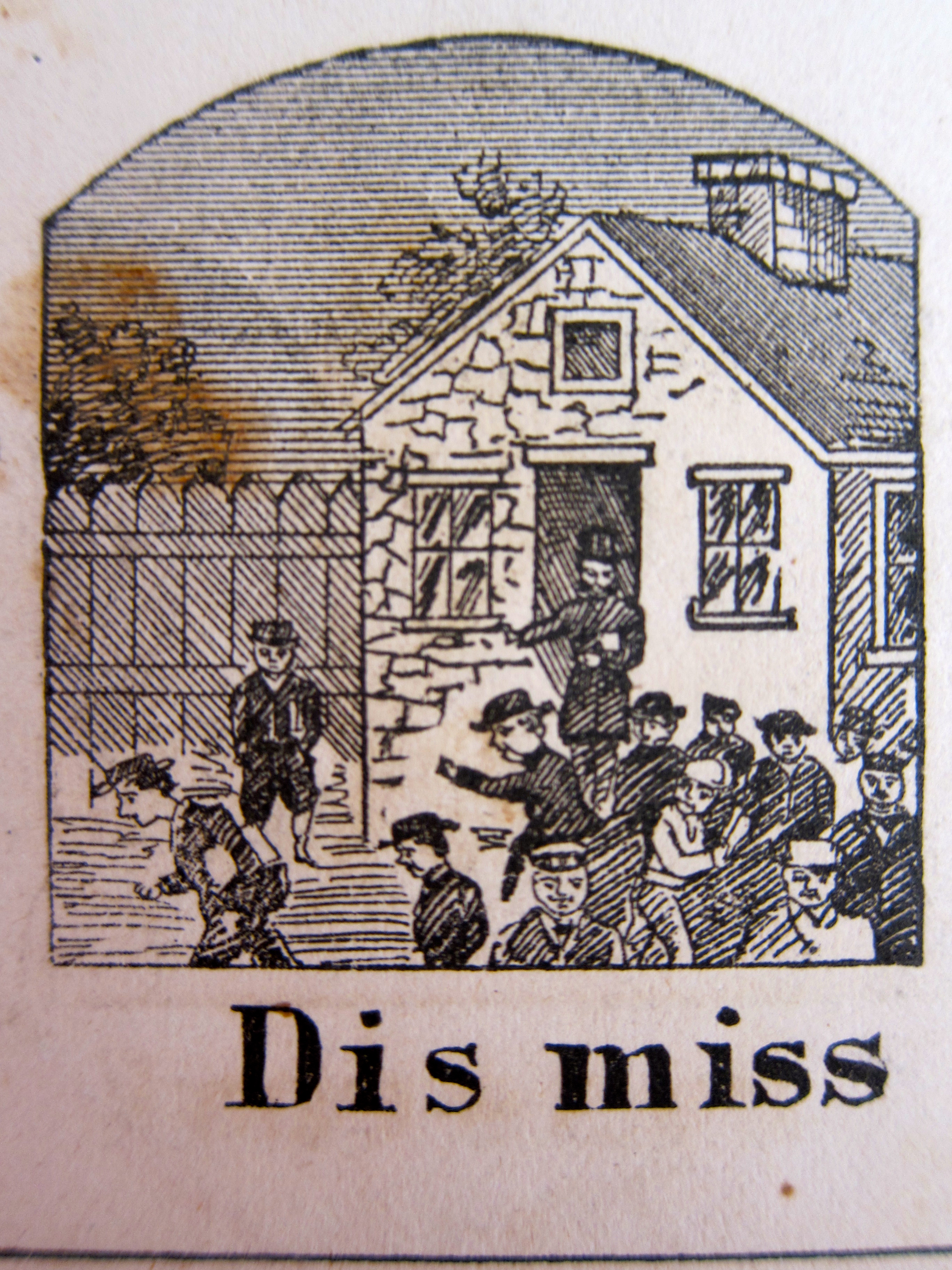
Dismiss


Wednesday Dec 31st  This morning sit down early to knitting

my hood  Have it all finished ready for the lining.  About ten 

Oclock went into the school with Mrs. Witherell.  Mr Brown

has closed his school to day.  Passed the afternoon & evening at Olivers

Mr & Mrs Wm Reed  Mr & Mrs J Howard, Whitwell & A Gilmore were there.

Susie Ames and Emily Witherell may have been happy today to reach the end of their school term. Class, dismissed!  1851, dismissed!

Just how the Ames family celebrated the departure of the old year and arrival of the new, we don’t know. Old Oliver, with his usual terse assessment of the day, merely noted that “this was a cloudy day and some cooler + misty + foggy.” The cool mist he saw would develop into a huge rain storm over night, preventing folks from moving around much.

A group of friends and relatives gathered for tea next door at the home of Oliver Ames, Jr. and his wife Sarah Lothrop Ames. Besides Evelina and Oakes, at the party were Reverend William Whitwell and his wife Eliza, Reverend William Reed and his wife Abigail, Jason Guild Howard and his wife Martha, and Evelina’s brother Alson Gilmore and his wife Henrietta.  In just a few more years, a group like this might have sung the beloved  Auld Lang Syne to mark the occasion. In fact, a version of Auld Lang Syne, written in 1855 and called Song of the Old Folks would become “the tradition of the Stoughton Musical Society to sing […] in memory of those who had died that year.”*

Out with old, in with the new. What a year it would be for the Ames clan.

http://www.americanmusicpreservation.com/SongoftheOldFolks.htm

December 30, 1851

SwedishRunnersC

*

Tuesday Dec 30th  This forenoon worked about the house

again. Have put the drugget down in the 

parlour and dusted the room thoroughly.

Made Susan the second pair of sleeves to her blue

cotton & wool Delaine  Finished the letter to Lucy Norris

Commenced knitting the border to the bottom of my hood

It is a beautiful warm sunny day like the spring of the year


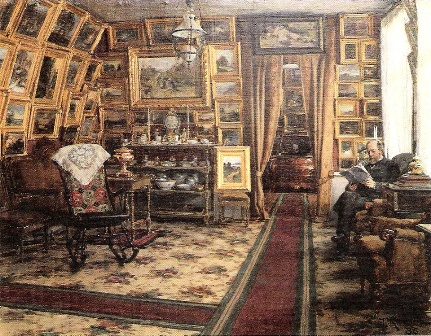
Nor surprisingly, the carpet that Evelina used in the house was inexpensive. Drugget, as it was known, was “a sort of cheap stuff, very thin and narrow, usually made of wool.”**  Drugget is an English term for “a coarse fabric having a cotton warp and a wool filling,” ** the kind of quick carpeting one might have found in a first class railway carriage. It probably had a design or a border printed on it.

Evelina has written here and elsewhere of putting carpeting down, taking it up and outside to clean, and putting it down again. She has written of stitching the carpeting together, which suggests that she may have used drugget runners side by side to make an over-all covering for her parlor floor. She may have been more conventional, though, and placed the drugget as runners on top of an area rug, or on top of a bare floor. Whatever she did, the work was repetitive and dusty.

It’s a shame that Evelina spent so much time indoors today when the weather was “fair warm + pleasant,” as Old Oliver reported. She herself made note of its similarity to spring; she should have known it wasn’t going to last.


** Wikipedia, “Drugget”, as of December 26, 2014


Scandinavian Room with drugget runners “Bibliotekarien Segersteen i sitt hem,” 1886, by Johan Fredrik Krouthen, Courtesy of http://www.burrows.com