October 15, 1852

9378923_3

Friday Oct 15th  We had a very stormy forenoon and

I presume Mrs Mower did not start for home

Miss Alger came this afternoon to give her

fourth lesson and Mother returned home

with her Emily got ahead of Susan fast of 

a lesson but Susan now got up with her


North Easton and its environs had crummy weather for the middle of October. After a night of steady rain, along came “a little snow there was an inch.”* Everyone would have been wet and cold, and forced to reckon with the approach of winter.

Evelina was probably correct that her friend Louisa Mower was unable to depart for Maine, whether by rail or ship. Despite the weather, however, Miss Alger, the piano teacher, slogged up from her home in southeastern Easton to give Susie Ames and Emily Witherell their lesson. On her trip home, Miss Alger took old Mrs. Gilmore back to the family farm.

How did the girls do on the fourth lesson? Evelina wrote an observation, then crossed it out. Why? Despite that strike through the writing, we can still read that Emily was pulling ahead of Susan in her scales and overall skill. Did Evelina write that in a fit of pique, perhaps, and change her mind later? Was she disappointed in her daughter, or annoyed at her niece?


*Oliver Ames, Journal, Stonehill College Archives, Arnold Tofias Collection

October 13, 1852


Blackstrapmolasses

Molasses

Wednesday Oct 13th  Baked this morning in the brick oven

Went with Mother & Lavinia over to Edwins

to get her receipt for making molasses ginger

snaps  left them to see over the house and came

home to have Susan ready to take her third

music lesson  Miss Alger came about nine.

Mother & Lavinia & self rode over to call on Mrs

E Keith. Augustus & wife  Mr Torrey & Abby spent the 

evening  Malvina spent the night with Susan

Ginger snaps came out of the old brick oven this morning and, although Evelina had baked them countless times before, she was trying out a new recipe borrowed from Augusta Pool Gilmore. No doubt the lovely fragrance of baking wafted into the parlor where Susan was taking her piano lesson from Miss Alger.

Although the recipe was different, the use of molasses was not. Molasses was a staple in most American kitchens and had been from colonial days onward. Molasses is the residue from the evaporated sap of sugar cane, available in varying degrees of sweetness and hue. In the days before refined sugar granules gained preference, molasses was the definitive sweetener in most homes.

Molasses was also the substance from which rum was made and, as such, was a primary factor in the historic “Triangular Trade” that went on in England, Africa, and the West Indies. It involved slavery. England sold rum in Africa in return for slaves, whom they took to the West Indies to work on the sugar plantations to produce molasses and unrefined sugar. The sugar stuffs then came to America so the colonies could make rum. On top of that, England established a tax on the colonies for the imported sugar which was one of the many grievances that led to the American Revolution.

Botanic historian Judith Sumner writes:

[T]he early American economy was deeply tied to sugar production; in eighteenth and early nineteenth century New England, the sugar trade promoted shipbuilding and spawned a rum industry with serious social ramifications.  Colonies also traded lumber, grains, meat, livestock and horses to supply the sugar plantations in the West Indies, where the owners concentrated exclusively on sugar production.”*

The connection of sugar cane to slavery did not go unnoticed. By the nineteenth century, “sugar was avoided by those who abhorred slavery because of the complex trading triangle that revolved around slaves, molasses, and rum […] Antislavery pamphlets illustrated cruel sugar plantation practices, where slaves were tethered to weights to prevent their escape and prevented from eating sugar cane by wearing heavy head frames.”* Some abolitionist households boycotted the use of sugar.

As we see, sugar processing and molasses production have an often unhappy history in the United States. And we haven’t even touched on Boston’s Great Molasses Flood of 1919.

*Judith Sumner, American Household Botany, 2004, pp. 206-207

October 11, 1852

factory-steam-engine

Early factory steam engine

Monday Oct 11th  Catharine Middleton & Murphy washed

and I sat down quite early to my sewing

with Mother & Louisa  Mended stockings

This afternoon we spent at Augustus

Mother & Louisa are going to spend the 

night  Mr Torrey & Abby were there

Mr Ames & Oakes A went to West B

I have been sewing on the skirt of Susans

fall Delaine

This was a typical Monday as far as domestic matters were concerned. In the morning, the women washed clothes and mended stockings. In the afternoon, they went calling on relatives in the village. But it was a red-letter day at the shovel shop, as men arrived to install the a steam engine – the first – at the factory.

Old Oliver seemed excited: “this was a fair good day for the season the man came here to sett up the enjoin four of them.” The company’s first steam engine was placed in the new Long Shop by the Corliss Nightingale Company of Providence. It was a technological change that Oliver had resisted in the past, but had since come to accept. His son, Horatio, in particular, had urged the change for several years in order “to counter water supply limitations”* In January, 1847 he had written his father and his brother, Oliver Jr., on the topic.

To Old Oliver:

I shall think a steam engine […] of sufficient power to carry 3 hammers and carry all your polishing works shearing and punching and Bisbees works […] would be cheaper and better […] It is too bad that you do not keep nearer supplying the market with shovels when a comparatively small expense would do it in addition to your other works.”*

To Oliver Jr.:

I enclose you with […the] price and terms for a steam engine. It will do you no hurt to compare cost of this and water power. it will take about one ton of coal a day to drive it and the repairs will be no more than a water power if as much[…] You never need fail for water either too much or too little […] I am altogether in favor of this plan over water power in your situation.”*

Horatio was right, as it turned out. The new engine was the beginning of modernization for O. Ames and Sons.

Gregory Galer, Forging Ahead, MIT, 2002, p. 251.  Text of Horatio Ames correspondence from Stonehill College Archives, Arnold Tofias Collection

October 6, 1852

IMG_0444

Oct 6th  Wednesday  Miss Alger came to day to give Emily

& Susan their first lessons in music  Made

tomato ketchup and doing one thing and another

about house  Have sewed but very little

Mrs Swain called and invited me to visit her

tomorrow  I called on Mrs Milo Williams

to inquire about the girl that has been living with her

Ketchup, or catsup, was on the stove today. The tomatoes from the garden were ripe and ready to be preserved. The resulting ketchup would be bottled and put in the cellar or the buttery for use at the dinner table over the winter. Sarah Josepha Hale approved of the condiment:

This is a very good and healthy flavor for meats, sauces, &c.  Take two quarts of skinned tomatos, two table-spoonfulls of salt, two of black pepper, and two of ground mustard; also one spoonful of allspice, and four pods of red pepper.  Mix and rub these well together, and stew them slowly in a pint of vinegar for three hours.  Then strain the liquor through a sieve, and simmer down to one quart of catsup. Put this in bottles and cork tightly.*

While the aroma of tomatoes filled the house, Susie Ames and Emily Witherell sat down at their pianos today for their first music lesson. Aside from singing that must have happened from time to time, the sound from the new piano keys would have been the first music ever to be heard in the Ames parlor. As far as we know, no one else in the house played an instrument. We in the 21st century take for granted our ability to access and listen to a broad range of music in our homes via stereos or ITunes, on CDs or over the radio. In 1852, in a small parlor in a clapboard house on the main street of a country village, making music must have been almost magical. Only at church or at an occasional band concert would Susie or Emily have otherwise listened to live music, and now they were learning to make it themselves.

* Sarah Josepha Hale, The Good Housekeeper, 1841, p. 71

October 5, 1852

Golden Piano Keys

Oct 5th  Tuesday  Called this forenoon upon Augusta

and then went into Olivers to dine & all my family

After dinner Mrs Norris & self called at Mr Torreys

and I then carried Mrs N to the cars.  Augusta

went with us.  When I returned Mrs Witherell &

Mrs S Ames called with me at Mr Whitwells on

Mrs Wordsworth & on Mrs Morse  Our pianos came

to night.

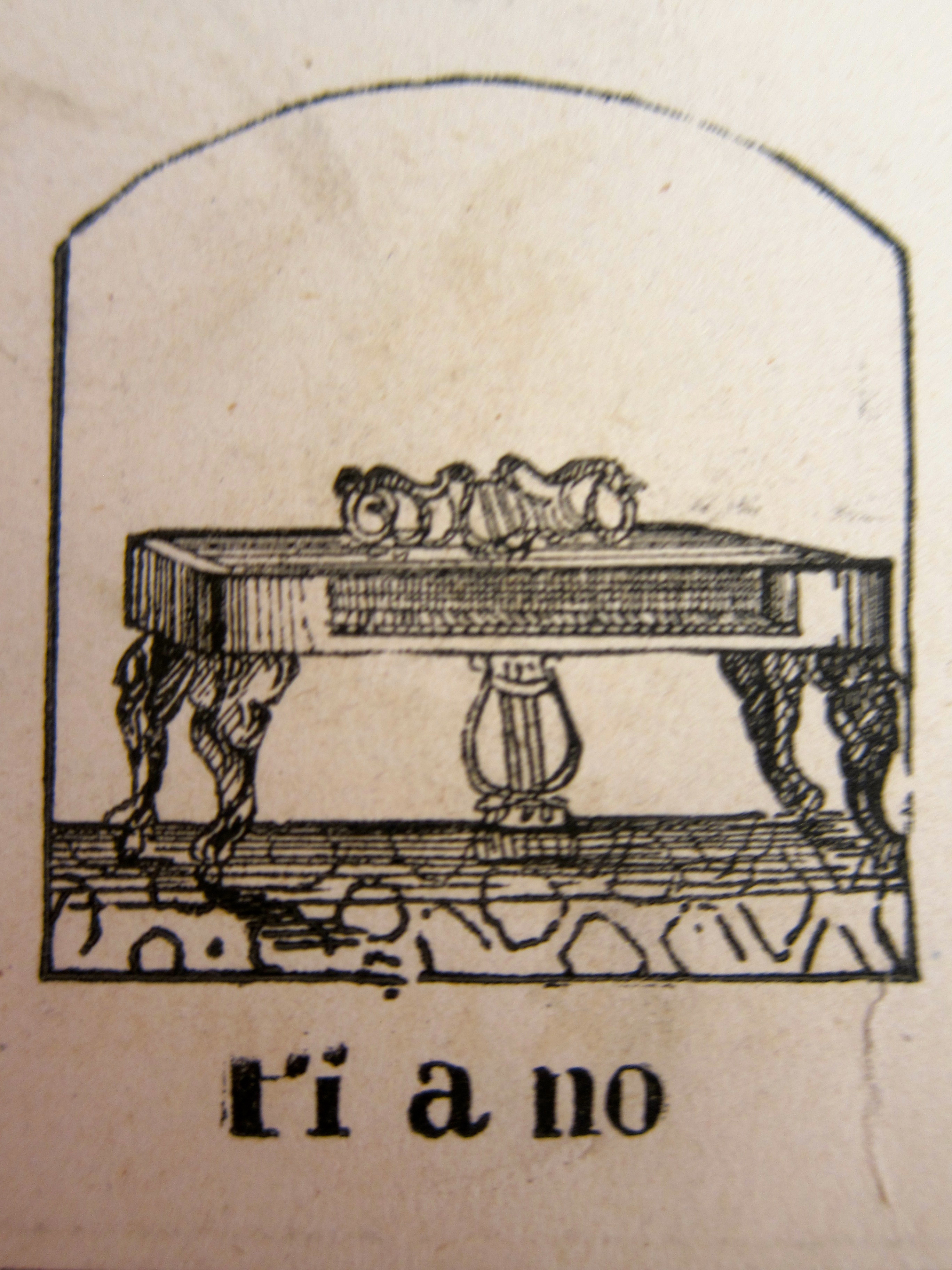
A momentous day at the Ames homestead: Two pianos arrived from Boston – drawn by oxen, one would think – and were set up in the respective parlors on each side of the house. One was for Evelina’s daughter, Susan, and the other was for Sarah Ames Witherell’s daughter, Emily. Everyone, even the men of the family who were unlikely to play the instruments, must have been intrigued by the new additions to the parlors.

Modern historian Jack Larkin describes the stylish impact of the addition of a piano to a parlor in the mid-nineteenth century:

“The pianoforte, the direct ancestor of today’s piano, became the most decisive piece of American parlor furniture. That small minority of families – less than one in a hundred – who were able ‘to beautify the room by so superb an ornament,’ as a cynical music teacher suggested in the Boston Musical Intelligencer, had acquired ‘the ultimate badge of gentility…the only thing that distinguishes ‘decent people’ from the lower and less distinguished’ whether it was ever played or not.”*

It was certainly Evelina’s intention that this instrument would be played by her daughter Susan who, she believed, would learn to play it, and play it well. It was presumably Sarah Witherell’s desire as well that Emily would do the same.  Did they imagine piano recitals and concerts taking place within their freshly-papered, newly decorated parlor walls?  Did they believe that their daughters would excel and play as well as Helen Ames next door? Did their daughters share this expectation? Did their daughters even want to learn piano?

*Jack Larkin, The Reshaping of Everyday Life, New York, 1988, p. 143

October 3, 1852

Play

Oct 3d Sunday  We have all been to meeting to day

Mrs Norris Mr Ames & self came home at noon but did not

have a dinner cooked  After meeting Frank carried Miss Linscott

& Orinthia to Bridgewater & Melinda & self went to Mothers and

called on Miss M J Alger while Frank went to carry them home

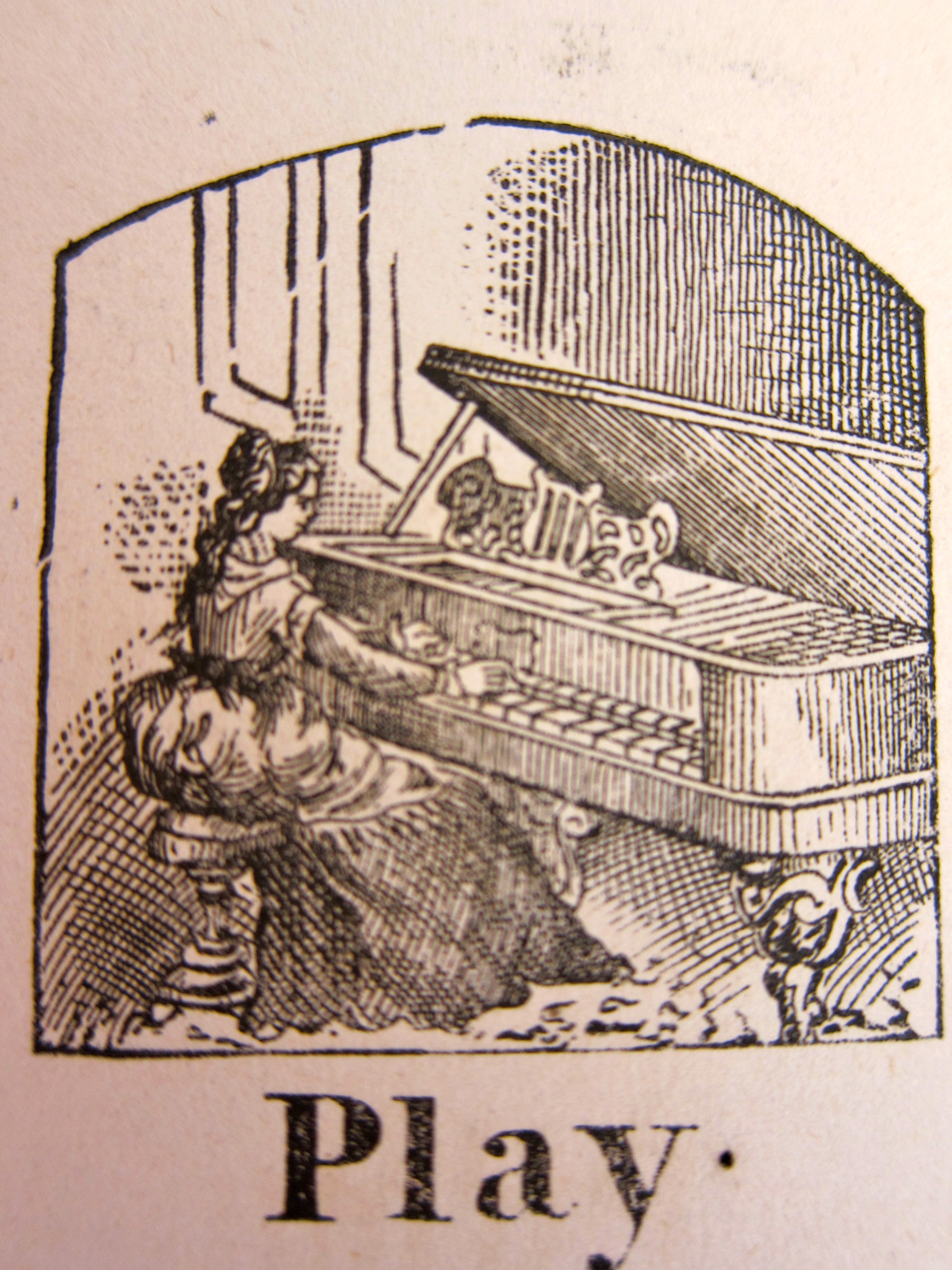
Mrs A[l]ger had her piano & played Horatio Jr is here came last night

More comings and goings today. Everyone went to church, of course, but afterwards dispersed in different directions. Frank Morton Ames obliged the young, single ladies in the group by driving them home to Bridgewater. While he headed east, Evelina and her friend Melinda Norris rode south to the family farm to visit the elderly Mrs. Gilmore. They also stopped to visit Miss M J Alger, the woman who would be giving piano lessons to Susie Ames and Emily Witherell. She, or her mother, played a piano for them.

Old Oliver reported that “this was a fair pleasant day for season Oakes came home from N. York las[t] night.” Oakes Angier stayed behind, on business or pleasure we don’t know. Evelina reported, as her father-in-law did not, that Horatio Ames Jr. was back for a visit. He was the son of Horatio Ames, a brother of Oakes and Oliver Jr. It’s unclear if Horatio Jr. was living in Boston at this point or was still in Connecticut at the family home there.


September 26, 1852

IMG_1175_ParkPhaeton

A Phaeton owned by a Boston family, ca. 1850


Sunday Sept 26th  Stormy to day and only one carriage

has been to church  I was not well and staid

at home  Susan Went  It has cleared off pleasant

Frank Susan & self have been to mothers and

called to see Miss Alger about giving lessons

Have written a letter this evening to

Mrs Mower  Have not read at all to day


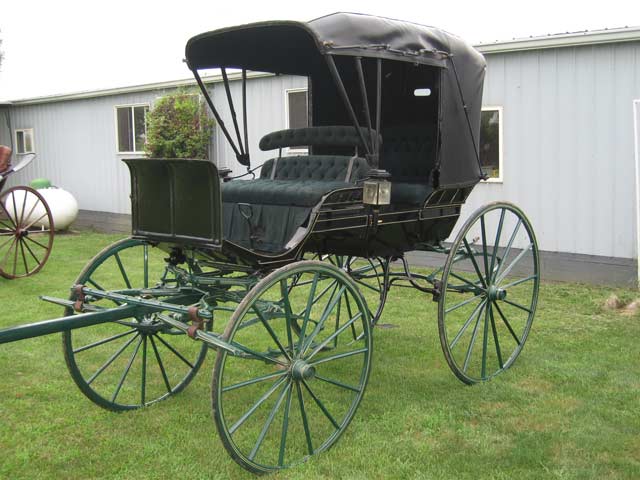
Old Oliver reported that “there was a little sprinklin[g] of rain to day.”* Evelina said it was “stormy.” The weather was in the eye of the beholder, it would appear. But Evelina wasn’t feeling well, so perhaps her condition affected her view out the window as she watched the lone carriage head south to the meeting house. She was feeling so poorly that she didn’t even read.

Both the weather and her spirits seemed to improve in the afternoon. With son Frank and daughter Susan, Evelina rode south to see her mother, Hannah Lothrop Gilmore, at the family farm.  While in the vicinity, she “called to see Miss Alger about giving lessons.’ Piano lessons, she meant; Susie was going to play an instrument. The new piano had been bought primarily for Susan’s benefit, just as the one bought by Sarah Witherell – and Old Oliver, presumably – was primarily for the benefit of Emily Witherell. Under the paid guidance of Miss Alger (probably the M J Alger who had visited the house earlier in the month), the young cousins would learn to play.

Evelina and Sarah Witherell must have been delighted to see their daughters getting music lessons, something that neither of them had likely access to when they were growing up.


*Oliver Ames, Journal, Stonehill College Archives, Arnold Tofias Collection


September 22, 1852

Piano

Wednesday Sept 22d Have been to Boston with Mrs

Witherell to get a Pianno  Have got to have

them made  Mrs Kinsley called to see them with

us  Met Mrs Wilson at Lintons to go to select

them. Dined at Mr Orrs while Mrs Witherelll

called on Mrs Dorr  Bought a Piano cloth

and gold thimble for Mrs Ames & C Hobart

and a ring for Helen  Oliver came from Providence


A piano! And not one piano, but two, one for each side of the house. Both Susan Ames and Emily Witherell would be learning to play the instrument. Each girl would have her own piano to practice on. What luxury. What gentility. What fun.

With advice from friends such as Louisa Kinsley, Evelina and Sarah Ames Witherell selected and ordered the instruments in a Boston store. Spending money liberally, Evelina went on to purchase gifts. For her other sister-in-law, Sarah Lothrop Ames, she bought a cloth to go on top of the piano that those Ameses already owned. For Catharine Hobart, a young family friend who had caught the eye of her son Oakes Angier Ames, she bought a gold thimble. And for her niece Helen Angier Ames – Catharine’s classmate – she bought a ring.

Did her husband Oakes know that Evelina was spending so much money? Did her father-in-law? While her husband must have given his approval, it’s unlikely that Old Oliver would have approved of such a spree. Yet both those men were often generous within the family; in that respect, Evelina was just following suit.

We note today, too, that Oliver (3) returned from a few days at a fair in Providence, where he no doubt saw friends and former classmates from his two semesters at Brown University. We might imagine that he was missing school.


August 31, 1852

1876-PlimptonEnvelope-white-1cent

Postal Stationery Envelope, circa 1876

Tuesday Aug 31st  Have not done any sewing to day Was

looking about house most of the forenoon and

fixing work for Catharine  Mr French and 

son were here to dine & Alson & Arden Hall.

Augusta & I have been to North Bridgewater

and home by West B and brought Susan

home  She has been at Mr Burrells

a week  We called at Rachels  Alson

& wife Arden Hall & wife there


There was sunshine today after several days of rain. “[I]t cleared of[f] to day pritty warm there was five inches of water fell in this storm + it raisd the water verry much”* was the upbeat report. The ponds were full.

The clear weather meant that Evelina could fetch her daughter, Susan, who had been staying in Bridgewater with the Burrell family, under the care of Orinthia Foss. With Augusta Pool Gilmore in tow, Evelina rode out in the afternoon. Ten-year-old Susie had been gone a whole week; one imagines she was ready to return home. The women also stopped to see Rachel Gilmore Pool en route.  Rachel was Evelina’s niece, and Augusta’s sister-in-law.

In Washington, D. C. on this date, Congress approved the very first pre-stamped envelopes, also known as postal stationery envelopes (PSE’s). The Postmaster General was authorized to provide “suitable letter envelopes with such watermarks or other guards against counterfeits… with the addition of the value or denomination of the postage stamps so printed or impressed thereon…”** The following year, the first set of stamped envelopes became available. They were known as the 1853 Nesbitt issues, after the contractor who produced them. This was high technology at the time.


*Oliver Ames, Journal, Stonehill College Archives, Arnold Tofias Collection

** Wikipedia, “Postal Stationery,” accessed August 27, 2015.


August 18, 1852

Trunk

Aug 18th Wednesday. This day has been a busy one

Have fired Susan off to stay at Alsons and

with Orinthia while I am gone. Mrs Stevens

has gone to Alsons just after they left Mr

Jones wife & daughter came in the midst 

of my packing and I had to leave all but

have got all ready this evening

The push was on to finish preparations for the trip Evelina, Oakes Angier and others would be taking the next day. Ten-year-old Susie Ames was “fired off” to stay first with her Uncle Alson Gilmore and later with her teacher, Orinthia Foss. What did she think of all this? Her older brothers, Oliver (3) and Frank Morton, got to stay at home with their father. She may have wondered why she didn’t get to stay home, or she may have been excited to spend a few nights away.

While she was packing her trunk, Evelina was interrupted by the Jones family, but after they left “got all ready this evening.” The Joneses were a family from Foxboro; their purpose in visiting was presumably social, but their timing was awkward. Evelina wasn’t prepared to spend her time with company; she just wanted to get ready for departure. We should remember that not only did she have to pack for herself, she had to get Oakes Angier’s clothes ready, too. A sliver of consolation in all this was that she would have a reason to wear her new traveling dress, the one she worked so hard on earlier in the summer.