September 25, 1852

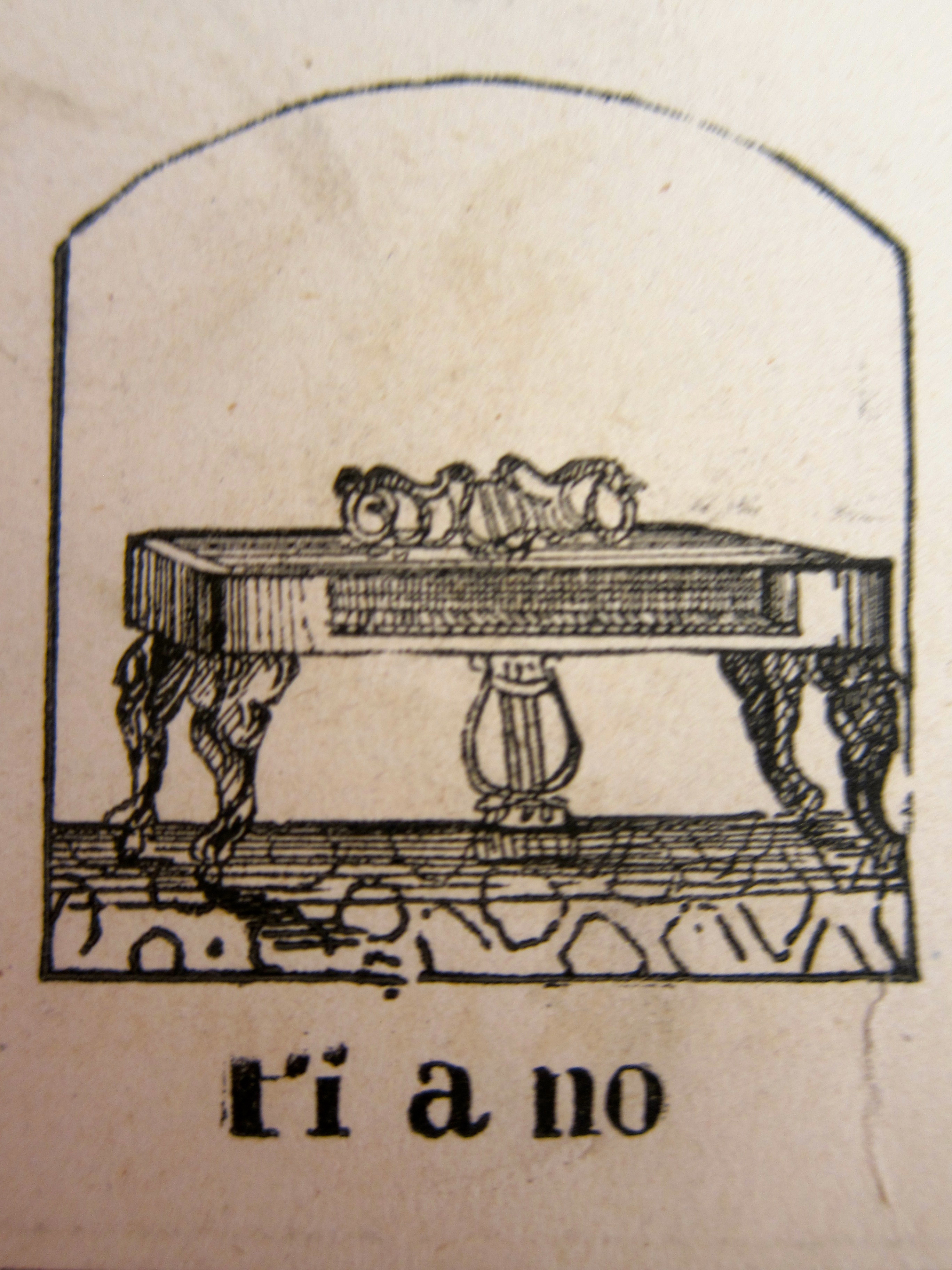
Music stool


Sat Sept 25th Louisa has a swelling on the back of

her hand which troubles her & she left this

morning and I have got Catharine Middleton

to stay untill next Wednesday when I expect

a new girl  Catharine made some squash

pies and finished the ironing. It has been about

most all the week  Helen & I have been to N Bridgewater

She had a tooth extracted  I got a Piano stool

Evelina was still spending money. In North Bridgewater (today’s Brockton) she bought a music stool to go with the new piano that was coming soon to her parlor. With her was niece Helen Angier Ames; the fifteen-year-old had a less enjoyable errand to accomplish: getting a tooth pulled. It’s interesting that Helen’s aunt, Evelina, and not her mother, Sarah Lothrop Ames, accompanied the girl to the dentist.

In the servant department, the new girl, Louisa McAvoy, departed today, having not even worked a full week. Evelina was really struggling to keep a household staff together. Catherine Middleton agreed to stay on and was helpful with the baking and ironing, the latter of which had taken “most all the week” to complete. We might wonder if Evelina ever missed Jane McHanna, the one servant who had been steady, if occasionally ill – the one whom Evelina had fired in June. Evelina had yet to really settle on a dependable replacement.


September 23, 1852

IMG_2471

Sarah Lothrop Ames

(1812 – 1890)


Thursday Sept 23th [sic] Have not sewed at all to day Starch

the clothes and ironed some fine shirts

Lavinia washed the clothes that Oliver brought

from Providence & Mr Rathbourne from 

Providence came this afternoon to visit […]

Oliver  He went to Stoughton after him

Mrs Holmes & sister came after some plants


It’s unusual to read of Evelina and her servants doing a wash on a Thursday, but so it was. Son Oliver (3) had returned from a trip to Providence with dirty laundry in tow and, more than that, a houseguest headed their way. Evelina had to finish up the laundry and prepare for company. She evidently had help from her twenty-year-old niece, Lavinia Gilmore, who, by washing the clothes of her twenty-one-year-old cousin, demonstrates not only the strict division of labor of the day, but the then-unexamined destiny of spinster daughters and nieces to serve the men of their family.

Next door, Sarah Lothrop Ames celebrated her 40th birthday which, in those times, was the front door to old age. It was her destiny to grow up in Easton, the only daughter of the Honorable Howard Lothrop and his wife, Sally Williams Lothrop. She had nine brothers, which makes us wonder if she, as a singleton girl, was doted on, or depended on, or both. On June 11, 1833, Sarah married Oliver Ames, Jr., third son of Old Oliver and Susannah Angier Ames. In social terms, it was a marriage between two of the town’s important families. The couple moved into their own house, built for them by Old Oliver, next door to the family homestead. They would eventually tear that house down and build a grander one, known to us as Unity Close.

Sarah and Oliver Jr had only two children, Frederick Lothrop and Helen Angier, at a time when a larger family was more typical. We can’t know if their decision to stop at two was happenstance, voluntary, or imposed by medical circumstances. Fred, they raised to go into the family shovel business, much as Oakes and Evelina did with their three sons. Fred was given a full college education, however, as his cousins were not. Helen and her younger cousin, Susan, meanwhile, were raised to be proper young ladies with fine dresses, piano lessons, and good schooling. It is doubtful that Helen ever had to wash her brother’s clothes. There were servants for that.

Like her sisters-in-law Evelina and Sarah Ames Witherell, Sarah Lothrop Ames was a regular church-goer and a conscientious neighbor. She did her duty with the elderly and infirm in the village, and she was a loving daughter to the end with her parents. Her mother, once widowed, developed dementia and incontinence, yet Sarah cared for her until her death. She was close to her children and grandchildren, of whom she had five.

A widow herself by 1877, Sarah would live until 1890, outlasting her husband, brothers-in-law, sisters-in-law and all but one brother, Cyrus, to whom she left the use of Unity Close for his lifetime. After his death, it passed to her eldest grandson, Oliver Ames (1865-1929).


September 22, 1852

Piano

Wednesday Sept 22d Have been to Boston with Mrs

Witherell to get a Pianno  Have got to have

them made  Mrs Kinsley called to see them with

us  Met Mrs Wilson at Lintons to go to select

them. Dined at Mr Orrs while Mrs Witherelll

called on Mrs Dorr  Bought a Piano cloth

and gold thimble for Mrs Ames & C Hobart

and a ring for Helen  Oliver came from Providence


A piano! And not one piano, but two, one for each side of the house. Both Susan Ames and Emily Witherell would be learning to play the instrument. Each girl would have her own piano to practice on. What luxury. What gentility. What fun.

With advice from friends such as Louisa Kinsley, Evelina and Sarah Ames Witherell selected and ordered the instruments in a Boston store. Spending money liberally, Evelina went on to purchase gifts. For her other sister-in-law, Sarah Lothrop Ames, she bought a cloth to go on top of the piano that those Ameses already owned. For Catharine Hobart, a young family friend who had caught the eye of her son Oakes Angier Ames, she bought a gold thimble. And for her niece Helen Angier Ames – Catharine’s classmate – she bought a ring.

Did her husband Oakes know that Evelina was spending so much money? Did her father-in-law? While her husband must have given his approval, it’s unlikely that Old Oliver would have approved of such a spree. Yet both those men were often generous within the family; in that respect, Evelina was just following suit.

We note today, too, that Oliver (3) returned from a few days at a fair in Providence, where he no doubt saw friends and former classmates from his two semesters at Brown University. We might imagine that he was missing school.


September 17, 1852

Brig

*

Friday Sept 17  Mrs Stevens has done some ironing to

day and I have been busy about house ironing

and one thing and another & have seen but very

little of her since she came  It has been hurry

burly all the time  We were at tea at Olivers

Abby came here but as we were there she

stopt & in the evening Mr Torrey came

Mrs S Ames has gone to watch with Mrs Savage

With the help of Mrs. Stevens, a houseguest, ironing continued, along with Evelina’s usual choring and “one thing and another.” According to Evelina’s misspelled expression, the household was all hurly-burly, full of commotion and tumult.  Later in the day, the two women – and other family members, presumably – enjoyed tea next door with Sarah Lothrop and Oliver Ames Jr. And even later, Col. Torrey stopped in for another visit.

In a California newspaper, there was an article about a missing ship, the Schooner Penelope. The vessel bore no direct relation to the Ames family (although an Ames relative, Cyrus Lothrop, would eventually own ships, including one named for Helen Angier Ames), but the article’s conclusion that the ship had been lost at sea was very much indicative of the perils of travel at the time. The Penelope had last been seen the year before by a sister ship as both headed into a bad storm.

Newspapers in coastal cities like San Francisco or Boston often carried such reports of ships that set sail and were never heard of again, much as our modern television and internet news sources carry coverage of airline disasters like the Malaysian flight that went missing over the Pacific. We may have our own disasters in the air and at sea, but the latter hazards were naturally more common in the 19th century, and the means of discovering, much less communicating, the fates of the vessels that disappeared were limited. After a certain amount of time had passed with no word of a particular ship, people had to assume the worst, and know that their sailor sons or husbands, or passengers for whom they waited, had drowned. The following from the Daly Alta California in San Francisco conveys the demise of the Penelope:

The American schooner Penelope, Capt. Austin K. Dodge, cleared from this port on the 14th of October, 1851, for San Juan del Sud, with 40 passengers. It is believed that she sailed the next day. Capt. Mann, of the brig Lowell, which sailed from this port on the same day, reports having seen the Penelope about the 5th of November, off Cape St. Lucas, just previous to a terrific hurricane, which lasted but a quarter of an hour. After the driving mist which accompanied the gale had lighted up, the Penelope was not visible. Capt Mann felt confident at the time that the vessel had foundered.

After arriving at San Juan he remained there some weeks, but received no tidings as to her fate. As nothing has yet been heard of her there is every reason to apprehend that she was lost at that time, and every soul on board perished. […]

Both the Penelope and Lowell were fitted out and sailed from Pacitic Wharf. Captain A. K. Dodge, of Beverly, Mass.; 1st mate, F. H. Choate; 2d mate, Thomas J. Fisher; the first mate from Salem, Mass., and the second from Boston. W. H. Nicolsen’ cook, from New York, aud James Brickley, John Smith, Manuel Silva, Joseph Frank and George Covell, seamen.**

The relatives of anyone who went to sea always had to worry.


*A brigantine is a type of schooner, distinguished by its sail configuration.


**http://www.maritimeheritage.org/ships/Schooner-Penelope-1852


September 15, 1852

Cake

Wednesday Sept 15th  Mr & Mrs Oliver Ames Helen & Miss Hobart

here to tea  Made cake & baked it in the stove

Mr Torrey made a long call here just after

dinner  He is quite neighbourly about this

time  Mrs Stevens need not take the credit of it

Augusta is not quite as well  sent for me to

come there & has had the Dr again

Oliver went to Providence this morning to the fair


Evelina baked a cake in her new cast-iron stove, something she was proud to note.  That was a real change for her, as before this she had used the family’s old, built-in brick oven for her baking. New technology in the kitchen was changing her ways.

The cake must have been a success; she served it at tea. Her husband and sons, minus Oliver (3), were present. Sarah Lothrop Ames and Oliver Ames Jr. came over from next door, too, bringing their daughter Helen Angier Ames and her friend, Catherine Hobart, with them. This was the last night of Catherine’s visit and it was sweet that her host and hostess took her next door for tea. Was there a conscious design behind the invitation and acceptance? Had the elders noticed a spark between Catherine and Oakes Angier Ames? Had Evelina contrived to make this happen? Were the young folks self-conscious on the occasion? Or was it just an average family gathering that inadvertently portended something more?

Catherine wasn’t the only guest. Mrs. Stevens was still visiting the Ameses and, inadvertently or otherwise, had made Evelina a little jealous. Col. Torrey, Evelina’s former brother-in-law – now a widower – had been calling more often than usual, and Mrs. Stevens had evidently volunteered the possibility that his attention was directed at her. Evelina, however, as we read from her rather ungracious entry, is reluctant to let her guest get any “credit.” Generous as she could sometimes be, Evelina was not inclined to share her friendship.

Across the street, meanwhile, young Augusta Pool Gilmore had had a relapse of her intestinal disorder, known in that day as “Cholera Morbus.” Certainly, her family and friends were worried about her.


September 12, 1852

Peach

Sunday Sept 12th  A very stormy day and none of the 

family have been to church.  Frank  C Hobart

& Helen went to the meeting house but there

was no meeting  Mr Ames & self laid down

and read “Poor rich man and Rich poor man”

Mother is better  Hannah has been to

[illegible] in the rain but is not able to work.

Cate Hobart, William & Olivers family came in this evening to eat peaches

Bad weather kept most folks indoors on this Sabbath day. Old Oliver reported a more than adequate rainfall: “it raind last night and nearly all day to day wind sotherly and warm   in that has fell yesterday + to day there is one inch + nine tenths of an inch.”* Despite the rain, Frank Morton Ames carried his cousin Helen and her classmate Catherine Hobart to church, but the service was cancelled. They must have had a wet ride down and back, but perhaps enjoyed the journey anyway.

Inside the Ames homestead, things were pretty quiet. Old Hannah Gilmore was feeling better, but servant Hannah Murphy was not. Evelina and Oakes spent some time upstairs and together read a story, probably from one of Evelina’s periodicals. Son Oliver (3) was likely to be reading, too. Perhaps Oakes Angier was reading or resting, in the interest of maintaining the good health he appeared to have regained. Certainly all three sons appeared late in the day, when family from around the compound gathered for tea.  William Leonard Ames and his young son, Angier Ames, who were staying with Old Oliver, popped in from the other part of the house. Oliver Ames Jr., his wife Sarah Lothrop Ames, daughter Helen and friend Catherine, on the other hand, had to cross the wet yard to attend. The big draw appears to have been peaches, a fresh, local and strictly seasonal treat.

*Oliver Ames, Journal, Stonehill College Archives, Arnold Tofias Collection

September 8, 1852

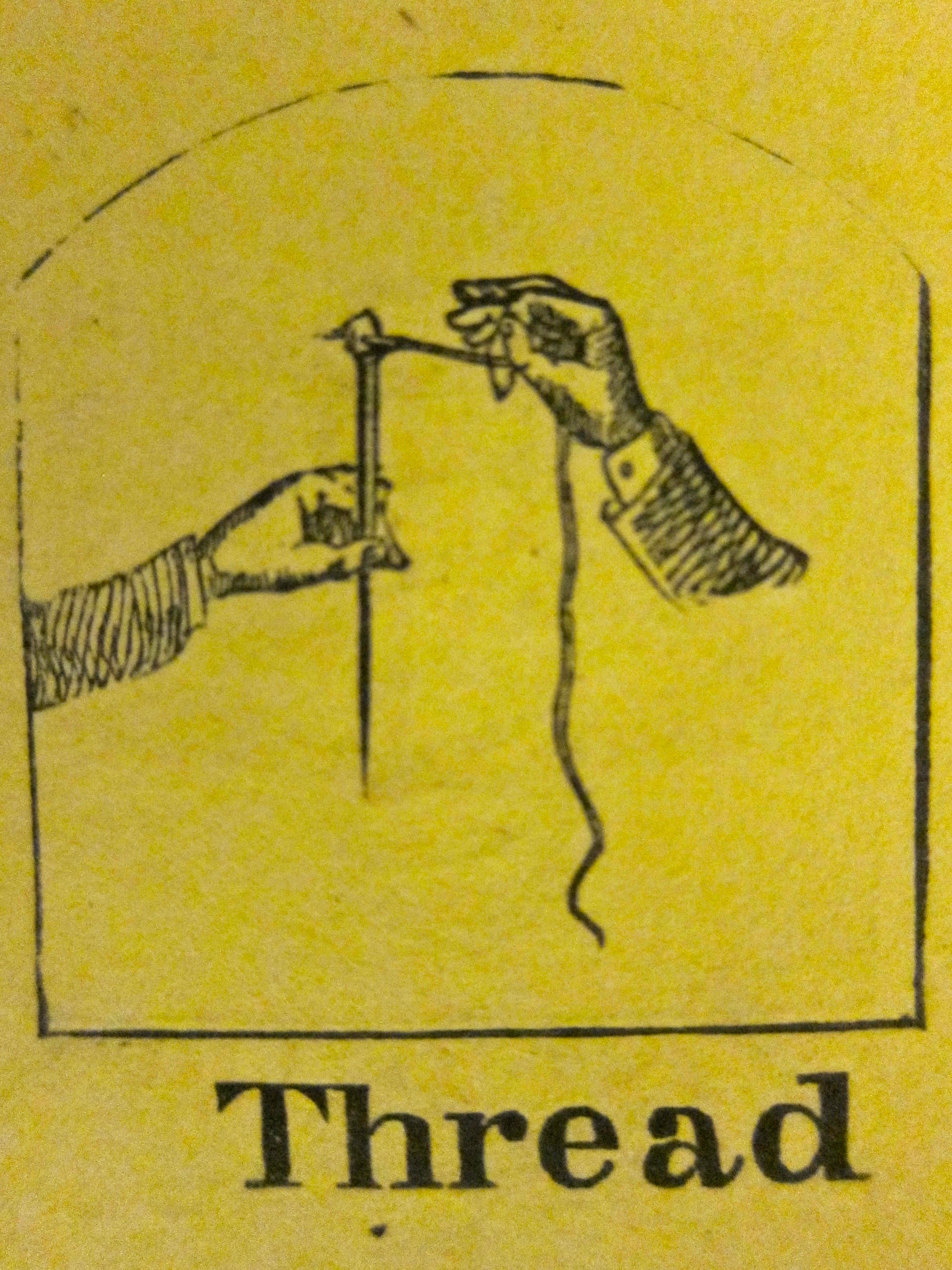
Thread


Wednesday Sept 8th  Was baking and at work

about house all the forenoon and this afternoon

have been to Olivers to the sewing Circle  Had

a pretty full meeting  Mrs Buck & Sarah were there

and worked on Mr Ames shirts  After tea we

all went into the gardens  Mother came from

there to night and will stop a few days here

It was time for Sewing Circle again.  The ladies of the Unitarian Church and their pastor, William Whitwell, met right next door at the home of Sarah Lothrop Ames and Oliver Ames Jr. They sewed, socialized and probably listened to a few words from Mr. Whitwell. Evelina was pleased to get some help making shirts for her husband.  The women all had tea and then walked about the garden, which must have been in its last foliage. Old Mrs. Gilmore, who probably had been brought to the meeting by her daughter-in-law, Henrietta, stayed over to spend a few days with her daughter.

Also on this date, another gathering of mostly women took place in Syracuse, New York. Led by suffragist Lucretia Mott, the Third National Women’s Rights Convention ran for three days and was certainly a headier, more disruptive kind of meeting than the one that Evelina attended. Mrs. Mott kept order well, although “at one point she felt it necessary to silence a minister who offended the assembly by using biblical references to keep women subordinate to men.” Many suffragists spoke, including Ernestine Rose, who responded to the offending minister with a reminder that ” the Bible should not be used as the authority for settling a dispute, especially as it contained much contradiction regarding women.” *

Two particularly noteworthy incidents happened at this annual gathering. Lucy Stone wore a pair of Turkish trousers, better known at “Bloomers, ” and the attendees were treated to the first public speech of a newcomer to the cause of suffrage: Susan B. Anthony.  Did Evelina read about any of this in the papers? Was she scornful or curious or disinterested? At no point in her diary does she comment on the nascent suffrage movement.


*National Women’s Rights Convention, Wikipedia, accessed Sept. 7, 2015


September 6, 1852


OLYMPUS DIGITAL CAMERA

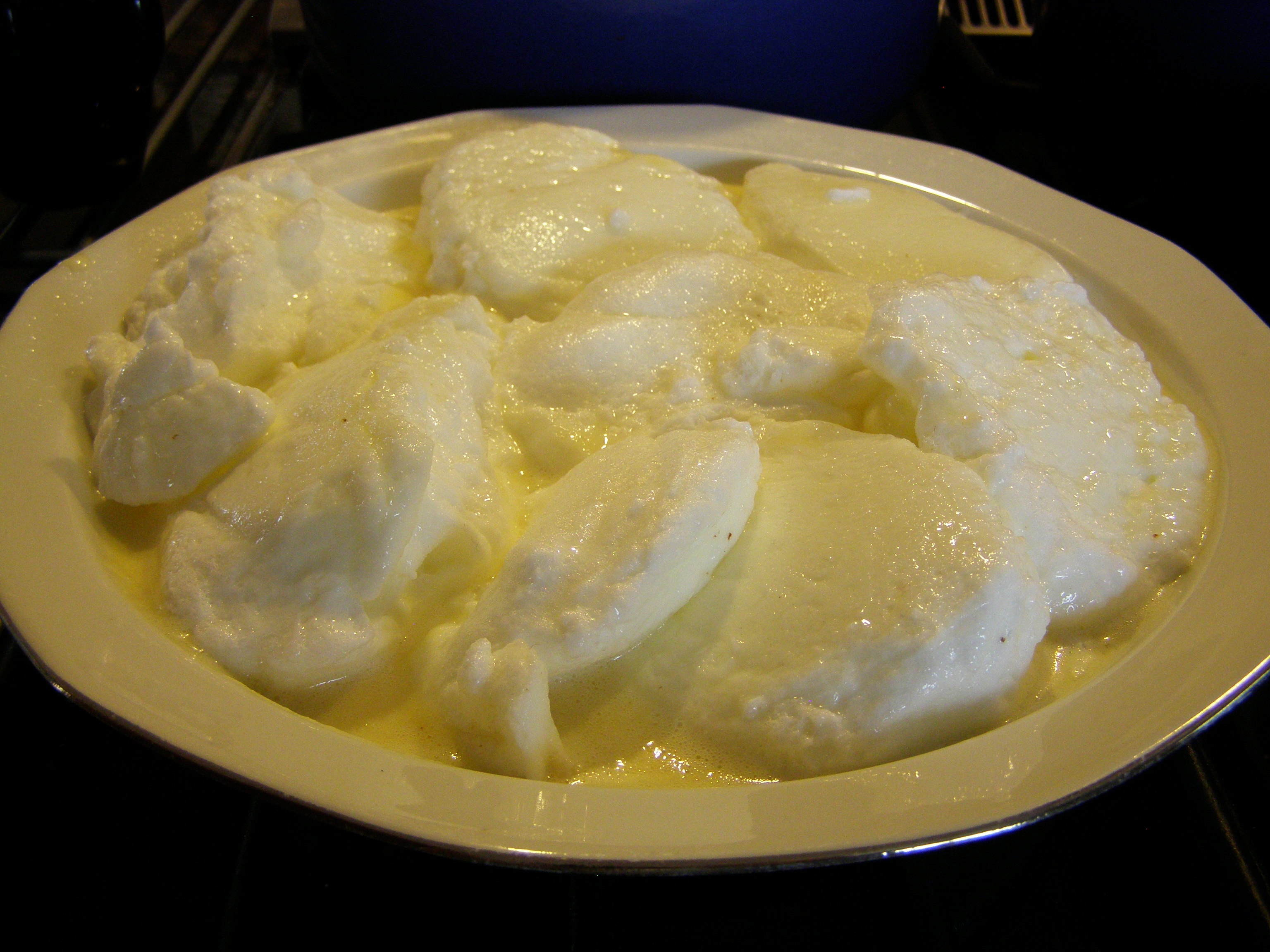
Floating Island


Monday Sept 6th  Hannah & Catharine washed

and I had to be about house most of the 

forenoon  made floating island &c &c Mr

Plymton & another man here from Walpole

to dine  Sewed some on shirts  Called

with Mrs S Ames & Mrs Stevens on Abby &

Hannah.  Called on Mrs Wales Sampson Holmes &c


“Oeufs a la Neige” is the French name for this lovely dessert, but Americans took their floating island from its Italian name, “Ile flottante.” Whatever one might call it, the basic recipe for the soft custard filled with floating ovals of poached meringue requires milk or cream and eggs.  It would have been a special occasion for Evelina to serve it, which suggests that she wanted to impress the gentlemen from Walpole who came to dinner. It also tells us that she had eggs to spare in her kitchen, which was unusual.

Recipes for this dish are varied, as one might expect. One 19th century “receipt,” printed in the 1870’s in Godey’s Lady’s Book of Receipts and Household Hints*,  tells us that making the dish was quite time consuming, especially when we remember that all that beating, stirring and frothing was done by hand.

Take six eggs, separate them; beat the yolks, and stir into a quart of milk; sweeten to taste; flavor with lemon or nutmeg. Put this mixture in a pan. Put some water in a saucepan, and set it on fire. When boiling, put in your pan, which ought to be half immersed. Keep stirring it until the custard gets thick, which will be in about thirty minutes. Whip the whites of the eggs to a strong froth. When the custard is done, put into a deep dish, and heap the frothed eggs upon it. Serve cold.*

No doubt Evelina’s dessert was a success at the dinner table. She could spend the afternoon in peace of mind, sewing and socializing. She, her sister-in-law, Sarah Lothrop Ames, and her guest, Mrs. Stevens, made a number of calls.

* Godey’s Lady’s Book of Receipts and Household Hints, 1870s, Recorded by Sarah Annie Frost, p. 237


September 1, 1852

Men's Work Shirt, mid-19th c.

Men’s Work Shirt, mid-19th c.

Wednesday

Sept 1st 1852  Have been cutting out shirts & fixing

them for Catharine to sew  She does very

well at sewing but I have to get it ready for

her  Mrs James Mitchell & Catharine Hobart

came before noon at Olivers   And I have

been in there  Did not get ready to go

very early  Mr Ames has gone to the 

Whig convention at Worcester


Evelina had settled back into her sewing routine, the latest project being shirts for the men in her family. The last time she had sewn a large batch of shirts was back in March, 1851. It looks like the men had worn through the allotment and needed new ones. Evelina and her servant, Catharine, probably used the Bartlett sheeting mentioned two days earlier for material.

Next door, Sarah Lothrop Ames welcomed some visitors from Bridgewater: Harriet Lavinia Angier Mitchell (not to be confused with Harriet Ames Mitchell) and Catharine Hobart, the latter a classmate of her daughter, Helen.  In another three years, Catharine Hobart would later become a member of the family when she married Oakes Angier Ames. We might imagine that Catharine asked after him, perhaps expressing concern for his health. How much information did the family share about Oakes Angier’s lung condition?

While the women worked and socialized at home, the Ames men were out and about. Oakes Ames attended the Whig Convention in Worcester to help put together the Whigs’s slate for the fall election, and Old Oliver “went to quincey + Braintree to get stone for the foundation for the steam enjoin”.  The building of the new factory to replace the one that had burned down in the spring was not yet complete.


August 28, 1852

2_6_1_b

Example of Kashmir Shawl Popular at Mid-19th Century*

Sat Aug 28th  Mr Ames called at Mr Orrs this morning said

they were not any of them very well at home.  Went

out to find Mrs S Ames at last met her at

Mr Orrs about noon.  Melinda has not got home

from her journey yet. Bought Mrs Witherell &

self a Cashmere shawl  Have had a pleasant 

visit but am glad to be home again


As he usually did on Saturdays, Oakes Ames traveled from North Easton into Boston on business. Instead of going right to his customers, however, he stopped by the Orrs’ where his wife was staying.  Evelina had been away for over a week and he wanted to report that they – meaning he and two of his sons, Oliver (3) and Frank Morton – had fared ill without her. “They were not any of them very well at home,” he complained.

The fact that Evelina didn’t go rushing home to take temperatures or brew beef tea, but spent the day shopping in the city with her sister-in-law Sarah Lothrop Ames, suggests that she didn’t take her husband’s report too seriously. If she had, she would have headed home right away. She may have felt that Oakes was just expressing dismay over the disorder that had arisen in her absence, a complaint that wouldn’t have been surprising in an era when the majority of men had no role in, skill at, or inclination for the domestic side of life. Evelina hadn’t been there to tend to the household and probably could have related to the words of Elizabeth Cady Stanton, suffragist and mother of seven, who had cause to bemoan “the chaotic conditions into which everything fell without her constant supervision.” Still, Evelina must have been warmed by the thought that she had been missed, and she was glad to get home.

While in Boston, though, Evelina did buy a couple of cashmere shawls, one for herself and one for Sarah Ames Witherell. If the shawls were as beautiful as the one in the illustration, they were two lucky women.  As seen, some shawls during this fashion era were made extra large to fall over the full skirts of the time.


*Image courtesy of Meg Andrews, “The Girton Curtains,” http://www.meg-andrews.com/articles