October 10, 1852

Daniel_Pierce_Thompson

Daniel Pierce Thompson

(1795 – 1868)

Sunday Oct 10th  It is quite unpleasant to day and

as mother & Mrs Mower was not going to meeting

I staid with them  Mrs Ames Oakes A & Frank

went this forenoon, and Mr Ames returned alone

this afternoon  I have been reading some in

the Rangers Torys Daughter and writing

Helen came in and played on the piano

this evening  Mrs Witherell & Ames came in a while

Evelina skipped church to stay home with her mother and houseguest, not minding too much because of poor weather, which Old Oliver described as  “cloud[y] damp + verry warm wind.”

The women did not sew, but they probably chatted a bit and read a lot. Evelina was reading The Rangers: Or, The Tory’s Daughter: A Tale Illustrative of the Revolutionary History of Vermont and the Northern Campaign of 1777, by Daniel Pierce Thompson. Mr. Thompson was a famous writer in the period before the Civil War, especially in New England. His novels were as well-known as Nathaniel Hawthorne’s, but his turgid prose, popular in its day, has caused him to fall far out of fashion. He was also a political figure in Vermont and an active abolitionist, but his novels are not much remembered.

The first two sentences of the book that Evelina was reading illustrate his dated style:

Towards night, on the twelfth of March, 1775, a richly equipped double sleigh, filled with a goodly company of well dressed persons of the different sexes, was seen descending from the eastern side of the Green Mountains, along what may now be considered the principal thoroughfare leading from the upper navigable portions of the Hudson to those of the Connecticut River. The progress of the travellers was not only slow, but extremely toilsome, as was plainly evinced by the appearance of the reeking and jaded horses, as they laboured and floundered along the sloppy and slumping snow paths of the winter road, which was obviously now fast resolving itself into the element of which it was composed.

In the evening Evelina put down the book – which must have been slow going – and whatever letters she was writing, and the whole family listened as Helen Angier Ames played the new piano.


 

October 7, 1852

elm-yellows


Oct 7th Thursday  Have been cutting out some shirts

for bosoms.  Catharine Murphy has made

four window curtains for my front chamber

Mrs Witherell Mrs S Ames & self passed the

afternoon & evening at Mr Swains  Mr Ames 

came to tea and Oliver rode down after us and 

stopt awhile Mr & Mrs Meader are there &

Ellen Meader  Augustus wife went to Boston


There was quite a bit of socializing today, prompted in part by good weather. “[T]he 7th was a fair pleasant day + verry warm,” noted Old Oliver Ames. Henry David Thoreau, some 40 miles to Oliver’s north, was more discursive about the sunshine:

I sit on Poplar Hill. It is a warm Indian-summerish afternoon. The sun comes out of clouds, and lights up and warms the whole scene. It is perfect autumn. I see a hundred smokes arising through the yellow elm-tops in the village, where the villagers are preparing for tea. It is the mellowing year. The sunshine harmonizes with the imbrowned and fiery foliage.**

The elm trees such as the ones that Thoreau mentions would also have been seen by Old Oliver. In fact, they would have been seen across the state and beyond. Once upon a time, American Elms were ubiquitous in the United States.They were tall trees with a wine-glass profile and a graceful green canopy. In the 20th century, however, most of them were wiped out by Dutch Elm disease. The existence of “Elm Streets” in communities around the country attests to the fact that elms were once as common as maples or pines. As Thoreau suggests, many a small town lived under their shade.

*Oliver Ames, Journal, Stonehill College Archives, Arnold Tofias Collection

**Henry David Thoreau, Journal, courtesy of http://hdt.typepad.com/henrys_blog


October 5, 1852

Golden Piano Keys

Oct 5th  Tuesday  Called this forenoon upon Augusta

and then went into Olivers to dine & all my family

After dinner Mrs Norris & self called at Mr Torreys

and I then carried Mrs N to the cars.  Augusta

went with us.  When I returned Mrs Witherell &

Mrs S Ames called with me at Mr Whitwells on

Mrs Wordsworth & on Mrs Morse  Our pianos came

to night.

A momentous day at the Ames homestead: Two pianos arrived from Boston – drawn by oxen, one would think – and were set up in the respective parlors on each side of the house. One was for Evelina’s daughter, Susan, and the other was for Sarah Ames Witherell’s daughter, Emily. Everyone, even the men of the family who were unlikely to play the instruments, must have been intrigued by the new additions to the parlors.

Modern historian Jack Larkin describes the stylish impact of the addition of a piano to a parlor in the mid-nineteenth century:

“The pianoforte, the direct ancestor of today’s piano, became the most decisive piece of American parlor furniture. That small minority of families – less than one in a hundred – who were able ‘to beautify the room by so superb an ornament,’ as a cynical music teacher suggested in the Boston Musical Intelligencer, had acquired ‘the ultimate badge of gentility…the only thing that distinguishes ‘decent people’ from the lower and less distinguished’ whether it was ever played or not.”*

It was certainly Evelina’s intention that this instrument would be played by her daughter Susan who, she believed, would learn to play it, and play it well. It was presumably Sarah Witherell’s desire as well that Emily would do the same.  Did they imagine piano recitals and concerts taking place within their freshly-papered, newly decorated parlor walls?  Did they believe that their daughters would excel and play as well as Helen Ames next door? Did their daughters share this expectation? Did their daughters even want to learn piano?

*Jack Larkin, The Reshaping of Everyday Life, New York, 1988, p. 143

October 1, 1852

Wax candle


Oct 1st  Friday   Went to Boston with Mrs Witherell to

see our pianos.  Miss Kinsley was going to the 

city and we asked her to try them for us.  She

thinks they are fine toned  Mrs S Ames also went

with us and Helen & Miss Hobart after school

Miss C Hobart is a very pleasant girl

I bought some wax candles at 62 per lb

Mrs Mower & Norris came home with us


Despite last night’s frost, this Friday proved to be “fair” and “pritty warm.”*  Evelina and her sisters-in-law, Sarah Ames Witherell and Sarah Lothrop Ames, took advantage of the pleasant weather to trip into Boston “to see our pianos” and do some shopping. Meeting them at the music store was Lucy Adelaide Kinsley (soon to become Mrs. Francis Howard Peabody) from Canton. A pianist herself, she approved of the purchases.

Joining the sisters-in-law later in the day, after school was over, were teen-agers** Helen Angier Ames and her friend Catharine Hobart. Evelina was growing fond of Helen’s friend; did she imagine that “Miss C Hobart” would one day be her daughter-in-law and mother of her grandchildren?

The two mothers were excited about the pianos. We can imagine that at least one or two of the expensive wax candles that Evelina bought were destined to be placed in candlesticks – or candelabra – near the new instrument. The old homestead was growing more elegant by the week. And it was back to that homestead that the women headed at the end of the day. Ordinarily, they would have stayed over in the city but instead, they returned to North Easton with houseguests in tow.

*Oliver Ames, Journal, Stonehill College Archives, Arnold Tofias Collection

** Teenager was not a term that Evelina would have used – it didn’t become a word until the 20th century.

September 29, 1852

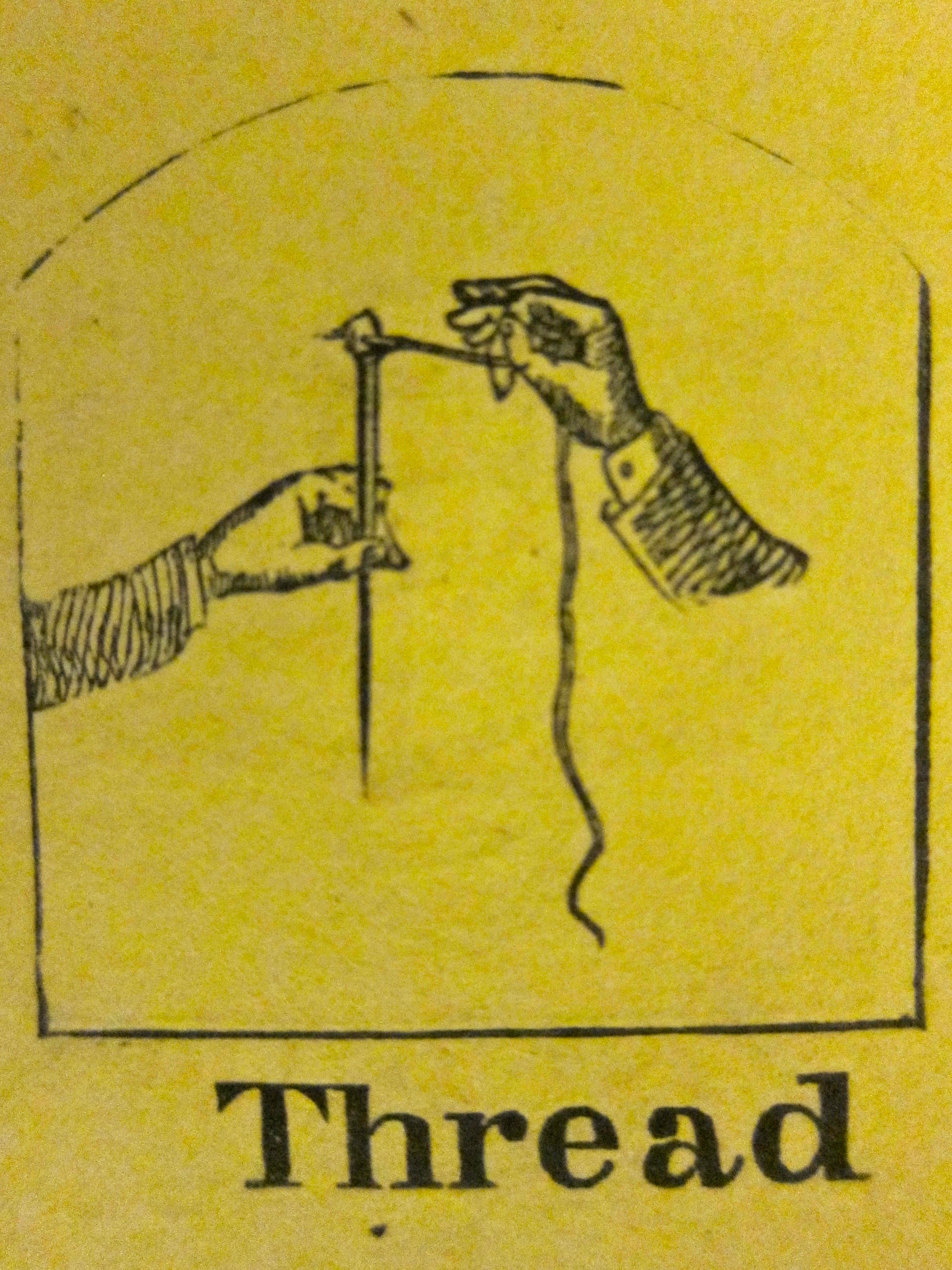
Thread

Wednesday Sept 29th  Mrs Witherell & Ames came in

& helped me about my baking and this

afternoon I have had the sewing circle  Not

one of the Pools here and had but very few

numbers. about a dozen or fifteen including 

my own family at tea  It is a beautiful moon 

light night and they spent part of the evening


With help from her sisters-in-law, Evelina prepared for the arrival of Sewing Circle members. It was a “fair cool day,”* so weather could not deter attendance. In the afternoon, the women came. Well, some came.  “[V]ery few numbers” arrived for the meeting, but at least it wasn’t the zero attendance of her previous gathering. There were enough ladies in the parlor to make the event a success.  Some of the group stayed until after dark, able to find their way home by the light of the moon.

Still, members of the Pool family didn’t show, which vexed Evelina. The Pools were a family she had grown up with in the south-eastern section of town. A Pool daughter, Augusta, had married Evelina’s nephew, Edwin, and now lived nearby. Evelina felt a connection to the family, although it may be that the family did not feel a connection to her. She never mentions Augusta’s mother, Lavarna, for instance, in the roll of ladies who call on her, though she did host the Pool family at tea in January when Augusta and Edwin were married. It’s possible that the Pool women disliked her. Perhaps they were jealous of her social success in marrying Oakes Ames. Your thoughts, readers?


*Oliver Ames, Journal, Stonehill College Archives, Arnold Tofias Collection

September 23, 1852

IMG_2471

Sarah Lothrop Ames

(1812 – 1890)


Thursday Sept 23th [sic] Have not sewed at all to day Starch

the clothes and ironed some fine shirts

Lavinia washed the clothes that Oliver brought

from Providence & Mr Rathbourne from 

Providence came this afternoon to visit […]

Oliver  He went to Stoughton after him

Mrs Holmes & sister came after some plants


It’s unusual to read of Evelina and her servants doing a wash on a Thursday, but so it was. Son Oliver (3) had returned from a trip to Providence with dirty laundry in tow and, more than that, a houseguest headed their way. Evelina had to finish up the laundry and prepare for company. She evidently had help from her twenty-year-old niece, Lavinia Gilmore, who, by washing the clothes of her twenty-one-year-old cousin, demonstrates not only the strict division of labor of the day, but the then-unexamined destiny of spinster daughters and nieces to serve the men of their family.

Next door, Sarah Lothrop Ames celebrated her 40th birthday which, in those times, was the front door to old age. It was her destiny to grow up in Easton, the only daughter of the Honorable Howard Lothrop and his wife, Sally Williams Lothrop. She had nine brothers, which makes us wonder if she, as a singleton girl, was doted on, or depended on, or both. On June 11, 1833, Sarah married Oliver Ames, Jr., third son of Old Oliver and Susannah Angier Ames. In social terms, it was a marriage between two of the town’s important families. The couple moved into their own house, built for them by Old Oliver, next door to the family homestead. They would eventually tear that house down and build a grander one, known to us as Unity Close.

Sarah and Oliver Jr had only two children, Frederick Lothrop and Helen Angier, at a time when a larger family was more typical. We can’t know if their decision to stop at two was happenstance, voluntary, or imposed by medical circumstances. Fred, they raised to go into the family shovel business, much as Oakes and Evelina did with their three sons. Fred was given a full college education, however, as his cousins were not. Helen and her younger cousin, Susan, meanwhile, were raised to be proper young ladies with fine dresses, piano lessons, and good schooling. It is doubtful that Helen ever had to wash her brother’s clothes. There were servants for that.

Like her sisters-in-law Evelina and Sarah Ames Witherell, Sarah Lothrop Ames was a regular church-goer and a conscientious neighbor. She did her duty with the elderly and infirm in the village, and she was a loving daughter to the end with her parents. Her mother, once widowed, developed dementia and incontinence, yet Sarah cared for her until her death. She was close to her children and grandchildren, of whom she had five.

A widow herself by 1877, Sarah would live until 1890, outlasting her husband, brothers-in-law, sisters-in-law and all but one brother, Cyrus, to whom she left the use of Unity Close for his lifetime. After his death, it passed to her eldest grandson, Oliver Ames (1865-1929).


September 22, 1852

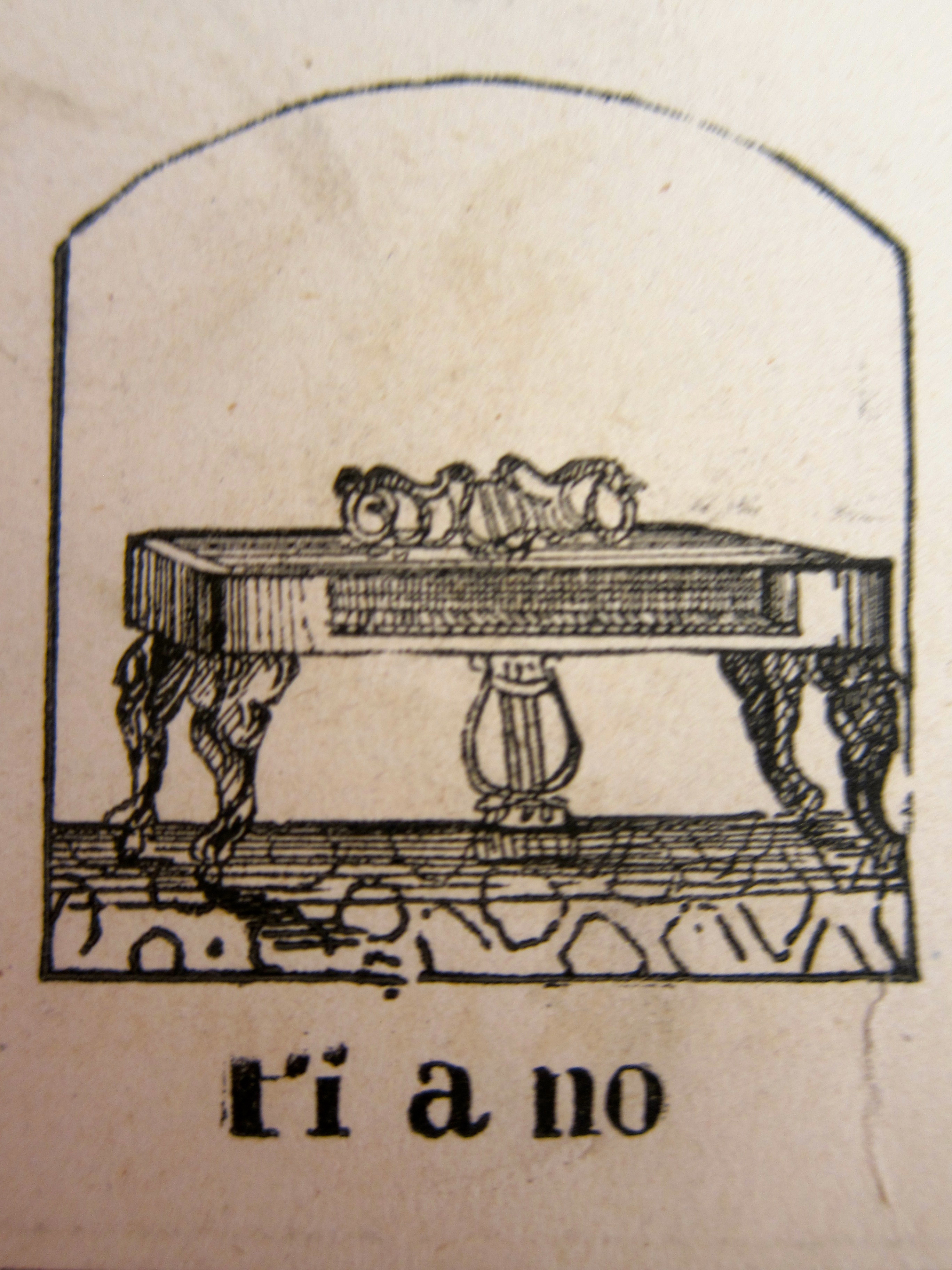
Piano

Wednesday Sept 22d Have been to Boston with Mrs

Witherell to get a Pianno  Have got to have

them made  Mrs Kinsley called to see them with

us  Met Mrs Wilson at Lintons to go to select

them. Dined at Mr Orrs while Mrs Witherelll

called on Mrs Dorr  Bought a Piano cloth

and gold thimble for Mrs Ames & C Hobart

and a ring for Helen  Oliver came from Providence


A piano! And not one piano, but two, one for each side of the house. Both Susan Ames and Emily Witherell would be learning to play the instrument. Each girl would have her own piano to practice on. What luxury. What gentility. What fun.

With advice from friends such as Louisa Kinsley, Evelina and Sarah Ames Witherell selected and ordered the instruments in a Boston store. Spending money liberally, Evelina went on to purchase gifts. For her other sister-in-law, Sarah Lothrop Ames, she bought a cloth to go on top of the piano that those Ameses already owned. For Catharine Hobart, a young family friend who had caught the eye of her son Oakes Angier Ames, she bought a gold thimble. And for her niece Helen Angier Ames – Catharine’s classmate – she bought a ring.

Did her husband Oakes know that Evelina was spending so much money? Did her father-in-law? While her husband must have given his approval, it’s unlikely that Old Oliver would have approved of such a spree. Yet both those men were often generous within the family; in that respect, Evelina was just following suit.

We note today, too, that Oliver (3) returned from a few days at a fair in Providence, where he no doubt saw friends and former classmates from his two semesters at Brown University. We might imagine that he was missing school.


September 21, 1852

Funeral

Tuesday Sept 21st  Have been almost sick to day and

not able to do much  Got a quilt into the

new chamber for Catharine to work upon

Went to the funeral of Mrs Savage at

one Oclock.  Called with Mrs Witherell at

Augustus,  Mr Swains & on Mrs Wales.  She

is confined to her bet yet and has been for weeks

It appears to have been Evelina’s turn to be ill, as she describes herself as unable “to do much.”  We readers know how hard she usually worked, so not doing much might mean that she only accomplished four or five tasks today instead of a dozen. Despite feeling “almost sick,” Evelina managed to arrange sewing for her servant Catharine, attend the funeral of Hannah Savage and, with her sister-in-law, Sarah Ames Witherell, call on several households in the village. It’s hard to know if Evelina was spreading germs or picking them up as she went along, but she meant well.

According to Old Oliver Ames, “this was a fair day + pritty warm wind northerly,”* in other words a pleasant day to be out and about. Yet, in two of the homes that Evelina and Sarah visited, people were ailing. At the Swains’, their infant son was teething and fussy. At the home of Ephraim and Maria Wales, the latter was “confined to her bed yet,” an expression which hints at a recent or impending childbirth. Mrs. Wales was of childbearing age, yet census records show no children for this young couple. Perhaps Maria would lose or had lost an infant, or was simply ill with any one of a myriad of possible ailments.

*Oliver Ames, Journal, Stonehill College Archives, Arnold Tofias Collection

September 16, 1852

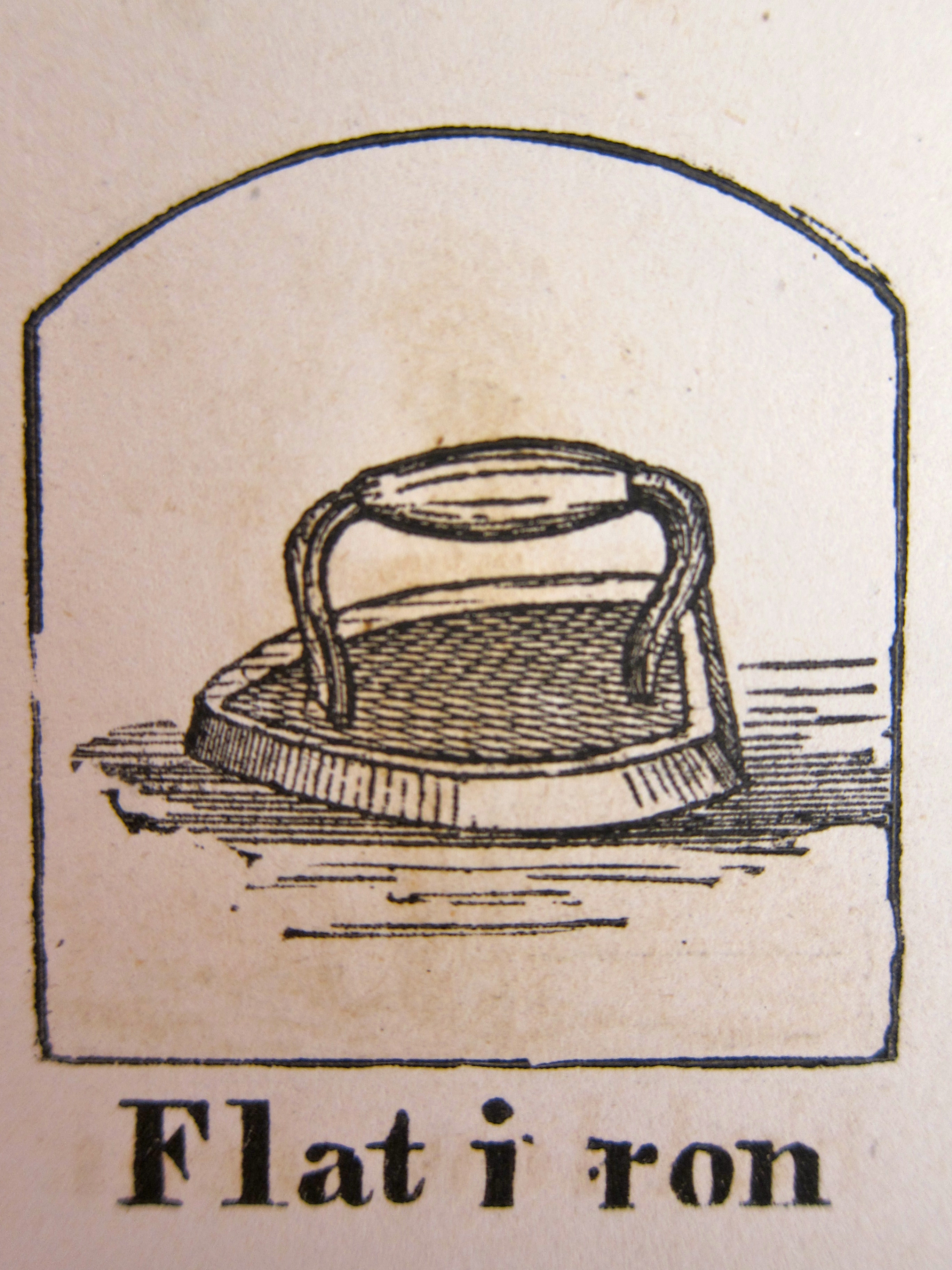
Flatiron

1852

Thursday Sept 16  Watched with Mrs Savage last night

came home at half past five went to bed

and laid untill past eight  Starched some

more shirts that were washed yesterday  We

have 20 fine shirts this week in the wash

Miss Elizabeth Capen called & Mrs Stevens was

with Mrs Witherell to tea  I was ironing & did not go

Oakes A went to carry Helen & C Hobart to Bridgewater

Today we have proof positive that Oakes Angier Ames, back from his recuperative rest in Vermont, was spending time with Catherine Hobart, the girl who would become his wife. For several days, Catherine had been staying next door with her classmate, Helen Angier Ames, but the time had come to return home to Bridgewater. Whether Oakes Angier volunteered to carry the girls or was assigned the duty, we don’t know, but we can believe that he enjoyed the trip. Was Evelina aware of their mutual attraction? Did Helen stay for a visit with Catherine, or did she return to Easton? Did the two girls discuss Oakes Angier after he left them off?

Evelina may have been too busy with all the shirts that needed starching and ironing to attend to her eldest son’s romantic inclination. Having spent most of the night before sitting up with Hannah Savage, she was only operating on three hours sleep. She positioned herself at the kitchen or dining table and covered it with a protective blanket and sheet, kept “on purpose for ironing.”* Using thick cloth to protect her hand from the hot handle, she lifted and pushed the heavy implement across each one of those new cotton shirts. Back and forth, back and forth, putting away one iron when it cooled to pick up another one that had heated up. It was hot, heavy work. She didn’t break her stride, either, not even for tea in the other part of the house.

* Lydia Maria Child, The American Frugal Housewife, 1832, p. 11

September 9, 1852

Sarah Ames Witherell

Sarah Ames Witherell  (Mrs. Nathaniel Witherell, Jr.)

(1814 – 1886)

Thursday Sept 9th  This has been a very warm day indeed

and not much air stirring  We went in to see

Augusta awhile this forenoon and found her

rather more comfortable  This afternoon have

been sitting in the parlour chamber sewing it

being the coolest place  Mrs Witherell & Mrs

S Ames came in awhile  Mrs W watched with Mrs

Savage last night

Evelina and her father-in-law agreed that this day and the one before “were fair days + […] verry warm indeed.” Oppressively hot for September, we might think.  Evelina, her mother Hannah Lothrop Gilmore and her friend Mrs. Stevens went across the street early in the day to check on the ailing Augusta Pool Gilmore and must have been pleased to find her “rather more comfortable.” Back to the house it was, where the three ladies moved into the parlor to sew. Usually they would work in the less formal sitting room, but the parlor perhaps offered less direct sunlight. It was “the coolest place.”

Evelina’s sisters-in-law, Sarah Lothrop Ames and Sarah Ames Witherell, paid a call. It was Sarah Witherell’s 38th birthday. A widow for only four years, her most recent year hadn’t been a happy one: she had burned her foot badly, had all her teeth pulled, lost her elderly father-in-law and, most awful of all, lost her fourteen year old son, George, to rheumatic fever. Yet she was moving through the proscribed stages of real mourning in a seemingly graceful way. She was still taking care of her father, Old Oliver, and her one remaining child, Emily, and was ever helpful around the family compound. As we see from the diary entry, Sarah had spent the previous night watching over the dying Hannah Savage. “Dignified,” is how one family friend described her, and we readers might add “dutiful” and “kind” as well.

In another decade, after her father had passed on, Sarah and her daughter Emily would move into Boston and take up residence there at the Hotel Hamilton. Sarah would continue in a quiet way to participate in both family and city life, and would enjoy traveling with her sister Harriet. Her brother Oliver Jr would make it a point to look after her.