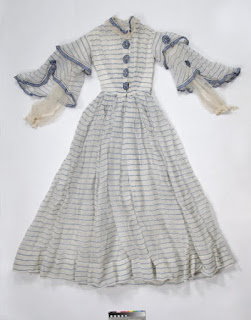
October 26, 1852


1860s blue striped muslin dress from St. Albans Museums

Dress with undersleeves, mid-19th c.*

Tuesday Oct 26  We have had a large washing

done to day and not finished untill

after dinner  Miss Alger & self spent

the afternoon in Olivers  Mr Ames

& all the children there to tea  Mr & Mrs 

Whitwell was there an hour or two

I made Susan a pair of undersleeves

and she is delighted with them


Because of all the company that had visited over the weekend, the servant girls were unable to launder clothes on Monday. Today, extra sheets and towels were added to the usual load and the washing went on into the afternoon. Not that Evelina rolled up her sleeves; after the midday meal, she and her remaining houseguest, Miss M. J. Alger, went next door to visit with Sarah Lothrop Ames and stayed for tea. All the family partook.

At various points during the day, Evelina had her work box open as she completed a pair of undersleeves for her daughter. Susie was “delighted” with them. Were they a peace offering from mother to daughter, perhaps to make up for Evelina’s insistence on Susan learning to play piano?

We’ve seen Evelina sewing undersleeves before. In the 1850’s and into the Civil War, undersleeves were an essential component of any woman’s dress, fitting independently but securely under the looser outer sleeve of the dress proper. Like the collars of the day, a good pair of undersleeves could be worn with different dresses. Susie must have felt rather grown-up with her new pair.

On the industrial side of American life, meanwhile, today was the 27th anniversary of the opening of the Erie Canal. The technological wonder of its day, it was already becoming obsolete. Railroads had arrived and, through their own capacity for moving freight, would soon obviate commercial use of the canal for many (though not all) industries. Shipping would change – was changing. The very word “shipping” derives from the fact that, initially, more goods moved by water than by land. This would no longer be true in this country or elsewhere in the developed world.

We should remember that Harriet Ames Mitchell, Old Oliver’s youngest daughter, was living in Erie at the time with her husband Asa and their three children.  Did they mark the day?


*Image of striped blue muslin dress with undersleeves courtesy of St. Albans Museum, England


October 16, 1852

darning-egg-designs

Darning Egg Designs, from Godey’s Lady’s Book

Sat Oct 16th Have made more barberry sauce to day

have three girls here now Ann came

Wednesday night but I am not to commence

paying her wages untill Monday and Catharine

Middleton is to leave to night  I have been

mending to day


Bad weather kept Evelina and her servants indoors. As Old Oliver recorded, “the ground froze some last night and it is verry cold to day for the season wind high from north west and some cloudy.” It was a good day for making barberry sauce, especially with three young women to help. The shelves in Evelina’s pantry – or buttery – and cellar must have been nearly full of jars of preserved fruit. There would be plenty to go around come winter. And winter was coming.

It was a good day, too, to catch up on mending. At least some of the mending consisted of darning the holes in the socks – or hose – worn by everyone in the family. Darning eggs, such as the ones in the illustration from Godey’s, were found in most homemakers’ sewing kits or work baskets. They were held on the inside of a sock to keep it firm while the stitching was done on the outside. Some intricate darning eggs also held needles, thimbles, and other tiny sewing utensils on the inside.

The prosaic simplicity of the day’s chores would not have raised any suspicion on Evelina’s part that seven years from this day, John Brown and a band of cohorts would lead a raid at Harper’s Ferry, Virginia. The incident would shock and alarm the nation as it realized that even in the civilized “Old Dominion” – as opposed to places on the wild frontier, like Kansas or Missouri – arms would be raised to eradicate slavery. None of the Ameses knew, of course – no one could – but a civil war between the states of the North and South was drawing near.


October 11, 1852

factory-steam-engine

Early factory steam engine

Monday Oct 11th  Catharine Middleton & Murphy washed

and I sat down quite early to my sewing

with Mother & Louisa  Mended stockings

This afternoon we spent at Augustus

Mother & Louisa are going to spend the 

night  Mr Torrey & Abby were there

Mr Ames & Oakes A went to West B

I have been sewing on the skirt of Susans

fall Delaine

This was a typical Monday as far as domestic matters were concerned. In the morning, the women washed clothes and mended stockings. In the afternoon, they went calling on relatives in the village. But it was a red-letter day at the shovel shop, as men arrived to install the a steam engine – the first – at the factory.

Old Oliver seemed excited: “this was a fair good day for the season the man came here to sett up the enjoin four of them.” The company’s first steam engine was placed in the new Long Shop by the Corliss Nightingale Company of Providence. It was a technological change that Oliver had resisted in the past, but had since come to accept. His son, Horatio, in particular, had urged the change for several years in order “to counter water supply limitations”* In January, 1847 he had written his father and his brother, Oliver Jr., on the topic.

To Old Oliver:

I shall think a steam engine […] of sufficient power to carry 3 hammers and carry all your polishing works shearing and punching and Bisbees works […] would be cheaper and better […] It is too bad that you do not keep nearer supplying the market with shovels when a comparatively small expense would do it in addition to your other works.”*

To Oliver Jr.:

I enclose you with […the] price and terms for a steam engine. It will do you no hurt to compare cost of this and water power. it will take about one ton of coal a day to drive it and the repairs will be no more than a water power if as much[…] You never need fail for water either too much or too little […] I am altogether in favor of this plan over water power in your situation.”*

Horatio was right, as it turned out. The new engine was the beginning of modernization for O. Ames and Sons.

Gregory Galer, Forging Ahead, MIT, 2002, p. 251.  Text of Horatio Ames correspondence from Stonehill College Archives, Arnold Tofias Collection

October 3, 1852

Play

Oct 3d Sunday  We have all been to meeting to day

Mrs Norris Mr Ames & self came home at noon but did not

have a dinner cooked  After meeting Frank carried Miss Linscott

& Orinthia to Bridgewater & Melinda & self went to Mothers and

called on Miss M J Alger while Frank went to carry them home

Mrs A[l]ger had her piano & played Horatio Jr is here came last night

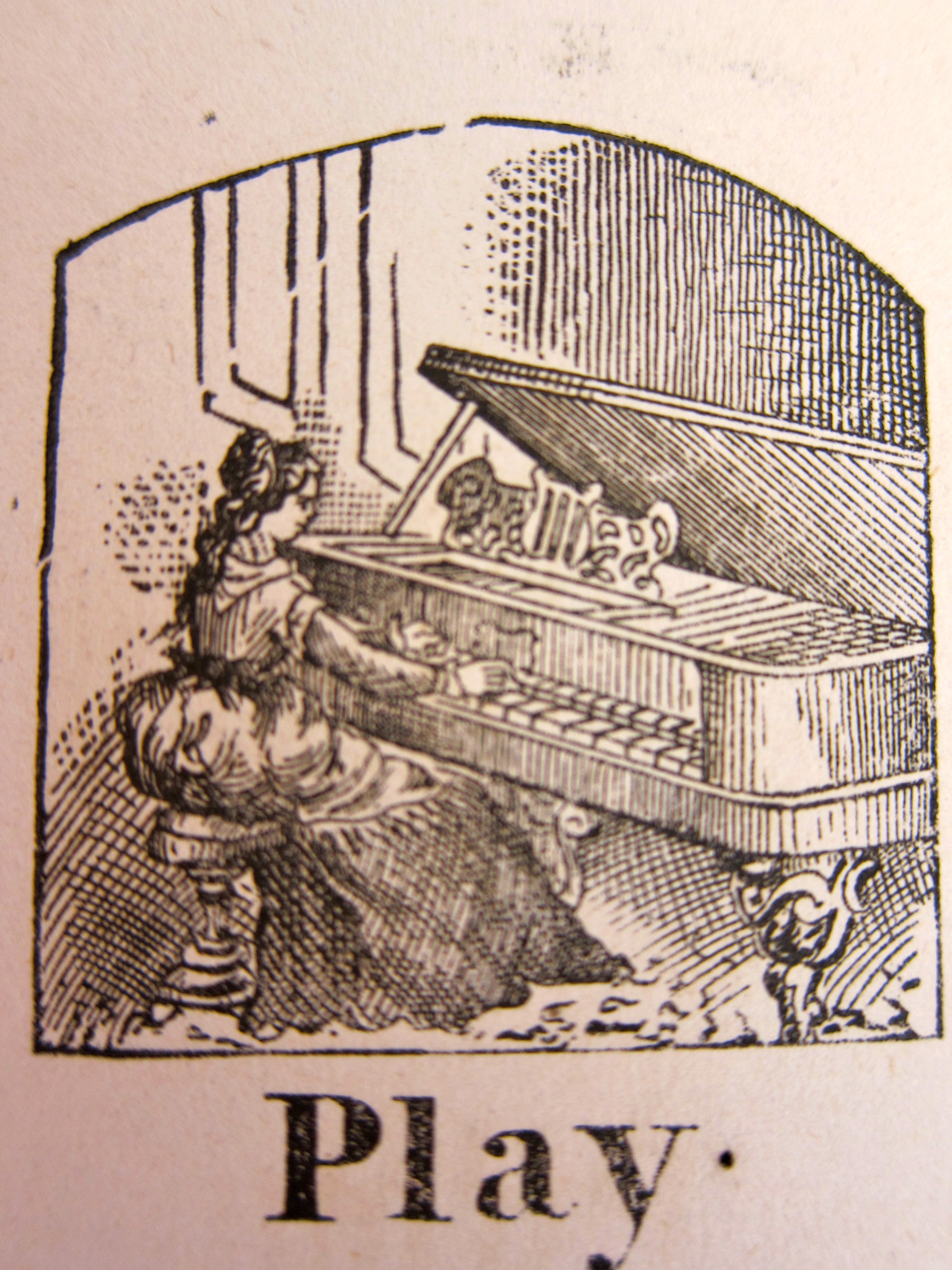
More comings and goings today. Everyone went to church, of course, but afterwards dispersed in different directions. Frank Morton Ames obliged the young, single ladies in the group by driving them home to Bridgewater. While he headed east, Evelina and her friend Melinda Norris rode south to the family farm to visit the elderly Mrs. Gilmore. They also stopped to visit Miss M J Alger, the woman who would be giving piano lessons to Susie Ames and Emily Witherell. She, or her mother, played a piano for them.

Old Oliver reported that “this was a fair pleasant day for season Oakes came home from N. York las[t] night.” Oakes Angier stayed behind, on business or pleasure we don’t know. Evelina reported, as her father-in-law did not, that Horatio Ames Jr. was back for a visit. He was the son of Horatio Ames, a brother of Oakes and Oliver Jr. It’s unclear if Horatio Jr. was living in Boston at this point or was still in Connecticut at the family home there.


September 26, 1852

IMG_1175_ParkPhaeton

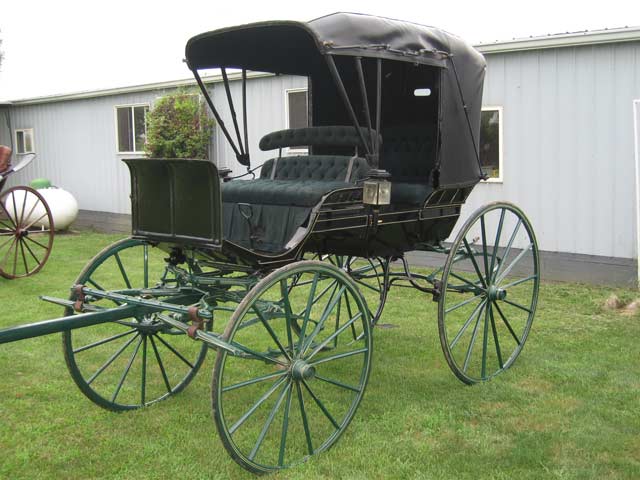
A Phaeton owned by a Boston family, ca. 1850


Sunday Sept 26th  Stormy to day and only one carriage

has been to church  I was not well and staid

at home  Susan Went  It has cleared off pleasant

Frank Susan & self have been to mothers and

called to see Miss Alger about giving lessons

Have written a letter this evening to

Mrs Mower  Have not read at all to day


Old Oliver reported that “there was a little sprinklin[g] of rain to day.”* Evelina said it was “stormy.” The weather was in the eye of the beholder, it would appear. But Evelina wasn’t feeling well, so perhaps her condition affected her view out the window as she watched the lone carriage head south to the meeting house. She was feeling so poorly that she didn’t even read.

Both the weather and her spirits seemed to improve in the afternoon. With son Frank and daughter Susan, Evelina rode south to see her mother, Hannah Lothrop Gilmore, at the family farm.  While in the vicinity, she “called to see Miss Alger about giving lessons.’ Piano lessons, she meant; Susie was going to play an instrument. The new piano had been bought primarily for Susan’s benefit, just as the one bought by Sarah Witherell – and Old Oliver, presumably – was primarily for the benefit of Emily Witherell. Under the paid guidance of Miss Alger (probably the M J Alger who had visited the house earlier in the month), the young cousins would learn to play.

Evelina and Sarah Witherell must have been delighted to see their daughters getting music lessons, something that neither of them had likely access to when they were growing up.


*Oliver Ames, Journal, Stonehill College Archives, Arnold Tofias Collection


September 24, 1852

Giffard1852

Henri Giffard’s Dirigible  

Friday Sept 24th  Mr Ames & Oakes Angier went

to Boston and are going to New York for New

Jersey to night  I have been to work again about

house all day ironing and this that & tother

Catharine got my quilt out and has been

mending some stockings  Mr Rathbourne

returned to P[rovidence] this afternoon  Oliver carried him

to Mansfield  They went to Canton this afternoon


Today Evelina saw her husband and eldest son depart for New York and New Jersey, by way of Boston; that helps explain the extra laundry day yesterday. The men were off on shovel business and the fact that Oakes Angier went along suggests that he was enjoying good health. He was also learning the family trade.

Back at the house in North Easton, domesticity reigned, as usual. Even Evelina couldn’t quite keep track of all the little tasks she was addressing. It was simply “this that & tother.” Mending, ironing, quilting went on. Her son Oliver was riding here and there with his houseguest, Mr. Rathbourne.  It looks like the only son who was present at the shovel works was the youngest, Frank Morton.

Miles away from anyplace that any Ameses were traveling today, a steam-powered dirigible, lifted by hydrogen, rose in the air for the very first time. Hot air balloons had already ascended the skies in various places and for various lengths of time. The airship was new and different by virtue of its shape, design, and engine. Created by a Frenchman, Henri Giffard, the airship made its maiden voyage from Paris to Elancourt. It traveled 17 miles. The winds were too strong for it to return to Paris, as planned, but Giffard was nonetheless able to steer and turn the airship in its course. It was the shape of things to come.


September 23, 1852

IMG_2471

Sarah Lothrop Ames

(1812 – 1890)


Thursday Sept 23th [sic] Have not sewed at all to day Starch

the clothes and ironed some fine shirts

Lavinia washed the clothes that Oliver brought

from Providence & Mr Rathbourne from 

Providence came this afternoon to visit […]

Oliver  He went to Stoughton after him

Mrs Holmes & sister came after some plants


It’s unusual to read of Evelina and her servants doing a wash on a Thursday, but so it was. Son Oliver (3) had returned from a trip to Providence with dirty laundry in tow and, more than that, a houseguest headed their way. Evelina had to finish up the laundry and prepare for company. She evidently had help from her twenty-year-old niece, Lavinia Gilmore, who, by washing the clothes of her twenty-one-year-old cousin, demonstrates not only the strict division of labor of the day, but the then-unexamined destiny of spinster daughters and nieces to serve the men of their family.

Next door, Sarah Lothrop Ames celebrated her 40th birthday which, in those times, was the front door to old age. It was her destiny to grow up in Easton, the only daughter of the Honorable Howard Lothrop and his wife, Sally Williams Lothrop. She had nine brothers, which makes us wonder if she, as a singleton girl, was doted on, or depended on, or both. On June 11, 1833, Sarah married Oliver Ames, Jr., third son of Old Oliver and Susannah Angier Ames. In social terms, it was a marriage between two of the town’s important families. The couple moved into their own house, built for them by Old Oliver, next door to the family homestead. They would eventually tear that house down and build a grander one, known to us as Unity Close.

Sarah and Oliver Jr had only two children, Frederick Lothrop and Helen Angier, at a time when a larger family was more typical. We can’t know if their decision to stop at two was happenstance, voluntary, or imposed by medical circumstances. Fred, they raised to go into the family shovel business, much as Oakes and Evelina did with their three sons. Fred was given a full college education, however, as his cousins were not. Helen and her younger cousin, Susan, meanwhile, were raised to be proper young ladies with fine dresses, piano lessons, and good schooling. It is doubtful that Helen ever had to wash her brother’s clothes. There were servants for that.

Like her sisters-in-law Evelina and Sarah Ames Witherell, Sarah Lothrop Ames was a regular church-goer and a conscientious neighbor. She did her duty with the elderly and infirm in the village, and she was a loving daughter to the end with her parents. Her mother, once widowed, developed dementia and incontinence, yet Sarah cared for her until her death. She was close to her children and grandchildren, of whom she had five.

A widow herself by 1877, Sarah would live until 1890, outlasting her husband, brothers-in-law, sisters-in-law and all but one brother, Cyrus, to whom she left the use of Unity Close for his lifetime. After his death, it passed to her eldest grandson, Oliver Ames (1865-1929).


September 22, 1852

Piano

Wednesday Sept 22d Have been to Boston with Mrs

Witherell to get a Pianno  Have got to have

them made  Mrs Kinsley called to see them with

us  Met Mrs Wilson at Lintons to go to select

them. Dined at Mr Orrs while Mrs Witherelll

called on Mrs Dorr  Bought a Piano cloth

and gold thimble for Mrs Ames & C Hobart

and a ring for Helen  Oliver came from Providence


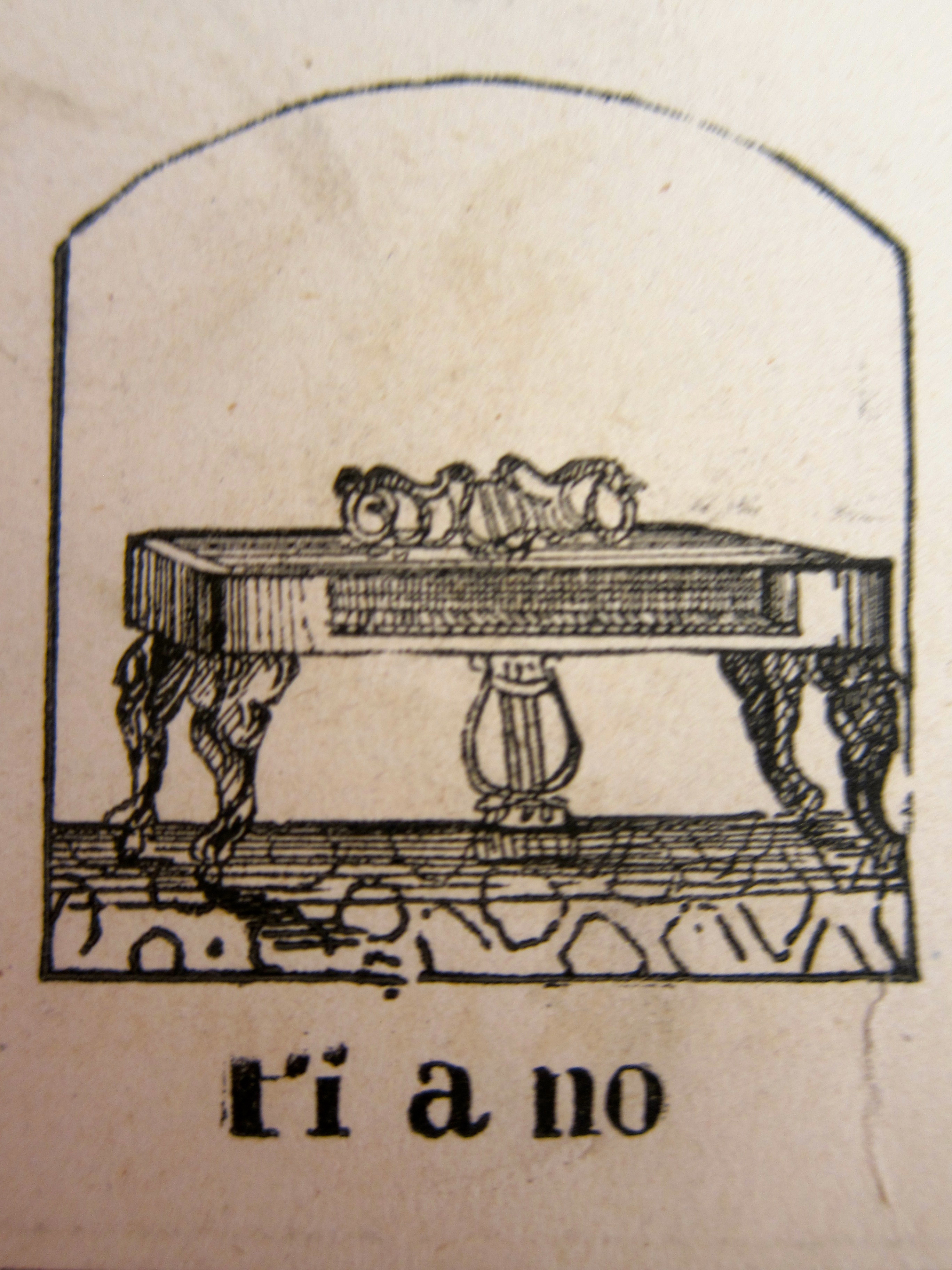
A piano! And not one piano, but two, one for each side of the house. Both Susan Ames and Emily Witherell would be learning to play the instrument. Each girl would have her own piano to practice on. What luxury. What gentility. What fun.

With advice from friends such as Louisa Kinsley, Evelina and Sarah Ames Witherell selected and ordered the instruments in a Boston store. Spending money liberally, Evelina went on to purchase gifts. For her other sister-in-law, Sarah Lothrop Ames, she bought a cloth to go on top of the piano that those Ameses already owned. For Catharine Hobart, a young family friend who had caught the eye of her son Oakes Angier Ames, she bought a gold thimble. And for her niece Helen Angier Ames – Catharine’s classmate – she bought a ring.

Did her husband Oakes know that Evelina was spending so much money? Did her father-in-law? While her husband must have given his approval, it’s unlikely that Old Oliver would have approved of such a spree. Yet both those men were often generous within the family; in that respect, Evelina was just following suit.

We note today, too, that Oliver (3) returned from a few days at a fair in Providence, where he no doubt saw friends and former classmates from his two semesters at Brown University. We might imagine that he was missing school.


September 20, 1852

Hay


Monday Sept 20th  Staid at Edwins last night

and slept with Emeline as I did not like

to leave them alone  Augusta rested very

well and is much better to day.  Hannah

left this morning & Louisa McAvoy came

and she & Catherine have washed  I have

worked hard all day  Augustus’ wife called

here this afternoon


Worried about her neighbor, Evelina spent the night at the Edwin Gilmore house in case Augusta took a turn for the worse. Also staying there was fourteen-year old Emeline Pool, Augusta’s youngest sibling, who may have been sent up by the Pool family to sit with her ailing sister. Everyone was unnerved by Augusta’s continued illness, but in the morning Evelina was able to report that Augusta had improved.

At the Ames house, of course, and, indeed, all over town, it was washday. Servant Hannah Murphy departed, as anticipated, but the new servant, Louisa McAvoy and the remaining servant, Catharine Middleton, were on task. The washtubs were out. Evelina did her usual Monday choring and tidying, and the house stirred with activity.

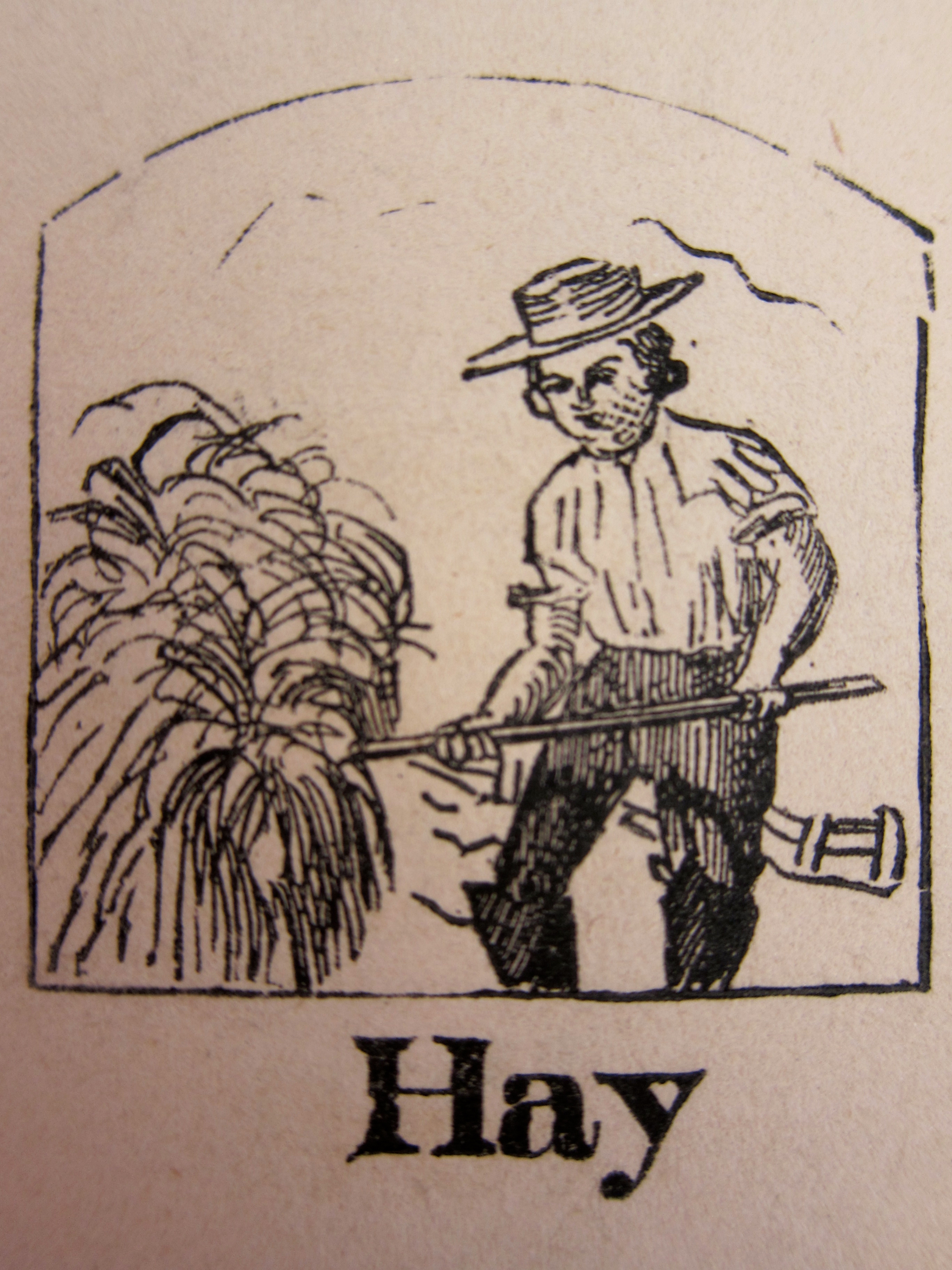
Also on task were men who worked for Evelina’s father-in-law, Old Oliver Ames. They were mowing. Old Oliver reported that “this [was] a fair day part of time + cloudy a part wind southerly + midling warm  began to mow second crop to day.”*  The hay that had been sown in early August was being cut, each worker mindful of the importance of the crop. “[T]he most important matter connected with American agriculture,” declared one farming expert a decade later, “the hay crop is of more value than the cotton, the corn, or the wheat crop, or any single article of farm produce upon which the lives of three fourths of all the horses, cattle, and sheep depend from November to April.[…] Farmer! Have you thought how much depends upon the four weeks of haying time?”** Old Oliver could have answered that question with alacrity.

*Oliver Ames, Journal, Stonehill College Archives, Arnold Tofias Collection

** Solon Robinson, Facts for Farmers, January 1865, pp. 772-773

September 15, 1852

Cake

Wednesday Sept 15th  Mr & Mrs Oliver Ames Helen & Miss Hobart

here to tea  Made cake & baked it in the stove

Mr Torrey made a long call here just after

dinner  He is quite neighbourly about this

time  Mrs Stevens need not take the credit of it

Augusta is not quite as well  sent for me to

come there & has had the Dr again

Oliver went to Providence this morning to the fair


Evelina baked a cake in her new cast-iron stove, something she was proud to note.  That was a real change for her, as before this she had used the family’s old, built-in brick oven for her baking. New technology in the kitchen was changing her ways.

The cake must have been a success; she served it at tea. Her husband and sons, minus Oliver (3), were present. Sarah Lothrop Ames and Oliver Ames Jr. came over from next door, too, bringing their daughter Helen Angier Ames and her friend, Catherine Hobart, with them. This was the last night of Catherine’s visit and it was sweet that her host and hostess took her next door for tea. Was there a conscious design behind the invitation and acceptance? Had the elders noticed a spark between Catherine and Oakes Angier Ames? Had Evelina contrived to make this happen? Were the young folks self-conscious on the occasion? Or was it just an average family gathering that inadvertently portended something more?

Catherine wasn’t the only guest. Mrs. Stevens was still visiting the Ameses and, inadvertently or otherwise, had made Evelina a little jealous. Col. Torrey, Evelina’s former brother-in-law – now a widower – had been calling more often than usual, and Mrs. Stevens had evidently volunteered the possibility that his attention was directed at her. Evelina, however, as we read from her rather ungracious entry, is reluctant to let her guest get any “credit.” Generous as she could sometimes be, Evelina was not inclined to share her friendship.

Across the street, meanwhile, young Augusta Pool Gilmore had had a relapse of her intestinal disorder, known in that day as “Cholera Morbus.” Certainly, her family and friends were worried about her.