January 17, 1852

IMG_2480

John Ames Mitchell

1852

Jan 17 Saturday  Finished Susans morino hood and mended

stockings & some other things  Finished Susans Delaine

dress that Julia Mahoney cut Dec 23  Mr Ames brought

Sarah W some fitch cuffs from Boston  Frederick

came home to night  Ruth Swan that was and

her husband came home to night  Heard of Mrs

Colin Harlowes death

Some months back Evelina’s sister-in-law, Harriett Ames Mitchell, had departed Easton with her three children to join her husband, Asa, in Erie, Pennsylvania  One of those children was John Ames Mitchell, who turned seven years old on this date.

John Ames Mitchell would lead an irregular childhood, moving around western Pennsylvania but eventually landing back in Massachusetts, in Bridgewater. His father, a coal trader who had worked for the Ames family, would succumb to mental illness or dementia and spend out his days in the Taunton Hospital for the Insane, his residence there supported by his brother-in-law, Oliver Ames Jr..  John’s mother, Harriett, and older brother, Frank Ames Mitchell, a Civil War veteran, would also live lives greatly indebted to the financial support of family; John, too, looked to his uncle for support on occasion.

John attended Harvard, but didn’t graduate, and studied abroad. Endowed with artistic and literary talent, he became an architect.  Under the guiding patronage of his Uncle Oliver Jr., John designed the Unitarian Church on Main Street in Easton in 1875, and worked on other projects in the Boston area before returning to Europe again, this time to study at the Beaux Arts. When he finally returned to the States, he used his ample talent to write novels, draw illustrations and, most lasting of all, create Life magazine.

With a racehorse owner named Andrew Miller, John started publishing Life in 1883. John and his staff, which included the Harvard grad and founder of Harvard Lampoon, Edward Sandford Martin,  saw Life as a publication that would “have something to say about religion, about politics, fashion, society, literature, the state, the stock exchange, and the police station.” He vowed “to speak out what is in our mind as fairly, as truthfully, and as decently as we know how.”* He also worked to bring wonderful illustrators on board, most famously Charles Dana Gibson, whose Gibson Girl would come to life in Life.

John also was a co-founder with Horace Greeley of the Fresh Air Fund.  He married but never had children of his own. His 75% ownership of Life lasted until his death in 1917.

January 10, 1852

Oakes_Ames_-_Brady-Handy

 Portrait of Oakes Ames by Matthew Brady 

1852

Jan 10th Saturday  Mr Whitwell & Ames have not met again

to day  Mr W called just as Augusta Helen Susan

& self were in the sleigh to take a ride  We have

called at mothers  Mr Horace & John Pool, Edwin

& wife here to tea  Swept the parlor this morning

and put the house in order partially frosted a loaf of cake

for Augusta having made one of hers carried the frosting

over and made her a call while heating it

The boys presented their Father a gold pen & pencil

Oakes Ames turned 48 years old today, as did the local Unitarian minister, William Whitwell.  Last year and again this year, Evelina was unsuccessful in getting the two men together to celebrate. Oakes Angier and Frank Morton gave their father a gold pen and pencil to mark the occasion, a fine gesture.

As Oakes closed in on the half-century mark, he presumably began to look beyond the confines of the work he and his brother Oliver Jr. did for the shovel company. The next generation, in fact, was being groomed to run O. Ames & Sons; Oakes Angier, as eldest son of the eldest son, was on deck to superintend the company whenever Oakes and Oliver Jr. decided to step down. He was learning every aspect of the manufacturing process. Oliver (3) and Fred Ames were at college, Oliver presumably honing the skills he would need to take over his father’s role in managing sales, while Fred was on a path to being the financial clerk or CFO we might say today. Frank Morton Ames was learning a variety of skills, too, although he was seen more as a spare man waiting to step in should his cousin or either older brother fail somehow.

What could Oakes do with his tremendous talent and energy? Clearly, the roiling politics of the day interested him. By 1860, his gregarious nature, quick comprehension and thirsty ambition led him to accept the nomination and election to Massachusetts Governor Andrew’s Council as representative from Bristol County. Two years later, by “a large popular vote,”* Oakes Ames was then elected to the Thirty-Eighth U. S. Congress, where he would serve for four terms.

In 1872, according to circumspect historian, Reverend William L. Chaffin, Oakes “declined a renomination.”* He died in May, 1873, shortly after the conclusion of Credit Mobilier, a national political scandal for which many held Oakes culpable. At the time, his natural candor and fearlessness worked against him and he was unable to dodge the political manuevering that placed most of the blame on him. That same brave honesty, coupled today with calmer, historical perspective, has since served to cast Oakes Ames in a better light.

William L. Chaffin, History of Easton, Massachusetts, 1886, p. 654


December 31, 1851

Dismiss


Wednesday Dec 31st  This morning sit down early to knitting

my hood  Have it all finished ready for the lining.  About ten 

Oclock went into the school with Mrs. Witherell.  Mr Brown

has closed his school to day.  Passed the afternoon & evening at Olivers

Mr & Mrs Wm Reed  Mr & Mrs J Howard, Whitwell & A Gilmore were there.

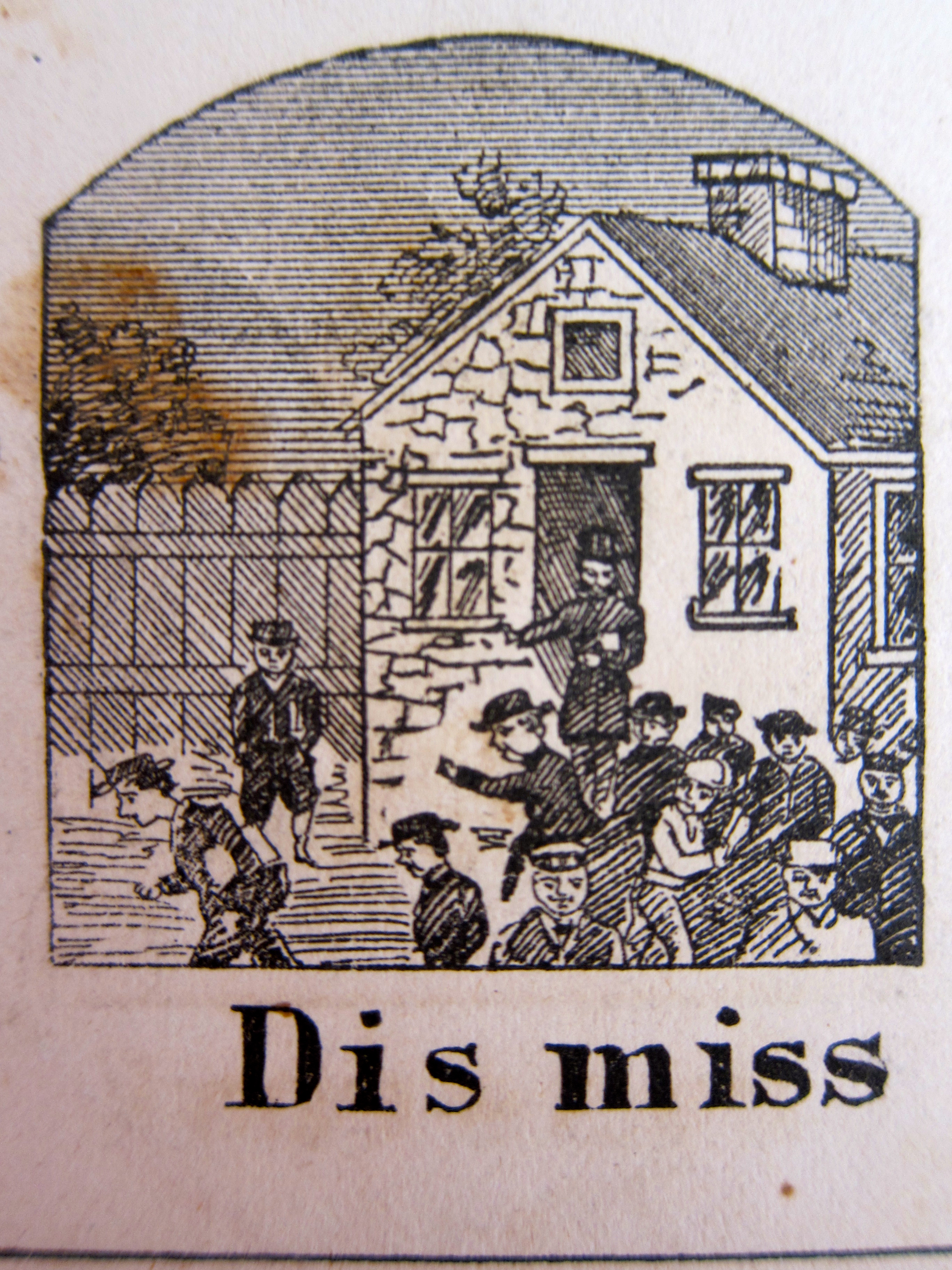
Susie Ames and Emily Witherell may have been happy today to reach the end of their school term. Class, dismissed!  1851, dismissed!

Just how the Ames family celebrated the departure of the old year and arrival of the new, we don’t know. Old Oliver, with his usual terse assessment of the day, merely noted that “this was a cloudy day and some cooler + misty + foggy.” The cool mist he saw would develop into a huge rain storm over night, preventing folks from moving around much.

A group of friends and relatives gathered for tea next door at the home of Oliver Ames, Jr. and his wife Sarah Lothrop Ames. Besides Evelina and Oakes, at the party were Reverend William Whitwell and his wife Eliza, Reverend William Reed and his wife Abigail, Jason Guild Howard and his wife Martha, and Evelina’s brother Alson Gilmore and his wife Henrietta.  In just a few more years, a group like this might have sung the beloved  Auld Lang Syne to mark the occasion. In fact, a version of Auld Lang Syne, written in 1855 and called Song of the Old Folks would become “the tradition of the Stoughton Musical Society to sing […] in memory of those who had died that year.”*

Out with old, in with the new. What a year it would be for the Ames clan.

http://www.americanmusicpreservation.com/SongoftheOldFolks.htm

December 21, 1851

Toasted rice blancmange


Sunday Dec 21st  My cough and cold is much better but not

well enough for me to go to meeting  Oliver is sick

with the rheumatism there was no one to meeting

from there  All the rest went.  I spent the forenoon

in making ice cream, blanc mange &c  have written

a letter to Brother John & wife.  About 8 Oclock went

into the office with Mr Ames   Mr Swains brother came 

in awhile  Checked over our account since May

A “pritty cold,” quiet Sunday, which Evelina spent productively. She missed church; her cold was better, but her cough wasn’t.  Next door, her brother-in-law Oliver Ames, Jr., was ill with rheumatism.

Evelina had some milk or cream on hand that she needed to use up, so she made not one but two dairy desserts: Ice cream, which seems ill-calculated to please on such a cold day, and blancmange, which was also served chilled.  Blancmange is a traditional, simple dessert made with milk, flour and sugar, poured into a mold to set. Sometimes used medicinally for sore throats, it was a popular treat in the 19th century.

Once the desserts were put away in the coldest area of the house (the shed? the buttery?), Evelina went to her desk and wrote a letter to her oldest brother, John Gilmore, and his wife, Eliza.  She hadn’t seen them since their brief visit back in June.

In the evening, Evelina walked across the yard to the office, where her husband and his brother usually met in the evening to go over the day’s business. On this occasion, however, with Oliver, Jr., under the weather, Oakes Ames was likely there by himself. Husband and wife sat together in rare, private companionship before being joined by an acquaintance.


December 19, 1851

Coal

Dec 19th Friday  After breakfast went to making

my citron made quite a long job of it nearly two before it

was all done had about 14 or 15 lbs  The coal

affected Jane so much that she nearly fainted 

and had to go to bed & I had to get dinner

After I got through with the citron I put

the things back into the store room from the

shed chamber & put it in order  Spent eve at Olivers

Coal was the fuel of choice at the Ames compound, but it had some negative aspects (beyond its environmental impact, a more modern concern.) Dust and smoke from burning coal was noxious, its particulates containing toxins like lead, mercury and arsenic.  Yet much of America was turning to coal for fuel to support the growth of manufacturing and the expanding rail traffic, and to replace the use of wood in homes.

While working in the kitchen making candied citron, Jane McHanna was overcome by the coal smoke and smell.  She went to bed to recover, leaving Evelina at the stove to finish up and make dinner. No doubt Evelina was concerned for the health of her servant, but no doubt she was somewhat peeved to be doing Jane’s job again.

Citron, meanwhile, was the fruit of choice for fruitcake.  Not as familiar to us nowadays as it was in 1850, it was cooked and candied and used for special baking.  Both Evelina and Jane would have known how to cook it down.


November 25, 1851


kitchen

*

Tues Nov 25th  Mary has done the ironing to day except

the fine clothes and they look much better than usual

Jane is rather better to day and has washed the dishes

and assisted some about the housework.  I have made a

dickey for Mr Ames. Passed the afternoon at Father Ames

with Mr & Mrs Swain & Mrs Meader  Mrs S Ames,

Fred & Helen came home to night

Family members began to gather in anticipation of Thanksgiving. Fred and Helen Ames came home from their respective schools in Cambridge and Boston, adding animation to the quieter house next door.  Surely their parents, Sarah Lothrop and Oliver Ames, Jr., were pleased to see them.  Oliver (3), away at school in Providence, was getting ready for his travel home.

No one was making merry yet, however.  Everyone still had work to do. The new girl, Mary, did some ironing, evidently better than Jane McHanna usually did.  Jane herself, still recovering from an illness that had laid her low for almost ten days, was able to wash dishes and help out a bit. Evelina, after supervising Mary and Jane, was finally freed up to sew and socialize.  She was in a happier state of mind.

The men of the family were working as well.  While Oakes, Oliver Jr, Oakes Angier, and Frank Morton were at the shovel shop, Old Oliver and some of his men began “a building an ice hous.”**

“About sunsett,” it began to snow.


*Image of a mid-19th century kitchen, Courtesy of http://www.victorianpassage.com

**Oliver Ames, Journal, Courtesy of Stonehill College Archives, Tofias Collection


November 18, 1851

IMG_2477

Horatio, Oakes, and Oliver Ames, Jr.*

Tuesday Nov 18th  Jane is not well at all she has done

the housework and starched the shirts and

ironed a little. I have swept the house most

all over except the parlour and been doing

little here and little there, have not sewed

at all.  I begin to think I never shall.

This evening have cut some more apples to put

to the barberries and picked over the mince pie meat


Evelina’s domestic concerns were disrupted by Jane McHanna’s illness. Although Jane tried to help a little, Evelina did most of the work, and sounded annoyed about it. She wanted to be sewing, not choring.

Today was the birthday of Horatio Ames, second son of Old Oliver and Susannah Ames.  Born in 1805, he had grown up in Easton to become a “towering”** man, yet was considered by most to be less capable than his powerful older brother, Oakes, or his next-youngest brother, Oliver Ames, Jr. Staying close to home, they prospered. Horatio and another brother, William Leonard, on the other hand, left home to find fortune and were less successful.

Horatio’s personality was part of his problem. His behavior could be crass, his attitude pugnacious. Modern historian, Gregory Galer, has noted:

“One obstacle Horatio Ames faced his entire life was others’ negative reaction to him personally.  Horatio was a large man, apparently with a high-pitched voice, and his physical features may have emphasized his irritating tendencies.  However, his direct, aggressive, and often foul-mouthed manner instantly limited his ability to gain supporters.  He seems to have had little tact and poor social skills.”***

As an adult, Horatio married an Easton girl and settled into a house in the village built for him by his father. Soon, however, he and his young family moved away, first to Albany and then to Fall River, Connecticut, where, with others, Horatio established a family-backed ironmaking enterprise.  Over the years, the business would be innovative, the iron it produced would be of better quality than other iron from the area, yet the business would never quite take off. Horatio would strive and struggle, yet never achieve the success of his two brothers back in Easton.

His personal life didn’t fare much better.  In 1853, his wife Sally Hewes Ames divorced him “on grounds of adultery with ‘divers women in New York.'”**** He was estranged from all three of his children, especially his two “miserable boys,” as he described them.  His eldest son, Horatio, Jr., was accused of attempting to murder him. His daughter Susan disobliged him by marrying a physician named Philander P. Humphrey, of whom Horatio didn’t approve. They moved west to Minnesota, where she, her husband and two of their three children were killed in an uprising on a Sioux reservation.

Horatio remarried in 1856. His second wife, Charlotte Langdon Ames, was sharper than his first wife. She tried to help manage the failing company and, after Horatio died from gangrene early in 1871, she maneuvered to keep his assets for herself.  She was bested by Oliver Ames, Jr., however, in a contentious court battle. Horatio’s business had been built with Ames money, and whatever money was left when he died was going to go right back home to Easton.

In her diary, Evelina seldom mentions Horatio or his wife at the time, Sally. Their families were not close.


*Courtesy of the Fall River, Connecticut Historical Society

**William Chaffin, History of Easton, Massachusetts, 1886, p. 345

***Gregory Galer, Robert Gordon, Frances Kemmish, Connecticut’s Ames Iron Works, New Haven, 1998, p. 157.

****ibid., pp. 158-159

November 17, 1851

Hoof

Monday Nov 17th  Jane has not been at all well to day

but she has done the washing and went to

bed early in the evening  I did the housework

to day and was about all this forenoon  This

afternoon have been to Mr Nahum Williams

with Mrs S Ames  Mr Seth Williams died

Friday night and is to be buried tomorrow at

ten Oclock.  We drive the new horse for the first.


The stalwart Jane McHanna, now the only house servant at the Ames’s, did the Monday washing today despite feeling not “at all well.” By evening she was in bed. Evelina picked up the slack and did the rest of the housework herself, something she was fully capable of doing.

Despite the extra choring that she did, Evelina and her sister-in-law, Sarah Lothrop Ames, found time to ride out of the village to call on Nahum and Amanda Williams.  Nahum, who lived in Furnace Village, was most likely the son of the Seth Williams who had just died. As was customary, the Ames wives helped tend the dead, the dying, and their families in their community.

A little more than twenty years later, on September 1, 1873, Nahum Williams himself died, and Sarah Lothrop Ames and her husband, Oliver Ames, Jr. along with her brother, George Van Ness Lothrop and his wife, Almira Strong Lothrop, would attend his funeral. Clearly, Nahum had a long-standing relationship with the Lothrop family, if not the Ameses, too.

November 15, 1851


SUGARLOF

1851

Sat Nov 15th  Another day I have been about house all

day, this morning helped the gardener weigh out

a box of sugar that we bought in Boston

got my bags of cloth of different kinds

in order in the shed chamber  It has been

very stormy all day Mr Ames and Oliver Jr

in Boston Oliver went yesterday He looked 

at carriages but did not purchase one

Bridget gone to housekeeping

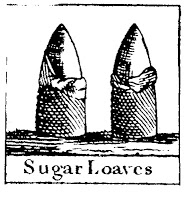
At the rate Evelina used sugar in her fruit preserves, she needed many loaves of it. Unable to purchase it at the family store in the village, she bought what they needed in Boston at Faneuil Hall.  On this day, she appeared to be breaking at least part of a sugar loaf into usable bits for her kitchen.  The family gardener helped her, perhaps because the sugar loaf was so heavy to hold.

Sugar wasn’t the only commodity that Boston had to offer.  Evelina’s husband, Oakes, and his brother, Oliver Ames Jr., had gone to the city, the latter in search of a new carriage. He – or they – didn’t purchase anything, just looked.  Oliver Jr. would have been very careful about the cost and quality of such a big item.  Both men would have admired the various coaches, chaises, gigs and traps they must have seen.

It’s worth noting that Evelina reveals today where she kept her “bags of cloth,” when not working on them: in the shed. As she organized them today, folding cloth and perhaps tossing any textiles that couldn’t be used, she would have heard steady rain on the roof.


November 11, 1851

Helen Angier Ames

Helen Angier Ames


Tues Nov 11th  Jane and Bridget washed this morning and I have

cleaned the front chamber closet and put things in

order in the chamber and worked about house untill about

four and went to tea in Olivers  Mr & Mrs Swain and 

Mrs Meader (Mrs Swains brothers wife) were there

Father & Sarah and her children dined there  They

had ducks for dinner

Post-election political discussions were no doubt rebounding in print news across the nation but in North Easton, Massachusetts, at the Ames compound, domestic concerns held sway. There was washing, cleaning and tidying up to be done. Laundry day had been postponed from its usual Monday slot; perhaps Evelina had waited for Jane McHanna to return from Mansfield. Evelina didn’t like doing laundry at all.

Today was Helen Angier Ames’s fifteenth birthday.  The only daughter of Sarah Lothrop Ames and Oliver Ames, Jr., she was at school in Boston, so not able to celebrate at home. Neither was her brother Fred at table, for he was at Harvard.  Perhaps the roast duck that Sarah and Oliver served to their dinner guests was in Helen’s honor, in absentia.

Helen Ames never married, choosing instead – or learning to accept – spinsterhood in North Easton and Boston.  She had a small social life with friends and family and when the railroads became more established, she traveled with her parents and cousins to places like Niagara Falls, Detroit, and points west. She played piano very well, occasionally playing the reed organ at the Unitarian church, where she was “acknowledged to be the best performer.”** Her uncle, Cyrus Lothrop, named one of his sailing vessels after her: the Schooner Helen A. Ames.

As a teenager, Helen enjoyed the company of Evelina’s niece, Lavinia Gilmore, another young woman from Easton who would never marry. Helen also was in school with a friend from Bridgewater named Catherine Hobart, the youngest daughter of a family well known to the Ameses.  Catherine, or Cate, would one day become her cousin Oakes Angier’s wife.

Helen’s father died in 1877, her mother not until 1894.  In 1882, at the age of 46, she herself “died suddenly in the prime of a life of thoughtful and generous service, deeply honored, loved, and lamented.”* Her brother, Fred, commissioned John LaFarge to create a stained-glass window, the Angel of Help, for Unity Church in memory of a sister he had loved.


*William L. Chaffin, History of Easton, Massachusetts, 1886, pp. 411-412

**Winthrop Ames, The Ames Family of Easton, Massachusetts, privately printed, 1937, p. 130