November 7, 1852

Anne_Marsh_Caldwell_Osgood

Anne Marsh-Caldwell

(1791 – 1874)

Sunday Nov 7th  It was unpleasant this morning

and I did not feel like going to church

All the rest of the family went  Oakes A

& Oliver came home at noon & did not return

I have been wicking most of the time

Evelina played truant today and skipped church. How quiet the house must have been with everyone away. She wrote that she was “wicking most of the time,” although we might imagine that she read a little as well.

Wicking is a term for placing a wick into a candle mold and pouring wax around it to make a candle. No doubt the Ameses used some candles around the house – we know, for instance, that Evelina had bought wax candles the previous month. It’s unlikely, however, that Evelina was actually making candles. The task would have been too big a production, especially on the Sabbath. She may have been using the term wicking in a different sense; perhaps she was placing fresh wicks into some of the oil lamps around the house. Although kerosene was not yet available, other sources of oil were. Knowing how up-to-date Evelina’s parlor was, we can imagine that she had furnished it with relatively modern oil lamps. She may have been trimming those wicks.

Given the “unpleasant” weather outside, Evelina spent the day indoors. Once the wicking was completed, she may have settled down to read, as she so often did on a Sunday after church. Last week she had mentioned reading a novel called Ravenscliffe, a novel published in 1851 and written by Anne Marsh-Caldwell, an Englishwoman.  Mrs. Marsh was known for her stories of the upper-middle class and second-tier aristocracy; her books were quite popular from the 1830’s through the 1850’s, occasionally rivaling books by authors with whom we are more familiar: Jane Austen and Charlotte Bronte, to name two. A contemporary described Mrs. Marsh’s novels as “thoroughly feminine,”* which suggests that they fell into the category that Old Oliver described as “love trash.” Evelina seemed to enjoy the book, regardless of her father-in-law’s contempt. It was probably good escapist fare from wicking and rain.

*Sara Coleridge, Memoirs and Letters of Sara Coleridge, 1873


November 2, 1852

490px-William_Rufus_DeVane_King_1839_portrait

William R. King

(1786 – 1853)

Tuesday Nov 2d  Sewed on cambric sleeves for

Susan this forenoon very quietly with

Miss Alger  It has rained since Saturday

morn but this afternoon has cleared 

off Mrs Ames & self have been to Mr

Swains & called at Doct Wales & Augustus

Miss Alger & O Angier took tea in Olivers


Back from her quick day trip into Boston, Evelina spent the morning “very quietly” in her sitting room, sewing. The piano teacher, Miss Alger, was still visiting.  Outside, “it rain[ed] by spells […] wind north east it stormd all the forenoon and was cloudy about all day – there has bin one inch + a quarter of water fell since Sunday”*

After midday dinner, when the storm had stopped, Evelina and her sister-in-law, Sarah Lothrop Ames, went out to check on Ann and John Swain, whose infant son had died on Saturday. Evelina would have taken with her the mourning accoutrements she had purchased for Ann in the city. No doubt the Ames women continued to comfort the forlorn parents. From the Swains they paid other calls in North Easton, to the home of Ephraim and Maria Wales and to see Evelina’s nephew, Alson “Augustus” Gilmore and his wife Hannah. Hannah had lost her infant son Willie back in the summer. The women would have had much to talk about.

On the national scene, the day was momentous. As we have read previously in this blog, General Franklin Pierce, a Democrat, was elected President of the United States, defeating Whig candidate General Winfield Scott (incumbent Whig Millard Fillmore hadn’t been renominated) and Free Soil candidate John P. Hale. Easton historian William Chaffin writes: “In 1852 the vote for President was one hundred and seventy-one for Winfield Scott, one hundred and forty-three for John P. Hale, forty-nine for Franklin Pierce, and four for Daniel Webster, who was dead. This vote shows the political complexion of the town, and confirms the statement of the adoption of the Free Soil position by many Democrats.”**

The vice-president-elect was William R. King, a senator from Alabama who believed strongly in the Union. He had helped draft the Compromise of 1850. Unfortunately, King was suffering from tuberculosis and would soon die in office, one of the shortest-termed vice-presidents and the only Alabaman. He was also the only vice-president to take the oath of office on foreign soil; he was in Cuba taking the cure when he was inaugurated.


*Oliver Ames, Journal, Stonehill College Archives, Arnold Tofias Collection

**William L. Chaffin, History of Easton Massachusetts, 1886, p. 630


October 27, 1852

381-1233891708GdW7

Wednesday Oct 27  Miss Alger has given the

girls the seventh lesson and Susan

makes hard work of practicing and 

I am sorry that she is so unwilling

Mrs S. Ames, Miss Alger Oakes A and

self have passed the afternoon at Mr

Nahum Williams  Mrs Rollins is at

her fathers  Mrs H & C Lothrop were there


“[T]his was a mild day & little hazy wind southerly.”* Once night fell, a full moon shone down on the rooftops, dooryards and unpaved streets of North Easton, lighting the byways even after curfew. The day itself was unremarkable, although Susan Ames grudgingly endured yet another piano lesson. Evelina bemoaned her daughter’s intransigence.

Evelina did pay a rare visit to Nahum Williams, “a farmer at Easton.”**Accompanying her were the ever-present piano teacher, Miss Alger, as well as Sarah Lothrop Ames and Oakes Angier Ames, the latter an unusual participant in the women’s sociable errand. They visited not only Nahum but his wife Amanda (nee Lothrop) and their daughter, Sarah Elizabeth Rollins. Also present were some Lothrop women – possibly Mrs. Henry Lothrop and Mrs. Clinton Lothrop. Sarah Lothrop Ames was probably related to Amanda.

We have met Nahum Williams before in Evelina’s pages; some time back, he lost his father, Seth, and various Ames family members had attended the funeral. Sarah Rollins was his recently married daughter; she and her husband had moved to Vermont and were expecting their first child. By 1860, she would return to her parents homes in Easton, possibly widowed, with three children: Ellen, George and Jennie.

*Oliver Ames, Journal, Stonehill College Archives, Arnold Tofias Collection

**Hyde Family Geneaology

October 23, 1852

Railway_Station,_Stoughton,_MA

Stoughton Railroad Station, built 1888*


1852

Saturday Oct 23d Baked in the brick oven brown

bread cake & pies  After I got the first

oven full I had pies enough for a second

and I put the brown bread with the

stove oven and heat the brick oven again

Oakes A & Susan went to Stoughton after

Fred and then after Miss Alger and she has

given her sixth lesson Mr & Mrs Davenport &

child came this evening from Attleboro

Bread, cake, pies and more pies. There was so much baking going on at the Ames house that Evelina used both ovens, the new cast iron one and the original brick oven – the latter twice. What was all the baking about? Company was coming.

A young couple from Attleboro came for a visit: Edward Davenport, a jeweler, with his wife Celestine and their toddler, Annie. What was their connection to the Ames family? They stayed for several days. Also arriving for a stay was the piano teacher, Miss M. J. Alger. We might wonder how Susie Ames felt about that.

Susie helped pick up Miss Alger, in fact. She and her brother Oakes Angier drove around today, first to the train depot in Stoughton and then to Miss Alger’s house. At Stoughton, they met their cousin Fred Ames, who must have been coming home on a break from Harvard. The depot they went to was the earliest iteration of a train station in that town, built in the mid-1840s for the Old Colony Railroad. It was later replaced; today, the Romanesque stone building erected in 1888 is on the National Register, reminding us of the tremendous role that the railroad played in the second half of the 19th century – and well into the 20th.

What a full house Evelina had tonight. Where did she fit everyone?

*Image from 1901, courtesy of Wikipedia


October 11, 1852

factory-steam-engine

Early factory steam engine

Monday Oct 11th  Catharine Middleton & Murphy washed

and I sat down quite early to my sewing

with Mother & Louisa  Mended stockings

This afternoon we spent at Augustus

Mother & Louisa are going to spend the 

night  Mr Torrey & Abby were there

Mr Ames & Oakes A went to West B

I have been sewing on the skirt of Susans

fall Delaine

This was a typical Monday as far as domestic matters were concerned. In the morning, the women washed clothes and mended stockings. In the afternoon, they went calling on relatives in the village. But it was a red-letter day at the shovel shop, as men arrived to install the a steam engine – the first – at the factory.

Old Oliver seemed excited: “this was a fair good day for the season the man came here to sett up the enjoin four of them.” The company’s first steam engine was placed in the new Long Shop by the Corliss Nightingale Company of Providence. It was a technological change that Oliver had resisted in the past, but had since come to accept. His son, Horatio, in particular, had urged the change for several years in order “to counter water supply limitations”* In January, 1847 he had written his father and his brother, Oliver Jr., on the topic.

To Old Oliver:

I shall think a steam engine […] of sufficient power to carry 3 hammers and carry all your polishing works shearing and punching and Bisbees works […] would be cheaper and better […] It is too bad that you do not keep nearer supplying the market with shovels when a comparatively small expense would do it in addition to your other works.”*

To Oliver Jr.:

I enclose you with […the] price and terms for a steam engine. It will do you no hurt to compare cost of this and water power. it will take about one ton of coal a day to drive it and the repairs will be no more than a water power if as much[…] You never need fail for water either too much or too little […] I am altogether in favor of this plan over water power in your situation.”*

Horatio was right, as it turned out. The new engine was the beginning of modernization for O. Ames and Sons.

Gregory Galer, Forging Ahead, MIT, 2002, p. 251.  Text of Horatio Ames correspondence from Stonehill College Archives, Arnold Tofias Collection

October 10, 1852

Daniel_Pierce_Thompson

Daniel Pierce Thompson

(1795 – 1868)

Sunday Oct 10th  It is quite unpleasant to day and

as mother & Mrs Mower was not going to meeting

I staid with them  Mrs Ames Oakes A & Frank

went this forenoon, and Mr Ames returned alone

this afternoon  I have been reading some in

the Rangers Torys Daughter and writing

Helen came in and played on the piano

this evening  Mrs Witherell & Ames came in a while

Evelina skipped church to stay home with her mother and houseguest, not minding too much because of poor weather, which Old Oliver described as  “cloud[y] damp + verry warm wind.”

The women did not sew, but they probably chatted a bit and read a lot. Evelina was reading The Rangers: Or, The Tory’s Daughter: A Tale Illustrative of the Revolutionary History of Vermont and the Northern Campaign of 1777, by Daniel Pierce Thompson. Mr. Thompson was a famous writer in the period before the Civil War, especially in New England. His novels were as well-known as Nathaniel Hawthorne’s, but his turgid prose, popular in its day, has caused him to fall far out of fashion. He was also a political figure in Vermont and an active abolitionist, but his novels are not much remembered.

The first two sentences of the book that Evelina was reading illustrate his dated style:

Towards night, on the twelfth of March, 1775, a richly equipped double sleigh, filled with a goodly company of well dressed persons of the different sexes, was seen descending from the eastern side of the Green Mountains, along what may now be considered the principal thoroughfare leading from the upper navigable portions of the Hudson to those of the Connecticut River. The progress of the travellers was not only slow, but extremely toilsome, as was plainly evinced by the appearance of the reeking and jaded horses, as they laboured and floundered along the sloppy and slumping snow paths of the winter road, which was obviously now fast resolving itself into the element of which it was composed.

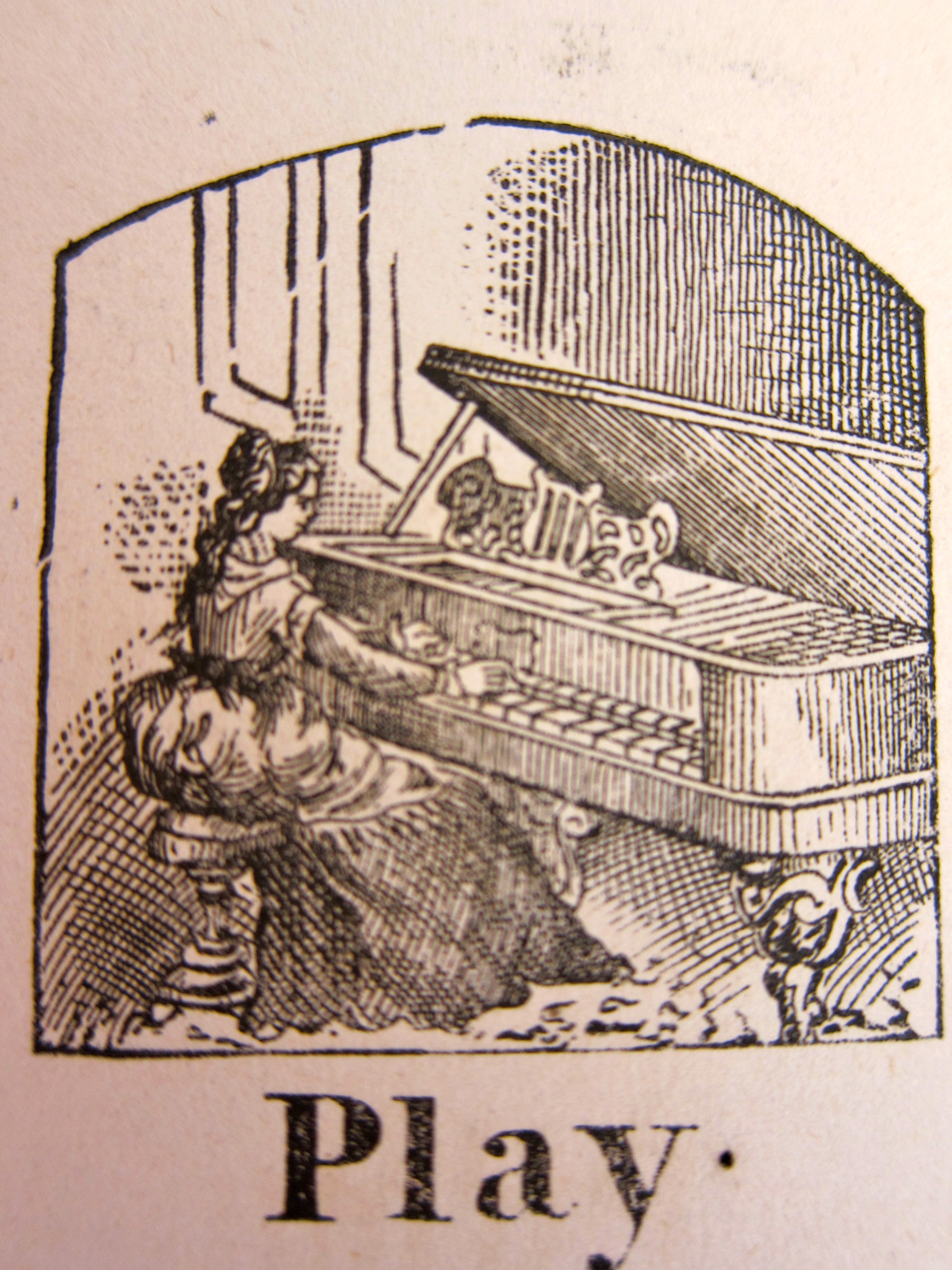
In the evening Evelina put down the book – which must have been slow going – and whatever letters she was writing, and the whole family listened as Helen Angier Ames played the new piano.


October 9, 1852

imgres-1

Piano scales

Sat Oct 9th  Miss Alger came to day to give her second

lesson. Mother Amelia Henrietta & Louisa

J Mower spent the day came about eleven

Henrietta went to Augustus to tea  Mother & Louisa

will stop here untill she returns to Maine

Oakes A returned from his journey & Helen

came with him. Have baked in the brick oven

Oakes Angier Ames came home today from points south. He had been on a business trip with his father to New York and New Jersey, but his father had returned several days earlier. What had Oakes Angier been doing? Was he meeting customers and delivering shovels, all on his own? And why was his cousin Helen Angier Ames with him? Perhaps he came back by way of Boston where Helen – and her friend, Catherine Hobart – were at school.

The day was cloudy and cool and the ladies who came to visit with Evelina must have sat inside. Two Gilmore sisters-in-law, Amelia, young widow of Joshua, Jr., and Henrietta, wife of Alson, were there along with the elderly Hannah Lothrop Gilmore and a guest from Maine, Louisa J. Mower. The latter two women would spend the night.

The girls of the house, meanwhile, had another piano lesson today. The sound of Susie and Emily practicing their scales would have been background sound for the chatter in the parlor.

October 3, 1852

Play

Oct 3d Sunday  We have all been to meeting to day

Mrs Norris Mr Ames & self came home at noon but did not

have a dinner cooked  After meeting Frank carried Miss Linscott

& Orinthia to Bridgewater & Melinda & self went to Mothers and

called on Miss M J Alger while Frank went to carry them home

Mrs A[l]ger had her piano & played Horatio Jr is here came last night

More comings and goings today. Everyone went to church, of course, but afterwards dispersed in different directions. Frank Morton Ames obliged the young, single ladies in the group by driving them home to Bridgewater. While he headed east, Evelina and her friend Melinda Norris rode south to the family farm to visit the elderly Mrs. Gilmore. They also stopped to visit Miss M J Alger, the woman who would be giving piano lessons to Susie Ames and Emily Witherell. She, or her mother, played a piano for them.

Old Oliver reported that “this was a fair pleasant day for season Oakes came home from N. York las[t] night.” Oakes Angier stayed behind, on business or pleasure we don’t know. Evelina reported, as her father-in-law did not, that Horatio Ames Jr. was back for a visit. He was the son of Horatio Ames, a brother of Oakes and Oliver Jr. It’s unclear if Horatio Jr. was living in Boston at this point or was still in Connecticut at the family home there.


September 24, 1852

Giffard1852

Henri Giffard’s Dirigible  

Friday Sept 24th  Mr Ames & Oakes Angier went

to Boston and are going to New York for New

Jersey to night  I have been to work again about

house all day ironing and this that & tother

Catharine got my quilt out and has been

mending some stockings  Mr Rathbourne

returned to P[rovidence] this afternoon  Oliver carried him

to Mansfield  They went to Canton this afternoon


Today Evelina saw her husband and eldest son depart for New York and New Jersey, by way of Boston; that helps explain the extra laundry day yesterday. The men were off on shovel business and the fact that Oakes Angier went along suggests that he was enjoying good health. He was also learning the family trade.

Back at the house in North Easton, domesticity reigned, as usual. Even Evelina couldn’t quite keep track of all the little tasks she was addressing. It was simply “this that & tother.” Mending, ironing, quilting went on. Her son Oliver was riding here and there with his houseguest, Mr. Rathbourne.  It looks like the only son who was present at the shovel works was the youngest, Frank Morton.

Miles away from anyplace that any Ameses were traveling today, a steam-powered dirigible, lifted by hydrogen, rose in the air for the very first time. Hot air balloons had already ascended the skies in various places and for various lengths of time. The airship was new and different by virtue of its shape, design, and engine. Created by a Frenchman, Henri Giffard, the airship made its maiden voyage from Paris to Elancourt. It traveled 17 miles. The winds were too strong for it to return to Paris, as planned, but Giffard was nonetheless able to steer and turn the airship in its course. It was the shape of things to come.


September 22, 1852

Piano

Wednesday Sept 22d Have been to Boston with Mrs

Witherell to get a Pianno  Have got to have

them made  Mrs Kinsley called to see them with

us  Met Mrs Wilson at Lintons to go to select

them. Dined at Mr Orrs while Mrs Witherelll

called on Mrs Dorr  Bought a Piano cloth

and gold thimble for Mrs Ames & C Hobart

and a ring for Helen  Oliver came from Providence


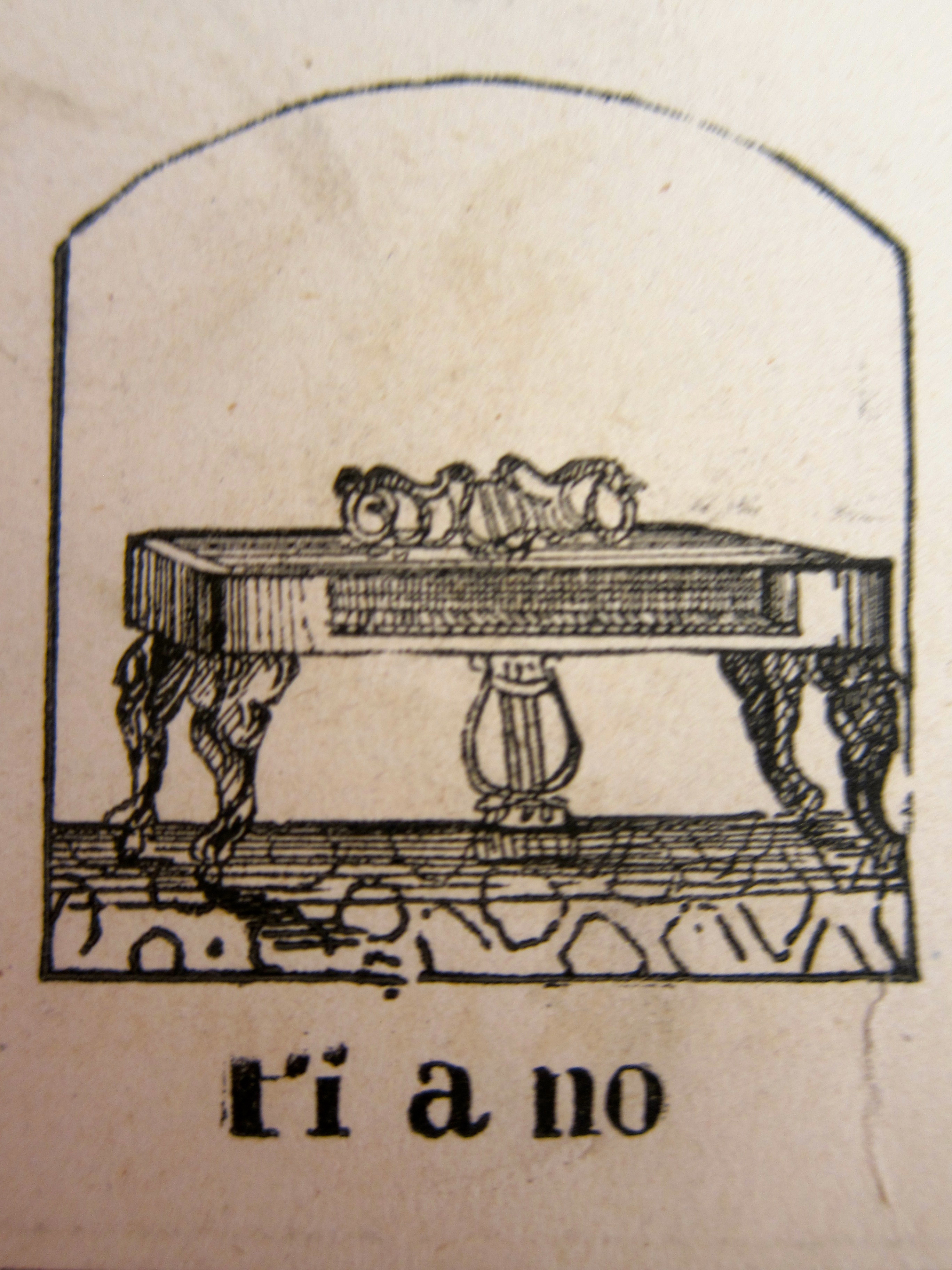
A piano! And not one piano, but two, one for each side of the house. Both Susan Ames and Emily Witherell would be learning to play the instrument. Each girl would have her own piano to practice on. What luxury. What gentility. What fun.

With advice from friends such as Louisa Kinsley, Evelina and Sarah Ames Witherell selected and ordered the instruments in a Boston store. Spending money liberally, Evelina went on to purchase gifts. For her other sister-in-law, Sarah Lothrop Ames, she bought a cloth to go on top of the piano that those Ameses already owned. For Catharine Hobart, a young family friend who had caught the eye of her son Oakes Angier Ames, she bought a gold thimble. And for her niece Helen Angier Ames – Catharine’s classmate – she bought a ring.

Did her husband Oakes know that Evelina was spending so much money? Did her father-in-law? While her husband must have given his approval, it’s unlikely that Old Oliver would have approved of such a spree. Yet both those men were often generous within the family; in that respect, Evelina was just following suit.

We note today, too, that Oliver (3) returned from a few days at a fair in Providence, where he no doubt saw friends and former classmates from his two semesters at Brown University. We might imagine that he was missing school.