March 3, 1852

Fire


1852

March 3  Wednesday  Last night the finishing shops

were burned to the ground by Quinns letting 

his lantern fall into the varnish  Oakes came

home from the fire about 4 Oclock much

more cheerful than I expected to see him and 

went to bed  OA and Frank came home to put

on dry clothes & went back and staid untill morning

Lavinia & Augusta were here awhile this afternoon


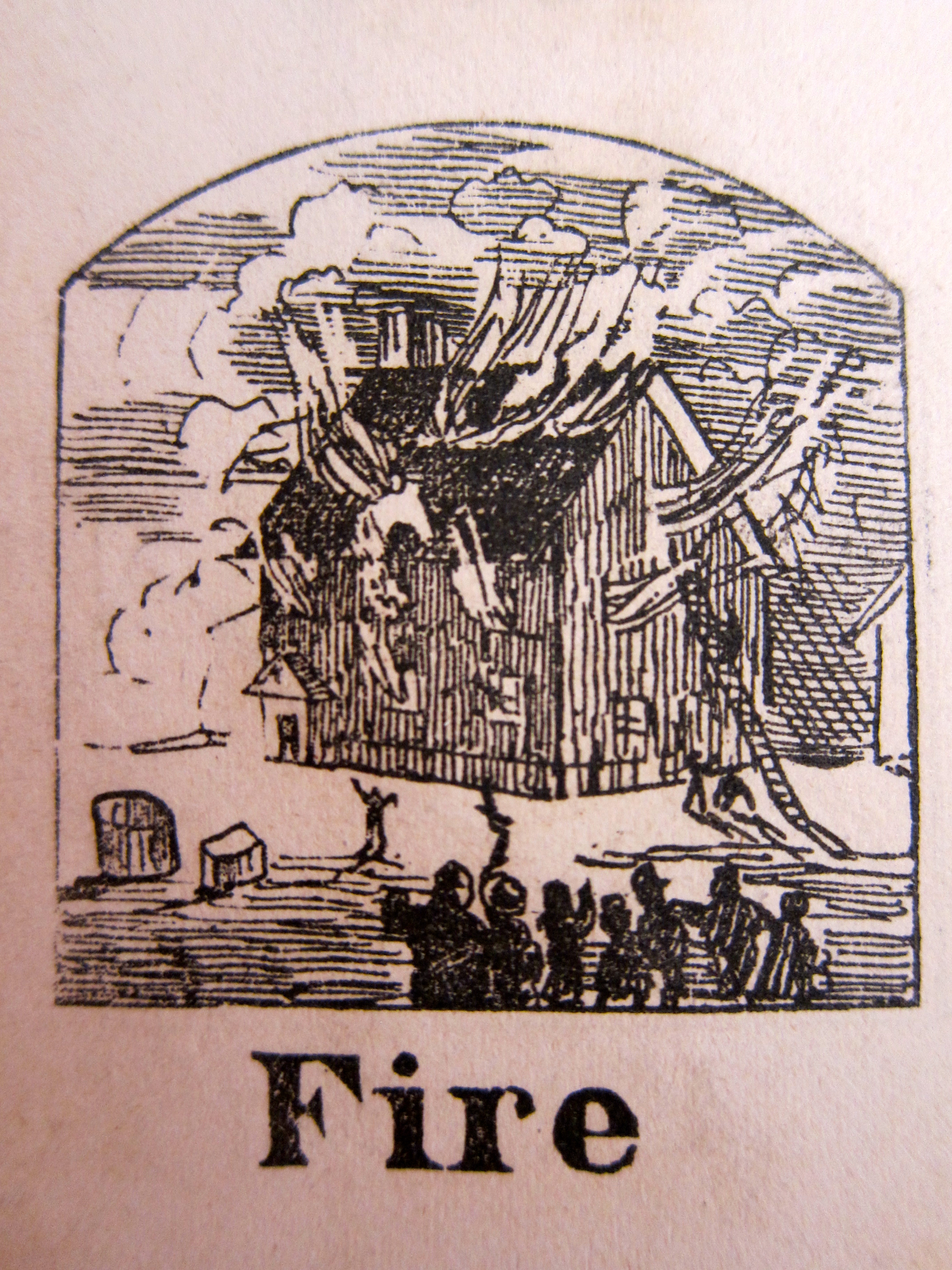
Fire! Most of the shovel company’s buildings, situated in”the most centralized areas of Ames production, ‘the island’ at the outfall of Shovel Shop Pond,”* caught fire and burned to the ground. On his nightly round, Patric Quinn, the watchman, dropped his lantern into the varnish. The subsequent explosion must have been quick and, given the nature of the combustibles, uncontainable from the outset.

Naturally, Old Oliver recorded the event as well: “last night about eleven O clock the finishing shop took fire and the shops adjoining it were burned down – Bisbes shop and the small one made out of the cole hous that was mooved from the hoe shop was saved – the fire took from the varnish …”**

O. Ames & Sons had caught fire before, once in 1844 and again in 1849.  After the 1844 fire, the family “had bought a used fire engine,”** which was brought to bear on the 1849 fire. In that case, Old Oliver credited the engine with saving the day, noting that “if we had have had no engoin I think it would have burnt up.” **

This latest conflagration was different. As modern historian Gregory Galer points out, “luck was not on their side…[the used fire] engine was no match for the blaze, fueled in part by 12,000 well-dried, ash shovel handles; oil and varnish used to protect completed shovels; and the wooden building itself.”*  The shovel shop was in ruins.

Evelina didn’t attend the fire, but she would have been able to see the flames from their front windows. The fire went on all night, her husband, sons and other townspeople present for most of it. There is no record of any injuries.


Gregory Galer, Forging Ahead, MIT, pp. 248-249

** Oliver Ames, Journal, Stonehill College Archives, Arnold Tofias Collection


March 2, 1852

Brush

March 2nd Tuesday

1852 March  Have been assisting Mr Scott paper[ing]

again to day  Worked untill past nine

and feel very tired.  The paper is all on

except a patch or two here & there  Francis brought

Lavinia up to Edwins this afternoon  Mr Holbrook

has finished the first coat of paint in 

the sitting room chamber

To begin with, the day was normal. Winter weather continued: “there was a little mist this morning + it froze as it fell and the ground was slipery, wind north East. it was cloudy and a little stormy all day – it cleard of[f] in the evening.”* Evelina was not tempted to go out.  She stayed indoors, focused on redecorating the downstairs.

With Mr. Scott in the lead, Evelina helped put wallpaper up in her parlour.  She must have had to take down the framed prints and new looking-glass in order to do this. The sitting room, too, was being repainted.

Evelina stayed up late, becoming “very tired,” and evidently ready to go to bed as she wrote this entry.  Yet a good night’s sleep would elude her. Indeed, few people in the village of North Easton would be able to sleep through the night of March 2, 1852.

*Oliver Ames, Journal, Stonehill College Archives, Arnold Tofias Collection
February 19, 1852

images-1


1852

Thursday Feb 19th  Have been to work on Olivers clothes getting

them ready to go back to school  Have spent the

whole afternoon mending a coat for him which he

has spoiled wearing it in the shop  Augusta was

here this afternoon did not stop to tea.  Lavinia called

came up to bring Mrs Lothrop & son to Willards

Susan & self have spent the evening at Willards

Oliver came after us about nine Oclock

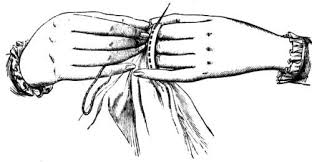
Finally, Oliver Ames (3) was going back to Brown. He had been home in North Easton, on a break, since January 21st. Evelina had her hands full mending a coat “which he has spoiled” so he could take it back to Providence. He wore it while working at the shovel factory and damaged it somehow. There was no time – and probably little inclination – to get a new one made for him. His mother had to fix it.

As Caroline Healey Dall, a contemporaneous female in Boston during this era, commented at one point in her mid-19th century diary, it was “a lonely, dull day – stitch, stitch, stitch.”* For most of the 19th century, all women sewed, and sewed often. Sometimes sewing was fun or companionable or rewarding; sometimes it wasn’t.  It was more often a necessity, a chore, and for Evelina today, the uninteresting and obligatory side of sewing prevailed.

Fortunately, Evelina had a few visits today from her younger female friends and relatives to help the time pass. Augusta Pool Gilmore visited in the afternoon – possibly with her own needle in hand – and niece Lavinia Gilmore called, having come into town from the family farm. In the evening, Evelina and her daughter Susan spent the evening with one of Easton’s more eccentric characters,Willard Lothrop, a medium. Oliver Ames (3) “came after” them after dark, probably anxious that all was ready for his return to college in the morning.

*Caroline Healey Dall, Daughter of Boston: The Extraordinary Diary of a Nineteenth Century Woman , ed. Helen R. Deese, Boston, 2005, p. 314

February 18, 1852

Hoof


1852

Wednesday 18 Feb  Augusta Emily Susan & self have

spent the day at Rachels.  Mother Henrietta & Lavinia

were there  Had a pleasant visit.  Went to

carry mother home with Charley had some trouble

with him about starting it was so cold.  Mrs Solomon

Lothrop & son Willard came to Alsons this afternoon 

Made two dickeys for Mr Ames and cut out two more


Just like the day before,”this was a fair day wind north west + cold”* as Old Oliver, family patriarch, noted in his daily journal. It was so cold that one of the family horses, Charley, didn’t want to leave the premises. But Evelina needed to take her elderly mother, Hannah Lothrop Gilmore, back to the family farm, so Charley was harnessed up and made to trot out. Evelina and her mother probably didn’t enjoy the frigid temperatures, either, but at least they could cover themselves with blankets or robes.

Evelina spent most of the day in the company of female relatives at the home of her niece, Rachel Gilmore Pool, who lived near the Gilmore farm.  Her daughter, Susan, and niece, Emily Witherell, were with her, as was new bride Augusta Pool Gilmore.**  Rachel’s unmarried sister, Lavinia, was there, along with their mother, Henrietta.  It was a multi-generational gathering of women from ages 9 to 79.

The women must have spent some time sewing as they all sat together, for Evelina managed to complete two dickeys, or shirt fronts, for her husband. The companionship would have made the handiwork fun to do.

*Oliver Ames, Journal, Stonehill College Archives, Arnold Tofias Collection

**Rachel Gilmore Pool was married to Augusta’s brother, John Pool, while Augusta Pool Gilmore was married to Rachel’s brother, Edwin Gilmore. One family’s sister and brother married a neighboring family’s brother and sister.

January 9, 1852

Cake

1852 Friday Jan 9th

[…]Have had about 30 here this evening and

quite a pleasant time though the weather not

pleasant.  Lavinia came here with Augustus last

night and we ladies have had a nice time making

cake and getting ready for them  Helen & Lavinia

made the bed in the front chamber to suit themselves

Oakes and Evelina Ames hosted a wedding reception at their house for newlyweds Edwin and Augusta Pool Gilmore, attended by members of the extended Gilmore and Pool families who traveled through inclement weather to get there. The celebration, complete with cake and tea – but no wine – was “quite a pleasant time.” What a special occasion for a cold, dark time of year.

The preparations for the party had been fun, too.  Lavinia Gilmore, sister of the groom, had been driven back to Evelina’s, carried by her brother Augustus Gilmore, to help with the cake. More cake! Helen Angier Ames had walked over from next door, again. The two young unmarried women had a sleep-over at their Aunt Evelina’s.

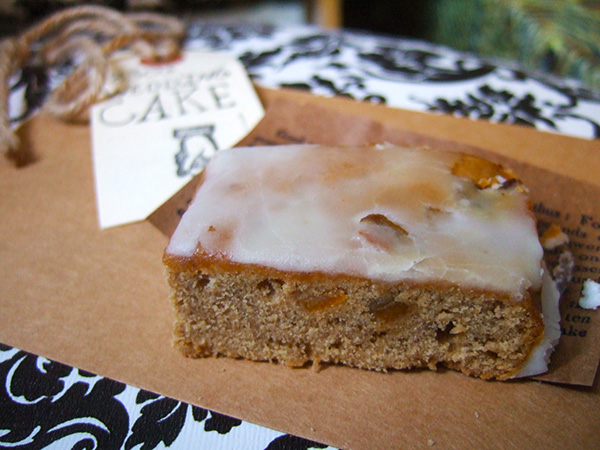
What might the cake have been made of? Sarah Josepha Hale offers up quite a recipe for a wedding cake in her 1841 The Good Housekeeper:

Take two pounds and a half of dried and sifted flour, allow the same quantity of fresh butter washed with rose water, two pounds of finely pounded loaf sugar, three pounds of cleaned and dried currants, one pound of raisins stoned, one nutmeg grated, half a pound of sweetmeats cut small, a quarter pound of blanched almonds pounded with a little rose water, and twenty eggs, the yolks and whites separately beaten.  

The butter must be beaten by hand till it becomes like cream; then add the sugar, and by degrees the eggs; after these, the rest of the ingredients, mixing in at last the currants, with nearly a tea-cupful of rose or orange flower water.  This mixture must be beaten together rather more than half an hour, then put into a cake-pan, which has previously been buttered and lined with buttered paper; fill it rather more than three quarters full.  It should be baked in a moderate oven for three hours, and then cooled gradually, by at first letting it stand some time at the mouth of the oven.

If you fear the bottom of the cake may burn, put the pan on a plate with saw-dust between.”*

*Sarah Josepha Hale, The Good Housekeeper, 1841, p. 100

January 7, 1852

weddinga_cake1

*

/52

Wednesday Jan 7th

Heat the brick oven baked a loaf

of brown bread two loaves of fruit cake for

Augusta & mince pies  A & L were at Edwins

this forenoon. This afternoon have sewed for me on 

Susans dress.  I have been making frosting for

the cake  Helen has been in and the girls have had

a nice time over it  Frank carried them home


Augusta Pool and Lavinia Gilmore were once again helping Lavinia’s Aunt Evelina. Helen Angier Ames, too, came over from next door, and the young maidens had “a nice time over it.” They did a little sewing for Evelina – that must have pleased her – and helped prepare frosting for Augusta’s wedding cake, which Evelina had kindly undertaken to make, along with all the regular baking she was doing for her family. Augusta was to be married the next day to Evelina’s nephew, Edwin Williams Gilmore.

If the women were following the instructions of Sarah Josepha Hale, they would have made “Iceing for Cakes,” according to the following instructions:

Beat the whites of four eggs to a stiff foam, and add gradually three quarters of a pound of the best double-refined loaf sugar, pounded and sifted; mix in the juice of half a lemon, or a tea-spoonful of rose water.  Beat the mixture till very light and white; place the cake before the fire, pour over the iceing, and smooth over the top and sides with the back of a spoon.”**

When it got late, Frank Morton Ames took Augusta and Cousin Lavinia back to their respective families in the countryside. The light of a full moon guided them along in a sleigh over snow that was “now about a futt deep.”***

* Image of 19th century wedding cake courtesy of http://www.fourpoundsflour.com

**Sarah Josepha Hale, The Good Housekeeper, 1841, p. 101

***Journal of Oliver Ames, Courtesy of Stonehill College Archives


January 6, 1852


OLYMPUS DIGITAL CAMERAOLYMPUS DIGITAL CAMERA

Augusta Pool                                       Lavinia Gilmore
                    

1852

Tues Jan 6 th

A heavy snow storm commenced about

10 Oclock  Mrs Witherell & her children have been

to the funeral in a waggon had a hard time getting

home.  Augusta and Lavinia have been at Edwins

house getting it in order for housekeeping.  This

evening have helped me stone raisons for cake  Edwin

came with them to tea

The bad weather continued, bringing snow that Sarah Witherell and her children, George and Emily, had to fight their way through as they returned from a funeral in a wagon. As Sarah Witherell’s father, Old Oliver, noted, it “snowd all day and in the evening. it was a damp snow and fell level.

Evelina was safe inside, out of the weather. With her were her 19-year-old niece, Lavinia Gilmore, and Augusta Pool, a 22-year-old who was about to marry Lavinia’s brother, Edwin. The two young women had been at Edwin’s house for much of the day, “getting it in order.” How exciting, and perhaps a little scary, for Augusta to be getting married and moving into a new house in the village of North Easton.  She had always lived out in the country, not far from the Gilmore farm, which is how she got to know Edwin.  In fact, Augusta’s older brother, John Pool, was married to Rachael Gilmore, Lavinia and Edwin’s older sister. They would be double-siblings-in-law. (There must be a more official word for the relationship when a brother and sister from one family marry a sister and brother, respectively, from another family.)

When they finished today’s work at Augusta’s new home, the two girls walked over to Evelina’s to help her stone raisins for the wedding cake.  Evelina may have put the raisins in a little warm water to plump them up before popping the seeds out.  Edwin, groom-to-be, joined the women and the rest of the family for tea once the men all arrived home from work.


* Photographs courtesy of The Easton Historical Society, with thanks to Frank Mennino, curator


November 29, 1851

frontcover_500

Nov 29th  Sat.  This forenoon have been mending

Olivers (3) clothes and putting them in order to 

carry back Monday.  Have been with Oliver

to spend the afternoon at Mothers. Came

home by Mr Lothrops to bring Sarah Lothrop

Fred & Helen home  Alson has been quite 

unwell a week or more & is not able to work

Evelina was enjoying the company of her middle son, Oliver (3), today. Like many a modern child, he had brought his clothes home from college to be put “in order” (but not washed – it wasn’t laundry day.) Evelina mended what she could and then the two of them rode south to visit old Mrs. Gilmore and the family on the farm. They found that Alson Gilmore, Evelina’s brother, had been “quite unwell.” He was evidently bed-ridden, which suggests that their Thanksgiving had been less celebratory than the Ames’s.

Unlike the shovel laborers in the village, Alson did work that didn’t follow a schedule set by a bell.  He labored according to the demands of the season, weather and livestock. How had he managed to run his farm this past week when he was too ill to work? Most likely his fifteen-year-old son, Francis, took over responsibility for any livestock. And if the Gilmores had any dairy cows, it was typically the women of the house – in this case, daughter Lavinia or wife Henrietta – who would typically have done the milking. Because it was November, and after the harvest, there was otherwise not much work that demanded attention.

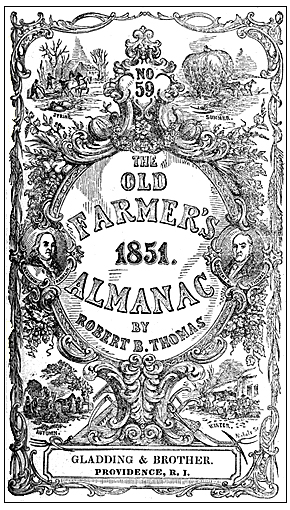
The Old Farmer’s Almanac, seen above, would have been full of advice for Alson and other farmers. We don’t know if Alson consulted it. (Like Old Oliver Ames, he might have consulted instead an agricultural newspaper called The Massachusetts Ploughman.)  The almanac was just featuring its new “Four Seasons” cover, first used in October of 1851 and still in use in 2014. It was designed by Hammatt Billings, a Boston architect and artist who also did the original illustrations for Uncle Tom’s Cabin, and engraved by Henry Nichols of Cambridge, who name appears on the lower right.  The editor was Robert B. Thomas, whose portrait is featured on the right side of the cover, opposite Benjamin Franklin.

November 2, 1851

IMG_0540

1851

Sunday Nov 2d  This has been a stormy day, but this evening

has cleared off pleasant  I have been to meeting all

day & went to Mrs John Howards at noon with

Lavinia & Mother  Mr Ames came home at noon and it rained

so hard that he did not go back.  Mr Whitwell

gave us two fine sermons.  Mr Ames & self passed

the evening at Augustus.  Have made an agreement

which I hope we shall both be careful to keep.

At the end of this rainy, chilly Sunday at the start of November, “the most disagreeable month in the whole year,” according to the fictional Margaret March, eldest of Louisa May Alcott’s four sisters in “Little Women,” our non-fictional Evelina and her husband, Oakes, reached an important decision.  Unfortunately, we don’t know what that decision was.

Surely this entry is one of the most tantalizing in Evelina’s diary. She and Oakes “made an agreement” that she hoped they’d “both be careful to keep.”  What did they decide? What promises did they exchange? Oakes had been away from home a great deal lately; did their discussion stem from that? Was this the moment when Oakes determined to become involved in regional politics? Would he have needed Evelina’s approval?  If this was the case, what might he have asked of her, or offered her in exchange?

Or was the decision less historic and more pedestrian? Did their discussion have anything to do with domestic arrangements or the recent spending on the house? Were they going to exercise more prudent care of their “accounts,” as Evelina calls them? Did their agreement have something to do with their children? Did it stem from something Reverend Whitwell said in one of his “fine sermons”? What was this agreement?

And were they able to keep it?


October 18, 1851


Herman_Melville_1860Herman Melville

Sat Oct 18  Have been to Boston with Mr Ames to day &

have bought Paper for the sitting room &c &c

went into all the stores where there were ribbons

to match my dress could not find a good one

Did not get near all the things I wanted

Lavinia came here to night.  Mrs S Witherell

& Miss S Orr called a few moments

It was a full Saturday for Evelina. She accompanied her husband into Boston and while he probably visited customers and took orders for shovels, or collected payments from various vendors, Evelina went shopping. She purchased new wallpaper for the sitting room and more. She was on a tear to refurbish the old homestead – or at least her half of it – yet wasn’t able to “get near all the things” she wanted.  She searched for ribbon, too, maybe to go with the new cashmere dress that she and Julia Mahoney only recently finished.

Evelina and Oakes returned to Easton in time to welcome niece Lavinia Gilmore for the night. As they traveled back from the city, they may have noticed the sky beginning to cloud up, pushed along by winds from the south. After their return, Sarah Witherell and her houseguest, spinster Susan Orr, popped in from the other part of the house, perhaps to ask what wallpaper Evelina had selected.

Far away, in London, 500 copies of a new novel called “The Whale” were published today in three small volumes. In a month, the same book, written by young American author Herman Melville, who dedicated it to his friend Nathaniel Hawthorne, would be published in New York with an added title: “Moby-Dick.”  Evelina never mentioned it, but might she have read it?