May 6, 1852

images-1

Queen of the Prairie

1852 May

Thursday 6th Worked in the garden a short time and

about nine went to the shovel shops with Hannah

and her sister  They spent the afternoon here and

Augusta.  Edwin came to tea  Mr Brown,

Olivers room mate, came to night.  We ladies rode

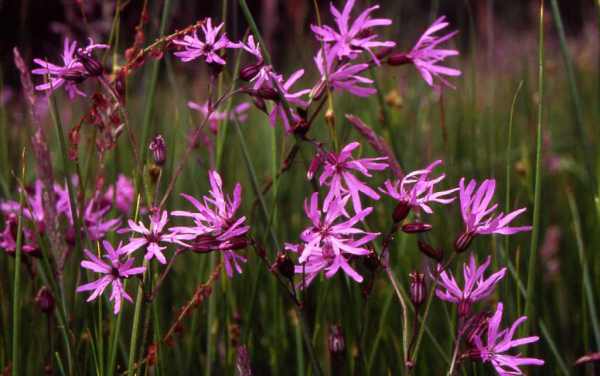
to Mr Clapps, bought Queen of the Prairie for 37 cts

Warm sunshine sent Evelina outdoors for much of the day. She gardened after breakfast, then broke away at nine a.m. to go over to the shovel shops with her niece, Hannah Lincoln Gilmore, and Hannah’s sister, Sarah Lincoln. What were the ladies doing at the factory? Evelina wouldn’t have gone there on her own volition.

The Lincoln sisters, originally from Hingham, spent much of the day with Evelina.  They were joined by Augusta Pool Gilmore, whose husband Edwin Williams Gilmore later came to tea. “We ladies” traveled to the home of Lucius Clapp, another fine gardener with plants to sell, where Evelina purchased a Filipendula rubra, or Queen of the Prairie. Clapp was a well-respected citizen of Stoughton, described by a contemporary historian as “one of the representative farmers of this progressive age.” *

Oliver (3), meanwhile, was briefly home from Brown University.  His roommate, a Mr. Brown, came to North Easton for a visit. It was a full table at tea time.

D. Hamilton Hurd, History of Norfolk County, Massachusetts, pp. 424-425


May 3, 1852

frontispiece_of_edward_shaw's_'the_modern_architect'_(1854)-141D753C60C6EA2D682

The Modern Architect”*

1852

May 3d Monday Our cook room being painted  Jane

had to wash in the bathing room.  Susan washed

the dishes and I did the rest that was done

about the work which was not much.  Rode

to Mr J Howards to get Rural Architect for Mr

Healy called at Mr Clarks and got some Gladiolus

bulbs and at Jason Howards to see their garden

afternoon planted some sweet peas & lilly seed

Oliver came home to night from Providence


More planting, this time of sweet peas and lilies, went on this afternoon. Gardening was preferable to choring on any given day, but it was probably especially true on this Monday. The kitchen, or “cook room” as Evelina called it, was being painted, making the usual chores more difficult. Servant Jane McHanna had to wash the weekly laundry in the bath tub. Evelina must have been pleased to be outdoors in the sunshine, viewing other gardens and planting flowers in her own. She also would have been pleased to greet her son, Oliver (3), home from college on a break.

At some point during the day, Evelina rode south to John and Caroline Howard’s to borrow a book written by Richard Upjohn, a prominent architect. “Upjohn’s Rural Architecture: Designs, working drawings and specifications for a wooden church, and other rural structures” was a popular new publication featuring home designs in the latest styles. Upjohn, who became the first president of the American Institute of Architects, favored Italianate and Gothic style cottages. His book appealed to the up-and-coming middle class as well as to the wealthy. Evelina borrowed it to show her carpenter, Henry Healey. She had something in mind for Healey to build.


*Frontispiece from “The Modern Architect,” by Edward Shaw, 1854


May 2, 1852

IMG_0157 (1)

Frontispiece, Breck’s Book of Flowers, 1851

Sunday May 2d

1852 Have been to church and at noon went

into Mrs Howards with Mother & Henrietta

After meeting went with Oakes A & Mrs

S Ames to call on Mrs Perkins at Mr Kimballs

also called at Mr Nahum Williams

Mrs Kimball has her garden laid out quite

prettily but the walls are too narrow I think

Evelina was almost as interested in other people’s gardens as she was in her own. After church, she and her son, Oakes Angier Ames, and sister-in-law,  Sarah Lothrop Ames, made a few calls around the neighborhood. The day “was cloudy + fair by turns,”* and as they visited, Evelina was able to see what others were doing in their yards.

The group stopped at the home of John and Lusannah Kimball, whose garden Evelina judged to be pretty, certainly, but “too narrow.” Perhaps Mrs.Kimball was building a perennial border, as opposed to the central bed configuration that Evelina used. Taste in gardening design was changing, with the latest ideal illustrated in Joseph Breck’s popular new book on flowers. Was this the look that Evelina was aiming to achieve in her yard?

The whole family seemed to be out and about, at least for the ride to and from the meeting house. The usual group, representing all three Ames households, was in attendance.  It would be the last Sunday ever for this particular ensemble.  In only two weeks, the Ameses would be back at church for a funeral for one of their own.

*Oliver Ames, Journal, Stonehill College Archives, Arnold Tofias Collection


May 1, 1852

Wreath

1852

Sat May 1st  The children were hoping to have a fine

time maying this morning had their wreaths

all made but it rained which prevented

their taking a walk but they had a nice time

in the old tool house. I dined in Edwins

John came there last night  Lavinia & Helen

here.  They were all here to tea to night

S E Williams called at Olivers  I gave her some plants


Rain spoiled the annual outing that Susan, Emily and other children had planned for May Day. They had made special wreaths for the occasion, probably to deliver to the homes of friends. To get out of the weather and save the pleasure of the day, they gathered instead in the “old tool house,” which seemed to make for an agreeable substitute.  Readers from the Easton area, does anyone know the probable whereabouts of this building?

Rain may have spoiled the children’s walk, but it helped soften the ground in the garden.  Old Oliver reported that today the garden was “spaded up and manured.”  He was most likely describing the family vegetable and herb garden, as opposed to Evelina’s flower beds, which were already under cultivation and probably out of Old Oliver’s immediate purview as well as beneath his notice.

Evelina, meanwhile, had her midday meal at Edwin’s and Augusta’s house, seemingly while the rest of the family ate at home. She went over to visit their mutual relative, her brother John Gilmore, who rarely came to town.


April 27, 1852

Brook

Tues April 27

1852  Mr Scott & Holbrook have painted the 

cook room worked all the forenoon getting 

it ready and this afternoon in the garden

The gardener came up from the shop and

set out the currant bushes farther from 

the brook and some Honeysuckle from Mr Swain 

and Lakes   Rachel came to Edwins I called to

see her and carried Augusta some plants.


Evelina shuttled around the house and grounds today, keeping track of indoor painting and outdoor gardening and, most likely, everything in between. A gardener arrived on assignment from the shovel factory to plant some honeysuckle bushes that Evelina had acquired from two obliging neighbors, the Swains and the Lakes. The gardener also help her move some currant bushes back from Queset River, the little brook behind the Ames property.

The Queset, which historian William Chaffin found to be “a pleasant-sounding name,”* is only the most recent name for the stream that runs from north to south through Easton. It was first identified by that name around 1825.  In earlier days it was known as the Mill River, and, before then, the portion particular to North Easton was called Trout Hole Brook.  One would have to go back to the early 18th century, before water privileges had been claimed and dams built, to find trout in the stream.

The waterways of Easton have frequently changed over the years, as needs have altered and other sources of power been identified.  In 1852, water power was still essential to the shovel shops, and many dams – including the one that had almost breeched the dam during the heavy rainstorm of the previous week – were depended upon to produce the water flow needed to keep the factory going – and the currant bushes growing.

William L. Chaffin, History of Easton, Massachusetts, 1886, pp. 10 – 11.

**Douglas Watts, at losteaston.blogspot.com, is a conservation writer who would like to turn the Queset back into an active trout stream.


April 26, 1852

ragged-robin

Ragged robin

Monday April 26

1852  Was about house and to work about the

garden all the forenoon  Mr Manly brought

me a Japan Quince Syringa P Lilac Compfre

Ragged robbin Cowslip Fleur de Luce &c  charged

90 cts.  Went this afternoon to Alsons with

Augustus & wife & her sister.  Came home

quite early and set out some plants that

I got there

Edwin Manley, Easton’s resident green thumb, brought Evelina her lilac bush this morning, along with a quince tree, some comfrey, ragged robin, cowslip and “fleur de luce,” which probably was Evelina’s spelling for fleur-de-lis, also known as  iris.  For less than a dollar, she acquired flora that promised to add fragrance and color to her garden. Later in the day she got more plants – for free, most likely – from her brother Alson Gilmore.

The countryside itself was still wanting in color at this mid-spring juncture, something Evelina and her fellow passengers might have noticed on their way to and from the Gilmore farm. Henry David Thoreau wrote about the pale fields and expectant woods in his journal on this date: “The landscape wears a subdued tone, quite soothing to the feelings; no glaring colors.”* Perhaps Evelina’s rush to add more vibrant colors to her yard would have jarred his sensibility.

Even with all the gardening, the day’s housework went on as usual with dusting, sweeping, dishes and laundry. Evelina and Jane McHanna both worked at various tasks, while Thoreau – not that many miles away – responded otherwise:  “It is a dull, rain dropping and threatening afternoon, inclining to drowsiness. I feel as if I could go to sleep under a hedge.”*

The two diarists reacted differently to the awakening pulse of spring.


**Henry David Thoreau, Journal

April 25, 1852.

Lilac_bush-2edq3ho

Sunday April 25th  A very pleasant day and have

all been to meeting.  Came home at noon

with Hannah & sister and Susan, all returned

in the afternoon.  After meeting called at

Olivers to see Mr & Mrs A Lothrop and rode to

Mr Manley to speak for some plants

Augustus & Hannah rode with us as far as

Mr Swains  Emily & Susan went also to Mr Manlys

Lilacs, a fragrant favorite for gardeners and civilians alike, were among the plants that Evelina selected at Edwin Manley’s today. In the 19th century, many a New England farmhouse featured lilacs close to the door, as American poet Walt Whitman famously describes in When Lilacs Last in the Dooryard bloom’d, his elegy for Abraham Lincoln:

…In the dooryard fronting an old farm-house near the white-wash’d palings,

Stands the lilac bush tall-growing with heart-shaped leaves of rich green,

With many a pointed blossom rising delicate, with the perfume strong I love,

With every leaf a miracle – and from this bush in the dooryard,

With delicate-color’d blossoms and heart-shaped leaves of rich green,

A sprig with its flower I break…

Today after church, the sermons and small social obligations dispensed with, Evelina thought about her flower beds. The day was “fair” and “some warmer,”* so with niece Sarah Emily Witherell and daughter Susan Eveline Ames, she rode up to visit her go-to gardener “to speak for some plants.”  Mr. Manley indicated he would bring the plants by the next day.  Evelina wouldn’t have been able to plant anything today, it being the Sabbath, but she could imagine where she would put the plants, and how they would look, the anticipation of which added to her delight.

*Oliver Ames, Journal, Stonehill College Archives, Arnold Tofias Collection


April 19, 1852

 March_2014_nor'easter_2014-03-26Satellite image of a Nor’easter

1852

April 19th Monday  It rained very fast all day and 

about noon the rain beat in the side lights 

of the entry, and parlour windows   had to take

back the carpet a little from our window put

dishes under the windows and caught a good

deal of water.  Have cut down my Verbenas

and Petunias fixed a skirt of a dress for

gardening

A powerful Nor’easter storm beat into New England this day.  Both Evelina and her father-in-law described the rain as “fast,” Oliver further elaborating that the rain came in sheets, “not in drops.”*  Evelina (and Jane McHanna, most likely) had to deal with water coming in through the side light panels on either side of the outside door. They scurried, too, to pull back the carpet from the windows and put dishes on the floor to catch some of the water beating into the house.

The wind howled and “[t]he storm continued all day , a part of the time pritty fast,” reported Old Oliver. Everyone stayed indoors, no doubt, yet Evelina reports cutting back some of her plants, which suggests outdoor work. That couldn’t have happened on a day such as this, however, so perhaps the verbenas and petunias had wintered-over in pots inside the house, and it was those that she cut down.

Gardening was on her mind, of that much we can be sure. She prepared a skirt to wear outside when she was in her flower beds, probably “repurposing” an old dress for the task. Her handwriting was rushed and incomplete when she wrote the last sentence of today’s entry; she inadvertently omitted to cross the “x” in fixed, leading this editor to conclude that she had “fired” a skirt.  Not so, thanks to a sharp reader who came up with the correct version.

Image courtesy of Wikipedia, April 18, 2015

April 5, 1852

images-4


1852

April 5th Monday  Went into the garden this morning and

found my tulips were coming up through the coal

scraped it off and set out a few that I got in

Olivers garden.  Went with Orinthia to Edwin

Manlys garden about three Oclock. he had gone

to Mr Clapps.  We rode there and met him on

the way stoped awhile and had a chat on plants

in general  The school commenced this morning

by Mr Brown & C Clark

Tulips! How welcome was the sight of the curl of green shoots “coming up through the coal.”

Forget the laundry.  Never mind the sweeping and dusting. Someone else could do the breakfast dishes. Without so much as a glance at her sewing workbox or the pile of mending, Evelina was in her garden.

She scraped the coal covering away and “set out a few” more plants. After midday dinner, she and Orinthia headed to Edwin Manley’s nursery north of the village only to find that Mr. Manley had himself headed out to look at plants at the home of Lucius Clapp in Stoughton. The two women rode on and finally came across Mr. Manly en route. With carriage and on horseback, the three avid gardeners paused in the roadway and “had a chat about plants.” Spring had truly begun.

March 22, 1852

Sweep


1852

March 22  Monday  Have been sweeping dusting &

cleaning all day  Have put in order parlour

entries, parlour & sitting room chambers and back

& shed chamber, nearly dusk before I got through

Orinthia & Susan washed the dishes in the 

morning  Orinthia has written another two or three 

letters has not done much  beside  Ain’t she lazy?

It was Monday. Evelina spent her day “sweeping dusting & cleaning,” and Jane McHanna washed tubs of clothes and hung them out to dry, but “lazy” Orinthia only helped wash the breakfast dishes and wrote a couple of letters. In comparison to quiet, helpful Amelia Gilmore, whose visit Evelina had enjoyed, Orinthia Foss and her spirited but indolent company was a come-down.  We should remember that Orinthia was single and only in her early twenties (although in that era, some would have said she was already a spinster) while Amelia, a widow, was in her early thirties and Evelina, a matron, in her early forties. The age gap between Evelina and Orinthia was beginning to wear thin on Evelina’s part, and perhaps on Orinthia’s as well.

Spring had officially arrived two days earlier on March 20. No buds or blossoms were yet in evidence, however, and more snow had yet to fall. The industry that Evelina demonstrated today with her broom and dust rag suggests that she was rehearsing for spring cleaning, perhaps wanting to get it out of the way so that the moment anything came up in her flower beds, she’d be free to go outside and garden. Perhaps she looked at the still-frozen ground and imagined her flowers in full bloom. It was getting to be that time.