October 17, 1852

The knife and fork. Old with white bone handle.

Sunday Oct 17th  

Went to church all of us.  Came home

at noon with Mr Ames and had a cup

of tea and lunch in the buttery

Catharine Middleton left this evening

and I paid her five dollars for the

three weeks that she has been here now

and one week some time since

This may be the first time that Evelina uses the word “lunch” in her diary. Usually, the meal in the middle of the day was dinner, and it was the big meal. But on Sundays, the routine was changed because, ostensibly, housewives didn’t cook. It was a Day of Rest. The women were at church and had no time to prepare a hot meal between services. Instead there was a cup of tea and a piece of cake at the parsonage or, in good weather, there might be a bread and fruit picnic on the lawn of the church, near the carriages. Early tail-gating, if you will. If a housewife were at home on a Sunday, as Evelina sometimes was, she might end up cooking, especially if she had houseguests. But the norm was no cooking.

Lunch, per se, was something different. The word itself was a shortened version of “luncheon,” which was generally accepted to be a small meal that might be held at any time of day, in between two larger meals. For most of the 19th century, luncheons were considered to be the province of middle- to upper-class ladies – hence the phrase, “ladies who lunch.” Cold meats, fruit, pastries and tea might make up the menu for the female meal.

Yet as industrialization of the workday took over, replacing the former agrarian practice of a substantial meal in the middle of the day, lunch as we know it became more accepted. Men took their cold meals to work, or warmed up a can of something over a stove or a radiator at the workplace. By the 20th century in America, lunch happened in the middle of the day and dinner moved to the evening.

In her diary, Evelina was only suggesting that the meal she and her husband shared at a scrub-top table in the pantry was no regular dinner. Little did she know that this simpler midday meal would one day be the norm.


 

October 16, 1852

darning-egg-designs

Darning Egg Designs, from Godey’s Lady’s Book

Sat Oct 16th Have made more barberry sauce to day

have three girls here now Ann came

Wednesday night but I am not to commence

paying her wages untill Monday and Catharine

Middleton is to leave to night  I have been

mending to day


Bad weather kept Evelina and her servants indoors. As Old Oliver recorded, “the ground froze some last night and it is verry cold to day for the season wind high from north west and some cloudy.” It was a good day for making barberry sauce, especially with three young women to help. The shelves in Evelina’s pantry – or buttery – and cellar must have been nearly full of jars of preserved fruit. There would be plenty to go around come winter. And winter was coming.

It was a good day, too, to catch up on mending. At least some of the mending consisted of darning the holes in the socks – or hose – worn by everyone in the family. Darning eggs, such as the ones in the illustration from Godey’s, were found in most homemakers’ sewing kits or work baskets. They were held on the inside of a sock to keep it firm while the stitching was done on the outside. Some intricate darning eggs also held needles, thimbles, and other tiny sewing utensils on the inside.

The prosaic simplicity of the day’s chores would not have raised any suspicion on Evelina’s part that seven years from this day, John Brown and a band of cohorts would lead a raid at Harper’s Ferry, Virginia. The incident would shock and alarm the nation as it realized that even in the civilized “Old Dominion” – as opposed to places on the wild frontier, like Kansas or Missouri – arms would be raised to eradicate slavery. None of the Ameses knew, of course – no one could – but a civil war between the states of the North and South was drawing near.


October 5, 1852

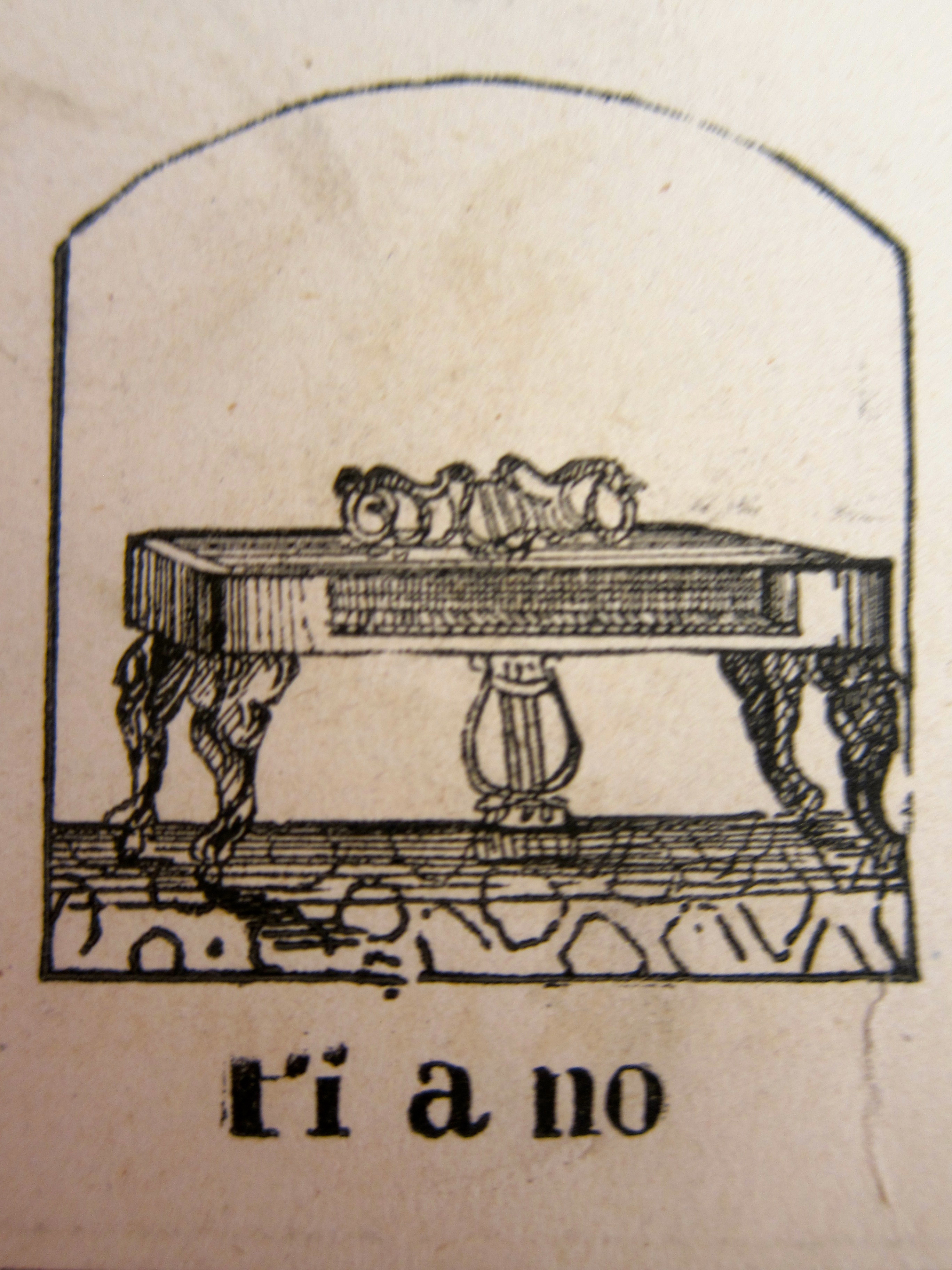
Golden Piano Keys

Oct 5th  Tuesday  Called this forenoon upon Augusta

and then went into Olivers to dine & all my family

After dinner Mrs Norris & self called at Mr Torreys

and I then carried Mrs N to the cars.  Augusta

went with us.  When I returned Mrs Witherell &

Mrs S Ames called with me at Mr Whitwells on

Mrs Wordsworth & on Mrs Morse  Our pianos came

to night.

A momentous day at the Ames homestead: Two pianos arrived from Boston – drawn by oxen, one would think – and were set up in the respective parlors on each side of the house. One was for Evelina’s daughter, Susan, and the other was for Sarah Ames Witherell’s daughter, Emily. Everyone, even the men of the family who were unlikely to play the instruments, must have been intrigued by the new additions to the parlors.

Modern historian Jack Larkin describes the stylish impact of the addition of a piano to a parlor in the mid-nineteenth century:

“The pianoforte, the direct ancestor of today’s piano, became the most decisive piece of American parlor furniture. That small minority of families – less than one in a hundred – who were able ‘to beautify the room by so superb an ornament,’ as a cynical music teacher suggested in the Boston Musical Intelligencer, had acquired ‘the ultimate badge of gentility…the only thing that distinguishes ‘decent people’ from the lower and less distinguished’ whether it was ever played or not.”*

It was certainly Evelina’s intention that this instrument would be played by her daughter Susan who, she believed, would learn to play it, and play it well. It was presumably Sarah Witherell’s desire as well that Emily would do the same.  Did they imagine piano recitals and concerts taking place within their freshly-papered, newly decorated parlor walls?  Did they believe that their daughters would excel and play as well as Helen Ames next door? Did their daughters share this expectation? Did their daughters even want to learn piano?

*Jack Larkin, The Reshaping of Everyday Life, New York, 1988, p. 143

September 28, 1852

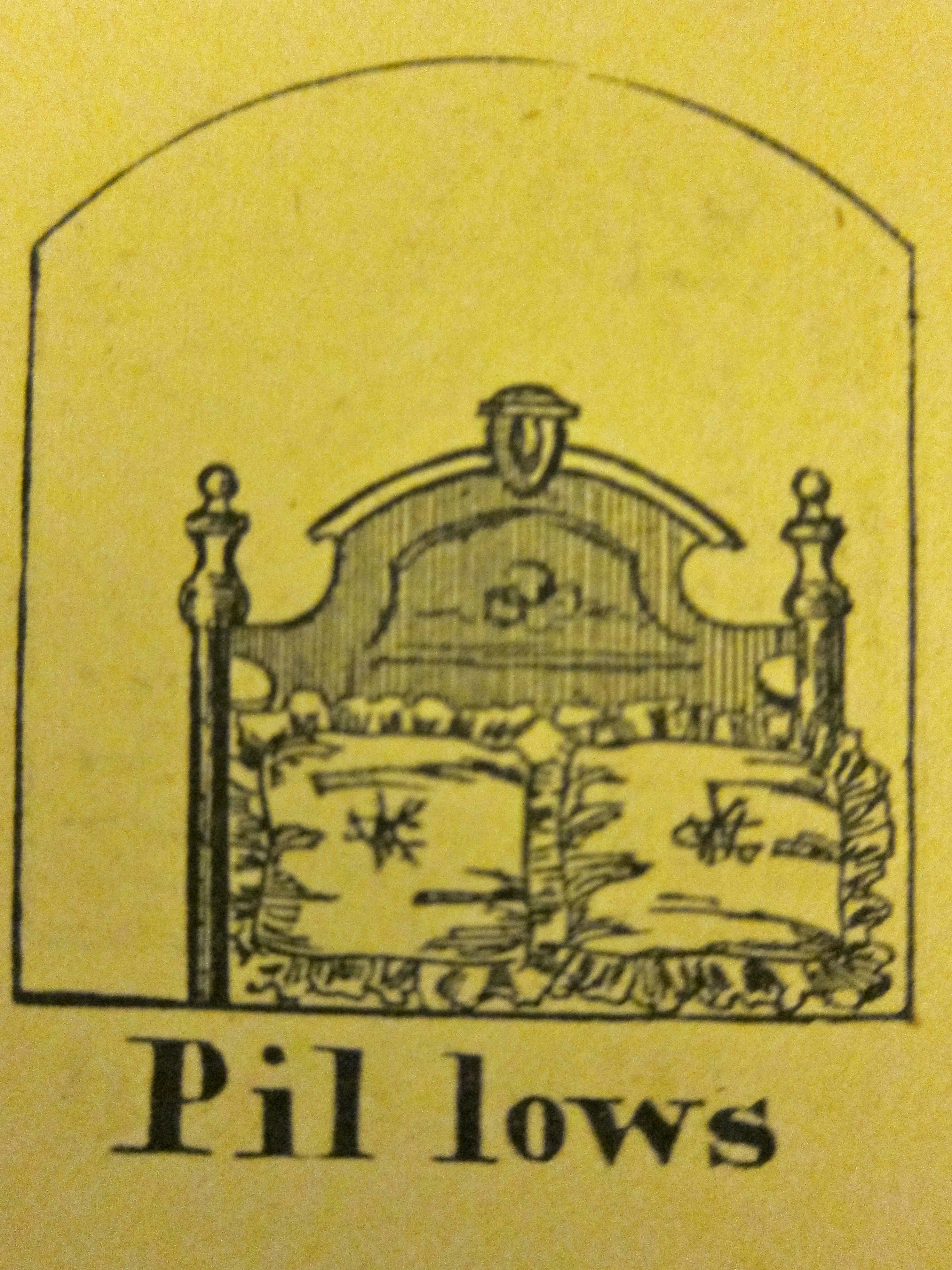
Pillows

Tuesday Sept 28th  Have two girls and yet Im

about house a great deal of my time

I fear I do not manage right  To day

I have sewed but very little have been

preparing for the sewing circle and have

cut out 6 prs of pillow cases & put them

out to whiten and 5 sheets.  This evening

have written to Mr Norris about our piannos


Evelina struggled to manage the servant girls. Was it her fault or theirs? Was Evelina too lenient, or demanding, or unappreciative? Were the young women ill trained, or naturally inept, or uncertain about their responsibilities? Evelina was inclined to blame herself.

She needed their help today, too, as she was getting ready to host this month’s meeting of the Unitarian Sewing Circle. Evelina hadn’t held a meeting of the Circle at her house for nineteen months, since her unsuccessful attempt back on February 12, 1851. On that occasion, bad weather and disinclination or indifference on the part of other Circle members had resulted in a no show of anyone except the immediate family. She had given a party that no one came to. She had been mortified, but soon recovered.

Did the memory of that embarrassment surface today as she was cleaned house, prepared food, and cut out pillow cases to be sewn? She doesn’t say. She had moved on, perhaps, and was more interested in thinking about the new pianos to come than revisiting an old grievance.

But would her fellow needlewomen show up tomorrow?

September 26, 1852

IMG_1175_ParkPhaeton

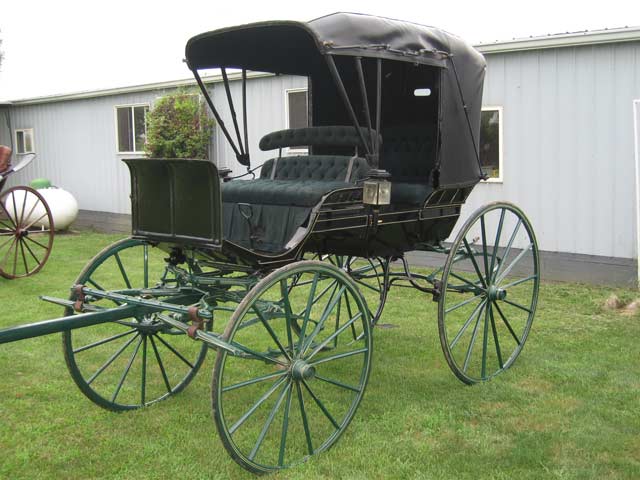
A Phaeton owned by a Boston family, ca. 1850


Sunday Sept 26th  Stormy to day and only one carriage

has been to church  I was not well and staid

at home  Susan Went  It has cleared off pleasant

Frank Susan & self have been to mothers and

called to see Miss Alger about giving lessons

Have written a letter this evening to

Mrs Mower  Have not read at all to day


Old Oliver reported that “there was a little sprinklin[g] of rain to day.”* Evelina said it was “stormy.” The weather was in the eye of the beholder, it would appear. But Evelina wasn’t feeling well, so perhaps her condition affected her view out the window as she watched the lone carriage head south to the meeting house. She was feeling so poorly that she didn’t even read.

Both the weather and her spirits seemed to improve in the afternoon. With son Frank and daughter Susan, Evelina rode south to see her mother, Hannah Lothrop Gilmore, at the family farm.  While in the vicinity, she “called to see Miss Alger about giving lessons.’ Piano lessons, she meant; Susie was going to play an instrument. The new piano had been bought primarily for Susan’s benefit, just as the one bought by Sarah Witherell – and Old Oliver, presumably – was primarily for the benefit of Emily Witherell. Under the paid guidance of Miss Alger (probably the M J Alger who had visited the house earlier in the month), the young cousins would learn to play.

Evelina and Sarah Witherell must have been delighted to see their daughters getting music lessons, something that neither of them had likely access to when they were growing up.


*Oliver Ames, Journal, Stonehill College Archives, Arnold Tofias Collection


September 23, 1852

IMG_2471

Sarah Lothrop Ames

(1812 – 1890)


Thursday Sept 23th [sic] Have not sewed at all to day Starch

the clothes and ironed some fine shirts

Lavinia washed the clothes that Oliver brought

from Providence & Mr Rathbourne from 

Providence came this afternoon to visit […]

Oliver  He went to Stoughton after him

Mrs Holmes & sister came after some plants


It’s unusual to read of Evelina and her servants doing a wash on a Thursday, but so it was. Son Oliver (3) had returned from a trip to Providence with dirty laundry in tow and, more than that, a houseguest headed their way. Evelina had to finish up the laundry and prepare for company. She evidently had help from her twenty-year-old niece, Lavinia Gilmore, who, by washing the clothes of her twenty-one-year-old cousin, demonstrates not only the strict division of labor of the day, but the then-unexamined destiny of spinster daughters and nieces to serve the men of their family.

Next door, Sarah Lothrop Ames celebrated her 40th birthday which, in those times, was the front door to old age. It was her destiny to grow up in Easton, the only daughter of the Honorable Howard Lothrop and his wife, Sally Williams Lothrop. She had nine brothers, which makes us wonder if she, as a singleton girl, was doted on, or depended on, or both. On June 11, 1833, Sarah married Oliver Ames, Jr., third son of Old Oliver and Susannah Angier Ames. In social terms, it was a marriage between two of the town’s important families. The couple moved into their own house, built for them by Old Oliver, next door to the family homestead. They would eventually tear that house down and build a grander one, known to us as Unity Close.

Sarah and Oliver Jr had only two children, Frederick Lothrop and Helen Angier, at a time when a larger family was more typical. We can’t know if their decision to stop at two was happenstance, voluntary, or imposed by medical circumstances. Fred, they raised to go into the family shovel business, much as Oakes and Evelina did with their three sons. Fred was given a full college education, however, as his cousins were not. Helen and her younger cousin, Susan, meanwhile, were raised to be proper young ladies with fine dresses, piano lessons, and good schooling. It is doubtful that Helen ever had to wash her brother’s clothes. There were servants for that.

Like her sisters-in-law Evelina and Sarah Ames Witherell, Sarah Lothrop Ames was a regular church-goer and a conscientious neighbor. She did her duty with the elderly and infirm in the village, and she was a loving daughter to the end with her parents. Her mother, once widowed, developed dementia and incontinence, yet Sarah cared for her until her death. She was close to her children and grandchildren, of whom she had five.

A widow herself by 1877, Sarah would live until 1890, outlasting her husband, brothers-in-law, sisters-in-law and all but one brother, Cyrus, to whom she left the use of Unity Close for his lifetime. After his death, it passed to her eldest grandson, Oliver Ames (1865-1929).


September 22, 1852

Piano

Wednesday Sept 22d Have been to Boston with Mrs

Witherell to get a Pianno  Have got to have

them made  Mrs Kinsley called to see them with

us  Met Mrs Wilson at Lintons to go to select

them. Dined at Mr Orrs while Mrs Witherelll

called on Mrs Dorr  Bought a Piano cloth

and gold thimble for Mrs Ames & C Hobart

and a ring for Helen  Oliver came from Providence


A piano! And not one piano, but two, one for each side of the house. Both Susan Ames and Emily Witherell would be learning to play the instrument. Each girl would have her own piano to practice on. What luxury. What gentility. What fun.

With advice from friends such as Louisa Kinsley, Evelina and Sarah Ames Witherell selected and ordered the instruments in a Boston store. Spending money liberally, Evelina went on to purchase gifts. For her other sister-in-law, Sarah Lothrop Ames, she bought a cloth to go on top of the piano that those Ameses already owned. For Catharine Hobart, a young family friend who had caught the eye of her son Oakes Angier Ames, she bought a gold thimble. And for her niece Helen Angier Ames – Catharine’s classmate – she bought a ring.

Did her husband Oakes know that Evelina was spending so much money? Did her father-in-law? While her husband must have given his approval, it’s unlikely that Old Oliver would have approved of such a spree. Yet both those men were often generous within the family; in that respect, Evelina was just following suit.

We note today, too, that Oliver (3) returned from a few days at a fair in Providence, where he no doubt saw friends and former classmates from his two semesters at Brown University. We might imagine that he was missing school.


September 20, 1852

Hay


Monday Sept 20th  Staid at Edwins last night

and slept with Emeline as I did not like

to leave them alone  Augusta rested very

well and is much better to day.  Hannah

left this morning & Louisa McAvoy came

and she & Catherine have washed  I have

worked hard all day  Augustus’ wife called

here this afternoon


Worried about her neighbor, Evelina spent the night at the Edwin Gilmore house in case Augusta took a turn for the worse. Also staying there was fourteen-year old Emeline Pool, Augusta’s youngest sibling, who may have been sent up by the Pool family to sit with her ailing sister. Everyone was unnerved by Augusta’s continued illness, but in the morning Evelina was able to report that Augusta had improved.

At the Ames house, of course, and, indeed, all over town, it was washday. Servant Hannah Murphy departed, as anticipated, but the new servant, Louisa McAvoy and the remaining servant, Catharine Middleton, were on task. The washtubs were out. Evelina did her usual Monday choring and tidying, and the house stirred with activity.

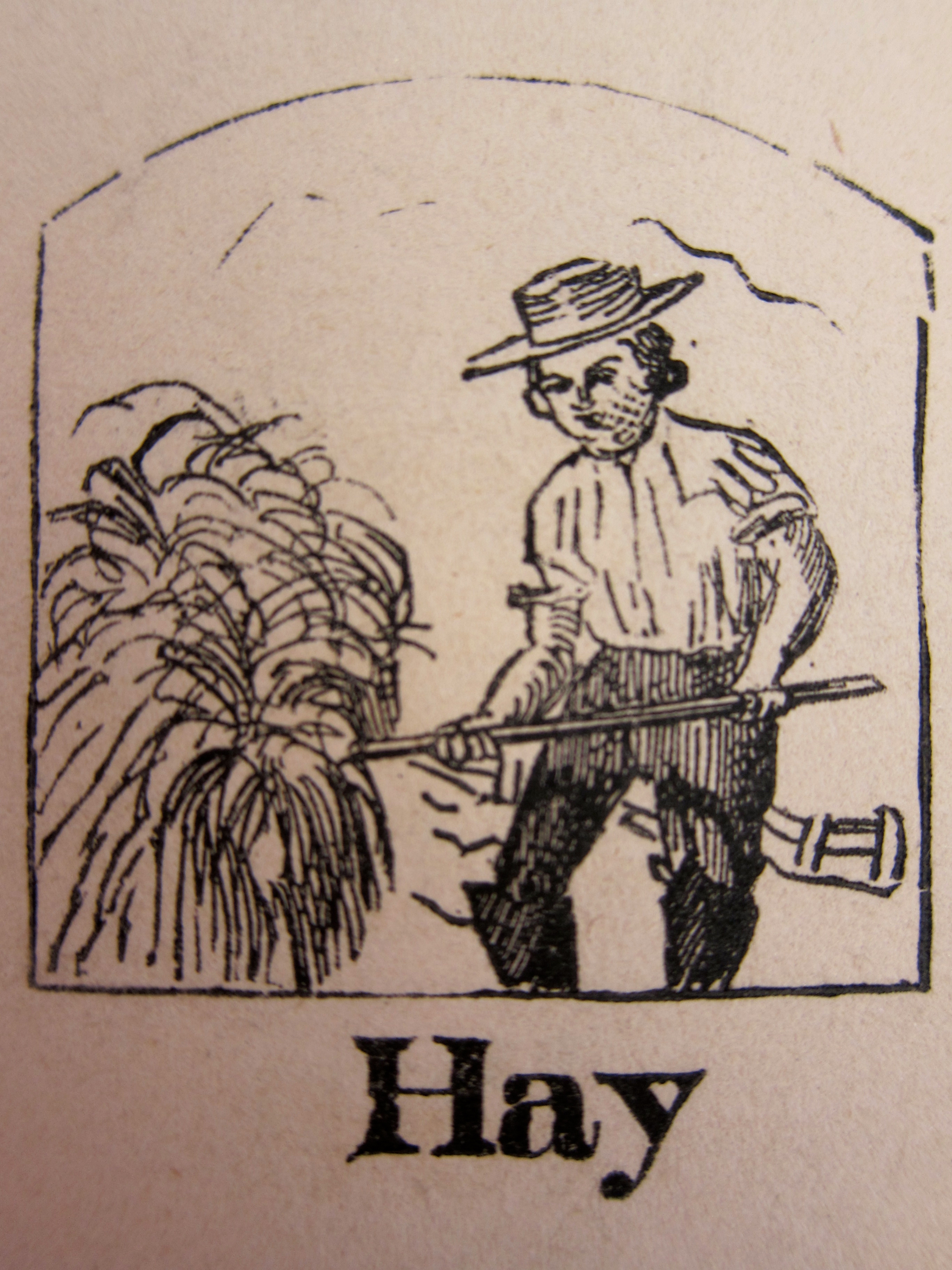
Also on task were men who worked for Evelina’s father-in-law, Old Oliver Ames. They were mowing. Old Oliver reported that “this [was] a fair day part of time + cloudy a part wind southerly + midling warm  began to mow second crop to day.”*  The hay that had been sown in early August was being cut, each worker mindful of the importance of the crop. “[T]he most important matter connected with American agriculture,” declared one farming expert a decade later, “the hay crop is of more value than the cotton, the corn, or the wheat crop, or any single article of farm produce upon which the lives of three fourths of all the horses, cattle, and sheep depend from November to April.[…] Farmer! Have you thought how much depends upon the four weeks of haying time?”** Old Oliver could have answered that question with alacrity.

*Oliver Ames, Journal, Stonehill College Archives, Arnold Tofias Collection

** Solon Robinson, Facts for Farmers, January 1865, pp. 772-773

September 16, 1852

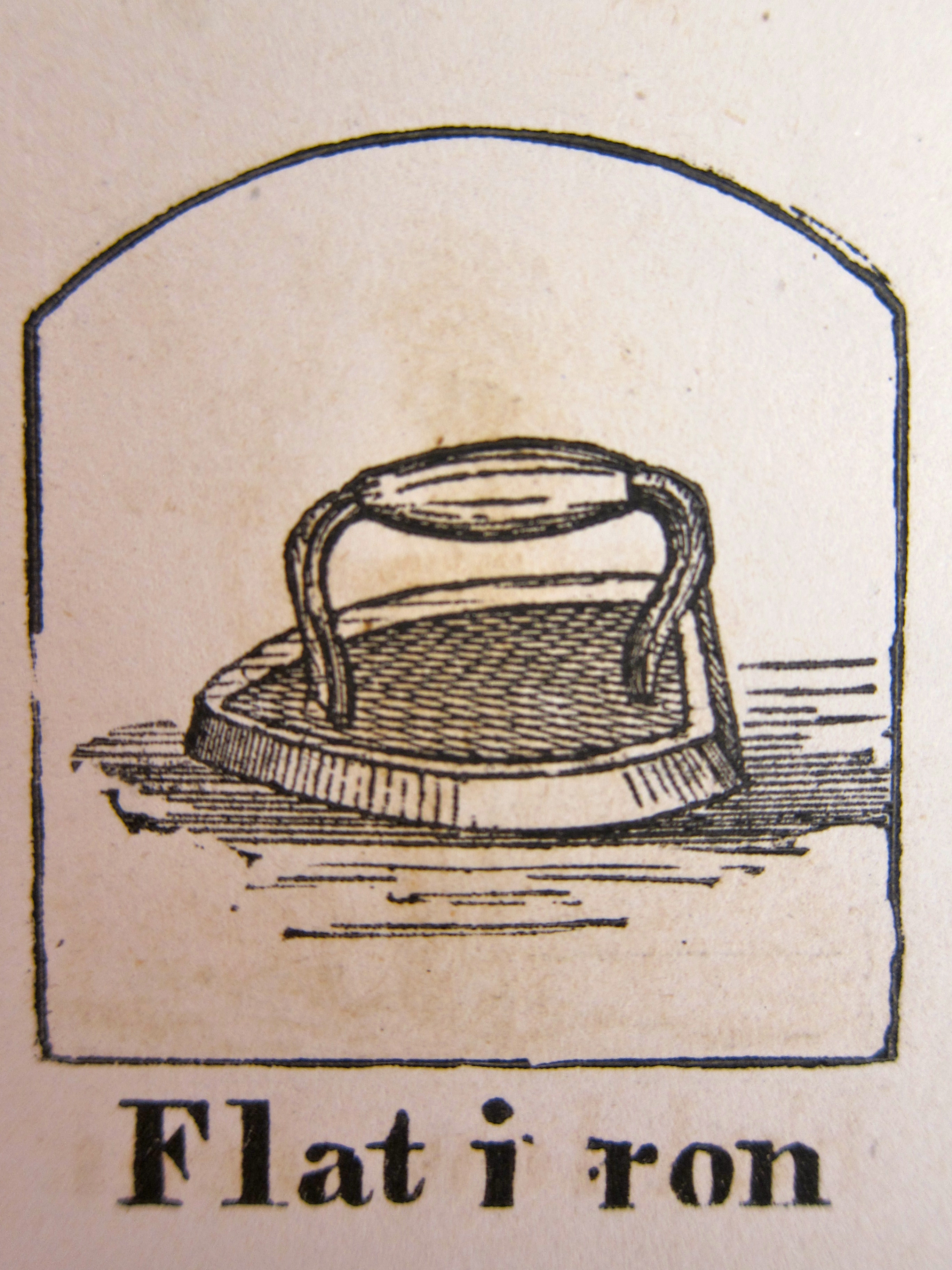
Flatiron

1852

Thursday Sept 16  Watched with Mrs Savage last night

came home at half past five went to bed

and laid untill past eight  Starched some

more shirts that were washed yesterday  We

have 20 fine shirts this week in the wash

Miss Elizabeth Capen called & Mrs Stevens was

with Mrs Witherell to tea  I was ironing & did not go

Oakes A went to carry Helen & C Hobart to Bridgewater

Today we have proof positive that Oakes Angier Ames, back from his recuperative rest in Vermont, was spending time with Catherine Hobart, the girl who would become his wife. For several days, Catherine had been staying next door with her classmate, Helen Angier Ames, but the time had come to return home to Bridgewater. Whether Oakes Angier volunteered to carry the girls or was assigned the duty, we don’t know, but we can believe that he enjoyed the trip. Was Evelina aware of their mutual attraction? Did Helen stay for a visit with Catherine, or did she return to Easton? Did the two girls discuss Oakes Angier after he left them off?

Evelina may have been too busy with all the shirts that needed starching and ironing to attend to her eldest son’s romantic inclination. Having spent most of the night before sitting up with Hannah Savage, she was only operating on three hours sleep. She positioned herself at the kitchen or dining table and covered it with a protective blanket and sheet, kept “on purpose for ironing.”* Using thick cloth to protect her hand from the hot handle, she lifted and pushed the heavy implement across each one of those new cotton shirts. Back and forth, back and forth, putting away one iron when it cooled to pick up another one that had heated up. It was hot, heavy work. She didn’t break her stride, either, not even for tea in the other part of the house.

* Lydia Maria Child, The American Frugal Housewife, 1832, p. 11

August 29, 1852

300px-1852_Atlantic_hurricane_season_summary_map

Map of 1852 Hurricane Season, 21st century imagery*

Sunday Aug 29

1852  Has rained powerfully all day  Not one

of the family been to meeting  Mr Ames &

self laid down about twelve and when

we went downstairs found Edwin & wife

among the missing  Made them come back

to tea and spend the night  I have

felt tired & lazy and have read but

very little

The unofficial hurricane season of 1852 opened about ten days before today’s diary entry with a storm now classified as the Great Mobile Hurricane of 1852. According to modern meteorologist Christopher Landsea (great name for a weatherman!)*, the unnamed storm hit the Florida Keys, made landfall near Pascagoula, Mississippi and broke back out into the Atlantic in South Carolina, destroying lighthouses, homes, trees, bridges and crops in its way. It surged northward toward Cape Cod, where it still had enough energy to be felt in New England. Thus could Old Oliver report today that “the wind changed to northeast last night and there was an inch + a half of rain fell and it is a raining this morning and it raind all day + the wind blew hard”**

While this weather event of hemispheric proportions pounded its way across the eastern United States, a quite different vignette unfolded inside the Ames’s home. Eveline writes that the family skipped going to church, naturally, given the weather. She and her husband, from whom she had been absent for ten days or so, went upstairs to their bedroom and lay down – and closed the door, presumably. We can’t know the details, nor should we. But we can be grateful for this rare and tiny glimpse of intimacy between Evelina and Oakes, and smile at the Victorian discretion exercised by Evelina as she recorded the event.

*Information courtesy of Wikipedia, “1852 Atlantic hurricane season,” accessed 8.26.2015

** Oliver Ames, Journal, Stonehill College, Arnold Tofias Collection