July 23, 1852

il_570xN.416155936_i0fm

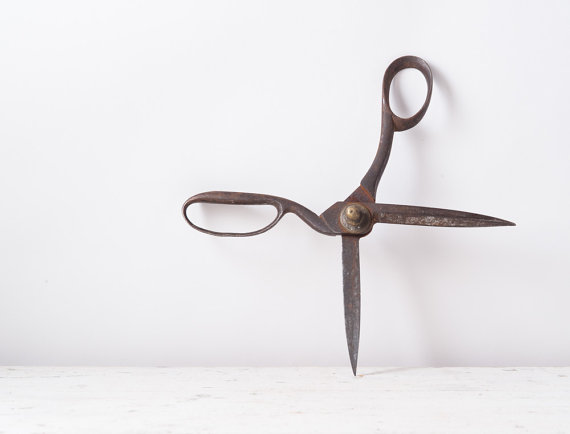
19th century tailor’s shears*

July 23d  Friday  Have cut the skirt & sleeves

& cape to my traveling dress and 

have set Mary to work on the skirt

and I have taken the sleeves

Mrs Stevens has sent me the lining

but not the trimming  Julia Mahoney

is at work at Olivers  Mr Torrey

and Abby called this morning

Evelina was back in good humor today. The thermometer was going down and she had a new project to work on. Shears in hand, she cut out the pieces for her new traveling dress, and probably the lining, too. Designed with a cape to fit over the shoulders, it would be a very fashionable outfit. She didn’t yet have the trimming she needed, and the dress would take longer to sew than she wished, but it would be finished in time for a trip she didn’t even know she would have to make.

Col. John Torrey, the widower of Evelina’s late sister Hannah, came to call.  As we have noted in earlier posts, Mr. Torrey lived in the village of North Easton in a building – a boarding house of sorts – whose spare rooms he rented out. Through Rev. William Chaffin’s history of the town, we learn that Mr. Torrey was a controversial character. Listed as a trader in the town census, and a one-time colonel of the local militia, he was considered laughable by some. Another local character, an erudite shovel-worker named James Adams, wrote a mock-heroic poem about him, the “derisive and scathing”* verses of which are lost. Yet Evelina appeared to enjoy her brother-in-law’s company and brand of humor, and she was devoted to his daughters Abby and Melvina.

*William Chaffin, History of Easton, Massachusetts, 1886, pp. 764-765


*Image courtesy of etsy.com
July 14, 1852

1852

P1070606-X2

High water (flood level) mark in canal in Lowell, Massachusetts


Wedns July 14th  Julia came again this morning

but we have not got along very fast

on my dress  Have no trimming for the

sleeves have written for Mrs Stevens to

get me some   There is a great deal to

do to finish my dress  Hannah & Mary 

have both been ironing all day and 

have it all done

Evelina was indoors, sewing a new dress with the help of dressmaker Julia Mahoney. Old Oliver was out haying, “jawing” orders at local men gathering up this year’s meager crop. Oakes Angier, Frank Morton and probably Oliver (3), now that he was home from college, were each posted in some area of the factory, making shovels alongside the workers. Oakes and Oliver Jr. were supervising, perhaps striding around the shovel complex watching the new building go up or sitting in the office looking at accounts.

If we modern readers want to find a day that typifies life in North Easton in the middle of the 19th century, we couldn’t do better than this ordinary summer day in 1852. In other years and in other places, July 14th has hosted more momentous events: the storming of the Bastille, the first ascent of the Matterhorn, the shooting of Billy the Kid, the day Jane Goodall arrived in Tanzania to study chimpanzees. Nonesuch in North Easton; according to Old Oliver’s record, July 14, 1852 was simply a “warm good hay”* day. Routine ruled.

This is not to say that history wasn’t happening. It was. Yet as Evelina noted, “we have not got along very fast,” a phrase that is applicable to so much of history. Change often quietly accumulates, transforming what we know in a stealthy fashion. Evelina’s hand-sewing, Old Oliver’s oxen-driven hay-wagons, Oakes’ and Oliver Jr.’s water-powered shovel machinery: all have since disappeared, replaced by modern equipment invented over time. The life that the Ameses lived was already altering, irrevocably, bit by bit.

Oliver Ames, Journal, Stonehill College Archives, Arnold Tofias Collection


June 16, 1852

Calamanco2-1

Calamanco fabric

June 16th Wednesday  The hottest day we have had

Julia has been here again to day have

finished Susans brilliant dress and cut

my muslin & purple cambric print and altered

the waist to green gingham and now they are

to finish  when will they be done  Mother has

gone to Augustus.  Catharine Middleton came

about nine or ten to sew for me

gentleman from New York to dine


The mercury rose to 96 degrees, and the women stayed inside out of the heat.  Even out of direct sunlight, however, the indoor air had to be stifling, so the women are to be admired for working with layers of fabric in their laps as they sewed. The ladies weren’t nearly as warm, however, as the men outside on the building lot, moving stones, or the men making shovels inside the factory. Everyone baked.

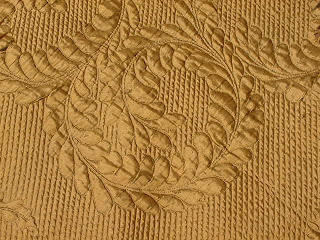
A new servant, Catherine Middleton, arrived to help with the sewing and, as she had been for the past few days, dressmaker Julia Mahoney was present to help Evelina. The women worked on several projects, including a “brilliant” dress for young Susie Ames. Brilliant was a pretty, shiny cloth, recognizable for its glazed and, often, patterned surface. It was a fabric that had been especially popular in the 18th century, but still had its admirers in the 19th.

Known by other names, including calamanco, the cloth originated in Norwich, England,  a center for textiles. Its origins make us wonder if the cloth Evelina was using had been made locally, in Lowell, Mass., say, or Rhode Island, or had been imported.


June 14, 1852

FullSizeRender

June 14th

1852 Monday  Am 43 this day quite an old woman

Julia Mahoney came to work on my dresses

Hannah Murphy commenced working for me

this day & Mrs Patterson is here and it

has been about as much as I can attend to

to wait upon the rest  If I had two or 

three more it would be all I could attend to


Hannah Murphy, replacing the departed Jane McHanna, donned an apron this morning and “commenced working.”  Mrs. Patterson was still on the premises and the three women proceeded with the Monday chores, laundry included. Evelina was very busy tending to it all.

Yet today was Evelina’s birthday and she felt old.  We in the U.S. might scoff at the notion that 43 feels old; our current life expectancy for females is 81.  In Massachusetts in 1850, however, it was no more than 45. Who knew how long Evelina would live?  While she had the hopeful example of her hardy, octogenarian mother to emulate, she also would have remembered her two older sisters, both dead in their thirties. She may have considered the possibility that, like her mother, she could live to an advanced age. In fact, she would live to be 73; on this birthday, she had thirty more years in front of her.

At the shovel factory, Oliver Ames took his mind off his concern for the crops and focused instead on the arrival of Clark S. Manchester, who “came here to day from Fall River to build our stone shop.”* Mr. Manchester, 37 years old, was a native of Little Compton, Rhode Island, who had only recently moved to Fall River with his wife and two children. His expertise with stone work had led him to the Ameses, or they to him.

So the new building began, on the west side of Shovel Shop Pond. This location was different from the original and recently rebuilt factory, which sat at a lower edge of the pond in order to maximize the drop in water level. Water still powered the factory machines, and the new location to the west would still rely on water power from “just above where the Queset entered Shovel Shop Pond.”** But different from the old factory, this new Long Shop would accommodate a modern steam engine, a huge advance in technology. A new era in production was waiting to begin, and the stone buildings would reflect the change.

Oliver Ames, Journal, Stonehill College Archives, Arnold Tofias Collection

** Gregory Galer, Forging Ahead, 2002, p. 250


December 23, 1851

4-currier-ives-winter-scene-granger


Tuesday Dec 23  Julia has been here to day to make Susans cotton

& wool Delaine  I have not sewed much with her

was choring about the house most all the forenoon

painted over some boxes for Mr Scott to grain.  made

the skirt & cuffs to Susans dress then went to knitting

on my hood which I commenced last evening.  Julia

cut and made and gathered the skirt and basted 

it on to the waist, the sleeves are not made


Old Oliver’s wintry weather report for this day suggests a scene worthy of Currier & Ives:”[T]his was a cloudy day + a verry little fine snow. wind north west it cleard of[f] about sunsett. what snow fell to day + last night was 1 ½ inch.” The countryside was covered with snow, appropriate enough for the first full day of winter.  And winter was a season much illustrated by the 19th century printmakers, Nathaniel Currier and James Ives.  Working out of New York, the firm produced enormously popular hand-colored lithographs of mostly American scenes. Currier began the prints in 1835 and was joined by Ives, who had been the firm’s bookkeeper, in 1856. The men soon developed a stable of artists and produced prints through the rest of the 19th century and into the early 20th. Evelina would have been familiar with Currier & Ives images, in the same way that many mid-20th century Americans were familiar with the illustrations of Norman Rockwell. The images were everywhere.

Many, if not most, Currier & Ives prints were scenes of the outdoors. On this day at the Ames’s, however, the action was all indoors, as the women chored, painted, sewed and knitted. Dressmaker Julia Mahoney was at the house to sew a wool dress for nine-year-old Susan Ames. That a child Susie’s age was having a dress made by a “professional” rather than her own mother was certainly a sign of the Ames’s wealth. Helen Ames, Susie’s fifteen-year-old cousin next door, often had her dresses made by Julia. Evelina was keeping up with her sister-in-law, Sarah Lothrop Ames, in providing the best for her daughter.


December 18, 1851

62834-004-ED8B9BE0


A Delaine Sheep

Dec 18 Thursday  Finished the back of Susans hood

and finished the blue and orange deLaine

for self that Julia cut a new waist for last spring

Mary left this morning said she was going

to Bridgewater for her clothes   It is bitter cold and 

I fear she will suffer  Jane has finished two

prs of cotton flannel drawers for me that she

has been sewing on since she was sick

Another “fair cold day;”* not an ideal time for the servant, Mary, to travel from North Easton to her home in Bridgewater.  Whether she rode or walked, she must have been quite exposed and have become sick, for she didn’t return to the Ames household for the rest of the winter. She only reappears in Evelina’s diary the next July, working by that time for Alson and Henrietta Gilmore at their farm.  What prompted her departure?  Was she homesick for family in Bridgewater, or tired of working at the Ames’s house?

Sewing was today’s occupation of choice for Evelina and her remaining servant, Jane McHanna. Evelina picked up an unfinished project from the previous spring, one that she had nearly finished with help from local dressmaker, Julia Mahoney.  It was a “blue and orange deLaine,” meaning that it was a print or plaid, fine-weave, challis-like wool dress, one that would be of service in this cold weather. The wool itself came from a type of Merino sheep known as a Delaine (as in, “of wool” in French.) Jane, meanwhile, sewed some flannel underclothes for Evelina, who would be warmly dressed once these articles were finished.

Next door, in the other part of the house, a man named Holman Johnson, probably visiting on shovel business, stayed the night.

*Oliver Ames Journal, Stonehill College Archives, Arnold Tofias Collection


October 14, 1851


Corpse


Tues Oct 14th  Expected Julia here to work this 

morning but she sent word that she would not come

untill afternoon and it has put me back about my work.

Went to the store and got muslin for Mrs Willis robe,

and linings for dresses.  Helped Mrs Witherell & Mrs S

Ames make the robe  Julia came this afternoon & cut

the waist to my dress  Mr Ames has been to Boston &

Braintree

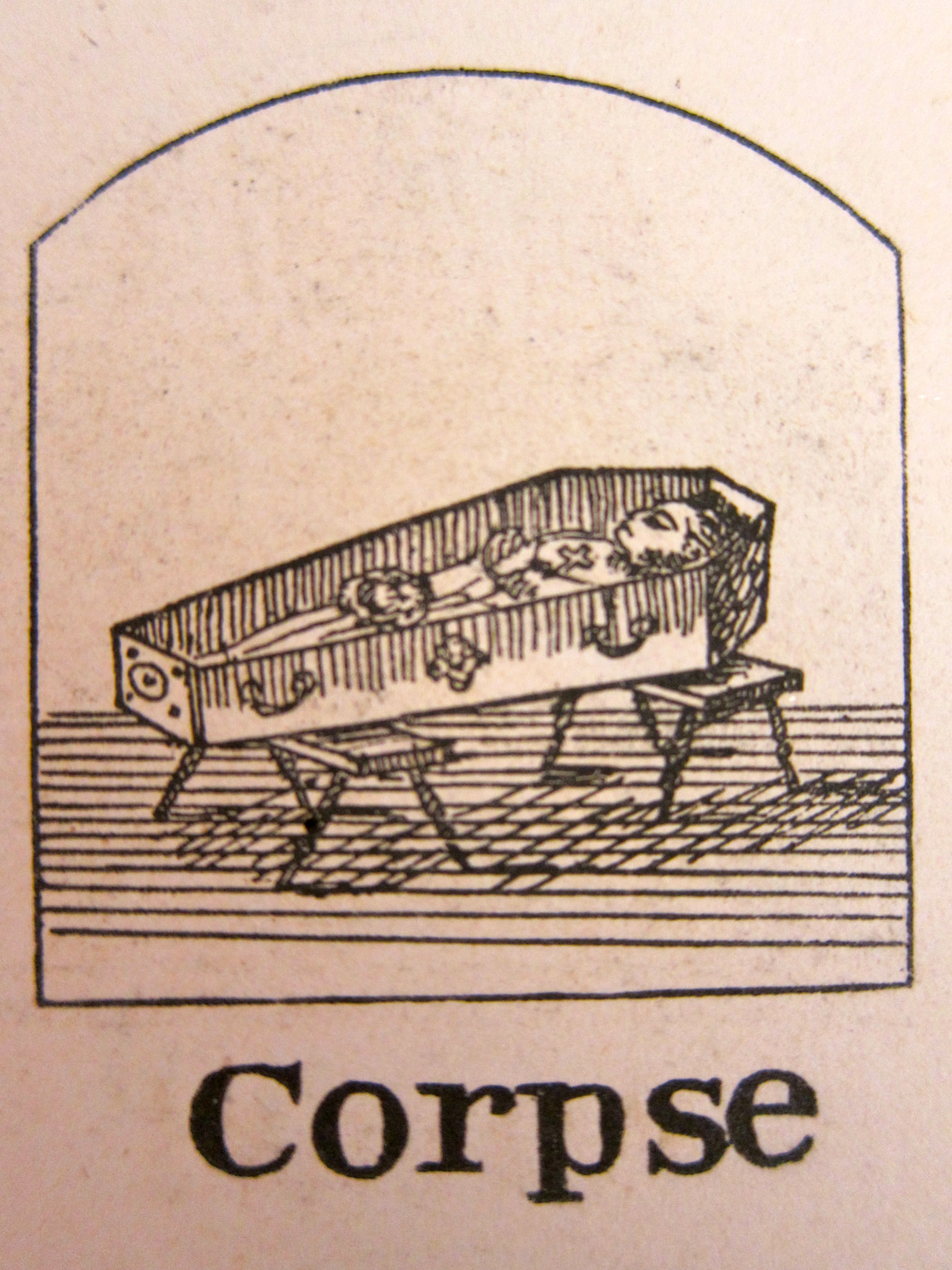
The sad business of sewing a robe, which is what the Ameses called a shroud, fell to Evelina and her sisters-in-law. The Ames women often were called on to make robes for the deceased, as they did today for a neighbor, Mrs. Willis. Mrs. Willis, who had died the day before, presumably had no family members who could otherwise sew the robe. Evelina herself picked up the muslin, the traditional material for a burial sheet, from the Ames store. The process of preparing the dead for burial tended to follow the existing customs:

“Before the Civil War, the care of the dead was largely the domain of the deceased’s family and neighbors. The corpse was customarily laid out on a board that was draped with a sheet and supported by chairs at either end. The body was washed, almost always by a female member of the household, and wrapped in a sheet for burial. A local carpenter or furniture maker […] supplied a coffin, a simple pine box with a lid. The undertaker, often the same carpenter or furniture maker […] took the coffin to the house and placed the body inside. With the family and friends gathered around, the minister performed the appropriate religious rituals, and then the undertaker conveyed the coffin to the graveyard.”*

Other sewing went on today as well. Evelina had spent the past several days piecing together a dress made of cashmere, and was waiting for the dressmaker of choice, Julia Mahoney, to work on the waist.  Julia was late, however, which threw a wrench into Evelina’s plans for the day. Evelina didn’t like tardiness, and was unhappy to have to rearrange her day. Eventually, however, Julia arrived and “cut the waist.”

Oakes Ames, meanwhile, went into Boston and Braintree, presumably on shovel business.  Saturday was his usual day to go into Boston; it being Tuesday, perhaps something beyond Oakes’s usual job of taking orders for shovels was called for.

*http://www.memorialhall.mass.edu/classroom/curriculum , “Death and Dying in the 18th and 19th Centuries”


September 25, 1851

DSCF1693small

Thursday Sept 25th  Julia has been here to day and has

cut two french print dresses.  She had but

very little trouble with them and I think they

sett very well  she also cut Susans doll a frock

Susan had a very comfortable night & appears

quite smart to day  The Dr came here to day

which makes the third visit says it is not necessary

for him to come again

Julia Mahoney, a young dressmaker who had recently immigrated from Ireland, worked at Evelina’s today.  She immediately set about cutting sections for two dresses to be made from the French print fabric that Evelina had just bought in Boston. Evelina was pleased with Julia’s work today, which wasn’t always the case.  To help keep little Susie Ames occupied as she recovered from a terrible case of nettle rash, Julia cut “a frock” for Susie’s doll.

The doctor – we don’t know which one in Easton had been called – visited today and confirmed Susie’s imminent recovery.  The little girl was appearing “quite smart,” a phrase that Evelina occasionally used to note marked improvement in someone’s appearance, health, or wits.

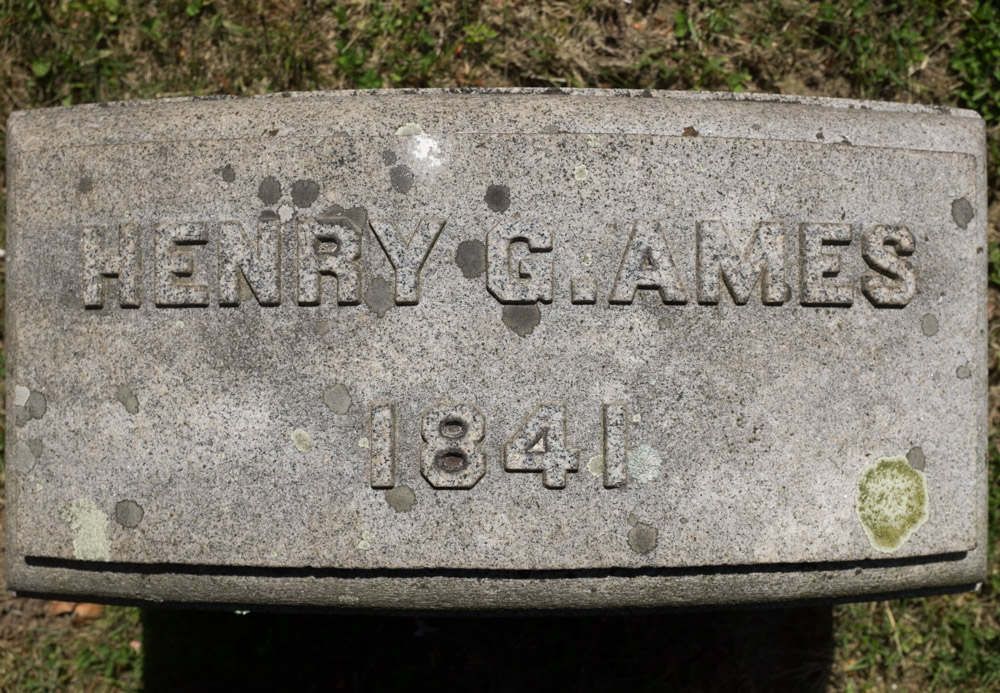
There was no question that fall had arrived.  Not only had the autumnal equinox occurred, officially ushering in the season, but Old Oliver had recorded several small frosts recently, including “a large frost last night.”  Daylight was shrinking slightly every day. As she quilted today, Evelina must have been turning her thoughts toward winter.  She may also have paused to remember that ten years ago on this date, her fourth son, Henry Gilmore Ames, had died at age 2 1/2.

July 28, 1851

Bookcase

Monday July 28th  Was about house as usual this 

morning and have been mending some and fixing

some of Susans clothes  Oakes & Oliver (3) are

having a book case put up in their room by

Ira Ford  They have almost got books enough to

fill it  Julia is to work for Mrs Witherell

making her a purple morning dress

A young carpenter named Ira Ford built a bookcase at the Ames house today in the bedroom of Oakes Angier and Oliver (3).  The boys had acquired schoolbooks and other “books enough” and needed a place to store them all.

Like their mother and unlike their father, the Ames sons like to read. The middle son, Oliver (3), in particular, cherished reading. According to an unnamed eulogist in a memorial volume published in 1895,  Oliver (3) built up quite a collection of books in his lifetime: “In the company of books he found an absorbing pleasure, and to the library which he had begun to collect in his early age he made in later years large additions of rare and valuable volumes.”* After Oliver (3)’s demise, those books that weren’t kept by his family were auctioned off at Sotheby’s.


*Anonymous, Oliver Ames Memorial, ca. 1895, p. 38 

July 15, 1851

Wring

1851

July 15 Tuesday  Jane washed this forenoon and about

nine or ten Mother Henrietta Rachel and her

babe came  They went home about 11 Oclock

mother will stop a few days  Gustavus left

yesterday morning  The afternoon Mrs H Ames

passed here  Mrs S Ames had a dress maker & did

not come in

Laundry was done today, a day later than normal because of the extra work involved in tidying up after a weekend of houseguests.  It’s not hard to imagine that such a disruption in the routine made Evelina or Jane McHanna or other members of the household think today was Monday instead of Tuesday.

Just as things were getting back to normal, however, more visitors arrived. Evelina’s sister-in-law, Henrietta Gilmore (Mrs. Alson Gilmore), arrived with Evelina’s mother, Hannah Lothrop Gilmore. As often happened, the senior Mrs. Gilmore came to spend “a few days” with Evelina, her only living daughter.  With them was Henrietta’s daughter, Rachel Howard (Gilmore) Pool (Mrs. John M. Pool or Poole) and her little girl, Ella. Ella, barely one year old, was Hannah Gilmore’s great-granddaughter. Four generations of Gilmore women visited together in the Ames parlor.

In the afternoon, Evelina had yet another sister-in-law pay a call, this one from the Ames side of the family.  Sally Hewes Ames came to visit one last time before leaving; she planned to return to Connecticut the next day. The women likely sat and sewed together; Evelina almost always had sewing or mending in her hands when socializing at home.  As was her wont, she probably gave something to Sally to work on while they talked. Perhaps even old Mrs. Gilmore sewed with them.