October 22, 1852


F201308231348352569927452

Tibetan Sheep, 21st century

Friday Oct 22d Julia Mahoney was here to work

this forenoon on Susans Maroon Thibot

making a new waist and put a new yoke

and making over the waist to her dark

striped wool deLaine  Carried home the

waist to finish to her Thibot dress  I spent

the afternoon at Olivers with Hannah + Augustus

Mr Whitwell called


Julia Mahoney, a local dressmaker, worked at Evelina’s sewing at least two dresses for Susan Ames. Susie, who was ten-going-on-eleven, was growing taller and more mature. The dresses she had worn the previous winter needed to be altered, the waists expanded, the tucks let out, a new yoke put in. One of her dresses was made of delaine, a wool that Evelina sewed often for herself and her daughter. It was a popular, open-weave, light-weight wool that came in many patterns and colors; it may or may not have been imported.

The “Thibot” cloth that Evelina describes was more unusual. It was of “[w]ool material, worsted with soft and smooth plain-finished face; made from mountain sheep of Thibet, Asia*.” This textile was imported and would have been more expensive, suggesting that Susie’s little maroon dress may have been meant for “Sunday best.” It was special enough that the dressmaker took it home to work on.

In Boston at this time, sources for wool were both domestic and foreign.  There were approximately 15 wool merchants in the city, most of whom were prospering. According to an early 20th century history:

“The quantity of domestic wool showed a steady decrease for several years subsequent to the enactment of the tariff of 1846. The effect of the gold discoveries upon general commerce in 1849, stimulating the manufacturing industry, is reflected in the rapidly increased imports of home grown wools. The imports of foreign wools show considerable yearly fluctuation, corresponding in the main to the varying quantities of domestic wools.”**

Some years later, Susie would marry a wool merchant named Henry French. She and Evelina would then – presumably – have access to whatever wool they needed or wanted, foreign or domestic.

*Betty J. Mills, Calico Chronicle: Texas Women and Their Fashions, 1830-1910, Texas Tech University Press, 1988, p. 183

**Joseph T. Shaw, The Wool Trade of the United States: History of a Great Industry:Its Rise and Progress in Boston, Now the Second Market in the World, 1909, p. 52

October 14, 1852

fig05

Cambridgeport, ca. 1854*

Thursday Oct 14th Mrs Mower left for Maine this

morning or rather she is to stop over night in 

Cambridgeport and home tomorrow  Mrs Witherell &

Mrs S Ames came in for an hour or two this afternoon

I feel that I have not seen Mrs Mower as much

as I wish  I have given her my winter bonnet

3 dollars in Cash and other things & paid her

passage from Boston

Louisa Mower, an old friend of Evelina, left for home. Evelina bought Louisa the ticket from Boston to Maine, gave Louisa some cash and her own old bonnet.  Evelina was often generous to friends and family this way – to the females, at any rate. She looked after the women she cared about and in her entry today, she sounds a bit sad to see this particular friend depart.

“[T]his was a cloudy cool day wind north east and some misty just at night”* wrote Old Oliver in his journal; he doesn’t suggest it, but the sky and wind portended a winter storm, the first of the season. Louisa’s travel to Maine would be delayed on account of it.

Cambridgeport, where Louisa was staying while waiting, is a neighborhood within the city of Cambridge that today borders the Charles River east from Massachusetts Avenue to Central Square. In the 19th century, it was part wetlands, part residential, and part transportation hub. It was the site of the relatively new Grand Junction Railroad and Depot Company, which connected trains heading west and north – a line that’s still active in our 21st century. A few years later, Cambridgeport was also the location of the F. A. Kennedy Steam Bakery, where Fig Newtons and Lorna Doones were born.


*Image courtesy of http://www.mit.edu

**Oliver Ames, Journal, Stonehill College Archives, Arnold Tofias Collection


October 7, 1852

elm-yellows


Oct 7th Thursday  Have been cutting out some shirts

for bosoms.  Catharine Murphy has made

four window curtains for my front chamber

Mrs Witherell Mrs S Ames & self passed the

afternoon & evening at Mr Swains  Mr Ames 

came to tea and Oliver rode down after us and 

stopt awhile Mr & Mrs Meader are there &

Ellen Meader  Augustus wife went to Boston


There was quite a bit of socializing today, prompted in part by good weather. “[T]he 7th was a fair pleasant day + verry warm,” noted Old Oliver Ames. Henry David Thoreau, some 40 miles to Oliver’s north, was more discursive about the sunshine:

I sit on Poplar Hill. It is a warm Indian-summerish afternoon. The sun comes out of clouds, and lights up and warms the whole scene. It is perfect autumn. I see a hundred smokes arising through the yellow elm-tops in the village, where the villagers are preparing for tea. It is the mellowing year. The sunshine harmonizes with the imbrowned and fiery foliage.**

The elm trees such as the ones that Thoreau mentions would also have been seen by Old Oliver. In fact, they would have been seen across the state and beyond. Once upon a time, American Elms were ubiquitous in the United States.They were tall trees with a wine-glass profile and a graceful green canopy. In the 20th century, however, most of them were wiped out by Dutch Elm disease. The existence of “Elm Streets” in communities around the country attests to the fact that elms were once as common as maples or pines. As Thoreau suggests, many a small town lived under their shade.

*Oliver Ames, Journal, Stonehill College Archives, Arnold Tofias Collection

**Henry David Thoreau, Journal, courtesy of http://hdt.typepad.com/henrys_blog


October 1, 1852

Wax candle


Oct 1st  Friday   Went to Boston with Mrs Witherell to

see our pianos.  Miss Kinsley was going to the 

city and we asked her to try them for us.  She

thinks they are fine toned  Mrs S Ames also went

with us and Helen & Miss Hobart after school

Miss C Hobart is a very pleasant girl

I bought some wax candles at 62 per lb

Mrs Mower & Norris came home with us


Despite last night’s frost, this Friday proved to be “fair” and “pritty warm.”*  Evelina and her sisters-in-law, Sarah Ames Witherell and Sarah Lothrop Ames, took advantage of the pleasant weather to trip into Boston “to see our pianos” and do some shopping. Meeting them at the music store was Lucy Adelaide Kinsley (soon to become Mrs. Francis Howard Peabody) from Canton. A pianist herself, she approved of the purchases.

Joining the sisters-in-law later in the day, after school was over, were teen-agers** Helen Angier Ames and her friend Catharine Hobart. Evelina was growing fond of Helen’s friend; did she imagine that “Miss C Hobart” would one day be her daughter-in-law and mother of her grandchildren?

The two mothers were excited about the pianos. We can imagine that at least one or two of the expensive wax candles that Evelina bought were destined to be placed in candlesticks – or candelabra – near the new instrument. The old homestead was growing more elegant by the week. And it was back to that homestead that the women headed at the end of the day. Ordinarily, they would have stayed over in the city but instead, they returned to North Easton with houseguests in tow.

*Oliver Ames, Journal, Stonehill College Archives, Arnold Tofias Collection

** Teenager was not a term that Evelina would have used – it didn’t become a word until the 20th century.

September 24, 1852

Giffard1852

Henri Giffard’s Dirigible  

Friday Sept 24th  Mr Ames & Oakes Angier went

to Boston and are going to New York for New

Jersey to night  I have been to work again about

house all day ironing and this that & tother

Catharine got my quilt out and has been

mending some stockings  Mr Rathbourne

returned to P[rovidence] this afternoon  Oliver carried him

to Mansfield  They went to Canton this afternoon


Today Evelina saw her husband and eldest son depart for New York and New Jersey, by way of Boston; that helps explain the extra laundry day yesterday. The men were off on shovel business and the fact that Oakes Angier went along suggests that he was enjoying good health. He was also learning the family trade.

Back at the house in North Easton, domesticity reigned, as usual. Even Evelina couldn’t quite keep track of all the little tasks she was addressing. It was simply “this that & tother.” Mending, ironing, quilting went on. Her son Oliver was riding here and there with his houseguest, Mr. Rathbourne.  It looks like the only son who was present at the shovel works was the youngest, Frank Morton.

Miles away from anyplace that any Ameses were traveling today, a steam-powered dirigible, lifted by hydrogen, rose in the air for the very first time. Hot air balloons had already ascended the skies in various places and for various lengths of time. The airship was new and different by virtue of its shape, design, and engine. Created by a Frenchman, Henri Giffard, the airship made its maiden voyage from Paris to Elancourt. It traveled 17 miles. The winds were too strong for it to return to Paris, as planned, but Giffard was nonetheless able to steer and turn the airship in its course. It was the shape of things to come.


September 22, 1852

Piano

Wednesday Sept 22d Have been to Boston with Mrs

Witherell to get a Pianno  Have got to have

them made  Mrs Kinsley called to see them with

us  Met Mrs Wilson at Lintons to go to select

them. Dined at Mr Orrs while Mrs Witherelll

called on Mrs Dorr  Bought a Piano cloth

and gold thimble for Mrs Ames & C Hobart

and a ring for Helen  Oliver came from Providence


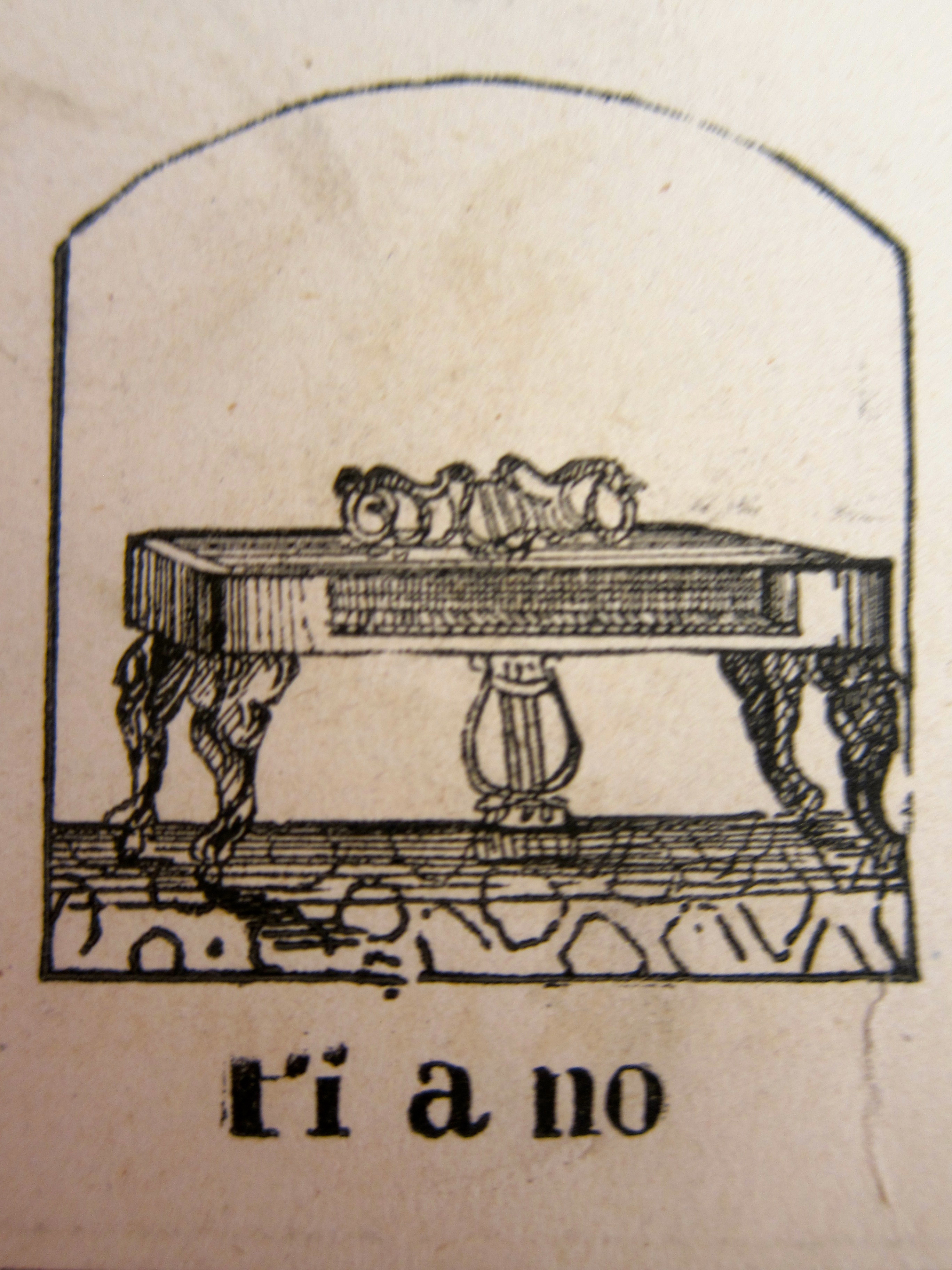
A piano! And not one piano, but two, one for each side of the house. Both Susan Ames and Emily Witherell would be learning to play the instrument. Each girl would have her own piano to practice on. What luxury. What gentility. What fun.

With advice from friends such as Louisa Kinsley, Evelina and Sarah Ames Witherell selected and ordered the instruments in a Boston store. Spending money liberally, Evelina went on to purchase gifts. For her other sister-in-law, Sarah Lothrop Ames, she bought a cloth to go on top of the piano that those Ameses already owned. For Catharine Hobart, a young family friend who had caught the eye of her son Oakes Angier Ames, she bought a gold thimble. And for her niece Helen Angier Ames – Catharine’s classmate – she bought a ring.

Did her husband Oakes know that Evelina was spending so much money? Did her father-in-law? While her husband must have given his approval, it’s unlikely that Old Oliver would have approved of such a spree. Yet both those men were often generous within the family; in that respect, Evelina was just following suit.

We note today, too, that Oliver (3) returned from a few days at a fair in Providence, where he no doubt saw friends and former classmates from his two semesters at Brown University. We might imagine that he was missing school.


September 17, 1852

Brig

*

Friday Sept 17  Mrs Stevens has done some ironing to

day and I have been busy about house ironing

and one thing and another & have seen but very

little of her since she came  It has been hurry

burly all the time  We were at tea at Olivers

Abby came here but as we were there she

stopt & in the evening Mr Torrey came

Mrs S Ames has gone to watch with Mrs Savage

With the help of Mrs. Stevens, a houseguest, ironing continued, along with Evelina’s usual choring and “one thing and another.” According to Evelina’s misspelled expression, the household was all hurly-burly, full of commotion and tumult.  Later in the day, the two women – and other family members, presumably – enjoyed tea next door with Sarah Lothrop and Oliver Ames Jr. And even later, Col. Torrey stopped in for another visit.

In a California newspaper, there was an article about a missing ship, the Schooner Penelope. The vessel bore no direct relation to the Ames family (although an Ames relative, Cyrus Lothrop, would eventually own ships, including one named for Helen Angier Ames), but the article’s conclusion that the ship had been lost at sea was very much indicative of the perils of travel at the time. The Penelope had last been seen the year before by a sister ship as both headed into a bad storm.

Newspapers in coastal cities like San Francisco or Boston often carried such reports of ships that set sail and were never heard of again, much as our modern television and internet news sources carry coverage of airline disasters like the Malaysian flight that went missing over the Pacific. We may have our own disasters in the air and at sea, but the latter hazards were naturally more common in the 19th century, and the means of discovering, much less communicating, the fates of the vessels that disappeared were limited. After a certain amount of time had passed with no word of a particular ship, people had to assume the worst, and know that their sailor sons or husbands, or passengers for whom they waited, had drowned. The following from the Daly Alta California in San Francisco conveys the demise of the Penelope:

The American schooner Penelope, Capt. Austin K. Dodge, cleared from this port on the 14th of October, 1851, for San Juan del Sud, with 40 passengers. It is believed that she sailed the next day. Capt. Mann, of the brig Lowell, which sailed from this port on the same day, reports having seen the Penelope about the 5th of November, off Cape St. Lucas, just previous to a terrific hurricane, which lasted but a quarter of an hour. After the driving mist which accompanied the gale had lighted up, the Penelope was not visible. Capt Mann felt confident at the time that the vessel had foundered.

After arriving at San Juan he remained there some weeks, but received no tidings as to her fate. As nothing has yet been heard of her there is every reason to apprehend that she was lost at that time, and every soul on board perished. […]

Both the Penelope and Lowell were fitted out and sailed from Pacitic Wharf. Captain A. K. Dodge, of Beverly, Mass.; 1st mate, F. H. Choate; 2d mate, Thomas J. Fisher; the first mate from Salem, Mass., and the second from Boston. W. H. Nicolsen’ cook, from New York, aud James Brickley, John Smith, Manuel Silva, Joseph Frank and George Covell, seamen.**

The relatives of anyone who went to sea always had to worry.


*A brigantine is a type of schooner, distinguished by its sail configuration.


**http://www.maritimeheritage.org/ships/Schooner-Penelope-1852


September 13, 1852

Towel

Monday Sept 13th  Catharine has washed all the fine

clothes & towels &c  We had 26 towels and 21 shirts

Hannah got up about nine or ten and went to

work some  I have starched most of the clothes

Have passed the afternoon in the other part

of the house with Mother & Mrs Stevens.  William

& Angier are there came three or four days

since

With the addition of all the new men’s shirts that Evelina had been sewing, the laundry this week was heaping. Two servants worked on the wash, while Evelina set items in starch. Fortunately, the day was sunny and the laundry could be hung outside. It was a busy Monday around the wash tubs.

On or close to this date in 1852, a campaign biography of Franklin Pierce was published in Boston by Ticknor, Reed and Fields. The Life of Franklin Pierce was written by Nathaniel Hawthorne, a friend of Pierce since their days at Bowdoin College. The purpose of the bio was to present the Democratic candidate to the voting populace at large, particularly in the areas of the country, such as the burgeoning northwest, where he was less well known. Publishing a biography was a typical campaign strategy at the time for major presidential contenders.

Although Hawthorne, who was famous as the author of The House of Seven Gables, readily admitted that this kind of writing was “remote from his customary occupation,”* he threw himself into the project. He softened Pierce’s well-known pro-slavery stance by emphasizing his friend’s peaceful and pragmatic nature. He explained Pierce as believing that slavery would disappear on its own without human intervention. It needed no management or interference. In sour jest, some abolitionists and others responded that this biography was Hawthorne’s best work of fiction yet.

As we know, Pierce did get elected; perhaps the campaign biography helped. With gratitude, Pierce appointed Hawthorne to a consulship in Liverpool, a lucrative post. Hawthorne needed the money. The two men remained friends for the rest of their lives, until Hawthorne’s death in his sleep in May, 1864, while visiting the Pierces.

*Nathaniel Hawthorne, Life of Franklin Pierce, Boston, 1852, Introduction.

September 9, 1852

Sarah Ames Witherell

Sarah Ames Witherell  (Mrs. Nathaniel Witherell, Jr.)

(1814 – 1886)

Thursday Sept 9th  This has been a very warm day indeed

and not much air stirring  We went in to see

Augusta awhile this forenoon and found her

rather more comfortable  This afternoon have

been sitting in the parlour chamber sewing it

being the coolest place  Mrs Witherell & Mrs

S Ames came in awhile  Mrs W watched with Mrs

Savage last night

Evelina and her father-in-law agreed that this day and the one before “were fair days + […] verry warm indeed.” Oppressively hot for September, we might think.  Evelina, her mother Hannah Lothrop Gilmore and her friend Mrs. Stevens went across the street early in the day to check on the ailing Augusta Pool Gilmore and must have been pleased to find her “rather more comfortable.” Back to the house it was, where the three ladies moved into the parlor to sew. Usually they would work in the less formal sitting room, but the parlor perhaps offered less direct sunlight. It was “the coolest place.”

Evelina’s sisters-in-law, Sarah Lothrop Ames and Sarah Ames Witherell, paid a call. It was Sarah Witherell’s 38th birthday. A widow for only four years, her most recent year hadn’t been a happy one: she had burned her foot badly, had all her teeth pulled, lost her elderly father-in-law and, most awful of all, lost her fourteen year old son, George, to rheumatic fever. Yet she was moving through the proscribed stages of real mourning in a seemingly graceful way. She was still taking care of her father, Old Oliver, and her one remaining child, Emily, and was ever helpful around the family compound. As we see from the diary entry, Sarah had spent the previous night watching over the dying Hannah Savage. “Dignified,” is how one family friend described her, and we readers might add “dutiful” and “kind” as well.

In another decade, after her father had passed on, Sarah and her daughter Emily would move into Boston and take up residence there at the Hotel Hamilton. Sarah would continue in a quiet way to participate in both family and city life, and would enjoy traveling with her sister Harriet. Her brother Oliver Jr would make it a point to look after her.

August 28, 1852

2_6_1_b

Example of Kashmir Shawl Popular at Mid-19th Century*

Sat Aug 28th  Mr Ames called at Mr Orrs this morning said

they were not any of them very well at home.  Went

out to find Mrs S Ames at last met her at

Mr Orrs about noon.  Melinda has not got home

from her journey yet. Bought Mrs Witherell &

self a Cashmere shawl  Have had a pleasant 

visit but am glad to be home again


As he usually did on Saturdays, Oakes Ames traveled from North Easton into Boston on business. Instead of going right to his customers, however, he stopped by the Orrs’ where his wife was staying.  Evelina had been away for over a week and he wanted to report that they – meaning he and two of his sons, Oliver (3) and Frank Morton – had fared ill without her. “They were not any of them very well at home,” he complained.

The fact that Evelina didn’t go rushing home to take temperatures or brew beef tea, but spent the day shopping in the city with her sister-in-law Sarah Lothrop Ames, suggests that she didn’t take her husband’s report too seriously. If she had, she would have headed home right away. She may have felt that Oakes was just expressing dismay over the disorder that had arisen in her absence, a complaint that wouldn’t have been surprising in an era when the majority of men had no role in, skill at, or inclination for the domestic side of life. Evelina hadn’t been there to tend to the household and probably could have related to the words of Elizabeth Cady Stanton, suffragist and mother of seven, who had cause to bemoan “the chaotic conditions into which everything fell without her constant supervision.” Still, Evelina must have been warmed by the thought that she had been missed, and she was glad to get home.

While in Boston, though, Evelina did buy a couple of cashmere shawls, one for herself and one for Sarah Ames Witherell. If the shawls were as beautiful as the one in the illustration, they were two lucky women.  As seen, some shawls during this fashion era were made extra large to fall over the full skirts of the time.


*Image courtesy of Meg Andrews, “The Girton Curtains,” http://www.meg-andrews.com/articles