January 16, 1852

image


1852

Jan 16th Friday  Made the bed in the front chamber and 

put the room in order swept the stairs &c &c

worked on Susans morino hood  Mrs Wm Reed &

Mrs Hall called  Augusta & Edwin here to tea and

spent most of the evening  Edwin put the casters

on my hourglass table and I nearly finished putting

on the cover  Mrs S Ames called a few moments.

In between the day’s activities of choring, sewing and finishing up a project for newlyweds Edwin and Augusta Gilmore, Evelina received several callers, including Abigail Reed, wife of the elderly William Reed, and a Mrs. Hall. Evelina had called on Mrs Reed the day before; Mrs Reed returned the courtesy today. Paying calls was an intrinsic part of social life in the nineteenth century, especially among women and especially in cities, but also in smaller country towns such as Easton. Social exchange, which in the country had been a somewhat relaxed occurrence based on an informal combination of need, opportunity and desire, was becoming ritualized.

As of 1850, social visits were beginning to follow a proscribed pattern, like the one described in The Art of Pleasing,* written about this time. On the topic of “Receiving Visitors”:

“To receive visitors with ease and elegance, and in such a manner that everything in you, and about you, shall partake of propriety and grace, – to endeavor that people may always be satisfied when they leave you, and be desirous to come again, – such are the obligations of the master, and especially of the mistress of a house.

“Everything in the house ought, as far as possible, to offer comfort and grace. Perfect, exquisite neatness and elegance, which easily dispense with being sumptuous, ought to mark the entrance of the house, the furniture, and the dress of the lady.”

In a cautionary paragraph, the author goes on to advise against sewing when company calls: “If a lady who receives a half ceremonious visit is sewing, she ought to leave off immediately, and not resume it except at the request of the visitor.”  That stricture may have been a difficult one for Evelina to follow, given how incessantly she sewed. But she and her sisters-in-law would have striven to be au courant with the etiquette of the day.

Before many more years went by, the phenomena of calling cards would be introduced, creating “an increasingly complex etiquette which determined the length and frequency of calls, whether a call should be returned or not and the sorts of people to whom a family was, or was not, ‘at home.’ Families connected by kinship, business and politics interchanged calls and invitations, but ranked and classified their acquaintances in ever more precise grades of social acceptability.”** These new rules would apply particularly to the next generation of Ameses.

H. M. Rulison, The Art of Pleasing, Cincinnati, 1853, pp. 27-28

** Jack Larkin, The Reshaping of Everyday Life, 1988, p. 265
 

January 14, 1852

il_340x270.670708305_2grg

Jan 14th Wednesday  Have been to work some on a 

morino hood for Susan to wear to school  Augusta called 

this forenoon and I went home with her to assist her in

cutting her cake to send to her friends  This afternoon

have been to N. Bridgewater and called on Miss Foss

with Mrs S Ames Emily & Susan  bought Edwin a clock

Called at Edwins and staid till about eight Oclock this

evening spent the rest of it at Olivers

Orinthia Foss is back.  “Miss Foss,” as Evelina calls her, more formally than usual, had taught school in Easton the previous year, living part of that time with the Ames family.  Although twenty years younger than Evelina, the two women had become close friends, often sewing, gardening and socializing together. When Orinthia left to go back to her family in Maine, Evelina had missed her. Now, Orinthia had returned and was teaching in North Bridgewater (today’s Brockton).

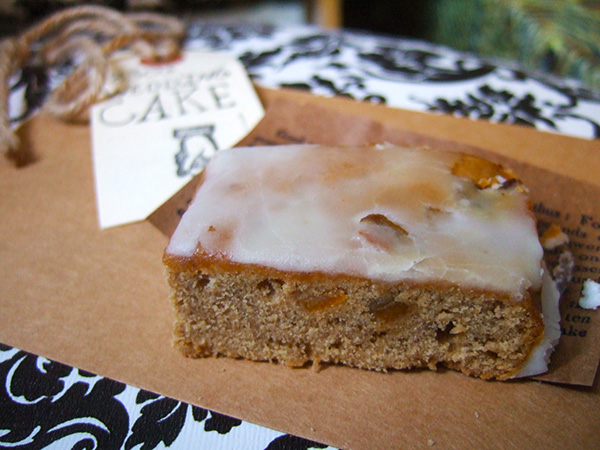
Evelina, Sarah Lothrop Ames, and the girls Susie and Emily rode to Bridgewater to call on Orinthia, a reunion that was presumably happy and animated.  The women also did some shopping.  Evelina, feeling pleased, bought a gift for her nephew Edwin Gilmore, despite having made a table for him and his bride, Augusta.  She had been over at the newlyweds’ home earlier in the day, in fact, showing Augusta how to cut up the wedding cake that she herself had made.  Pieces of the cake would be sent out to friends and relatives as a keepsake.  Wedding cakes were meant to bring luck to the new couple.

Back in Easton, Old Oliver noted that “we kild a yoke of oxen I bought at randolph for 125$ one of them weighd 1359 + the other 1277 one of their hyde weighd 116 lb and the other 104 pounds”.  There would be beef and tripe headed for Evelina’s kitchen.


January 12, 1852


 Plate

Jan 12 Monday  Susan washed the dishes this morning

and I went to work on my plants making some frames

for them and was to work on them and about the

house all the forenoon.  This afternoon have been

mending pants for Oakes Angier.  Have put a new

pocket into one pair  Jane washed and has been to see

Mrs Savage  Carried Augusta’s cake over to her and

Called a few minutes on Mrs Sarah Ames  Very cold


After breakfast each morning, a stack of dishes awaited washing in the Ames kitchen, numbering approximately seven plates, seven cups, seven saucers, 14-21 pieces of cutlery, various serving platters and bowls and serving spoons, plus the pots and pans used in preparation.

Hot water would be boiled and poured into a bucket or perhaps a basin set inside a dry sink. Using a cake of homemade soap, either chipped into the water or swirled by hand, Susie Ames or Jane McHanna or Evelina herself from time to time, washed each item with a washrag, rinsed the piece in a separate pan of clean water and placed it on a rack to dry or be wiped dry with a dish towel. The chore could take 30 to 45 minutes, and had to be repeated at dinner and tea.  It wasn’t as convenient as hand-washing dishes today – no liquid soap, no faucet spray – and it certainly wasn’t like loading the dishwasher.

Inventors, in fact, were trying to develop a machine that would wash dishes; the first such patent was filed in 1850. It wasn’t until 1886, however, that a wealthy woman named Josephine Garis Cochrane would make the first successful dishwashing machine. She didn’t wash dishes herself, but her servants did and often chipped the ceramic plates in the process.  Impatient with the damage, as well as the length of time it took to wash all the dishes after the many dinner parties she gave, she decided to make a machine to do the work.

Mrs. Cochrane  contrived a wire rack shaped for various specific dishes to fit inside a wheel inside a copper boiler. “A motor turned the wheel while hot soapy water squirted up from the bottom of the boiler and rained down on the dishes.”* The dishwasher was born. It went on to be displayed at the 1893 Columbian Exposition in Chicago, where it won a prize.  The Garis-Cochrane Company was formed and manufactured dishwashers until bought by KitchenAid, which in turn is owned by Whirlpool.

All this was a far cry from nine-year old Susie Ames washing up the breakfast dishes, plate by plate.


* Wikipedia, “Josephine Cochrane”, January 10, 2015

January 10, 1852

Oakes_Ames_-_Brady-Handy

 Portrait of Oakes Ames by Matthew Brady 

1852

Jan 10th Saturday  Mr Whitwell & Ames have not met again

to day  Mr W called just as Augusta Helen Susan

& self were in the sleigh to take a ride  We have

called at mothers  Mr Horace & John Pool, Edwin

& wife here to tea  Swept the parlor this morning

and put the house in order partially frosted a loaf of cake

for Augusta having made one of hers carried the frosting

over and made her a call while heating it

The boys presented their Father a gold pen & pencil

Oakes Ames turned 48 years old today, as did the local Unitarian minister, William Whitwell.  Last year and again this year, Evelina was unsuccessful in getting the two men together to celebrate. Oakes Angier and Frank Morton gave their father a gold pen and pencil to mark the occasion, a fine gesture.

As Oakes closed in on the half-century mark, he presumably began to look beyond the confines of the work he and his brother Oliver Jr. did for the shovel company. The next generation, in fact, was being groomed to run O. Ames & Sons; Oakes Angier, as eldest son of the eldest son, was on deck to superintend the company whenever Oakes and Oliver Jr. decided to step down. He was learning every aspect of the manufacturing process. Oliver (3) and Fred Ames were at college, Oliver presumably honing the skills he would need to take over his father’s role in managing sales, while Fred was on a path to being the financial clerk or CFO we might say today. Frank Morton Ames was learning a variety of skills, too, although he was seen more as a spare man waiting to step in should his cousin or either older brother fail somehow.

What could Oakes do with his tremendous talent and energy? Clearly, the roiling politics of the day interested him. By 1860, his gregarious nature, quick comprehension and thirsty ambition led him to accept the nomination and election to Massachusetts Governor Andrew’s Council as representative from Bristol County. Two years later, by “a large popular vote,”* Oakes Ames was then elected to the Thirty-Eighth U. S. Congress, where he would serve for four terms.

In 1872, according to circumspect historian, Reverend William L. Chaffin, Oakes “declined a renomination.”* He died in May, 1873, shortly after the conclusion of Credit Mobilier, a national political scandal for which many held Oakes culpable. At the time, his natural candor and fearlessness worked against him and he was unable to dodge the political manuevering that placed most of the blame on him. That same brave honesty, coupled today with calmer, historical perspective, has since served to cast Oakes Ames in a better light.

William L. Chaffin, History of Easton, Massachusetts, 1886, p. 654


January 8, 1852

OLYMPUS DIGITAL CAMERA

*

1852

Jan 8th Thursday

Frosted the cake over the second time

this morning and it was quite dry at three when

Edwin took it away  they are married this evening

Have invited their parents uncles aunts and cousins

here tomorrow. Have presented them with an hour

glass table  Mr & Mrs Reed have passed the afternoon

in the other part of the house  Two shovel handlers from

Maine to spend the night here

Had a quarter of Beef of fathers  The

Ox weighed over 14 hundred

Edwin Williams Gilmore and Augusta Pool were married today in what would have been a small ceremony, probably at the home of Augusta’s parents, Lavarna and John Pool, Jr. Presided over by a minister – Reverend William Whitwell, most likely – the event would have been attended only by close family members. The couple took no honeymoon or “bridal tour,” but moved right into the new house that Edwin had built in the village, barely a stone’s throw away from the Ames compound.

The new house had been furnished not only by Edwin, but also by Augusta herself, who probably brought along household goods as part of what was called her “marriage portion.” Items such as dishes, cutlery, and linens would have been at least some of what Augusta and her new sister-in-law, Lavinia, had labored to put into place over the last two days.

Evelina spent her time preparing for the party she was giving the next day for members of the Gilmore and Pool families.  Her domestic routine wasn’t too overwhelmed, however; she was still able to cope with more pedestrian matters, such as accommodating two shovel handlers from Maine for an overnight visit, even as she set up for thirty guests.


Currier & Ives, The Marriage, 1847


January 7, 1852

weddinga_cake1

*

/52

Wednesday Jan 7th

Heat the brick oven baked a loaf

of brown bread two loaves of fruit cake for

Augusta & mince pies  A & L were at Edwins

this forenoon. This afternoon have sewed for me on 

Susans dress.  I have been making frosting for

the cake  Helen has been in and the girls have had

a nice time over it  Frank carried them home


Augusta Pool and Lavinia Gilmore were once again helping Lavinia’s Aunt Evelina. Helen Angier Ames, too, came over from next door, and the young maidens had “a nice time over it.” They did a little sewing for Evelina – that must have pleased her – and helped prepare frosting for Augusta’s wedding cake, which Evelina had kindly undertaken to make, along with all the regular baking she was doing for her family. Augusta was to be married the next day to Evelina’s nephew, Edwin Williams Gilmore.

If the women were following the instructions of Sarah Josepha Hale, they would have made “Iceing for Cakes,” according to the following instructions:

Beat the whites of four eggs to a stiff foam, and add gradually three quarters of a pound of the best double-refined loaf sugar, pounded and sifted; mix in the juice of half a lemon, or a tea-spoonful of rose water.  Beat the mixture till very light and white; place the cake before the fire, pour over the iceing, and smooth over the top and sides with the back of a spoon.”**

When it got late, Frank Morton Ames took Augusta and Cousin Lavinia back to their respective families in the countryside. The light of a full moon guided them along in a sleigh over snow that was “now about a futt deep.”***

* Image of 19th century wedding cake courtesy of http://www.fourpoundsflour.com

**Sarah Josepha Hale, The Good Housekeeper, 1841, p. 101

***Journal of Oliver Ames, Courtesy of Stonehill College Archives


January 6, 1852


OLYMPUS DIGITAL CAMERAOLYMPUS DIGITAL CAMERA

Augusta Pool                                       Lavinia Gilmore
                    

1852

Tues Jan 6 th

A heavy snow storm commenced about

10 Oclock  Mrs Witherell & her children have been

to the funeral in a waggon had a hard time getting

home.  Augusta and Lavinia have been at Edwins

house getting it in order for housekeeping.  This

evening have helped me stone raisons for cake  Edwin

came with them to tea

The bad weather continued, bringing snow that Sarah Witherell and her children, George and Emily, had to fight their way through as they returned from a funeral in a wagon. As Sarah Witherell’s father, Old Oliver, noted, it “snowd all day and in the evening. it was a damp snow and fell level.

Evelina was safe inside, out of the weather. With her were her 19-year-old niece, Lavinia Gilmore, and Augusta Pool, a 22-year-old who was about to marry Lavinia’s brother, Edwin. The two young women had been at Edwin’s house for much of the day, “getting it in order.” How exciting, and perhaps a little scary, for Augusta to be getting married and moving into a new house in the village of North Easton.  She had always lived out in the country, not far from the Gilmore farm, which is how she got to know Edwin.  In fact, Augusta’s older brother, John Pool, was married to Rachael Gilmore, Lavinia and Edwin’s older sister. They would be double-siblings-in-law. (There must be a more official word for the relationship when a brother and sister from one family marry a sister and brother, respectively, from another family.)

When they finished today’s work at Augusta’s new home, the two girls walked over to Evelina’s to help her stone raisins for the wedding cake.  Evelina may have put the raisins in a little warm water to plump them up before popping the seeds out.  Edwin, groom-to-be, joined the women and the rest of the family for tea once the men all arrived home from work.


* Photographs courtesy of The Easton Historical Society, with thanks to Frank Mennino, curator


November 16, 1851

IMG_0017

Modern photograph of house in North Easton built by Edwin Williams Gilmore, 1851


Sunday 16th  We have all been to meeting all day

Went to Mr Whitwells at noon with mother

rode with our new horse do not believe he

is any great affair  Edwin took tea with 

us and I went into his house with him  Wrote

a letter to Oliver.  Oakes A went to North

Bridgewater to see Mr French about selling

some hogs for father.  I asked once to let me go but

he went without me


The Ameses went to meeting today, naturally, and Evelina visited with her mother at the parsonage during intermission.  The Ames family often rode in tandem if not together to church; Evelina perhaps rode in a carriage with Old Oliver and Mrs Witherell.  She certainly seemed underwhelmed by the new horse that Old Oliver had recently acquired.

Edwin Williams Gilmore, Evelina’s nephew, stopped by for tea at the end of the day.  He was building a house in North Easton, barely a stone’s throw away from the Ames compound. Although he may have worked at the shovel factory at this time, he would soon embark on a business of his own: a hinge factory that would be a successful enterprise for decades to come. He wasn’t interested in working and living on the family farm; that job would fall to his younger brother, Francis.

For now, Edwin was an ambitious twenty-three year old who wanted to live in the village.  The house, which his father, Alson, had been helping him build, was almost ready. His next step would be to marry, and he evidently had a wife in mind: twenty-two year old Augusta Pool, his neighbor near the farm. Evelina may have been privy to Edwin’s plans; if not, she surely enjoyed looking in on the new property so close to her own. Her visit with Edwin perhaps made up for not going with her son Oakes Angier to North Bridgewater.


August 30, 1851

OLYMPUS DIGITAL CAMERA

*

Sat Aug 30th Have been marking Olivers clothes and fixing

them.  Called to Mr Whitwells Major Seba Howards

Mr Samuel Dunbars and at Alsons with Pauline

Took tea at Alsons brought Orinthia home with us

All of Mr John Pools family were there or rather

Rachel Augusta & Elisabeth.  Mrs Stevens came

there yesterday  Alson & Mr N Hall here to

dinner & tea

Another sociable Saturday was enjoyed by many throughout Easton, as friends and neighbors rode here and there calling on one another. As one modern historian has noted, “formal and informal forms of socializing were the most common amusements throughout the period. Then, as now, folks liked to visit one another, usually after supper and on weekends. The middle class gathered in their parlors, talked, sang, played games, and so on.”**

Evelina certainly did her part. With her friend Pauline Dean, she paid calls on various friends, including the Howards, the Dunbars, and the dependable Reverend Whitwell and his wife Eliza. At her brother Alson’s farm, where they took tea and visited with old Mrs. Gilmore, they chatted with three daughters of the John Pool family, including Rachel, Augusta and Elizabeth.  Rachel and Augusta had visited Evelina earlier in the month and accompanied her to the company store and the shovel shop.  Evelina was a friend to young women – especially to Orinthia Foss, the schoolteacher, whom they scooped up and took back to North Easton.

On their way home, as they likely rode past fields of Queen Anne’s Lace and Goldenrod, did they acknowledge that summer was coming to an end?


Photograph by John S. Ames III

** Marc McCutcheon, Everyday Life in the 1800s, Cincinnati, 1993, p. 200.


August 20, 1851

Scales

Weds 20th Aug  Rachel, Lavinia and Augusta Pool spent

the day here  Mr Ames and Augustus went to Boston

Pauline Dean came to night in the stage

appears the same as she did when she left

Went to the store & was weighed  148 lbs

called at the factory to see Edwin work and he came to

tea  Mr Whitwell called while we were gone

Not shy, Evelina stepped on the scale at the company store.  Fully clothed in the voluminous fashion of the day, she weighed 148 pounds. Given that her dress was full-skirted and worn over a chemise, undersleeves and petticoats, and that she wore a bonnet and most likely kept her hose and shoes on, her actual weight was probably several pounds less than she reported.  She likely weighed closer to 140.

Evelina missed a visit from Reverend Whitwell today, as she was out and about with young female company.  Two nieces, Lavinia Gilmore and Rachel Gilmore Pool, came over with Rachel’s sister-in-law, Augusta Pool.  They were ages 19, 21, and 22, respectively. They visited the store, shopped, perhaps, and watched their aunt get weighed. Perhaps they got weighed themselves. It might have been a lively time as they chatted and moved back and forth.

From the store the group traipsed to the shovel factory to watch Evelina’s nephew and Lavinia and Rachel’s brother, Edwin Williams Gilmore, work – an unusual visit to say the least, and one that could only have been accomplished in the company of the boss’s wife. What did the workmen think?

Edwin, nearly 23, would not work at the shovel shop for long. By 1854 he would be manufacturing hinges along with business partners Oakes and Oliver Ames Jr., whom he would eventually buy out. All that was in his future; today he would join his sisters and their friend Augusta for tea at his aunt’s.