October 11, 1852

factory-steam-engine

Early factory steam engine

Monday Oct 11th  Catharine Middleton & Murphy washed

and I sat down quite early to my sewing

with Mother & Louisa  Mended stockings

This afternoon we spent at Augustus

Mother & Louisa are going to spend the 

night  Mr Torrey & Abby were there

Mr Ames & Oakes A went to West B

I have been sewing on the skirt of Susans

fall Delaine

This was a typical Monday as far as domestic matters were concerned. In the morning, the women washed clothes and mended stockings. In the afternoon, they went calling on relatives in the village. But it was a red-letter day at the shovel shop, as men arrived to install the a steam engine – the first – at the factory.

Old Oliver seemed excited: “this was a fair good day for the season the man came here to sett up the enjoin four of them.” The company’s first steam engine was placed in the new Long Shop by the Corliss Nightingale Company of Providence. It was a technological change that Oliver had resisted in the past, but had since come to accept. His son, Horatio, in particular, had urged the change for several years in order “to counter water supply limitations”* In January, 1847 he had written his father and his brother, Oliver Jr., on the topic.

To Old Oliver:

I shall think a steam engine […] of sufficient power to carry 3 hammers and carry all your polishing works shearing and punching and Bisbees works […] would be cheaper and better […] It is too bad that you do not keep nearer supplying the market with shovels when a comparatively small expense would do it in addition to your other works.”*

To Oliver Jr.:

I enclose you with […the] price and terms for a steam engine. It will do you no hurt to compare cost of this and water power. it will take about one ton of coal a day to drive it and the repairs will be no more than a water power if as much[…] You never need fail for water either too much or too little […] I am altogether in favor of this plan over water power in your situation.”*

Horatio was right, as it turned out. The new engine was the beginning of modernization for O. Ames and Sons.

Gregory Galer, Forging Ahead, MIT, 2002, p. 251.  Text of Horatio Ames correspondence from Stonehill College Archives, Arnold Tofias Collection

October 10, 1852

Daniel_Pierce_Thompson

Daniel Pierce Thompson

(1795 – 1868)

Sunday Oct 10th  It is quite unpleasant to day and

as mother & Mrs Mower was not going to meeting

I staid with them  Mrs Ames Oakes A & Frank

went this forenoon, and Mr Ames returned alone

this afternoon  I have been reading some in

the Rangers Torys Daughter and writing

Helen came in and played on the piano

this evening  Mrs Witherell & Ames came in a while

Evelina skipped church to stay home with her mother and houseguest, not minding too much because of poor weather, which Old Oliver described as  “cloud[y] damp + verry warm wind.”

The women did not sew, but they probably chatted a bit and read a lot. Evelina was reading The Rangers: Or, The Tory’s Daughter: A Tale Illustrative of the Revolutionary History of Vermont and the Northern Campaign of 1777, by Daniel Pierce Thompson. Mr. Thompson was a famous writer in the period before the Civil War, especially in New England. His novels were as well-known as Nathaniel Hawthorne’s, but his turgid prose, popular in its day, has caused him to fall far out of fashion. He was also a political figure in Vermont and an active abolitionist, but his novels are not much remembered.

The first two sentences of the book that Evelina was reading illustrate his dated style:

Towards night, on the twelfth of March, 1775, a richly equipped double sleigh, filled with a goodly company of well dressed persons of the different sexes, was seen descending from the eastern side of the Green Mountains, along what may now be considered the principal thoroughfare leading from the upper navigable portions of the Hudson to those of the Connecticut River. The progress of the travellers was not only slow, but extremely toilsome, as was plainly evinced by the appearance of the reeking and jaded horses, as they laboured and floundered along the sloppy and slumping snow paths of the winter road, which was obviously now fast resolving itself into the element of which it was composed.

In the evening Evelina put down the book – which must have been slow going – and whatever letters she was writing, and the whole family listened as Helen Angier Ames played the new piano.


October 9, 1852

imgres-1

Piano scales

Sat Oct 9th  Miss Alger came to day to give her second

lesson. Mother Amelia Henrietta & Louisa

J Mower spent the day came about eleven

Henrietta went to Augustus to tea  Mother & Louisa

will stop here untill she returns to Maine

Oakes A returned from his journey & Helen

came with him. Have baked in the brick oven

Oakes Angier Ames came home today from points south. He had been on a business trip with his father to New York and New Jersey, but his father had returned several days earlier. What had Oakes Angier been doing? Was he meeting customers and delivering shovels, all on his own? And why was his cousin Helen Angier Ames with him? Perhaps he came back by way of Boston where Helen – and her friend, Catherine Hobart – were at school.

The day was cloudy and cool and the ladies who came to visit with Evelina must have sat inside. Two Gilmore sisters-in-law, Amelia, young widow of Joshua, Jr., and Henrietta, wife of Alson, were there along with the elderly Hannah Lothrop Gilmore and a guest from Maine, Louisa J. Mower. The latter two women would spend the night.

The girls of the house, meanwhile, had another piano lesson today. The sound of Susie and Emily practicing their scales would have been background sound for the chatter in the parlor.

October 8, 1852

bushel-and-peck

Friday Oct 8th  Have been making barberry sauce

to day only 1 peck but a great many more apples

Julia was here and altered the skirt of my 

Delaine dress.  She scarcely got the skirt

right  Augusta has gone to her fathers this

afternoon to pass a week or so her father came after

her  I have sewed but very little again to day

Why is it that I cannot find more time to sew?


Evelina was spending so much time in the kitchen lately that she had “but very little” time for sewing. So it went during harvest season. Fruits and vegetables came piling into the kitchen in all manner of measures, and Evelina and her servants had to cook and store them, or lose them. She writes today of using up a peck of barberries for sauce and even more apples, though it’s unclear if the apples went into the barberry sauce or were used in something else. A year ago at this time, Evelina was doing exactly the same thing, cooking barberries and other fruit in her kitchen, except that at the time, she was ill with nettle rash.

We get pints, quarts, pecks and bushels from our English heritage. No metric system for them, or us. A peck is a dry measure equivalent to eight quarts; four pecks make up a bushel. Modern grocery shoppers don’t often see food sold in a quantity of one peck in a regular supermarket. This time of year, one can find displays of five-pound paper bags of fresh apples in the produce department; one of those bags is equivalent to half a peck. With that in mind, think of how many pounds of apples, barberries and more Evelina had to process in the fall. She had no choice, either. Even a family as wealthy as the Ameses needed that food for the winter.

A half-bushel, by the way, was once called a kenning.


October 7, 1852

elm-yellows


Oct 7th Thursday  Have been cutting out some shirts

for bosoms.  Catharine Murphy has made

four window curtains for my front chamber

Mrs Witherell Mrs S Ames & self passed the

afternoon & evening at Mr Swains  Mr Ames 

came to tea and Oliver rode down after us and 

stopt awhile Mr & Mrs Meader are there &

Ellen Meader  Augustus wife went to Boston


There was quite a bit of socializing today, prompted in part by good weather. “[T]he 7th was a fair pleasant day + verry warm,” noted Old Oliver Ames. Henry David Thoreau, some 40 miles to Oliver’s north, was more discursive about the sunshine:

I sit on Poplar Hill. It is a warm Indian-summerish afternoon. The sun comes out of clouds, and lights up and warms the whole scene. It is perfect autumn. I see a hundred smokes arising through the yellow elm-tops in the village, where the villagers are preparing for tea. It is the mellowing year. The sunshine harmonizes with the imbrowned and fiery foliage.**

The elm trees such as the ones that Thoreau mentions would also have been seen by Old Oliver. In fact, they would have been seen across the state and beyond. Once upon a time, American Elms were ubiquitous in the United States.They were tall trees with a wine-glass profile and a graceful green canopy. In the 20th century, however, most of them were wiped out by Dutch Elm disease. The existence of “Elm Streets” in communities around the country attests to the fact that elms were once as common as maples or pines. As Thoreau suggests, many a small town lived under their shade.

*Oliver Ames, Journal, Stonehill College Archives, Arnold Tofias Collection

**Henry David Thoreau, Journal, courtesy of http://hdt.typepad.com/henrys_blog


October 6, 1852

IMG_0444

Oct 6th  Wednesday  Miss Alger came to day to give Emily

& Susan their first lessons in music  Made

tomato ketchup and doing one thing and another

about house  Have sewed but very little

Mrs Swain called and invited me to visit her

tomorrow  I called on Mrs Milo Williams

to inquire about the girl that has been living with her

Ketchup, or catsup, was on the stove today. The tomatoes from the garden were ripe and ready to be preserved. The resulting ketchup would be bottled and put in the cellar or the buttery for use at the dinner table over the winter. Sarah Josepha Hale approved of the condiment:

This is a very good and healthy flavor for meats, sauces, &c.  Take two quarts of skinned tomatos, two table-spoonfulls of salt, two of black pepper, and two of ground mustard; also one spoonful of allspice, and four pods of red pepper.  Mix and rub these well together, and stew them slowly in a pint of vinegar for three hours.  Then strain the liquor through a sieve, and simmer down to one quart of catsup. Put this in bottles and cork tightly.*

While the aroma of tomatoes filled the house, Susie Ames and Emily Witherell sat down at their pianos today for their first music lesson. Aside from singing that must have happened from time to time, the sound from the new piano keys would have been the first music ever to be heard in the Ames parlor. As far as we know, no one else in the house played an instrument. We in the 21st century take for granted our ability to access and listen to a broad range of music in our homes via stereos or ITunes, on CDs or over the radio. In 1852, in a small parlor in a clapboard house on the main street of a country village, making music must have been almost magical. Only at church or at an occasional band concert would Susie or Emily have otherwise listened to live music, and now they were learning to make it themselves.

* Sarah Josepha Hale, The Good Housekeeper, 1841, p. 71

October 5, 1852

Golden Piano Keys

Oct 5th  Tuesday  Called this forenoon upon Augusta

and then went into Olivers to dine & all my family

After dinner Mrs Norris & self called at Mr Torreys

and I then carried Mrs N to the cars.  Augusta

went with us.  When I returned Mrs Witherell &

Mrs S Ames called with me at Mr Whitwells on

Mrs Wordsworth & on Mrs Morse  Our pianos came

to night.

A momentous day at the Ames homestead: Two pianos arrived from Boston – drawn by oxen, one would think – and were set up in the respective parlors on each side of the house. One was for Evelina’s daughter, Susan, and the other was for Sarah Ames Witherell’s daughter, Emily. Everyone, even the men of the family who were unlikely to play the instruments, must have been intrigued by the new additions to the parlors.

Modern historian Jack Larkin describes the stylish impact of the addition of a piano to a parlor in the mid-nineteenth century:

“The pianoforte, the direct ancestor of today’s piano, became the most decisive piece of American parlor furniture. That small minority of families – less than one in a hundred – who were able ‘to beautify the room by so superb an ornament,’ as a cynical music teacher suggested in the Boston Musical Intelligencer, had acquired ‘the ultimate badge of gentility…the only thing that distinguishes ‘decent people’ from the lower and less distinguished’ whether it was ever played or not.”*

It was certainly Evelina’s intention that this instrument would be played by her daughter Susan who, she believed, would learn to play it, and play it well. It was presumably Sarah Witherell’s desire as well that Emily would do the same.  Did they imagine piano recitals and concerts taking place within their freshly-papered, newly decorated parlor walls?  Did they believe that their daughters would excel and play as well as Helen Ames next door? Did their daughters share this expectation? Did their daughters even want to learn piano?

*Jack Larkin, The Reshaping of Everyday Life, New York, 1988, p. 143

October 4, 1852

searchsearch                                             weal_03_img0569

                       Roger B. Taney                                                                   Benjamin Robbins Curtis                

(1777 – 1864)                                                                       (1809 – 1874)

Oct 4th Monday  Catharine Middleton & C Murphy washed

Mrs Norris and all of us dined with Mrs Witherell

and staid there untill about four and then

Mrs Norris and self went to Augustus’ to tea and

passed the evening  Mrs Lincoln is there

intends spending the winter  I do but very

little sewing have made a pr of plain cambric sleeves to day


It was the first Monday in October which in North Easton meant another washday. At the Ames compound, the Irish servant girls, Catharine Middleton and Catharine Murphy, tied their aprons on, filled the wash tubs and went to work. The slight rain did not interfere.

In Washington D.C., on this first Monday in October, nine white male justices put on their black robes and also went to work. A new session of the U.S. Supreme Court got underway. Led by Chief Justice Roger B. Taney of Maryland, the 1852-1853 term would deal with, among others, the case of Cooley vs. Board of Wardens of the Port of Philadelphia. That decision would confirm the right of states to regulate commerce within their own boundaries. We might imagine that this decision had an impact on businesses such as the shovel works that shipped merchandise.

Taney and three other members of the court – John McLean of Ohio (the longest-serving), James Moor Wayne of Georgia, and John Catron of Tennessee – had been appointed by Andrew Jackson in the 1830’s. Two other justices, John McKinley of Alabama and Peter Vivian Daniel of Virginia, had been appointed by Martin Van Buren and had served almost as long. Newer to the bench were Samuel Nelson of New York, appointed by John Tyler in 1845, and Benjamin Robbins Curtis of Massachusetts, appointed by Millard Fillmore the previous year, 1851.

Associate Justice Curtis was the first and only Whig ever to serve on the Supreme Court. A graduate of Harvard, he was also the first justice to have a formal law degree. The justices up until that time had either “read law” as apprentices or attended law school without getting their degree.  Curtis would further distinguish himself in 1857 when the Taney Court handed down the infamous Dred Scott decision that determined that a black man had no rights of citizenship. Curtis and John McLean dissented from that majority decision, with Curtis so upset that he resigned from the court. He is the only justice to date to resign from the Supreme Court on a matter of principle.


October 3, 1852

Play

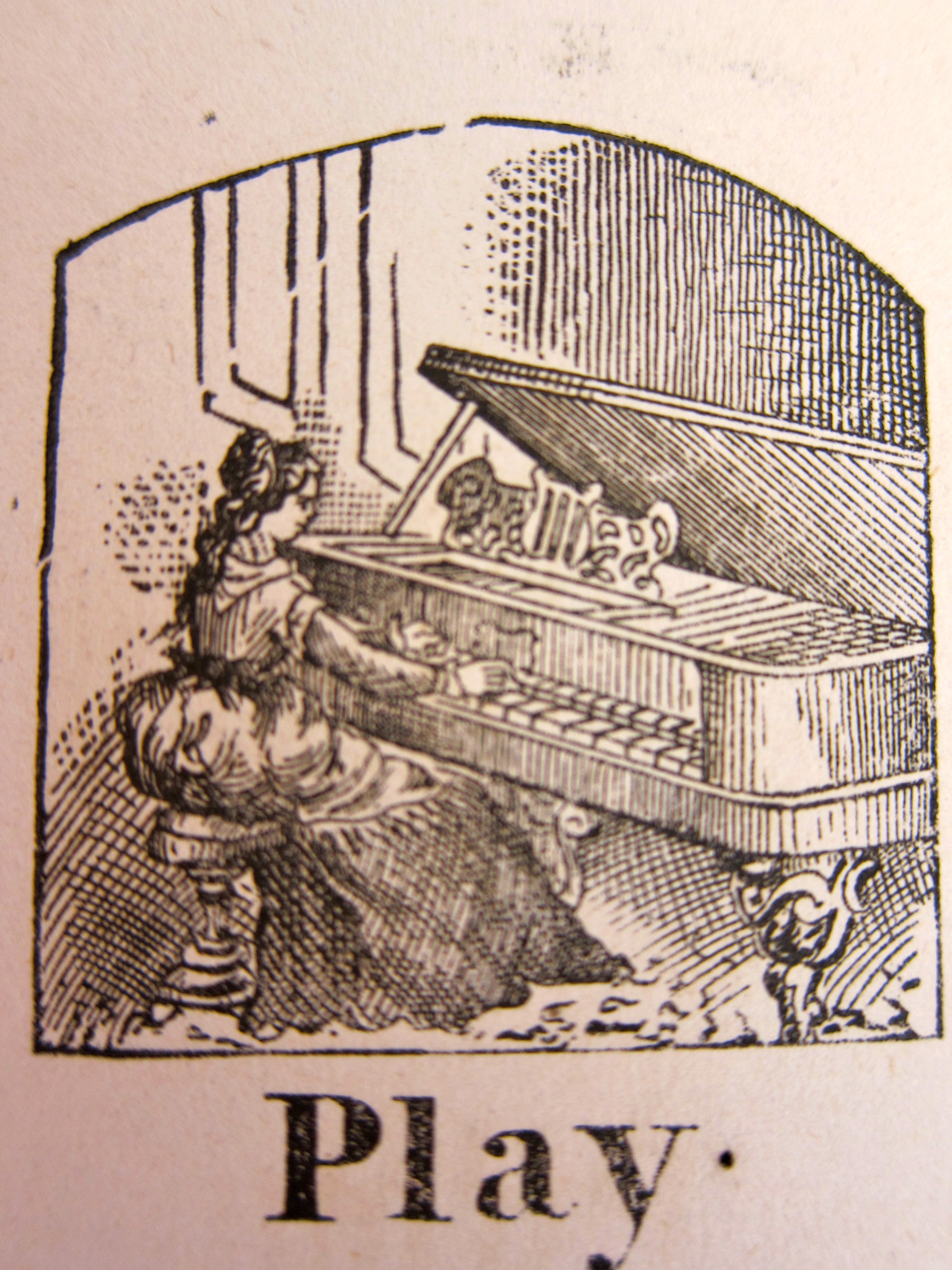
Oct 3d Sunday  We have all been to meeting to day

Mrs Norris Mr Ames & self came home at noon but did not

have a dinner cooked  After meeting Frank carried Miss Linscott

& Orinthia to Bridgewater & Melinda & self went to Mothers and

called on Miss M J Alger while Frank went to carry them home

Mrs A[l]ger had her piano & played Horatio Jr is here came last night

More comings and goings today. Everyone went to church, of course, but afterwards dispersed in different directions. Frank Morton Ames obliged the young, single ladies in the group by driving them home to Bridgewater. While he headed east, Evelina and her friend Melinda Norris rode south to the family farm to visit the elderly Mrs. Gilmore. They also stopped to visit Miss M J Alger, the woman who would be giving piano lessons to Susie Ames and Emily Witherell. She, or her mother, played a piano for them.

Old Oliver reported that “this was a fair pleasant day for season Oakes came home from N. York las[t] night.” Oakes Angier stayed behind, on business or pleasure we don’t know. Evelina reported, as her father-in-law did not, that Horatio Ames Jr. was back for a visit. He was the son of Horatio Ames, a brother of Oakes and Oliver Jr. It’s unclear if Horatio Jr. was living in Boston at this point or was still in Connecticut at the family home there.


October 2, 1852

doc-2-dakotapaul

Oct 2d Saturday  Have had quite a party this after 

noon  Mrs Norris, Mrs Mower, Miss Foss, Linscott

& Lavinia here to dine & Hannah Augusta Abby

& Malvina here to tea  Carried Augusta out to

ride the first that she has been out for a long time

We have been to the shops and making calls

and I have done no sewing to day  Mrs Mower

went home with Lavinia  Made my peach preserves

Mr Ames came home from New York


Friends of Evelina descended on the house today, some for dinner and some for tea. Carriages full of females trotted along Main Street, coming or going to the Ames residence. Evelina’s friend, Orinthia Foss and her fellow school teacher, Frances Linscott, came from Bridgewater and spent the night. Niece Lavinia Gilmore arrived to help with house guests Melinda Norris and Louisa Mower, the latter from Maine. At tea time, Evelina’s sister-in-law Hannah Lincoln Gilmore and two nieces, Abby and Melvina Torrey, joined the group. For the second time this week, many women filled the parlor. We might imagine that Evelina was really enjoying herself.

What did the men of the family do to cope with all the socializing? Join the crowd or disappear into the office next door? What must Oakes Ames have thought when he walked in, home from his business trip?

Augusta Pool Gilmore, who had been ailing for many weeks now, was on the mend. She, too, came for tea and later was taken out for a drive. Like yesterday, the weather was mild and sunny and Augusta must have felt reborn to finally get out of her sick room and back with the living.

Even with a big midday meal and many for tea, the servants – and perhaps Evelina herself – still managed to put up some peach preserves. What a busy kitchen!