August 13, 1852

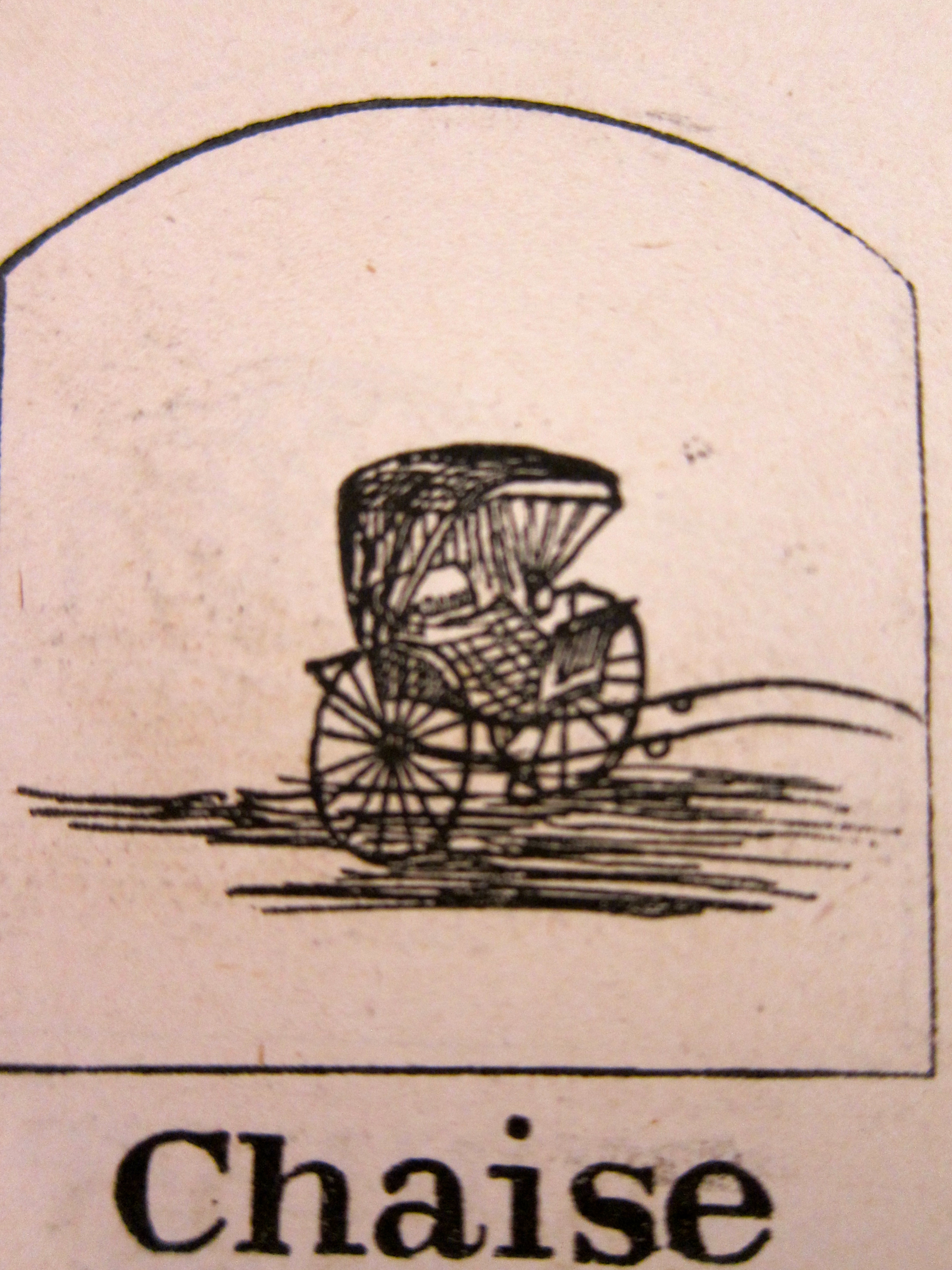
Chaise

Friday Aug 13th  Went to Boston with Oakes A and

Susan in Mr Whites Buggy chaise

Mrs S Ames went in the Cars. Met her at

12 Oclock at Mr Daniells  Ran around most

all day to get a bonnet  Mrs Norris went

with me in the afternoon and at last just

at night found one such as I wanted


Evelina had a bonnet to buy in Boston; Oakes Angier had a medical appointment to make. So, sitting snugly in a chaise borrowed from Col. Guilford White, Evelina, Oakes Angier, and little Susie Ames rode into Boston. Most likely, Oakes Angier drove while the females sat beside him and examined the passing countryside. This trip would have been a big adventure for Susie, who didn’t move beyond Easton very often.

Sarah Lothrop Ames, meanwhile, took the train into town. The two women met up at noon at a familiar haunt, Mr. Daniell’s Dry Goods store on Washington Street. From there they “ran around most all day,” Evelina looking everywhere for the right bonnet – at the right price, no doubt. She secured one at the end of the day and presumably went to the home of Robert and Melinda Orr to spend the night, probably with Susan. Whether Oakes Angier joined her there isn’t recorded.

The Ames family didn’t own a chaise, evidently, though such two-wheeled vehicles were quite common. One hears of chaises, known colloquially as shays, being the definitive carriage for rural doctors and country parsons – men who had to move around frequently to see their patients and parishioners, respectively. In 1858, Oliver Wendell Holmes Sr. wrote a satirical poem about a well-built chaise entitled the “The Deacon’s Masterpiece or The Wonderful One-Hoss Shay” that was quite popular in its day.


July 31, 1852

images

Women making potash soap, circa 1900*

1852 July 31st  Saturday  Have made two barrels

of potash soap and have had very good luck  This 

afternoon have been mending  Catharine Murphy came

this afternoon to sew for me and Im sure I hope she

will be worth something for it  Mary has been to work

on her own dress this afternoon   Susan &

self have been to Augustus this evening

and staid until ten  He is getting quite smart

This was a full Saturday for Evelina. She made a large batch of soap and was quite pleased with the result. Soap-making is an art, and Evelina was good at it. She knew enough about it, indeed, to be grateful for her own success. Of course, she could have purchased soap in the city or, perhaps, even in the Ames’s general store, but the farm girl in her resisted spending money on something she could make herself.

Lydia Maria Child, author of The American Frugal Housewife, devotes a whole page of her slim volume to making soap. “In the country,” she states unequivocally, “I am certain, it is good economy to make one’s own soap.” She offers various measures of ingredients: “To make a barrel of soap, it will require about five or six bushels of ashes, with at least four quarts of unslacked stone lime,” after which “[t]hree pounds of grease should be put into a pailful of lye.”** The trick to making soap depended on the sequence in which the ingredients were mixed, and at what temperature. It was a backyard chemistry experiment.

After the hard work of soap-making, in which Evelina was no doubt assisted by a servant, and an afternoon of mending, Evelina and her daughter Susan went to see her nephew. Augustus had fallen quite ill two weeks earlier with fever, but was now on the mend.


Image courtesy of http://www.wildernessarena.com

** Lydia Maria Child, The American Frugal Housewife, 1841

July 30, 1852

381-1233891708GdW7

July 30th  Friday  Came home from Dr Wales at half

past four and slept untill half past

eight left her quite comfortable

Have cut out another sack night dress

and Susan a waist  Alson & Lavinia Edwin

and wife were here to tea  Mr & Mrs Kinsley

called just at night for a few moments.  We

all went into the other part of the house for

ice cream this evening   Horatio here to dine

When Evelina came home at 4:30 in the morning, was the moon still up? Did she realize that this night would offer the second full moon of the month, familiarly known as a blue moon? She would be able to see it, too, as the skies were clear.

We use the term blue moon to identify a second full moon within a calendar month.  An earlier definition – one that may have been in effect when Evelina could gaze at the night sky – was that of being the third full moon within a season that has four full moons. So say various almanacs. Tracking the lunar cycle to define the passage of time has gone on as far back as human history can record. The Christian ecclesiastical calendar, for one, is built around moon phases. According to one modern source,

Some years have an extra full moon—13 instead of 12. Since the identity of the moons was important in the ecclesiastical calendar (the Paschal Moon, for example, used to be crucial for determining the date of Easter), a year with a 13th moon skewed the calendar, since there were names for only 12 moons. By identifying the extra, 13th moon as a blue moon, the ecclesiastical calendar was able to stay on track.”*

The terrestrial events of Evelina’s day included sewing (of course), her nephew Horatio Jr as a guest at lunch, company for tea and, as a special treat at the end of the day, ice cream. Despite her lack of sleep, a pleasant day overall.

*Courtesy of http://www.infoplease.com/spot/bluemoon (accessed July 26, 2015)


July 25, 1852


images

Massapoag Pond

July 25th  Have been to meeting and at intermission

went into Mrs John Howards with Mother

Had a very pleasant call met a number 

of ladies carried Miss Jarvis a boquet

of flowers  After meeting rode to Mashpog 

pond with Mr Ames & Susan.  Came home

through Sharon & went by Col Tisdales

a very pleasant ride but feel much fatigued


Evelina had a “very pleasant” time at church today. She carried some flowers from her garden with her and gave them to a friend, Miss Jarvis, at intermission. She was worn out by the end of the day, however, because after church, she, her husband, and daughter drove up to Massapoag Pond in Sharon. The day was sunny and warm and the drive along the woods may have been pleasant, especially as they drew near the water. There were old iron works in the area; perhaps they were what interested Oakes in the outing.

On the way home, the threesome drove by the home of the late Col. Israel Tisdale. Frank Mennino, curator at the Easton Historical Society, tells us that:

“The Tisdale family was well known in the area from colonial days, once operating an inn on Bay Road. Later, the family built two farmhouses and ran a large farm on Mountain Road. One of the houses was the house that Oakes and Blanche [Ames] stayed in while Borderland was being built, and was lived in for many years by the Manning and Kent families. It burned in the early 1980’s after being empty for some time. Mountain Road was ‘party central’ back then.”

Oakes, Evelina and Susie did no partying as they ventured home, but they did have “a very pleasant ride,” nonetheless.


July 12, 1852

Furnace

July 12th Monday  Mary & Hannah both washed and I

was about house most of the forenoon 

Have cut the sleeves & skirt to my borage

dress and cut a waist for Susan

Carried my work into Olivers and stopt

some time  Edwin & Augusta rode to the

furnace & carried my pot to Mr Harveys to

get some butter but it was not ready for me

When Edwin and Augusta Gilmore “rode to the furnace,” they probably went south to an area of Easton known as Furnace Village or Easton Furnace. This was one of the oldest areas in town, its early homes today recognized as a National Historic District. First settled around 1715, it was a site for industry in a landscape that was otherwise quite agrarian. Using Mulberry Brook to turn its wheel, a sawmill was established there well before the American Revolution. Later industries included a tannery and a blast furnace for ironmaking, the latter giving the area its name. Historian Edmund Hands notes, “Once Easton Furnace possessed the highest degree of industrialization in town, but that industry never grew large enough to transform Furnace Village the way the Shovel Shop created the urbanized landscape of North Easton.”*

Back in the urbanized landscape to the north of Furnace Village, Evelina’s servants, Hannah Murphy and a woman named Mary, were doing the weekly laundry. Evelina was choring, sewing and waiting for Edwin and Augusta to return with some butter, which they were unable to do.  In the fields around North Easton, Old Oliver and his men were cutting hay. The agrarian life still held sway despite mills, foundries and factories.

*Edmund C. Hands, Easton’s Neighborhoods, 1995, p. 105

July 10, 1852

DSC_0383

Lace doily

July 10th Saturday  Have finished Susans 5th pair of

pantletts & Mrs Witherell has given her three

more so she is pretty well off in the pantlett line

Have been marking some clothes and Mrs

Witherell marked 6 gentlemans hdkfs & 6 for

me and doylies & other things  Mary has sewed

some but does not accomplish much is better at

housework than sewing  Oakes A has gone to a

sing near Jonas Hartwells with other gentlemen

and ladies

Evelina and her sister-in-law, Sarah Witherell, sewed today: pantletts, handkerchiefs, and an item new to the repertoire: doilies.  A maid named Mary did some sewing, too, but wasn’t up to the standards set by the older women.

In the 21st century, we know doilies as decorative paper mats that are typically used to present special baked goods. Doilies can also be made from cloth or lace, however, and once had a broader range of applications than just accompanying tea cakes. Designed in the 17th century by a London draper named Mr. Doiley, the original item was an inexpensive woolen cloth that was used to ornament a dress. It developed into a napkin used to protect the material under it. It might be seen on a tablecloth, a sideboard, or even on the back of an armchair (where it became known as an antimacassar.) Beautifully-made doilies were a housewife’s source of pride, specially stored in the linen closet.

Old Oliver, no doubt entirely disinterested in the women’s sewing agenda, reported that this “was a a fair warm day wind south west. + has bin all the week.”* Oakes Angier Ames took advantage of the good weather and, after work, headed to Bridgewater to attend a sing near the farm of Jonas Hartwell “with other gentlemen and ladies.” Who were they? Did he run into anyone of interest?

*Oliver Ames, Journal, Stonehill College Archives, Arnold Tofias Collection

July 2, 1852

VN-24.3L


Friday July 2d  Sewed on Susans clothes & new strung

her coral necklace then went to transplanting

moss pinks and work untill noon  The gardener

has hoed & weeded my flower garden  This afternoon 

went into school with Mrs Witherell.  Mr Brown & Miss 

Clark have closed  The school appeared well.

After school went into Edwins to tea  Augustus

& wife were there came home & made a boquet of flowers


The day was sunny and windy and Evelina took advantage of practically the whole morning to work in her flower beds. She transplanted flowers with relative ease because a hired gardener had “hoed and weeded” everything for her. Wasn’t she lucky! Plus she had blossoms enough at the end of the day to arrange a “boquet” for the house.

Evelina also did some sewing for her daughter. Of particular interest is that Evelina restrung a coral necklace belonging to the girl. Susie was fortunate to own such a necklace; coral was a popular gemstone, and had been for centuries. It was colorful, exotic and could hold a high polish. By this era in fashion, such a necklace was usually sold as part of a set, suggesting that Susie may have owned a pair of coral earrings or a brooch as well. Earrings had increased in popularity as hair styles were lifted off the ears to expose the lobes, but Susie seems a little young to wear a set. Perhaps not. Having jewelry to wear was, obviously, a sign of wealth and status.

Yet Susie was still a schoolgirl, coral necklace or no, and this afternoon, school let out for summer. Susie and her cousin, Emily Witherell, were free of lessons for the time being, and they were probably happy about it. Evelina and Sarah Witherell went to the school, perhaps to get a report from the teachers or simply to acknowledge the occasion with their daughters and bring them home.


July 1, 1852


OLYMPUS DIGITAL CAMERA


Thursday July 1st  Transplanted some in the garden

this morning but there came up a shower

and put a stop to it  I then went to

mending on some of Susans clothes  Susan

was quite sick last night and not well

enough to go to school to day.  This afternoon 

Mrs Witherell S Ames A Ames rode to make calls

found all the ladies that we were to call on at Mr E Howards


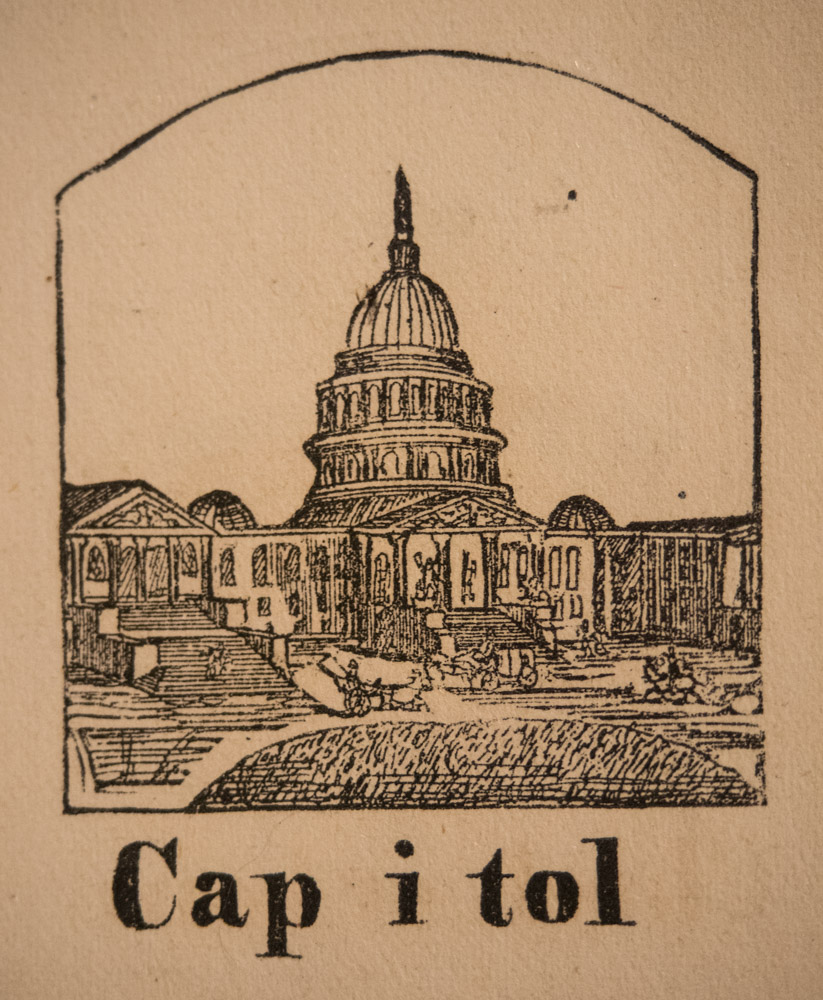
In Washington, D. C., Senator Henry Clay of Kentucky became the first person ever to lie in state in the Capitol rotunda.  A giant in his day, he had served in the House of Representatives, the Senate, and as Secretary of State. He was the man who had created the Whig Party and aspired to the presidency, who always spoke passionately for the Union and was willing to compromise to preserve it. As he himself noted in a speech in 1844, “It has been my invariable role to do all for the Union. If any man wants the key of my heart, let him take the key of the Union, and that is the key to my heart…”* He had dedicated his life to public service and the country thanked him.

The next such person to lie in state in the rotunda would be Abraham Lincoln.

Less august (but no less meaningful to Evelina) events transpired in North Easton today. Evelina, Almira Ames, Sarah Ames and Sarah Witherell “rode to make calls.” This activity marks the first time that Sarah Witherell had ventured out socially since the death of her son, George, six weeks earlier.

Old Oliver made note of the rain that had interrupted Evelina’s early morning work in the garden: “It raind a little last night + there was a little rain this forenoon it was a warm day + cloudy most of the time.”**

*Henry Clay, from 1844 speech, as quoted in “Henry Clay,” by Robert V. Rimini, New York, 1991

** Oliver Ames, Journal, Stonehill College Archives, Arnold Tofias Collection

June 24, 1852

4185604807_e27afcf530_b

Modern image of Mount Hope Cemetery, Boston


1852 Thursday

June 24th  Carried Mrs Patterson to Bridgewater.

Helen & Susan went with me. Dined at Mr

Burrells, Orinthias boarding place  got there about

twelve left there about two & went to Dr Washburns

He filed my eyetooth to make it even with the 

others  Went into the cemetery and in Orinthias school

a short time & home by Alsons stoped with Lavinia a 

few moments.  Alsons wife had gone to Boston


With her niece, Helen, and daughter, Susie, Evelina drove Mrs. Patterson to her home in Bridgewater. This was the last appearance of Mrs. Patterson in the diary, so we may assume that she didn’t work at the Ames residence any more this year. Most likely, she had been hired for spring-cleaning only, yet her brief tenure with the Ameses had a lasting impact. She was efficient enough to make Evelina dissatisfied or otherwise unhappy with the work of her regular servant, Jane McHanna, the result of which was the latter’s dismissal.

While in Bridgewater, Evelina accomplished various errands, the most pleasant of which was probably dinner at Orinthia’s “boarding place.”  The least pleasant had to be the appointment with Dr. Washburn, where the dentist filed down one of her canine teeth “to make it even with the others.”

Evelina went into the local cemetery, too, perhaps to visit a specific grave. Interesting to note that on this exact same day in the Boston area, another cemetery was receiving attention. In Roslindale, Mount Hope Cemetery – a new, rural-type graveyard in the mold of Mount Auburn – was dedicated.

On the way home, Evelina stopped at the family farm and had a quick chat with her niece Lavinia.


June 19, 1852

manx40rimwh


A “Visite”

Sat June 19th  Have been weeding in the garden and

transplanting   Spent the afternoon in 

Olivers with Mother  Mrs Witherell & Augusta

were there awhile  Finished Susans visite

quite late in the evening  It has not been

much of a job to make if I could have sat

down steady

Evelina worked in her garden today, weeding and moving some of her plants around. After midday dinner, she and her mother, who was visiting, “spent the afternoon” next door “in Olivers,” meaning at Sarah Lothrop Ames’s. In citing Oliver rather than Sarah as the owner of the house, Evelina was only following the norm of the time, whose patriarchal laws prevented women from owning property. Sarah and Evelina lived in homes that belonged solely to the males in the family.

Old Oliver, Ames patriarch above all the rest, reported that “this was a fair day wind southerly + quite warm we have bought two yoke of cattle this weeke one yoke of N Warrin of Stoughton, 6 years old for $110 and one yoke of Thomas Ames 9 or 10 years old for $100.” He was probably buying cattle to help with the approaching hay harvest.

Once indoors, perhaps even after others had gone to bed, Evelina finished a mantle for her daughter Susie. Also known as a visite or paletot or pardessus, a mantel (or mantilla, as Evelina labeled it the previous day) was a three-quarter length cloak with pagoda or cape-like sleeves. It was often adorned with lace, ruching, and especially fringe, which was very big about this time. Many visites were unlined, which no doubt simplified the process of making them. That may be why Evelina thought the garment had “not been much of a job.”