June 29, 1851

portrait of yoiung man yawning

 *

1851

June 29th Sunday  Went this forenoon to meeting

came home again did not feel like going

back again as it [was] very warm and I was very

sleepy and thought I might as well sleep at 

home as at church  After meeting at night

Mr Ames & I walked to Mr Peckhams to see

Mrs Swain.  She is a very pleasant woman I

should judge.

Small wonder that Evelina nearly fell asleep in church this morning. Reverend Whitwell’s sermons usually held her attention, but she was tired. She’d been busy all week, augmenting her usual chores and interests with a visit from her brother, John. On top of the emotional excitement of that rare reunion, she went to Boston yesterday, an excursion that typically delighted and exhausted her at the same time. She needed a nap.

Late in the day, evidently refreshed, Evelina and Oakes walked to the home of John and Susan Peckham. Mr. Peckham served as clerk for the Ames Shovel works, but was preparing to move away with his young family.  Replacing him, apparently, was the new clerk, John H. Swain. Evelina had already met Mr. Swain when he dined with them back in May. Tonight she met his wife, Ann, who made a favorable impression. The two families would become close over the years.

 * Photographer Unknown; portrait of a young man, yawning; ambrotype; ca. 1854; George Eastman House, Donald Weber Collection


May 31, 1851

IMG_0004

*

1851

May 31st Saturday  This morning baked in Mrs Witherells oven

brown bread & cake  Mrs S Ames went to Boston

Returned to night with Harriet & a Miss Eaton

from Pittsburgh.  Miss Linscot Orinthia & I […]

have been walking & riding about all day.  have

been to all the shops, ponds, Mr Manley & Claps

flower gardens, & called at Mr Torreys

It has been a beautiful day, rather cold.  A A not here

gone to Boston

Evelina used her sister-in-law’s brick oven early this morning and afterwards ventured outside to enjoy the “beautiful day” with her young house guests. She gave them the standard tour of much that North Easton offered: shovel shops, large ponds, full streams, two farms with extensive flower gardens, and a stop at Col. John Torrey’s, in the village. The latter was probably a sociable occasion that included tea with Abby Torrey.

Sarah Lothrop Ames, meanwhile, went into Boston for the day and returned with Harriett Ames Mitchell and a friend from Pittsburgh, where Harriett had lately been living. There was still no sign of Harriett’s husband, Asa Mitchell, who was, presumably, yet in Pennsylvania on business. Oakes Ames would have been in Boston today, too, perhaps with Augustus Gilmore.

The Ames boys wouldn’t have been pleasuring about – they were at the shovel shops, working.

* Building in modern-day North Easton that once belonged to Col. John Torrey


April 26, 1851

Spade

Sat Apr 26th  This morning a man came from the shops 

to spade my flower garden & hoe the currant

bushes Miss Foss Susan & self rode to Edwin Manlys

to speak for some plants and then went to Mothers

got there about half past twelve. Brought

home some Horseradish, Carraway roots & some

few plants Made the skirt to Susans green 

borage Delaine Miss Foss has finished the two shirts.

At last, gardening in earnest. A shovel shop employee was taken off his usual task to go up to the Ames homestead to turn over the soil in Evelina’s flower beds.  He used an Ames shovel, no doubt, and also an Ames hoe to loosen the dirt around the currant bushes behind the house.

Evelina celebrated the spring day with her daughter Susie and boarder Orinthia Foss; the three took a wagon, most likely, north to the home of Edwin Manly.  At the time, Manly lived close to the town line with Stoughton, and was employed at the shovel shop. He was obviously interested in plants and kept an informal nursery on his farm, raising flowers to sell.  His green thumb brought in customers like Evelina. Not too long after this, however, he hurt his hand and had to leave his job at O. Ames & Sons. Fascinated by biology, chemistry and science in general, he studied medicine at Harvard, became a physician and set up an office in North Easton in the early 1860s. Later he moved to Taunton, where he worked as the town librarian for a number of years. Eventually, he moved to California.

Flowers weren’t all that the women brought home in the wagon.  They drove south to the other end of Easton to visit Evelina’s mother, Hannah Gilmore, at the Gilmore farm, where they picked up the horseradish and caraway roots and “some few plants.”   That Evelina and Orinthia had time to sew after all that riding around says a lot about their stamina and work ethic.

April 11, 1851

Old Oliver Ames


1851

April 11th Friday.  This morning sat down with Lavinia

quite early but did not feel very well.  Washed & ironed

the skirt of my foullard silk dress ready to make 

over  This afternoon went with Lavinia into school 

and then to Mr Torreys and stoped a hour or two

Abby & Malvina came home with us and were here to

tea also Augustus  Quite windy this forenoon 

Oliver Ames, known to Evelina as “Father Ames” and to us as “Old Oliver,” turned 72 today. He didn’t mention his birthday in his journal and the likelihood is that no one else mentioned it either.  He was not a person who encouraged frivolity. As the man who built O. Ames & Sons and made the best American shovels of the 19th century, Old Oliver was well known in his time, as this excerpt from a 19th century biographical sketch shows:

“Hon. Oliver Ames, the founder of the great manufacturing firm of O. Ames & Sons, was born at Plymouth, Mass., April 11, 1779, being the youngest son of Capt. John and Susannah Ames, and was a lineal descendant of William Ames, who came to this country in 1638 and settled in Braintree, Mass. His early education was gained by ordinary common-school instruction, and by the practical experiences of hard work in his father’s blacksmith-shop. These furnished him the groundwork of sober judgment, industrious habits, and a stable and energetic character. At the age of eighteen he went to Springfield, where he learned the trade of gunsmith. In April, 1803, he married Susannah Angier […] and commenced the manufacture of shovels. After a stay of over two years at Easton, he removed to Plymouth to manufacture shovels for Messrs. Russell, Davis & Co. […] until about 1813, when he returned to Easton […where he] had purchased land and a good water-privilege, and had begun the erection of a dwelling-house.

He was one of a company to build a cotton-factory for the manufacture of cotton fabrics. He had manufactured hoes and shovels during his first stay in Easton, but on his second arrival he began again the business that has now become world-famed. Difficulties and embarrassments that would have defeated any one but a man of great ability and persistent energy beset him in these early days. The cotton-factory burned; the war of 1812 had had a disastrous effect upon business; he was endeavoring to restore the business of his father to a prosperous condition; and he had made great outlays in getting established at Easton. But his credit was good and his courage strong; his character and ability alike inspired unlimited confidence; and he worked steadily on to a sure and lasting success.

With only a humble beginning, shovels being made by hand and carried to market upon a one-horse wagon, the business steadily increased, shop being added to shop, workmen increasing by scores, until it has become by far the largest and most prosperous shovel business in the world. He would never allow any work to be sent to the market that was imperfect, and he thus laid the foundation for the great reputation which the Ames shovel has borne, and which it continues to bear.

In 1828-29 he represented his town in the Massachusetts Legislature, serving with marked ability upon the Committee on Manufactures. In 1845 he was elected, contrary to his desires, and by a large vote, to the Massachusetts Senate. He was, however, no lover of office, and desired only that he might have the charge of the highways of his town intrusted to him, a charge he took pride in, and faithfully fulfilled. He was a man of strong and resolute will, of great force of character, indomitable energy, and persevering industry. He was the possessor of a splendid physique, and easily bore off the palm in all feats of strength and skill, especially in wrestling, of which he was very fond. His manly and dignified bearing gave everyone who saw him the impression that they looked upon a man of mark. He was such a man as a stranger, meeting upon the street, would turn to look at a second time. Born of the people, he was always very simple in his tastes and democratic in his feelings and principles. In his likes and dislikes he was equally decided, but his judgments were based upon what he believed to be the real worth of any one, without reference to his station or condition.   He was consequently greatly respected and beloved by his neighbors and fellow-townsmen. He was enthusiastically fond of farming, and, like Daniel Webster, was especially fond of the oxen, always obtaining the best, and taking great pleasure in their management. He took an early stand, both as a matter of principle and practice, in favor of temperance, and brought up his family according to total abstinence principles. He was a decided Unitarian in his religious convictions, having a cordial dislike to the rigid tenets of the Calvinism of his day. He was liberal in his aid of religious institutions, to which he also gave the sanction of his personal attendance. His charities were large, and they were not bounded by the limits of his sect or neighborhood. His defects were such as pertained merely to his limited culture and to the stern conflict and discipline of his early life. Mr. Ames lived to the ripe old age of eighty-four years, dying at North Easton, Sept.11, 1863.”*

*Duane Hamilton Hall, ed., History of Bristol County, Massachusetts,Vol.2, Philadelphia, 1883


March 24, 1851

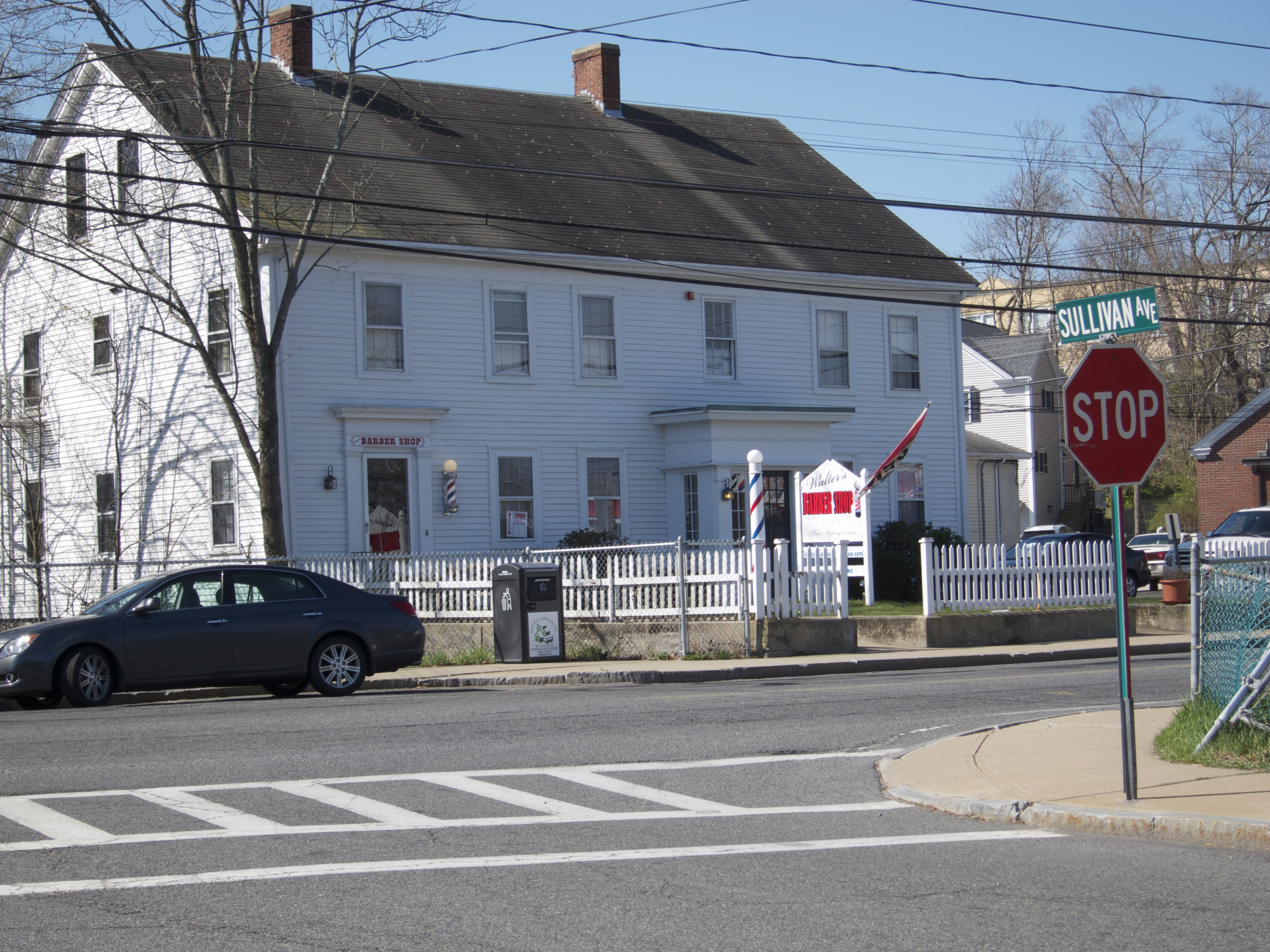
canton-ma-landscaping

/51

March 24 Monday  It was so unpleasant this morning

that Jane could not put her clothes out but

about noon it cleared up and she has got

them all dry  I have cut out a shirt for Oliver 

of fine unbleached cloth and have sewed

some of it & mended Mr Ames coat & vest

He went to Canton this afternoon.  Mr Whitwell

called.  Mrs Witherell passed an [illegible] this evening

Perhaps wearing one of his new shirts, or at least wearing a mended one, Oakes Ames traveled to neighboring Canton today.  Named for Canton, China, because some imaginative citizen believed the Chinese city to be its geographical twin on the opposite side of the world, the Massachusetts city had manufacturing interests much like Easton. Since before the American Revolution, the Kinsley family had operated an ironworks there. Like the shovel works, the Kinsley business had started small and grown well. Initially, it produced farm implements and was entirely family-run. It had a forge, a large rolling mill and the capability of producing steel.

In 1851, Lyman Kinsley was its sole operator; by 1858, the company would be owned by the Ameses. Oliver Ames Jr. would become its first Ames president, with others to follow (Frederick Lothrop Ames would be next, and after him, his son Oliver.) Frank Morton Ames would be its General Manager. Perhaps Oakes’s visit to Canton today, although certainly having something to do with getting steel for shovels, was also quietly prompted by some foreknowledge that the Ameses were interested in acquiring this complementary business.

Once the Ames owned it, the Kinsley Iron and Machine Company would eventually develop to produce wheels and axles for railroad cars, another product that would fit nicely with Ames business interests.

February 21, 1851

Bed

1851  Feb 21  Friday  It stormed so hard & so dark that Mr & Mrs

Whitwell spent last night with us & returned

home about 8 Oclock this morning  Lavinia &

myself have been sitting quietly sewing.

Susan is all engaged making Labels for the shop

has cut quite steady all day.  Helen brought her work in, and staid two

or three hours but I could not prevail on her to stop to tea

Bridget has hired a bed & bedstead

The family business, O Ames and Sons (as it had been known since 1844 when Old Oliver handed over two-thirds of the reins to his sons Oakes and Oliver Jr.) was just that: a family business.  The Ames men all had rolls to play in its operation, from manufacturing to sales to management.  On this day in 1851, it appears that an Ames female had a roll to play, too.  Little eight-year old Susie Ames spent the day making labels for the shop.  Presumably, this meant she was cutting out printed labels to be affixed to individual shovels.  Did she sit at a table in the kitchen or the dining room, paper and scissors in hand?  Was she paid for this effort, or was this just a rainy day game for her?  Who thought this up?

While Susie wielded scissors, the women wielded needles, of course.  Evelina and her niece, Lavinia Gilmore, kept each other company as they sewed and were joined for a few hours by Helen Ames from next door.  Although Lavinia, aged 19, lived in the country and Helen, aged 14, lived in town, the two young women, distantly related by marriage, were friends.

Lavinia was in town visiting her aunt Evelina.  Last night, Mr. and Mrs. Whitwell stayed over, unable to return home because of bad weather.  A new servant, Bridget, had just ordered a bed and bedstead for herself. In a two-family house already filled with ten people, not including servants, where did everybody sleep? People surely doubled up; Oakes Angier and Oliver (3), for instance, shared a bedroom and probably a bed. Although this practice, too, was disappearing, many houses of the period still kept beds in their parlors; apparently the Ames did this, so perhaps that was where the Whitwells spent the night.

The difference between a bed and a bedstead was simply that the former included only the mattress and linens (also known as bedding), while the latter was the frame on which to put the mattress.  This verbal distinction was beginning to disappear at the time, but it was still useful in an era when some people – servants, particularly – only had bedding on which to sleep.  A mattress could be rolled up and moved around, a wooden frame could not.  Bridget showed hope or confidence in her place in the household when she ordered a bedstead as well as a bed.

February 18, 1851

yoke-of-oxen

Feb 18  Tuesday  After doing my usual mornings work sit

down to sewing on Susans work   She sewed with me

and counted stiches again  She will do pretty well

and keep quite steady when we count stiches

This afternoon went into Olivers to assist on Helens

quilt but found it most done.  Was called home

to see Mr Whitwell   Abby & Malvina Torrey & their 

cousin Mrs Fullerton  called  Pleasant

Sewing lessons for eight-year old Susie Ames continued today.  She seemed to be getting the hang of the needle as long as she counted her stitches.  This meant calculating and maintaining an equal number of stitches per inch of sewing. After the lesson was through, Evelina tripped next door to help with the making of a quilt. She discovered that the work was pretty well complete, however, which was just as well as she was called back home to sit with Reverend Whitwell, who came to visit.  More follow-up to the Sewing Circle meeting?

Outside, away from this cozy domesticity, Old Oliver was clomping around looking at oxen to buy.  He found a pair that he particularly admired and seemed pleased with his purchase:

“this was fair day  wind about west and not cold   I bought a yoke of oxen to day of a Mr Whitcom of East Randolph for $125-00 they are a handsom red + look a good deal alike.  he said they would be 6 years old this spring comeing   the off one girts 7 feet + 2 inches + the nigh one 7 feet   they weighed after drinking with yoke on 3220 lb.  the man  said he had them for twins”

And while Old Oliver dealt with the farming side of the Ames enterprises, Oakes and his three sons were no doubt busy at the shovel works, the young men continuing to learn the ins and outs of manufacturing, much as little Susie was learning to be domestic.   The futures of all four offspring were being lined up.

February 13, 1851

Money

1851

Feb 13th  Thursday  This morning put the parlour in order

and went down to the store with the intention of calling

on Miss Eaton on my way back, but her Mother & brother

came last night and thought best not to see her but wait

until she was over the excitement of seeing them  Went into the

office with account of butter and other things sold.  Mr Peckham

gave me 30 dollars 78 cents  Augustus is still assisting him with

his books.  Very pleasant but ground rather wet.

Moving past yesterday’s humiliation, Evelina put her parlor back together first thing this morning and left the house, all by herself.  A walk to the little village on a fair day must have felt good, muddy ground notwithstanding.  She went right to the company store.

The Ames family made shovels, obviously, but their overall enterprise was never limited to manufacturing alone  – witness their eventual involvement with the Union Pacific.  They also made money from the operation of a company store, one that had been owned previously by a former partner of Old Oliver named Colonel David Manley.* The shop was right in the village of North Easton where shovel employees and others could purchase ordinary household items – muffin tins, for instance – dry goods like flour and personal articles. Evelina shopped there from time to time, and on this day she may have picked something up.  But she also sold things through the store, which explains why later that day she made her way to the Counting Office to collect $30.78 for “butter and other things sold.”  She had a little stream of income for herself, a source of satisfaction for any homemaker, and material consolation for a wounded spirit.

On her walking rounds, Evelina stopped in at the Holmes residence to call on Miss Eaton, a neighbor who is slowly declining. When she learned that Miss Eaton had family visiting, she deferred her call until another day.  Evelina and her sister-in-law Sarah Lothrop Ames have been looking after Miss Eaton from time to time and will continue to do so as her health fails.  The Ames women were dutiful in looking after the sick among the families of employees of the shovel shop.

* For more information on this store, you might want to read Easton’s Neighborhoods by Edmund C. Hands.  Among extensive historical information about the town, he offers some great context about early business days in North Easton.

February 11, 1851

Bookkeeper

Feb 11th Tuesday  This day has been a very busy one

with me, getting ready for the sewing Circle.  Have

washed the front stairs & have been sweeping &

dusting.  Have got things pretty much in order for

tomorrow  It was very unpleasant this morning but this

afternoon it has cleared off very pleasant.  Augustus

is helping Mr Peckham post his books.  went home

with him to dinner & tea

Evelina seemed to feel better today and so went right to work.  Stairs got washed, carpet was swept, table tops were dusted, knick knacks, books and periodicals put in order.  The house would look spanky clean for the Sewing Circle tomorrow. Evelina herself was doing this work, while the servant Jane McHanna handled the regular chores: cooking the meals, washing the dishes and tidying up from the indoor laundry activity of yesterday.  Jane and/or Evelina may have ironed today, too, although it’s doubtful that they could have completed the task.   With all those men’s shirts to care for, ironing at the Ames house often lasted for several days.

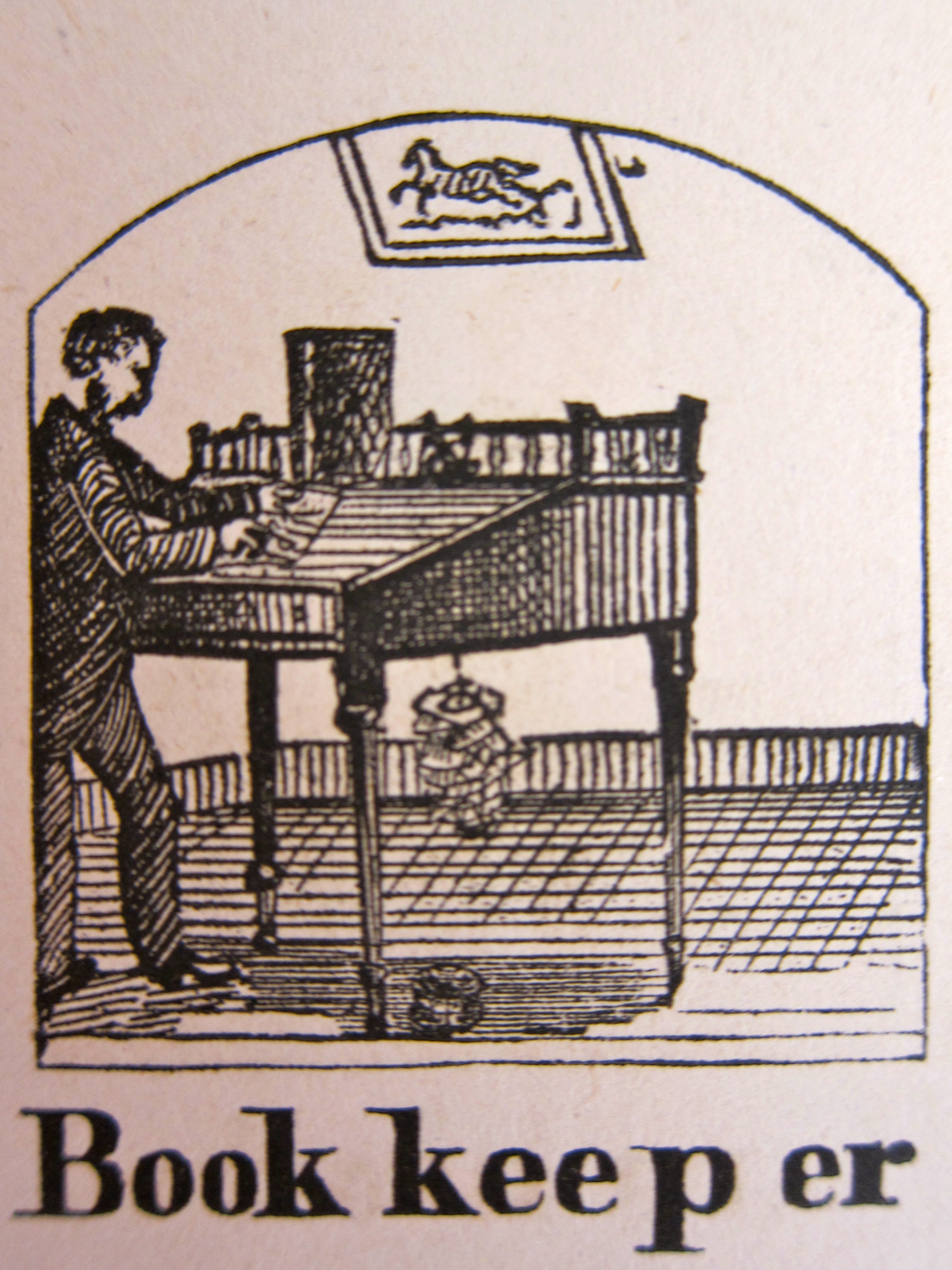
In the office, or Counting House, next door, the company’s bookkeeper, John Peckham, was tending to business. Evelina’s nephew, Alson “Augustus” Gilmore, had started work there temporarily as Peckham’s assistant. Augustus is the nephew who has been looking for a place to rent for his growing family, all while beginning to set up a boot manufacturing company in the area. But meanwhile, nepotism being an acceptable, even laudable fact of life in a family-run business, Augustus was being kept afloat financially by work here and there for O. Ames and Sons.   Augustus, a man of robust build, would prove to be a well-known figure around town, especially once he accepted the role of moderator at town meetings, a position he would hold twenty-four times in the next 32 years.

January 19, 1851

Ride

1851 Jan 19th Sunday.  It was rather earlier than common this morning

when we had our breakfast as Jane was going to

meeting   We have all been to meeting all day

Mr Whitwell gave us two good sermons, though not

as interesting as usual.  After hearing the class in

the Sunday school I called at Mr Whitwells

This evening have been into Mr Bucks to a prayer meeting

Three Ladies spoke & a number of men.  Very pleasant

Before the Ames family left for church, their servant Jane McHanna was on her way to a Catholic service.  Every few weeks, an itinerant priest would ride into town to conduct Sunday mass in the dining room of a boarding house owned by the Ames shovel company.  Although North Easton offered several Protestant options to its church-going citizens, it had no Catholic church for the influx of faithful who had recently immigrated from Ireland.

The number of Roman Catholics in North Easton, as elsewhere in Massachusetts, was rapidly expanding.  In 1849, Reverend William Chaffin tells us, there were 45 Catholics in town.  By 1852, there were 150; when the Civil War began, there were 400.   As the number of Irish immigrants grew, a dedicated facility was clearly needed.  Recognizing this, in 1850 the Ames family donated a piece of land on Pond Street to the Irish to build their own church.  It was under construction as the year 1851 opened.

Evelina’s day was full of religious activity.  Not only did she hear “two good sermons,” she visited the Sunday school and, in the evening, went out to a prayer meeting held by Benjamin and Mary “Polly” Buck, who lived in a house in the near neighborhood that they rented from Old Oliver.