February 18, 1852

Hoof


1852

Wednesday 18 Feb  Augusta Emily Susan & self have

spent the day at Rachels.  Mother Henrietta & Lavinia

were there  Had a pleasant visit.  Went to

carry mother home with Charley had some trouble

with him about starting it was so cold.  Mrs Solomon

Lothrop & son Willard came to Alsons this afternoon 

Made two dickeys for Mr Ames and cut out two more


Just like the day before,”this was a fair day wind north west + cold”* as Old Oliver, family patriarch, noted in his daily journal. It was so cold that one of the family horses, Charley, didn’t want to leave the premises. But Evelina needed to take her elderly mother, Hannah Lothrop Gilmore, back to the family farm, so Charley was harnessed up and made to trot out. Evelina and her mother probably didn’t enjoy the frigid temperatures, either, but at least they could cover themselves with blankets or robes.

Evelina spent most of the day in the company of female relatives at the home of her niece, Rachel Gilmore Pool, who lived near the Gilmore farm.  Her daughter, Susan, and niece, Emily Witherell, were with her, as was new bride Augusta Pool Gilmore.**  Rachel’s unmarried sister, Lavinia, was there, along with their mother, Henrietta.  It was a multi-generational gathering of women from ages 9 to 79.

The women must have spent some time sewing as they all sat together, for Evelina managed to complete two dickeys, or shirt fronts, for her husband. The companionship would have made the handiwork fun to do.

*Oliver Ames, Journal, Stonehill College Archives, Arnold Tofias Collection

**Rachel Gilmore Pool was married to Augusta’s brother, John Pool, while Augusta Pool Gilmore was married to Rachel’s brother, Edwin Gilmore. One family’s sister and brother married a neighboring family’s brother and sister.
February 8, 1852

Spool

1852

Feb 8th  Sunday,  Have been to meeting to day and at 

noon went into Mrs J Howards with Mrs E Howard &

others  had a pleasant call   Augustus called this evening

and staid untill quite late and I have

not read but very little to day  Mr Ames

came in about eight but too late to go out as 

intended  Mr Ames brought me 12 spools of cotton

yesterday

It was an ordinary winter Sunday for the Ames family. They went to church and visited with friends during the intermission between the morning and afternoon services. Back home, Evelina’s nephew Augustus came to call and seems to have overstayed his welcome; Evelina barely got to read. She probably sat looking at the new spools of cotton thread that Oakes had brought her the day before and wished that she could at least do some sewing. But sewing and other work was forbidden on the Sabbath.

The laws that the Puritans had established in the 17th century that forbid work or play on the Sabbath still held sway in Massachusetts in 1850. Businesses weren’t open, mail wasn’t delivered, and many people wouldn’t travel. People in Evelina’s generation had been taught to put down their daily work – except for chores which were essential, such as milking the cows – and spend Sundays quietly, at church and at home in contemplation and worship. No sewing, no housework, no shovel-making was permissible.

As the tempo of 19th century life picked up, however, that restrictive pattern was changing. Rail travel, for instance, was impossible to harness to a Puritan timetable. Many of the old ways were beginning to break down, and the advent of the Civil War would effectively demolish most of the lingering vestiges of Puritanism. The “blue laws,” however (so named by Connecticut preacher Samuel Peters) would continue to influence state laws, especially around commerce.  For much of the 20th century, retail stores could not open on Sundays, and in many places, alcohol couldn’t be sold.  Even today, in 2015, several states – Maine and Colorado, for two – forbid car dealerships to operate on Sundays.


I


February 5, 1852

imgres

Jenny Lind 

(1820- 1887)

Thursday  Feb 5th  Have not been very well to day after being

out last evening.  Have put a new bosom into

an old shirt of Olivers  Passed part of the

afternoon at Edwins and part of the evening in

Olivers was also there about two hours this forenoon

It is a delightful evening and fine sleighing


A celebrity wedding took place in Boston on this date. Opera singer Jenny Lind married her accompanist, Otto Goldschmidt, at the home of banker Samuel Gray Ward in Louisburg Square.* There was no People Magazine, Entertainment Tonight or The Daily Beast to herald the occasion, but the newspapers of the day carried the story.  “The Swedish Nightingale” was big news.

Originally from Sweden, Jenny Lind was discovered at the age of nine when the maid of a dancer at the Royal Opera overheard her singing. Though untrained, Lind soon rose to prominence on the strength of her beautiful soprano voice and became court singer to the King of Sweden and Norway. She almost damaged her vocal cords in the process, but rest and proper training set her to rights. She became world-famous in operas such as Der Freischutz  and Lucia di Lammermoor.  

In 1850, showman P. T. Barnum brought Jenny Lind to the United States, where she gave 93 performances over two years. When she married in Boston, she was nearing the end of her American tour and would soon to return to Europe. At 32, she would retire from touring and become the mother of three, yet she would continue to perform occasionally and teach for the remainder of her life. Many of us in the 21st century know of Jenny Lind as much for a style of spool bed that carries her name as for her acclaim as an early international opera star.


* Jim Vrabel, It Happened in Boston, p. 61

February 2, 1852

grhog

1852

Monday Feb 2d  Worked about house untill about twelve

and went into Olivers to dine with my whole family

and mother.  Alson came this afternoon & carried

mother home.  All took tea at Olivers.  Mrs S Ames

Oliver Fred & self passed the evening at Mr Swain

Worked some on flannel skirt this afternoon […]

carried Susans stocking to Mr Swains.


We know about February 2; it’s Groundhog’s Day.  In 1852, it was no such thing, at least not in New England. In the Pennsylvania Dutch communities of the mid-Atlantic states, however, some folks had begun to claim that the behavior of a groundhog on this date could prognosticate the weather for the remainder of the winter. This practice was first formally celebrated in 1887, in Punxsutawny, Pennsylvania, and continues today.

More common for this date was the celebration of Candlemas, a holy day in the Christian Church that honored the presentation by Mary of Jesus at the temple. Roman Catholics called it the fourth Joyful Mystery of the Rosary. Unitarians had no name for it because Unitarians, like some other Protestant sects, didn’t acknowledge ecclesiastical feast days.

Yet there was a saying regarding this time of year that New England farmers – Old Oliver, a Unitarian, included – would have been familiar with:

“Half your wood and half your hay, You should have on Candlemas Day”

Candlemas falls between winter solstice and vernal equinox. It’s a day that turns the corner on winter, and heads for spring. It’s a day to take stock and hope you have enough wood left to keep warm and enough hay remaining to feed your animals for the rest of the winter.


January 28, 1852

Sleighing

1852

Jan 28 Wednesday  Mother went to Augustus this morning and I went

this afternoon. Mr Ames sent Frank after me in the sleigh

this evening  Mr Ames & Oliver went to West Bridgewater

this afternoon  I have been to work on Susans flannel

skirt have got most of it done.  Susan spent the afternoon

and evening with Malvina.  Mr Brown spent two

nights at Augustus, returned to Boston this morning.


The morning was fair, the afternoon cloudy and warm enough so that the snow on the ground “thawd some.”* Sleighing (or “slaying,” as Old Oliver occasionally spelled it) would have been good, the top crust of the snow-packed roads slick with ice and fast to travel.

Despite being out and about today in a sleigh, Evelina accomplished some sewing. The flannel skirt she was making for her daughter was probably a petticoat that Susie could wear under her dress, rather than an outer skirt. Full dresses and jackets were indeed made from wool flannel around this time, but the flannel underskirt was more common. Known for its insulating capability, the cloth would have kept Susie extra warm on the cold, cold days.

Flannel was also inexpensive. It would really come into its own during the Civil War, when soldiers wore undershirts and even simple coats made from the material. Flannel became the go-to cloth for long underwear. In 1889, a man named Hamilton Carhartt opened a factory in Detroit to manufacture flannel work clothes which became popular with railroad and construction workers.**


*Oliver Ames Journal, Stonehill College Archives, Arnold Tofias Collection

** http://www.gearpatrol.com, January 26, 2015


January 26, 1852


IMG_0371

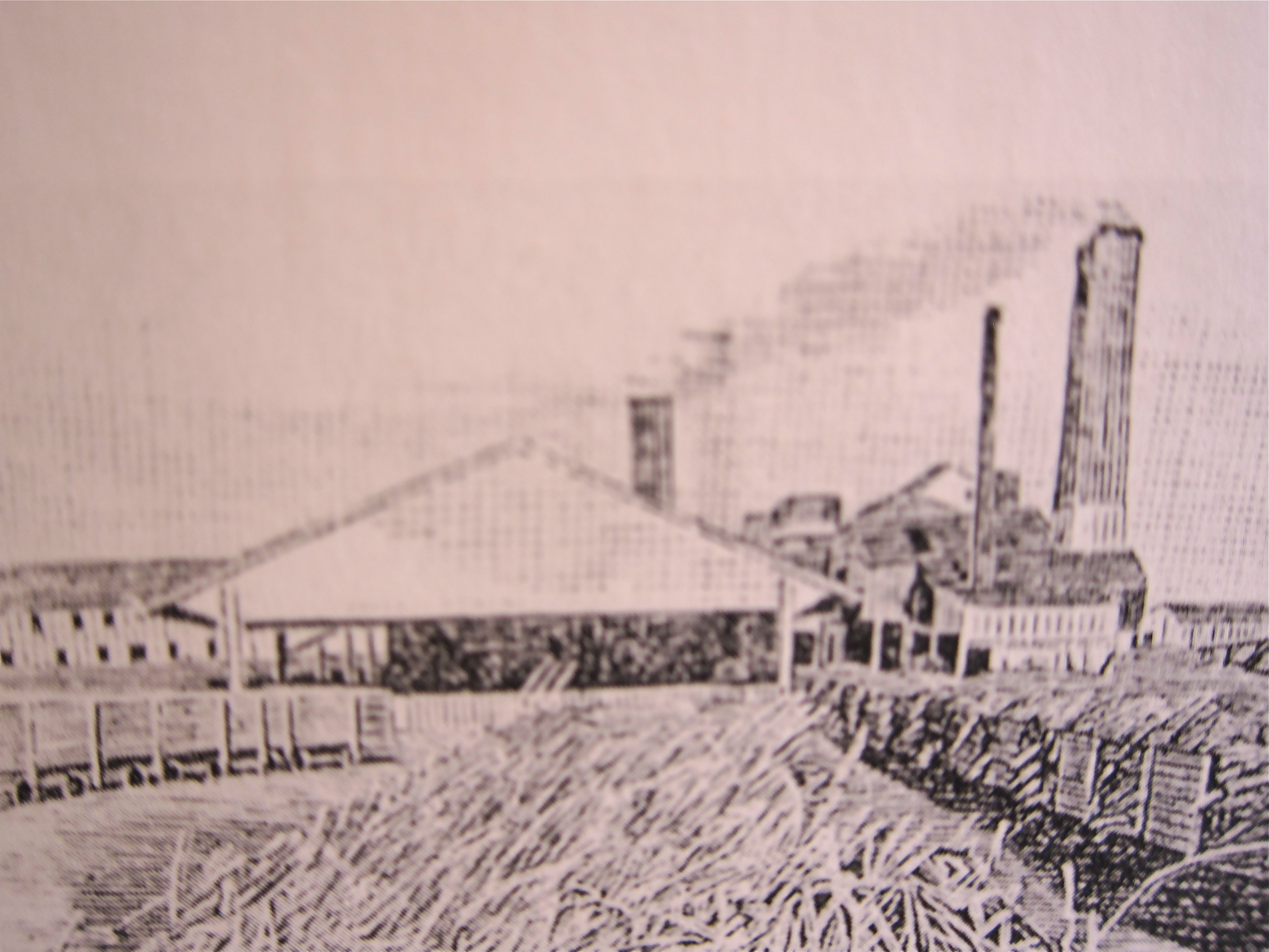
Ames Plantation, Jefferson Parish, Louisiana, ca. 1880’s

Jan 26/51 (sic)

Monday   commenced making Susan a flannel skirt

Mother & self went into Edwins with our work and staid

about 3 hours came home to tea.  Evening Augustus

Hannah and Mrs Witherell were here Oliver Jr

and Oakes A went to Mr Whitwells expecting to meet

Willard L there.  It has been a beautiful day.  Mrs Buck

and Sarah called at Edwins while we were there and

were very polite

It was Monday, which meant that Evelina probably did a little housework this morning before picking up her sewing. As usual, Jane McHanna managed the Monday washing and Evelina didn’t need to paint or fix or oversee anything but the flannel skirt she was making for her daughter. After midday dinner, she and her elderly mother, Hannah Lothrop Gilmore, walked to the home of Edwin Gilmore and sat with his bride, Augusta Pool Gilmore, each of them tending to their sewing. It seemed quiet on the home front.

In another decade, it would be anything but quiet – at least across most of the country.  The United States would be in the first upheavals of an impending civil war. “The Great Rebellion,” they would call it. On this particular day in January, 1861, Louisiana would secede from the Union, the sixth of eleven states to do so. When the war ended in 1865, the Confederacy defeated, Louisiana and her sister states would ultimately be accepted back into the Union through the arduous and hotly political process known as Reconstruction.

In another two decades, the economies of the southern states would still be struggling, enabling many northerners to acquire cheap land and cast-off businesses. In 1873, the three Ames brothers – Oakes Angier, Oliver (3) and Frank Morton – would purchase two old plantations, Estelle and South Side in Jefferson Parish, Louisiana, right across the Mississippi from New Orleans. On 13,000 acres, they would grow and refine sugar. The business ran until the start of the 20th century, overseen eventually by one of Frank’s sons. The property, which”stretched for more than one mile on the river and ran about eight miles deep”* was eventually sold.  Today that land comprises much of the city of Marrero, Louisiana. Little is left of the Ames influence except an eponymous boulevard running through the city’s center.


* Betsy Swanson, Historic Jefferson Parish: From Shore to Shore, p. 97.


January 19, 1852

d44daf6476649bfb638e3038c8f2221c

Fashion illustration from Godey’s Lady’s Book, 1850


1852

Jan 19th Monday  Susan washed the dishes and after doing

my usual mornings work commenced sewing some pieces

of fur that was taken off my cloak for Susan a muff

to carry to school.  Finished it before dark and in

the evening made over her best muff and it looks

as well if not better than when new. feel very well

satisfied with my days work  Very cold.


The snow continued today. According to Old Oliver Ames, “it snowd all last night + more than half the day to day and it was a verry cold storm – it did not snow fast any part of the time and all that has come now will not measure more than 6 inches on a level. it drifted considerable and is dry + light.”*

Susan Ames probably would appreciate the muff that her mother was making for her to keep her hands warm.  She already had one for “best” to wear to church, but this one would be for everyday. Made from recycled pieces of fur off her mother’s cloak, Susie would be making quite a fashion statement for a nine-year-old school child, most of whose classmates would likely have worn mittens.  Even Meg and Jo March had to walk to their jobs without muffs, holding instead warm popovers fresh from the oven to keep their fingers from numbing up.

At day’s end, Evelina was “very well satisfied” with the muffs she had reworked.  The household today appears to have been running well which would have amplified Evelina’s happy mood. Jane McHanna must have worked some magic to get the laundry done despite the snow storm.

*Oliver Ames, Journal, Stonehill College Archives, Arnold Tofias Collection

January 7, 1852

weddinga_cake1

*

/52

Wednesday Jan 7th

Heat the brick oven baked a loaf

of brown bread two loaves of fruit cake for

Augusta & mince pies  A & L were at Edwins

this forenoon. This afternoon have sewed for me on 

Susans dress.  I have been making frosting for

the cake  Helen has been in and the girls have had

a nice time over it  Frank carried them home


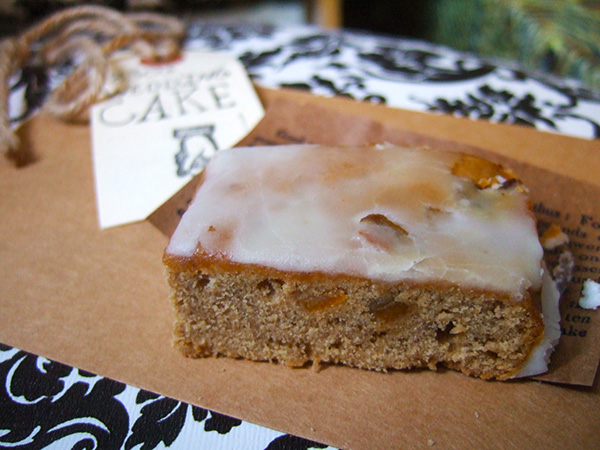
Augusta Pool and Lavinia Gilmore were once again helping Lavinia’s Aunt Evelina. Helen Angier Ames, too, came over from next door, and the young maidens had “a nice time over it.” They did a little sewing for Evelina – that must have pleased her – and helped prepare frosting for Augusta’s wedding cake, which Evelina had kindly undertaken to make, along with all the regular baking she was doing for her family. Augusta was to be married the next day to Evelina’s nephew, Edwin Williams Gilmore.

If the women were following the instructions of Sarah Josepha Hale, they would have made “Iceing for Cakes,” according to the following instructions:

Beat the whites of four eggs to a stiff foam, and add gradually three quarters of a pound of the best double-refined loaf sugar, pounded and sifted; mix in the juice of half a lemon, or a tea-spoonful of rose water.  Beat the mixture till very light and white; place the cake before the fire, pour over the iceing, and smooth over the top and sides with the back of a spoon.”**

When it got late, Frank Morton Ames took Augusta and Cousin Lavinia back to their respective families in the countryside. The light of a full moon guided them along in a sleigh over snow that was “now about a futt deep.”***

* Image of 19th century wedding cake courtesy of http://www.fourpoundsflour.com

**Sarah Josepha Hale, The Good Housekeeper, 1841, p. 101

***Journal of Oliver Ames, Courtesy of Stonehill College Archives


January 3, 1852

OLYMPUS DIGITAL CAMERA

*

1852

Jan 3d Saturday 

Finished my old hood and ripped Susans

old one & washed the lining and have partly quilted

it once again  Have spent all the afternoon in 

mending Franks shop coat.  Sewed this evening

untill nearly ten have not read at all

Mrs Witherell received news last night that her

father Witherell is not expected to live and she has gone

to see him.

Three-and-a-half years earlier, Sarah Ames Witherell had lost her husband, Nathaniel Witherell, Jr.  Now, she had the sad duty of traveling to Boston to say goodbye to her husband’s father, Nathaniel Witherell, Sr. Someone must have written a letter to tell her he was ill and, ever dutiful, Sarah Witherell responded quickly to the news.  Off she went.

Better news was that today was the birthday of one of Evelina’s many nieces, Mary “Melvina” (or “Malvina” as Evelina spelled it) Torrey. The youngest daughter of Evelina’s late older sister, Hannah Howard Gilmore Torrey, Melvina turned 11. Her father was Col. John Torrey, a high-profile personage in North Easton, of whom Evelina often writes. Melvina and her sister, Abby Torrey, were great favorites of Evelina; Melvina is the niece to whom Evelina gave a bloomer hat the previous summer.

In another ten years, Melvina would marry an older man, Sanford Blake Strout, who also lived in the village of North Easton, on Center Street. She would bear two sons, Byron Howard Strout and Havilen Torrey Strout.


Illustration from Godey’s Lady’s Magazine, 1851


January 2, 1852

Tea


1852

Jan 2d Friday  Seated myself quite early this morning to work

on Susans hood & finished item about ten Oclock

then ripped my old blue hood and washed the

lining & turned the outside have got it nearly done

We all went into the other part of the house to tea

Mr & Mrs Oliver & Helen there  Frank has a sore

ankle as [sic] does not go to the shop  Dr Swan called there

to see Helen & left Jane some medicine

The family gathered for tea today in “the other part of the house,” meaning that Evelina, Oakes, and their children, Oakes Angier, Frank and Susan went into the southern half of the shared house where Old Oliver and his widowed daughter, Sarah Witherell, lived with her two children, George and Emily. Joining them was the family next door: Oliver Ames, Jr, his wife Sarah and their daughter, Helen Angier Ames, who made an appearance despite being home from school with a cold. Other than missing Oliver (3) and Frederick Lothrop, the sons who were off at college, the group was a normal configuration for a gathering at the homestead.

Evelina’s grandson, Winthrop Ames, would one day describe such a family gathering from less than a decade later, by which time daughters-in-law and grandchildren had arrived:

“Supper, always called Tea, at seven, was the sociable occasion. It usually consisted of cold meats, hot biscuits, preserves and cakes – an easy menu to expand for unexpected guests.  Every week at least, and usually oftener, one household would invite the others and their visitors to tea; and the whole Ames family might assemble, even infant children being brought along and tucked into bed upstairs.  Fifteen or twenty was not at all an unusual gathering.”*

The family was as tightly-knit as any of Evelina’s knitted worsted hoods.

One other note about today’s entry: Dr. Swan left some medicine off for Jane McHanna, the servant, who had been ailing for much of the fall and winter. What did she suffer from?

* Winthrop Ames, The Ames Family of Easton, Massachusetts, privately printed, 1937, p.128