July 22, 1852

Fly

July 22 Thursday.  this has been a hot uncomfortable

day and the flies are quite too plenty

dead ones laying on the floor in any

quantity.  Hannah is not neat at all

and does not keep the house in any order

Julia has got my skirt to the borage so

much one side that it will have to be taken

of[f]. She says she will come Saturday and do it


Oh, dear. Today was “allso a verry warm day verry much like yesterday.” * Evelina appears to have been affected by the “uncomfortable” heat. She had nothing agreeable to report. Her maid was sloppy, her dressmaker was inept, and there were dead flies all around the house. Probably not even her flower garden offered solace.

As for the flies, we modern readers must remember that window screens were in their infancy, so that when Evelina and other housewives pulled up the window sashes in their homes to try to cool the air inside, they let in flies and other bugs “in any quantity.”

Flypaper hadn’t been invented yet, either, but it would come along in another decade when a baker in the small town of Waiblingen, Germany, fed up with the flies that landed on his cakes and tortes, had the idea to coat a strip of paper with molasses and hang it in his window. The flies went for it, so to speak, and a universal aggravation was successfully addressed. Customers began to want the strips of flypaper even more than the baked goods, so much so that the baker eventually gave up baking and took up the manufacturing of his product. (He would soon replace the molasses with arsenic, but that’s another story.)

The German baker’s invention, unfortunately, came too late to help the disgruntled Evelina or the hapless Hannah on this warm, warm day in Easton.


*Oliver Ames, Journal, Stonehill College Archives, Arnold Tofias Collection
July 21, 1852

Thermometer

July 21st Wednesday  Have been at work on my

borage dress  what time I have sewed

The weather is very hot and I can

work but little  Julia & Elizabeth Pool

are at Edwins having some dresses

made by Julia Mahoney  I called 

to see them carried my work and

stoped awhile  Have been to see

Augustus this evening he is quite feverish


“This was a verry warm day and the most scorching sun I ever felt […] it was warm all day and the night following verry,” reported Evelina’s father-in-law, Old Oliver Ames. She, herself, was enervated by the heat; she could “work but little.”  She was alone, too, as Julia Mahoney, her usual dressmaker, was across the street at Edwin and Augusta Pool’s. Augusta had two sisters visiting who were having dresses made. Evelina walked over to join them for a time.

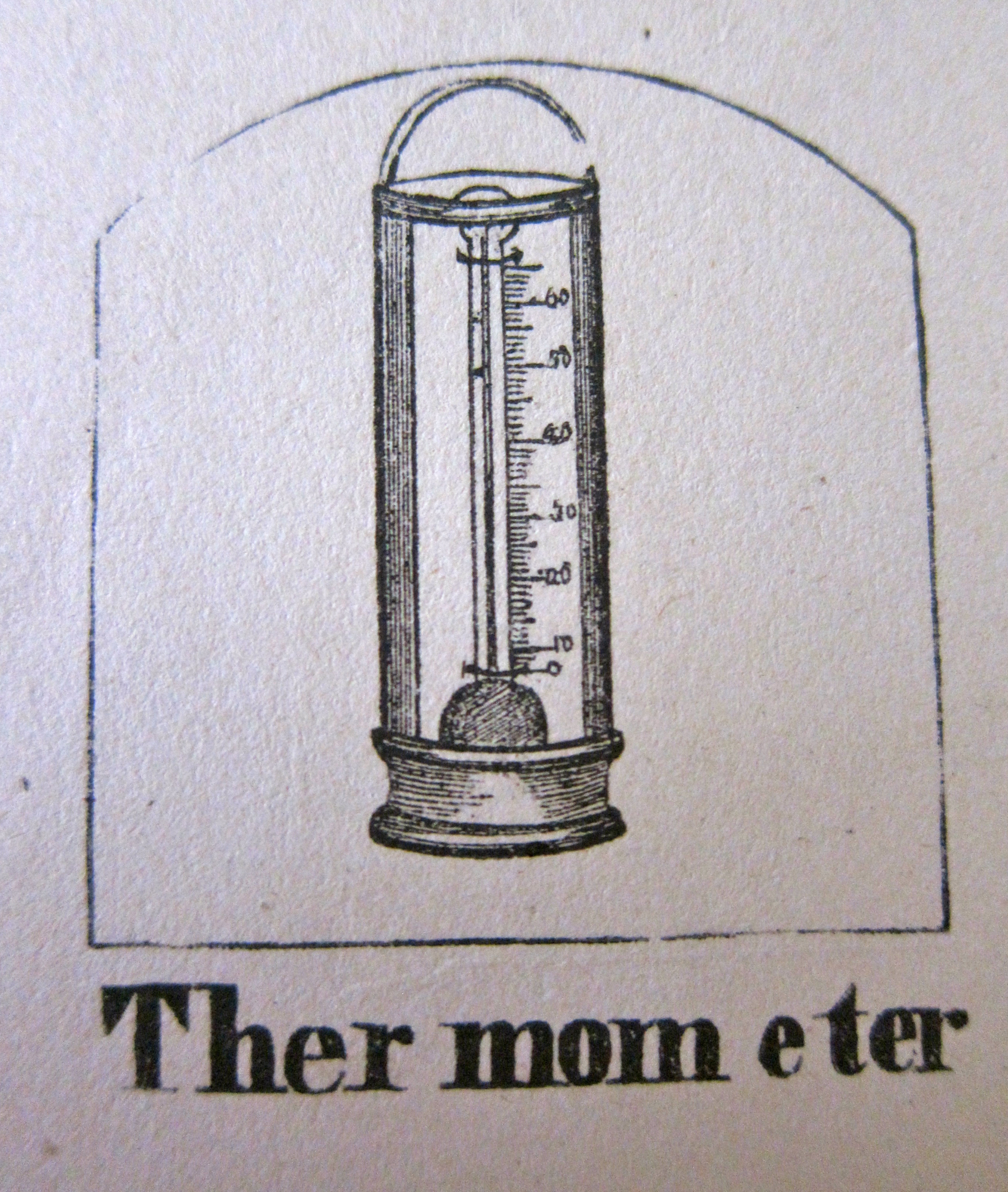
Alson Augustus Gilmore,Evelina’s nephew, was having no fun. He had a fever and in the heat must have felt as if he had landed in Hades. He was indoors, presumably, out of the direct sun at least. Old Oliver and his field hands, on the other hand, may have been outdoors haying in the blasting sunlight, the heat rising in waves around them. We can imagine that they stayed hydrated by drinking water ladled from buckets or a nearby well.  No thermoses or bottled Dasani or Fuji or Poland Spring water for them.

July 19, 1852

OLYMPUS DIGITAL CAMERA

1852

July 19th Monday  Hannah & Mary both washed again

to day and I was fussing about house all

the forenoon  How is it that I do not accom

plish more? I try but somehow I get but

very little done.  I have commenced trimming

the sleeves to my borage dress.  It is going

to be something of a job to finish my dress

yet   Uncle Ephraim called to see about Mrs Ames again

After a string of warm days, this start to a new week “was fair rather cool.”*  While the servants did the laundry, Evelina was “fussing about house.” She also fussed at herself for not getting things done. “I try” she writes in frustration, feeling that she failed to meet her own standards. Her response to this perception was typical: she picked up her sewing needle and went to work.

Who was this Uncle Ephraim who called? There were at least two men in the Bridgewater area at this time named Ephraim Ames, and none named Ephraim Gilmore or Ephraim Lothrop. It appears that a distant Ames relative may have been the man who kept calling “to see about Mrs Ames again.” The Mrs. Ames in question was most likely the visiting Almira Ames, widow of cousin George Ames. Had she sparked a romantic interest in this eager caller?


*Oliver Ames, Journal, Stonehill College Archives, Arnold Tofias Collection
July 16, 1852

FullSizeRender

Traveling dresses*

1852

July 16th  Have been to Boston & Mt Auburn with

Mrs Witherell, S Ames & A L Ames had a 

very pleasant time  Returned from Mt

Auburn about one or two called on Mrs 

Stevens and the rest of the day shopping

bought me a travelling dress &c &c

Did not see any of Mr Orrs family except

Mr Norris  Mrs N is at Newburyport


The Ames women went to town today. Apparently they headed first to Mt.  Auburn, probably to take a turn around the cemetery, then on to Boston. It sounds as if the four women rode in a carriage or wagon all the way from Easton. One of the women may have driven the vehicle, but it’s more likely that a man, such as Old Oliver’s coachman Michael Burns, drove. Whoever held the reins guided the horse along what is today’s Route 138.  The carriage would have traveled a short distance east to get out of Easton, then headed straight north through Canton and Milton into the outskirts of the big city. Normally the vehicle would have taken Washington Street as it veered northeast into Boston, but today they went instead via Jamaica Plain to cross the Charles River.

After their tour of Mt. Auburn Cemetery, a popular destination for many pedestrians and riders, the Ames women crossed back across the Charles River into Boston, where they spent “the rest of the day shopping.” Evelina purchased material and a pattern, perhaps, for a “travelling dress,” such as the one in the illustration. She will spend the next few weeks making this new outfit at home.

Back in Easton, meanwhile, Old Oliver reflected on the week going by and noted that “the 14 – 15 + 16th were all warm good hay days + verry drying.”** He was satisfied with the weather.


Godey’s Lady’s Journal, November, 1852

**Oliver Ames, Journal, Stonehill College Archives, Arnold Tofias Collection

July 15, 1852

imgres-1

1852

Thursday July 15  Mary had to pick out all the work

she did while I was at Canton and it has

taken her a long while  I shall not get much

of my sewing done by her Im thinking.  I have been

to work on my borage and there is a great 

deal to do with it   Have spent the afternoon 

at Fathers with Olivers family and mine

at tea

Sarah Ames Witherell, two months bereft of her eldest son, was entertaining again, if only for the family. She and her father, Old Oliver, had everyone in for tea. This must have been a good sign for the entire clan, as they could only have wished to see Sarah able to pick up her life again.

Evelina was dissatisfied with sewing done by her servant, Mary, and had her take out every stitch from a piece she had been working on in Evelina’s absence. No servant yet had been able to meet Evelina’s standard for needlework. She was too good at it, and seemed frustrated that she couldn’t rely on anyone else to accomplish what she herself was able to do. And she was doubly frustrated to find herself paying for a sequence of poor work being done, then undone, then redone. Not good for a Yankee. She would have to lower her standards, find someone who could do the work, or do it herself.


July 12, 1852

Furnace

July 12th Monday  Mary & Hannah both washed and I

was about house most of the forenoon 

Have cut the sleeves & skirt to my borage

dress and cut a waist for Susan

Carried my work into Olivers and stopt

some time  Edwin & Augusta rode to the

furnace & carried my pot to Mr Harveys to

get some butter but it was not ready for me

When Edwin and Augusta Gilmore “rode to the furnace,” they probably went south to an area of Easton known as Furnace Village or Easton Furnace. This was one of the oldest areas in town, its early homes today recognized as a National Historic District. First settled around 1715, it was a site for industry in a landscape that was otherwise quite agrarian. Using Mulberry Brook to turn its wheel, a sawmill was established there well before the American Revolution. Later industries included a tannery and a blast furnace for ironmaking, the latter giving the area its name. Historian Edmund Hands notes, “Once Easton Furnace possessed the highest degree of industrialization in town, but that industry never grew large enough to transform Furnace Village the way the Shovel Shop created the urbanized landscape of North Easton.”*

Back in the urbanized landscape to the north of Furnace Village, Evelina’s servants, Hannah Murphy and a woman named Mary, were doing the weekly laundry. Evelina was choring, sewing and waiting for Edwin and Augusta to return with some butter, which they were unable to do.  In the fields around North Easton, Old Oliver and his men were cutting hay. The agrarian life still held sway despite mills, foundries and factories.

*Edmund C. Hands, Easton’s Neighborhoods, 1995, p. 105

July 10, 1852

DSC_0383

Lace doily

July 10th Saturday  Have finished Susans 5th pair of

pantletts & Mrs Witherell has given her three

more so she is pretty well off in the pantlett line

Have been marking some clothes and Mrs

Witherell marked 6 gentlemans hdkfs & 6 for

me and doylies & other things  Mary has sewed

some but does not accomplish much is better at

housework than sewing  Oakes A has gone to a

sing near Jonas Hartwells with other gentlemen

and ladies

Evelina and her sister-in-law, Sarah Witherell, sewed today: pantletts, handkerchiefs, and an item new to the repertoire: doilies.  A maid named Mary did some sewing, too, but wasn’t up to the standards set by the older women.

In the 21st century, we know doilies as decorative paper mats that are typically used to present special baked goods. Doilies can also be made from cloth or lace, however, and once had a broader range of applications than just accompanying tea cakes. Designed in the 17th century by a London draper named Mr. Doiley, the original item was an inexpensive woolen cloth that was used to ornament a dress. It developed into a napkin used to protect the material under it. It might be seen on a tablecloth, a sideboard, or even on the back of an armchair (where it became known as an antimacassar.) Beautifully-made doilies were a housewife’s source of pride, specially stored in the linen closet.

Old Oliver, no doubt entirely disinterested in the women’s sewing agenda, reported that this “was a a fair warm day wind south west. + has bin all the week.”* Oakes Angier Ames took advantage of the good weather and, after work, headed to Bridgewater to attend a sing near the farm of Jonas Hartwell “with other gentlemen and ladies.” Who were they? Did he run into anyone of interest?

*Oliver Ames, Journal, Stonehill College Archives, Arnold Tofias Collection

July 8, 1852


IMG_7790

1852

July 8th Thursday  This forenoon cut out a night dress

from Mrs Ames pattern and was busy in my 

chamber made some cake & ginger snaps and 

baked them in Mrs Witherells oven  This

afternoon Mrs Witherell S Ames & A Ames were

here & Helen & Emily  The gentlemen came to 

tea  Mrs Augustus Gilmore passed the evening

This was a hot day for baking, but Evelina nonetheless made “cake & ginger snaps” in her sister-in-law’s brick oven. No doubt she served some of the goodies later in the day when the Ames clan gathered for tea. There didn’t seem to be any special occasion for the tea, except that a cousin, Almira Ames, was visiting. Rather, it was perhaps Evelina’s turn to entertain the family. As Evelina’s grandson, Winthrop Ames, later pointed out, “[e]very week at least, and usually oftener, one household would invite the others and their visitors to tea; and the whole Ames family might assemble…”*

Ginger snaps were pretty standard fare at such occasions. Evelina baked them regularly. In recipes from that time, they’re often referred to as hard gingerbread. Sarah Josepha Hale includes a “receipt” for them in The Good Housekeeper from 1841:

Rub a half a pound of butter into a pound of flour; then rub in half a pound of sugar, two table-spoonfuls of ginger, and a spoonful of rose water; work it well; roll out, and bake in flat pans in a moderate oven. It will take about half an hour to bake. This gingerbread will keep good some time.**


Winthrop Ames, The Ames Family of Easton, Massachusetts, 1937, p. 128

**  Sarah Josepha Hale, The Good Housekeeper, 1841, p, 99


July 6, 1852

500px-Illinoisoldcapitol

Old State Capitol Building, Springfield, Illinois, built 1839

1852

July 6th Tuesday  Was very busy sewing this forenoon

Mary made the sleeves to my purple cambric

calico and sewed the drugget for the sitting

room  This afternoon have been into Olivers

to tea with Mrs Witherell & Mrs Ames &c &c

Mr Jones from Foxboro called.

Received a note from Cassander Gilmore that 

Henry died this morning requesting us to attend the funeral 


In the statehouse in Springfield, Illinois, a practicing lawyer and former U. S. Representative named Abraham Lincoln gave a eulogy today for Henry Clay, the Senator from Kentucky who had just passed away. Clay had been Lincoln’s idol, his “beau ideal of a statesman.”* In 1832, Lincoln cast his first presidential vote for Clay; in 1844, he campaigned for Clay and served as an elector from Illinois. Clay’s influence on Lincoln would be life-long.

On the occasion of Clay’s death, Lincoln spoke for some time, quoting at length a laudatory editorial which lamented “that never again that majestic form shall rise again in the council-chambers in his country to beat back the storms of anarchy which may threaten, or pour the oil of peace upon the troubled billows as they rage and menace around…” Lincoln then moved on to his own simpler words. He praised Clay for his wisdom, eloquence, and perseverance, noting that “Mr. Clay’s predominant sentiment, from first to last, was a deep devotion to the cause of liberty – a strong sympathy with the oppressed everywhere, and an ardent wish for their elevation.”*

In the town of Easton, Massachusetts, on this same day, Evelina received a letter asking for her presence at a different funeral. Her cousin Henry Gilmore of Raynham had died this very morning, as his brother Cassander Gilmore wrote to say, and she and her family were pressed to attend the funeral the next day.


* henryclay.org

July 5, 1852


Motto_frederick_douglass_2

Frederick Douglass

(1818 – 1895)

1852 July 5th Monday  Orinthia & Lavinia went to Boston with

lots of others this morning  Orinthia is going to Maine 

on a visit  Mary came to sew or to see what she

can do. I have been sewing some to day and hope 

now that I shall be able to [do] more than I have

Have finished my brown muslin.  Augusta

has been here in this afternoon and this evening

we have been to see the fire works at Mr Russels

The nation was 76 years old. The Fourth of July having fallen on a Sunday, however, the celebration of it was deferred to Monday. Thus Evelina and Oakes and, no doubt, their sons and daughter went to Mr. Russell’s tonight to watch some fireworks. Others traveled into Boston, perhaps to see the fireworks there.

Mr. Russell may have been Edwin Russell, a shoemaker. The Ameses knew the family, certainly, as all three sons had attended a funeral back in January for Edwin’s father, Frank. If it was Edwin who hosted the fireworks, his may not have been as elaborate as those that would be seen in Boston, but he was following a tradition established by John Adams at the very beginning of the republic.

In a letter to his wife, Abigail Adams, on July 3, 1776, John Adams described his grand vision for a commemoration of the nation’s birthday.  It was to be celebrated “with Pomp and Parade, with Shews, Games, Sports, Guns, Bells, Bonfires and Illuminations from one End of the Continent to the Other from this Time forward forever more.” His vision was realized by 1777 when both Philadelphia and Boston – and other cities or towns, perhaps – set off Fourth of July Fireworks. A tradition was born.

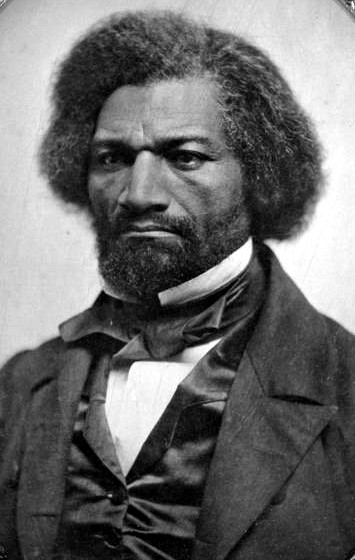
Not everyone celebrated the nation’s birthday, however, as Frederick Douglass, probably the country’s most prominent African-American, pointed out on this date* in a speech now famously known as “What to the Slave is the Fourth of July?”  He said:

“I am not included within the pale of glorious anniversary! Your high independence only reveals the immeasurable distance between us.  The blessings in which you, this day, rejoice are not enjoyed in common. The rich inheritance of justice, liberty, prosperity, and independence, bequeathed by your fathers, is shared by you, not by me.  The sunlight that brought light and healing to you, has brought stripes and death to me. This Fourth July is yours, not mine.  You may rejoice, I must mourn.”**

Douglass eloquently  described the fissure between white lives and black, yet he did “not despair of this country. There are forces in operation which must inevitably work the downfall of slavery…” ** He rightly predicted its elimination, but even he could not have predicted the carnage and destruction that the end of slavery would cost.

Frederick Douglass, “What, to the Slave, is your Fourth of July?,” various dates cited for this speech: July 5, 1852 or 1854.