November 6, 1851

OLYMPUS DIGITAL CAMERA

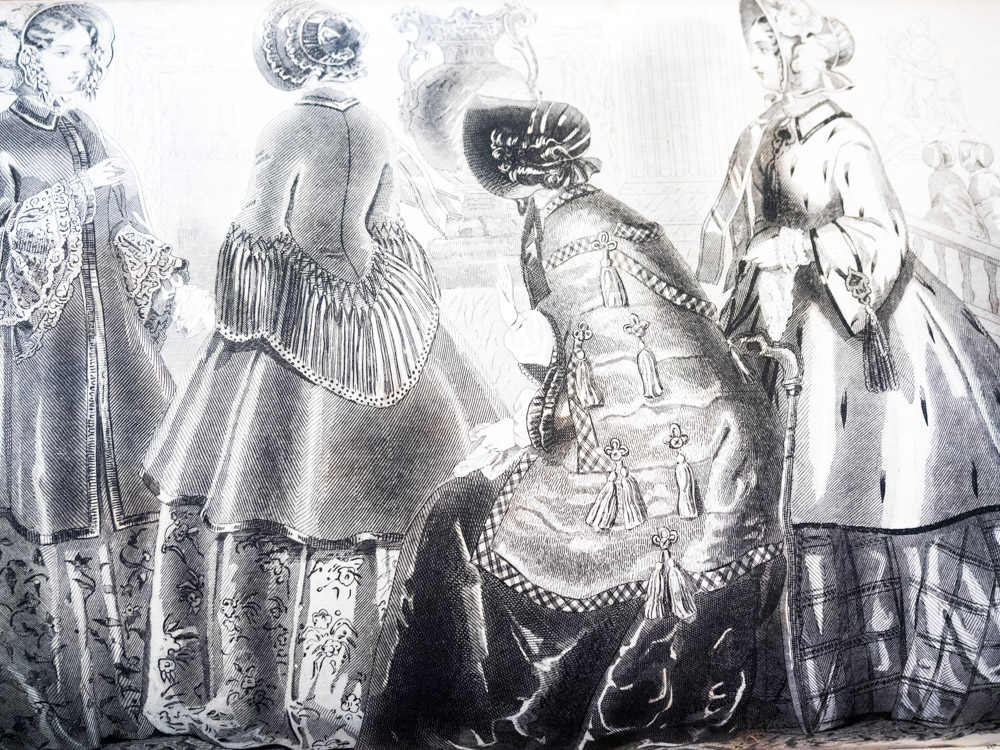
Winter wear from Godey’s Lady’s Book, November, 1851


Thurs Nov 6th  Worked about the house awhile this

morning and about eleven went into the

other part of the house to sit with the ladies

sewed the shirt onto my delaine dress.

Mrs Hubbell & Mrs Ames returned to New York

this afternoon  After they left Mrs S Ames &

self called on Mrs Swain & we went

to Augustus  Mr Bartlett is here will spend the night


After a morning of choring, sewing, and visiting, the Ames women were out and about this afternoon under fair skies. Houseguests Mrs. Hubbell and Almira (Mrs. George) Ames were carried to Mansfield to catch the train for New York.  No doubt they had on their best traveling dresses for the journey. They had been visiting Sarah Witherell and Old Oliver for better than a week.  Servant Jane McHanna traveled with them as far as Mansfield.

After midday dinner, Evelina joined another sister-in-law, Sarah Lothrop Ames, to pay a call on their young friend, Ann Swain.  Mrs. Swain, the wife of the new Ames clerk, John Swain, was a new mother already doting on her first-born son. There would be many visits to ooh and aah over the infant.  Similar oohing and aahing might have been dispensed at their second afternoon call, this one to Augustus Gilmore, his wife Hannah, and her three month old son, Willie.  Even if obligatory, surely these visits were preferable to the calls that the Ames women also made on the sick and the dying.


October 30, 1851

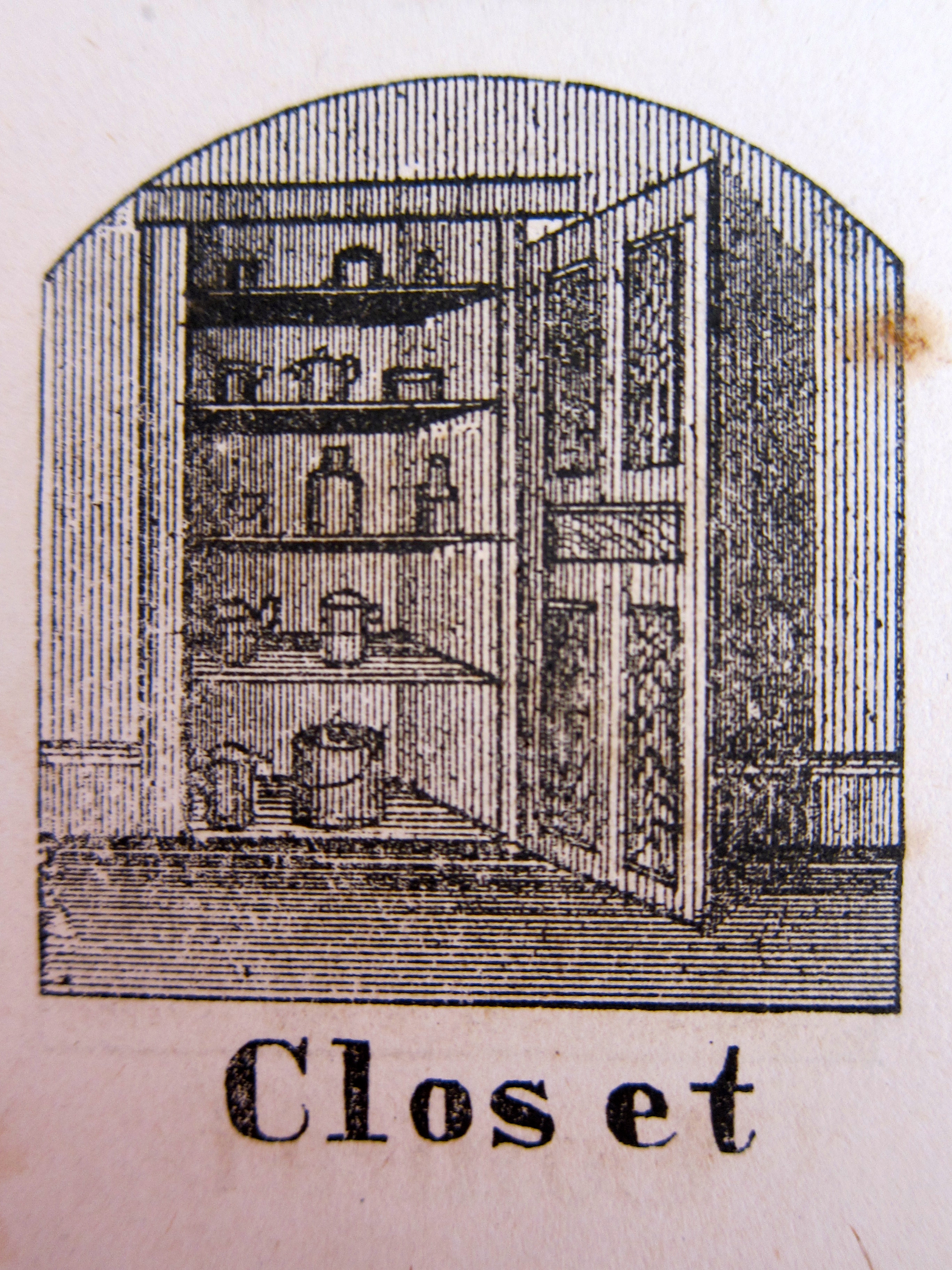
Closet

1851

Thursday Oct 30th  Mr Scott finished papering the 

parlour this morning and has painted some drawers

to be grained, and has drawn some of the windows

in the parlour  I have been doing a little of every

thing but cannot tell what.  Have got the carpet

down in the sitting room and the dishes into the

closet and we begin to look more comfortable


The redecorating of the downstairs began to wind down and the house became “more comfortable.” Getting the sitting room back in order was a big deal, for that was Evelina’s main domain for her daily sewing. It was her office, so to speak, more so than the kitchen.  She surely had missed her sewing routine while the house was disordered.

Putting the dishes back into the sitting room closet was also an accomplishment.  Jane Nylander, modern historian of 19th century domestic life, has written of the role of that closet:

“In most substantial households, parlors, sitting rooms, and dining rooms were furnished with a closet in which were stored cups and saucers, decanters of wines, glassware, and loaves of rich fruitcake, which was prized for its lasting quality as well as its flavor.  The shelves of these closets were grooved so that the small serving plates called ‘twifflers’ could be stood against the back wall and make a handsome show when the door was opened. ”  Twifflers – great name! – were about 9 1/2″ in diameter.

While Evelina set her house to rights, her father-in-law was busy about the factory. “began to work on the Flyaway Dam to day I went to Bridgewater + caried Clark + Keith to help Mr Phillips about fixing th bellows”** What had happened to the bellows? They were key to the manufacturing process.


*Jane Nylander, Our Own Snug Fireside, New York, 1993,  pp. 236 – 237.

**Oliver Ames Journal, Courtesy of Stonehill College Archives


October 21, 1851

scraping-wallpaper-renovation-14163480

Tues Oct 21st  Have been scraping off the paper again

to day and getting ready for the painters

Have been to work some on the sleeves

of my cashmere have sewed part of the 

trimming on.  Hannah called to ask

me to take care of her babe for her to go

to Boston tomorrow  Was in the other part

of the house part of the afternoon 

The house continued to be in some upheaval this morning as Evelina scraped more wallpaper off of the parlor walls in order to get “ready for the painters.” Her arms and hands must have ached with the effort. Soon enough she broke away from that task and turned to her sewing, probably with relief. For some time she had been working on a new wool dress and today sewed some trim on.  Did she add fringe, or piping, or lace? Or did she add the ribbon she’d been looking for lately?

The bad weather from the weekend had disappeared. According to Old Oliver’s daily chronicle “there was a large fog this morning + after it went of[f] it was verry warm wind brisk from south west Mr Arnold came here to day to sleight the shop at great pond.”

Hannah Lincoln Gilmore, wife of Evelina’s nephew Alson “Augustus” Gilmore, came by to ask her aunt to babysit the next day. Evelina, always a friend to younger women, agreed to watch Hannah’s infant son. It’s worth noting that in order to ask that favor, Hannah had to walk over from the village to physically appear at Evelina’s house. That, or she could have written a note and asked someone to deliver it.  There was no phoning, no texting, no emailing, no instant messaging. Instead, there was a knock on the door and a face-to-face request. That’s how it was done in 1851.

Evelina wound up the day with a visit to Sarah Witherell and her houseguest, Susan Orr, in the other part of the house.


October 17, 1851

OLYMPUS DIGITAL CAMERA

Friday Oct 17 Was working about house most of the

forenoon and have been sewing on Susans

and my dress.  Carried my work to Augustus

for a couple of hours this afternoon.  Lavinia

and Abby were there  Mr Ames has been quite 

unwell for a day or two and to night has taken

a warm bath  I have written a letter to Oliver

this evening  Mr Ames sent him a check for 25 Dls.


Oakes Ames had taken ill. Had he caught the nettlerash from his wife and daughter? Or was his illness something closer to a simple bad cold? He was “quite unwell.” Whatever he had, Oakes chose to palliate his ailment with a hot bath. Did he take a sitz bath, one that would alleviate itching from a rash?

That Evelina makes note of her husband taking a bath insinuates that his bathing was something out of the ordinary, which wouldn’t be unusual for the era. Regular bathing, which for many meant a weekly bath, was only just becoming the norm, and indoor plumbing was only just taking hold in urban areas.  Unlike the image in the illustration (which was published circa 1877), most bathtubs at mid-century were still free-standing.  The bath water was poured from buckets of hot water, which had been drawn from a well or cistern or kitchen pump and heated on the stove.  (Thus the expression, “to draw a bath.”)

The Ameses were fortunate in having their own indoor plumbing, a fact we know from Winthrop Ames’s mention in his family history of a “bathing room” in the house. Was this room shared by both families, as the brick oven was?

Oakes wasn’t too ill to write a check for his son, Oliver (3), who was away at college. Evelina wrote to Oliver and perhaps enclosed the check with her letter.  Had Oliver written home asking for money?  Such a scenario is certainly time-honored.


October 16, 1851


OLYMPUS DIGITAL CAMERA

*

Thurs Oct 16th Lavinia came back with O & F and spent the 

night  Sat with her awhile and sewed some on

the waist of my dress and sewed some buttons on

Franks vest  Went with Augustus with her

about Eleven and stopt an hour.  This afternoon

have been to Augustus Lothrop with Mrs S Ames

He has been sick about a week with the

Typhoid fever.  Bought 3 Bl apples of N Alger

Mrs Swain has a son born this morning

Evelina’s niece, Lavinia Gilmore, stayed the night with the Ameses, having ridden from the Gilmore farm with her cousins Oakes Angier and Frank Morton Ames.  Lavinia often visited with the Ameses in North Easton, evidently enjoying the bustle that the village of North Easton provided, relative to life on the farm. Today she sat and sewed with her aunt, who always enjoyed company while sewing. Somewhere along the way in today’s comings and goings, Evelina purchased three bushels (or barrels) of apples from Mr. N. Alger, a probable neighbor of Lavinia and her family.

In the afternoon, Evelina went with her sister-in-law, Sarah Lothrop Ames, to visit one of Sarah’s many brothers. This youngest brother, Horace “Augustus” Lothrop, lived in nearby Sharon where he ran a cutlery company.  He was quite ill with typhoid fever, a bacterial disease that was all too common in the 19th century. Spread by unsanitary conditions, typhoid fever killed more than 80,000 soldiers during the Civil War. Happily, Augustus Lothrop would survive his bout with the disease.

Another survivor today was Ann Swain, who came safely through the birth of her first child, a son. No doubt the relatives who had gathered to help were thankful and pleased.


Illustration of nursery furniture from Godey’s Lady’s Book, 1851

October 14, 1851


Corpse


Tues Oct 14th  Expected Julia here to work this 

morning but she sent word that she would not come

untill afternoon and it has put me back about my work.

Went to the store and got muslin for Mrs Willis robe,

and linings for dresses.  Helped Mrs Witherell & Mrs S

Ames make the robe  Julia came this afternoon & cut

the waist to my dress  Mr Ames has been to Boston &

Braintree

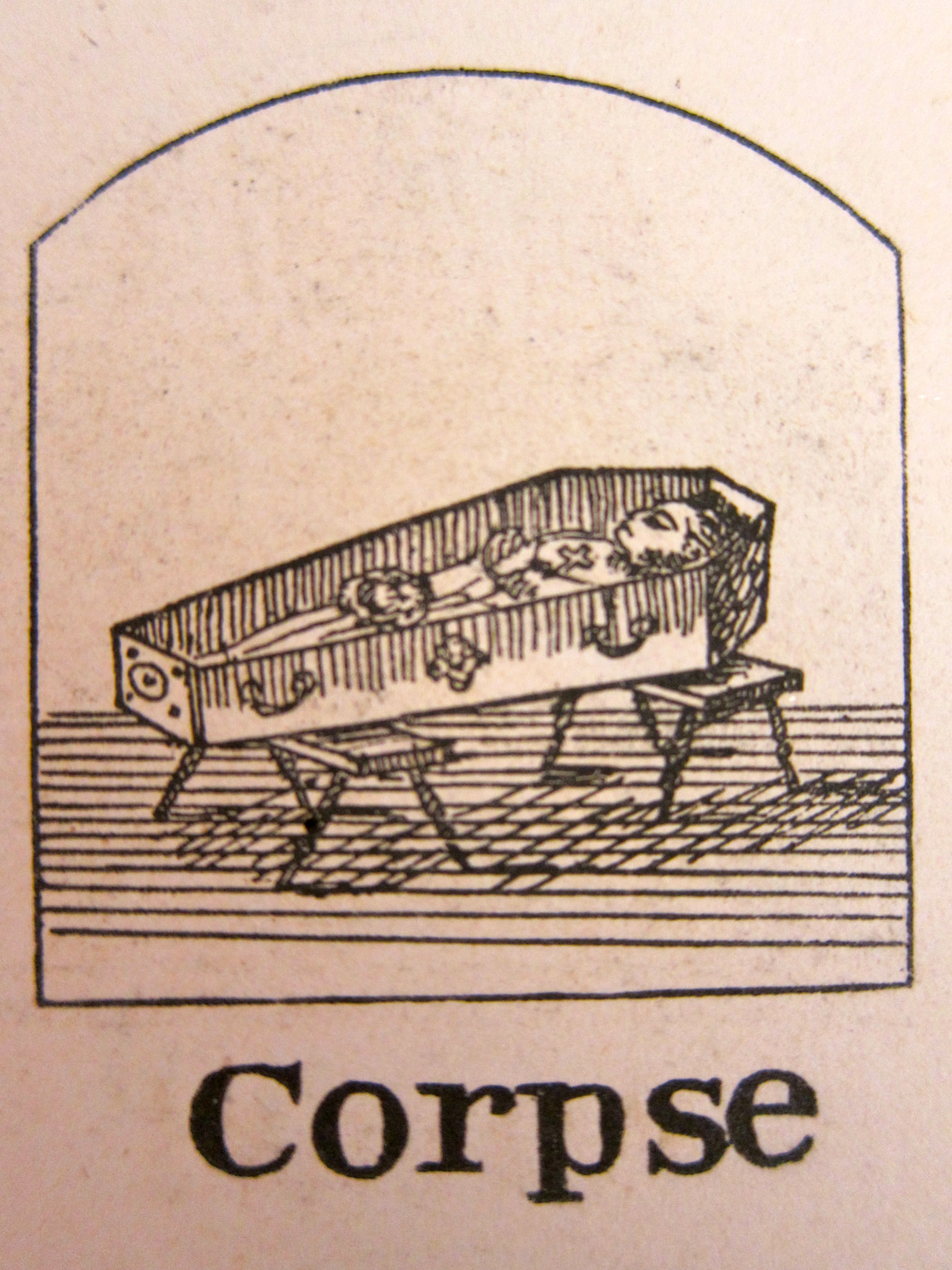
The sad business of sewing a robe, which is what the Ameses called a shroud, fell to Evelina and her sisters-in-law. The Ames women often were called on to make robes for the deceased, as they did today for a neighbor, Mrs. Willis. Mrs. Willis, who had died the day before, presumably had no family members who could otherwise sew the robe. Evelina herself picked up the muslin, the traditional material for a burial sheet, from the Ames store. The process of preparing the dead for burial tended to follow the existing customs:

“Before the Civil War, the care of the dead was largely the domain of the deceased’s family and neighbors. The corpse was customarily laid out on a board that was draped with a sheet and supported by chairs at either end. The body was washed, almost always by a female member of the household, and wrapped in a sheet for burial. A local carpenter or furniture maker […] supplied a coffin, a simple pine box with a lid. The undertaker, often the same carpenter or furniture maker […] took the coffin to the house and placed the body inside. With the family and friends gathered around, the minister performed the appropriate religious rituals, and then the undertaker conveyed the coffin to the graveyard.”*

Other sewing went on today as well. Evelina had spent the past several days piecing together a dress made of cashmere, and was waiting for the dressmaker of choice, Julia Mahoney, to work on the waist.  Julia was late, however, which threw a wrench into Evelina’s plans for the day. Evelina didn’t like tardiness, and was unhappy to have to rearrange her day. Eventually, however, Julia arrived and “cut the waist.”

Oakes Ames, meanwhile, went into Boston and Braintree, presumably on shovel business.  Saturday was his usual day to go into Boston; it being Tuesday, perhaps something beyond Oakes’s usual job of taking orders for shovels was called for.

*http://www.memorialhall.mass.edu/classroom/curriculum , “Death and Dying in the 18th and 19th Centuries”


October 13, 1851

OLYMPUS DIGITAL CAMERA

Oct 13th  Susan washed the […] dishes this morning and 

went to sewing quite early made the sleeves

to my cashmere dress and pocket made and

have got all ready for Julia to cut the waist in 

the morning.  Spent most of the afternoon in the

other part of the house  Mrs Willis died about

one or two Oclock this afternoon


“[V]erry warm and sultry like dog days” was Old Oliver’s assessment of today’s unseasonal weather. Evelina didn’t complain about it, nor did she mention any discomfort from the nettlerash that had plagued her for the last ten days.  Perhaps the burning and itching was finally subsiding.

Mrs J. Willis died today. There were a few women in North Easton who might have been this person; a possible candidate was a 44-year-old woman named Hannah Willis who lived in the Pauper’s House with her probable father-in-law, James Willis, and a child named James W. Willis. She had done some sewing for Jane McHanna back in March.

Evelina herself spent the morning with a needle and thread, making the sleeves and pocket for a cashmere dress.  She planned to use the services of Julia Mahoney to sew the waist. In the afternoon she went to the other part of the house, presumably to visit with her sister-in-law Sarah Witherell and a guest, Susan Orr. Given the heat and her slow recovery, Evelina moved around surprisingly well.

October 11, 1851


Hog

Sat Oct 11th  Baked in the brick oven  brown bread cake & seed

cakes Squash & apple pies  Miss S. Orr, Mrs Witherell

and her children here to tea  Helen came home last

night and Julia is at Olivers making her silk dress.

Mrs Elizabeth Lothrop is there assisting them.  I have

mended Mr Ames a vest and made the skirt

to Susans striped Delaine dress


Today many baked goods came out of the brick oven that Sarah Witherell and Evelina shared. It was getting to be pie season, so Evelina made squash and apple pies, along with more usual fare like brown bread and cake. Special on the menu was seed cake, something that Evelina hasn’t mentioned baking before.  She probably used caraway seeds from some roots she “set out” last April.

Next door Helen Angier Ames, briefly home from boarding school, met with the family’s favorite dressmaker, Julia Mahoney. Only fourteen, Helen was having a silk dress made; perhaps it was a party dress she might use in Boston. Helping Helen and her mother, Sarah Lothrop Ames, was Sarah’s young sister-in-law, Elizabeth Howard Lothrop. Only 22-years-old, Elizabeth was the mother of two very young sons and the recent widow of Sarah’s brother Clinton.

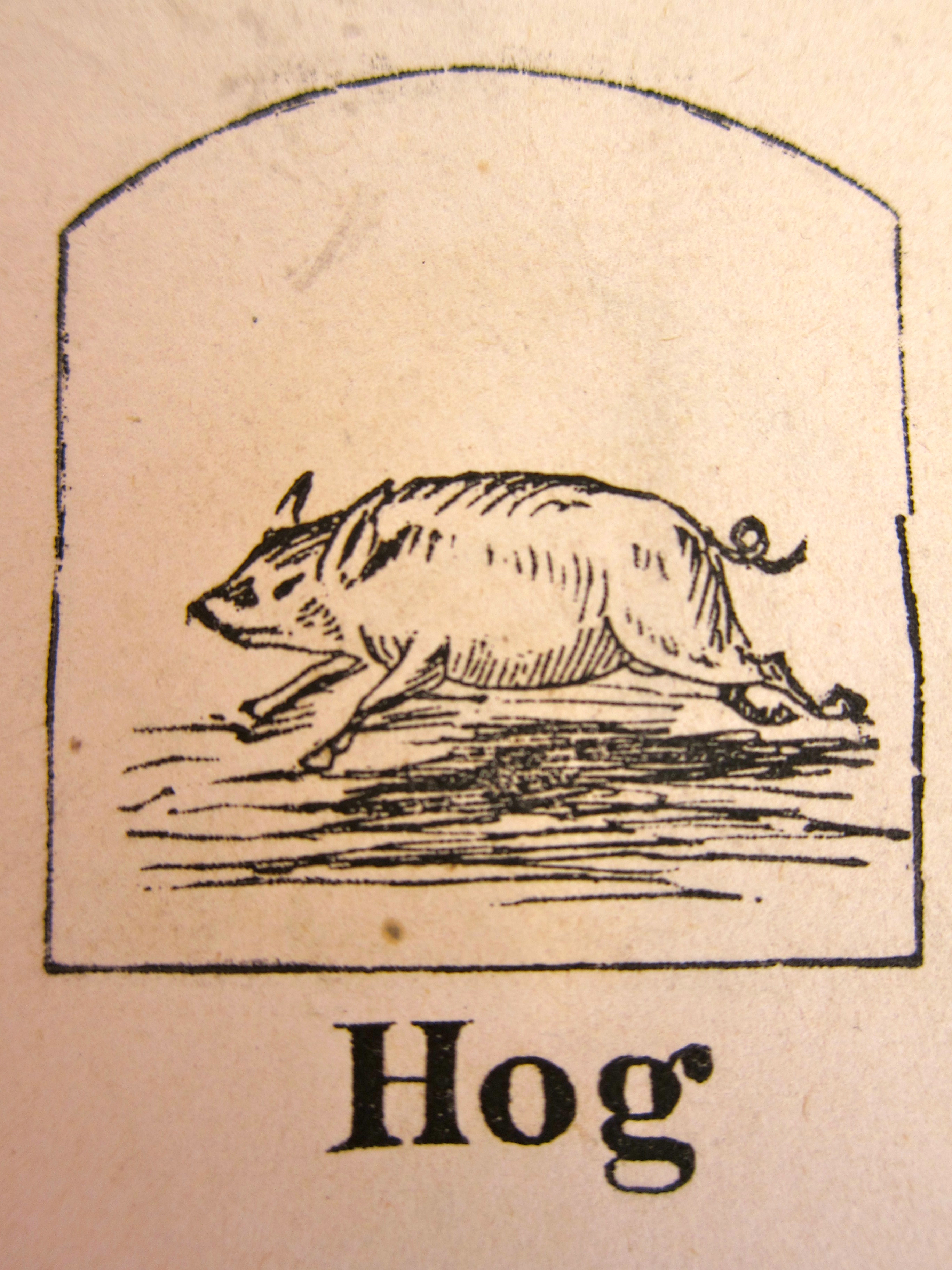
Old Oliver had to be pleased with life at this particular time. Only the day before, “Mr Phillips finisht his work at the great pond,” meaning that the new flume at Great Pond was in place. This was a good achievement for the shovel business which relied on water power to run the factory. Old Oliver was still active in the business he had started and passed on to his sons, yet never took his eye off of the family farm, either. Today he “bought 12 pigs that weighd 1330 pound at 6 ½ cents a lb average weight 112 pounds – cost $86:45.” He would raise those pigs, eventually selling some and slaughtering others to feed his large family. The factory and the farm continued to engage Old Oliver as he grew old.


October 10, 1851

Track

Friday Oct 10th  This forenoon made the skirt to my

cashmere dress and sewed some for Harriet.  This 

afternoon Mrs H Mitchell and children left with

William for Erie.  They are to stop a few days in 

Goshen with William and then go on to meet Asa at

Erie  Hannah called with Eddy a few moments when

she returned I went as far as the store & got some

Linings for my sleeves & Susans dress

Back on April 19, Harriett Ames Mitchell and her three children, Frank, John and Anna, had arrived in North Easton from Pittsburgh.  Harriett’s husband, Asa Mitchell, had not arrived with them, although he visited North Easton briefly later in the summer. Harriett and the children had spent six months in North Easton, mostly without Asa, staying off and on with Harriett’s father, Old Oliver, and her sister Sarah Witherell. They had also stayed in Bridgewater, where the Mitchell family lived.  Now, the family was traveling back to Pennsylvania, this time to Erie, where they would meet up with Asa. Harriett’s next oldest brother, William Leonard Ames, who had been visiting Old Oliver, too, “went from here with them.”*

Erie, Pennsylvania had just that year been chartered as a city, and was becoming a thriving manufacturing spot. As one modern historian has noted, “Erie was, of course, aided greatly by its proximity to the coal fields of Pennsylvania.”**  It was that proximity to coal that must have drawn Asa Mitchell to the town; he was a dealer in the coal market. Evelina speaks very little about Asa and from that it’s tempting to infer that Asa didn’t have a strong roll in the Ames family life.  He may have played a part in the business dynamics of the various Ames enterprises, however, but if Evelina knew about that, she didn’t mention it.

What did Evelina think about her sister-in-law moving away again? Evelina had a brother, John, who also had moved away from the area, but most of her family was nearby.  Did she ever think about life beyond eastern Massachusetts?  Did she ever want to board a train to see where it might take her? She doesn’t seem to have suffered from wanderlust.


*Oliver Ames, Journal, courtesy of Stonehill College Archives

** http://www.theeriebook.com, published by Matthew D. Walker Publishing Company, 2014


October 8, 1851

03615

*

Wednes Oct 8th  Have been sewing pretty steady to day have finished

my dark french print dress and have worn it this

evening  This afternoon called at Mrs Swains with

Mrs S Ames  Her brothers wife is there from Nantucket

with two children & her nurse is there and with her

father & mother made quite a family, nine of them

Mrs Swain said  She appears quite smart

She doesn’t mention her condition in her journal today, but Evelina was still afflicted with nettlerash, and would continue to be for another several days.  Why was her version of this troublesome condition so much more severe than her daughter’s had been?  Did the two, in fact, even have the same illness?

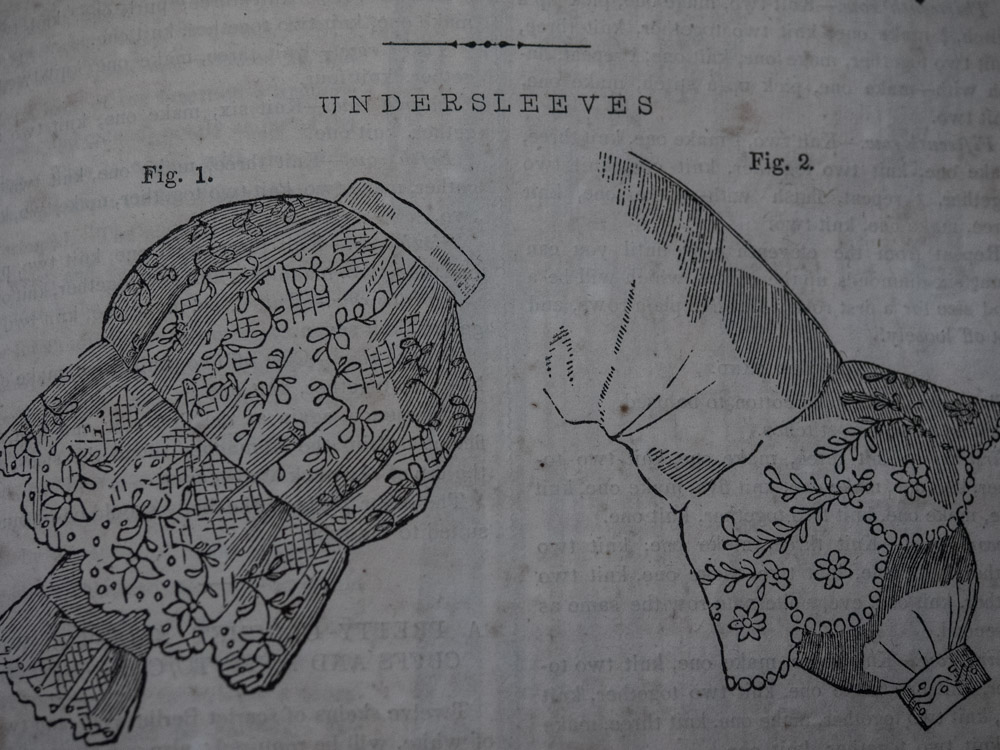
The only way to cope was to keep moving forward.  As least Evelina seemed able to sit and sew, enough to complete a “dark french print dress” she had been working on for some time. (Perhaps the fabric was not unlike the example of a 19th century French print fabric in the above illustration.) She even changed into the new dress for the evening.  Sarah Lothrop Ames may have stopped in from next door for the two sisters-in-law went to call on Ann Swain, wife of John Swain, the new bookkeeper and clerk at the shovel company.

Ann Swain was pregnant, almost at full term and doing well, appearing “quite smart.” She was surrounded by relatives – “nine of them” – who had evidently traveled from Nantucket in order to assist at the birth. The baby would be Mrs. Swain’s first, and her parents as well as others were on hand to help. Neither Sarah nor Evelina would be needed.

Courtesy of http://www.french-treasures.blogspot.com