November 21, 1852

IMG_0404

Lady’s Cloak**

Sunday Nov 21st  have been to church and at

intermission went with Mother into Mrs John

Howards.  Have invited Mr & Mrs Whitwells

family to dine here Thanksgiving

After church read & heard Susan practice

her lesson a while  Edwin & wife came

in this evening and I went to Augustus with 

them


This Sunday before Thankgiving “was a fair sunny day wind northerly + cool.”* The Ames contingent headed to church as usual and at intermission spread out to different informal gatherings. We don’t know where the men of the family went, or what Susie did, but we do know that Evelina took her elderly mother to the home of John and Caroline Howard, where they would have been offered a cup of tea and a piece of pie or cake.

After church, Evelina heard her daughter practice the piano. Like yesterday, the friction and anxiety between the two over the piano lessons seemed to have dissipated. At least, Evelina doesn’t mention having to force Susan to practice.

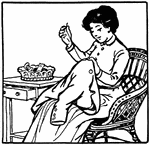
Evelina also did a little reading. If she picked up her copy of the November issue of Godey’s Lady’s Book, she would have noticed, among many essays, stories and poems, a short article on women’s cloaks:

Never was there a season in which there was so great a variety of graceful cloaks to choose from. Not the heavy, cumbrous garment that once enshrouded and hid all grace or outline in the female figure, but light, yet ample costumes, that answer every purpose of warmth for walking or driving...**

Cloaks were in. If Evelina needed proof that her sister-in-law Sarah Lothrop Ames had a nose for fashion, there it was. Only a week earlier, Sarah had been in Boston buying a cloak for her daughter Helen. There were many styles to be seen, including the one in the illustration, in the Alboni style. Will Evelina get one for herself or her daughter?


*Oliver Ames, Journal, Stonehill College Archives, Arnold Tofias Collection

** Godey’s Lady’s Book, , Cloaks and Mantles, November 1852, pp. 476 – 477

November 18, 1852

5251656_f520

Thursday Nov 18th  Catharine & Ann have cleaned

the buttery and it has taken them both all

day and I see to putting most of the dishes

back  Mixed my meat for mince pies

Wrote a note to Mrs Ames to send by

Mr Swain tomorrow with a gold thimble

Called in Olivers  Augusta there this evening


For all the sewing that Evelina did, this is the first entry where she mentions a thimble. The approximate particulars seem to be that Evelina asked her sister-in-law, Sarah Lothrop Ames, to get a gold thimble to be sent – as a gift? – to Ann Swain. Sarah Ames must have been planning to go to Boston the next day. Readers, your interpretation?

Whatever the circumstances were around this gold thimble, there’s no question that women used thimbles to sew. A thimble was worn on the tip of the finger to push the needle through the fabric. Simple enough, and time-honored. Thimbles have been found dating from BC, the earliest ones made of metal or leather or wood. Brass eventually became a standard material, although versions made of glass, ceramic, or even whalebone were made as well. Silver and gold, of course, were at the high end of the spectrum and often became heirlooms. Although the sewing machine would soon enter the market and alter the sewing habits of most women, thimbles would remain a tool for anyone using a needle and thread.

Not all the day was spent on sewing concerns. Evelina and her servants cleaned the buttery (or pantry) and made mincemeat. Old Oliver and his men were still outside where, in a “chilly” wind, they “finisht geting the manure of[f] our hog yard.” Surely everyone was pleased to finish that noisome task.


November 17, 1852

xa7210p0

Girl’s dress, mid-19th century

Wedns Nov 17th  Miss Alger has been here to

day and has given her 12th lesson and 

dined here.  Mrs S Ames & self have been

to North Bridgewater  Emily & Susan

went with us  I got Susan a plaid

dress but do not feel satisfied with it


In the 19th century, girls often wore plaid; Susan Ames was no exception. Her mother got her a plaid dress in North Bridgewater (today’s Brockton) but ended up unhappy with the purchase. Did Evelina buy an actual dress or the material to make the dress? Probably the latter, as this is what she has done previously. Also, we must remember that “off-rack” clothing really was not yet on the market.

One thing we don’t read about today is the ongoing tussle between Evelina and her daughter over the piano. The teacher, Miss Alger, had been at the house for the 12th lesson for Emily and Susan, and there is no mention of lack of skill or failure to practice on Susie’s part. She must have been getting the hang of the new instrument and perhaps was even beginning to enjoy it.

After the lesson, Susan and Emily got to ride to North Bridgewater on the shopping excursion with Evelina and their aunt, Sarah Lothrop Ames. There must have been no school on this day, so the girls got to enjoy the sunshine.


November 13, 1852

Turnip

Sat Nov 13th  Have cleaned the parlour

but did not take up the carpet

gave it a thourough sweeping and

washed the paint  Miss Alger has

been here and given the girls their

eleventh lesson  Mrs Oliver Ames

has been to Boston  got Helen a cloak


Evelina stayed indoors today, perhaps envious that her sister-in-law Sarah Lothrop Ames was shopping in Boston. Sarah bought her daughter Helen a cloak. Do we imagine that Evelina might soon head for the city to buy one for her daughter Susan?

Old Oliver, meanwhile, was still busy outdoors on several fronts, including the harvesting of turnips, as he reported: “this was a fair day but pritty chilly we got in some [of] our turnips to day*”. Turnips were an important vegetable crop that kept well over the winter, making it a staple in most households. Botanist Judith Sumner notes that “as early as 1609, colonists […] cultivated turnips. […] Cold weather improved their flavor, so it may not be coincidental that a November 1637 letter from John Winthrop to his wife instructed her to harvest their crop while he was away.”** Native Americans adopted the vegetable themselves, preferring it to other edible roots that they had previously gathered.

Turnips were still standard fare at the 19th century New England dinner table, typically prepared just as Sarah Josepha Hale suggests:

Turnips should be pared; put into boiling water, with a little salt; boiled till tender; then squeeze them thoroughly from the water, mash them smooth, add a piece of butter and a little pepper and salt.***

Surely there would be mashed turnips served at Thanksgiving.


*Oliver Ames, Journal, Stonehill College Archives, Arnold Tofias Collection

**Judith Sumner, American Household Botany, Portland, Oregon, 2004, p. 30

*** Sarah Josepha Hale, The Good Housekeeper, 1841, p. 74


November 5, 1852

Oliver Ames, Jr.

Oliver Ames, Jr.

(1807 – 1877)

Friday Nov 5th Susan has taken her ninth lesson

in music and I fear she is rather dull

does not call her letters well at all

Mrs Swain called this afternoon to settle

with me about her things and to night sent

me as a present as much as a half bushel […]

quinces  We passed the evening in Olivers

After stopping by to pay for the mourning apparel Evelina had picked up in Boston, Ann Swain sent Evelina two pecks of quinces to further thank her for her kindness. This thoughtful gesture may have distracted Evelina from her ongoing annoyance at her daughter’s “dull” piano playing. Susan had not yet learned her scales. At night, Evelina and Oakes, and perhaps other family members, “passed the evening” next door at Oliver Ames Jr’s.

Today, in fact, was Oliver Ames Jr.’s 45th birthday. He and his wife, Sarah Lothrop Ames, lived next door to Oakes and Evelina. At this juncture, Oliver Jr. was serving his first term as State Senator; he would serve a second term in 1857. According to Reverend William Chaffin, who knew the Ames family well, “Oliver Ames stood among the foremost in his reputation for a manly and unblemished character and for business ability…a strong, substantial, able, and honorable man.”****

The third of Old Oliver’s eight children, Oliver Jr. had originally been the brother who tinkered with the possibility of a career away from the shovel factory. In his teens, he suffered a “severe fall,”**** and was unable to work. He was sent to the Franklin Academy in North Andover after which he began to read law with William Baylies, Esq., of West Bridgewater. Reading and debating – good lawyering skills, both – had always been sources of pleasure for Oliver, but “[t]he confinement of office proving unfavorable to his health, together with the increasing demands of business at home,”**** he returned to North Easton. In 1833, he married Sarah Lothrop, the daughter of the Honorable Howard Lothrop and Sally Williams Lothrop. They had two children, Frederick Lothrop and Helen Angier Ames.

Relative to his brother, Oakes, Oliver Jr was reckoned to be “pretty dignified, and takes a good deal after his father, but Oakes is always ‘hail fellow well met.”** Another contemporary acquaintance of both men said simply that Oliver Jr. was “the conservative one.”***They made a good business pair. Over time, Oliver Jr. and Oakes, under the watchful eye of their father, turned the shovel shops into an industrial powerhouse, even as they groomed the next generation, Oakes Angier, Oliver (3) and Fred, to take over when the time was right. They invested in technological improvements and hired more help, especially from the newly arrived Irish population. They improved supply and delivery; in 1855, Oliver Jr. helped create the Easton Branch Railroad spur from Stoughton to North Easton.  In 1863, he oversaw the creation of a railroad line through the Great Cedar Swamp to Raynham. His interest in railroads led him to join his brother in the plan to build a transcontinental railroad when Oakes, by that time a U. S. Congressman, was tapped by Lincoln to lead the way.

The rest, as they say, is history. Both brothers became “deservedly famous”*****for their involvement with the Union Pacific. More than one contemporaneous historian has noted: “In 1866, Oliver Ames was elected president of that railroad, an office he held with significant ability until March, 1871.  During this time the road passed through some of its stormiest days and severest trials. His sound judgment, great business capacity, and inflexible integrity were of immense service in carrying this great enterprise safely through difficulty and peril to final success.”*****

On this dark autumn night in 1852, the “difficulty and peril [and…] success” lay ahead for both brothers as they sipped tea with their wives and watched “a few flakes of snow” fall.*

*Oliver Ames, Journal, Stonehill College Archives, Arnold Tofias Collection

**“Ames at Easton: The Shovel Makers and Their Works. Life and Habits of the Congressman. Cursed Abroad – Applauded at Home,” The Boston Times, February, 1873

***Josiah Bushnell Grinnell, Reminiscences of Forty Years, 1891, Boston, p. 137

****William Chaffin, History of Easton, Massachusetts, 1886, p. 655.

*****Duane Hamilton Hurd, History of Bristol County, Massachusetts, Vol. II, 1883, pp. 430 – 431 (also Chaffin, p. 656)

November 4, 1852

67877_mendclothes_mth

Thursday Nov 4th  I was very busy about house this

forenoon making cake & scalding barbaries

&c &c Miss Alger not very well

Mrs John Howard called here & at Olivers

dined with Mrs Witherell  She is having

Julia cut her a dress I have been mending

some this afternoon but do not sew much

The piano teacher, Miss Alger, was staying with the Ames family, and today she was unwell. Evelina had to cope with this, knowing as she did that her daughter Susan resented, in some degree, the presence of Miss Alger. Was Evelina beginning to resent her as well? Miss Alger had been staying with them for quite a while. But perhaps Evelina was too “busy about house” to allow herself any unkind thoughts. Ever domestic, she baked, cooked and mended for most of the day.

Caroline Howard, a fellow Unitarian and Sewing Circle member, made a social call at the Ames compound, visiting Evelina and Sarah Lothrop Ames, then having midday dinner with Sarah Ames Witherell. Mrs. Howard was planning to have a dress made by Julia Mahoney, the Ames women’s favorite dressmaker. Caroline was the wife of John Howard, a laborer (according to the 1850 census) and appeared to have no children. She would far outlive the ladies she was visiting, not dying until age 95 in 1897. Her life span basically covered the whole of the 19th century. What changes she saw!

November 3, 1852

Thread

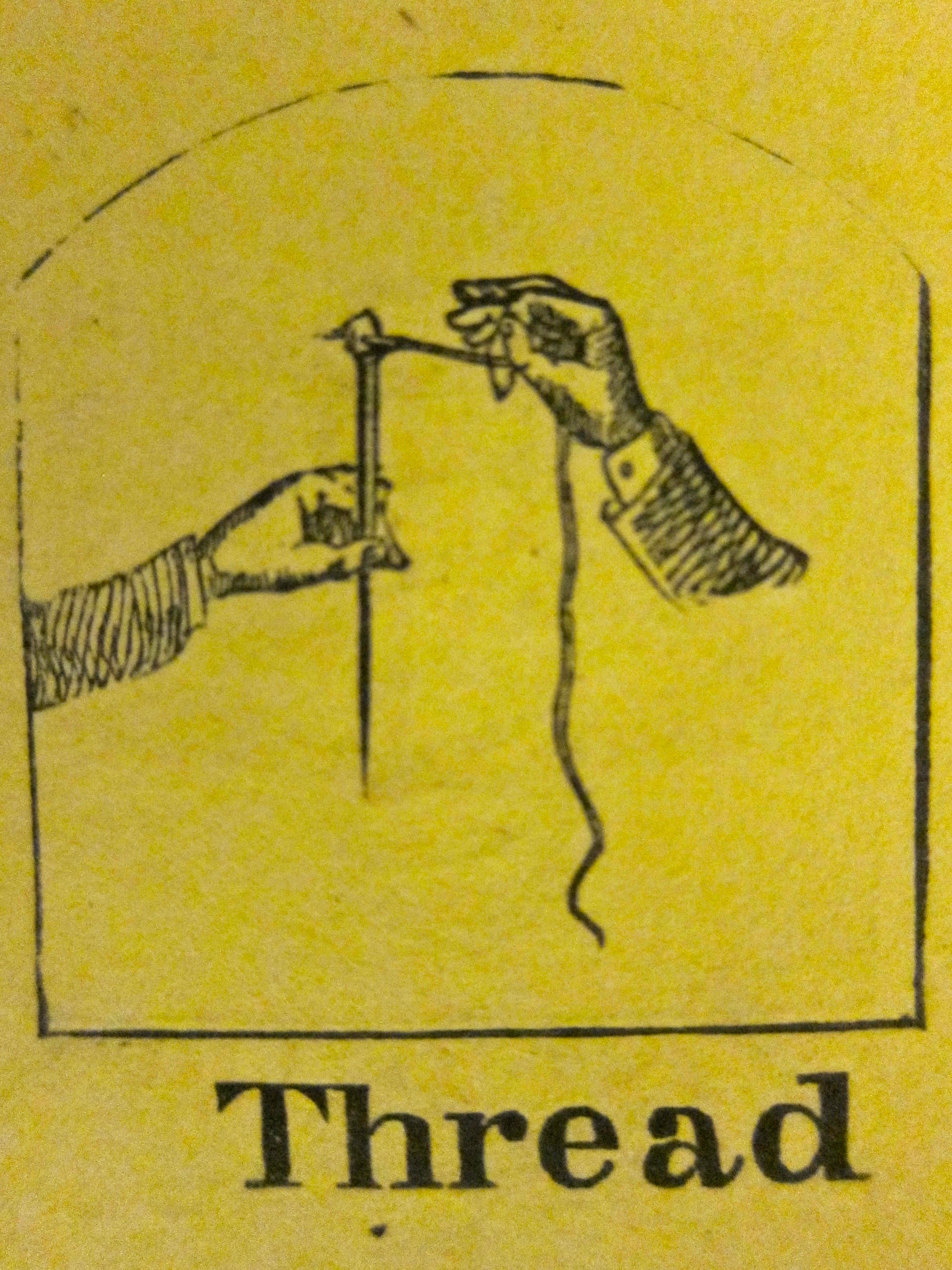
Wednesday Nov 3d  The girls took their eigth

lesson this forenoon and I sat with

Susan to see her take hers so that I 

could assist her some if required

We have been to the funeral and 

then Mrs S Ames and self went to the sewing

circle at Mr Clarkes,  Miss Alger took

tea with Witherell.  Lavina Wms called

Susie Ames and Emily Witherell took another piano lesson this morning. Evelina, still determined that her reluctant daughter was going to learn to play the new instrument, “sat with Susan” in the parlor as she had her lesson. Miss Alger, the teacher, had tea with Sarah Witherell later in the day. The two women might have discussed how the girls were faring with their lessons; with Evelina out of the house, it would have been easier to discuss the fact that Emily was the stronger student.

Evelina and Oakes, presumably, and other Ameses attended the funeral of the Swain baby. John H. Swain Jr. had died on Sunday from “Teething,” much to his parents’ sorrow. Today, the sun was out, though the wind blew, as folks gathered around the little grave.

Afterwards, Evelina and her sister-in-law, Sarah Lothrop Ames, rode to the monthly Sewing Circle at the home of “Mr Clarke.”  He may have been Daniel Clark, a carpenter, whose wife was Elvira Clark and whose daughter, Elizabeth, had played the piano at the meeting house the summer before last. The piano again! Evelina couldn’t get away from other mothers whose daughters did well at the piano. How frustrated she must have felt about her own daughter.


November 2, 1852

490px-William_Rufus_DeVane_King_1839_portrait

William R. King

(1786 – 1853)

Tuesday Nov 2d  Sewed on cambric sleeves for

Susan this forenoon very quietly with

Miss Alger  It has rained since Saturday

morn but this afternoon has cleared 

off Mrs Ames & self have been to Mr

Swains & called at Doct Wales & Augustus

Miss Alger & O Angier took tea in Olivers


Back from her quick day trip into Boston, Evelina spent the morning “very quietly” in her sitting room, sewing. The piano teacher, Miss Alger, was still visiting.  Outside, “it rain[ed] by spells […] wind north east it stormd all the forenoon and was cloudy about all day – there has bin one inch + a quarter of water fell since Sunday”*

After midday dinner, when the storm had stopped, Evelina and her sister-in-law, Sarah Lothrop Ames, went out to check on Ann and John Swain, whose infant son had died on Saturday. Evelina would have taken with her the mourning accoutrements she had purchased for Ann in the city. No doubt the Ames women continued to comfort the forlorn parents. From the Swains they paid other calls in North Easton, to the home of Ephraim and Maria Wales and to see Evelina’s nephew, Alson “Augustus” Gilmore and his wife Hannah. Hannah had lost her infant son Willie back in the summer. The women would have had much to talk about.

On the national scene, the day was momentous. As we have read previously in this blog, General Franklin Pierce, a Democrat, was elected President of the United States, defeating Whig candidate General Winfield Scott (incumbent Whig Millard Fillmore hadn’t been renominated) and Free Soil candidate John P. Hale. Easton historian William Chaffin writes: “In 1852 the vote for President was one hundred and seventy-one for Winfield Scott, one hundred and forty-three for John P. Hale, forty-nine for Franklin Pierce, and four for Daniel Webster, who was dead. This vote shows the political complexion of the town, and confirms the statement of the adoption of the Free Soil position by many Democrats.”**

The vice-president-elect was William R. King, a senator from Alabama who believed strongly in the Union. He had helped draft the Compromise of 1850. Unfortunately, King was suffering from tuberculosis and would soon die in office, one of the shortest-termed vice-presidents and the only Alabaman. He was also the only vice-president to take the oath of office on foreign soil; he was in Cuba taking the cure when he was inaugurated.


*Oliver Ames, Journal, Stonehill College Archives, Arnold Tofias Collection

**William L. Chaffin, History of Easton Massachusetts, 1886, p. 630


November 1, 1852

Rain

Monday Nov 1st  Went to Boston for Mrs Swain

to purchase mourning  Dined at Mr Orrs

Julia left there this morning  Miss Alger

came home with me  It is very bad walking

in Boston and my clothes covered with

mud rained all the forenoon  Mrs

S Ames & Helen here this evening


Even on a somber errand, Evelina never seemed to mind going into Boston. Still, given her recent lack of sleep and the rainy weather, she was kind to take on this sad business. Her goal was “to purchase mourning” clothes for her young friend, Ann Swain. Mrs. Swain had just lost her one-year old son and, as per the mores of the day, needed proper black apparel to mark her loss. If she followed convention, she would dress in mourning clothes for one whole year. She could ask advice from Sarah Witherell if she needed, for Sarah would still have been dressing in black or gray from the death of her own son back in the spring.

Different from her usual extended shopping trip into the city, Evelina went in and came out all in the same day, stopping only long enough to take supper with family friends, the Orrs. Surely the bad weather hurried her along on her errand. Evelina is emphatic about the misery wrought by the rain she endured while shopping, her outfit “covered with mud.”  Back home in Easton, her father-in-law Old Oliver was, as usual, less ruffled about the precipitation: “it raind some last night + has bin misty all day. wind north east.”* We should presume that more rain hit Boston than North Easton.

*Oliver Ames, Journal, Stonehill College Archives, Arnold Tofias Collection

October 31, 1852

Abbott H. Thayer, Angel, 1887, oil Smithsonian American Art Museum Gift of John Gellatly

Abbott H. Thayer, Angel, 1887, oil
Smithsonian American Art Museum
Gift of John Gellatly


Sunday Oct 31st  Mr Swains child died at 20 minutes

past five this morning  Mrs Witherell

and self passed the night there & laid

him out  Mrs Witherell came home & I 

staid untill about four  Mrs S Ames

& Helen were here awhile this evening

and the rest of the time I read Ravenscliffe

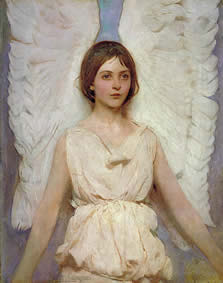
John Howland Swain, Jr., aged one year and 14 days, died at dawn this morning. Cause of death was listed as Teething. What did that mean? He was dehydrated? He had a fever? An infection? Whatever it was, it was too much for the little boy – and for the medical treatments of the day.

In the 19th century, infant death was common, but its ubiquity made it no less easy for parents to bear. Sylvia D. Hoffert, a 20th century historian, has studied the subject. She writes:

“The number of children that couples were likely to bear was beginning to decline in the early nineteenth century. This factor combined with the cult of motherhood, which demanded that women invest considerable time, effort, and affection in their children and measured their contribution to society by their success in fulfilling their maternal obligations, made the death of an infant a particularly tragic occurrence. […] Although […parents] placed great value on their babies’ lives and did what they could to protect them, they were well aware that children commonly died in infancy and that there was little they could really do to ensure the survival of infants. They used the loss of infants as an occasion for demonstrating their willingness to submit to the will of God and found comfort in the belief that their children had gone to join him in heaven. For them, the death of an infant was a private, family matter.”*

The Ames women supported Ann and John Swain as they dealt with the loss of their firstborn son. Both Evelina and Sarah Witherell had themselves buried children of their own, and could comprehend the sorrow inflicted. While Evelina deals with the little boy’s death matter-of-factly, even escaping into her reading later in the day, she had to have been sad for the young Swain couple. She knew.

*Sylvia D. Hoffert, Private Matters, 1989, University of Illinois,  pp. 169-170