July 29, 1852

stock-illustration-20625662-woman-on-death-bed-friend-at-bedside-1862-magazine

Thursday July 29th  Julia has been here again

to day worked for me untill about

three and cut Mary a dress  Mrs G

Ames Mrs S Ames Helen Emily & self

have passed the afternoon at Mr B

Algers coming home  Dr Wales stoped

the carriage & asked me to go there and watch with his wife

Evelina and her dressmaker sewed for hours today, presumably working on Evelina’s new traveling outfit but also cutting out a dress for the maid, Mary. In the late afternoon, Evelina joined the visiting Almira Ames, sister-in-law Sarah Lothrop Ames and two nieces, Helen Angier Ames and Sarah Emily Witherell at the home of the Algers in Easton.

Ephraim Wales, a young doctor in town, evidently crossed paths with Evelina as she, and probably some of the other ladies, traveled home after their call on the Algers. Dr. Wales wanted Evelina to watch with his wife, Maria. Maria must have been ill or possibly even in labor.  Subsequent records don’t reveal why a doctor wanted Evelina to tend to his wife. But it does seem that Evelina was becoming the go-to care-giver in various homes. She was clearly generous with her time, and her bedside skills must have been excellent.

July 8, 1852


IMG_7790

1852

July 8th Thursday  This forenoon cut out a night dress

from Mrs Ames pattern and was busy in my 

chamber made some cake & ginger snaps and 

baked them in Mrs Witherells oven  This

afternoon Mrs Witherell S Ames & A Ames were

here & Helen & Emily  The gentlemen came to 

tea  Mrs Augustus Gilmore passed the evening

This was a hot day for baking, but Evelina nonetheless made “cake & ginger snaps” in her sister-in-law’s brick oven. No doubt she served some of the goodies later in the day when the Ames clan gathered for tea. There didn’t seem to be any special occasion for the tea, except that a cousin, Almira Ames, was visiting. Rather, it was perhaps Evelina’s turn to entertain the family. As Evelina’s grandson, Winthrop Ames, later pointed out, “[e]very week at least, and usually oftener, one household would invite the others and their visitors to tea; and the whole Ames family might assemble…”*

Ginger snaps were pretty standard fare at such occasions. Evelina baked them regularly. In recipes from that time, they’re often referred to as hard gingerbread. Sarah Josepha Hale includes a “receipt” for them in The Good Housekeeper from 1841:

Rub a half a pound of butter into a pound of flour; then rub in half a pound of sugar, two table-spoonfuls of ginger, and a spoonful of rose water; work it well; roll out, and bake in flat pans in a moderate oven. It will take about half an hour to bake. This gingerbread will keep good some time.**


Winthrop Ames, The Ames Family of Easton, Massachusetts, 1937, p. 128

**  Sarah Josepha Hale, The Good Housekeeper, 1841, p, 99


July 2, 1852

VN-24.3L


Friday July 2d  Sewed on Susans clothes & new strung

her coral necklace then went to transplanting

moss pinks and work untill noon  The gardener

has hoed & weeded my flower garden  This afternoon 

went into school with Mrs Witherell.  Mr Brown & Miss 

Clark have closed  The school appeared well.

After school went into Edwins to tea  Augustus

& wife were there came home & made a boquet of flowers


The day was sunny and windy and Evelina took advantage of practically the whole morning to work in her flower beds. She transplanted flowers with relative ease because a hired gardener had “hoed and weeded” everything for her. Wasn’t she lucky! Plus she had blossoms enough at the end of the day to arrange a “boquet” for the house.

Evelina also did some sewing for her daughter. Of particular interest is that Evelina restrung a coral necklace belonging to the girl. Susie was fortunate to own such a necklace; coral was a popular gemstone, and had been for centuries. It was colorful, exotic and could hold a high polish. By this era in fashion, such a necklace was usually sold as part of a set, suggesting that Susie may have owned a pair of coral earrings or a brooch as well. Earrings had increased in popularity as hair styles were lifted off the ears to expose the lobes, but Susie seems a little young to wear a set. Perhaps not. Having jewelry to wear was, obviously, a sign of wealth and status.

Yet Susie was still a schoolgirl, coral necklace or no, and this afternoon, school let out for summer. Susie and her cousin, Emily Witherell, were free of lessons for the time being, and they were probably happy about it. Evelina and Sarah Witherell went to the school, perhaps to get a report from the teachers or simply to acknowledge the occasion with their daughters and bring them home.


June 1, 1852

Mathew_Brady_-_Franklin_Pierce_-_alternate_crop

Franklin Pierce (1804-1869)

Photograph by Matthew Brady

1852

Tuesday June 1st  Have been to Boston with

Mrs Witherell Mrs S Ames Helen & Emily

Called at Mr Orrs the first place met

the other ladies at half past nine at Mr

Daniells & Co.  Was trying to get a bonnet

most all day at last got materials for a lace 

one  Went to Doe & Hasletons about my consol

Mrs Norris met us at half past two

Most of the Ames females decamped North Easton today and went into the city.  Even Sarah Witherell, dressed in black, rode into Boston to go shopping. Were her sisters-in-law hoping to cheer her up with an outing?

While Evelina and “the other ladies” went about Boston “most all day” in earnest pursuit of bonnets, furniture and more, a group of politicians was gathered in Baltimore some 400 miles south. The Democrats were holding their national convention for the nomination of their next presidential candidate.  Among the ten to twelve gentlemen in the running were Senators Lewis Cass of Michigan, Daniel S. Dickinson of New York, Henry Dodge of Wisconsin, Stephen A. Douglas of Illinois and Sam Houston of Texas, Governor Philip Allen of Rhode Island, former Secretary of State James Buchanan, and former Senator Franklin Pierce of New Hampshire. The latter, a dark horse candidate, was chosen.

Franklin Pierce would win the next election and serve as President from 1853 through 1857. Known as “Handsome Frank,” a sociable fellow with a difficult personal life and a probable addiction to alcohol, Pierce was an accomplished politician and fierce opponent of abolition. Once in office, he signed the inflammatory Kansas-Nebraska Act, then failed to be renominated for a second term. His purported response was “There’s nothing left to do but get drunk.”

After the Democrats’ gathering, another presidential convention would shortly be held in the same Baltimore hall, the Maryland Institute for the Mechanical Arts.  This time, the Whig Party would meet and nominate Gen.Winfield Scott, hero of the Mexican-American War.  Scott was the candidate that the Ames men would support.  The Ames women couldn’t vote, of course.

May 12, 1852

Corpse

Wednesday May 12th  Helped Mrs Witherell make Georges robe

Planted some seeds that Mrs Howard gave me

and African rose sent from Andover.  Have ripped

the skirt from Susans borage delaine to lengthen

it Swept & dusted my chamber &c &c Jane had

finished the ironing  Have not felt very well

have not got over being broken of my rest.  It has

rained since nine Oclock quite fast

A new gardener commenced work today

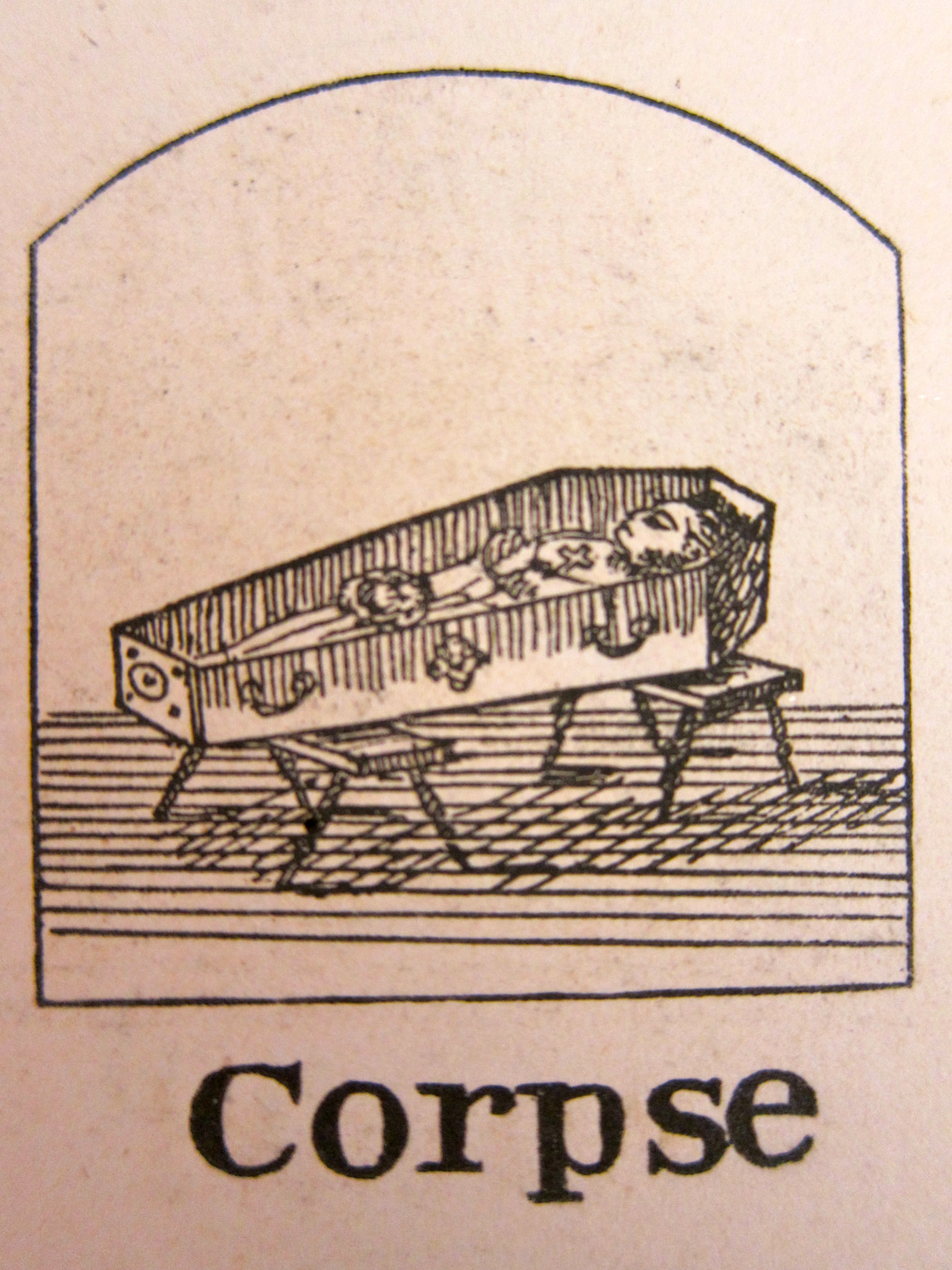
What sad sewing went on today. Sarah Ames Witherell, a thoughtful, dutiful woman who had sewn so many things for friends and family, now sat and made a shroud for her first-born child, George. Only fourteen years-old, he had died the day before after a painful bout of rheumatic fever. Of the three children Sarah had borne, only her middle child, Emily, was still alive.

The steady rain must have enhanced the gloom. Old Oliver wrote that “it began to rain before noon wind north east and it grew cold and raind all the afternoon.”* Evelina must have done her planting first thing in the morning, after which she helped Sarah with the robe for George. She also worked on a skirt for Susan, and swept and dusted while Jane McHanna ironed. She was probably not the only family member who was recovering from “being broken of my rest.” Everyone was trying to return to a normal routine after the disruption and sorrow of George’s illness, although next door, Helen Angier Ames was still suffering from a case of blisters and facial swelling.

*Oliver Ames, Journal, Stonehill College Archives, Arnold Tofias Collection


May 1, 1852

Wreath

1852

Sat May 1st  The children were hoping to have a fine

time maying this morning had their wreaths

all made but it rained which prevented

their taking a walk but they had a nice time

in the old tool house. I dined in Edwins

John came there last night  Lavinia & Helen

here.  They were all here to tea to night

S E Williams called at Olivers  I gave her some plants


Rain spoiled the annual outing that Susan, Emily and other children had planned for May Day. They had made special wreaths for the occasion, probably to deliver to the homes of friends. To get out of the weather and save the pleasure of the day, they gathered instead in the “old tool house,” which seemed to make for an agreeable substitute.  Readers from the Easton area, does anyone know the probable whereabouts of this building?

Rain may have spoiled the children’s walk, but it helped soften the ground in the garden.  Old Oliver reported that today the garden was “spaded up and manured.”  He was most likely describing the family vegetable and herb garden, as opposed to Evelina’s flower beds, which were already under cultivation and probably out of Old Oliver’s immediate purview as well as beneath his notice.

Evelina, meanwhile, had her midday meal at Edwin’s and Augusta’s house, seemingly while the rest of the family ate at home. She went over to visit their mutual relative, her brother John Gilmore, who rarely came to town.


April 25, 1852.

Lilac_bush-2edq3ho

Sunday April 25th  A very pleasant day and have

all been to meeting.  Came home at noon

with Hannah & sister and Susan, all returned

in the afternoon.  After meeting called at

Olivers to see Mr & Mrs A Lothrop and rode to

Mr Manley to speak for some plants

Augustus & Hannah rode with us as far as

Mr Swains  Emily & Susan went also to Mr Manlys

Lilacs, a fragrant favorite for gardeners and civilians alike, were among the plants that Evelina selected at Edwin Manley’s today. In the 19th century, many a New England farmhouse featured lilacs close to the door, as American poet Walt Whitman famously describes in When Lilacs Last in the Dooryard bloom’d, his elegy for Abraham Lincoln:

…In the dooryard fronting an old farm-house near the white-wash’d palings,

Stands the lilac bush tall-growing with heart-shaped leaves of rich green,

With many a pointed blossom rising delicate, with the perfume strong I love,

With every leaf a miracle – and from this bush in the dooryard,

With delicate-color’d blossoms and heart-shaped leaves of rich green,

A sprig with its flower I break…

Today after church, the sermons and small social obligations dispensed with, Evelina thought about her flower beds. The day was “fair” and “some warmer,”* so with niece Sarah Emily Witherell and daughter Susan Eveline Ames, she rode up to visit her go-to gardener “to speak for some plants.”  Mr. Manley indicated he would bring the plants by the next day.  Evelina wouldn’t have been able to plant anything today, it being the Sabbath, but she could imagine where she would put the plants, and how they would look, the anticipation of which added to her delight.

*Oliver Ames, Journal, Stonehill College Archives, Arnold Tofias Collection


February 18, 1852

Hoof


1852

Wednesday 18 Feb  Augusta Emily Susan & self have

spent the day at Rachels.  Mother Henrietta & Lavinia

were there  Had a pleasant visit.  Went to

carry mother home with Charley had some trouble

with him about starting it was so cold.  Mrs Solomon

Lothrop & son Willard came to Alsons this afternoon 

Made two dickeys for Mr Ames and cut out two more


Just like the day before,”this was a fair day wind north west + cold”* as Old Oliver, family patriarch, noted in his daily journal. It was so cold that one of the family horses, Charley, didn’t want to leave the premises. But Evelina needed to take her elderly mother, Hannah Lothrop Gilmore, back to the family farm, so Charley was harnessed up and made to trot out. Evelina and her mother probably didn’t enjoy the frigid temperatures, either, but at least they could cover themselves with blankets or robes.

Evelina spent most of the day in the company of female relatives at the home of her niece, Rachel Gilmore Pool, who lived near the Gilmore farm.  Her daughter, Susan, and niece, Emily Witherell, were with her, as was new bride Augusta Pool Gilmore.**  Rachel’s unmarried sister, Lavinia, was there, along with their mother, Henrietta.  It was a multi-generational gathering of women from ages 9 to 79.

The women must have spent some time sewing as they all sat together, for Evelina managed to complete two dickeys, or shirt fronts, for her husband. The companionship would have made the handiwork fun to do.

*Oliver Ames, Journal, Stonehill College Archives, Arnold Tofias Collection

**Rachel Gilmore Pool was married to Augusta’s brother, John Pool, while Augusta Pool Gilmore was married to Rachel’s brother, Edwin Gilmore. One family’s sister and brother married a neighboring family’s brother and sister.

January 29, 1852

Teeth

1852

Jan 29th Thursday  Mrs Witherell Oliver 3rd & Fred & George went

to Bridgewater this morning for Mrs Witherells temporary

set of teeth.  Father & Mrs S Ames & Emily here to dine

Mrs S Ames came about half past eleven and spent

the rest of the day.  Have written a letter to Harriet

Ames [of] Burlington.  Went after mother in a sleigh to night

Augustus & wife spent the evening Three evenings this week


Sarah Ames Witherell traveled to Bridgewater today to pick up a “temporary set of teeth” to replace the real ones that had been pulled out earlier this month. It turned out that they weren’t ready, so she had to return home without them. As before, she was accompanied by several family members including her son George Oliver Witherell and two of her nephews, first cousins and good friends Oliver (3) and Frederick Lothrop Ames, who were still home on a recess from college.

Evelina, meanwhile, fed midday dinner to all the family members who stayed behind in Easton.  Sarah’s daughter, Emily, didn’t go with her mother this time; unlike Oliver and Fred, she and Susie Ames may well have been back in school. Evelina may have been feeling the strain of so much company.  She notes that her nephew Augustus and his wife, Hannah Lincoln Gilmore, had come to call “Three evenings this week.” Augustus, who did a lot of work for Oakes and Oliver Jr., often made himself at home at the Ames’s.

Harriet Ames of Burlington, Vermont, to whom Evelina wrote today, was a spinster cousin. Her mother was the widow of Old Oliver’s brother, John.*

*not the same John Ames who manufactured paper in Springfield

January 13, 1852

images-1


Jan 13 Tuesday  Have not done much work to day

can scarcely tell what I have been doing  Have

been trying to fix Susan some work to learn her to sew

Have got out an apron and commenced a stocking

for her to knit.  This afternoon called on Mrs Richards

Holmes, Torrey Savage & Hannah  Spent the evening with

Augustus and wife at Olivers.  Mrs Witherell been to Dr Washburns

& had her teeth out.  Mrs S Ames George & Emily went with her.  Father

& Oliver dined here & the others when they came back from Bridgewater

This was not Sarah Witherell’s best week. Limping from a bad burn on her foot, she kept an appointment with a dentist, Dr. Nahum Washburn, to have her teeth pulled. Dr. Washburn had his office in Bridgewater, in an historic building known as “the Tory House.”  It was the same office that Evelina had been to several months earlier to have her own teeth worked on.

Modern historian Jack Larkin has noted that “[h]undreds of thousands of Americans had at least some of their teeth badly rotted, a source of chronic pain and foul breath to many, with extraction its only cure […] Dentistry, which most rural American physicians practiced, was by far the most effective form of surgery; extraction was a decisive and relatively safe procedure (although infection always posed some risk).”*

While Sarah Witherell suffered today, her family united to support her. Her children and sister-in-law accompanied her to the dentist’s office.  Evelina (with Jane McHanna in the kitchen, of course) fed the entire family, which made for twelve around the dining table. Old Oliver, whose midday meal was usually prepared by Sarah Witherell, came over from the other part of the house. The Ameses from next door were there, too. Everyone came together for Sarah Witherell.

Evelina managed to socialize today, too.  She called on various friends and relatives around town, perhaps sharing the news of poor Sarah’s painful dentistry.


*Jack Lardin, The Reshaping of Everyday Life, 1988, pp. 92 – 93