July 20, 1851

Rests


1851

Sunday July 20th  Have been to church all day  Mr Whitwell

preached felt very sleepy and heard but a

little of the sermon  After meeting went over

to the Methodist meetinghouse to a sing.  There are

some fine singers there.  Oakes A & Orinthia called

for Louisa Swan and brought her to the sing & Orinthia

went back to Mr. Howards

The Ames family was Unitarian. Three generations of them, from Old Oliver to little Susie, dutifully attended church almost every Sunday, just as Evelina did today. Their attachment to the Unitarian service, however, didn’t preclude tolerance of other Protestant congregations in town. The Ameses and others were generally friendly with the Methodists who, like the Unitarians, had broken with the “dark and hopeless Calvinism”* that once prevailed in the meeting houses of New England.

The Methodists had a long history in Easton, the first near-one-hundred years of which were recounted in chatty detail by Unitarian minister and town historian, William Chaffin, in his 1886 History of Easton.*  As the Methodists, founded by Wesley brothers John and Charles, gained adherents in the late 18th and early 19th century, the sect took hold in Easton, too, shortly after the demise of the local Baptist Society. In addition to their welcoming services and missionary zeal, Methodists offered something special to congregations everywhere: Music.

The “sing” that Evelina went to today at the Methodist meeting house was a gathering to sing hymns, many of which were written by the Wesley brothers themselves. Also in attendance was at least one Ames son, and probably the other two as well.  The boys enjoyed the sings, both for the music and for the chance to socialize with other young people.  Oliver (3), who was very musical, was particularly fond of the gatherings.

* William Chaffin, History of Easton, 1886.
 

July 19, 1851

Lightning


1851

July 19 Saturday  To day I have been sitting with mother

sewing on muslin & cambric insertion mending &c

It has been very showery accompanied with heavy

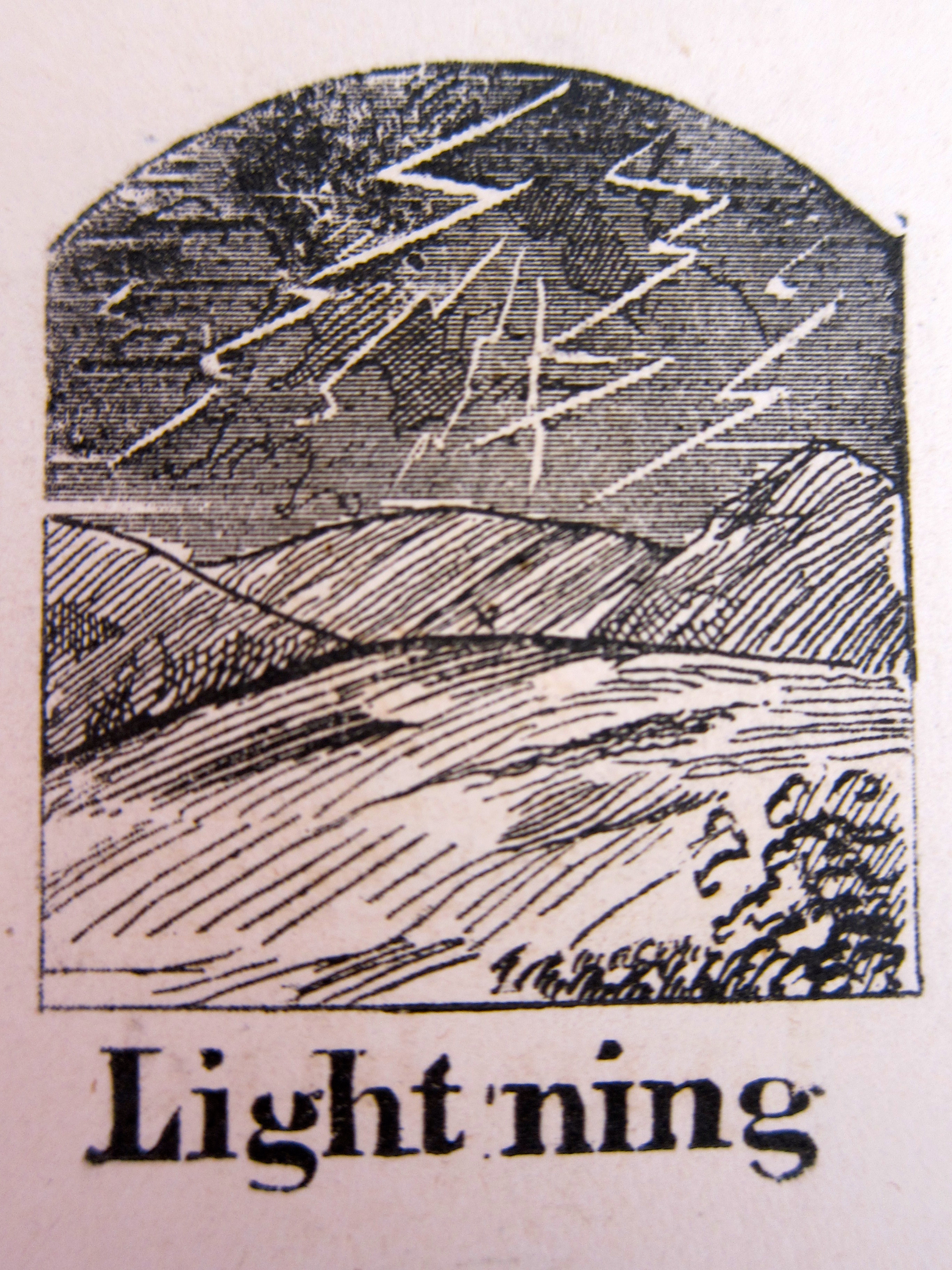
thunder and very sharp lightning  Oakes Angier

went to Mr Algers after some butter to night and

carried Mother home  Orinthia is here to day

called this afternoon to see Abby Torrey 

Yesterday’s hot, sticky weather gave way to thunderstorms today, with “very sharp lightning.”

Hannah Lothrop Gilmore returned to the family farm, driven there by her grandson Oakes Angier Ames.  He went on to pick up some butter at the farm of Bernard and Vesta Alger, who lived not far from the Gilmores on the turnpike road.  It’s curious that Evelina was buying butter this summer, because earlier in the year she had been selling it.

Orinthia Foss was back at the Ames’s for a visit, up from the home of Elijah and Nancy Howard where she was boarding. She went into the village to pay a call on Evelina’s niece, Abigail Williams Torrey. Evelina, meanwhile, spent her Saturday mending everyone’s clothes, and working on an “insertion” for one of her dresses.

July 13, 1851

HailCorn1

July 13 Sunday  We all went to church this forenoon

but my company did not wish to go this

afternoon and I staid with them

About 4 Oclock had a very heavy shower of

rain & hail which prevented us from going to Mr

Manlys garden as we intended.  Oakes A carried

Orinthia home & stoped awhile at Dr Swans

Mrs S Ames & Mrs Mitchell & Witherell called


After noting yesterday’s accommodating weather, Old Oliver made a very different report today:

“it was fair to day but rather cool wind north west untill about 5, O,clock when there was a smart shower and a considerable quantity of hail but it was not large enough to do much damage. there was some thunder the hail cut the corn leves in strings – and at Daniel Wheatons and in Taunton it broke a good deal of glass”

Damage to the corn crop was no small matter, although Old Oliver seemed to make light of it.

Evelina, meanwhile, along with Oakes and their sons had to entertain the young houseguests, Melinda and Caleb Norris and Julianne and Benjamin Harris, once they all came home from church. The expedition to Edwin Manley’s garden, a regular and favorite destination for guests, was cancelled because of the bad weather. Instead, the company must have sat inside and listened to the pelting hail.

Eventually, the weather passed and some family members ventured forth.  Oakes Angier carried Orinthia Foss back to the Elijah Howard house, where she was boarding, and stopped to visit Dr. Swan and his two daughters, presumably, on his way home.  Evelina’s sisters-in-law came to call, and tea was likely served to a crowd.

July 12 1851

54-02

*

July 12 Saturday  Have been very much engaged to day

in putting my house in order & have been to work

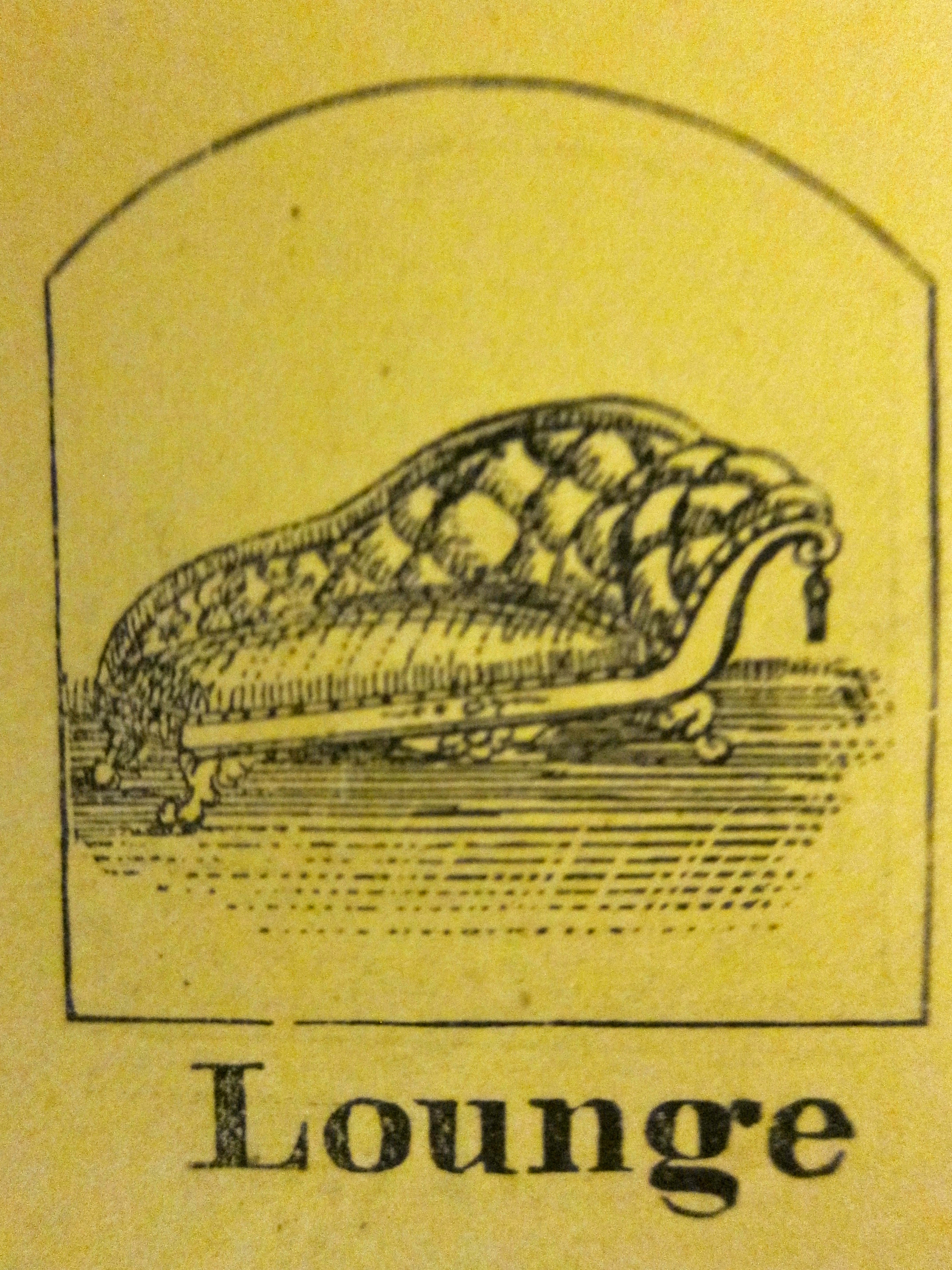
on the cushion to the lounge, and put the cover

on to the arm.  called in Olivers awhile.  Mrs

H Ames and Mrs Mitchell spent the day there

Mr Norris came in the stage to night & Mr & Mrs

Harris Mrs Norris from Bridgewater, Miss Foss

came with Oakes A who had been that way on an errand

Company! From Boston by way of Bridgewater came the Orr daughters and their husbands. Melinda Orr Norris with her husband Caleb, who had visited Easton just the other day, and Julianne Orr Harris and her husband, Benjamin Winslow Harris, arrived for an overnight stay with the Ameses.  Evelina spent much of the day “very much engaged” in getting the house ready for the two young couples, although she did manage to slip next door to sit with her sisters-in-law. The whole Ames property was full to the rafters.

Everyone had tasks to do today, which wasn’t unusual in that hard-working family. Old Oliver and a crew were outdoors:

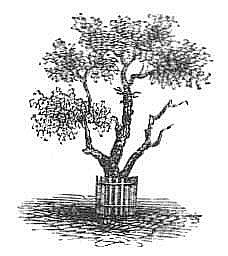
“it was cloudy half the fore noon but the afternoon was pritty fair wind north part of the time + south west a part we mowd the high land back of the Factory pond and that on this side of the old pair trees. to day”  Was this mowing a forerunner of haying season?

* Pear tree


July 11, 1851

OLYMPUS DIGITAL CAMERA

*

July 11th Friday  Have been to mothers to day with

Mrs Horatio Ames & Mrs Mitchell & Anna.

Called on Miss Foss with her to come home with

us but E Howard & Miss Williams are to visit

her school tomorrow.  It was late when we 

got to mothers, almost dinner time.

With sisters-in-law Sally Ames and Harriett Mitchell Ames in tow, as well as Harriett’s four-year old daughter, Anna, Evelina rode down see her mother on the family farm. The group probably joined the Gilmores for midday dinner.  Orinthia Foss was to have traveled with them, but she had to prepare for an inspection of her schoolroom.

Sally Ames (who some sources list as Sarah Hewes – another sister-in-law named Sarah!) was the wife of Horatio Ames.  She was up from Connecticut for a few days to visit her in-laws in North Easton, a town she had lived in as a bride and young mother.  Her father-in-law, Old Oliver, had built a house for her and Horatio back in the day, but the couple ended up moving to Falls Village, Connecticut, where Horatio, with marginally more success than his younger brother, William Leonard Ames, built an iron furnace operation underwritten by family funds. It was in Falls Village rather than North Easton that Sally and Horatio raised their three children, Susan, Horatio Jr., and Gustavus.  Their marriage was not a happy one; by the end of this year, Sally would be asking Horatio for a divorce.

*“Residence of H Ames Esq, Falls Village,” from Fagan’s map of Salisbury, 1853, “Connecticut’s Ames Iron Works,” Gregory Galer, Robert Gordon, and Frances Kemmish, New Haven, 1998, p. 133

July 4, 1851

800px-US_flag_31_stars.svg

*

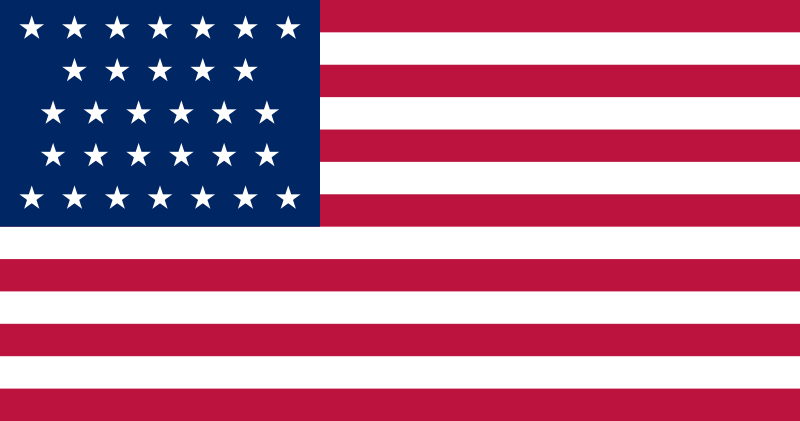
July 4th  Have been transplanting some pinks &c to day We have had several heavy showers  Oakes A & Frank rode to Dr Swans to make a call and carry his chaise home  Oliver & wife Harriet & Helen went to Mr Lothrops this afternoon  Mr Ames & self to mothers.  Orinthia has gone to Cohasset with Mr Brett.  Helen came home last night   On the Fourth of July in 1851, the new 31-star flag was raised over America for the first time.  It recognized the addition of California to the union.  Previously known as the California Military District, and before that as the short-lived California Republic, the new state had been officially added back on September 9, 1850, less than three years after gold was discovered there. California’s statehood had been a political struggle in that age of slavery. Only after significant wrangling by Congress and Presidents Zachary Taylor and Millard Fillmore, did compromise legislation, spear-headed by Senator Henry Clay, finally carry the day. There was to be no slavery in California. The 31-star flag would remain the standard until 1858, when Minnesota joined the union. The nation’s 75th birthday was recognized in Washington, D.C. with a ceremony for the laying of a cornerstone of the new addition to the Capitol. Massachusetts’ own Daniel Webster gave a speech. A long speech it was, in the style of the day, in which, among other things, Webster exhorted his audience to acknowledge that the formation of the United States had wrought “astonishing changes […] in the condition and prospects of the American people” and to advise “ye men of the South” that the progress of the country was worth staying in the union for. Ten years before the Civil War, Webster opined that “the secession of Virginia, whether alone or in company, is the most improbable, the greatest of all improbabilities.”  Webster didn’t live long enough to see how wrong he had been. Back in Easton, the shovel shop was closed. Many employees may have tried to picnic despite the rain. In the Ames family, most everyone had someplace to go. Evelina and Oakes rode to the Gilmore farm to visit Evelina’s mother. Oakes Angier and Frank Morton, no doubt tired from their long day yesterday, took the borrowed chaise back to Caleb Swan. Oliver Ames Jr., his wife Sarah and daughter Helen rode over to Sarah’s parents’s house, taking Harriett Ames Mitchell with them. Where was her husband, Asa? Where were her young children? With the Mitchell in-laws in Bridgewater, perhaps. Why weren’t they all together? Even Orinthia Foss was out and about, gone to Cohasset with a Mr. Brett.   * If you want to see other designs for the 31-star flag, check out the Zaricor Flag collection at flagcollection.com

June 21, 1851

1687-Illustration_from_Theosophie_and_Alchemie-Michael_Maier_and_Johann_Theodor_de_Bry-300x282

21 June Saturday  Early this morning Mrs. Seba Howard

brought Orinthia up and found me in the

garden weeding. We worked there an hour or two

and then went to sewing.  Orinthia on her dress

and I on the hair cloth.  Harriet came and sat

with us awhile in the afternoon and while she

was in I worked on the sleeves to my plaid stone

colour borage  Orinthia called on Abby   Pleasant

Weeding continued to be the dominant occupation of Evelina’s early morning hours. On this Saturday morning her young friend, Orinthia Foss, arrived for the day and immediately stepped to the garden to help weed. Orinthia was carried up from the southern part of town by a contemporary of Evelina named Eleutheria Howard, wife of Major Seba Howard.

Today was summer solstice, the official start of summer and the high water mark of daylight; the women probably would have enjoyed being outside in the garden all day long, but sewing and other duties called. Each woman had a dress she was working on, and Evelina was still piecing together a horsehair cover for her new lounge. Just as they had sat on so many days during the late winter, so the two sat today, on chairs near the windows for light, with folds of cloth in their laps. Harriett Ames Mitchell, Evelina’s sister-in-law, joined them in the afternoon.

Later in the day Orinthia went to call on Abby Torrey, Evelina’s niece who lived right in the village of North Easton.

June 16, 1851

Lounge

1851

June 16th Monday  Worked about the house awhile

Boiled some curled hair (for the matress

for my lounge) that belonged to the sewing

circle, formerly the pulpit cushion.  Edwin

Manly brought me 5 dahlias and Miss Foss

sent me 20 dahlia slips  This afternoon 

have been fixing the cotton for the matress

have put it in some old cloth

Evelina undertook to fashion a horsehair cushion for the new lounge she just bought in North Bridgewater.  Horsehair was a popular and relatively inexpensive material, so it’s small wonder that Evelina chose it.  That the cloth was “recycled,” to use a word she wouldn’t have recognized, from an old pulpit cushion by way of the Sewing Circle made it all the more attractive. How old that horsehair must have been!

The material may have been cheap, but it would be a bear to cover the new mattress, or cushion, with it. She had to boil it, presumably to both soften and clean it, shape it and sew it onto a cotton covering. She was planning to use some old cotton, too, for the cushion. The work would take several days, but Evelina never minded long or complicated projects when it came to sewing.

Meanwhile, she had 25 dahlias to plant in her garden.

June 7, 1851

images-1

1851

June 7th Saturday  We have had a powerful

rain all day  Orinthia & self have been sitting

sewing most of the time  Orinthia has made a

pair of overalls for Frank  I have trimmed &

lined or rather Harriet trimmed the bonnet

and I feel very well satisfied about it.  The

school did not keep to day or yesterday

Susan has turned a sheet  Horatio Ames Jr &

Mr Scoval came to father Ames.  Mr Ames

brought a lobster that weighed 15 lbs.


No gardening today, but it wasn’t a bad day, despite the rain.  Evelina and Orinthia got to visit for hours over sewing, Oakes Ames brought home lobster – a big lobster – from Boston and, best of all, Evelina was finally “very well satisfied” about her bonnet.

Harriett Ames Mitchell visited, too, and trimmed Evelina’s bonnet. She might have used ribbons or cloth flowers or even a feather or two to adorn the summer headdress. Nine-year old Susie sewed as well.  Either the bad weather kept her indoors, or her mother finally made good on her threat from a few weeks ago to make Susan play less and learn to sew.  Susie “turned a sheet,” which means she did some hemming.

Old Oliver had a rare visit from one of his grandsons, Horatio Ames, Jr., who must have travelled up from Connecticut with a Mr. Scoval.  Horatio Jr. was a first cousin to Oakes Angier, Oliver (3), Frank Morton, and Susan.  The eldest son of Horatio and Sally Hewes Ames, and a recent student at Rensselaer Polytechnic Institute, he would prove to have a difficult life.  Closer to his mother than to his father, he was incensed when his parents divorced. According to some sources, he actually tried to kill his father during an argument in 1856.* His father, who was no saint himself, described his eldest son as “the worst hardened villain I have ever seen.”*

Still, Horatio Jr. was family, and Old Oliver welcomed him to his home more than once over the course of Evelina’s diary.


*John Mortimer, Zerah Colburn: The Spirit of Darkness, 2005

June 5, 1851

e_gg_hook_organ2-291x440

*

1851

June 5th Thursday  To day I have been to Mothers, stoped at Orinthias

school and staid about an hour, left Susan there

and got to Mothers about noon.  Met A Augustus & wife

and her sister Elizabeth, John Pool & wife.  On my way

home stoped to Miss Louisa Howards & got some Asters

and at the meeting house to hear Elizabeth Clark play

Met Oliver & wife & Harriet, Mr Clark and

two daughters  A beautiful pleasant day


Several Ameses gathered this afternoon with others for a concert at the meeting house. Presumably, the new organ was featured again, played this time by a more proficient organist than Mr. Rotch from a few Sundays ago. Miss Elizabeth Clark, daughter of Daniel and Elvira Clark and barely 19 years old, treated the listeners to a recital. The Clarks were Unitarians, and Daniel was a capable carpenter who did occasional work for the Ames family. Elizabeth was evidently a fine pianist.

The new organ was possibly made by E. G. and G. Hook of Boston, whose factory was later in Weston, Massachusetts. Known by 1885 as Hook and Hastings, their firm was prominent in the 19th century in the production of church organs. Their first concert hall organ, no longer extant, was installed in the Tremont Temple across from the Boston Common. Their largest was placed in Boston’s Cathedral of the Holy Cross.  More common were smaller organs such as the one in the illustration that were installed in more modest meeting houses, like the Easton one used by the Unitarians in 1851.

The occasion for this particular recital is unknown, and how it came to be held on a weekday afternoon is also a puzzle.  It made sense to the townspeople, however, who turned out in full for the occasion.

*E. G. and G. Hook organ, Boston, Mass., circa 1848.  Athol Historical Society