
July 14, 1852

1852

P1070606-X2

High water (flood level) mark in canal in Lowell, Massachusetts


Wedns July 14th  Julia came again this morning

but we have not got along very fast

on my dress  Have no trimming for the

sleeves have written for Mrs Stevens to

get me some   There is a great deal to

do to finish my dress  Hannah & Mary 

have both been ironing all day and 

have it all done

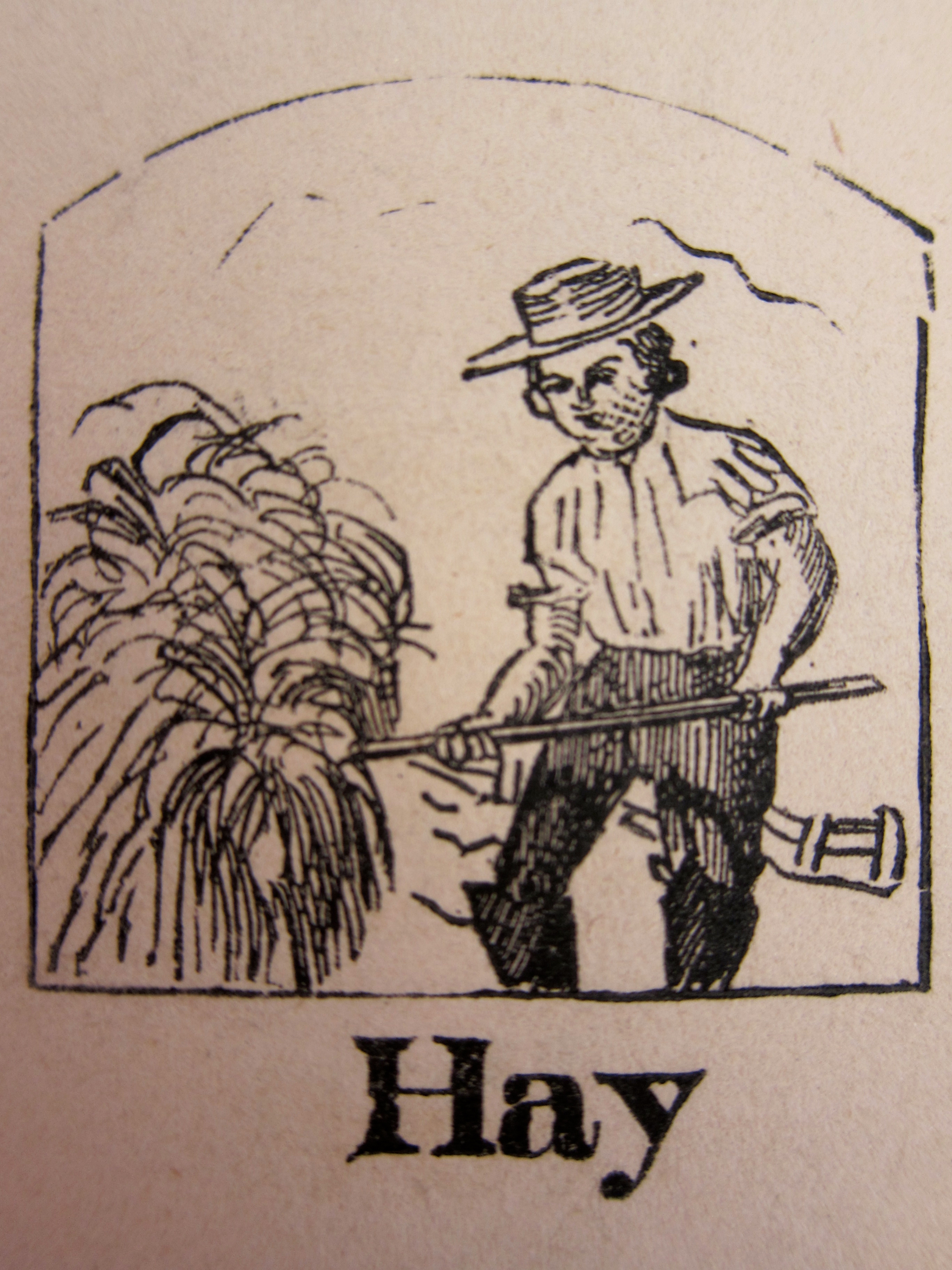
Evelina was indoors, sewing a new dress with the help of dressmaker Julia Mahoney. Old Oliver was out haying, “jawing” orders at local men gathering up this year’s meager crop. Oakes Angier, Frank Morton and probably Oliver (3), now that he was home from college, were each posted in some area of the factory, making shovels alongside the workers. Oakes and Oliver Jr. were supervising, perhaps striding around the shovel complex watching the new building go up or sitting in the office looking at accounts.

If we modern readers want to find a day that typifies life in North Easton in the middle of the 19th century, we couldn’t do better than this ordinary summer day in 1852. In other years and in other places, July 14th has hosted more momentous events: the storming of the Bastille, the first ascent of the Matterhorn, the shooting of Billy the Kid, the day Jane Goodall arrived in Tanzania to study chimpanzees. Nonesuch in North Easton; according to Old Oliver’s record, July 14, 1852 was simply a “warm good hay”* day. Routine ruled.

This is not to say that history wasn’t happening. It was. Yet as Evelina noted, “we have not got along very fast,” a phrase that is applicable to so much of history. Change often quietly accumulates, transforming what we know in a stealthy fashion. Evelina’s hand-sewing, Old Oliver’s oxen-driven hay-wagons, Oakes’ and Oliver Jr.’s water-powered shovel machinery: all have since disappeared, replaced by modern equipment invented over time. The life that the Ameses lived was already altering, irrevocably, bit by bit.

Oliver Ames, Journal, Stonehill College Archives, Arnold Tofias Collection


July 13, 1852

Hay


1852

Tuesday July 13  Julia Mahoney came to work this

morning and cut the waist to my borage

dress and went home at noon.  Mr Ames

went to Canton and I begged the chance

to go with him & we called at Mr Kinsleys

Saw the ladies of the family & two Mr Peabodys

of Boston  Called on Mrs Atherton

The first few days of this particular week were proving be “verry warm days. + pritty good hay days.”* Old Oliver had to be pleased.

After a morning of sewing a new barege dress with her dressmaker, Evelina “begged the chance” to ride east and north with her husband to Canton, where they visited Lyman and Louisa Kinsley. The Kinsleys, of course, were business associates but also friends, and they and their twenty-one year-old daughter, Lucy, happened to be entertaining visitors from Boston, “two Mr Peabodys.”

The Peabody brothers had called on the Kinsleys to be sociable, certainly, but one of them had a romantic motive. Francis Howard Peabody, also aged twenty-one, was courting Miss Lucy; the two would wed in 1854. They would have three children, a boy followed by two girls. Their little boy, Frank Everett Peabody, would become a founding member of a famous Boston brokerage firm, Kidder and Peabody.

*Oliver Ames, Journal, Stonehill College Archives, Arnold Tofias Collection

July 10, 1852

DSC_0383

Lace doily

July 10th Saturday  Have finished Susans 5th pair of

pantletts & Mrs Witherell has given her three

more so she is pretty well off in the pantlett line

Have been marking some clothes and Mrs

Witherell marked 6 gentlemans hdkfs & 6 for

me and doylies & other things  Mary has sewed

some but does not accomplish much is better at

housework than sewing  Oakes A has gone to a

sing near Jonas Hartwells with other gentlemen

and ladies

Evelina and her sister-in-law, Sarah Witherell, sewed today: pantletts, handkerchiefs, and an item new to the repertoire: doilies.  A maid named Mary did some sewing, too, but wasn’t up to the standards set by the older women.

In the 21st century, we know doilies as decorative paper mats that are typically used to present special baked goods. Doilies can also be made from cloth or lace, however, and once had a broader range of applications than just accompanying tea cakes. Designed in the 17th century by a London draper named Mr. Doiley, the original item was an inexpensive woolen cloth that was used to ornament a dress. It developed into a napkin used to protect the material under it. It might be seen on a tablecloth, a sideboard, or even on the back of an armchair (where it became known as an antimacassar.) Beautifully-made doilies were a housewife’s source of pride, specially stored in the linen closet.

Old Oliver, no doubt entirely disinterested in the women’s sewing agenda, reported that this “was a a fair warm day wind south west. + has bin all the week.”* Oakes Angier Ames took advantage of the good weather and, after work, headed to Bridgewater to attend a sing near the farm of Jonas Hartwell “with other gentlemen and ladies.” Who were they? Did he run into anyone of interest?

*Oliver Ames, Journal, Stonehill College Archives, Arnold Tofias Collection
July 1, 1852


OLYMPUS DIGITAL CAMERA


Thursday July 1st  Transplanted some in the garden

this morning but there came up a shower

and put a stop to it  I then went to

mending on some of Susans clothes  Susan

was quite sick last night and not well

enough to go to school to day.  This afternoon 

Mrs Witherell S Ames A Ames rode to make calls

found all the ladies that we were to call on at Mr E Howards


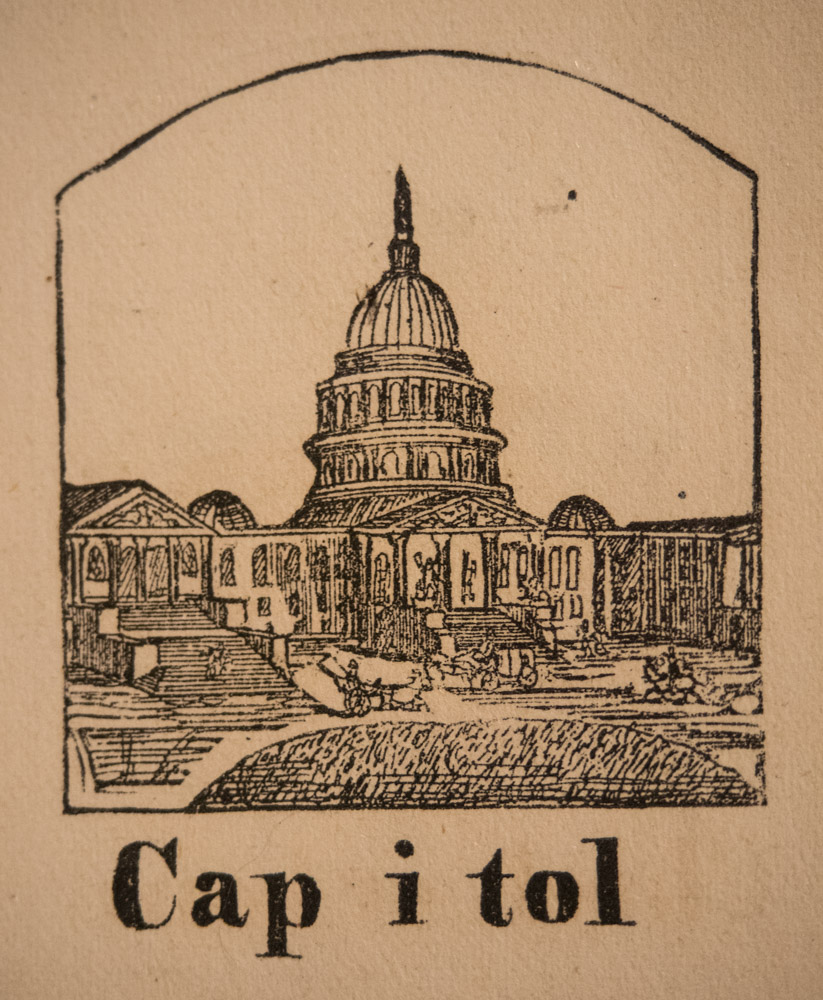
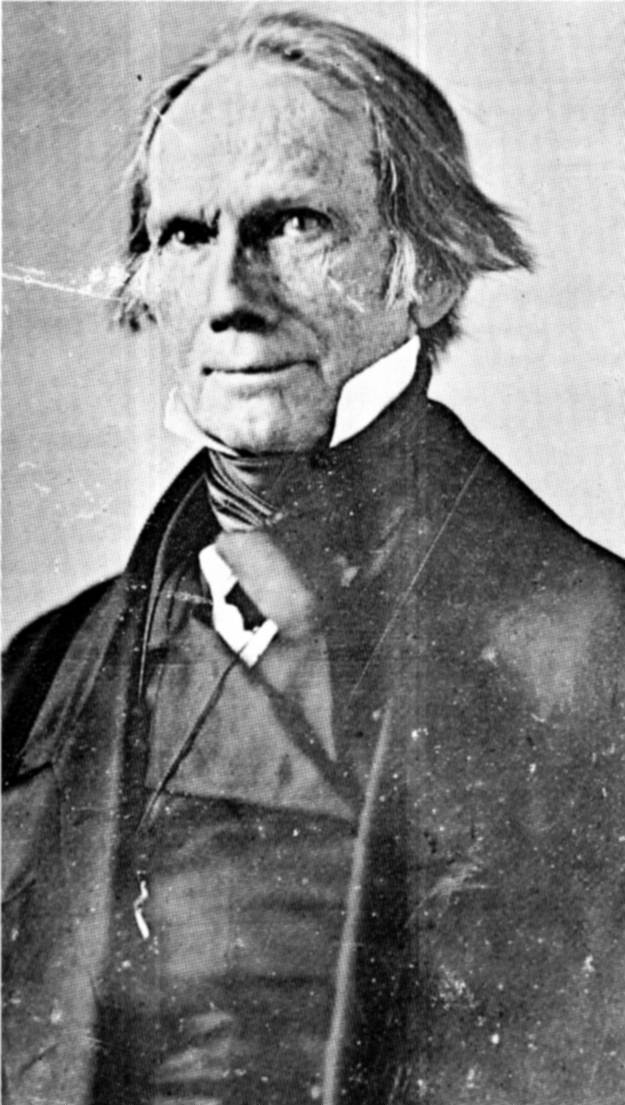
In Washington, D. C., Senator Henry Clay of Kentucky became the first person ever to lie in state in the Capitol rotunda.  A giant in his day, he had served in the House of Representatives, the Senate, and as Secretary of State. He was the man who had created the Whig Party and aspired to the presidency, who always spoke passionately for the Union and was willing to compromise to preserve it. As he himself noted in a speech in 1844, “It has been my invariable role to do all for the Union. If any man wants the key of my heart, let him take the key of the Union, and that is the key to my heart…”* He had dedicated his life to public service and the country thanked him.

The next such person to lie in state in the rotunda would be Abraham Lincoln.

Less august (but no less meaningful to Evelina) events transpired in North Easton today. Evelina, Almira Ames, Sarah Ames and Sarah Witherell “rode to make calls.” This activity marks the first time that Sarah Witherell had ventured out socially since the death of her son, George, six weeks earlier.

Old Oliver made note of the rain that had interrupted Evelina’s early morning work in the garden: “It raind a little last night + there was a little rain this forenoon it was a warm day + cloudy most of the time.”**

*Henry Clay, from 1844 speech, as quoted in “Henry Clay,” by Robert V. Rimini, New York, 1991

** Oliver Ames, Journal, Stonehill College Archives, Arnold Tofias Collection
June 29, 1852

22633861_126751003919

Henry Clay

(1777 – 1852)

1852

Tuesday June 29th  Have had a quiet […] sick day  have

a bad cold & cough and sick head ache

A gentleman here from Pennsylvania

to dine but I did not go to the table

Mr Bartlett here to tea from Maine

Augusta came in and cut her out a

visite & I have written to Melinda to

get some trimming for it  Ottomans came

from Boston

Evelina was sick and probably spent most of the day in bed. She didn’t eat much, missing midday dinner – with company – and possibly skipping tea, too. Perhaps she took a tray of food in her room. She must have begun to feel a bit better, however, as she eventually roused herself to cut out a “visite” for Augusta Gilmore, who came over at the end of the day.  She even wrote to her friend Melinda Orr, in Boston, to find some trim. She could get animated about a sewing project, though not much else appealed to her today.

It was “a fair warm day + verry dry,”* and probably “verry” good for the haying that was underway. Old Oliver and a team of hands would have been outdoors from sunup to sundown.

In the world beyond North Easton, a consummate, outspoken and controversial politician passed away today: Senator Henry Clay of Kentucky, aged 75, died in Washington D. C., of consumption. The Ameses wouldn’t have known this, however, until they read the next day’s newspapers. But most likely they admired Clay, the “Star of the West,” and the founder of the Whig Party. Clay’s biggest opponent back in the day had been Andrew Jackson, who called Clay “the Judas of the West.”  One imagines that Oakes Ames had probably been on the side of Clay’s admirers.

*Oliver Ames, Journal, Stonehill College Archives, Arnold Tofias Collection

June 28, 1852

Haymaking

1852

Monday June 28th  Have been about the house at

work most of the day  Swept most of the 

house except the parlour.  washed the

front stairs and have the house in pretty

good order  Mrs S Ames came in with her 

work and stoped an hour or two something

unusual for her  Hannah came to spend 

the evening but I had gone into Edwins and

she went in to see Mrs Witherell


Either Evelina felt better this morning, or her habit of working simply wouldn’t let her be idle. In the course of the morning, she swept most of the rooms and washed the stairs while her servant – Hannah Murphy, most likely- did the laundry and prepared the midday dinner. In the afternoon, Evelina at last sat down. Sarah Lothrop Ames came over – “something unusual for her” – and they visited and sewed together. Evelina was usually the one who went next door, not the other way around. In the evening, Evelina even felt well enough to go across the street to see Edwin and Augusta Gilmore.

The highlight of the day, however, had to be the commencement of haying. Old Oliver reported that “this was a fair warm day wind south west + verry dry We begun haying to day.”*  The calendar may have indicated that summer had barely begun, but everyone knew that fall and winter lay ahead. That hay would be essential. And now that haymaking had begun, perhaps Old Oliver would be less irritable with his family members.


Oliver Ames, Journal, Stonehill College Archives, Arnold Tofias Collection
June 22, 1852

Lightning

1852

Tuesday June 22d  Worked in the garden again this

morning untill about ten.  My garden

takes up quite too much of my time.  This afternoon

carried my work into Olivers.  Sewed the skirt

on to my brown muslin and worked some on the waist

of my purple cambric dress  Catharine here again

to day but it is of no use for me to have her.  Have had

a very heavy shower with thunder & lightning


Evelina complained that gardening “takes up quite too much” of her time, but she did seem to love it. It and sewing were her especial interests. From the two occupations, we can derive the fact that she loved many colors. She didn’t just choose one or two colors, she chose all of them. In her garden we see blossoms of pink, purple, red and yellow in many shades and sizes. In her wardrobe, too, the spectrum is broad. On this day she worked on both a brown muslin and a purple cambric dress.  Just recently, she had finished a green gingham dress, and before that there was a black silk. She had sewn pink aprons, blue silks and plaid skirts, and many of her outfits had bonnets or ribbons to match. Her taste was all-encompassing, it would seem. Did her color selection reflect the styles of the day, or her personal preferences, or both?

While the colorful garden was apparently thriving under Evelina’s careful attention, her sewing projects were not. The new servant, Catharine Middleton, who had been hired primarily to assist with sewing, was not working out. She was “of no use.”

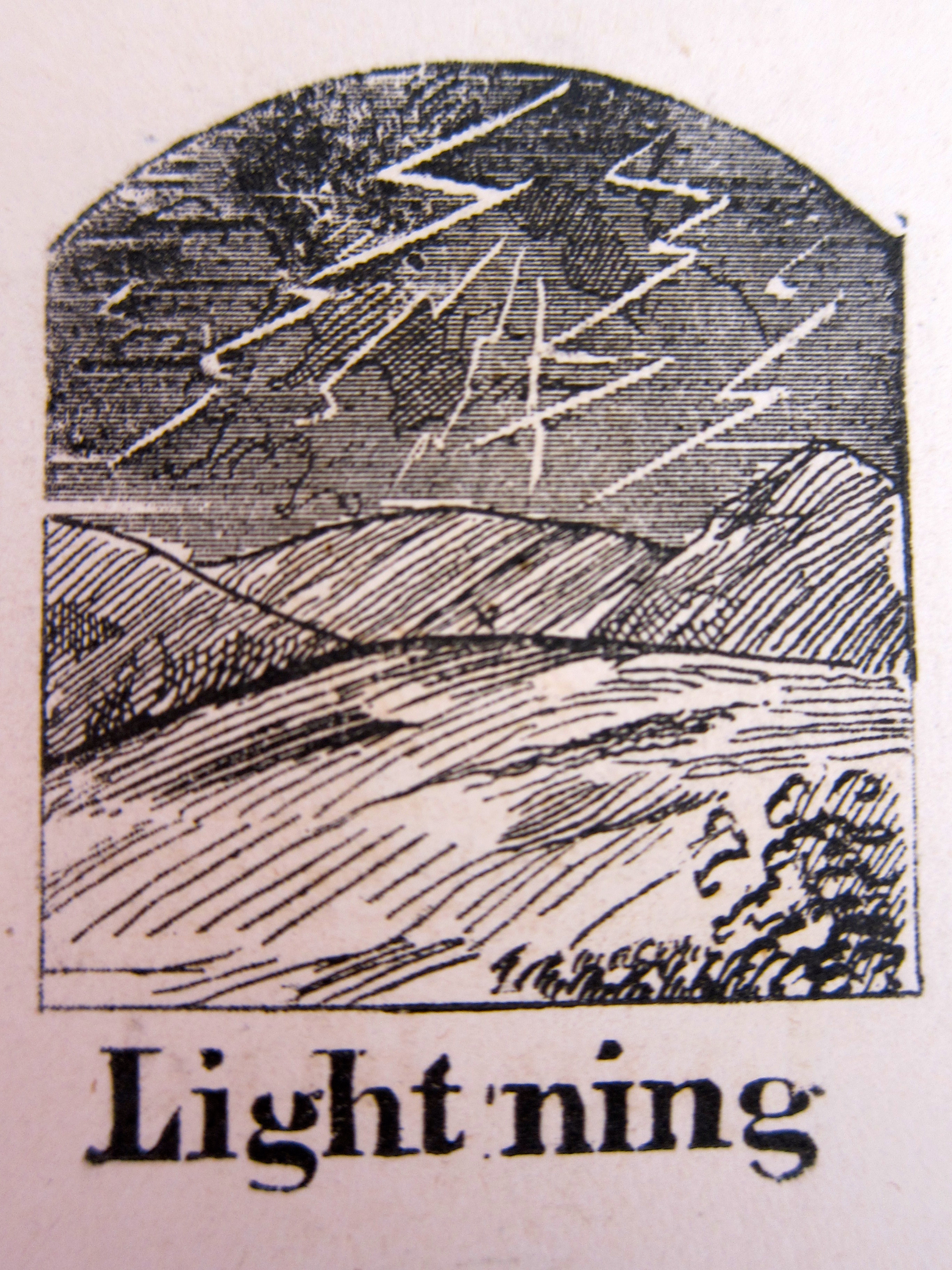
Old Oliver, the family weatherman, was unusually chatty about today’s weather.  He was excited about the rain, but feared it had come too late for certain patches of hay. He wrote: “it was fair this forenoon + cloudy in the afternoon the wind was very high all day from the South west + towards night + in the evening there was a shower of nearly half an inch, but the grass on gravely land is to far gone to be helpt.”


June 21, 1852

images-1

1852 Monday  June 21st  Mrs Patterson & Hannah washed and 

I worked in the garden untill about ten

and was about house until two or three

Oclock  Catharine Middleton here sewing

Father has given me another jawing about

my leaving some old coats on the grass


Here in the early 21st century, a dictionary of slang defines “jawing” as being saucy or speaking disrespectfully. Not so in the 1850s, when “jawing” was slang for moralizing, or giving a lecture.  “Father Ames,” as he was known to the Ames wives, gave Evelina “another jawing” today, this time about her “leaving some old coats” outside on the lawn.  She or Mrs. Patterson or Hannah Murphy must have washed the items and left them out to dry in the sunshine without hanging them on a line.  Perhaps the women had run out of clothespins. But Old Oliver would have been concerned about possible damage to the grass, which was already vulnerable due to drought. Or perhaps he was just cross.

Old Oliver described this Monday as “a fair warm day wind south west.”  What he didn’t mention was that it was summer solstice, the longest day of the year. The earth in its orbit tilted its northern hemisphere closest to the sun at around 7:30 in the morning.  If Oliver knew it, he didn’t care, or just didn’t record it. He was watching the ground and planning to cut the hay.


June 20, 1852

Lemon

Sunday June 20th  Have been to meeting all day Mother

went this afternoon and returned home  Mr Sanger

of Dover preached  Since meeting have been to 

Alsons with Edwin & wife & Oakes Angier.

Called at Mr Pools  Was treated with strawberries

& ice cream at Alsons and with lemonade

at Mr Pools  Frank went to a sing at Cohassett

Father gave me quite a lecture on cooking stoves

says we have had a dozen and we have had four


No Mr. Whitwell at church today. Instead, Rev. Ralph Sanger of the First Church of Dover led the service. Dr. Sanger was an older minister in the area, having graduated from Harvard in 1808, a year before Evelina was born. He had spent his entire ministerial life in Dover where he was well regarded. He also served several terms in the Massachusetts Legislature and was the chaplain for the Massachusetts State Senate.

After church came an afternoon of sweet sensations. Strawberries, ice cream and lemonade were served at two different homes where Evelina, Oakes Angier, and the young Gilmore couple called. The fresh fruit was a seasonal treat, and the ice cream and lemonade no doubt delightful as well.

Not all was sweet at home, however. Old Oliver got cross with his daughter-in-law and gave Evelina “quite a lecture” about her cooking stove. She was about to get a new one in her kitchen, certainly with her husband’s approval, but her father-in-law had no patience for it.  He didn’t see the need to update the kitchen equipment. We might remember that Oliver had grown up watching his own mother cook over a hearth, a style of cooking that had served for generations.  And here was his daughter-in-law planning to install another stove under his roof.

Even the little bit of rain that fell around sunrise didn’t cheer Old Oliver up.

June 19, 1852

manx40rimwh


A “Visite”

Sat June 19th  Have been weeding in the garden and

transplanting   Spent the afternoon in 

Olivers with Mother  Mrs Witherell & Augusta

were there awhile  Finished Susans visite

quite late in the evening  It has not been

much of a job to make if I could have sat

down steady

Evelina worked in her garden today, weeding and moving some of her plants around. After midday dinner, she and her mother, who was visiting, “spent the afternoon” next door “in Olivers,” meaning at Sarah Lothrop Ames’s. In citing Oliver rather than Sarah as the owner of the house, Evelina was only following the norm of the time, whose patriarchal laws prevented women from owning property. Sarah and Evelina lived in homes that belonged solely to the males in the family.

Old Oliver, Ames patriarch above all the rest, reported that “this was a fair day wind southerly + quite warm we have bought two yoke of cattle this weeke one yoke of N Warrin of Stoughton, 6 years old for $110 and one yoke of Thomas Ames 9 or 10 years old for $100.” He was probably buying cattle to help with the approaching hay harvest.

Once indoors, perhaps even after others had gone to bed, Evelina finished a mantle for her daughter Susie. Also known as a visite or paletot or pardessus, a mantel (or mantilla, as Evelina labeled it the previous day) was a three-quarter length cloak with pagoda or cape-like sleeves. It was often adorned with lace, ruching, and especially fringe, which was very big about this time. Many visites were unlined, which no doubt simplified the process of making them. That may be why Evelina thought the garment had “not been much of a job.”