May 2, 1852

IMG_0157 (1)

Frontispiece, Breck’s Book of Flowers, 1851

Sunday May 2d

1852 Have been to church and at noon went

into Mrs Howards with Mother & Henrietta

After meeting went with Oakes A & Mrs

S Ames to call on Mrs Perkins at Mr Kimballs

also called at Mr Nahum Williams

Mrs Kimball has her garden laid out quite

prettily but the walls are too narrow I think

Evelina was almost as interested in other people’s gardens as she was in her own. After church, she and her son, Oakes Angier Ames, and sister-in-law,  Sarah Lothrop Ames, made a few calls around the neighborhood. The day “was cloudy + fair by turns,”* and as they visited, Evelina was able to see what others were doing in their yards.

The group stopped at the home of John and Lusannah Kimball, whose garden Evelina judged to be pretty, certainly, but “too narrow.” Perhaps Mrs.Kimball was building a perennial border, as opposed to the central bed configuration that Evelina used. Taste in gardening design was changing, with the latest ideal illustrated in Joseph Breck’s popular new book on flowers. Was this the look that Evelina was aiming to achieve in her yard?

The whole family seemed to be out and about, at least for the ride to and from the meeting house. The usual group, representing all three Ames households, was in attendance.  It would be the last Sunday ever for this particular ensemble.  In only two weeks, the Ameses would be back at church for a funeral for one of their own.

*Oliver Ames, Journal, Stonehill College Archives, Arnold Tofias Collection


April 28, 1852

Unitarian Church, Bridgewater, Mass

1852

Wednesday April 28  Have been to the ordination of

Mr Ballou of W Bridgewater with Oakes A & 

Sister Sarah, Mr H Ballou, Briggs of Plymouth

Brigham [illegible] Ballou of Stoughton &c

Mrs Witherell dined at old Mrs Ames, the

rest of us at Mr Thomas Ames.  On my return 

stoped at Augustus’.  Oakes A came to tea

Miss S Lincoln Rachel Augusta & Abby here

It was the middle of a work week, but the Unitarian ministry was busy. In Bridgewater, (or West Bridgewater) a Mr. Ballou was ordained as minister. The name Ballou was associated with many late 18th and 19th century men of the cloth, particularly with Hosea Ballou, an early leader of the Universalist Church. Today’s Mr. Ballou wasn’t he, but may have been a relative.

Why were the Ameses invited to this ordination? Why did they attend? What was the connection? Were they related to the Ballous? They were distantly related to various Ameses in the area, including Thomas Ames, a 52 years-old farmer, who kindly had them to dine.

On this special occasion, as the Unitarians in Bridgewater were honoring ritual and perpetuating their ilk, a forward-looking and entirely new event took place in Boston. The first electric fire alarm in the world “was rung from what is now Box 1212 for a fire on Causeway Street. Created by Dr. William Channing and Moses Farmer, the system consists of forty miles of wire, forty-five signal boxes, and sixteen alarm bells. Police officers and members of the Boston Night Watch are given keys to the locked boxes to enable them to turn in alarms.”* What’s particularly amazing is that “[p]art of the system is still in use today.”*

*Jim Vrabel, When in Boston, 2004, p. 160

April 15, 1852

images-1

April 15 Thursday.  Oakes Angier 23 years old to day.

This day 23 years ago not a cloud to be seen to day

a heavy rain storm  Julia Mahoney here making

my Delaine and altering my black silk having

a new waist and sleeves.  She has both waists fitted

but did not get much ready for me to work upon

till just at night  I have made the button holes

in the delaine

In both years of her diary Evelina takes note of Oakes Angier’s birthday. She also mentions him by name approximately 117 times as he comes and goes, works, reads, rides, eats or ails. By comparison, her other sons, Oliver [3] and Frank Morton, are each cited with similar purpose only 74 times, or one third less often, and neither of their birthdays draws any mention at all. This numerical disparity, coupled with the soft tone of Evelina’s rare reminiscence about her first child’s birth, when “not a cloud” could be seen, hints at maternal favoritism for the eldest son.

Not only was Oakes Angier the firstborn child of Oakes and Evelina, he was, on his father’s side, the eldest of 24 grandchildren of Old Oliver and Susannah. On his mother’s side of the family, he placed in the middle of a pack of a dozen grandchildren of Joshua and Hannah Gilmore, many of whom, like cousin Edwin W. Gilmore, lived in the vicinity.

Oakes Angier Ames would have known all four of his grandparents, although he was only seven years old when his grandfather Gilmore died. He was just turning 18 when his grandmother Ames passed away and in his thirties, with children of his own, when his grandfather Ames and his grandmother Gilmore (who lived to be nearly 92) died. Throughout his life, Oakes Angier was surrounded by multiple generations of relatives; he grew up amid a swirl of siblings and first cousins, among most of whom he held primogenitary status. He was the standard bearer. His siblings and cousins called him simply “Oakes,” leaving it to Evelina (and his descendants and historians) to append his middle name when spoken of.


April 7, 1852

images-2

Five Dollar Gold Piece, 1850

1852

April 7th  Mother is 80 years old this day and notwithstanding

the snow banks have been down to see her and made

her a present of a five dollar gold piece.  She is

not very smart to day but is generaly very well and

capable for one of her years.  Orinthia Abby & Augusta

went with me and we have had a very pleasant visit

Augustus stoped the evening here  Helen came

home this afternoon with her father.

Evelina’s mother, Hannah Lothrop Gilmore, turned 80 years old. She was the grandmother of Oakes Angier, Oliver (3), Frank Morton and Susan Eveline Ames – among other grandchildren –  and first cousin-once-removed of Sarah Lothrop Ames. She was born in Bridgewater in 1772, the fifth child and only daughter of Daniel and Hannah (Howard) Lothrop.  Her mother died soon after she was born and her father remarried two times more and had six additional children.

In 1789, at age 17, Hannah married Joshua Gilmore of Easton. They had a large family, too, producing eight children, of whom Evelina was seventh. By this 80th birthday in 1852, Hannah was a widow with only three offspring still alive. As we have seen, she lived on a farm with a son, Alson Gilmore, but often visited her daughter, Evelina.

Beyond these genealogical facts, little is known of the life of Hannah Lothrop Gilmore. When she was barely twenty, however, and already a mother of her first baby, John, she walked on a trail one day with her husband in an area of Easton known at the Great Cedar Swamp. Town historian William Chaffin recorded the tale:

“There was then no road through Cedar Swamp. Trees were however felled, and on these by hard work pedestrians at certain seasons could pick their way through from Easton to Raynham, or return.

“In 1792 […] Raynham had petitioned the Court of General Sessions for Bristol County to require Easton to build a road through the swamp to connect the two towns. The advantages of such a road were obvious. But Easton stood aghast at the prospect of incurring the expense of building a causeway such a distance and in such depths of mire.  The difficulty is illustrated by the fact that as Joshua Gilmore was going on the footpath through the swamp one day with his wife, carrying a little child in his arms, Mrs. Gilmore was speaking of the difficulty of the passage, and her husband replied that some day the child would ride through the swamp in a carriage; and the idea struck her as so essentially preposterous that she had a hearty laugh over it. However, the Court of Sessions did not, it would seem, share her skepticism, for it ordered Easton to construct the road.”*

The road, known then as the Turnpike Road or Street, was built, and Hannah Gilmore lived to ride it in a carriage.

*William L. Chaffin, History of Easton, Massachusetts, 1886, pp. 454-455

April 6, 1852

330px-Harriet_Beecher_Stowe_c1852

Harriet Beecher Stowe

(1811 – 1896)

1852

April 6th  Tuesday  We have had one of the driving

snow storms of the season  the snow is very

much banked.  We have been reading Uncle

Toms Cabin  Susan has read to us most of the

time  have been sewing & mending.  Orinthia hemmed

a black cravat for O Angier and sewed some

on Susans pink apron.  Have made a little needle

book for mother

Yesterday, Evelina and Orinthia had been in Evelina’s garden planting flowers. Today the two women sat indoors “sewing & mending” because the unstable spring weather had brought on “one of the driving snow storms of the season.” According to Old Oliver, the snow “was all in heaps and the wind blowing verry hard from northeast” *

Yet the women weren’t disconsolate. While they sewed, Evelina’s daughter Susan read aloud to them from Uncle Tom’s Cabin, a popular new novel. Originally published in serial form in the National Era, an abolitionist periodical out of Washington, D. C.,  the full book had just been published in Boston by John P. Jewett and was on its way to becoming the best selling work of fiction of the 19th century.

Written by Harriet Beecher Stowe, Uncle Tom’s Cabin, or a Tale of Life Among the Lowly tells the story of two Kentucky slaves, Tom and Eliza, who are forced to leave their home plantation and make their way in a hostile society, one sold south, the other escaping north. It was a tale that gripped readers north and south, within the country and abroad, and provoked various imitations, interpretations and theatrical iterations. It has never been out of print.

Mrs. Stowe was not only an author, mother of seven children and wife of a Biblical scholar and educator; she and her husband were also active abolitionists. For a number of years they had lived in Cincinnati, Ohio, an active depot for escaping slaves, where they were participants in the Underground Railroad and personally helped hide slaves on the run. When the Fugitive Slave Act was enacted in 1850, Mrs. Stowe was distraught. She wrote Uncle Tom’s Cabin in protest.

How might Evelina have liked Uncle Tom’s Cabin?  Very much, one suspects. Though hardly an active abolitionist, Evelina was sympathetic to the slaves. After the Civil War, she even tried to hire some freed black women to come work for her but, according to her grandson Winthrop Ames, the plan never worked out.

*Oliver Ames Journal, Stonehill College Archives, Arnold Tofias Collection

April 2, 1852

Ox

1852 March [sic] 2d Friday  Have been mending pants for Frank

Made a long call on Mrs S Ames in the morning

Have been sweeping and dusting.  Mrs S Ames dined

in the other part of the house  I carried my sewing

in there a couple of hours this afternoon  Oakes A

went to Mr Howards after Orinthia this evening

Frank is not well and did not go  Have

written a letter to Mrs Norris  Augusta here this evening

After yesterday’s April Fool’s fun, Evelina resumed her domestic routine. She swept, dusted, mended, sewed and wrote a letter to a friend. Same old, same old. Her son Frank Morton, however, was under the weather, but her oldest son, Oakes Angier, was fine and even went out for the evening after work.

Old Oliver Ames, meanwhile, also resumed some of his routine, most of which had been disrupted by the shovel shop fire a month earlier. He was occupied by planning for the new stone factory buildings, but as he listened to the rain fall, he knew it was almost planting time. The farmer in him was getting ready for a new growing season. Perhaps in recognition of that, he “bought a yoke of oxen to day of Samuel Clap for $117-50.”*


March 4, 1852

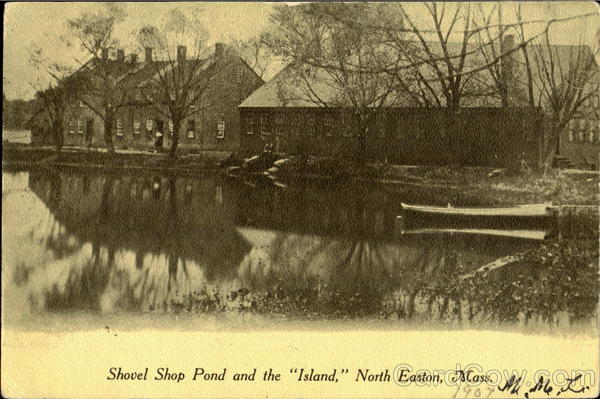
Shovel Shop Pond And The Island North Easton, MA

Replacement buildings on a section of the Ames shovel complex

1852

March 4 Thursday  Scott & Holbrook are setting glass at

the shop to day  They have the front entry partly

painted  I carried my work into Edwins this

forenoon  mended O Angiers shop coat  This afternoon

have been to Mr Torreys with Augustus & Lavinia

Called a few moments on Hannah  She has a 

sore mouth and is weaning her child

Evelina addresses her day calmly, as always keeping her distance from the goings-on at O. Ames & Sons. Most other residents of North Easton were still reeling, no doubt, from the huge fire that had burned down a majority of shovel factory buildings over the night of March 2. The sun was shining and the wind was out of the north west, pushing around remnant smoke still rising from the ruins of the complex of wooden buildings. Shovel shop employees had no regular job to go to and the owners had some serious decisions to make, fast.

Clean-up from the huge fire was underway, probably by the labor of the very men whose factory jobs had been temporarily eliminated. The men who had been painting and papering at the Ames’s house, for instance, were co-opted to set glass at the shop, suggesting that new panes of glass – the originals probably having been blown out by the fire – were going into the windows of the one or two buildings that had survived.

As town historian Ed Hands points out, “the Ames family and the neighborhood rebounded quickly.”*  Old Oliver and his sons Oakes and Oliver Ames Jr. made a two-fold decision. The first was to create temporary structures to house the manufacturing so that shovel making could resume as quickly as possible.  The second was to create “new, permanent stone shops,”* sturdy, nonflammable structures that could outwit any new fire.

There was insurance money to cover at least some of the rebuilding. Sources differ on the amount of damage that the fire inflicted, but suggest it was between $30,000 and $40,000. The amount of insurance coverage is also uncertain. Old Oliver “states that there was $3,000 worth of insurance on the buildings”** but, according to industrial historian Greg Galer, it’s likely that the Ameses had increased insurance coverage on the factory back in November, 1851. Whatever the actual dollar cost was, “[t]he company bounced back quickly from the devastation, and seemingly without significant financial trauma.”**

*Edmund C. Hands, Easton’s Neighborhoods, Easton, 1995, p. 163

** Gregory Galer, Forging Ahead, MIT, 1989, p. 249


March 3, 1852

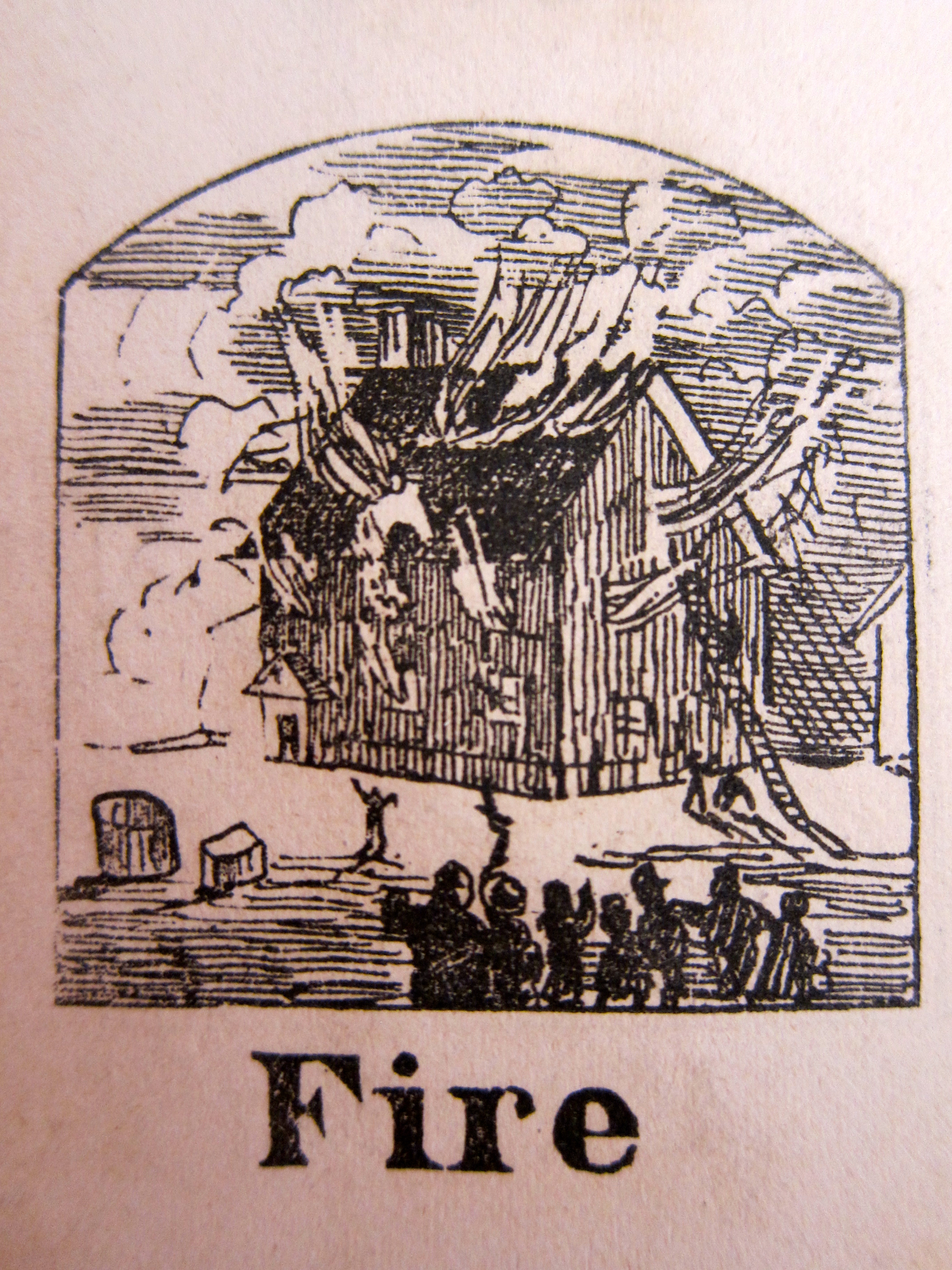
Fire


1852

March 3  Wednesday  Last night the finishing shops

were burned to the ground by Quinns letting 

his lantern fall into the varnish  Oakes came

home from the fire about 4 Oclock much

more cheerful than I expected to see him and 

went to bed  OA and Frank came home to put

on dry clothes & went back and staid untill morning

Lavinia & Augusta were here awhile this afternoon


Fire! Most of the shovel company’s buildings, situated in”the most centralized areas of Ames production, ‘the island’ at the outfall of Shovel Shop Pond,”* caught fire and burned to the ground. On his nightly round, Patric Quinn, the watchman, dropped his lantern into the varnish. The subsequent explosion must have been quick and, given the nature of the combustibles, uncontainable from the outset.

Naturally, Old Oliver recorded the event as well: “last night about eleven O clock the finishing shop took fire and the shops adjoining it were burned down – Bisbes shop and the small one made out of the cole hous that was mooved from the hoe shop was saved – the fire took from the varnish …”**

O. Ames & Sons had caught fire before, once in 1844 and again in 1849.  After the 1844 fire, the family “had bought a used fire engine,”** which was brought to bear on the 1849 fire. In that case, Old Oliver credited the engine with saving the day, noting that “if we had have had no engoin I think it would have burnt up.” **

This latest conflagration was different. As modern historian Gregory Galer points out, “luck was not on their side…[the used fire] engine was no match for the blaze, fueled in part by 12,000 well-dried, ash shovel handles; oil and varnish used to protect completed shovels; and the wooden building itself.”*  The shovel shop was in ruins.

Evelina didn’t attend the fire, but she would have been able to see the flames from their front windows. The fire went on all night, her husband, sons and other townspeople present for most of it. There is no record of any injuries.


Gregory Galer, Forging Ahead, MIT, pp. 248-249

** Oliver Ames, Journal, Stonehill College Archives, Arnold Tofias Collection


February 25, 1852

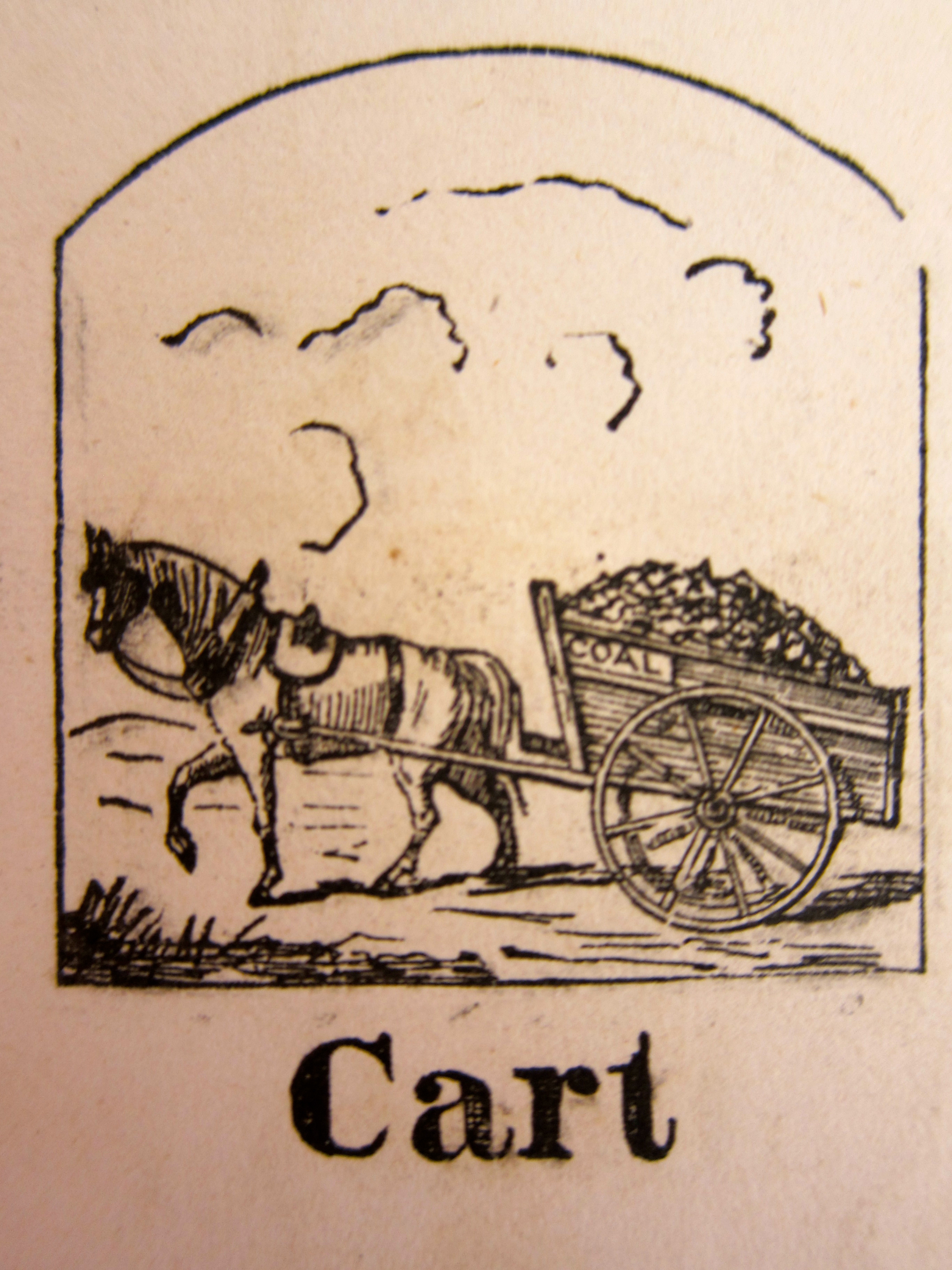
Cart

1852 Feb 25 Wednesday Was at work about the house untill

about ten and had just got seated at my sewing

when Mother & Alson came  They were here to 

dinner and this afternoon mother & self spent

at Willards. The young folks had company

Oakes & Frank are there this evening and were

having a lively time when we came away  Elizabeth

Williams was here this forenoon.  She & Susan went to

Emeline Haleys party this afternoon & evening


“[T]his was a warm day and thawd so much that it made the carting bad,” grumbled Old Oliver in his daily journal.  Despite the soft road bed, however, Evelina’s brother Alson Gilmore traveled by wagon or carriage to bring their mother into town from the family farm. The two came to midday dinner at the Ames’, after which Alson presumably went on his way. Mother and daughter went on to visit Willard Lothrop – Evelina had been seeking his company quite a bit lately. Under his influence, was she becoming a Spiritualist?

While the notion of communicating with the dead intrigued her, Evelina’s interest in Willard Lothrop may have been more sociable than religious.  She comments on the “young folks,” – her sons Oakes Angier and Frank Morton Ames among them – “having a lively time.” All ages seemed to be moving around today attending various gatherings that must have helped dispel some mid-winter gloom. Never mind the mud; the hint of warmth in the air must have been preferable to more snow.

February 16, 1852

Picture frame

Monday Feb 16th

1852

Susan washed the dishes this morning and I was

at work about the house most of the forenoon

Mrs Mary Williams came about eleven Oclock and 

staid to dinner  Called into Olivers and Edwins

with her  She returned to Joshua C Wm about three

and went home in the stage  Oliver tried to get

the coloured engraving smooth in the frame but could 

not  Mended Oakes Angier a vest


The new week opened with the usual domestic arrangements: Jane McHanna doing laundry, Susie Ames washing dishes and Evelina choring “about the house” in the morning.  A visitor, Mary Williams, arrived and stayed for midday dinner, then departed mid-afternoon on the local stagecoach .

With her son Oliver’s help, Evelina finished hanging the prints she had bought the week before in Boston. The new pieces of art were quite au courant; etchings, lithographs, and engravings were appearing on parlor walls across the country.  New printing technology – the same that promoted the appearance of so many new periodicals and serial novels – made the production and distribution of art prints easy. The subject matters varied from historical (like the famous image by Emanuel Gottlieb Leutze of Washington Crossing the Delaware, first painted in 1851) to religious to geographical to sentimental.  They were decorative and affordable, and the middle class flocked to buy them.

Subject matter, of course, was important; Evelina had purchased one print about Halloween (or All Hallows Eve as it was known). The prints had to be attractive and look handsome on the wall. But the decorative frames that went around the art work counted, too, and “were often considered more important than the prints themselves.”* It’s too bad that Oliver was having difficulty making one new print fit properly in its frame.

* Pierre-Lin Renie, The Image on the Wall: Decoration in the Nineteenth Century Interior, Nineteenth Century Art Worldwide