May 27, 1851


VFC021712-26

1851

Tues May 27th  My beadstead was brought this

forenoon  It is very pretty but much to large shall

have it made shorter.  Have had the center table

lowered & new castors put on it.  Put straw carpet in

Franks chamber and it is ready for him to come back

into.  Have not sewed any to day I seem to have been

busy but have not accomplished much for a long while

Pleasant weather  Mr Ames went to Canton this 

afternoon

Redecorating continued.  Not only had things been cleaned and painted or papered, but new furniture was being brought in, and old furniture reconfigured.  Casters, beloved of Victorian housewives, were put in place so that furniture could be rolled for better cleaning.

What prompted Evelina’s burst of refurbishment? New wallpaper, new carpet, new furniture. Did she do some redecorating every spring or was this a departure from the norm? It may be that the new expenditures were relatively recent and stemmed from the increasing prosperity of the Ames shovel business as well as a contemporaneous, burgeoning access to material goods that had once been scarce. In other words, with American manufacturing on the rise,  Evelina and Oakes – and Sarah Lothrop and Oliver Jr. – could now afford and obtain desirable textiles, furnishings and decorative items for their homes.  They went to Bridgewater, Boston and New York, and bought.

One thing was certain. Evelina wouldn’t have proceeded with any of this without Oakes’s approval.  Implicit in her purchases was his consent, tacit or enthused.  For a man who spent nothing on his personal appearance, it’s interesting to understand that he would spend money on decorating his house. It’s also curious to wonder what Old Oliver might have thought about the upgrading at the old family homestead.

 

May 25, 1851

Cemetery


25 May Sunday  Have been to church all day. Went to Mr

Whitwells at noon with Mother and Mrs Whitwell

made us take a cup of tea Also Mrs Elijah Howard & Miss

Louisa H.  Had quite a spirited chat about Mr

Wm Reed & Mr Dean. After meeting Mr Ames & Oliver

& wife rode to the burying grounds  Cannot 

feel reconciled to having it where it is. Oakes A Susan

& Orinthia went to a sing & Oakes carried Orinthia home.


A cup of tea and good, “spirited chat” among the women during intermission brightened Evelina’s Sunday.  Who were Mr. Reed and Mr. Dean that they evoked such consideration from the female population?  There were several men of either name who lived in Easton at the time.

When church was over, Evelina, Oakes, Oliver Jr. and Sarah Lothrop Ames drove together to look at the new cemetery in South Easton. Created by the Easton Cemetery Corporation, it was one of almost thirty graveyards in the town.  For reasons lost to history, this newest burial-ground had been deemed desirable and consequently established by men well-known to the Ameses, including Elijah Howard and Dr. Caleb Swan.  Perhaps their intention had been to create at burial place that would be tended to as time passed, as many smaller, family graveyards throughout the town were not. Perhaps they were responding to personal inclinations to group Unitarians together for eternity.

Whatever the thinking behind the new burial-ground, Evelina was dubious.  Did she look at it and think she and Oakes might be buried there someday?  Did she wish instead to be buried near her son Henry, wherever that was? Or did she think of another graveyard where her father and certain siblings were buried? Little could she imagine that twenty-five years hence, the Village Cemetery of North Easton would be created behind a Unitarian Church that hadn’t yet been built, both projects funded by Oliver Jr, and that there she, her husband, and all her children would eventually be laid to rest.


May 14, 1851


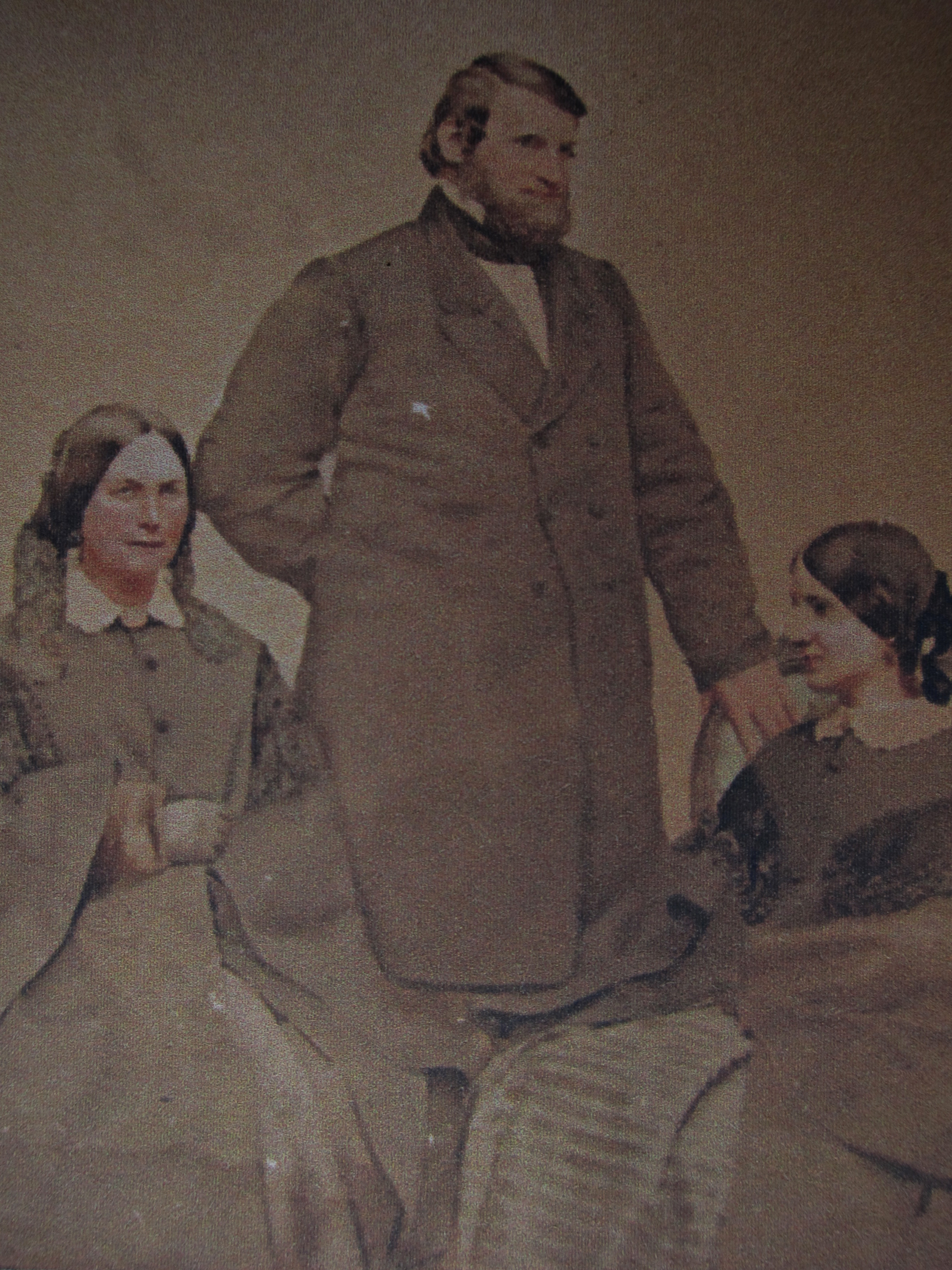
Evelina, Oakes and Susan Ames, ca. 1860 Archives at Stonehill College, Easton, Massachusetts

Evelina, Oakes and Susan Ames, ca. 1860
Archives at Stonehill College, Easton, Massachusetts

Wednesday May 14  Susans birth day and she has had a little

party.  Julia has been here to work on Orinthias

dresses.  Ellen Howard called this evening

came from Jasons. Mrs Holmes called a 

few moments this morning.  I have swept

and dusted the front chamber and taken the 

carpet from the stairs and painted them It

has been a confused day. Pleasant this afternoon

Augustus gone to Boston


Another interruptious day, filled by “confused” and overlapping events: Susie Ames’s birthday party, Julia Mahoney’s work on dresses for Orinthia Foss, calls from Ellen Howard and Harriet Holmes, the usual choring in the downstairs rooms, not to mention Evelina’s removing the carpet from the stairs and painting the treads. What commotion.

Susan Eveline Ames, the only daughter and youngest child of Evelina and Oakes Ames, turned nine years old today and was treated to a little party. Did she have friends over or was the party strictly en famille? Did she have cake? Ginger snaps? Presents? What was a nine-year-old’s birthday party like in 1851?

Born in 1842, Susie Ames came along several years after all her big brothers were born. From the beginning, she was raised differently from them. While they were slated to work, earn and provide, her education and training were oriented toward a future of domestic responsibilities. Like most girls of the time, she was brought up assuming that she would marry and raise a family. If she failed to marry, she would have to make her way as a spinster aunt living with one or more of her brothers, or become a schoolteacher like Orinthia Foss. Which route was hers?  Marriage.

On January 1, 1861, Susan married Henry W. French, a wool merchant. She was 18 years old; he was 27. For many years, the couple lived in the Ames house with her parents, and possibly looked after the house during the periods when congressman Oakes and Evelina were in Washington. For a time, Susan and Henry lived in their own home on Main Street, on the site where the Oakes Ames Memorial Hall came to be built circa 1880.

As Evelina moved into widowhood and grappled with illness and age, Susan looked after her. She and Henry never had any children, so the particulars of her story weren’t passed on to interested offspring. She only comes to life in her mother and brother Oliver’s journals.


May 10, 1851

7411thumb2

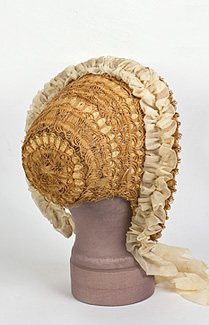
Sat May 10th  My bonnet does not fit me at all.  Mr Ames

called to see if they would take it back & make

me another I shall have another journey into

Boston for a bonnet. I have not felt like

doing much to day and never do after being

in Boston. Orinthia came home to night in

fine spirits. feels rather better satisfied with

her purchases that I do. The weather tolerably pleasant.

The bonnet that Evelina ordered from Alfred Remick & Company in Boston didn’t fit, so Evelina asked her husband Oakes to return it for her while he was in Boston.  He always went into the city on business on Saturdays.  The idea of Oakes Ames, a tall, large-chested man with a charismatic but somewhat rough-hewn manner, standing at a millinery counter negotiating the fine points of his wife’s headware, is a mental image to be treasured. This man, who could build shovels, advise a president, and imagine a continental railroad, could also cajole a store clerk and convince him or her to take back the hat his wife just bought. Oakes Ames was a force to be reckoned with, a force who also loved his wife.

Evelina, having dispensed her husband on that important errand, puttered around the house in desultory fashion as she was wont to do after a trip to Boston.  Schoolteacher and boarder Orinthia Foss returned to the house from the city happy and light-hearted, pleased with her shopping.  She must have brightened Evelina’s flagging spirits – or made her more disappointed with her own acquisitions.

April 30, 1851

Boot

1851

April 30 Wednesday  Hannah came with Augustus in the stage

and Eddy came with them  I fear she did not 

have a pleasant visit Eddy was not well and very

troublesome. We called at the shoe shop and

at Mr. Torreys.  Abby came home with us to tea

I have sewed some on Susans borage dress but

have not been able to do much. The weather is

pleasant but rather windy


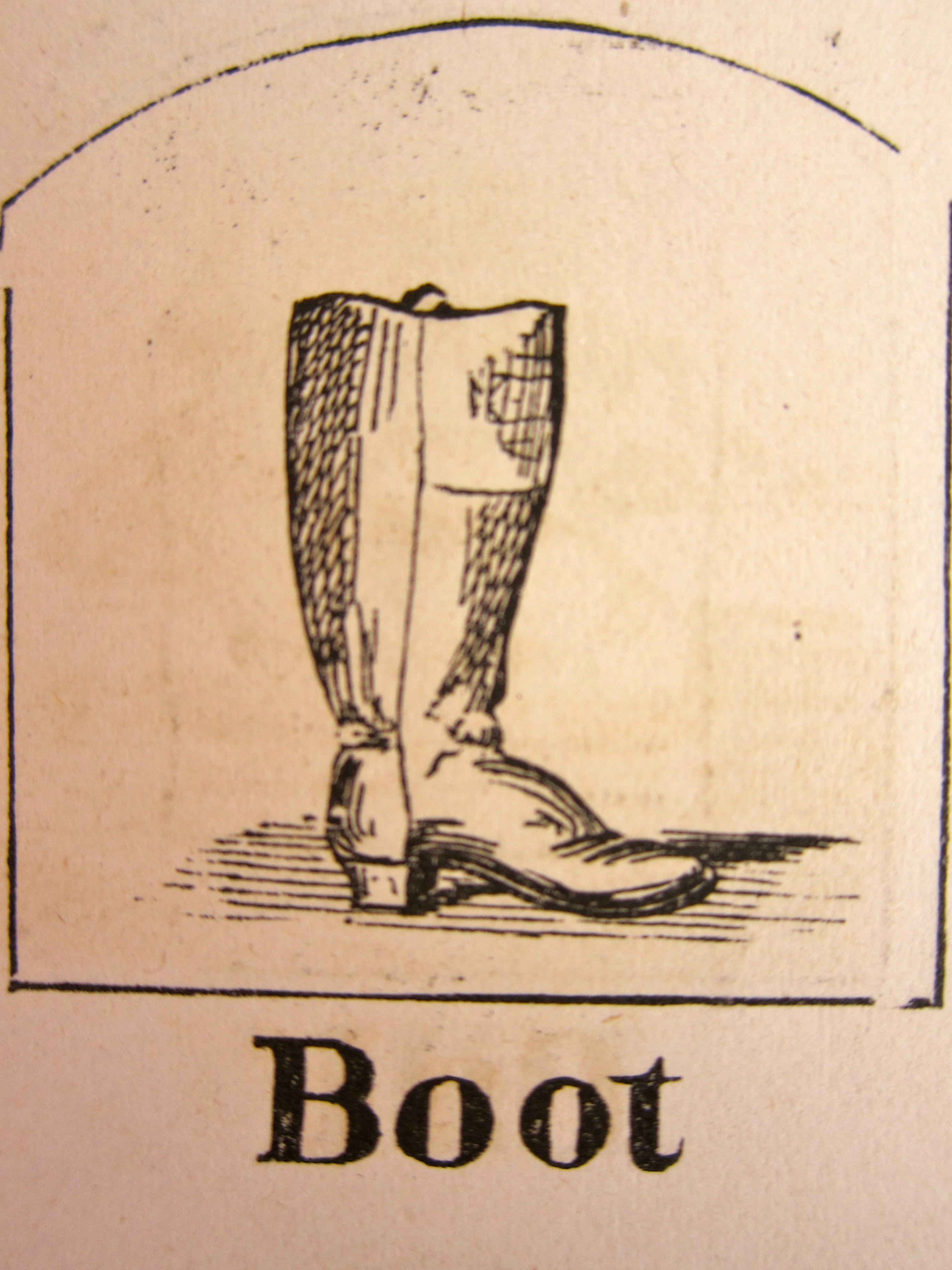
The reason for Augustus Gilmore’s continued presence at the Ames home became clearer today. The boot factory (or shoe shop, as Evelina called it) that Augustus had been working to establish was now up and running. Oakes Angier was an original partner, according to Chaffin’s History of Easton:

“In 1851 there was organized in North Easton the firm of A.A. Gilmore & Co., the other members of the firm being Elisha T. Andrews and Oakes A. Ames. They manufactured fine calf-skin boots in a building owned by Cyrus Lothrop. Oakes Ames succeeded to the interest first owned by Oakes A. Ames. In 1870, Messrs Gilmore and Andrews bought out Oakes Ames. This firm, which for some time did quite an extensive business, gave up the manufacture of boots in 1879; but the firm did not dissolve until death broke up the long partnership, Mr. Andrews dying in 1883.” *

The manufacture of shoes was an important industry in southeastern Massachusetts, particularly in the nearby towns of Randolph and North Bridgewater (soon to be known as Brockton). One theory is that shoe-making grew out of a cottage industry begun in the late 18th century, a thrifty, small, household-by-household effort to augment the meager income from subsistence farming by making shoes. It was one way to use the leather from the farm animals who were slaughtered.

New England as a whole was a major producer of shoes throughout the nineteenth century, “with Massachusetts alone responsible for over 50% of the nation’s total shoe production through most of the period.”** The trade continued well into the 20th century, with organizations such as the New England Shoe and Leather Association and the Boston Boot and Shoe Club championing the industry. Some leather manufacturing continues today in the region.

It only made sense that Easton, bustling as it was with the manufacture of goods such as shovels, mathematical instruments and, soon, hinges, would participate in the regional trade of shoe-making. That members of the Ames family were involved seemed to make sense, too.


* p.598

**http://www.albany.edu/history/ej/origins.html


April 22, 1851


images

1851

Tuesday April 22d  This morning it is quite pleasant & I went

to the store & got the print for Susans dress

that I returned last week have made the 

skirt & cut the sleeves called into the other part

of the house awhile & have staid three or four

hours in Olivers, she is quite sick so that

she does not sit up at all.  Mary Middleton buried

in Canton 17 carriages went to the grave

A[u]gustus went to New York last night with Henry Gilmore

Evelina spent several hours today in the bed chamber of Sarah Lothrop Ames, who was so sick in bed that she did “not sit up at all.”  That kind of illness was worrisome, especially as Sarah had been sick for several days and wasn’t getting better.

Sewing wasn’t forgotten amid her concern for her sister-in-law.  Evelina picked out some printed cloth for a new dress for Susie, the same print or dress at the company store that she had rejected previously.  She began cutting and sewing and had the skirt finished and the sleeves underway while otherwise occupied with checking in on both sisters-in-law. She was speedy with the needle.

Meanwhile, a local woman named Mary Middleton was buried in Canton.  Evelina was quite impressed at the number of carriages that followed the casket to the cemetery.  Miss or Mrs. Middleton must have been a personage of some importance, or someone with countless relatives. Evelina could have no way of knowing that when her own husband Oakes would die in 1873, a crowd of 3,000 people would attend his funeral. How many carriages would he draw to his service?


April 14, 1851

Coffin

1851

April 14 Monday  Julia Mahoney has been here to day

to work on my foulard silk It is bad to 

work on and she has not succeeded very well

but is coming again to finish it. Jane has

done the washing and her clothes dry

Orinthia has finished the shirt for Oliver that

was cut out March 31st Weather Pleasant

Mrs Witherell Mrs G Ames & Mrs S Ames called evening

In his journal today, Old Oliver noted that his son, Horatio Ames, was visiting. Although Horatio would have been, literally, under the same roof as Evelina and Oakes, Evelina didn’t mention his visit. She might not have seen him, of course, although she must have known he was in town and probably staying in the other part of the house.  Horatio, like their brother William, was on poor terms with Oakes and it appears that neither wanted to encounter the other.

Another heartfelt topic that found no tongue today was the anniversary of the birth of Henry Gilmore Ames, the son of Evelina and Oakes who did not survive childhood.  Henry would have been twelve years old today, but died at age two-and-a-half of an unrecorded cause.

In the future – 1876 in fact – family graves would be disinterred from their original locations and moved to a dedicated family cemetery behind the new Unitarian church on Main Street. Oakes Angier would oversee the relocation; among the graves moved would be the small one for Henry.  At the time, Oliver (3) made a few observations about the relocation, including one of the little brother they had lost: “Bro Henry was moved to day and his hair was as perfect as when he was buried. His hair was smooth and parted.”  Oliver (3) also noted that his father’s coffin was so heavy that it took seven men to lift it from its original resting place.

If Evelina remembered today’s date, she indicated nothing.  She was busy with overseeing laundry day (not that Jane McHanna needed any direction on what needed to be done,) as well as Orinthia Foss’s completion of one last men’s shirt, and Julia Mahoney’s sewing on her silk dress.  Many needles at work.


April 12, 1851

City

1851

April 12 Saturday  Went to Boston with Mr Ames. Have 

purchased a carpet & paper for the dark bedroom,

bought Susan a dark french print & borage

DeLaine Bible &c &c dined at Mr Orrs no one

at home but Mrs Orr & Mr Norris.  All gone to East

Bridgewater Mrs George Ames returned from 

New York with Mr Peckham Snowed a

little this morning but otherwise pleasant.


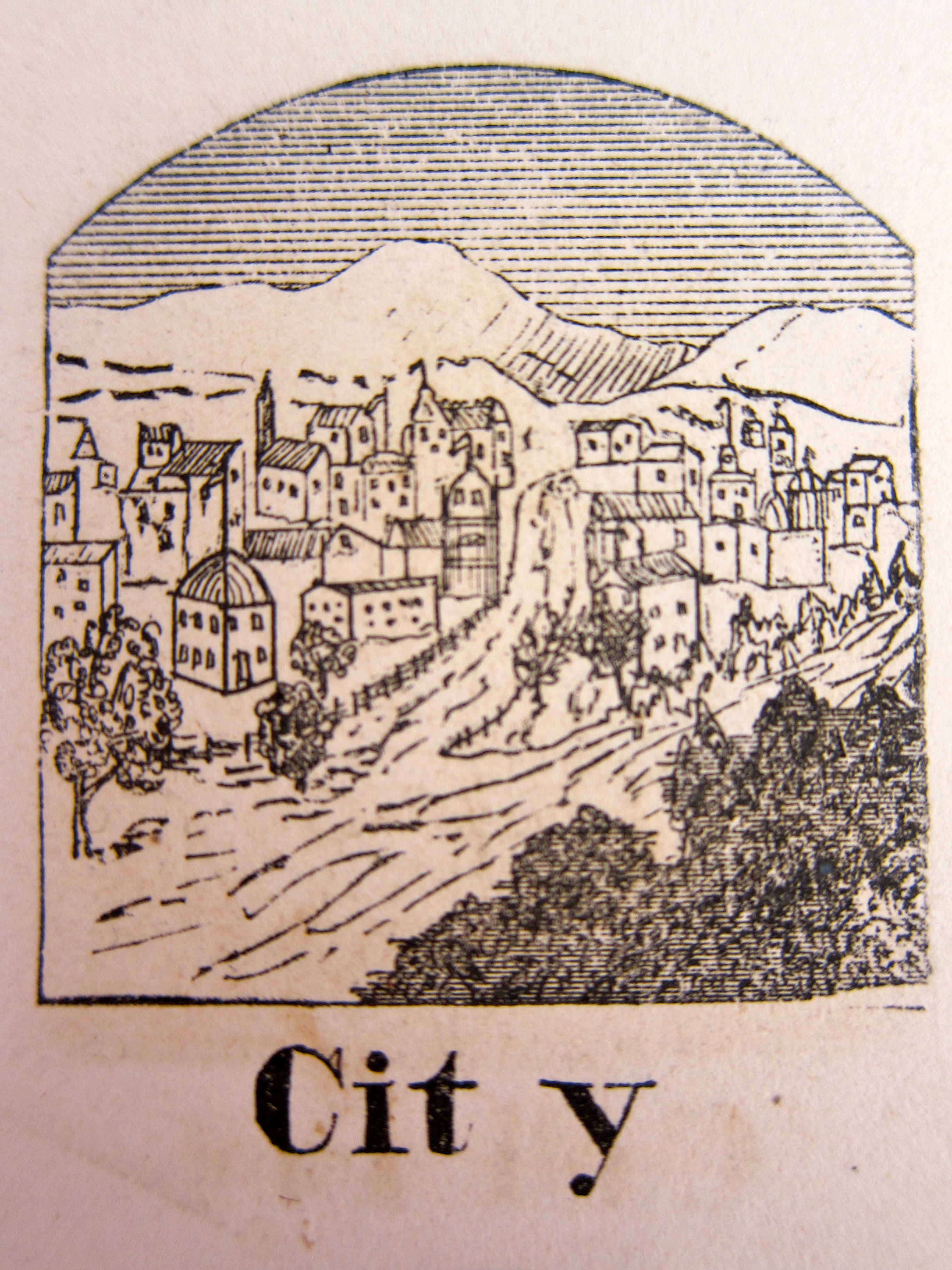
Oakes Ames made his usual Saturday trip to Boston and took a happy Evelina with him. It was the first time she had been to the city since January 17, and she didn’t seem to mind a light snow at the start of her journey. After three months in the country, she was excited to be in town, gazing at cobblestones, masonry, store fronts, and being part of the bustle of carriages and pedestrians.  Time to do some shopping.

She found some fabric for dresses for Susan. She bought a Bible. For whom? Why? With purpose and forethought, she selected new carpet and wall paper for at least one of the bedrooms at home that she and Jane had emptied out the day before. The carpet and wall paper, and more perhaps, would surely be delivered to North Easton rather than carried home.

As she had before, Evelina and Oakes, presumably, dined with their long-time friends, the Orrs, whose family, like theirs, had originally settled in Bridgewater. Evelina often stayed with the Orrs, but today she and Oakes only dined with Melinda Orr (Mrs. Robert Orr) and her son-in-law, Caleb Norris.

Today also marked a return visit to Easton by Almira Ames, widow of Old Oliver’s nephew George. She was a first cousin by marriage to Oakes, Oliver Jr., and Sarah Witherell and was used to visiting North Easton. In fact, she had spent enough time in North Easton to be listed in the 1850 census as living in the Ames household. In 1851, however, Almira seemed to be living in New York City. She was something of a favorite relative among the Ames women.


March 30, 1851

headache1

*

March 30 Sunday  Have not been to meeting at all to day.  My

cold is very troublesome have a very bad head ache.

could not read much.  Mr Cyrus Lothrop 3d called this 

evening & Frederick, Oakes Angier & Orinthia rode

down to Mr E Howards this evening.  Mrs Howard

has gone to Nashua to make a visit.  Mother returned

home from meeting  A very fine day

I commenced making fire in the furnace

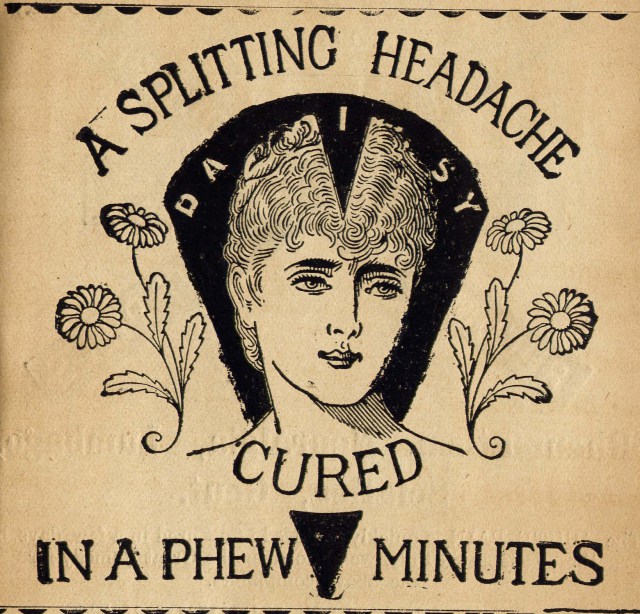
Evelina continued feeling poorly today. After yesterday’s helping of the commercial elixir, Wistar’s Balsam of Wild Cherry, one can’t help but wonder if her headache was, in fact, a symptom of hangover from the alcohol she unknowingly ingested.

The consumption of alcohol was absolutely forbidden at the Ames’s house.  Both Oakes and his brother Oliver Jr took a temperance pledge early on, and kept it. They hoped their workmen would follow their example. In this they differed from their father who, in his heyday of running the shovel works, had allowed his workers a ration of rum as part of their regular routine.  Old Oliver’s habits had been learned in the 18th century, which had a more lenient attitude about liquor.  In the 19th century, however, tolerance of alcohol disappeared. Temperance became the banner of the day, its support increasing yearly and culminating, ultimately, in the Prohibition amendment in the 20th.

In the Ames dining room, even something as mild as cider was frowned upon.  Cider was considered by some at a “gateway” beverage to liquor and hard spirits; others found it innocuous. Evelina kept some in the pantry to put in her mince pies but never served it at table.  Once, however, she offered a tumbler of cider to her future son-in-law, Henry French when he turned down a cup of coffee. Oakes admonished them both by stating flatly that, “No cider shall be drunk at my table.”

Alcohol was a controversial issue.  If Evelina had known that the medicine she was taking was laced with alcohol, she might not have indulged.  If Oakes had known, he wouldn’t have allowed her.

*Advertisement from ca. 1900.  


March 26, 1851

Sweep

1851 March 26 This morning Orinthia & myself gave a thorough

sweeping & dusting to sitting room entry & then I 

went to mending stockings  Mother & myself passed

the afternoon at Olivers with Mr & Mrs Whitwell.

Mrs S Ames & Mrs Witherell spent the evening

here  I finished the shirt that I commenced 

for Oliver on Monday.  It has been a delightful day

Mud season, as they call it in New England, had arrived and thus a daily sweeping of the floor and carpet was essential. Dust and mud entered the house on the bottoms of boots and shoes when anyone came in the door.  Once this messy passage from winter to spring had safely passed, it would be time for spring cleaning.

Meanwhile, the ladies in the Ames compound on Main Street were socializing among themselves. Evelina took her mother next door to Sarah Lothrop Ames’s house in the afternoon and visited with William and Eliza Whitwell, who were calling.  In the evening, both sisters-in-law came over to visit with her.  The ladies sewed – Evelina still working on shirts, this one for her middle son – and chatted.

The men were not present for this girls’ night in.  Oliver Jr. was in New Jersey on business and, if Oakes were in town, he would have been over in the office, as was his wont.  Years later, Winthrop Ames, grandson to Oakes and Evelina, would note in his description of family life in Easton in 1861:

“Usually […] Oakes, Oliver junior and their sons went to the office in the evening to catch up with their correspondence (all letters were written and copied by hand), discuss business together and go over accounts with the head bookkeeper.”

Whether working or playing, the Ames family members spent this quiet evening en famille.