March 1, 1851

Photographing

March 1st  Saturday  This forenoon put a bosom into an old

shirt of Mr Ames.  After dinner worked on shirt

bosoms, carried them into Olivers and staid two

hours and then went to meet Orinthia at the

Daguerretype saloon.  Called at the store and on Abby

Torrey  On my return called on Miss Eaton found her

more comfortable than I have seen her for some time

Mrs. Holmes mother has been sick for a week.  Very 

pleasant.  Augustus not here

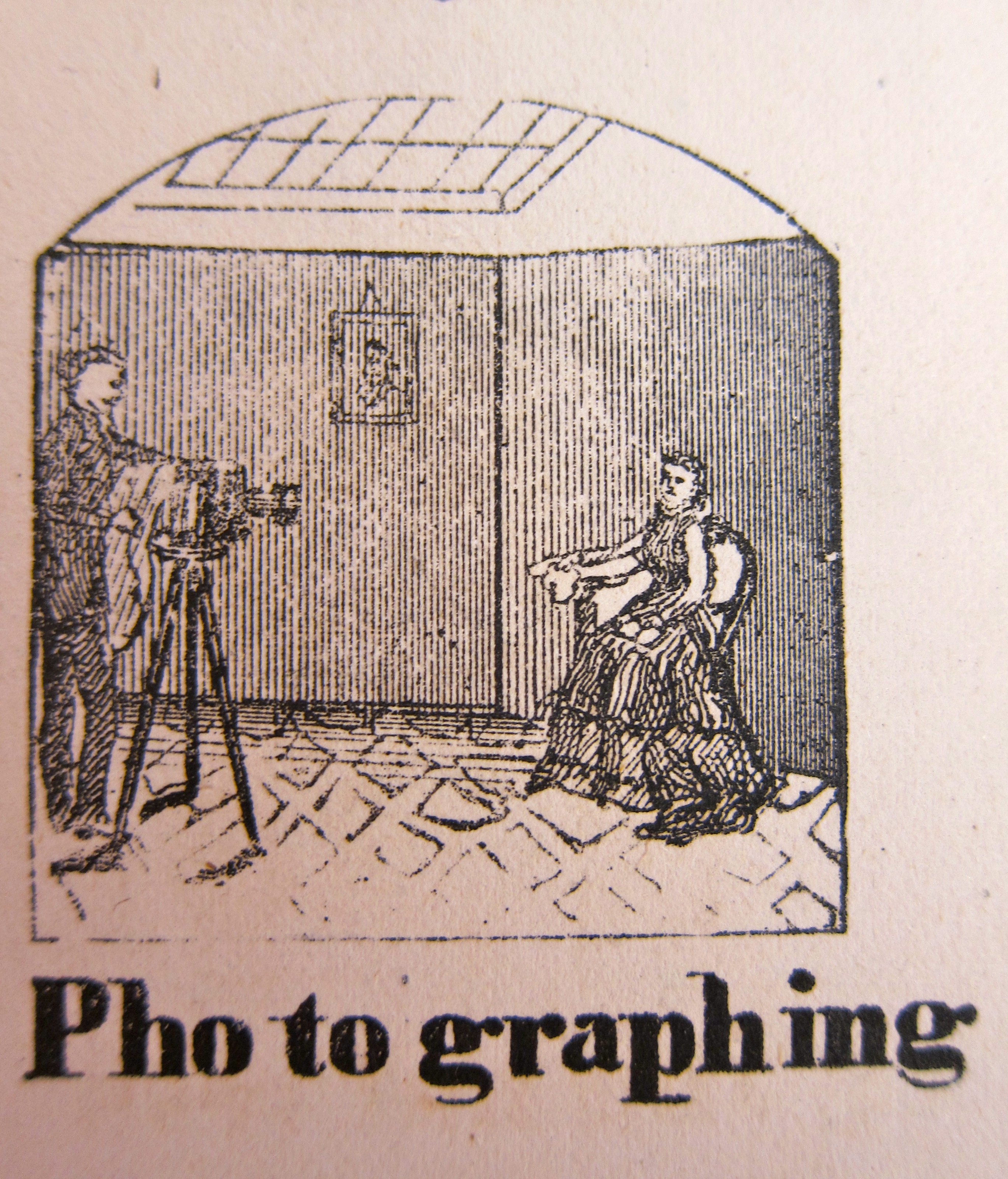
Only a dozen years after a Frenchman named Louis Daguerre reproduced an image of a Paris street onto a piece of treated glass, the new medium of photography had become so popular and successful that someone in the small town of North Easton, Massachusetts had seen fit to set up a “saloon” to take pictures.  What a novelty for the townspeople.

After a day of rather pedestrian sewing, Evelina Ames, housewife, went to the daguerreotype studio to meet Orinthia Foss, schoolteacher (and boarder at the Ames’s,) to have their likenesses taken. What a lark for them to go pose for the camera.  Whose idea was it? Did they pose together?  Did they pose alone?  Or did only one of them have an image taken? How long did she or they have to hold still?  Who ran the shop? Where are those photographs today?  What good friends Evelina and Orinthia are getting to be.

A stop at the company store and a visit with her niece, Abby Torrey, were next on the agenda for Evelina’s afternoon. Now that it was March, the daylight began to last a little longer, allowing more time for errands before heading home. One last stop at the house of Bradford and Harriet Holmes was in order. There, two invalids, Miss Eaton and Mrs. Wright, were being “watched,” or looked after by various friends and relatives, in a manner resembling today’s hospice care. Miss Eaton, of indeterminate age, had been in poor health for several months, probably with consumption.  Sixty year old Mrs. Wright, mother to Harriet Holmes, had also taken ill.  She was suffering from pleurisy and was not expected to recover. Spring might be on its way, but not for these two women.

February 13, 1851

Money

1851

Feb 13th  Thursday  This morning put the parlour in order

and went down to the store with the intention of calling

on Miss Eaton on my way back, but her Mother & brother

came last night and thought best not to see her but wait

until she was over the excitement of seeing them  Went into the

office with account of butter and other things sold.  Mr Peckham

gave me 30 dollars 78 cents  Augustus is still assisting him with

his books.  Very pleasant but ground rather wet.

Moving past yesterday’s humiliation, Evelina put her parlor back together first thing this morning and left the house, all by herself.  A walk to the little village on a fair day must have felt good, muddy ground notwithstanding.  She went right to the company store.

The Ames family made shovels, obviously, but their overall enterprise was never limited to manufacturing alone  – witness their eventual involvement with the Union Pacific.  They also made money from the operation of a company store, one that had been owned previously by a former partner of Old Oliver named Colonel David Manley.* The shop was right in the village of North Easton where shovel employees and others could purchase ordinary household items – muffin tins, for instance – dry goods like flour and personal articles. Evelina shopped there from time to time, and on this day she may have picked something up.  But she also sold things through the store, which explains why later that day she made her way to the Counting Office to collect $30.78 for “butter and other things sold.”  She had a little stream of income for herself, a source of satisfaction for any homemaker, and material consolation for a wounded spirit.

On her walking rounds, Evelina stopped in at the Holmes residence to call on Miss Eaton, a neighbor who is slowly declining. When she learned that Miss Eaton had family visiting, she deferred her call until another day.  Evelina and her sister-in-law Sarah Lothrop Ames have been looking after Miss Eaton from time to time and will continue to do so as her health fails.  The Ames women were dutiful in looking after the sick among the families of employees of the shovel shop.

* For more information on this store, you might want to read Easton’s Neighborhoods by Edmund C. Hands.  Among extensive historical information about the town, he offers some great context about early business days in North Easton.

February 10, 1851

Storm

Feb 10th Monday  Warm this morning but not pleasant  Jane 

put her clothes out but the wind commenced blowing quite

hard with some rain, so that the clothes had to be taken

in & were dried over the registers  Cut Susan a Chemise

out of the width of  1  1/4 yd wide cloth and partly made it

Worked about house as usual on washing days in 

the forenoon  Wind blows quite hard this eve.

What a jungle of white linens the Ames house featured this Monday, with Jane McHanna having to drape dripping laundry around the heat registers.  So much for Evelina’s cleaning the floors the other day.  Miserable winter weather – snow, rain, ice, wind and rain again – was wreaking havoc with the domestic schedule.

One person in the Ames household celebrated her 12th birthday today: Sarah “Emily” Witherell.  Emily was born in New Jersey where her parents had lived while her father, Nathaniel Witherell, Jr., worked with William Leonard Ames, her mother’s brother, at various Ames enterprises.  Tragedy had struck in recent years, though, with the death of her father and the subsequent “drounding” of her two year old brother, Channing.  Emily was stricken with loss at an early age.

With her mother, Sarah; older brother, George Oliver Witherell; and grandfather Old Oliver Ames,  Emily now lived in North Easton, Massachusetts in “the other part of the house”.  She probably still attended school, but she and Susie Ames were too far apart in age at this point to be close friends, although they would soon find themselves sharing  piano lessons.  Her cousin Oliver (3) found Emily to be outspoken and opinionated; she was, evidently, unafraid of speaking her mind at a time when candor in women was not prized.

Emily never married.  After Old Oliver died in 1863, when she was about twenty-four, Emily and her mother moved into Boston, eventually taking up residence in Back Bay at the Hotel Hamilton and living off of distributions from investments managed by her male cousins.  A spinster cousin, Amelia Hall Ames, the only daughter of William Leonard Ames, eventually moved in with Emily.  These two cousins, in turn, may have undertaken to raise yet another cousin, Eleanor Ames, a granddaughter of William Leonard Ames. All that is in the future; on this day in 1851, we can hope that Emily had a special birthday despite the weather. She deserved a happy moment.

February 1, 1851

Ames Home and Office, North Easton, Massachusetts ca. 1852 - 1862

Ames Home and Office, North Easton, Massachusetts
ca. 1852 – 1862

Feb 1st  Saturday  Sit down to mending again this morning

Mended a pr of kid gloves and a number of other things

Went into the other part of the house with mother

to tea  worked on panteletts finished two prs.  Mrs Packard

and Mrs Rhoda Fuller called there  Mr Ames has been 

to Boston & brought home Ladys Books Grahams & Harpers

& International Magazines & 1/4 lb Angola yarn.  Have been

reading in the magazines this evening.  Cloudy & warmer

Evelina often mentions going into “the other part of the house,” which was a section of the house on the southern side in which Old Oliver, a widower, lived with his widowed daughter Sarah Witherell and her children.  This section was created when Old Oliver turned the original (ca. 1812) dwelling into a duplex in 1827 on the occasion of the marriage of Oakes and Evelina.

In 18th century New England, family custom often dictated that the eldest son inherit the family homestead and, in order to effect that, houses were sometimes renovated to allow two families to live side by side until the transfer of property came to pass.  That this practice was becoming less prevalent in the 19th century meant nothing to Old Oliver who, independent and conservative, still had his feet in the 18th century in certain ways.  His home would go to his eldest son, and he would eventually provide homes for his other children as well.

In the above photograph of the Ames House on Main Street, we can see the original home in the center, a building that is divided in two on the inside, with Old Oliver’s doorway facing toward the camera (behind the middle tree).  The entryway for Oakes and Evelina faces the street.  To the left of the house is the attached office, where Oakes and Oliver Jr and others kept track of business matters.  It was known as the Counting House.

In the background to the right is the house Old Oliver built for Oliver Jr and wife Sarah Lothrop Ames on the occasion of their marriage in 1833.  In 1863, they would tear this down and rebuild a more modern and formal abode, one that still stands today. The old homestead, which housed generations of Ameses in its time, was torn down in 1951, approximately 100 years after this photograph was taken.

January 26, 1851

Gravestone of Hannah Gilmore

Gravestone of Hannah Gilmore

Jan 26  Sunday  Have been to meeting all day and heard two

excellent sermons from Mr Whitwell  Came home

between meetings.  Alson rode home with Mr Ames

Mother came with us from the afternoon meeting will

stop a few days.  Mr Whitwell walked up this morning

expecting to exchange with Mr Lovell but he (Mr Lovell)

was not prepared.  Mr W says a minister ought always to

be prepared.  Edwin called this evening.  It is a beautiful day.

A scheduling mix-up at church today caused consternation.  Most congregations had a practice of exchanging ministers.  On a regular basis, a minister from one church would swap one Sunday with a minister from another, allowing the congregations to listen to other voices and sermons.   On this Sunday, the scheduled switch between Reverend Whitwell of the Unitarian Church and Reverend Lovell of the soon-to-disband Protestant-Methodist assembly failed to take place.  Mr. Whitwell wasn’t pleased, but he seemed to recover just fine.  He delivered two more “excellent sermons.”

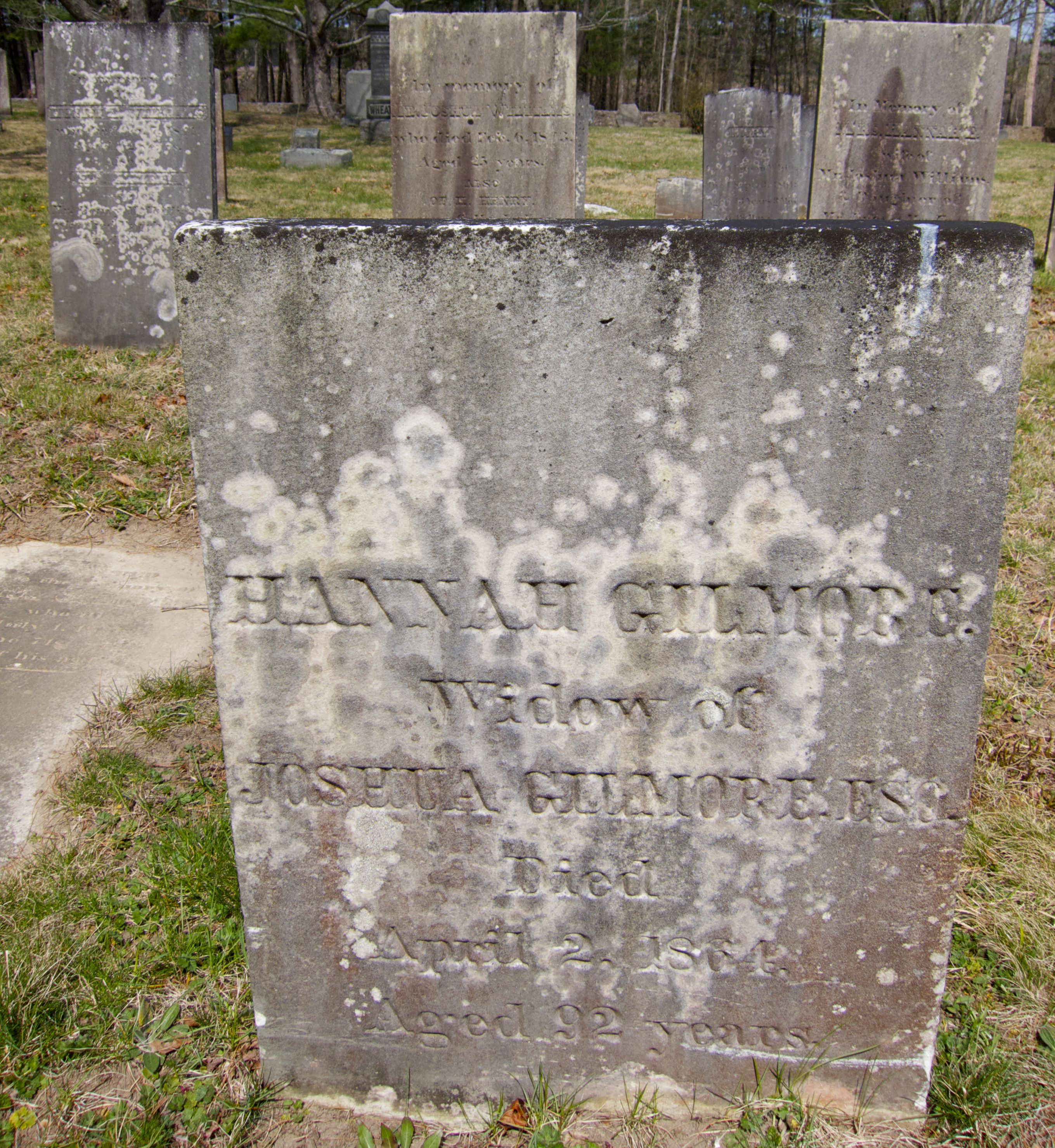
“Mother” was Hannah Lothrop Gilmore, or Mrs. Joshua Gilmore, as she would have been known, or perhaps  The Widow Gilmore, her husband having passed away in 1836.  One year shy of eighty, she was the mother of eight children, of whom only three were still alive.  Evelina was her only living daughter.

Mrs. Gilmore lived most of the time with her middle son, Alson, his wife, Henrietta, and their children at the family farm in the southeastern corner of Easton.  Just north of the town line with Raynham, the Gilmore property lay on what was known as the Turnpike Road.  In the distant past, Joshua Gilmore had maintained a tavern at that site, and had collected the fees from travelers on that road.  In 1851, the family still got income from the Turnpike, but the tavern was gone.  The land was all farm.

Occasionally, Mrs. Gilmore would visit with her daughter in North Easton.  Alson would carry her to church and after the service was over, Hannah would leave with Oakes and Evelina to stay at their home for the week.   While in North Easton, she’d be able to visit not only with her Ames grandchldren, but also with other grandchildren in the area, like Abby and Malvina Torrey.  And on this Sunday, her grandson Edwin Williams Gilmore, a grown son of Alson who no longer lived at the farm, paid a visit.  He would soon be building a home close to the Ameses.

January 21, 1851

Potato

Jan 21  Tuesday.  This morning commenced working on

Susans sack but had some things to do about house so

that I could not accomplish much.  Mrs. Holmes called

to get some potatoes for Miss Eaton  says she (Miss E) is

failing and the Dr had told her that he could not help

her  Mr Robinson came this afternoon to varnish the

chimney pieces & spilled the varnish over my carpet

which prevented me from going to have Susans doll

dressed

Harriet Holmes, a neighbor, came to the Ames house to fetch potatoes for the ailing Miss Eaton, the same Miss Eaton on whom Evelina and Sarah Ames called during the cold spell earlier in the month. The spinster lived with Harriet and Bradford Holmes, their children, Harriet’s mother and a shovel worker named Oliver Eaton – a relative, possibly.  Mr. Holmes was a teamster who probably worked with Old Oliver’s oxen. Many folks who lived in North Easton were connected to the shovel works in some way.

The potatoes that Evelina gave away would have been grown either by Old Oliver or by Alson Gilmore, Evelina’s brother, who owned the Gilmore family farm.  Potatoes were common fare at the dinner table, and particularly a favorite for winter use.  The Irish called them “pratties.” The challenge for a housewife lay in how to serve potatoes: mashed, roasted, and boiled were familiar variations, then and today.  Sarah Josepha Hale underscored the dietary importance of potatoes in her book, The Good Housekeeper.  “To boil Potatoes in the best manner, is a very great perfection in cookery,” she said.

In the Ames sitting room, hapless Mr. Robinson had to contend with a displeased housewife after he spilled varnish on the carpet.  He was already in Evelina’s bad graces from having taken too long to paint around the fireplaces. How do you suppose Evelina got the varnish cleaned up?

January 19, 1851

Ride

1851 Jan 19th Sunday.  It was rather earlier than common this morning

when we had our breakfast as Jane was going to

meeting   We have all been to meeting all day

Mr Whitwell gave us two good sermons, though not

as interesting as usual.  After hearing the class in

the Sunday school I called at Mr Whitwells

This evening have been into Mr Bucks to a prayer meeting

Three Ladies spoke & a number of men.  Very pleasant

Before the Ames family left for church, their servant Jane McHanna was on her way to a Catholic service.  Every few weeks, an itinerant priest would ride into town to conduct Sunday mass in the dining room of a boarding house owned by the Ames shovel company.  Although North Easton offered several Protestant options to its church-going citizens, it had no Catholic church for the influx of faithful who had recently immigrated from Ireland.

The number of Roman Catholics in North Easton, as elsewhere in Massachusetts, was rapidly expanding.  In 1849, Reverend William Chaffin tells us, there were 45 Catholics in town.  By 1852, there were 150; when the Civil War began, there were 400.   As the number of Irish immigrants grew, a dedicated facility was clearly needed.  Recognizing this, in 1850 the Ames family donated a piece of land on Pond Street to the Irish to build their own church.  It was under construction as the year 1851 opened.

Evelina’s day was full of religious activity.  Not only did she hear “two good sermons,” she visited the Sunday school and, in the evening, went out to a prayer meeting held by Benjamin and Mary “Polly” Buck, who lived in a house in the near neighborhood that they rented from Old Oliver.

January 16, 1851

Muff & Tippet B & W

1851

Jan 16 Thursday  Went to Boston with S Ames.  Oakes A carried 

us over to the stage.  We found it very bad walking 

could scarcely cross the street without going over

shoe in snow & water but otherwise a delightful day

We bought some druggett & Sarah a muff & tippet

for herself & cuff & tippet for Helen.  We got us some

oysters at Vintons.  Called at Mr Orrs about four thirty

that we should have time to reach the cars but we were left.

Boys went to an assembly at Canton

Alson & Augustus dined here.

O, joy, a trip to Boston, an event that Evelina typically finds “delightful” no matter what the weather.  After two days of sadness about the death of Lewis Carr, Evelina and Sarah Lothrop Ames headed into the city via stage coach on a shopping excursion.  The railroad, which they called “the cars,” did not yet reach North Easton, but did stop in Stoughton.  The women intended to return by train at nightfall, and be carried home from Stoughton by one son or other, but missed the train and had to stay overnight.  They may not have been disappointed to have to stay in town.

Sloppy weather didn’t prevent the successful acquisition of goods.  Evelina bought some drugget, or carpeting, while Sarah found accessories for herself and her daughter.  Muffs and tippets, naturally, were very much in fashion for winter wear.  Dining on oysters was another highlight, as was a visit to an old family connection, Mr. Orr.

The homefront in Easton was busy, too.  Evelina’s brother, Alson, and his oldest son, Augustus, took midday dinner with Oakes and his children.  Little Susie would have been the only girl at the table.  In the evening, Oakes Angier, Oliver (3) and Frank Morton headed to Canton to a dance.  Everyone’s spirits seemed brighter today.

Photo of muff and tippet, ca. 1840,  from Minnesota Historical Society

January 12, 1851

Preach

/51 Jan 12 Sunday  Have been to church all day and heard two

excellent sermons from Mr Whitwell.  The afternoon text was

“Train up a child in the way he should go and when he is old

he will not depart from it”  Passed this evening at Mr Willard

Lothrop with Mr Ames & met with Minister Norris & Mr Torrey

This noon I stopped to hear Mr Whitwells class in the Sabbath

School afterwards went into Mr Daniel Reeds with Mother

Very warm + pleasant for the time of the year

The Ames family, Unitarians all, attended meeting today and stayed for both services, which encompassed a morning program, an intermission, and an afternoon program.  In their family pew, Evelina, Oakes, Oakes Angier, Oliver (3), Frank Morton and Susan sat with or near Old Oliver, Sarah Witherell and her children, George and Emily.  Also nearby, if not in the same pew, sat Oliver Jr, Sarah Lothrop Ames and their children, Fred and Helen, faces upturned to hear Reverend Whitwell deliver the day’s two sermons.  Eight-year old Susie may have squirmed in her seat; she wasn’t inclined to sit still for the second service.  And Oakes Ames was known to fall asleep, however inspiring Mr. Whitwell’s words were to Evelina.

In 1851, the Unitarians congregated at a church in Easton Centre, a few miles south of the village of North Easton (but still within the boundaries of the Town of Easton, Massachusetts.)  Like many families, the Ameses had to travel by carriage or sleigh to attend Sunday service.  The adults would have ridden, or “been carried,” as the expression went,  but the children may have had to walk the distance.  Children walking to church, regardless of distance, was common.  If this was true for the Ames family, we might imagine that cousins Oliver (3) and Fred walked together, as they were close friends.

At intermission, children went into Sunday School and the adults socialized.  Winthrop Ames, a grandson-to-be, described the scene in his family history (from 1937):

“They tethered their horses in a long, open shed and stayed through both morning and afternoon services, eating the luncheons they had brought and gossiping with the townsfolk during the intermission.”

On this winter Sunday Evelina and her mother, Hannah Lothrop Gilmore visited at the nearby home of Daniel and Mary Reed.  Socializing continued in the evening as Evelina and Oakes called on Willard Lothrop.

January 11, 1851

Workbox

/51 Jan 11 Saturday.  Made a haircloth back & cushion for one

of my rocking chairs.  Mrs Witherell brought in her work

and staid about two hours.  Willard Lothrop made

quite a long call.  Told Mrs W that he did think at one

time of coming to see her but she looked so dignified &c that

he could hardly muster courage &c &c  This evening have been

mending stockings & reading the papers.  Mr Ames has been

to Boston bought him a pr of Robbins.  Brought home watch

Very warm, pleasant but sloppy.  Bought 5 3/4 lbs Beef of C Lothrop

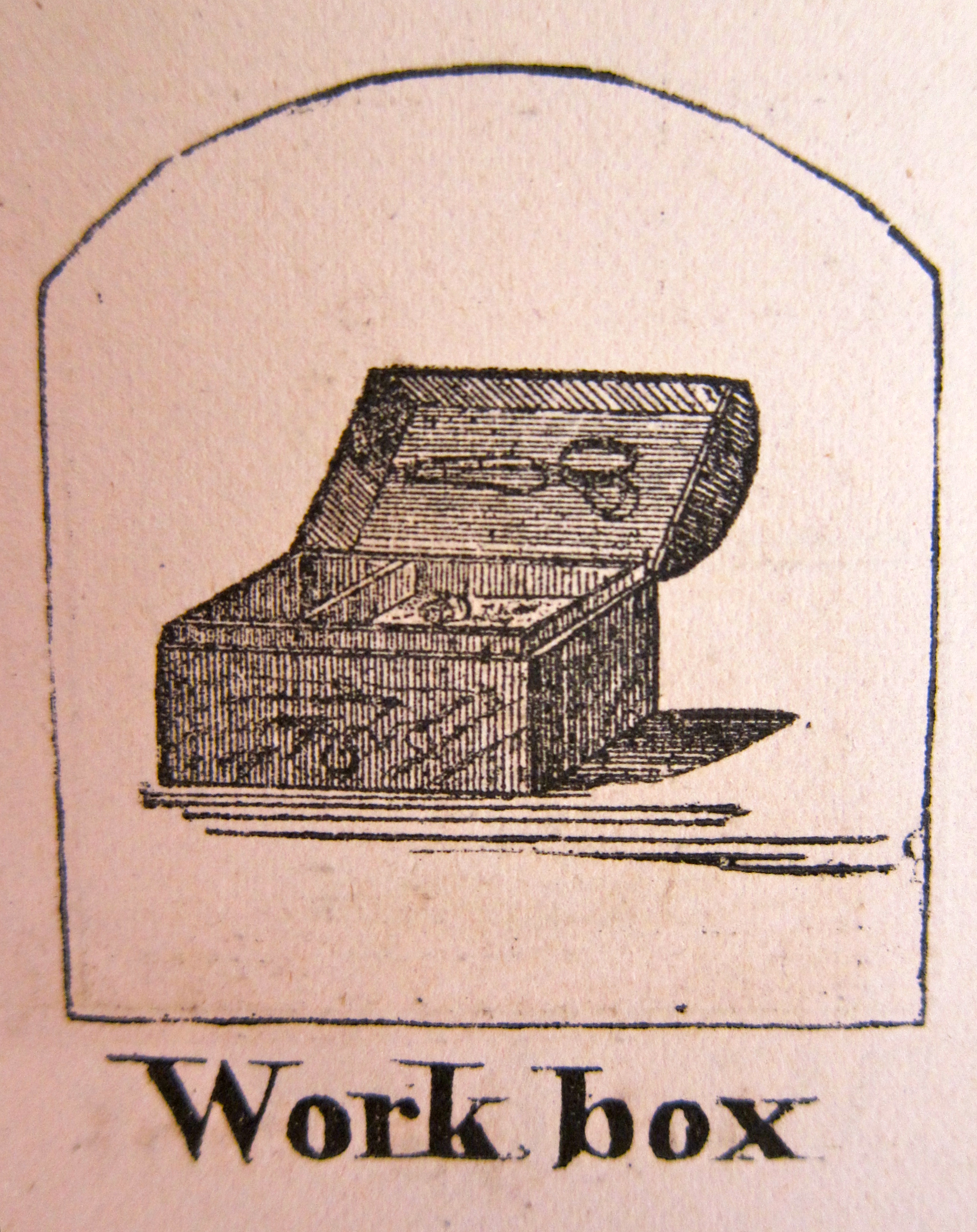
While Oakes made his usual Saturday trip into Boston, Evelina and Sarah Witherell sat together in the Ames’s front room, sewing. Evelina was completing a horsehair back and cushion for a rocking chair.  Horsehair upholstery was common in the 19th century, the haircloth being both durable and lustrous, plus relatively inexpensive.  Evelina, accomplished housewife that she was, would naturally have undertaken to do this work herself.

With their work boxes at hand, the two sisters-in-law sat, sewed and conversed until the arrival of a visitor, Willard Lothrop.  Mr. Lothrop, an employee at the shovel shop, was something of a character.  He was a self-declared medium and an impassioned advocate of spiritualism. (He may also have been related to both Evelina and her other sister-in-law, Sarah Lothrop Ames, through the Lothrop family line.  There were many Lothrops in the area.)

Spiritualism was a practice that claimed, in Reverend William Chaffin’s words, “that there is a vital connection between the seen and the unseen worlds by which communication between the two can be maintained.”  Though hardly a new concept, this American iteration took root in the mid-19th century and gained strength for a time after the Civil War.  Many in North Easton, especially those living along the Bay Road, were interested in it.

Lothrop, the purpose of whose call at the Ames house is not disclosed, focused his attention on Sarah Witherell, confessing that he found her unapproachable.  No mention of Evelina being inaccessible!  Lothrop offers us a rare, backdoor insight into the character, or the bearing at least, of the Ames sister of whom we know the least.  Except for her presence in Evelina’s diary, Sarah Witherell left almost no trace behind, no diary, no stories, no grandchildren, no legacy.  In a powerful, visible, active family, she may simply have been its most private member.

After Lothrop left, what did the ladies talk about?  And what are the “Robbins” that Oakes Ames bought in Boston?