August 29, 1851

WhiteAster

Friday Aug 29th  Alson & Mr Hall came early this

morning and were here to dinner & tea, brought Pauline

with them  Have been mending for Oliver getting his

clothes ready for school  Went with Pauline to Edwins

garden he has not many pretty flowers in blossom has

some fine Dahlias  got 5 lbs of butter at Mr Marshalls

after we came back went into Olivers to hear Pauline

play.  George & wife & Sarah gone to her fathers

The day after Clinton Lothrop’s funeral, Sarah Lothrop Ames, her brother George Van Ness Lothrop and his wife Almira spent the day, at least, at the Lothrop farm with their parents, Howard and Sally Lothrop. They would have had to make long-term plans for the property, now that Clinton wouldn’t be there to tend the family farm.

Alson Gilmore, Evelina’s brother, took his meals at the Ames’s today.  He was working nearby, perhaps with Mr. Hall, helping his son, Edwin Williams Gilmore, build a house. They were putting in the cellar.  Pauline Dean, who must have been staying with or near the Gilmores, returned for a visit. She probably got roped into helping Evelina with the mending.

Evelina had a lot of mending to do, as Oliver (3) was preparing to go off to school.  Like his cousin Fred Ames, he was going to attend an Ivy League college, but in Providence, not Cambridge.  Oliver (3) would be going to Brown, and his mother had to get his clothes ready. Shirt fronts, collars and hose weren’t her only business today, however.  She and Pauline took a break from domesticity and went to Edwin Manley’s to see his garden. There they saw “some fine dahlias.”

Dahlias, which had been introduced in the United States early in the 1800s, had quickly became popular, although not yet listed in Joseph Breck’s Book of Flowers. So successful were they that over the course of the century more than 10,000 varieties were developed or identified and sold. Today, dahlias are still much admired by flower gardeners, yet less than a dozen of those 19th century heirloom examples still exist in cultivation.* The earliest known, White Aster (above) dates from 1879.

*oldhousegardens.com
July 19, 1851

Lightning


1851

July 19 Saturday  To day I have been sitting with mother

sewing on muslin & cambric insertion mending &c

It has been very showery accompanied with heavy

thunder and very sharp lightning  Oakes Angier

went to Mr Algers after some butter to night and

carried Mother home  Orinthia is here to day

called this afternoon to see Abby Torrey 

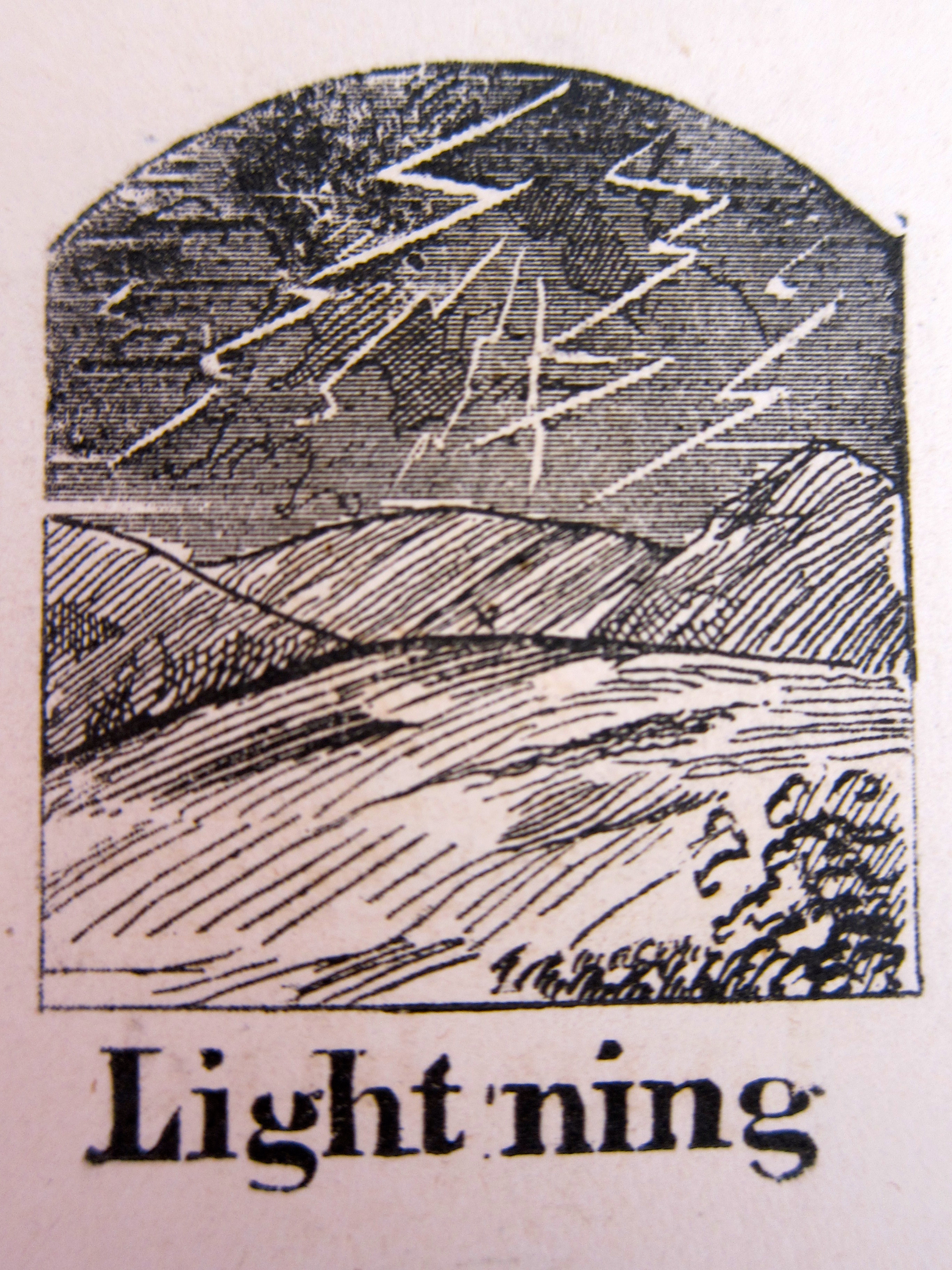
Yesterday’s hot, sticky weather gave way to thunderstorms today, with “very sharp lightning.”

Hannah Lothrop Gilmore returned to the family farm, driven there by her grandson Oakes Angier Ames.  He went on to pick up some butter at the farm of Bernard and Vesta Alger, who lived not far from the Gilmores on the turnpike road.  It’s curious that Evelina was buying butter this summer, because earlier in the year she had been selling it.

Orinthia Foss was back at the Ames’s for a visit, up from the home of Elijah and Nancy Howard where she was boarding. She went into the village to pay a call on Evelina’s niece, Abigail Williams Torrey. Evelina, meanwhile, spent her Saturday mending everyone’s clothes, and working on an “insertion” for one of her dresses.

June 11, 1851

images

June [11]  Wednesday  Mended

Oakes Angiers coat put on new

buttons  Then made the button holes in 

the waist of Mrs Sarah Ames dress. Cooked

a calfs head for dinner  This afternoon

about three Mrs Witherell, Mitchell & Miss

Eaton & self went to call on Mrs Whitwell.

Called at Mr Wm Reeds  Mrs Reed was from

home.  Called at Dr Swans.  Bridget here.

A[u]ugustus gone to Boston.


Evelina’s activities today were quintessentially nineteenth-century.  She mended her son’s coat, made button holes for her sister-in-law, rode out in the carriage with her other sisters-in-law to call on the parson’s wife, and served a calf’s head for dinner.

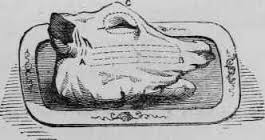
Perhaps there is a reader out there who has been served calf’s head, or cooked it.  Most 19th century cook books carried a “receipt” for it, right next to recipes for calf’s feet, sheep’s head, and roasted sweetbreads.  Calf’s head could be roasted or boiled; the recipe below from Mary Peabody Mann’s 1858 Christianity in the Kitchen opts for the latter.  What follows is not for the squeamish:

To Dress a Calf’s Head

Soak the head for ten minutes in lukewarm water, powder it well with rosin, dip it into a large quantity of scalding water, and holding it by the ear, scrape off the hair with the back of a knife.  When clean, take out the eyes, cut out the tongue, remove the jawbone with teeth, saw lengthwise through the skull without injuring the brains, which must be carefully taken out, and put for a few hours into lukewarm water, to disgorge, [that is, to rinse out the blood.]

Make a stock by putting into the brazing pan two or three carrots and onions, six cloves, a pint of cream, a bouquet of parsley, thyme, and bay-leaves, and after stirring this together for twenty minutes over the fire, add a pint of water.  When this is warm, mix a quarter of a pound of flour with a gallon of water, slice a lemon, add a quarter of a pound of salt, and lay the calf’s head into the stock.  Let it be entirely covered, else the uncovered part will have a dark look, and simmer it gently till it is tender.


June 10, 1851

url

June 10th 

Tuesday  Worked all the forenoon and part of the afternoon

weeding the flowers.  Got some Petunias at Mr Savages

The gardener has been to work in my flower

garden most all day weeding and fixing the

beds, has made them wider  This afternoon have

been mending Franks & Olivers pants

Mrs Witherell & Mitchell & Miss Eaton walked

up to Edwins garden.  Abby & Miss Smith called

Bridget ONeil here to work to day


The weather was fine enough that sisters Sarah Ames Witherell and Harriett Ames Mitchell took a long walk north toward Stoughton with their houseguest, Miss Eaton. They headed to Edwin Manley’s garden, a much-visited spot, to see what he had growing. Being on foot, it’s doubtful that they purchased anything to bring home. They may have ordered something to be delivered, however.

In the morning, Evelina went out to look at flowers, too, at the nearby home of William Savage, a shovelworker, and brought home some petunias.  Petunias, a great garden favorite in the latter half of the nineteenth century, originated in South America, appeared in Europe by 1800, but had only recently become available in the United States. Petunias were still so exotic, in fact, that they didn’t appear in the list of annuals in Breck’s Book of Flowers, published in Boston in 1851. How did Mr. Savage come upon them?

The Ames’s new gardener, who had been with the family for almost a month, weeded the flower beds today and worked at making them wider. Evelina’s parlor garden was becoming more and more ambitious. And for some reason, Bridget O’Neil, a servant, worked at Evelina’s today. She had been working next door at Oliver and Sarah Lothrop Ames’ house.  Where was Jane McHanna?

June 3, 1851

barege2


1851 

June 3rd Tuesday  Have finished Susans green plaid gingham

and have cut the sleeves to her green borage Delaine

Have been mending some, but realy I have done

so little sewing of late that I can scarcely sit myself

to work.  Jane has cleaned the boys chamber in 

the other part of the house

We are having very fine weather and I feel much better

than I have for a few days past


When sewing, Evelina often mentioned using borage, more properly spelled “barege.” Barege is a fabric with a sheer, gauzy weave that features a worsted warp and a silk weft. Warp is the longitudinal thread in a roll of cloth; weft, also known as woof, is the transverse or horizontal thread that is woven through the warp with a shuttle. Using two different types of thread creates a cloth with some texture to it.

Barege was quite popular for dress material in the mid-19th century, even taking prizes at shows. At London’s Great Exhibition of 1851, a medal in the “Worsted Class” went “for a great variety of light goods of the barege class, plain, checked, and brocaded, of excellent combinations.”*  Although most of the fabric that Evelina used was made in New England, it’s possible that the green barege for her daughter’s dress had come from abroad.  The example illustrated above features a barege dress from the early 1860’s.

Getting back to dressmaking, her favorite kind of sewing, may have contributed to Evelina’s improved spirits today. The “very fine weather” probably helped, too.


May 17, 1851

Plant

1851

May 17  About eight Oclock this morning

Orinthia & I rode to Mr Manlys to get some plants for

our garden  He kept us there a long while talking

about them and calling over the long names untill we

almost despaired of getting any  At last we got a few

and come home & set them out & called at Mr

Savages, got a few there  This afternoon we have had

a shower.  I mended the stockings &c &c


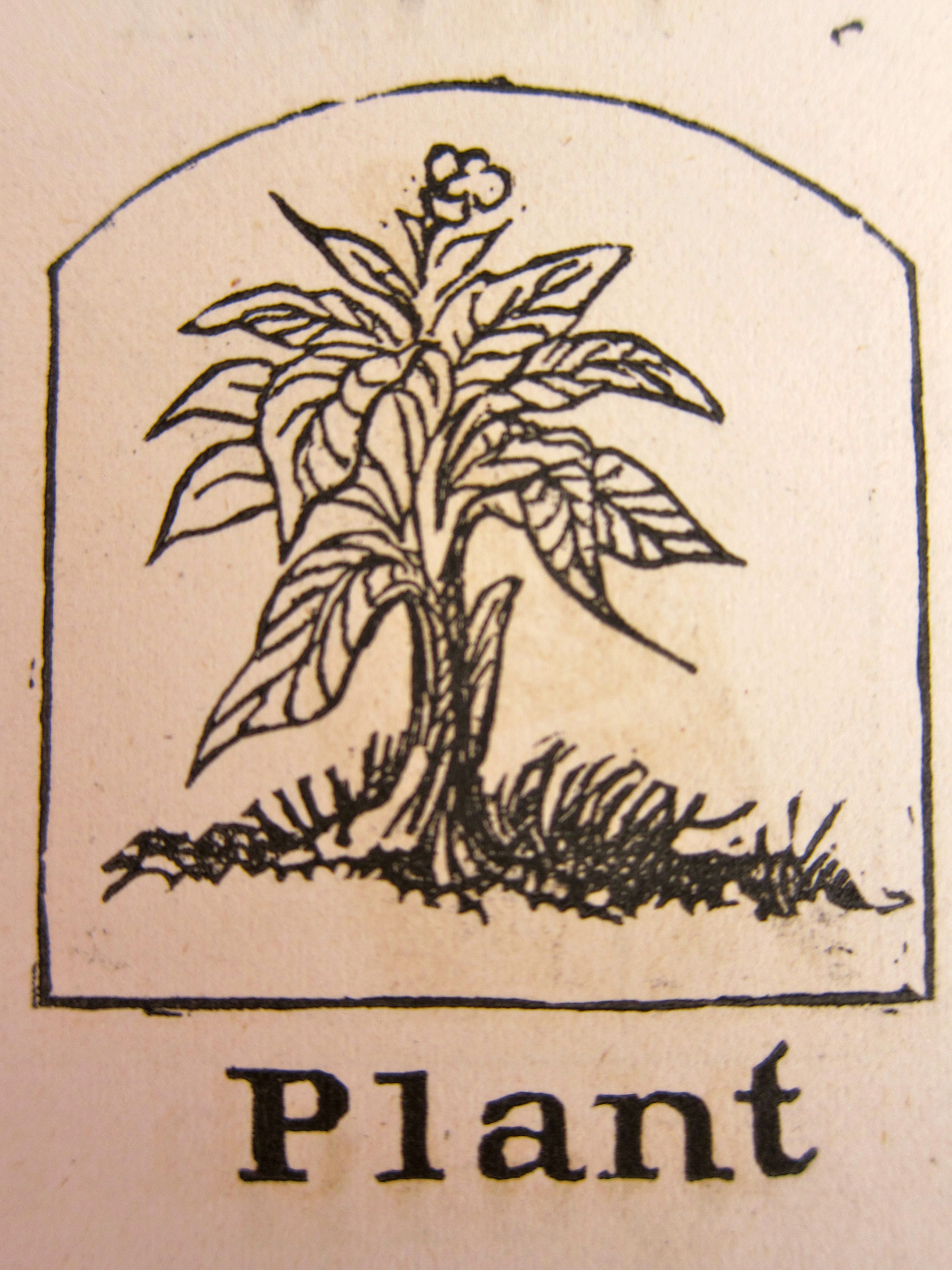
With help from her boarder and young friend, Orinthia, Evelina was making headway everyday in her garden. Early this Saturday morning, the two women rode once again to Edwin Manley’s for plants. Mr. Manley, a knowledgeable and somewhat eccentric fellow, kept the ladies “there a long while” discussing the selection of plants, going over their Latin names and properties. Let’s hope that Evelina’s impatience to be on her way didn’t spoil his clear appreciation of the flowers he could offer her.

From Mr. Manley’s, the eager gardeners went on to yet another source for plants. William Savage was an employee at the shovel shop. Unlike Mr. Manley and Mr. Clapp, he lived in the neighborhood of North Easton. He grew petunias, which were a fairly new flower for the home gardener, among other plants. Evelina was collecting all kinds of specimens for her parlor garden.

Other growers were less sanguine than Evelina about the prospect of the coming growing season.  Old Oliver, Evelina’s crusty father-in-law, noted in his daily journal that  “this was a fair day in the forenoon with a strong south west wind it was cloudy in the afternoon + a verry little rain and rather cool. the ground is verry wett + the season backward about doing the planting”.  Backward season or not, the planting – and gardening – had to go forward.

May 2, 1851

1528

Globe Amaranth

1851

May 2nd Friday.  Susan started with several other children

about 6 Oclock maying and did not get back

untill half past nine.  They went over three miles

to the “West Shire”  I made cake & ginger snaps to

bake with Mrs Witherell. Jane made some pies and 

bread.  Mr & Mrs Whitwell and Mrs William Reed

called. Afterward planted some globe seed and 

carried my stockings to mend in the other part of the house

Today’s good weather gave Susie Ames and her friends the opportunity they missed yesterday. Leaving early in the morning, they walked west to deliver May baskets to friends and family, or perhaps even to strangers. It sounds as if the children walked a long way on their little legs. Readers in Easton, where exactly is the “West Shire?”  By the Bay Road?

Baking was in order today. Evelina and her sister-in-law Sarah Witherell baked cake and ginger snaps, while Jane McHanna prepared the usual pies and brown bread. Did the children get any ginger snaps when they returned home? Certainly, Reverend and Mrs. Whitwell would have been offered some to eat, as would Abigail Reed, wife of the Reverend William Reed. Guests who dropped in, whether or not they were expected, were always offered refreshments such as tea and fruit or biscuits. Cider was a common refreshment, too, but not at the Ames’s house; it was too close to alcohol.

Once the guests had departed, Evelina went out to her garden and began to plant globe seed. Did she have a specific plan in mind for the garden, or was her planting haphazard and spontaneous? If she consulted any of the publications she read, like The Massachusetts Ploughman, or the ladies’ periodicals, she probably found suggestions for arranging her flower beds.


April 25, 1851

Coat

1851

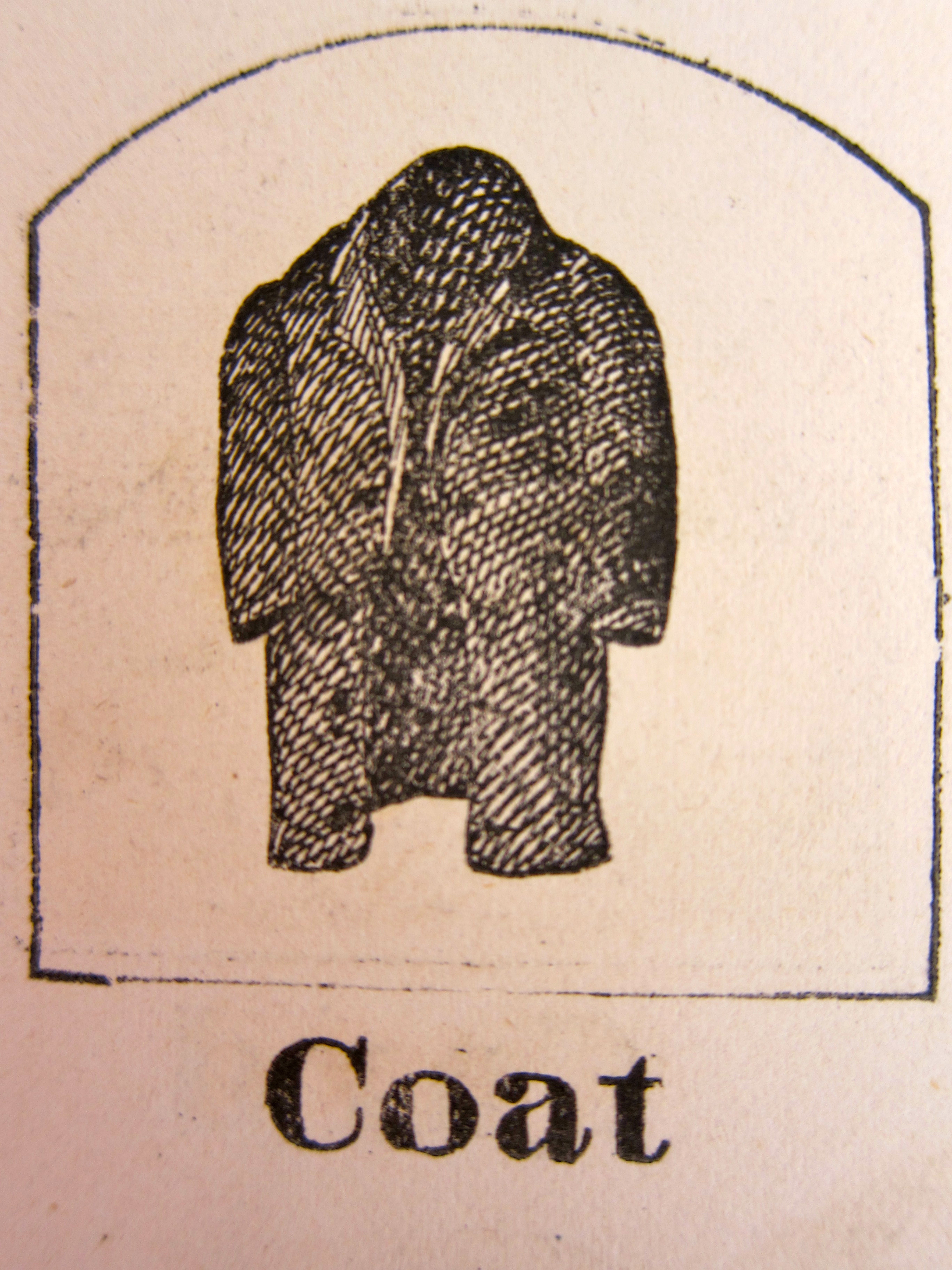
Friday April 25  Have done some mending and been putting

things in order about the house Made Mrs

S Ames bed and stoped with her awhile

This afternoon mended Oakes Angier two coats.

dirty things they were! Met Mis[s] Foss coming from

school and called with her at Mrs Holmes & Mrs 

Connors spent the evening with Mrs S Ames

Mr Harrison Pool & wife & Mrs Horace Pool called

Sarah Lothrop Ames was still sick and unable to get up and around. Once again, Evelina went next door to visit and helped out by making Sarah’s bed up fresh.  Later in the day, Sarah had a companion, Mrs. Connors, sit with her. Was she being “watched” or was she on the mend? Who made the decision to have someone sit with her?  Her husband or her female relatives?

Mending and housework otherwise took up Evelina’s time today. She and Jane McHanna were still carrying on with spring cleaning, but the effort was sporadic lately, with mending taking over much of Evelina’s time. In the transition from cold to warm weather, all the spring and summer wardrobes had to be brought up to snuff, “dirty things” that some of them were.

The Pools came to call this evening.  Harrison and Horace Pool were brothers, fifteen years apart in age, who lived in the south eastern section of Easton, near the Raynham line and the Gilmore farm.  They made mathematical instruments: surveyors’ tools, levels, compasses and thermometers, among other items. Harrison’s wife was Mary J Pool, a young wife close in age to Oakes Angier.  Horace’s wife was Abby A. Pool, identical in age (43) to Evelina.  Mary and Abby were members of Evelina’s Sewing Circle, two of the women who didn’t attend the meeting that Evelina held back in February. Evelina would have grown up knowing the Pool (also sometimes spelled Poole) family.

April 18, 1851

aclk

U.S. Three Cent George Washington stamp, 1851

1851

April 18  Friday  I have made up the bed new in the 

parlour chamber and got the room in pretty

good order have not got to clean it this spring

I have been choring about house most all 

day about four Oclock  went into

the other part of the house & took the stockings

with me to mend  Not at all pleasant

Spring was the season for choring, choring, choring. Until she went to sit and mend stockings with Sarah Witherell, Evelina worked around the house all day.  The bad weather of the past several days continued.

The Ameses kept a bed in their parlor.  This seems strange to us, but it was customary at the time, or had been.  The practice was waning, as bigger, Victorian houses became the style and the older Colonial and Federal floor plans were abandoned.  Once upon a time, however, a downstairs parlor served multiple purposes.  We know it as the spot in the house where more formal visitors were welcomed. In the 18th and into the 19th century, the parlor was also where the master and mistress of the house might sleep, while children went upstairs to colder quarters. As the family became more affluent and rooms got reconfigured, the bed in the parlor accommodated overnight guests.  Several weeks back, in fact, inclement weather had forced William and Eliza Whitwell to stay over; they may have stayed in the very parlor that Evelina put “in pretty good order” today. Same with Evelina’s mother when she came to visit.

Many Ameses celebrated their birthdays in the month of April.  Today was another family birthday, that of John Ames 2d, the youngest son of Old Oliver and Susannah, who was born on this date in 1817. He was never in robust health, never married and succumbed to lung disease at age 27.  Before his death, however, he served as the very first postmaster of North Easton, then a new outpost between two larger post offices elsewhere in Easton proper. According to historian William Chaffin, young John Ames’s “office” consisted of “a large box with a cover […] set upon a post” with “mail (at least newspapers and heavy mail)” that was “put into and taken from this box by the drivers of the passing mail-coaches.”  This newest post office was needed for the increasing amount of mail coming in and out of the shovel factory.  With his health too poor to work in the factory itself, at least John had a role in managing the post.

April 4, 1851

fc63da74a7d83ab723f4be9af9db4c70

1851

April 4th

Friday  Have been working about house this forenoon

Gave my parlour a thorough sweeping & bedroom

& stairs &c  Have not been at all well and had

hard work to sweep.  Jane finished the ironing

We have had a hard weeks work  This afternoon

I mended the stockings  Called at Olivers awhile

Mrs Peckham called here.  Very Pleasant

Evelina was feeling the effects of a laborious week of domestic duties. Over the past several days, she and Jane McHanna had really turned to in the kitchen, preserving a pig, trying lard, making sausage and doing the bi-weekly baking. On top of that the women had seen to their regular chores, which included ironing and sweeping the rooms free of the spring dust. Evelina managed all this while recovering from the cold of the weekend before. Sitting down to do some mending must have felt good.

She found some compensation by briefly visiting her sister-in-law, Sarah Ames, next door. And at home, Susan Peckham came to call. Mrs. Peckham was the wife of John Peckham, the Ames’s head clerk and bookkeeper. What was the purpose of her call? Susan may simply have desired to be sociable, or she may have had something she needed to communicate. At a time when today’s instantaneous ability to telephone or text someone was unimagined, even the simplest request or slightest inclination to talk to a friend, a relative, or, in this case, the boss’s wife took time and effort. Susan Peckham, whatever her purpose was, had only two options open to her: writing Evelina a note, or calling on her.  She chose the latter.

What might the women have discussed?  Evelina didn’t say.