October 17, 1851

OLYMPUS DIGITAL CAMERA

Friday Oct 17 Was working about house most of the

forenoon and have been sewing on Susans

and my dress.  Carried my work to Augustus

for a couple of hours this afternoon.  Lavinia

and Abby were there  Mr Ames has been quite 

unwell for a day or two and to night has taken

a warm bath  I have written a letter to Oliver

this evening  Mr Ames sent him a check for 25 Dls.


Oakes Ames had taken ill. Had he caught the nettlerash from his wife and daughter? Or was his illness something closer to a simple bad cold? He was “quite unwell.” Whatever he had, Oakes chose to palliate his ailment with a hot bath. Did he take a sitz bath, one that would alleviate itching from a rash?

That Evelina makes note of her husband taking a bath insinuates that his bathing was something out of the ordinary, which wouldn’t be unusual for the era. Regular bathing, which for many meant a weekly bath, was only just becoming the norm, and indoor plumbing was only just taking hold in urban areas.  Unlike the image in the illustration (which was published circa 1877), most bathtubs at mid-century were still free-standing.  The bath water was poured from buckets of hot water, which had been drawn from a well or cistern or kitchen pump and heated on the stove.  (Thus the expression, “to draw a bath.”)

The Ameses were fortunate in having their own indoor plumbing, a fact we know from Winthrop Ames’s mention in his family history of a “bathing room” in the house. Was this room shared by both families, as the brick oven was?

Oakes wasn’t too ill to write a check for his son, Oliver (3), who was away at college. Evelina wrote to Oliver and perhaps enclosed the check with her letter.  Had Oliver written home asking for money?  Such a scenario is certainly time-honored.


October 16, 1851


OLYMPUS DIGITAL CAMERA

*

Thurs Oct 16th Lavinia came back with O & F and spent the 

night  Sat with her awhile and sewed some on

the waist of my dress and sewed some buttons on

Franks vest  Went with Augustus with her

about Eleven and stopt an hour.  This afternoon

have been to Augustus Lothrop with Mrs S Ames

He has been sick about a week with the

Typhoid fever.  Bought 3 Bl apples of N Alger

Mrs Swain has a son born this morning

Evelina’s niece, Lavinia Gilmore, stayed the night with the Ameses, having ridden from the Gilmore farm with her cousins Oakes Angier and Frank Morton Ames.  Lavinia often visited with the Ameses in North Easton, evidently enjoying the bustle that the village of North Easton provided, relative to life on the farm. Today she sat and sewed with her aunt, who always enjoyed company while sewing. Somewhere along the way in today’s comings and goings, Evelina purchased three bushels (or barrels) of apples from Mr. N. Alger, a probable neighbor of Lavinia and her family.

In the afternoon, Evelina went with her sister-in-law, Sarah Lothrop Ames, to visit one of Sarah’s many brothers. This youngest brother, Horace “Augustus” Lothrop, lived in nearby Sharon where he ran a cutlery company.  He was quite ill with typhoid fever, a bacterial disease that was all too common in the 19th century. Spread by unsanitary conditions, typhoid fever killed more than 80,000 soldiers during the Civil War. Happily, Augustus Lothrop would survive his bout with the disease.

Another survivor today was Ann Swain, who came safely through the birth of her first child, a son. No doubt the relatives who had gathered to help were thankful and pleased.


Illustration of nursery furniture from Godey’s Lady’s Book, 1851

August 25, 1851

il_570xN.69597337

*

Monday Aug 25  Did not wash this morning on account 

of having so much company  Warren left in the stage

cousin Jerry went to Mr Thesis with Oakes Angier

and Frank on their way fishing.  Alson dined here.

We Ladies all called at Mr Torreys & on Elisha

at the Boot shop.  Mr & Mrs & Miss Kinsley & Miss

Billings from Canton were here to tea – came

about 6 Oclock went to the shop with them

Another Monday and for the second time that summer, washing day got deferred.  Tidying up from “having so much company” took precedence over routine. The young relatives, Jerry and Warren Lothrop, left in the morning.  Another visitor, Pauline Dean, remained.

Oakes Angier and Frank Morton Ames left to go fishing, a trip they had deferred from last week. They had waited then for the imminent death of Dewitt “Clinton” Lothrop, which hadn’t happened.  Clinton, though deathly ill with typhus, was hanging on. The boys decided to wait no further, and departed.

Evelina and “We Ladies” – which could only mean Pauline and probably niece Lavinia – went to see Col. John Torrey in the village and called on Elisha Andrews at the boot factory. Elisha, who was 27 years old and single, had started up the factory with Augustus Gilmore and Oakes Angier Ames. In recounting the visit to the boot shop in her diary, Evelina underlined Elisha’s name. Why? The visit was significant in some way; perhaps one of the women – Lavinia? – was romantically interested in Elisha.

More socializing continued late in the day when the Kinsley family visited.  Lyman Kinsley, his wife Louisa, daughter Lucy Adelaide and a Miss Billings (a niece of Louisa, most likely) came for tea. Mr. Kinsley ran an iron and machine shop in Canton, an enterprise that the Ameses would eventually own. After tea, they all walked over to the factory.

* Currier and Ives, “Starting Out,” print, ca. 1852

August 24, 1851

Road

Sunday 24th Aug  We turned out to church pretty well for us

to day 9 from here 7 from the other part of the 

house 5 from Olivers.  Mr Whitwell preached

Cousin Jerry, Warren, Orinthia Lavinia & Rachel

came at noon  Alson & wife Edwin & Lavinia came

after meeting.  Lavinia will spend the night.

This evening Cousin J & W went with me to call at Willards

Twenty-one people attended church today from the Ames family compound.  Immediate and extended family members and their guests rode down Centre Street to the Unitarian meeting house to listen to Reverend William Whitwell preach. How many carriages rolled down the road?  Did any of them walk, or did they all ride? Did they all fit into the family pews?  Some returned home after the first service.

Adding to the crowd after church, Evelina’s brother Alson, sister-in-law Henrietta, and two of their offspring, Edwin Williams Gilmore and his sister Lavinia, came to the house as well. The gathering spoke to the warmth and closeness of the extended family.  It also spoke to the relative ease of travel at this time of year. Traveling between the homes of friends and family had been marked this month, with everyone taking advantage of the good weather – and good roads – before winter.

The visiting continued in the evening when Evelina took Jerry and Warren Lothrop to visit Willard Lothrop, a local spiritualist, shovel shop worker, and likely relative.


August 20, 1851

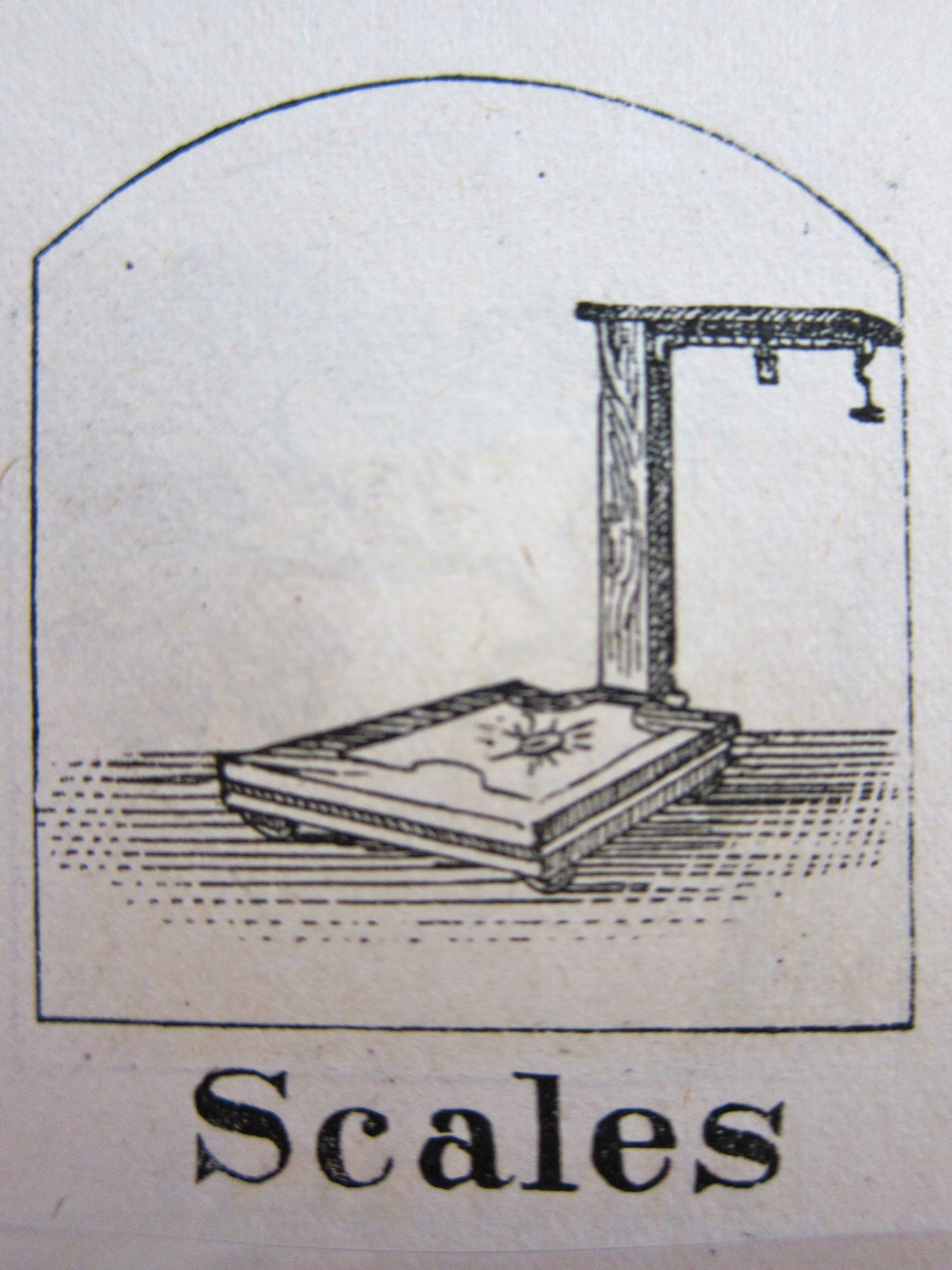
Scales

Weds 20th Aug  Rachel, Lavinia and Augusta Pool spent

the day here  Mr Ames and Augustus went to Boston

Pauline Dean came to night in the stage

appears the same as she did when she left

Went to the store & was weighed  148 lbs

called at the factory to see Edwin work and he came to

tea  Mr Whitwell called while we were gone

Not shy, Evelina stepped on the scale at the company store.  Fully clothed in the voluminous fashion of the day, she weighed 148 pounds. Given that her dress was full-skirted and worn over a chemise, undersleeves and petticoats, and that she wore a bonnet and most likely kept her hose and shoes on, her actual weight was probably several pounds less than she reported.  She likely weighed closer to 140.

Evelina missed a visit from Reverend Whitwell today, as she was out and about with young female company.  Two nieces, Lavinia Gilmore and Rachel Gilmore Pool, came over with Rachel’s sister-in-law, Augusta Pool.  They were ages 19, 21, and 22, respectively. They visited the store, shopped, perhaps, and watched their aunt get weighed. Perhaps they got weighed themselves. It might have been a lively time as they chatted and moved back and forth.

From the store the group traipsed to the shovel factory to watch Evelina’s nephew and Lavinia and Rachel’s brother, Edwin Williams Gilmore, work – an unusual visit to say the least, and one that could only have been accomplished in the company of the boss’s wife. What did the workmen think?

Edwin, nearly 23, would not work at the shovel shop for long. By 1854 he would be manufacturing hinges along with business partners Oakes and Oliver Ames Jr., whom he would eventually buy out. All that was in his future; today he would join his sisters and their friend Augusta for tea at his aunt’s.

August 9, 1851

Early-Tornado-Drawing_GrazulisBook


*

Aug 9th Sat  Was mending most of the forenoon after doing

my chamber work  This afternoon Helen & I have

been to Mothers found her quite sick with a cold

so that she could not speak aloud.  Called for

Orinthia to carry her with us but she did not go

Brought her home with us at night  Just as we 

got to Mr Howards there came up a tempest &

we stoped untill it was over

Helen Angier Ames, aged 14, accompanied her Aunt Evelina this afternoon to the Gilmore farm, perhaps to see Evelina’s niece, Lavinia Gilmore, aged 19. The two young women were friends. The schoolteacher, Orinthia Foss, was invited to go along as well but declined. Instead, she joined Evelina and Helen on their return trip.

As she often did, Evelina went to visit her mother and family at the farm where she grew up. Hannah Lothrop Gilmore, aged 79, lived most of the time with her son Alson. She was usually in good health, but today she was “quite sick” with a summer cold and laryngitis.  Illness seemed to be all around Evelina in these dog days of summer.

On their ride home, the women encountered a storm violent enough to make them stop off at the Howards’ house. The outburst was, in fact, part of a squall line that produced a tornado in Hartford, Connecticut.  A “tempest,” Evelina called it, using a word that nowadays isn’t often heard in American English.  Modern usage might describe the storm less poetically as a “weather event.”

*U.S. Tornado Early History, http://www.ustornadoes.com  

June 1, 1851

imgres

*

1851

June 1st Sunday  We have all been to church to day.

The young people went to walk to the hoe shop

& [illegible] before meeting.  Mr Ames Miss Linscot

Orinthia, Susan & self came home at noon.  After

meeting Lavinia came home with us  Oakes A

carried them to a sing to our meeting house

and then O & L home  I feel rather down

hearted to night & have been for two or three days

The young people gathered today for a sing at the meeting house.  Oakes Angier and his brothers, perhaps, accompanied Orinthia, her friend Frances, and Cousin Lavinia to the church for an evening that was probably more lively and joyous than the two sermons they had listened to earlier. They sang and socialized.

Evelina was neither lively nor joyous. She was “down hearted,” and no singing or June sunshine seemed to make it better. Where did her blues come from? Was she upset with Oakes for some reason? Did she reconsider her friendship with Orinthia and find their age difference suddenly unbridgeable? Was she tired from the spring cleaning? She doesn’t mention a particular instance that could have set off a mild depression.

In 1851, Evelina was in her early forties, an age subject to the physical effects of “change of life,” a condition that 19th century women wouldn’t have known much about, much less admitted to if they did. The formal and fastidious norms of the day abhorred words that alluded to specific female conditions. The word “pregnancy,” for instance, was indelicate; if they said anything at all, it was that a woman was “in the family way.” Some described childbirth as “being taken ill.” Menopause, a word that even some 21st century women are reticent to use, was not in Evelina’s vocabulary.

Yet a lack of understanding and the absence of social acceptance couldn’t obviate a real female condition.  Evelina was at a stage in her life when the onset of menopause could begin to influence her mental and physical state. The chemistry of her body could have made her feel down-hearted without her knowing why.

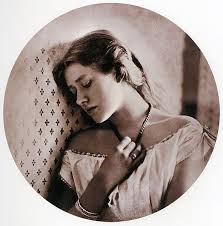
*  “Sadness” evoked by 19th century actress Ellen Terry.  Photograph by Julia Margaret Cameron.

May 15, 1851

pond_water

Ames Long Pond

May 15

Thursday  I was intending to go to Boston with Mrs S Ames

this morning but she has the ague in her face

which prevented and lucky for me that I did

not go for about twelve Oclock Lavinia, Ann Pool,

and Francis, came and this afternoon Abby.  We all

rode to Edwins and Mr Clapps garden and to the ponds

Jane cleaned the […] buttery, and I was working

in the chambers when they came


Sarah Ames was sick once again, this time with what was probably a head cold, so a planned outing to Boston was called off. Sarah had been quite ill for much of the spring; perhaps she hadn’t given herself enough time to recover and was now suffering a relapse.

Normally, Evelina would have been disappointed to miss a trip to Boston, especially as she still needed to buy a bonnet, but a visit from a set of young relatives made for a happy alternative.  Her nieces Lavinia Gilmore and Abby Torrey, nephew Francis Gilmore, and a young friend of theirs, Ann Pool, arrived and rescued her from choring. With Francis holding the reins, presumably, the group rode north toward Stoughton, where they stopped at two farms to look at garden plants, one farm belonging to Edwin Manley, the other to Lucius Clapp.

They also rode by the ponds, including Ames Long Pond, which sits on the boundary between Easton and Stoughton. Most likely they also rode by Flyaway Pond which had been created only six years earlier, in 1845, to supply more water power from the Queset River to the shovel factory. Queset, according to historian Ed Hands, was “the most heavily used of all the drainage systems” in the watersheds of Easton.*  The shovel business would never have started in Easton had it not been for the Queset (Brook) River; O. Ames & Sons absolutely relied on it for decades.

Flyaway Pond is no longer configured the way Evelina and her companions would have seen it during their pleasant afternoon ride. It collapsed during a huge flood in March, 1968, wreaking havoc and causing considerable property damage.   As Hands points out, that 20th century flood washed away an important symbol of the Ames period in Easton, that of the control of the Queset River for commercial purposes.  Evelina couldn’t imagine that future for Flyaway Pond, of course; she could only enjoy riding past it and Ames Long Pond – and others, perhaps? –  in the spring air.

*Edmund C. Hands, Easton’s Neighborhoods, 1995


May 11, 1851

photo

*

Sun May 11th  Have been to church this afternoon. Did

not feel like going in the morning It rained

this forenoon but cleared off quite pleasant

after dinner and after church Oakes A, Orinthia

and I called at Mothers, carried her a poplin

dress that I purchased in Boston.

Have not read any to day. Oakes Lavinia & Orinthia

called on Ann Pool

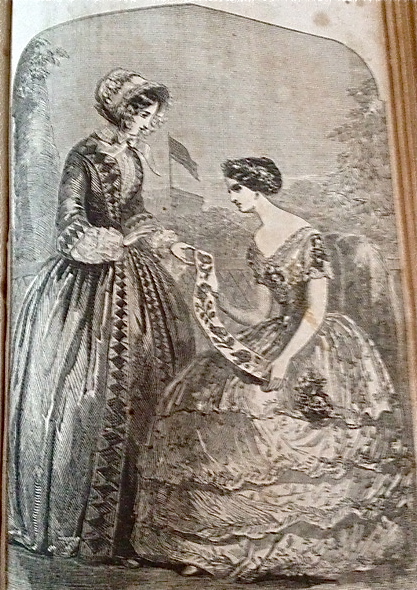
One item that Evelina brought back from Boston was a poplin dress – ready-made, presumably, or perhaps made to order – that she bought for her mother. It had to have been an item that her mother, an elderly country woman, would never have purchased for herself. Hannah Lothrop Gilmore had spent a lifetime sewing her own garments.  She was also unlikely to board a wagon or carriage to go into Boston to shop. The ride from the farmhouse to church on Sundays was about as adventurous as she got. How kind of Evelina to treat her mother in this extravagant way.

Poplin was a popular cotton fabric in the nineteenth century. It was smooth, lightweight and finely woven, more refined than broadcloth, although they were not dissimilar in weave. Both were sturdy and today both are often used for men’s shirts. The dress on the left in the illustration above was a day-dress and probably similar in shape and weight to the poplin dress Evelina bought, perhaps with less trim. The undersleeves were a particular feature of women’s dresses right before the Civil War.

The dress on the right was not something that Evelina would have purchased for her mother, or even for herself at this stage in her life. It was an evening dress with a stylish flounced skirt that would have been entirely too “jeune fille” for old Mrs. Gilmore.

* Spring fashions from Godey’s Lady’s Book, 1851


April 11, 1851

Old Oliver Ames


1851

April 11th Friday.  This morning sat down with Lavinia

quite early but did not feel very well.  Washed & ironed

the skirt of my foullard silk dress ready to make 

over  This afternoon went with Lavinia into school 

and then to Mr Torreys and stoped a hour or two

Abby & Malvina came home with us and were here to

tea also Augustus  Quite windy this forenoon 

Oliver Ames, known to Evelina as “Father Ames” and to us as “Old Oliver,” turned 72 today. He didn’t mention his birthday in his journal and the likelihood is that no one else mentioned it either.  He was not a person who encouraged frivolity. As the man who built O. Ames & Sons and made the best American shovels of the 19th century, Old Oliver was well known in his time, as this excerpt from a 19th century biographical sketch shows:

“Hon. Oliver Ames, the founder of the great manufacturing firm of O. Ames & Sons, was born at Plymouth, Mass., April 11, 1779, being the youngest son of Capt. John and Susannah Ames, and was a lineal descendant of William Ames, who came to this country in 1638 and settled in Braintree, Mass. His early education was gained by ordinary common-school instruction, and by the practical experiences of hard work in his father’s blacksmith-shop. These furnished him the groundwork of sober judgment, industrious habits, and a stable and energetic character. At the age of eighteen he went to Springfield, where he learned the trade of gunsmith. In April, 1803, he married Susannah Angier […] and commenced the manufacture of shovels. After a stay of over two years at Easton, he removed to Plymouth to manufacture shovels for Messrs. Russell, Davis & Co. […] until about 1813, when he returned to Easton […where he] had purchased land and a good water-privilege, and had begun the erection of a dwelling-house.

He was one of a company to build a cotton-factory for the manufacture of cotton fabrics. He had manufactured hoes and shovels during his first stay in Easton, but on his second arrival he began again the business that has now become world-famed. Difficulties and embarrassments that would have defeated any one but a man of great ability and persistent energy beset him in these early days. The cotton-factory burned; the war of 1812 had had a disastrous effect upon business; he was endeavoring to restore the business of his father to a prosperous condition; and he had made great outlays in getting established at Easton. But his credit was good and his courage strong; his character and ability alike inspired unlimited confidence; and he worked steadily on to a sure and lasting success.

With only a humble beginning, shovels being made by hand and carried to market upon a one-horse wagon, the business steadily increased, shop being added to shop, workmen increasing by scores, until it has become by far the largest and most prosperous shovel business in the world. He would never allow any work to be sent to the market that was imperfect, and he thus laid the foundation for the great reputation which the Ames shovel has borne, and which it continues to bear.

In 1828-29 he represented his town in the Massachusetts Legislature, serving with marked ability upon the Committee on Manufactures. In 1845 he was elected, contrary to his desires, and by a large vote, to the Massachusetts Senate. He was, however, no lover of office, and desired only that he might have the charge of the highways of his town intrusted to him, a charge he took pride in, and faithfully fulfilled. He was a man of strong and resolute will, of great force of character, indomitable energy, and persevering industry. He was the possessor of a splendid physique, and easily bore off the palm in all feats of strength and skill, especially in wrestling, of which he was very fond. His manly and dignified bearing gave everyone who saw him the impression that they looked upon a man of mark. He was such a man as a stranger, meeting upon the street, would turn to look at a second time. Born of the people, he was always very simple in his tastes and democratic in his feelings and principles. In his likes and dislikes he was equally decided, but his judgments were based upon what he believed to be the real worth of any one, without reference to his station or condition.   He was consequently greatly respected and beloved by his neighbors and fellow-townsmen. He was enthusiastically fond of farming, and, like Daniel Webster, was especially fond of the oxen, always obtaining the best, and taking great pleasure in their management. He took an early stand, both as a matter of principle and practice, in favor of temperance, and brought up his family according to total abstinence principles. He was a decided Unitarian in his religious convictions, having a cordial dislike to the rigid tenets of the Calvinism of his day. He was liberal in his aid of religious institutions, to which he also gave the sanction of his personal attendance. His charities were large, and they were not bounded by the limits of his sect or neighborhood. His defects were such as pertained merely to his limited culture and to the stern conflict and discipline of his early life. Mr. Ames lived to the ripe old age of eighty-four years, dying at North Easton, Sept.11, 1863.”*

*Duane Hamilton Hall, ed., History of Bristol County, Massachusetts,Vol.2, Philadelphia, 1883