July 22, 1852

Fly

July 22 Thursday.  this has been a hot uncomfortable

day and the flies are quite too plenty

dead ones laying on the floor in any

quantity.  Hannah is not neat at all

and does not keep the house in any order

Julia has got my skirt to the borage so

much one side that it will have to be taken

of[f]. She says she will come Saturday and do it


Oh, dear. Today was “allso a verry warm day verry much like yesterday.” * Evelina appears to have been affected by the “uncomfortable” heat. She had nothing agreeable to report. Her maid was sloppy, her dressmaker was inept, and there were dead flies all around the house. Probably not even her flower garden offered solace.

As for the flies, we modern readers must remember that window screens were in their infancy, so that when Evelina and other housewives pulled up the window sashes in their homes to try to cool the air inside, they let in flies and other bugs “in any quantity.”

Flypaper hadn’t been invented yet, either, but it would come along in another decade when a baker in the small town of Waiblingen, Germany, fed up with the flies that landed on his cakes and tortes, had the idea to coat a strip of paper with molasses and hang it in his window. The flies went for it, so to speak, and a universal aggravation was successfully addressed. Customers began to want the strips of flypaper even more than the baked goods, so much so that the baker eventually gave up baking and took up the manufacturing of his product. (He would soon replace the molasses with arsenic, but that’s another story.)

The German baker’s invention, unfortunately, came too late to help the disgruntled Evelina or the hapless Hannah on this warm, warm day in Easton.


*Oliver Ames, Journal, Stonehill College Archives, Arnold Tofias Collection
July 21, 1852

Thermometer

July 21st Wednesday  Have been at work on my

borage dress  what time I have sewed

The weather is very hot and I can

work but little  Julia & Elizabeth Pool

are at Edwins having some dresses

made by Julia Mahoney  I called 

to see them carried my work and

stoped awhile  Have been to see

Augustus this evening he is quite feverish


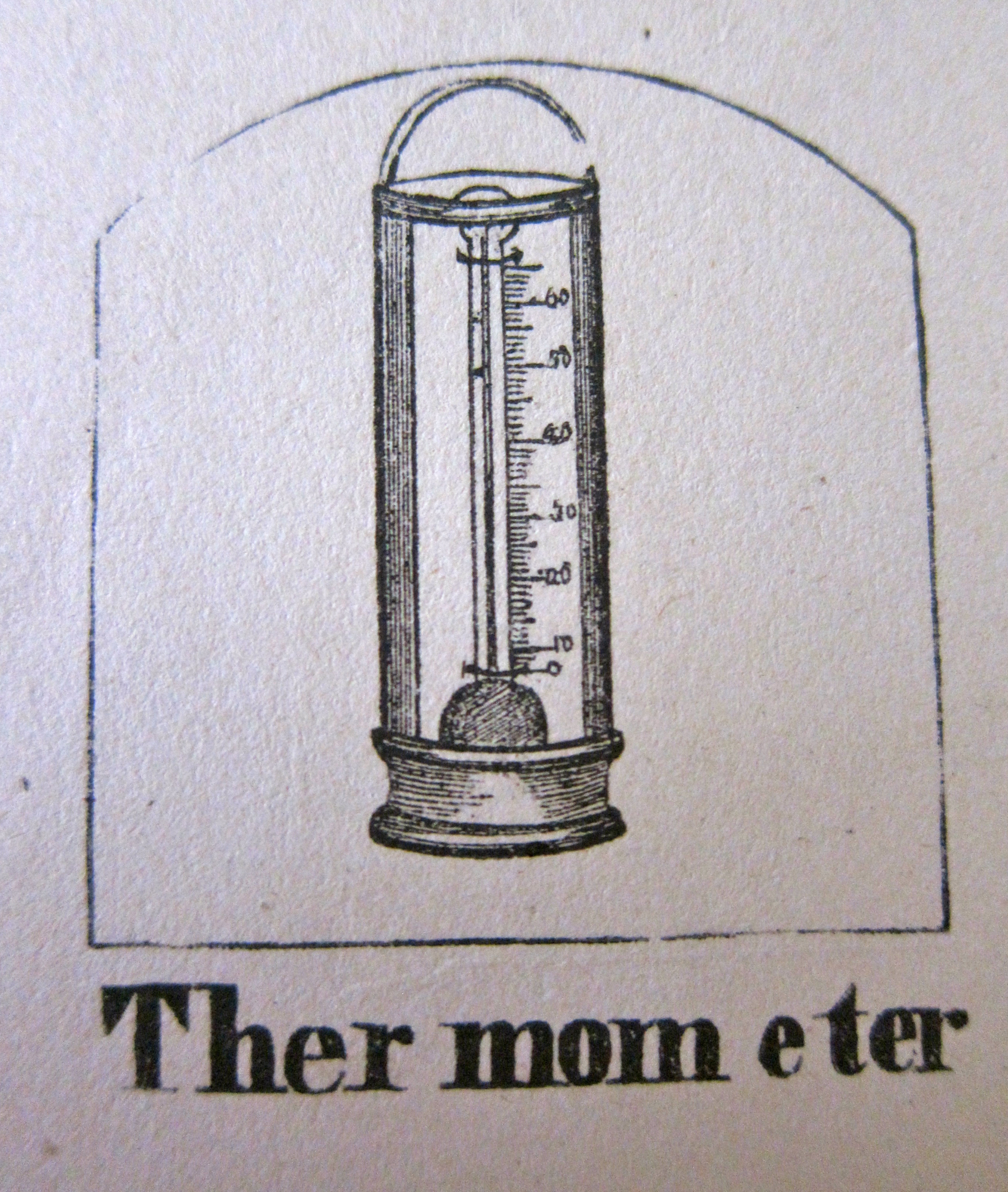
“This was a verry warm day and the most scorching sun I ever felt […] it was warm all day and the night following verry,” reported Evelina’s father-in-law, Old Oliver Ames. She, herself, was enervated by the heat; she could “work but little.”  She was alone, too, as Julia Mahoney, her usual dressmaker, was across the street at Edwin and Augusta Pool’s. Augusta had two sisters visiting who were having dresses made. Evelina walked over to join them for a time.

Alson Augustus Gilmore,Evelina’s nephew, was having no fun. He had a fever and in the heat must have felt as if he had landed in Hades. He was indoors, presumably, out of the direct sun at least. Old Oliver and his field hands, on the other hand, may have been outdoors haying in the blasting sunlight, the heat rising in waves around them. We can imagine that they stayed hydrated by drinking water ladled from buckets or a nearby well.  No thermoses or bottled Dasani or Fuji or Poland Spring water for them.

July 14, 1852

1852

P1070606-X2

High water (flood level) mark in canal in Lowell, Massachusetts


Wedns July 14th  Julia came again this morning

but we have not got along very fast

on my dress  Have no trimming for the

sleeves have written for Mrs Stevens to

get me some   There is a great deal to

do to finish my dress  Hannah & Mary 

have both been ironing all day and 

have it all done

Evelina was indoors, sewing a new dress with the help of dressmaker Julia Mahoney. Old Oliver was out haying, “jawing” orders at local men gathering up this year’s meager crop. Oakes Angier, Frank Morton and probably Oliver (3), now that he was home from college, were each posted in some area of the factory, making shovels alongside the workers. Oakes and Oliver Jr. were supervising, perhaps striding around the shovel complex watching the new building go up or sitting in the office looking at accounts.

If we modern readers want to find a day that typifies life in North Easton in the middle of the 19th century, we couldn’t do better than this ordinary summer day in 1852. In other years and in other places, July 14th has hosted more momentous events: the storming of the Bastille, the first ascent of the Matterhorn, the shooting of Billy the Kid, the day Jane Goodall arrived in Tanzania to study chimpanzees. Nonesuch in North Easton; according to Old Oliver’s record, July 14, 1852 was simply a “warm good hay”* day. Routine ruled.

This is not to say that history wasn’t happening. It was. Yet as Evelina noted, “we have not got along very fast,” a phrase that is applicable to so much of history. Change often quietly accumulates, transforming what we know in a stealthy fashion. Evelina’s hand-sewing, Old Oliver’s oxen-driven hay-wagons, Oakes’ and Oliver Jr.’s water-powered shovel machinery: all have since disappeared, replaced by modern equipment invented over time. The life that the Ameses lived was already altering, irrevocably, bit by bit.

Oliver Ames, Journal, Stonehill College Archives, Arnold Tofias Collection


July 13, 1852

Hay


1852

Tuesday July 13  Julia Mahoney came to work this

morning and cut the waist to my borage

dress and went home at noon.  Mr Ames

went to Canton and I begged the chance

to go with him & we called at Mr Kinsleys

Saw the ladies of the family & two Mr Peabodys

of Boston  Called on Mrs Atherton

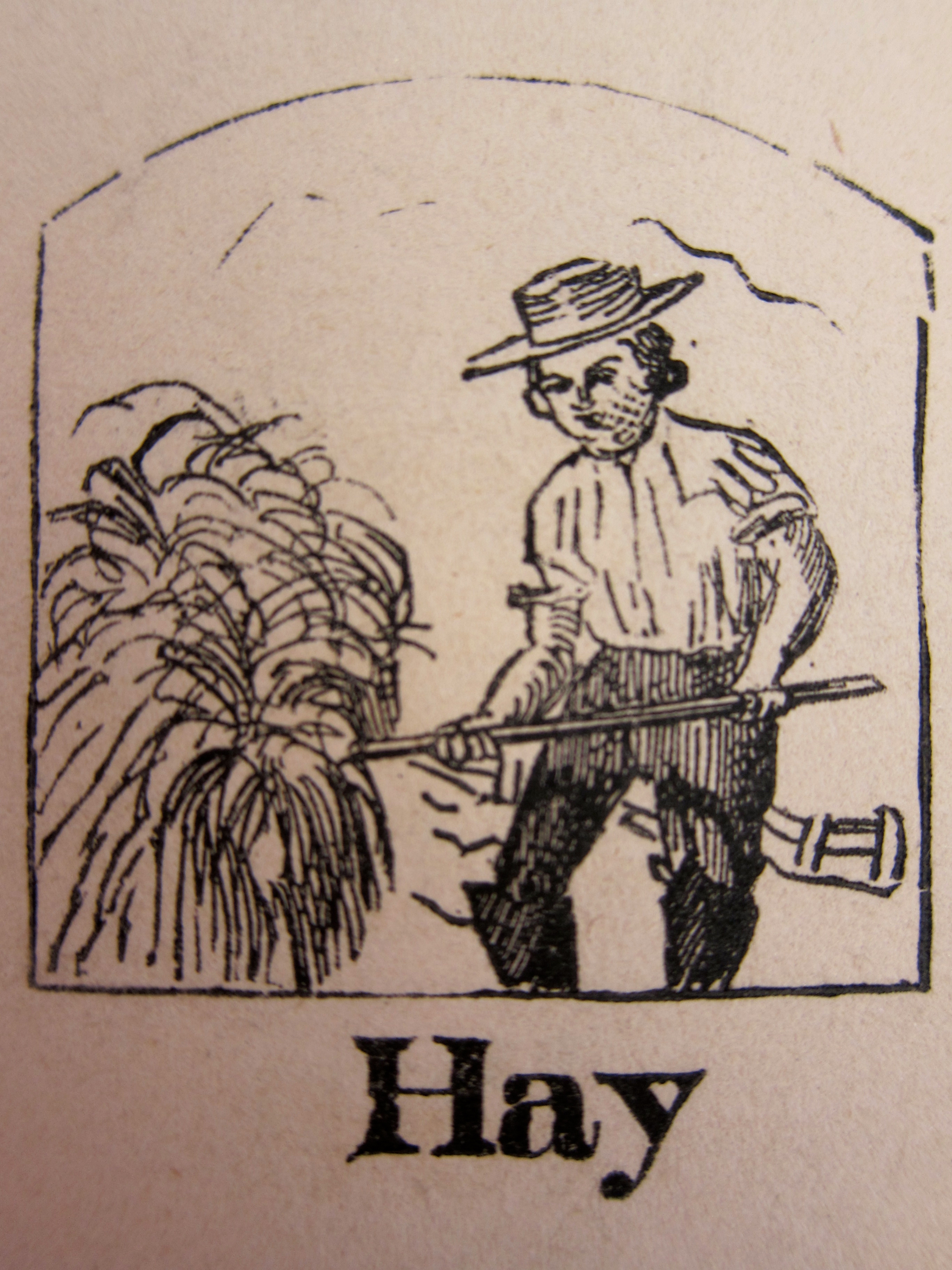
The first few days of this particular week were proving be “verry warm days. + pritty good hay days.”* Old Oliver had to be pleased.

After a morning of sewing a new barege dress with her dressmaker, Evelina “begged the chance” to ride east and north with her husband to Canton, where they visited Lyman and Louisa Kinsley. The Kinsleys, of course, were business associates but also friends, and they and their twenty-one year-old daughter, Lucy, happened to be entertaining visitors from Boston, “two Mr Peabodys.”

The Peabody brothers had called on the Kinsleys to be sociable, certainly, but one of them had a romantic motive. Francis Howard Peabody, also aged twenty-one, was courting Miss Lucy; the two would wed in 1854. They would have three children, a boy followed by two girls. Their little boy, Frank Everett Peabody, would become a founding member of a famous Boston brokerage firm, Kidder and Peabody.

*Oliver Ames, Journal, Stonehill College Archives, Arnold Tofias Collection
June 16, 1852

Calamanco2-1

Calamanco fabric

June 16th Wednesday  The hottest day we have had

Julia has been here again to day have

finished Susans brilliant dress and cut

my muslin & purple cambric print and altered

the waist to green gingham and now they are

to finish  when will they be done  Mother has

gone to Augustus.  Catharine Middleton came

about nine or ten to sew for me

gentleman from New York to dine


The mercury rose to 96 degrees, and the women stayed inside out of the heat.  Even out of direct sunlight, however, the indoor air had to be stifling, so the women are to be admired for working with layers of fabric in their laps as they sewed. The ladies weren’t nearly as warm, however, as the men outside on the building lot, moving stones, or the men making shovels inside the factory. Everyone baked.

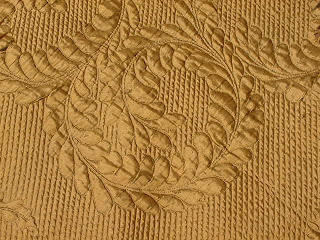
A new servant, Catherine Middleton, arrived to help with the sewing and, as she had been for the past few days, dressmaker Julia Mahoney was present to help Evelina. The women worked on several projects, including a “brilliant” dress for young Susie Ames. Brilliant was a pretty, shiny cloth, recognizable for its glazed and, often, patterned surface. It was a fabric that had been especially popular in the 18th century, but still had its admirers in the 19th.

Known by other names, including calamanco, the cloth originated in Norwich, England,  a center for textiles. Its origins make us wonder if the cloth Evelina was using had been made locally, in Lowell, Mass., say, or Rhode Island, or had been imported.


June 15, 1852

LongShop

Recent image of Long Shop 

June 15th  Tuesday  Julia here and I have been sewing

some but have not had much time […] I

t’s very hot weather mother spent the

day at Edwins I called there awhile and 

ripped my green gingham dress to have 

it made over.  had quite a heavy shower 

this morning which was needed very much

Everyone agreed that this day was “verry warm” and that rain was needed.* Evelina, looking up from her sewing, reported that they had “quite a heavy shower.” Her father-in-law, however, described the rain as “a small shower in the forenoon about an eighth of an inch.” Her glass was half-full, his was half-empty when it came to considering the benefit bestowed by this particular rainfall.

Such quick rain wouldn’t have been enough to interfere with the building of the new stone shops at the factory. Workers had begun to arrive on Saturday and, surely, some initial construction was already underway.  Old Oliver would have made sure of that. This first building on the new site, which was much closer to where the Ames family lived, was dubbed the Long Shop.

Industrial historian Greg Galer describes the Long Shop as “a simple, narrow, gable-roofed, two story building 525 feet long and 35 feet wide with a 60 by 50 foot ell and an additional 30 by 10 foot engine house. “**  This sturdy, less flammable facility would be up and running by the end of the year, and soon include a 60 hp steam engine.

Residents of North Easton today know the Long Shop as one of several shovel factory buildings repurposed for residential use. Along with others, Mr. Galer was instrumental in the successful effort to preserve the historic character of the Long Shop as the site was developed.

* Oliver Ames, Journal, Stonehill College Archives, Arnold Tofias Collection
** Gregory Galer, Forging Ahead, 2002, p. 150

June 14, 1852

FullSizeRender

June 14th

1852 Monday  Am 43 this day quite an old woman

Julia Mahoney came to work on my dresses

Hannah Murphy commenced working for me

this day & Mrs Patterson is here and it

has been about as much as I can attend to

to wait upon the rest  If I had two or 

three more it would be all I could attend to


Hannah Murphy, replacing the departed Jane McHanna, donned an apron this morning and “commenced working.”  Mrs. Patterson was still on the premises and the three women proceeded with the Monday chores, laundry included. Evelina was very busy tending to it all.

Yet today was Evelina’s birthday and she felt old.  We in the U.S. might scoff at the notion that 43 feels old; our current life expectancy for females is 81.  In Massachusetts in 1850, however, it was no more than 45. Who knew how long Evelina would live?  While she had the hopeful example of her hardy, octogenarian mother to emulate, she also would have remembered her two older sisters, both dead in their thirties. She may have considered the possibility that, like her mother, she could live to an advanced age. In fact, she would live to be 73; on this birthday, she had thirty more years in front of her.

At the shovel factory, Oliver Ames took his mind off his concern for the crops and focused instead on the arrival of Clark S. Manchester, who “came here to day from Fall River to build our stone shop.”* Mr. Manchester, 37 years old, was a native of Little Compton, Rhode Island, who had only recently moved to Fall River with his wife and two children. His expertise with stone work had led him to the Ameses, or they to him.

So the new building began, on the west side of Shovel Shop Pond. This location was different from the original and recently rebuilt factory, which sat at a lower edge of the pond in order to maximize the drop in water level. Water still powered the factory machines, and the new location to the west would still rely on water power from “just above where the Queset entered Shovel Shop Pond.”** But different from the old factory, this new Long Shop would accommodate a modern steam engine, a huge advance in technology. A new era in production was waiting to begin, and the stone buildings would reflect the change.

Oliver Ames, Journal, Stonehill College Archives, Arnold Tofias Collection

** Gregory Galer, Forging Ahead, 2002, p. 250


April 17, 1852

Village

1852

April 17  Saturday  Julia was at work here a year ago to day

has improved very much in dress making since then

I have my black silk nearly finished.  The Delaine

all done except the sleeves & buttons, am waiting

to go to Boston to get the trimmings.  This afternoon 

have been altering some old dresses for Susan

Hannah called to get me to go up by the school

house and select a place for a house for them

Mrs Witherell went with me  A beautiful pleasant day

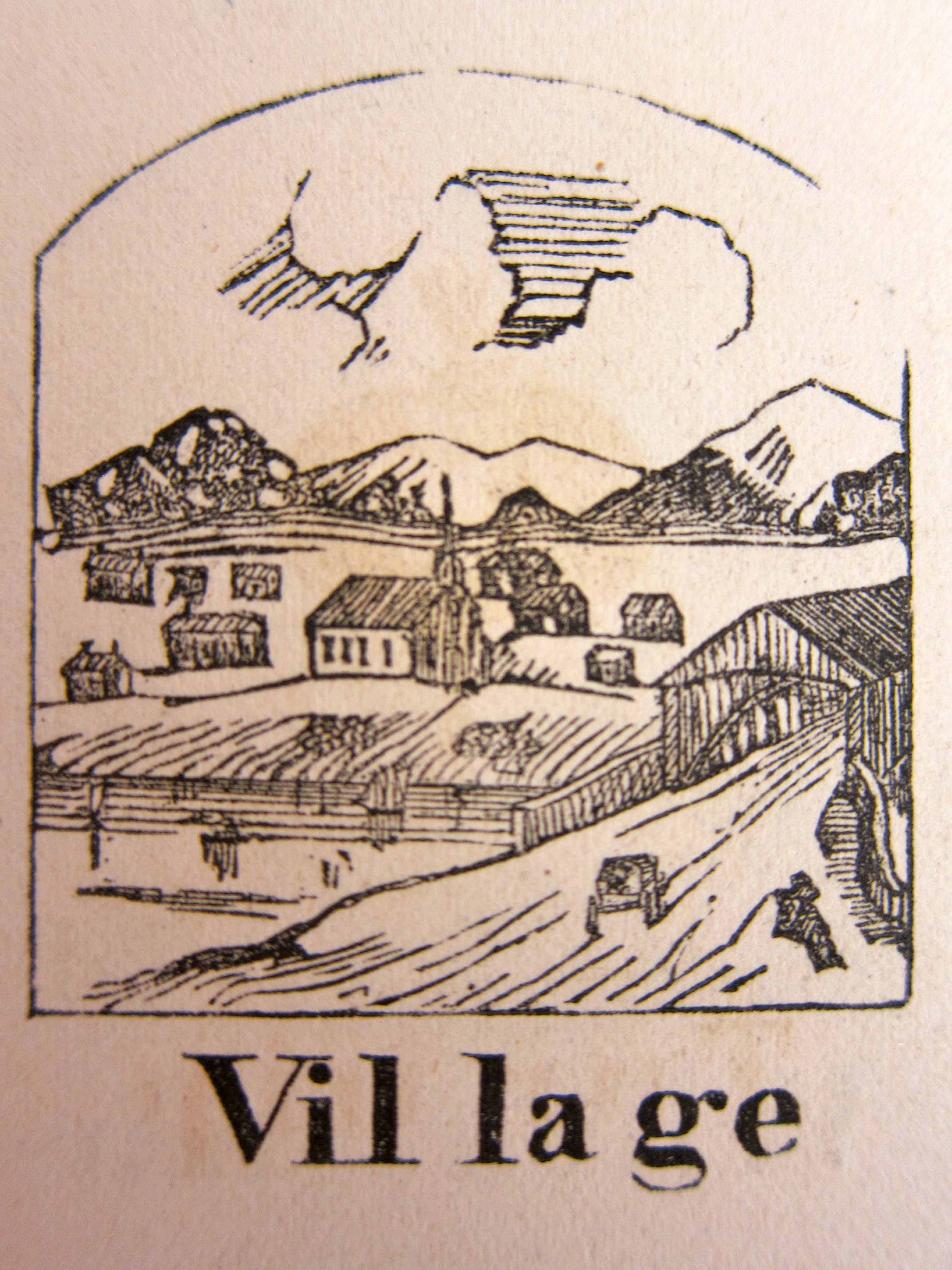
Sewing continued today, with Julia Mahoney again on hand to assist with Evelina’s new dresses, one of black silk, the other of a light wool they called delaine. The finished projects would have to wait for trimmings to be fetched from Boston. Evelina meanwhile refashioned some old dresses for her daughter, for “[e]very season there was a great remaking of old garments to bring them up to date.”*

The bad weather of the past two days disappeared and was replaced by fair skies. Despite continued cold temperatures, Evelina was finally drawn outside on a fun errand. Invited by her niece, Hannah Lincoln Gilmore, and accompanied by her sister-in-law, Sarah Ames Witherell, she went to the local school house to look at some property that her nephew, Alson Augustus Gilmore, and Hannah, his wife, were considering.  They had been renting rooms from Col. John Torrey, but now were planning to build a house.

Everyone in North Easton lately seemed to be wielding a hammer. It was spring.


*Winthrop Ames, The Ames Family of Easton, Massachusetts, p. 127


April 16, 1852

 women sewing*

1852

April 16th Friday.  Julia here again to day and we have

been to work on my dresses  Mrs S Ames & Witherell

helped some time this afternoon and we have

got along nicely  Hannah & Augusta called

Augusta brought her work and Hannah finished

Susans stocking.  Susan has the other stocking about

half done.  The first pair that she ever attempted to knit.

Stormy again to day.

The day before had rained “pritty fast” all day long, and today opened in much the same vein, with “snow squals + rain + a high wind.”***  The women stayed indoors and focused on fashion.  Dressmaker Julia Mahoney came over to work on new outfits for Evelina. Sisters-in-law Sarah Ames and Sarah Witherell helped for a time, too, both of them as accomplished at sewing as Evelina. They all “got along nicely,” a phrase that suggests good progress was made on Evelina’s dresses, although the women’s sociability quotient was also probably pretty high.

Others joined the hum.  Nieces-in-law Hannah Gilmore and Augusta Gilmore, a younger set of eyes and hands, arrived with work in hand. Hannah helped her little cousin, Susie Ames, knit a pair of stockings.

The sewing of new dresses – as opposed, say, to the mending of men’s shirt fronts – was the favorite expression of the women’s collective talent with needle and thread. As Winthrop Ames noted, “An immense amount of sewing went on in every family.”** We’ve certainly learned that from Evelina’s diary.  In 1852, they still made their own dresses. “[T]he materials and trimmings, after much consultation about their style and quality, were made up in the house with the help of the town seamstress and pictures from the fashion magazines.”

Things would change. By the start of the Civil War, the Ames women began to have their dresses made up in Boston. But on this day in North Easton, needles flew.


*Image courtesy of nhdsewingmachine.weebly.com

** Winthrop Ames, The Ames Family of Easton, Massachusetts, p.126

*** Oliver Ames, Journal, Stonehill College Archives, Arnold Tofias Collection
 

April 15, 1852

images-1

April 15 Thursday.  Oakes Angier 23 years old to day.

This day 23 years ago not a cloud to be seen to day

a heavy rain storm  Julia Mahoney here making

my Delaine and altering my black silk having

a new waist and sleeves.  She has both waists fitted

but did not get much ready for me to work upon

till just at night  I have made the button holes

in the delaine

In both years of her diary Evelina takes note of Oakes Angier’s birthday. She also mentions him by name approximately 117 times as he comes and goes, works, reads, rides, eats or ails. By comparison, her other sons, Oliver [3] and Frank Morton, are each cited with similar purpose only 74 times, or one third less often, and neither of their birthdays draws any mention at all. This numerical disparity, coupled with the soft tone of Evelina’s rare reminiscence about her first child’s birth, when “not a cloud” could be seen, hints at maternal favoritism for the eldest son.

Not only was Oakes Angier the firstborn child of Oakes and Evelina, he was, on his father’s side, the eldest of 24 grandchildren of Old Oliver and Susannah. On his mother’s side of the family, he placed in the middle of a pack of a dozen grandchildren of Joshua and Hannah Gilmore, many of whom, like cousin Edwin W. Gilmore, lived in the vicinity.

Oakes Angier Ames would have known all four of his grandparents, although he was only seven years old when his grandfather Gilmore died. He was just turning 18 when his grandmother Ames passed away and in his thirties, with children of his own, when his grandfather Ames and his grandmother Gilmore (who lived to be nearly 92) died. Throughout his life, Oakes Angier was surrounded by multiple generations of relatives; he grew up amid a swirl of siblings and first cousins, among most of whom he held primogenitary status. He was the standard bearer. His siblings and cousins called him simply “Oakes,” leaving it to Evelina (and his descendants and historians) to append his middle name when spoken of.