January 31, 1852

500

Jan 31st  1852

Saturday  have been choring about house & mending most

all day.  Made a robe for Mitchell Willis child with

Mrs S Ames assistance  Edwin & wife here to tea  Mrs S

Ames has been here about three hours with her work

Mrs Witherell here awhile this afternoon.  Mr Frank

Russell was buried this afternoon.  My three sons went

to the funeral.  Quite a hard snow storm  Mr Ames to Boston

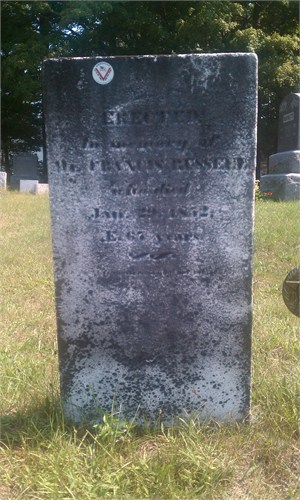
Inclement weather didn’t keep the Ames men from moving around today. Oakes Ames traveled into Boston on business, as he usually did on Saturdays. His sons, Oakes Angier, Oliver (3) and Frank Morton, rode to Easton Center for the funeral of Frank Russell, a 67-year-old blacksmith and veteran of the War of 1812. Russell had died two days earlier from pleurisy, and, despite the “hard snow storm,” he was buried at the Seth Pratt Cemetery with friends and family in attendance.  What had been his connection to the Ames’s sons? Had he worked for the shovel company?

Evelina, too, was tending to a death outside the family.  She and her sister-in-law, Sarah Lothrop Ames, sewed a burial robe for Luella Willis, the two-year old daughter of Mitchell and Amanda Willis.  Like Frank Russell, little Luella would have to be buried in cold ground during snowy weather. Once the services were over, the living would carry on with their chores, their commitments and their lives.  Evelina would turn to “mending most all day.”
January 26, 1852


IMG_0371

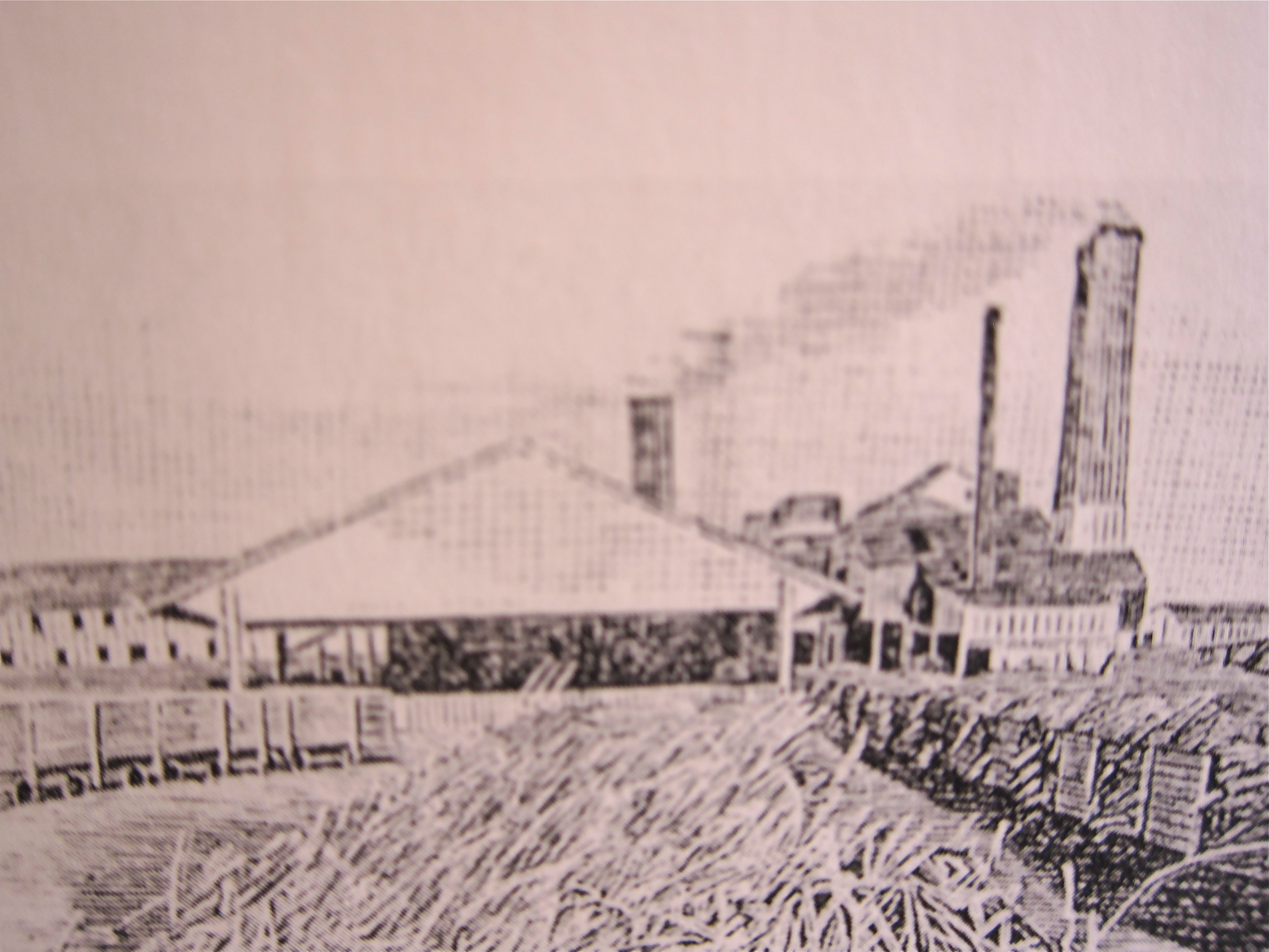
Ames Plantation, Jefferson Parish, Louisiana, ca. 1880’s

Jan 26/51 (sic)

Monday   commenced making Susan a flannel skirt

Mother & self went into Edwins with our work and staid

about 3 hours came home to tea.  Evening Augustus

Hannah and Mrs Witherell were here Oliver Jr

and Oakes A went to Mr Whitwells expecting to meet

Willard L there.  It has been a beautiful day.  Mrs Buck

and Sarah called at Edwins while we were there and

were very polite

It was Monday, which meant that Evelina probably did a little housework this morning before picking up her sewing. As usual, Jane McHanna managed the Monday washing and Evelina didn’t need to paint or fix or oversee anything but the flannel skirt she was making for her daughter. After midday dinner, she and her elderly mother, Hannah Lothrop Gilmore, walked to the home of Edwin Gilmore and sat with his bride, Augusta Pool Gilmore, each of them tending to their sewing. It seemed quiet on the home front.

In another decade, it would be anything but quiet – at least across most of the country.  The United States would be in the first upheavals of an impending civil war. “The Great Rebellion,” they would call it. On this particular day in January, 1861, Louisiana would secede from the Union, the sixth of eleven states to do so. When the war ended in 1865, the Confederacy defeated, Louisiana and her sister states would ultimately be accepted back into the Union through the arduous and hotly political process known as Reconstruction.

In another two decades, the economies of the southern states would still be struggling, enabling many northerners to acquire cheap land and cast-off businesses. In 1873, the three Ames brothers – Oakes Angier, Oliver (3) and Frank Morton – would purchase two old plantations, Estelle and South Side in Jefferson Parish, Louisiana, right across the Mississippi from New Orleans. On 13,000 acres, they would grow and refine sugar. The business ran until the start of the 20th century, overseen eventually by one of Frank’s sons. The property, which”stretched for more than one mile on the river and ran about eight miles deep”* was eventually sold.  Today that land comprises much of the city of Marrero, Louisiana. Little is left of the Ames influence except an eponymous boulevard running through the city’s center.


* Betsy Swanson, Historic Jefferson Parish: From Shore to Shore, p. 97.


January 10, 1852

Oakes_Ames_-_Brady-Handy

 Portrait of Oakes Ames by Matthew Brady 

1852

Jan 10th Saturday  Mr Whitwell & Ames have not met again

to day  Mr W called just as Augusta Helen Susan

& self were in the sleigh to take a ride  We have

called at mothers  Mr Horace & John Pool, Edwin

& wife here to tea  Swept the parlor this morning

and put the house in order partially frosted a loaf of cake

for Augusta having made one of hers carried the frosting

over and made her a call while heating it

The boys presented their Father a gold pen & pencil

Oakes Ames turned 48 years old today, as did the local Unitarian minister, William Whitwell.  Last year and again this year, Evelina was unsuccessful in getting the two men together to celebrate. Oakes Angier and Frank Morton gave their father a gold pen and pencil to mark the occasion, a fine gesture.

As Oakes closed in on the half-century mark, he presumably began to look beyond the confines of the work he and his brother Oliver Jr. did for the shovel company. The next generation, in fact, was being groomed to run O. Ames & Sons; Oakes Angier, as eldest son of the eldest son, was on deck to superintend the company whenever Oakes and Oliver Jr. decided to step down. He was learning every aspect of the manufacturing process. Oliver (3) and Fred Ames were at college, Oliver presumably honing the skills he would need to take over his father’s role in managing sales, while Fred was on a path to being the financial clerk or CFO we might say today. Frank Morton Ames was learning a variety of skills, too, although he was seen more as a spare man waiting to step in should his cousin or either older brother fail somehow.

What could Oakes do with his tremendous talent and energy? Clearly, the roiling politics of the day interested him. By 1860, his gregarious nature, quick comprehension and thirsty ambition led him to accept the nomination and election to Massachusetts Governor Andrew’s Council as representative from Bristol County. Two years later, by “a large popular vote,”* Oakes Ames was then elected to the Thirty-Eighth U. S. Congress, where he would serve for four terms.

In 1872, according to circumspect historian, Reverend William L. Chaffin, Oakes “declined a renomination.”* He died in May, 1873, shortly after the conclusion of Credit Mobilier, a national political scandal for which many held Oakes culpable. At the time, his natural candor and fearlessness worked against him and he was unable to dodge the political manuevering that placed most of the blame on him. That same brave honesty, coupled today with calmer, historical perspective, has since served to cast Oakes Ames in a better light.

William L. Chaffin, History of Easton, Massachusetts, 1886, p. 654


January 7, 1852

weddinga_cake1

*

/52

Wednesday Jan 7th

Heat the brick oven baked a loaf

of brown bread two loaves of fruit cake for

Augusta & mince pies  A & L were at Edwins

this forenoon. This afternoon have sewed for me on 

Susans dress.  I have been making frosting for

the cake  Helen has been in and the girls have had

a nice time over it  Frank carried them home


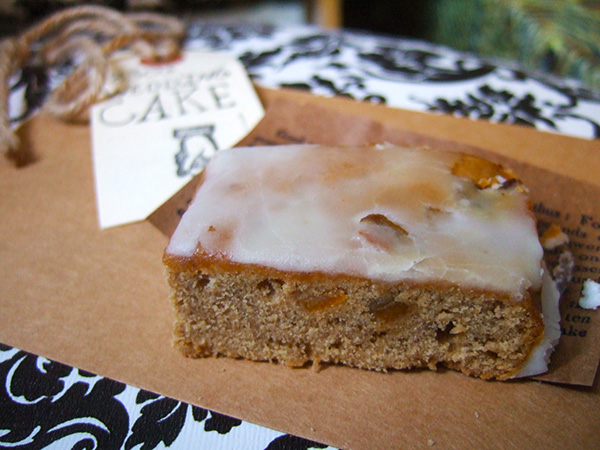
Augusta Pool and Lavinia Gilmore were once again helping Lavinia’s Aunt Evelina. Helen Angier Ames, too, came over from next door, and the young maidens had “a nice time over it.” They did a little sewing for Evelina – that must have pleased her – and helped prepare frosting for Augusta’s wedding cake, which Evelina had kindly undertaken to make, along with all the regular baking she was doing for her family. Augusta was to be married the next day to Evelina’s nephew, Edwin Williams Gilmore.

If the women were following the instructions of Sarah Josepha Hale, they would have made “Iceing for Cakes,” according to the following instructions:

Beat the whites of four eggs to a stiff foam, and add gradually three quarters of a pound of the best double-refined loaf sugar, pounded and sifted; mix in the juice of half a lemon, or a tea-spoonful of rose water.  Beat the mixture till very light and white; place the cake before the fire, pour over the iceing, and smooth over the top and sides with the back of a spoon.”**

When it got late, Frank Morton Ames took Augusta and Cousin Lavinia back to their respective families in the countryside. The light of a full moon guided them along in a sleigh over snow that was “now about a futt deep.”***

* Image of 19th century wedding cake courtesy of http://www.fourpoundsflour.com

**Sarah Josepha Hale, The Good Housekeeper, 1841, p. 101

***Journal of Oliver Ames, Courtesy of Stonehill College Archives


January 2, 1852

Tea


1852

Jan 2d Friday  Seated myself quite early this morning to work

on Susans hood & finished item about ten Oclock

then ripped my old blue hood and washed the

lining & turned the outside have got it nearly done

We all went into the other part of the house to tea

Mr & Mrs Oliver & Helen there  Frank has a sore

ankle as [sic] does not go to the shop  Dr Swan called there

to see Helen & left Jane some medicine

The family gathered for tea today in “the other part of the house,” meaning that Evelina, Oakes, and their children, Oakes Angier, Frank and Susan went into the southern half of the shared house where Old Oliver and his widowed daughter, Sarah Witherell, lived with her two children, George and Emily. Joining them was the family next door: Oliver Ames, Jr, his wife Sarah and their daughter, Helen Angier Ames, who made an appearance despite being home from school with a cold. Other than missing Oliver (3) and Frederick Lothrop, the sons who were off at college, the group was a normal configuration for a gathering at the homestead.

Evelina’s grandson, Winthrop Ames, would one day describe such a family gathering from less than a decade later, by which time daughters-in-law and grandchildren had arrived:

“Supper, always called Tea, at seven, was the sociable occasion. It usually consisted of cold meats, hot biscuits, preserves and cakes – an easy menu to expand for unexpected guests.  Every week at least, and usually oftener, one household would invite the others and their visitors to tea; and the whole Ames family might assemble, even infant children being brought along and tucked into bed upstairs.  Fifteen or twenty was not at all an unusual gathering.”*

The family was as tightly-knit as any of Evelina’s knitted worsted hoods.

One other note about today’s entry: Dr. Swan left some medicine off for Jane McHanna, the servant, who had been ailing for much of the fall and winter. What did she suffer from?

* Winthrop Ames, The Ames Family of Easton, Massachusetts, privately printed, 1937, p.128


December 25, 1851

Turnstile


Dec 25th Thursday  The Irish are expecting to have a great

time to day Jane went to the meeting house about

eight but the priest did not come she stoped an

hour. Carried my knitting into Olivers awhile this

forenoon. This afternoon have been to mothers

with Mr Ames & Frank as they were going to West

Bridgewater.  Finished knitting the front & back of

my hood  Made a present to Lavinia of Turnpike Dividend $800

Christmas Day! But as Evelina points out, the Irish Catholics in town would be celebrating, but the Ames family wouldn’t. Jane McHanna left the house to attend a Christmas mass for which, unfortunately, the priest was either late or didn’t show up at all.  Jane returned home to prepare dinner. Evelina, meanwhile, visited Sarah Lothrop Ames next door, knitting in hand.

After dinner Evelina rode along with her husband and youngest son as they went on an errand to West Bridgewater.  They dropped her off to see her mother at the family farm. There may have been some recognition of the holiday in this gesture, although Evelina makes no mention of gift-giving, with one significant exception. Evelina gave an $800 dividend to her niece Lavinia Gilmore.

The dividend came, somehow, from proceeds from the Taunton and South Boston Turnpike, a road that had run through part of Easton since the early 1800s, between “‘Taunton Green, so called, to the Blue Hill Turnpike,'” according to town historian William Chaffin.* Its origin was controversial and involved a long-standing disagreement with the Town of Raynham, but its impact on the Gilmore family was generally positive, as various Gilmores, including Evelina’s father and brother, served as toll-gate keepers. As Chaffin points out, however, “[t]he toll-gate naturally became unpopular.” It was closed in October of 1851.

How Evelina came to possess $800 from the road is unclear. Was this a regular dividend that Evelina received, or was the family compensated for the road’s discontinuance? That Evelina passed this money on to her niece, however, is a clear demonstration that for all her economical instincts, Evelina was capable of great generosity.


*William L. Chaffin, History of Easton, Mass, 1866, pp. 454 – 458.

December 20, 1851

unnamed Dec 20 Saturday  Have been very busy all day working

on different articles  Mended some clothes

for Frank, the stockings and mended the

places that were cut & bound the end of

some pieces of carpeting Jane finished the 

second robin that she has made for Frank

Mr Ames brought home some marble rubber

and lining & ribbon for Susans bonnet   ”


[T]his was a fair day and not verry cold” was the weather report from Old Oliver Ames. It was a normal Saturday at the Ames’s house in all respects. Evelina mended clothes, darned socks and repaired some carpeting.  Jane McHanna sewed, too, having recovered from an acute indisposition caused by coal the day before. She finished a “robin” (which one reader suggests was a kind of tough work pants) for Frank Morton Ames, Evelina’s youngest son.

Oakes Ames went into Boston, as usual, for a weekly check-in with shovel customers, after which he went shopping for his wife. From a list Evelina must have given him, he made his way along Washington Street and around Faneiul Hall, probably knowing just which shop to go to for such-and-such ribbon or a well-priced bolt of flannel. He returned to North Easton laden with parcels wrapped in paper and tied with string.

December 13, 1851

$(KGrHqJHJFMFJusCVdz8BSe+hz0oG!~~60_35

Sat Dec 13th  Have tried my lard cleaned hogs head

and fat and the meat ready choped & seasoned 

for filling  Have been to work all day on them

together with Jane & Mary.  Have 78 lbs meat

Mr Ames & Augustus have been to Boston.

Augustus got me some worsteds for hood

Frank & Oakes chopped my meat & Sarahs, she

had 28 lbs.

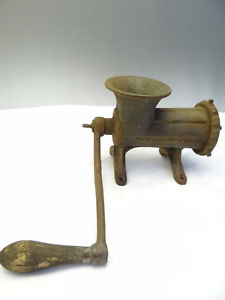
Sarah Witherell and Evelina Ames, sisters-in-law bent on taking care of some pork fresh from the slaughter of a few Ames hogs, had 106 pounds of pork between them to be turned into sausage. In addition to the capable hands of servants Jane McHanna and Mary, they had help from Evelina’s sons Oakes Angier and Frank Morton, who chopped the meat, and probably the fat, too,  into manageable chunks. Together with other ingredients – see below – the meat was forced into a grinder like the one pictured above.

Most likely, the women didn’t need to follow a recipe to make the sausage, having made it countless times before.  But if they did, they could have turned to Sarah Josepha Hale’s instructions in The Good Housekeeper.  They would have had to multiply the recipe times thirty or so:

“TO MAKE SAUSAGE MEAT. — Chop two pounds of lean with one of fat pork very fine – mix with this meat five teaspoonfuls of sale, severn of powdered sage, two of black pepper, and one of cloves.  You can add a little rosemary, if you like it”*

And sausage wasn’t the only product from the pork that Evelina, Sarah, Jane and Mary worked on.  They made lard and dressed a hog’s head. It was a most productive day in the Ames kitchen.

*Sarah Josepha Hale, The Good Housekeeper, Boston, 1841

November 27, 1851

Turkey


Nov 27  Thanksgiving day we have passed in the other

part of the house.  Our sons & Helen went this evening

to a ball in Canton  Father Mrs Witherell Mr Ames &

self had a game of cards.  Mr & Mrs H Lothrop

A[u]gustus & wife Cyrus & Sarah Lothrop

spent the day at Olivers

In 1844, Lydia Maria Child, a Massachusetts mother, author and abolitionist, published the original six verses of a poem about Thanksgiving. The poem was put to music, and verses were added or modified over time. We know it, and everyone sitting around the Ames’s dinner table would have known it:


The New-England Boy’s Song About Thanksgiving Day
Over the river, and through the wood,
To Grandfather’s house we go;
the horse knows the way to carry the sleigh
through the white and drifted snow.
Over the river, and through the wood,
to Grandfather’s house away!
We would not stop for doll or top,
for ’tis Thanksgiving Day.
Over the river, and through the wood—
oh, how the wind does blow!
It stings the toes and bites the nose
as over the ground we go.
Over the river, and through the wood—
and straight through the barnyard gate,
We seem to go extremely slow,
it is so hard to wait!
Over the river, and through the wood—
When Grandmother sees us come,
She will say, “O, dear, the children are here,
bring a pie for everyone.”
Over the river, and through the wood—
now Grandmother’s cap I spy!
Hurrah for the fun! Is the pudding done?
Hurrah for the pumpkin pie!

– Lydia Maria Child


Happy Thanksgiving, everyone.

November 25, 1851


kitchen

*

Tues Nov 25th  Mary has done the ironing to day except

the fine clothes and they look much better than usual

Jane is rather better to day and has washed the dishes

and assisted some about the housework.  I have made a

dickey for Mr Ames. Passed the afternoon at Father Ames

with Mr & Mrs Swain & Mrs Meader  Mrs S Ames,

Fred & Helen came home to night

Family members began to gather in anticipation of Thanksgiving. Fred and Helen Ames came home from their respective schools in Cambridge and Boston, adding animation to the quieter house next door.  Surely their parents, Sarah Lothrop and Oliver Ames, Jr., were pleased to see them.  Oliver (3), away at school in Providence, was getting ready for his travel home.

No one was making merry yet, however.  Everyone still had work to do. The new girl, Mary, did some ironing, evidently better than Jane McHanna usually did.  Jane herself, still recovering from an illness that had laid her low for almost ten days, was able to wash dishes and help out a bit. Evelina, after supervising Mary and Jane, was finally freed up to sew and socialize.  She was in a happier state of mind.

The men of the family were working as well.  While Oakes, Oliver Jr, Oakes Angier, and Frank Morton were at the shovel shop, Old Oliver and some of his men began “a building an ice hous.”**

“About sunsett,” it began to snow.


*Image of a mid-19th century kitchen, Courtesy of http://www.victorianpassage.com

**Oliver Ames, Journal, Courtesy of Stonehill College Archives, Tofias Collection