March 30, 1851

headache1

*

March 30 Sunday  Have not been to meeting at all to day.  My

cold is very troublesome have a very bad head ache.

could not read much.  Mr Cyrus Lothrop 3d called this 

evening & Frederick, Oakes Angier & Orinthia rode

down to Mr E Howards this evening.  Mrs Howard

has gone to Nashua to make a visit.  Mother returned

home from meeting  A very fine day

I commenced making fire in the furnace

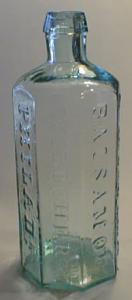
Evelina continued feeling poorly today. After yesterday’s helping of the commercial elixir, Wistar’s Balsam of Wild Cherry, one can’t help but wonder if her headache was, in fact, a symptom of hangover from the alcohol she unknowingly ingested.

The consumption of alcohol was absolutely forbidden at the Ames’s house.  Both Oakes and his brother Oliver Jr took a temperance pledge early on, and kept it. They hoped their workmen would follow their example. In this they differed from their father who, in his heyday of running the shovel works, had allowed his workers a ration of rum as part of their regular routine.  Old Oliver’s habits had been learned in the 18th century, which had a more lenient attitude about liquor.  In the 19th century, however, tolerance of alcohol disappeared. Temperance became the banner of the day, its support increasing yearly and culminating, ultimately, in the Prohibition amendment in the 20th.

In the Ames dining room, even something as mild as cider was frowned upon.  Cider was considered by some at a “gateway” beverage to liquor and hard spirits; others found it innocuous. Evelina kept some in the pantry to put in her mince pies but never served it at table.  Once, however, she offered a tumbler of cider to her future son-in-law, Henry French when he turned down a cup of coffee. Oakes admonished them both by stating flatly that, “No cider shall be drunk at my table.”

Alcohol was a controversial issue.  If Evelina had known that the medicine she was taking was laced with alcohol, she might not have indulged.  If Oakes had known, he wouldn’t have allowed her.

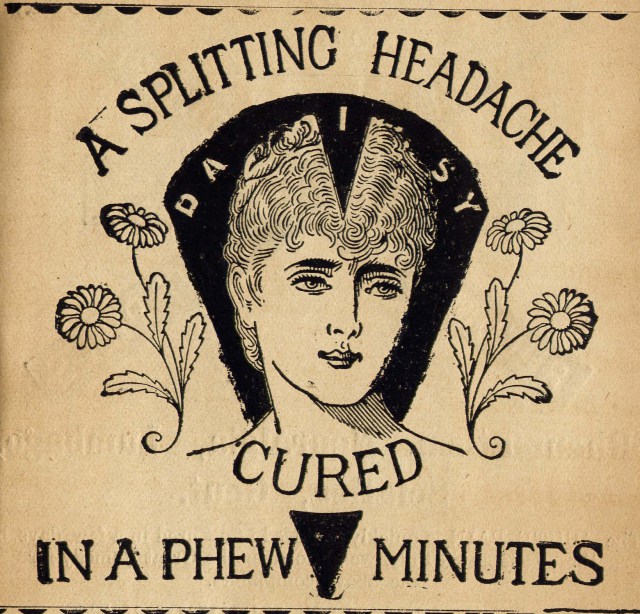
*Advertisement from ca. 1900.  
 

March 29, 1851

483a

1851

March 29 Sat  Have a very bad cold and cough some

but it has not increased with my cold which is unusual

Have taken Wisters Balsam  This afternoon mother

Orinthia & self called awhile in the other part of the 

house  Abby came here about four & stoped one

hour or two, but did not stay to tea  I finished Mr

Ames bleached shirt and Orinthia finished a

coarse shirt for him  Pleasant and fine traveling

Evelina caught a “very bad cold,” her second one since the start of the year.  The first cold she treated by concocting a time-honored home remedy of which her Puritan ancestors would have approved. It included honey, a little horehound from her own garden, and more. The new cold, however, she dosed with a commercial product, Wistar’s Balsam. This bottle of patent medicine was something she purchased “over-the-counter,” as we would say today, with the expectation that a commercial product offered an improvement over what she might have made for herself.  Such a transition from home-made to manufactured goods was very much part of the mid-19th century world in which she lived.

Dr. Wistar’s Balsam of Wild Cherry was the most popular of many patent medicines available in the marketplace for the self-treatment of various ailments. With its “heady melange of cherry bark, alcohol and opiates,” it claimed to have “‘effected some of the most astonishing cures ever recorded in the History of Medicine!'”* With no regulatory oversight or standards to adhere to, it and other nostrums could and did claim curative powers over everything from colds to consumption. A consumer like Evelina could be completely taken in.

How Wistar’s Balsam helped Evelina’s cold is uncertain, but she temporarily felt better for the drugs she imbibed. She was able to sit up with her mother, Orinthia and Sarah Witherell, visit with her niece Abby Torrey, and finish sewing a fine shirt for her husband.


*footnotessincethewilderness.wordpress.com/2010/07/13/henry-wister-and-the-nations-leading-patent-medicine-dr-wistars-balsam-of-wild-cherry

March 15, 1851

Rein

1851

March 15th Saturday  This morning Orinthia & myself gave the sitting

room &c a thourough cleaning & afterwards sat down to 

sewing.  Mended a number of articles  Orinthia put some

new sleeves into an old shirt of Franks that were small

This afternoon Orinthia Susan & I went down to Mothers with Charley,

called at Mr Guilds & Howards to see about her school and at Major Sebas & Mrs R

Howards.  Mr Ames brought from Boston Velvet chalk.  Pleasant

Charley was a horse, one of several that the Ames family owned.  Today Charley was put to work pulling Evelina, her daughter Susan and the new teacher, Orinthia Foss, in a carriage along the rough road from North Easton to the Gilmore farm near the Raynham town line. This, after Evelina’s mentioning only the day before the “bad traveling” on the local roads. They must have had a bumpy ride.  The weather was nice, though, so on they went.

Coming back from the Gilmore farm, they made several calls, the first two at Mr. Guild’s and at Elijah and Nancy Howard’s on school matters.  Evelina continued to act with or for Orinthia Foss “about her school.”  The ladies were on a roll with their visiting and stopped in at Seba and Eleuthera Howard’s farm.  Their last stop was a visit to Mrs. Roland Howard, a widow who was also a member of the Sewing Circle.

Evelina, Orinthia and Susan weren’t the only travelers out this day.  Oakes Ames made his usual Saturday trip into Boston on shovel business and brought back some “Velvet chalk” for dressmaking.

March 14, 1851

Hose

March 14 Friday  Quite early this morning sat down to 

mending the stockings.  Jane had mended them for two

or three weeks & they were very much out of order.  At

ten Oclock comenced working on the new pattern shirt

& finished it before eight the bosom was ready to put in.

made the button holes & helped Orinthia finish a

a coarse shirt of Oakes Angier.  Very pleasant

but bad traveling

Jane McHanna, the Irish servant who did the laundry and cooking for Evelina and Oakes Ames, was not much of a seamstress.  She had recently been assigned the task of mending everyone’s stockings, or hose as they were also known, but evidently, Jane’s mending did not pass muster. Evelina had to see to the work herself.  This explains why we’ve never heard of Jane sewing any of the shirts that Evelina had been working on for weeks.

Orinthia Foss was around to rely on, however.  When not teaching her little classroom, she seemed to help Evelina in various ways, sewing and choring.  Evelina must have been grateful not just for the assistance, but also for the company of another adult female in a home usually filled with the sounds and sights of four grown men and one little schoolgirl.

“Bad traveling” meant that the roads were in transition from winter to spring.  Roads weren’t paved, of course, so by this time of the year they were rutted, rough and still patchy with snow or wet with puddles. Sleighs no longer worked, so wagons, carriages and carts had to bump and rock along the byways.  Hard to say who had tougher going, the animals pulling or the passengers riding.

March 11, 1851

photo*

/51

March 11  Tuesday.  Orinthia & myself each finished a coarse shirt

this morning before school  I then went to mending

shirts and worked on them all the forenoon & untill

about two Oclock & went to cutting out shirts.  Cut three

coarse ones for Oakes Angier & one fine one from the pattern

I had of Sister Sally.  Cut out some stories for my scrap

book.  This evening commenced the sleeves of a shirt.

Augustus dined at Mr Peckhams  Pleasant but windy

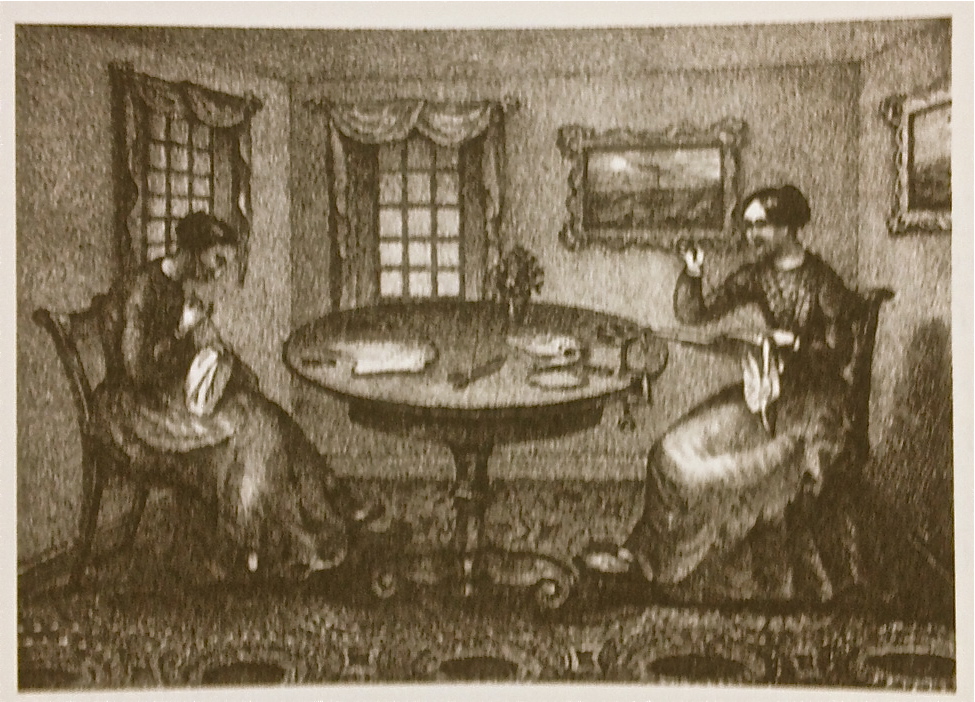
The ladies continued sewing on shirts.  Evelina sewed for so long that her eyes must have hurt by the end of the day, yet she was still working with her needle when the lamps were lit. She mended many shirts, finished sewing one and cut out four more. Orinthia Foss, the young schoolteacher who was boarding with the Ameses, helped her.

Of the four shirt patterns Evelina cut, one was a new design from “Sister Sally,” most likely the wife of Horatio Ames. Horatio was the second son of Old Oliver and brother to Oakes, Oliver Jr., William, and Sarah Witherell. The black sheep of the family, he lived in Connecticut where, like his brother William, he ran an ironworks operation.  He and his wife Sally had begun their married life in North Easton; his father had built them a home there and their first child, another girl named Susan, was born only a few months after Oakes Angier.  As the two earliest grandchildren of Old Oliver and Susanna, the two cousins had certainly played together.

Evelina did take one break from sewing.  She cut out some items for her scrapbook, which up to now had been filled mostly with “receipts” or recipes.  That, or Evelina was creating two scrapbooks, one for keepsakes and favorite readings, the other filled with recipes for the kitchen.

*Illustration “Ladies Sewing Birds,” advertising broadside of C. E. Stearns, Middletown, Connecticut, 1851. Connecticut Historical Society, Hartford

March 1, 1851

Photographing

March 1st  Saturday  This forenoon put a bosom into an old

shirt of Mr Ames.  After dinner worked on shirt

bosoms, carried them into Olivers and staid two

hours and then went to meet Orinthia at the

Daguerretype saloon.  Called at the store and on Abby

Torrey  On my return called on Miss Eaton found her

more comfortable than I have seen her for some time

Mrs. Holmes mother has been sick for a week.  Very 

pleasant.  Augustus not here

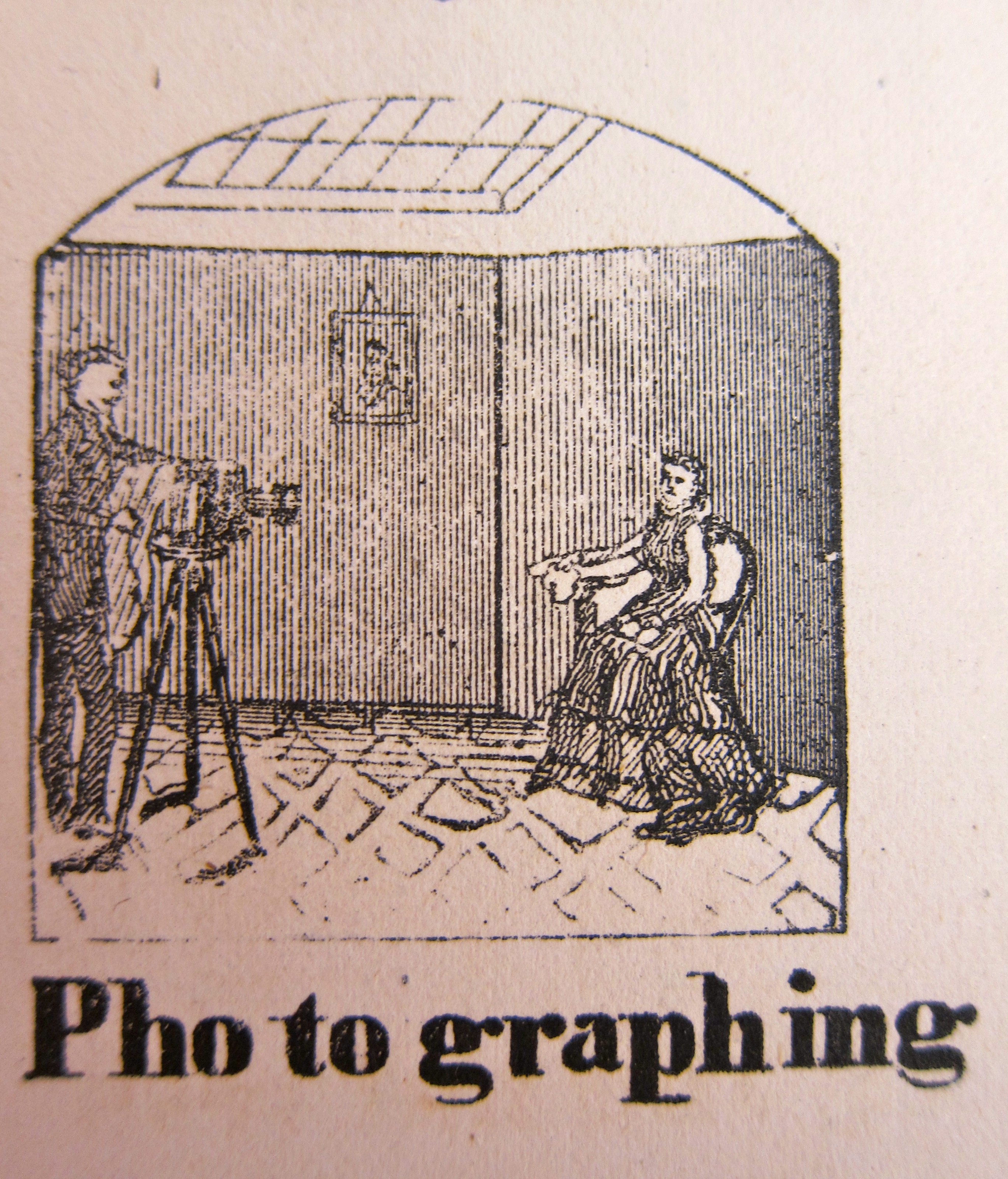
Only a dozen years after a Frenchman named Louis Daguerre reproduced an image of a Paris street onto a piece of treated glass, the new medium of photography had become so popular and successful that someone in the small town of North Easton, Massachusetts had seen fit to set up a “saloon” to take pictures.  What a novelty for the townspeople.

After a day of rather pedestrian sewing, Evelina Ames, housewife, went to the daguerreotype studio to meet Orinthia Foss, schoolteacher (and boarder at the Ames’s,) to have their likenesses taken. What a lark for them to go pose for the camera.  Whose idea was it? Did they pose together?  Did they pose alone?  Or did only one of them have an image taken? How long did she or they have to hold still?  Who ran the shop? Where are those photographs today?  What good friends Evelina and Orinthia are getting to be.

A stop at the company store and a visit with her niece, Abby Torrey, were next on the agenda for Evelina’s afternoon. Now that it was March, the daylight began to last a little longer, allowing more time for errands before heading home. One last stop at the house of Bradford and Harriet Holmes was in order. There, two invalids, Miss Eaton and Mrs. Wright, were being “watched,” or looked after by various friends and relatives, in a manner resembling today’s hospice care. Miss Eaton, of indeterminate age, had been in poor health for several months, probably with consumption.  Sixty year old Mrs. Wright, mother to Harriet Holmes, had also taken ill.  She was suffering from pleurisy and was not expected to recover. Spring might be on its way, but not for these two women.

February 23, 1851

Map of Maine, 1850

Map of Maine, 1850

1851

Feb 23  Sunday  Have not been to church to day on account

of my cough, although it is a great deal better.

Orinthia staid at home too, having a bad cold and 

being a good deal fatigued.  We have had a nice 

quiet time talking over Maine affairs.  She spent

Thursday night at Mr Mowers.  Have written a long

letter to Louise J. Mower to day.  Mr Whitwell exchanged

with Mr Bradford of Bridgewater.  It is a lovely day.

This was the second Sunday in a row that Evelina missed going to meeting.   She stayed behind ostensibly to keep the new boarder company and to nurse the lingering cough that she admitted to herself was much better.  Was she still avoiding certain people at church, or had she gotten past the Sewing Circle incident?  Whatever her reasoning, she had a pleasant visit with young Orinthia Foss, the new schoolteacher.

Orinthia seems to have hailed from the state of Maine, where the Ames family had vital business connections.  The wooden handles of the Ames shovels came from Maine, where good wood like ash was still plentiful. Massachusetts, on the other hand, in 1850, was fairly well devoid of decent stands of hardwood after two centuries of settlement and development.  Wood from Maine was a critical resource for the Ames enterprise and over the years, one or other of the Ames men made a periodic trip north to examine the supply and cultivate the connections. Oliver Jr., for instance, made a trip to Wayne, Maine, near Augusta, in the mid-1860s.

On her journey to North Easton, Orinthia Foss spent a night with the Warren Mower family in Greene, Maine, a town near today’s Lewiston-Auburn area. Quite wooded, and close to the Androscoggin River as well.   Mrs. Warren Mower was the former Louisa Jane Gilmore born in Leeds, Maine, in 1820. Was she a relative, perhaps? Evelina’s eldest brother, John Gilmore, lived in Leeds, having moved there from Easton in the 1840s.  What was the connection? Whether or not they were related, Evelina and Louisa were clearly friends who corresponded regularly.

February 13, 1851

Money

1851

Feb 13th  Thursday  This morning put the parlour in order

and went down to the store with the intention of calling

on Miss Eaton on my way back, but her Mother & brother

came last night and thought best not to see her but wait

until she was over the excitement of seeing them  Went into the

office with account of butter and other things sold.  Mr Peckham

gave me 30 dollars 78 cents  Augustus is still assisting him with

his books.  Very pleasant but ground rather wet.

Moving past yesterday’s humiliation, Evelina put her parlor back together first thing this morning and left the house, all by herself.  A walk to the little village on a fair day must have felt good, muddy ground notwithstanding.  She went right to the company store.

The Ames family made shovels, obviously, but their overall enterprise was never limited to manufacturing alone  – witness their eventual involvement with the Union Pacific.  They also made money from the operation of a company store, one that had been owned previously by a former partner of Old Oliver named Colonel David Manley.* The shop was right in the village of North Easton where shovel employees and others could purchase ordinary household items – muffin tins, for instance – dry goods like flour and personal articles. Evelina shopped there from time to time, and on this day she may have picked something up.  But she also sold things through the store, which explains why later that day she made her way to the Counting Office to collect $30.78 for “butter and other things sold.”  She had a little stream of income for herself, a source of satisfaction for any homemaker, and material consolation for a wounded spirit.

On her walking rounds, Evelina stopped in at the Holmes residence to call on Miss Eaton, a neighbor who is slowly declining. When she learned that Miss Eaton had family visiting, she deferred her call until another day.  Evelina and her sister-in-law Sarah Lothrop Ames have been looking after Miss Eaton from time to time and will continue to do so as her health fails.  The Ames women were dutiful in looking after the sick among the families of employees of the shovel shop.

* For more information on this store, you might want to read Easton’s Neighborhoods by Edmund C. Hands.  Among extensive historical information about the town, he offers some great context about early business days in North Easton.

February 12, 1851

Thread

1851

Feb 12th This was the day for the sewing circle & what a crowded

house! Not one here except Mr Whitwell and our own

families  Father Ames came in to tea & Sarah W

George, Emily & Oliver & wife  Poldens boy was buried

to day  Isabell & Ann went to the funeral & took tea

with Jane after they came back.  I prepared enough

for 40 and think it is very provoking to have none

 of the members  It is a delightful day.  Letter from Miss Foss

No one came to Evelina’s party.

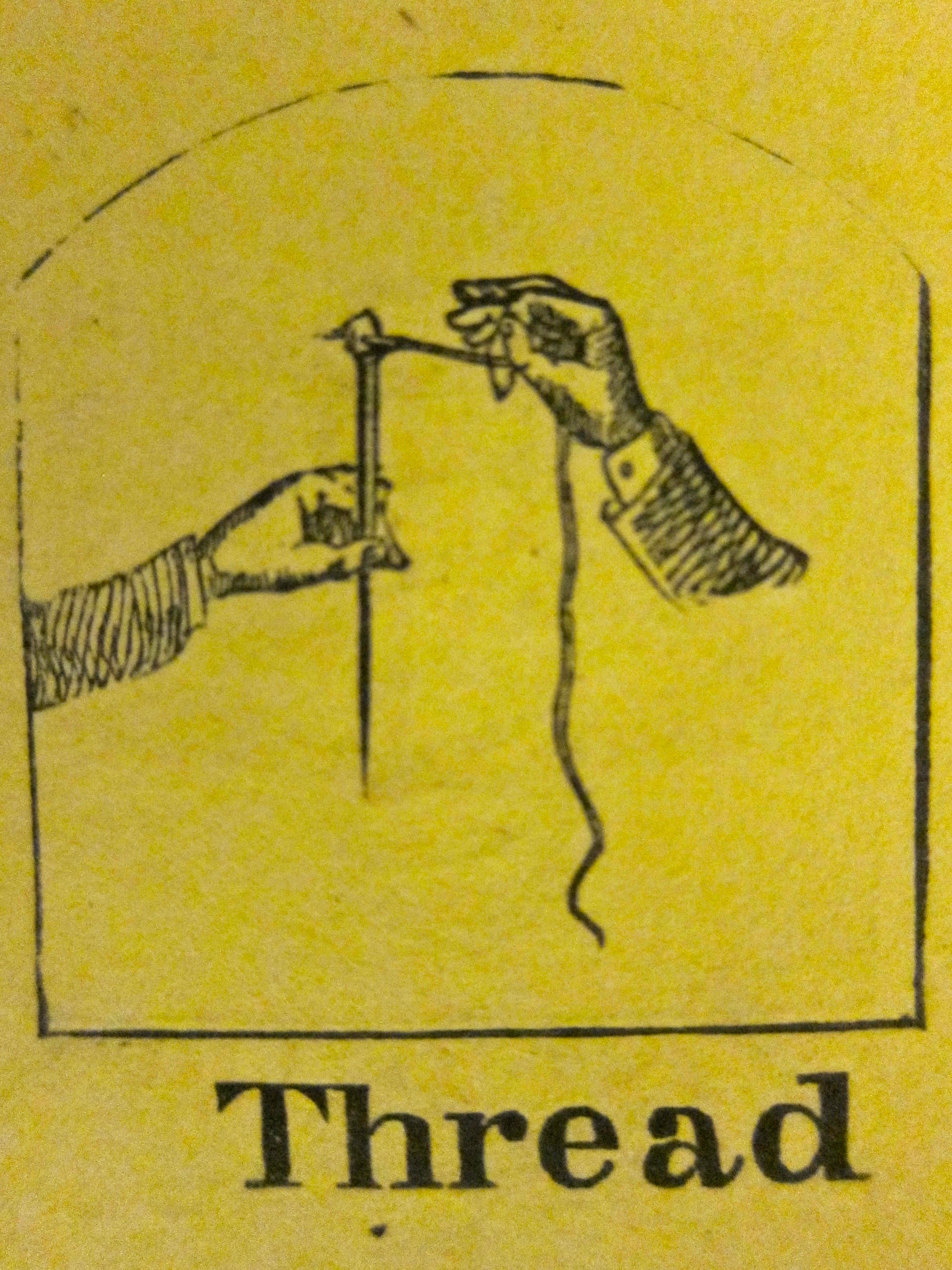
“Very provoking,” indeed.  Mortifying, even, that not a single member of the Sewing Circle attended today’s meeting, unless you count Reverend Whitwell.  All the preparations, the baking, the cleaning, the spools of thread from Boston, all in vain.

Evelina took the rejection with a lacing of humor: “What a crowded house!”  Although disappointed and upset, she must have been grateful for the way the Ames clan filed in to partake of the feast. From Old Oliver (who almost never came to tea) and all three Witherells to Oliver Jr and Sarah Lothrop Ames to her own children and husband, presumably, the family closed ranks around her and filled her parlor with warm bodies.  Even the Irish servant girls on their way home from a wake partook of the spread of food – in the kitchen with Jane McHanna, of course.

So what happened?  Evelina said the day was delightful but her father-in-law, a dependable chronicler of the daily weather, described “the going” that day as “rough + bad” even though the weather itself was “fair”.  After days of terrible weather that had swung from rain to ice and back again, some of the absentee members probably couldn’t drive their wagons out of their own yards.  Bad roads might account for some, if not all, of the truancy.

Nevertheless, the incident raises questions about Evelina’s popularity and social standing.  She was married to one of the most important men in town, and she and Oakes enjoyed the friendship of many.  Is it possible that some of the women in the Unitarian Circle resented her, or felt themselves superior to her?  Where were the women she had grown up with? Were they jealous of her? Did she fail socially in comparison to her sisters-in-law, each whom had a more refined upbringing? Sarah Ames and Sarah Witherell never failed to attract a lively turnout for their Sewing Circles.

All these possibilities must have swirled in her mind.  The true test would come when the Sewing Circle met again at Evelina’s, many months from this day, this awkward day that Evelina surely hoped to forget.

February 1, 1851

Ames Home and Office, North Easton, Massachusetts ca. 1852 - 1862

Ames Home and Office, North Easton, Massachusetts
ca. 1852 – 1862

Feb 1st  Saturday  Sit down to mending again this morning

Mended a pr of kid gloves and a number of other things

Went into the other part of the house with mother

to tea  worked on panteletts finished two prs.  Mrs Packard

and Mrs Rhoda Fuller called there  Mr Ames has been 

to Boston & brought home Ladys Books Grahams & Harpers

& International Magazines & 1/4 lb Angola yarn.  Have been

reading in the magazines this evening.  Cloudy & warmer

Evelina often mentions going into “the other part of the house,” which was a section of the house on the southern side in which Old Oliver, a widower, lived with his widowed daughter Sarah Witherell and her children.  This section was created when Old Oliver turned the original (ca. 1812) dwelling into a duplex in 1827 on the occasion of the marriage of Oakes and Evelina.

In 18th century New England, family custom often dictated that the eldest son inherit the family homestead and, in order to effect that, houses were sometimes renovated to allow two families to live side by side until the transfer of property came to pass.  That this practice was becoming less prevalent in the 19th century meant nothing to Old Oliver who, independent and conservative, still had his feet in the 18th century in certain ways.  His home would go to his eldest son, and he would eventually provide homes for his other children as well.

In the above photograph of the Ames House on Main Street, we can see the original home in the center, a building that is divided in two on the inside, with Old Oliver’s doorway facing toward the camera (behind the middle tree).  The entryway for Oakes and Evelina faces the street.  To the left of the house is the attached office, where Oakes and Oliver Jr and others kept track of business matters.  It was known as the Counting House.

In the background to the right is the house Old Oliver built for Oliver Jr and wife Sarah Lothrop Ames on the occasion of their marriage in 1833.  In 1863, they would tear this down and rebuild a more modern and formal abode, one that still stands today. The old homestead, which housed generations of Ameses in its time, was torn down in 1951, approximately 100 years after this photograph was taken.