March 30, 1852

Exif_JPEG_PICTURE

1852

March 30th  Tuesday  Spent the forenoon puttering about

the house doing nothing at all.  Have been to

carry Orinthia to Mrs John Howards.  Mrs S Ames

went with us and we called at Mrs Reed, Whitwell

J. Howard  Mrs Merrill and Mrs Hills  Mrs Ames

stoped here to tea and spent the evening.  Louisa

Swan was at home and Ann Johnson.  Augusta called

Hannah called for a moment this forenoon

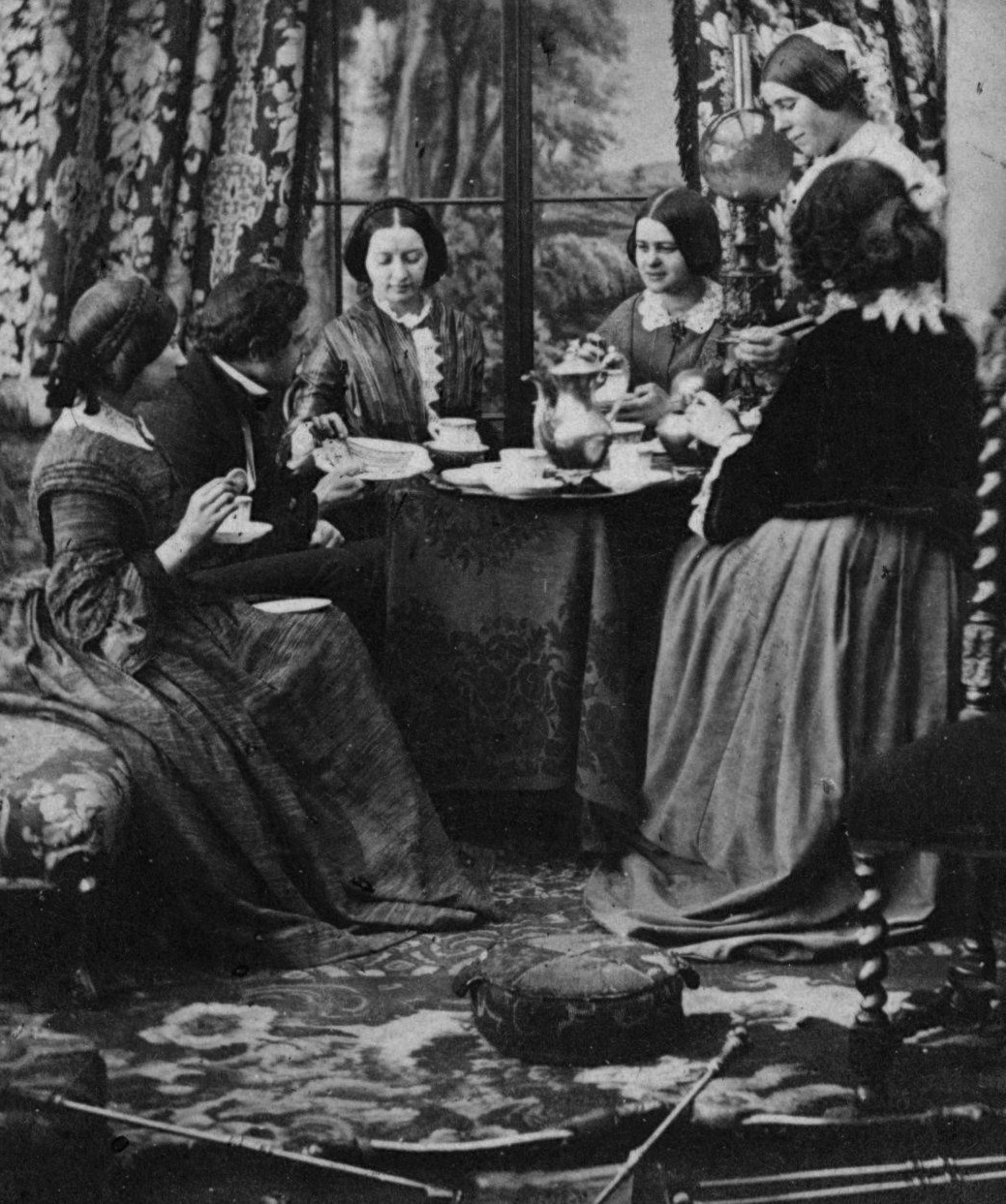
Apparently, there was no sewing today; perhaps Evelina’s fingers were sore from working the heavy moreen fabric the day before. She hardly seemed to mind “doing nothing at all,” however, and gave the afternoon over entirely to calling, an occupation she enjoyed. She, her sister-in-law Sarah Lothrop Ames, and guest Orinthia Foss called on Caroline Howard, Abigail Reed, Eliza Whitwell, Mrs. Merrill and Mrs. Hills. They may have called on some younger fellow Unitarians, too: Louisa Swan (daughter of Dr. Caleb Swan) and Ann Johnson.

Calling was an essential component of social life in the 19th century, as we’ve noted before.  Some women thrived on it, others only tolerated it, but just about every woman exercised the obligation to call on their friends and neighbors, as due. In Louisa May Alcott’s classic novel, “Little Women,” an entire chapter is devoted to two of the March sisters, Amy and Jo, making calls. Amy enjoyed them, but had to persuade Jo to join her:

“Now put on all your best things, and I’ll tell you how to behave at each place, so that you will make a good impression.  I want people to like you, and they would if you’d only try to be a little more agreeable. Do your hair the pretty way, and put the pink rose in your bonnet; its becoming, and you look too sober in your plain suit.  Take your light kids and the embroidered handkerchief. […]

“Jo […] sighed as she rustled into her new organdie, frowned darkly as she tied her bonnet strings in an irreproachable bow, wrestled viciously with pins as she put on her collar, wrinkled up her features generally as she shook the handkerchief, whose embroidery was as irritating to her nose as the present mission was to her feelings; and when she had squeezed her hands into tight gloves with two buttons and a tassel, as the last touch of elegance, she turned to Amy with an imbecile expression of countenance, saying meekly, –

“‘I’m perfectly miserable; but if you consider me presentable, I die happy.'”*

*Louisa May Alcott, Little Women
February 17, 1852

imgres

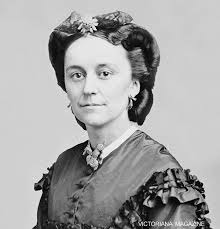
Example of mid-19th century headdress*

1852

Tuesday Feb 17th  This forenoon made me a headdress of Satin

ribbon of the colour of my hair and lace  Alsons

wife came to Augustus this forenoon and to Edwins this

afternoon  Called here awhile after dinner

Mrs Witherell S Ames & self spent the afternoon & evening

at Mr John Howards with Mr & Mrs Whitwell

Mr & Mrs Reed & Mrs Elizabeth Lothrop  Frederick

carried us down & [came] after us this evening

Bonnets may have been the most common covering for the heads of well-dressed mid-century females, but head gear of other persuasions was not to be ignored.  A fore-runner of today’s fascinators, light, decorative headdresses such as the one in the illustration above were very popular for certain indoor or evening outfits. Evelina must have enjoyed sewing one for herself, taking extra pleasure in how well it matched her own coloring.

Evelina’s father-in-law, Old Oliver, noted that this “was a fair day wind north west + cold.” The wind would have been somewhat behind them when the three sisters-in-law, Sarah Ames Witherell, Sarah Lothrop Ames, and Evelina were driven south in the afternoon by Fred Ames. The women visited a group of friends at the home of fellow Unitarians John and Caroline Howard.  The tea they must have been served there perhaps helped stoke them up for the cold drive back home into the wind.


*Courtesy of Library of Congress

February 7, 1852

dickens12_2084187b


Charles Dickens, ca. 1852

(1812 – 1870)


1852  Sat  Feb 7th  Orinthia Miss Burill Susan & self called this

morning on Mrs J Howard, Whitwell & E Howards

left Susan at Mr Howards, came home with Frank

from a sing this evening.  Abby Augusta & Helen were

here awhile this afternoon  Helen went out to Bridgewater

last night and came up with Mr & Mrs James Mitchell this

forenoon  Orinthia went home about five and this

evening we have been into Olivers.  Mr Mitchell returned at nine.


This was a non-stop sociable Saturday for Evelina; she, her daughter Susan, dear companion Orinthia Foss, and another young schoolteacher, Miss Burrell, made calls all morning long. In the afternoon, she entertained three of her nieces and in the evening, visited next door at Oliver Jr and Sarah Lothrop Ames’s house. Chat, chat, chat.

In the larger world of letters, Charles Dickens turned 40 years old today. Even at mid-career, he was known as “The Inimitable,” so great was his talent, so voracious his readers. Evelina loved his work and benefited from his prolificacy.

By this point in Dickens’ life, among the books he had already published were The Pickwick Papers, Nicholas Nickleby, various Christmas novellas including A Christmas Carol, Dombey and Son, and David Copperfield, which Evelina had read the previous year. At this time he was composing Bleak House which, like most of his novels, was published in serial form over many months. Its first episode would come out in March, 1852, and run through September, 1853.

Still waiting to be born were future classics such as Hard Times (which targeted Unitarianism, among other entities), Great Expectations, A Tale of Two Cities, Our Mutual Friend – and more. Dickens wrote articles, made speeches, toured, and even acted. He was a high-profile tour de force with a fertile imagination and a thirst for success. Ralph Waldo Emerson, who heard Dickens speak in Boston, compared the author’s ability to “a fearful locomotive to which he is bound and can never be free from it nor set to rest.”*

*Ralph Waldo Emerson, quoted in Annie Field’s diary, 1868.


January 27, 1852

TMM03FOOD10_a_237278c

1852

Jan 27  Tuesday.  Mrs S Ames & Frederick were to dinner  had a roast

goose.  This afternoon Mr & Mrs Whitwell, Mr & Mrs

John Howard & Miss Jarvis    Mrs Witherell Augustus

& Hannah came this evening    Frederick went after the

ladies. Oliver & George carried them all home this

evening.  Baked some tarts in the other house stove

Have sewed but very little  Mr Wm Brown was also here.

Quite a sociable day for the Ameses, full of company.  Midday dinner was attended by Sarah Lothrop Ames and her son Frederick. (The absence of Oliver Jr. and Helen Angier Ames suggests that the former might have been away on business while the latter had returned to school.) Fred, like Oliver (3), was home from the Ivy League; their conversation at the dinner table probably provided some fresh subject matter. Perhaps they entertained family members with a modified description of life on campus.

Evelina served a roast goose (that Jane McHanna had cooked), a dish that normally denoted a special occasion such as Christmas or New Year’s. Were they serving it in anticipation of Oliver (3)’s 21st birthday, or was it just a whim? Either way, serving roast goose on an odd weekday signified wealth behind the larder.

Sarah Josepha Hale offered a recipe for roast goose in her popular household guide, The Good Housekeeper, suggesting that it be stuffed and roasted on a spit over a “brisk” fire for at least two hours. Otherwise, she had a qualified opinion of the dish:

“Geese seem to bear the same relationship to poultry that pork does to the flesh of other domestic quadrupeds; that is, the flesh of goose is not suitable for, or agreeable to, the very delicate in constitution. One reason doubtless is, that it is the fashion to bring it to table very rare done; a detestable mode!”*

Mrs. Hale would likely have approved of the baked tarts, however, that Evelina served for tea later in the day to the Whitwells and others.  It’s a happy note that Sarah Witherell ventured over at the very end of the day; she must have been feeling better after the extraction of her teeth some days back.  She was comfortable enough to let Evelina’s nephew Augustus and his wife Hannah see her face, which had been swollen for days.


*Sarah Josepha Hale, The Housekeeper’s Guide, 1841, p. 52


December 31, 1851

Dismiss


Wednesday Dec 31st  This morning sit down early to knitting

my hood  Have it all finished ready for the lining.  About ten 

Oclock went into the school with Mrs. Witherell.  Mr Brown

has closed his school to day.  Passed the afternoon & evening at Olivers

Mr & Mrs Wm Reed  Mr & Mrs J Howard, Whitwell & A Gilmore were there.

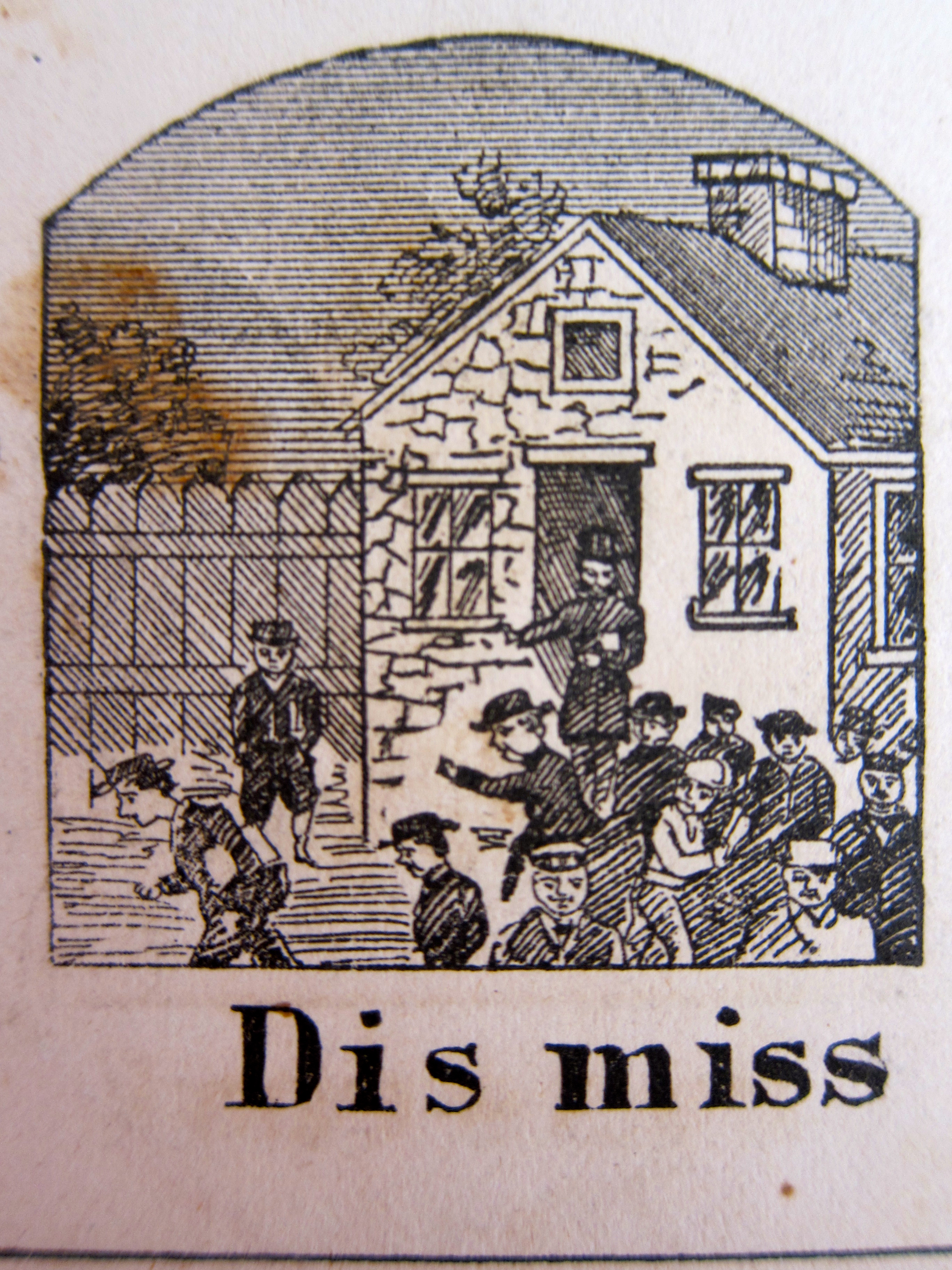
Susie Ames and Emily Witherell may have been happy today to reach the end of their school term. Class, dismissed!  1851, dismissed!

Just how the Ames family celebrated the departure of the old year and arrival of the new, we don’t know. Old Oliver, with his usual terse assessment of the day, merely noted that “this was a cloudy day and some cooler + misty + foggy.” The cool mist he saw would develop into a huge rain storm over night, preventing folks from moving around much.

A group of friends and relatives gathered for tea next door at the home of Oliver Ames, Jr. and his wife Sarah Lothrop Ames. Besides Evelina and Oakes, at the party were Reverend William Whitwell and his wife Eliza, Reverend William Reed and his wife Abigail, Jason Guild Howard and his wife Martha, and Evelina’s brother Alson Gilmore and his wife Henrietta.  In just a few more years, a group like this might have sung the beloved  Auld Lang Syne to mark the occasion. In fact, a version of Auld Lang Syne, written in 1855 and called Song of the Old Folks would become “the tradition of the Stoughton Musical Society to sing […] in memory of those who had died that year.”*

Out with old, in with the new. What a year it would be for the Ames clan.

http://www.americanmusicpreservation.com/SongoftheOldFolks.htm

December 5, 1851

tumblr_mbsy6tKaeV1r5pmqlo1_r1_1280

Unidentified group having tea


Dec 5th Friday  As usual this morning after being in

Boston felt tired & lazy did not get my

room in order very early.  Before it was

cleaned Mrs S Ames came in and we chatted

awhile.  Went into Edwins to get Mr Scott

to paint the porch & thus the forenoon passed

Have passed the afternoon in father Ames

with Mrs J R Howard her sister & Mrs Whitwell

With her husband away, and only her four nearly-grown children to look after, Evelina chose to relax this morning rather than make her bed, tidy up and get to her chores and sewing. “As usual,” she felt lethargic after her Boston shopping trip, but uncharacteristically, she didn’t try to overcome this lazy spell. An early morning visit from Sarah Lothrop Ames gave her some excuse to take it easy and hang out, as we might say today.

Most of the rest of her day was spent socializing.  In the afternoon Evelina went to the other part of the house to visit with sister-in-law, Sarah Ames Witherell, and other ladies who had gathered: Eliza Whitwell, Caroline Howard and the latter’s sister.  The women may simply have sat and chatted, teacups in hand, but Evelina, perhaps, had some sewing or mending at the ready as she visited.

The one piece of business that Evelina managed to do today was walk down the street to the new house being built by her nephew, Edwin Williams Gilmore, to track down Mr. Scott, a painter who was working there. He and another painter, Randall Holbrook, came over in the afternoon and began working for her. The presence of painters at Edwin’s house suggests that it was nearing completion.  Perhaps Edwin was getting ready to move in, if he hadn’t already.


December 2, 1851

 FillmorePresident Millard Fillmore

Dec 2d  Tuesday.  It has been cold to day but not near as

cold at yesterday or as windy  Mary has put

her clothes out.  Jane has ironed some shirts

for Mr Ames & I have ironed some collars

cuff & handkerchiefs &c for self  Mother & self

have passed the afternoon at Mr Whitwells

Mr & Mrs John R Howard were there.  Had

a pleasant visit

While the servant Mary – whose last name we never learn – put out most of yesterday’s wet laundry to dry, Jane McHanna rose from bed to iron some of Oakes Ames’s shirts.She had spent part of yesterday placing them in a tub of starch. Evelina took to ironing as well, looking after her own collars, cuffs and handkerchiefs. Ironing, which required a small fleet of flatirons being kept warm on a hot stove, was a welcome chore on a cold day. We don’t often read of Evelina doing the ironing herself.

In Washington, D. C., President Millard Fillmore’s State of the Union address was delivered in writing to Congress.  His speech was quite literal, full of specific details about foreign policy, exports, mining, gold in California, the acquisition of Texas and the surveying and improvements necessary for the territories and frontier.  He lauded the importance of agriculture, noting that “four fifths of our active population are employed in the cultivation of the soil,” and argued for a Bureau of Agriculture.

Fillmore also could not help but write of the growing differences between North and South and the 1850 legislation that was designed to address various aspects of the problem of slavery. He began his address optimistically, writing “the agitation which for a time threatened to disturb the fraternal relations which make us one people is fast subsiding…” but later admitted “that it is not to be disguised that a spirit exists, and has been actively at work, to rend asunder this Union which is our cherished inheritance from our Revolutionary fathers.”

In closing, Fillmore urged patience and reconciliation.  He counseled his countrymen to honor the Compromise of 1850.  “Wide differences and jarring opinions can only be reconciled by yielding something on both sides,” he cautioned.

November 20, 1851

OLYMPUS DIGITAL CAMERA

Thursday Nov 20  I had to get breakfast again this 

morning and do most of the housework  Jane

assisted some and ironed three fine shirts &

washed the dishes after dinner  Mrs Whitwell

came with Mr Brown when he came to school

and staid untill about three and Mr Whitwell

came for her,  after she left I prepared the

mince for pies  Jane chopped the apple

With Jane McHanna continuing to feel poorly, Evelina again cooked breakfast. As her grandson, Winthrop Ames later pointed out, “family breakfasts were promptly at six – and no sketchy affairs of orange juice and a bit of toast either, but substantial meals of mill-ground cereals, eggs and often meat.”* Evelina was cooking for five people, not counting Jane or any other help. She also would have had to prepare the main meal at midday, and tea later on. Today’s tea may have been a simple affair.

Jane felt a bit better as the day wore on and managed to iron shirts, wash dishes and chop apples for baking.  When Evelina wasn’t sitting with her afternoon visitors, Eliza Whitwell and Erastus Brown, she worked in the kitchen on her mincemeat. Thanksgiving Day was only one week away, and the preparing of food for the feast had begun. Pie time!


**Winthrop Ames, The Ames Family of Easton, Massachusetts, privately printed, 1937, p. 128

September 23, 1851

phototake-rm-hives_urticaria_skin_rash

*

Tues Sept 23d  Susan has passed a dreadful night has not slept

any at all and this morning we sent for the Doctor

and he pronounces it the nettle rash  She has suffered 

very much to day would not let me leave her for

one moment  Mr & Mrs Whitwell are spending the 

day at the other part of the house  Oakes A & Mrs

H Mitchell called there last evening and visited them

She called in to see Susan

Little Susie Ames was in agony.  She had nettle rash, a 19th century term for hives, an acute, raised rash that erupts from the skin in painful splotches. It can appear in many places on the body; Susie’s landed on her backside and spread from there. Known medically as urticaria, the condition is often symptomatic of an allergic reaction, but it can have viral or idiopathic origins, too. It’s hard to say what might have caused the nine-year old’s sudden breakout.

The poor girl’s skin itched, stung and burned, making her unable to rest or sleep without discomfort. Tending her daughter all night and day, Evelina didn’t get any rest, either, and the regular domestic pattern of the day was disrupted. A quick visit from Harriett Ames Mitchell must have been helpful, at least, in capturing Susie’s attention for a few minutes.

In the house next door, Sarah Lothrop Ames turned 39 years old today. Given the recent death of one of her brothers, it’s doubtful that any great fuss was made over the occasion. Sarah and her immediate family were probably still wearing some form of mourning apparel at this point.


*www.webmd.com


September 15, 1851

Peach

Monday Sept 15th  Mrs Stevens & I made our plan

to go to North Bridgewater this afternoon but

could not get a horse in season  Augustus

rode up to his house with us and we brought

Miss Eddy home with us.  Called at Mr Reeds

and got some peaches.  Mr & Mrs Whitwell

called before we went away Ruth & Louisa

Swan called at the other part of the house

Plans to go to North Bridgewater had to be cancelled today when Evelina couldn’t get a horse in time, or “in season,” as she says. The morning hours had been spent on housework and laundry, certainly, and the planned trip to Bridgewater must have been a sweet incentive to get the choring done.  No doubt Evelina and Mrs Stevens were disappointed not to go.

Evelina and Mrs. Stevens did get to call on Evelina’s nephew, Alson Augustus Gilmore and his wife, Hannah Lincoln Gilmore.  Hannah had recently given birth to her second son, Willie, and might well have welcomed the company. The women also secured some peaches at one of the Reeds’ homes, no doubt with plans to make some preserves. Reverend William Whitwell and his wife Eliza called on them and two of Dr. Caleb Swan’s offspring, Ruth and Louisa, called to see Sarah Witherell.  Ruth was about to be married. The social comings and goings of summer continued despite the light frost overnight, a sure sign of approaching autumn.