January 24, 1852


IMG_2669


1852

Jan 24th  Saturday   Worked all the forenoon mending

Olivers overcoat & pants. Have finished my worsted

hood in Olivers this afternoon.  Julia Pool

Augusta & Edwin were there to tea. Mr Ames

has been to Boston & has brought home Oliver a

gold watch  Fred & Oliver have fine time and 

are wide awake  They sleep together.  Fred came 

in here tonight.

Evelina must have written this entry at night, perhaps in her bedroom where she could hear her son Oliver (3) and nephew Fred Ames conversing and laughing elsewhere in the house.  The first cousins, college men both, enjoyed one another’s company and were spending the night together. Up to now, they were the only family members in recent memory to go to university and must have had some stories to compare.

The fond regard that Oliver (3) and Fred held for one another would last throughout their lives, although it would be sorely tested on occasion. As grown men caught up in the high stakes of the railroad business, they found themselves holding opposing views more than once.  And after the sudden death of Oakes Ames and the attendant financial woes that followed, Oliver (3) defended his father’s legacy, while Fred supported his own father’s efforts to recoup funds that Oliver, Jr. believed were his.  In other words, Oliver (3) and Fred faced off over money. Yet they moved in similar circles, invested in similar capitalist ventures and, in 1893, when Fred himself died quite suddenly, Oliver (3) grieved, “completely broken down by [the] sad news.”*

Those difficult times lay ahead, but on this day, Oliver (3) had something to celebrate.  His father, Oakes, had given him a gold watch, perhaps in honor of his 21st birthday, which was right around the corner. Perhaps, too, Oakes was honoring his middle son for his successful studies at Brown University, studies that Oakes had initially resisted. The watch was certainly a sign that Oakes was proud.

*Oliver Ames Third, Diary, September 13, 1893, Collection of Stonehill College Archives


January 23, 1852


images-1

Currier & Ives, Winter in the Country: Getting the Ice1864

1852

Jan 23d Friday  Have had a hard days work.  Heat the

brick oven 4 times.  Baked mince & dried apple

pies brown bread cup cake & ginger snaps.

Had quite a fright about Oliver & Fred being

away at tea time was affraid they had got into the

pond where they had been cutting ice for the ice house

found them at Edwins.  Mrs S Ames went with me

about 8 Oclock into Edwins


There are few things scarier for a parent than having a child – whatever the age – not come home when expected. Evelina and her sister-in-law Sarah Lothrop Ames had “quite a fright” when their sons, Oliver (3) and Fred Ames, respectively, didn’t return home from a day spent outside, harvesting ice at a family pond. The pond was some distance from the family compound, out of earshot. At tea time, no one was able to report on their whereabouts. The boys might have fallen in.

The worried mothers went out after dark to search for their sons and found them practically next door. They were fine. Oliver and Fred had stopped to call on Oliver’s cousin, Edwin Gilmore, and were presumably unaware that their absence had alarmed anyone. How relieved Evelina and Sarah must have been.

For the young men, the day spent working outdoors in the cold sunshine must have been an invigorating change from their college studies, and for their grandfather, Old Oliver, their participation in the important annual harvest of ice must have been gratifying.

January 22, 1852

Tripe

Tripe

1852

Jan 22  Thursday  Have been cutting some apples & chopping

meat for mince pies, have it ready for baking

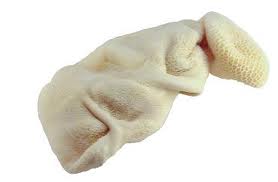
was about it all the forenoon, boiled tripe

This afternoon have been quilting the lining

for my hood. Julia Pool & Augusta spent the

afternoon. Augusta went home to get tea for Edwin &

in the evening they both came in and staid until

nearly ten Oclock. Mrs S Ames was here about an hour

Evelina was the recipient of the tripe from the two oxen that Old Oliver had butchered a few days earlier. Tripe is the stomach.

Lydia Maria Child offered advice on its preparation: “Tripe should be kept in cold water, or it will become too dry for cooking. The water in which it is kept should be changed more or less frequently, according to the warmth of the weather. Broiled like a steak, buttered, peppered, &c., some people like it prepared like souse.”*

Souse, also known as head-cheese, is a terrine made with meat from the head of a cow, calf or pig, often pickled, and set in a meat jelly or aspic. Mrs. Child was suggesting that the tripe be served in aspic, which Evelina might have done once she boiled it.  It’s not a dish one sees anymore on the American dinner table.

Out of the kitchen, Evelina welcomed visitors from the Pool family. The bride, Augusta Pool Gilmore, and her sister, Julia Pool, spent the afternoon at the Ames house and in the evening, the newlyweds themselves visited until ten o’clock.


Lydia Maria Child, The American Frugal Housewife, p. 38

January 16, 1852

image


1852

Jan 16th Friday  Made the bed in the front chamber and 

put the room in order swept the stairs &c &c

worked on Susans morino hood  Mrs Wm Reed &

Mrs Hall called  Augusta & Edwin here to tea and

spent most of the evening  Edwin put the casters

on my hourglass table and I nearly finished putting

on the cover  Mrs S Ames called a few moments.

In between the day’s activities of choring, sewing and finishing up a project for newlyweds Edwin and Augusta Gilmore, Evelina received several callers, including Abigail Reed, wife of the elderly William Reed, and a Mrs. Hall. Evelina had called on Mrs Reed the day before; Mrs Reed returned the courtesy today. Paying calls was an intrinsic part of social life in the nineteenth century, especially among women and especially in cities, but also in smaller country towns such as Easton. Social exchange, which in the country had been a somewhat relaxed occurrence based on an informal combination of need, opportunity and desire, was becoming ritualized.

As of 1850, social visits were beginning to follow a proscribed pattern, like the one described in The Art of Pleasing,* written about this time. On the topic of “Receiving Visitors”:

“To receive visitors with ease and elegance, and in such a manner that everything in you, and about you, shall partake of propriety and grace, – to endeavor that people may always be satisfied when they leave you, and be desirous to come again, – such are the obligations of the master, and especially of the mistress of a house.

“Everything in the house ought, as far as possible, to offer comfort and grace. Perfect, exquisite neatness and elegance, which easily dispense with being sumptuous, ought to mark the entrance of the house, the furniture, and the dress of the lady.”

In a cautionary paragraph, the author goes on to advise against sewing when company calls: “If a lady who receives a half ceremonious visit is sewing, she ought to leave off immediately, and not resume it except at the request of the visitor.”  That stricture may have been a difficult one for Evelina to follow, given how incessantly she sewed. But she and her sisters-in-law would have striven to be au courant with the etiquette of the day.

Before many more years went by, the phenomena of calling cards would be introduced, creating “an increasingly complex etiquette which determined the length and frequency of calls, whether a call should be returned or not and the sorts of people to whom a family was, or was not, ‘at home.’ Families connected by kinship, business and politics interchanged calls and invitations, but ranked and classified their acquaintances in ever more precise grades of social acceptability.”** These new rules would apply particularly to the next generation of Ameses.

H. M. Rulison, The Art of Pleasing, Cincinnati, 1853, pp. 27-28

** Jack Larkin, The Reshaping of Everyday Life, 1988, p. 265


January 14, 1852

il_340x270.670708305_2grg

Jan 14th Wednesday  Have been to work some on a 

morino hood for Susan to wear to school  Augusta called 

this forenoon and I went home with her to assist her in

cutting her cake to send to her friends  This afternoon

have been to N. Bridgewater and called on Miss Foss

with Mrs S Ames Emily & Susan  bought Edwin a clock

Called at Edwins and staid till about eight Oclock this

evening spent the rest of it at Olivers

Orinthia Foss is back.  “Miss Foss,” as Evelina calls her, more formally than usual, had taught school in Easton the previous year, living part of that time with the Ames family.  Although twenty years younger than Evelina, the two women had become close friends, often sewing, gardening and socializing together. When Orinthia left to go back to her family in Maine, Evelina had missed her. Now, Orinthia had returned and was teaching in North Bridgewater (today’s Brockton).

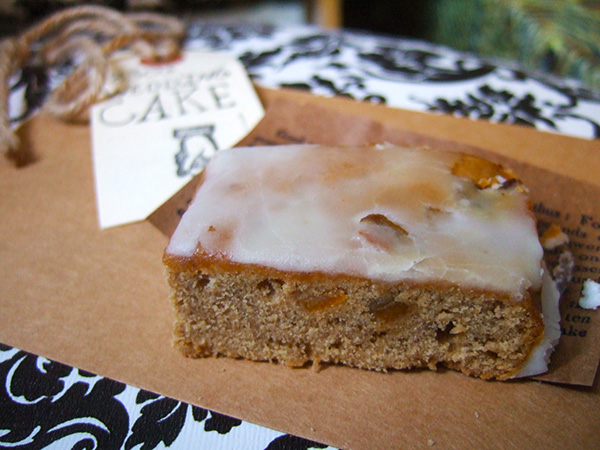
Evelina, Sarah Lothrop Ames, and the girls Susie and Emily rode to Bridgewater to call on Orinthia, a reunion that was presumably happy and animated.  The women also did some shopping.  Evelina, feeling pleased, bought a gift for her nephew Edwin Gilmore, despite having made a table for him and his bride, Augusta.  She had been over at the newlyweds’ home earlier in the day, in fact, showing Augusta how to cut up the wedding cake that she herself had made.  Pieces of the cake would be sent out to friends and relatives as a keepsake.  Wedding cakes were meant to bring luck to the new couple.

Back in Easton, Old Oliver noted that “we kild a yoke of oxen I bought at randolph for 125$ one of them weighd 1359 + the other 1277 one of their hyde weighd 116 lb and the other 104 pounds”.  There would be beef and tripe headed for Evelina’s kitchen.


January 10, 1852

Oakes_Ames_-_Brady-Handy

 Portrait of Oakes Ames by Matthew Brady 

1852

Jan 10th Saturday  Mr Whitwell & Ames have not met again

to day  Mr W called just as Augusta Helen Susan

& self were in the sleigh to take a ride  We have

called at mothers  Mr Horace & John Pool, Edwin

& wife here to tea  Swept the parlor this morning

and put the house in order partially frosted a loaf of cake

for Augusta having made one of hers carried the frosting

over and made her a call while heating it

The boys presented their Father a gold pen & pencil

Oakes Ames turned 48 years old today, as did the local Unitarian minister, William Whitwell.  Last year and again this year, Evelina was unsuccessful in getting the two men together to celebrate. Oakes Angier and Frank Morton gave their father a gold pen and pencil to mark the occasion, a fine gesture.

As Oakes closed in on the half-century mark, he presumably began to look beyond the confines of the work he and his brother Oliver Jr. did for the shovel company. The next generation, in fact, was being groomed to run O. Ames & Sons; Oakes Angier, as eldest son of the eldest son, was on deck to superintend the company whenever Oakes and Oliver Jr. decided to step down. He was learning every aspect of the manufacturing process. Oliver (3) and Fred Ames were at college, Oliver presumably honing the skills he would need to take over his father’s role in managing sales, while Fred was on a path to being the financial clerk or CFO we might say today. Frank Morton Ames was learning a variety of skills, too, although he was seen more as a spare man waiting to step in should his cousin or either older brother fail somehow.

What could Oakes do with his tremendous talent and energy? Clearly, the roiling politics of the day interested him. By 1860, his gregarious nature, quick comprehension and thirsty ambition led him to accept the nomination and election to Massachusetts Governor Andrew’s Council as representative from Bristol County. Two years later, by “a large popular vote,”* Oakes Ames was then elected to the Thirty-Eighth U. S. Congress, where he would serve for four terms.

In 1872, according to circumspect historian, Reverend William L. Chaffin, Oakes “declined a renomination.”* He died in May, 1873, shortly after the conclusion of Credit Mobilier, a national political scandal for which many held Oakes culpable. At the time, his natural candor and fearlessness worked against him and he was unable to dodge the political manuevering that placed most of the blame on him. That same brave honesty, coupled today with calmer, historical perspective, has since served to cast Oakes Ames in a better light.

William L. Chaffin, History of Easton, Massachusetts, 1886, p. 654


January 8, 1852

OLYMPUS DIGITAL CAMERA

*

1852

Jan 8th Thursday

Frosted the cake over the second time

this morning and it was quite dry at three when

Edwin took it away  they are married this evening

Have invited their parents uncles aunts and cousins

here tomorrow. Have presented them with an hour

glass table  Mr & Mrs Reed have passed the afternoon

in the other part of the house  Two shovel handlers from

Maine to spend the night here

Had a quarter of Beef of fathers  The

Ox weighed over 14 hundred

Edwin Williams Gilmore and Augusta Pool were married today in what would have been a small ceremony, probably at the home of Augusta’s parents, Lavarna and John Pool, Jr. Presided over by a minister – Reverend William Whitwell, most likely – the event would have been attended only by close family members. The couple took no honeymoon or “bridal tour,” but moved right into the new house that Edwin had built in the village, barely a stone’s throw away from the Ames compound.

The new house had been furnished not only by Edwin, but also by Augusta herself, who probably brought along household goods as part of what was called her “marriage portion.” Items such as dishes, cutlery, and linens would have been at least some of what Augusta and her new sister-in-law, Lavinia, had labored to put into place over the last two days.

Evelina spent her time preparing for the party she was giving the next day for members of the Gilmore and Pool families.  Her domestic routine wasn’t too overwhelmed, however; she was still able to cope with more pedestrian matters, such as accommodating two shovel handlers from Maine for an overnight visit, even as she set up for thirty guests.


Currier & Ives, The Marriage, 1847


January 7, 1852

weddinga_cake1

*

/52

Wednesday Jan 7th

Heat the brick oven baked a loaf

of brown bread two loaves of fruit cake for

Augusta & mince pies  A & L were at Edwins

this forenoon. This afternoon have sewed for me on 

Susans dress.  I have been making frosting for

the cake  Helen has been in and the girls have had

a nice time over it  Frank carried them home


Augusta Pool and Lavinia Gilmore were once again helping Lavinia’s Aunt Evelina. Helen Angier Ames, too, came over from next door, and the young maidens had “a nice time over it.” They did a little sewing for Evelina – that must have pleased her – and helped prepare frosting for Augusta’s wedding cake, which Evelina had kindly undertaken to make, along with all the regular baking she was doing for her family. Augusta was to be married the next day to Evelina’s nephew, Edwin Williams Gilmore.

If the women were following the instructions of Sarah Josepha Hale, they would have made “Iceing for Cakes,” according to the following instructions:

Beat the whites of four eggs to a stiff foam, and add gradually three quarters of a pound of the best double-refined loaf sugar, pounded and sifted; mix in the juice of half a lemon, or a tea-spoonful of rose water.  Beat the mixture till very light and white; place the cake before the fire, pour over the iceing, and smooth over the top and sides with the back of a spoon.”**

When it got late, Frank Morton Ames took Augusta and Cousin Lavinia back to their respective families in the countryside. The light of a full moon guided them along in a sleigh over snow that was “now about a futt deep.”***

* Image of 19th century wedding cake courtesy of http://www.fourpoundsflour.com

**Sarah Josepha Hale, The Good Housekeeper, 1841, p. 101

***Journal of Oliver Ames, Courtesy of Stonehill College Archives


January 6, 1852


OLYMPUS DIGITAL CAMERAOLYMPUS DIGITAL CAMERA

Augusta Pool                                       Lavinia Gilmore
                    

1852

Tues Jan 6 th

A heavy snow storm commenced about

10 Oclock  Mrs Witherell & her children have been

to the funeral in a waggon had a hard time getting

home.  Augusta and Lavinia have been at Edwins

house getting it in order for housekeeping.  This

evening have helped me stone raisons for cake  Edwin

came with them to tea

The bad weather continued, bringing snow that Sarah Witherell and her children, George and Emily, had to fight their way through as they returned from a funeral in a wagon. As Sarah Witherell’s father, Old Oliver, noted, it “snowd all day and in the evening. it was a damp snow and fell level.

Evelina was safe inside, out of the weather. With her were her 19-year-old niece, Lavinia Gilmore, and Augusta Pool, a 22-year-old who was about to marry Lavinia’s brother, Edwin. The two young women had been at Edwin’s house for much of the day, “getting it in order.” How exciting, and perhaps a little scary, for Augusta to be getting married and moving into a new house in the village of North Easton.  She had always lived out in the country, not far from the Gilmore farm, which is how she got to know Edwin.  In fact, Augusta’s older brother, John Pool, was married to Rachael Gilmore, Lavinia and Edwin’s older sister. They would be double-siblings-in-law. (There must be a more official word for the relationship when a brother and sister from one family marry a sister and brother, respectively, from another family.)

When they finished today’s work at Augusta’s new home, the two girls walked over to Evelina’s to help her stone raisins for the wedding cake.  Evelina may have put the raisins in a little warm water to plump them up before popping the seeds out.  Edwin, groom-to-be, joined the women and the rest of the family for tea once the men all arrived home from work.


* Photographs courtesy of The Easton Historical Society, with thanks to Frank Mennino, curator


December 11, 1851

Unpack

Dec 11th Thursday.  Have had a bad head ache and

very bad cold  Called into the other part of the

house with Mrs S Ames.  Mrs Witherell had bound

the quilt that we quilted yesterday  Mrs R Pool

called & I went into Edwins house with her.  She & her

husband have spent the day at Augustus  I varnished

store room stairs & porch.  Mr Ames came from New York

Mr Clarke put the inside windows in sitting room

Both Evelina and Old Oliver noted that Oakes Ames “came from New York” today after having been away eight days. He was probably glad to be home; he confessed late in his life that he didn’t enjoy travel. And family dynamics, if they had altered at all in his absence, would have reverted to normal once his “stalwart and rugged”* self returned to his own place as the head of the household.

Evelina’s cold, which had been hovering since Sunday, finally landed with vehemence, although Evelina continued to be up and around. She sat with both sisters-in-law, Sarah Ames and Sarah Witherell, and went over to Edwin Gilmore’s new house with her niece (and Edwin’s sister) Rachael Gilmore Pool. In addition to socializing, Evelina varnished her porch and storeroom stairs. The strong smell from the varnish wouldn’t have helped her “bad head ache,” at all; in fact, it probably made it worse. What was she thinking? Was she too economical to let Mr. Scott complete the job? And did she know that she was spreading her cold everywhere she went?

*William L. Chaffin, Oakes Ames, 1804/1873, Easton Historical Society, North Easton, 1996, p. 1