December 30, 1851

SwedishRunnersC

*

Tuesday Dec 30th  This forenoon worked about the house

again. Have put the drugget down in the 

parlour and dusted the room thoroughly.

Made Susan the second pair of sleeves to her blue

cotton & wool Delaine  Finished the letter to Lucy Norris

Commenced knitting the border to the bottom of my hood

It is a beautiful warm sunny day like the spring of the year


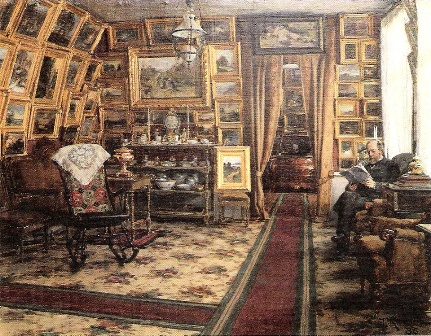
Nor surprisingly, the carpet that Evelina used in the house was inexpensive. Drugget, as it was known, was “a sort of cheap stuff, very thin and narrow, usually made of wool.”**  Drugget is an English term for “a coarse fabric having a cotton warp and a wool filling,” ** the kind of quick carpeting one might have found in a first class railway carriage. It probably had a design or a border printed on it.

Evelina has written here and elsewhere of putting carpeting down, taking it up and outside to clean, and putting it down again. She has written of stitching the carpeting together, which suggests that she may have used drugget runners side by side to make an over-all covering for her parlor floor. She may have been more conventional, though, and placed the drugget as runners on top of an area rug, or on top of a bare floor. Whatever she did, the work was repetitive and dusty.

It’s a shame that Evelina spent so much time indoors today when the weather was “fair warm + pleasant,” as Old Oliver reported. She herself made note of its similarity to spring; she should have known it wasn’t going to last.


** Wikipedia, “Drugget”, as of December 26, 2014


Scandinavian Room with drugget runners “Bibliotekarien Segersteen i sitt hem,” 1886, by Johan Fredrik Krouthen, Courtesy of http://www.burrows.com

 

December 23, 1851

4-currier-ives-winter-scene-granger


Tuesday Dec 23  Julia has been here to day to make Susans cotton

& wool Delaine  I have not sewed much with her

was choring about the house most all the forenoon

painted over some boxes for Mr Scott to grain.  made

the skirt & cuffs to Susans dress then went to knitting

on my hood which I commenced last evening.  Julia

cut and made and gathered the skirt and basted 

it on to the waist, the sleeves are not made


Old Oliver’s wintry weather report for this day suggests a scene worthy of Currier & Ives:”[T]his was a cloudy day + a verry little fine snow. wind north west it cleard of[f] about sunsett. what snow fell to day + last night was 1 ½ inch.” The countryside was covered with snow, appropriate enough for the first full day of winter.  And winter was a season much illustrated by the 19th century printmakers, Nathaniel Currier and James Ives.  Working out of New York, the firm produced enormously popular hand-colored lithographs of mostly American scenes. Currier began the prints in 1835 and was joined by Ives, who had been the firm’s bookkeeper, in 1856. The men soon developed a stable of artists and produced prints through the rest of the 19th century and into the early 20th. Evelina would have been familiar with Currier & Ives images, in the same way that many mid-20th century Americans were familiar with the illustrations of Norman Rockwell. The images were everywhere.

Many, if not most, Currier & Ives prints were scenes of the outdoors. On this day at the Ames’s, however, the action was all indoors, as the women chored, painted, sewed and knitted. Dressmaker Julia Mahoney was at the house to sew a wool dress for nine-year-old Susan Ames. That a child Susie’s age was having a dress made by a “professional” rather than her own mother was certainly a sign of the Ames’s wealth. Helen Ames, Susie’s fifteen-year-old cousin next door, often had her dresses made by Julia. Evelina was keeping up with her sister-in-law, Sarah Lothrop Ames, in providing the best for her daughter.


November 6, 1851

OLYMPUS DIGITAL CAMERA

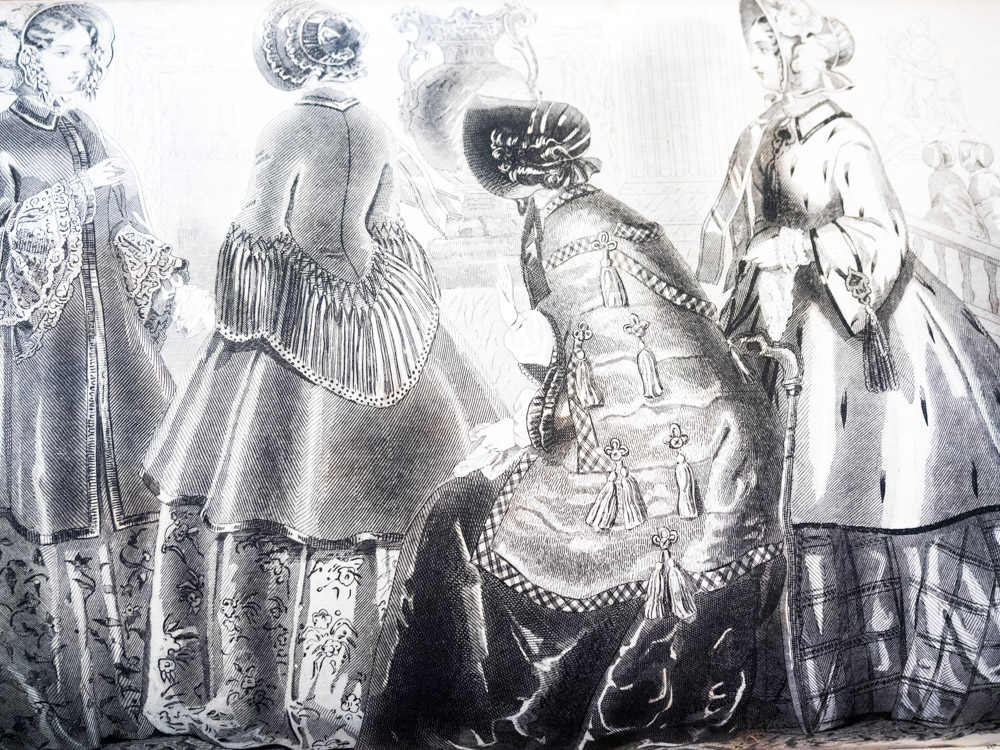
Winter wear from Godey’s Lady’s Book, November, 1851


Thurs Nov 6th  Worked about the house awhile this

morning and about eleven went into the

other part of the house to sit with the ladies

sewed the shirt onto my delaine dress.

Mrs Hubbell & Mrs Ames returned to New York

this afternoon  After they left Mrs S Ames &

self called on Mrs Swain & we went

to Augustus  Mr Bartlett is here will spend the night


After a morning of choring, sewing, and visiting, the Ames women were out and about this afternoon under fair skies. Houseguests Mrs. Hubbell and Almira (Mrs. George) Ames were carried to Mansfield to catch the train for New York.  No doubt they had on their best traveling dresses for the journey. They had been visiting Sarah Witherell and Old Oliver for better than a week.  Servant Jane McHanna traveled with them as far as Mansfield.

After midday dinner, Evelina joined another sister-in-law, Sarah Lothrop Ames, to pay a call on their young friend, Ann Swain.  Mrs. Swain, the wife of the new Ames clerk, John Swain, was a new mother already doting on her first-born son. There would be many visits to ooh and aah over the infant.  Similar oohing and aahing might have been dispensed at their second afternoon call, this one to Augustus Gilmore, his wife Hannah, and her three month old son, Willie.  Even if obligatory, surely these visits were preferable to the calls that the Ames women also made on the sick and the dying.


October 11, 1851


Hog

Sat Oct 11th  Baked in the brick oven  brown bread cake & seed

cakes Squash & apple pies  Miss S. Orr, Mrs Witherell

and her children here to tea  Helen came home last

night and Julia is at Olivers making her silk dress.

Mrs Elizabeth Lothrop is there assisting them.  I have

mended Mr Ames a vest and made the skirt

to Susans striped Delaine dress


Today many baked goods came out of the brick oven that Sarah Witherell and Evelina shared. It was getting to be pie season, so Evelina made squash and apple pies, along with more usual fare like brown bread and cake. Special on the menu was seed cake, something that Evelina hasn’t mentioned baking before.  She probably used caraway seeds from some roots she “set out” last April.

Next door Helen Angier Ames, briefly home from boarding school, met with the family’s favorite dressmaker, Julia Mahoney. Only fourteen, Helen was having a silk dress made; perhaps it was a party dress she might use in Boston. Helping Helen and her mother, Sarah Lothrop Ames, was Sarah’s young sister-in-law, Elizabeth Howard Lothrop. Only 22-years-old, Elizabeth was the mother of two very young sons and the recent widow of Sarah’s brother Clinton.

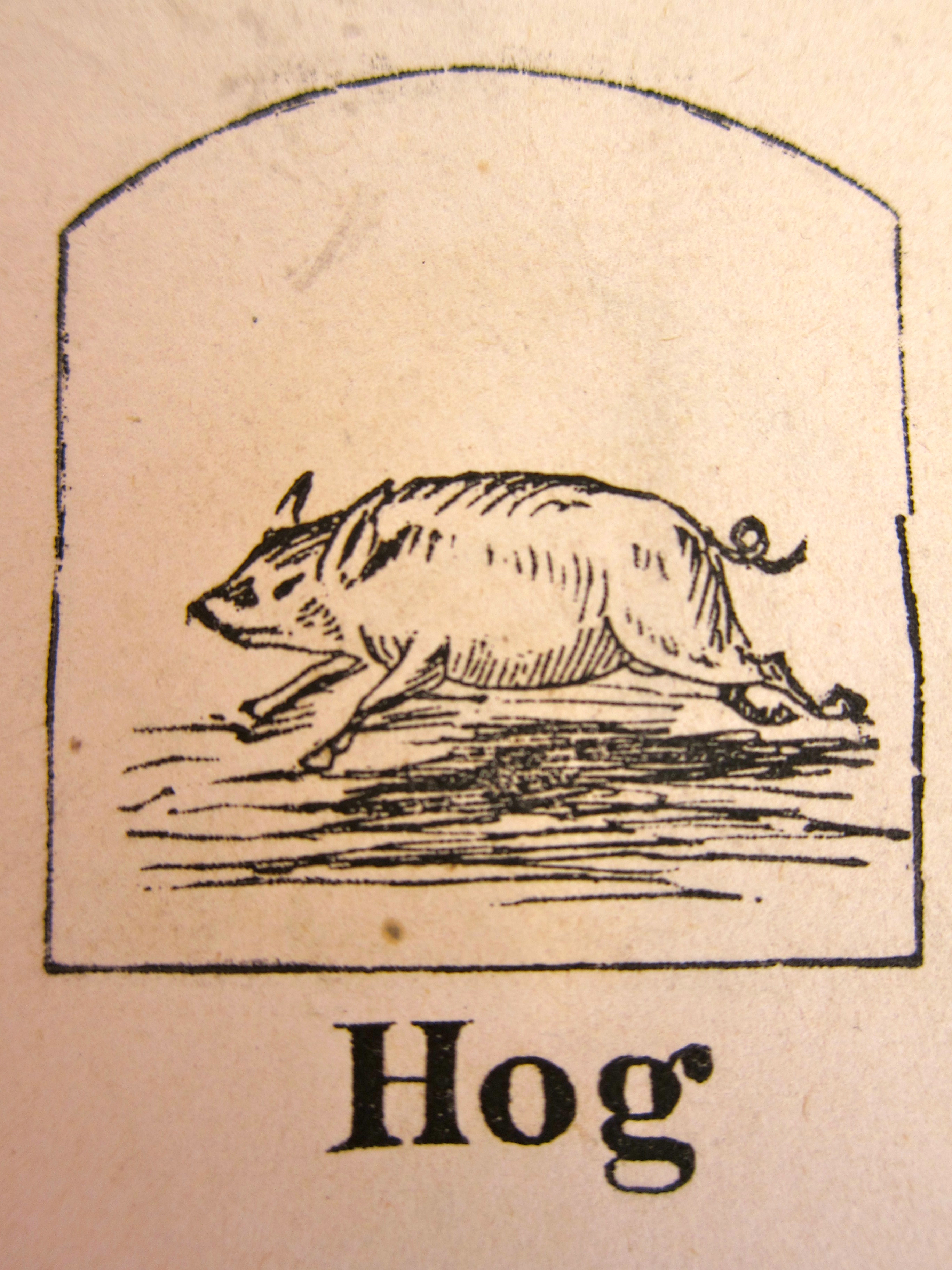
Old Oliver had to be pleased with life at this particular time. Only the day before, “Mr Phillips finisht his work at the great pond,” meaning that the new flume at Great Pond was in place. This was a good achievement for the shovel business which relied on water power to run the factory. Old Oliver was still active in the business he had started and passed on to his sons, yet never took his eye off of the family farm, either. Today he “bought 12 pigs that weighd 1330 pound at 6 ½ cents a lb average weight 112 pounds – cost $86:45.” He would raise those pigs, eventually selling some and slaughtering others to feed his large family. The factory and the farm continued to engage Old Oliver as he grew old.


July 7, 1851


large-003500

*

1851 July 7th  This morning being washing day had to do the

house work and see about the dinner  My finger

is still very tender and I find it difficult to sew

but I have cut of the skirt of my borage Delaine

for Harriet to make and this afternoon have been

working the sleeves to it  Expect Julia here tomorrow

It was Monday, so Jane McHanna washed and hung out the laundry while Evelina swept, dusted and cooked the midday dinner.  Her finger may still have been sore – what had she done to it? – but she did her chores.

She did some sewing, too, or at least she prepared to sew with Julia Mahoney, the dressmaker who was expected the next day.  She cut the cloth for the skirt of a new dress, no small task. The barege she used, as noted in a previous post, was an open weave wool, lightweight and popular at mid-century.

In 1851, dresses were styled with very full skirts, some with flounces, that required upwards of 25 yards of fabric. Knowing Evelina’s instinct for thrift, we may believe that she probably settled for fewer flounces and less material. Still, even the simpler dresses with all their parts – skirt, lining, bodice, sleeves, undersleeves, pocket, collar, and any decorative element such as piping, ribbon or fringe – consumed significant yardage.  Cutting out all the pieces took expertise and room to maneuver. Imagine the project spread out across the dining room table.

How did she convince her sister-in-law Harriett to help sew the skirt?

* Fashion plate from Godey’s Ladys Magazine, July 1851


June 3, 1851

barege2


1851 

June 3rd Tuesday  Have finished Susans green plaid gingham

and have cut the sleeves to her green borage Delaine

Have been mending some, but realy I have done

so little sewing of late that I can scarcely sit myself

to work.  Jane has cleaned the boys chamber in 

the other part of the house

We are having very fine weather and I feel much better

than I have for a few days past


When sewing, Evelina often mentioned using borage, more properly spelled “barege.” Barege is a fabric with a sheer, gauzy weave that features a worsted warp and a silk weft. Warp is the longitudinal thread in a roll of cloth; weft, also known as woof, is the transverse or horizontal thread that is woven through the warp with a shuttle. Using two different types of thread creates a cloth with some texture to it.

Barege was quite popular for dress material in the mid-19th century, even taking prizes at shows. At London’s Great Exhibition of 1851, a medal in the “Worsted Class” went “for a great variety of light goods of the barege class, plain, checked, and brocaded, of excellent combinations.”*  Although most of the fabric that Evelina used was made in New England, it’s possible that the green barege for her daughter’s dress had come from abroad.  The example illustrated above features a barege dress from the early 1860’s.

Getting back to dressmaking, her favorite kind of sewing, may have contributed to Evelina’s improved spirits today. The “very fine weather” probably helped, too.


April 29, 1851

CultivationToolsBP

April 29 Tuesday  Frank has finished the beds in the flower

garden and I have set out some plants that Henrietta

gave me and some that I bought of Edwin Manly paid

him one dollar Julia here finishing the dresses for

Susan & my blue Delaine dress.  Mrs George Ames

& I went to Sharon and spent the afternoon

Had a pleasant ride with Dominic


Three spheres of activity informed Evelina’s day. First was gardening, made possible by Frank Morton Ames finally finishing tilling the soil in the flower beds.  He and others had been loosening the soil off and on for several days, which raises the question of how many flower beds Evelina had, and how large they were, and where they were situated relative to the house. Evelina “set out” some plants that she got on Saturday. One group came from her sister-in-law, Henrietta Lincoln Gilmore, at the Gilmore farm; she probably got those for free.  The other group from Edwin Manley, however, she had to pay one dollar for.

The second sphere of action was sewing, of course, which always seemed to be going on in center ring at the Ames house. Today Julia Mahoney, the dressmaker of choice, worked on a dress for Susan and a blue delaine, or light wool, dress for Evelina. The warm weather would soon arrive and the lighter dresses would be needed.

The last sphere was a nice change of pace – literally – for Evelina and her cousin-in-law, Almira Ames. With Dominic, a horse, pulling them along, the two women drove the carriage (or were driven) to nearby Sharon. Whom did they visit? Did they shop in the town?  The ride was pleasant, whatever the errand.


April 26, 1851

Spade

Sat Apr 26th  This morning a man came from the shops 

to spade my flower garden & hoe the currant

bushes Miss Foss Susan & self rode to Edwin Manlys

to speak for some plants and then went to Mothers

got there about half past twelve. Brought

home some Horseradish, Carraway roots & some

few plants Made the skirt to Susans green 

borage Delaine Miss Foss has finished the two shirts.

At last, gardening in earnest. A shovel shop employee was taken off his usual task to go up to the Ames homestead to turn over the soil in Evelina’s flower beds.  He used an Ames shovel, no doubt, and also an Ames hoe to loosen the dirt around the currant bushes behind the house.

Evelina celebrated the spring day with her daughter Susie and boarder Orinthia Foss; the three took a wagon, most likely, north to the home of Edwin Manly.  At the time, Manly lived close to the town line with Stoughton, and was employed at the shovel shop. He was obviously interested in plants and kept an informal nursery on his farm, raising flowers to sell.  His green thumb brought in customers like Evelina. Not too long after this, however, he hurt his hand and had to leave his job at O. Ames & Sons. Fascinated by biology, chemistry and science in general, he studied medicine at Harvard, became a physician and set up an office in North Easton in the early 1860s. Later he moved to Taunton, where he worked as the town librarian for a number of years. Eventually, he moved to California.

Flowers weren’t all that the women brought home in the wagon.  They drove south to the other end of Easton to visit Evelina’s mother, Hannah Gilmore, at the Gilmore farm, where they picked up the horseradish and caraway roots and “some few plants.”   That Evelina and Orinthia had time to sew after all that riding around says a lot about their stamina and work ethic.

April 21, 1851


Doctor

1851

Monday April 21st  I have ripped my blue & orange

Delaine dress & washed & ironed it ready to make over

It was quite pleasant this morning & Jane got her

clothes all dried but this afternoon & evening it storms

again. Frank has been unwell for a few days

with his throat & headache.  Dr Swan called & I paid

him 50 cts.  Mrs S Ames sick and had the Doctor

Frank helped me set out some rhubarb roots

A sunny morning sent Evelina out of doors and into her garden, which must have been muddy after all the recent rain. With the help of son Frank Morton, she put in some rhubarb.  Nearby, Jane McHanna hung the Monday wash and managed to get it dry before more wet weather arrived in the afternoon.

Frank had been unwell, as had Sarah Lothrop Ames next door and each had a call from a doctor. In those days, doctors would typically call on patients in their homes. Physicians kept offices, of course (usually in their own homes,) but generally treated people by traveling to them rather than the other way around. This practice was commonplace well into the 20th century.

Dr. Caleb Swan was Evelina’s physician of choice.  Besides being generally considered quite competent, Swan was “suave, genial and agreeable.”*  His bedside manner must have been calm and attentive. He had studied at Harvard and then apprenticed under a practicing physician, apprenticeships being standard training regimen at that time. A popular man in town, he was involved occasionally with local and state politics.  “Intensely opposed to the Know Nothing” party, he was a “pronounced anti-slavery man.”* He had a large family, and four of his sons became physicians like him.

Elsewhere in the world of shovels, Old Oliver oversaw work on a shop they kept in Bridgewater, where men were “sleighting the roof.”  Slate was the preferred roof material for owners who were concerned with the possibility of fire.

*William Chaffin, History of Easton, 1886