July 20, 1851

Rests


1851

Sunday July 20th  Have been to church all day  Mr Whitwell

preached felt very sleepy and heard but a

little of the sermon  After meeting went over

to the Methodist meetinghouse to a sing.  There are

some fine singers there.  Oakes A & Orinthia called

for Louisa Swan and brought her to the sing & Orinthia

went back to Mr. Howards

The Ames family was Unitarian. Three generations of them, from Old Oliver to little Susie, dutifully attended church almost every Sunday, just as Evelina did today. Their attachment to the Unitarian service, however, didn’t preclude tolerance of other Protestant congregations in town. The Ameses and others were generally friendly with the Methodists who, like the Unitarians, had broken with the “dark and hopeless Calvinism”* that once prevailed in the meeting houses of New England.

The Methodists had a long history in Easton, the first near-one-hundred years of which were recounted in chatty detail by Unitarian minister and town historian, William Chaffin, in his 1886 History of Easton.*  As the Methodists, founded by Wesley brothers John and Charles, gained adherents in the late 18th and early 19th century, the sect took hold in Easton, too, shortly after the demise of the local Baptist Society. In addition to their welcoming services and missionary zeal, Methodists offered something special to congregations everywhere: Music.

The “sing” that Evelina went to today at the Methodist meeting house was a gathering to sing hymns, many of which were written by the Wesley brothers themselves. Also in attendance was at least one Ames son, and probably the other two as well.  The boys enjoyed the sings, both for the music and for the chance to socialize with other young people.  Oliver (3), who was very musical, was particularly fond of the gatherings.

* William Chaffin, History of Easton, 1886.

 

July 13, 1851

HailCorn1

July 13 Sunday  We all went to church this forenoon

but my company did not wish to go this

afternoon and I staid with them

About 4 Oclock had a very heavy shower of

rain & hail which prevented us from going to Mr

Manlys garden as we intended.  Oakes A carried

Orinthia home & stoped awhile at Dr Swans

Mrs S Ames & Mrs Mitchell & Witherell called


After noting yesterday’s accommodating weather, Old Oliver made a very different report today:

“it was fair to day but rather cool wind north west untill about 5, O,clock when there was a smart shower and a considerable quantity of hail but it was not large enough to do much damage. there was some thunder the hail cut the corn leves in strings – and at Daniel Wheatons and in Taunton it broke a good deal of glass”

Damage to the corn crop was no small matter, although Old Oliver seemed to make light of it.

Evelina, meanwhile, along with Oakes and their sons had to entertain the young houseguests, Melinda and Caleb Norris and Julianne and Benjamin Harris, once they all came home from church. The expedition to Edwin Manley’s garden, a regular and favorite destination for guests, was cancelled because of the bad weather. Instead, the company must have sat inside and listened to the pelting hail.

Eventually, the weather passed and some family members ventured forth.  Oakes Angier carried Orinthia Foss back to the Elijah Howard house, where she was boarding, and stopped to visit Dr. Swan and his two daughters, presumably, on his way home.  Evelina’s sisters-in-law came to call, and tea was likely served to a crowd.

July 6, 1851

photo

*

1851 July 6th  Oakes A and Mr Norris went to East Bridgewater

this morning and returned this evening  I went to

meeting this morning but had something of a head

ache and did not go but half a day.  Mr Ames

rode with me to Mr Kinsleys  Since meeting had a

very pleasant call  Met a Mr & Miss Kinsley

there from Springfield

In his Fourth of July speech two days earlier at the laying of a new cornerstone for an addition at the Capitol building, Daniel Webster praised the church-going character of the American people:

“I think it is safe to say that a greater portion of the people of the United States attend public worship, decently clad, well behaved, and well seated, than of any other country of the civilized world.”  He could have been describing Evelina as his ideal church goer.  She was undoubtedly well-behaved, nicely dressed and, whatever it means, well-seated.  On the other hand, her husband, Oakes Ames, who chose to wear shabby clothes  and was known for falling asleep in church, was not the image of American godliness that Webster intended to praise.

Evelina did attend meeting today, but only stayed for the morning service.  She had a headache, perhaps the result of hot weather or too much socializing and not enough gardening.  She recovered enough to go to Canton later with Oakes to visit the Kinsley family, a “very pleasant call.”

* W. E. Tucker, The Church Porch, an illustration designed and engraved especially for Godey’s Ladys Books, July 1851


June 29, 1851

portrait of yoiung man yawning

 *

1851

June 29th Sunday  Went this forenoon to meeting

came home again did not feel like going

back again as it [was] very warm and I was very

sleepy and thought I might as well sleep at 

home as at church  After meeting at night

Mr Ames & I walked to Mr Peckhams to see

Mrs Swain.  She is a very pleasant woman I

should judge.

Small wonder that Evelina nearly fell asleep in church this morning. Reverend Whitwell’s sermons usually held her attention, but she was tired. She’d been busy all week, augmenting her usual chores and interests with a visit from her brother, John. On top of the emotional excitement of that rare reunion, she went to Boston yesterday, an excursion that typically delighted and exhausted her at the same time. She needed a nap.

Late in the day, evidently refreshed, Evelina and Oakes walked to the home of John and Susan Peckham. Mr. Peckham served as clerk for the Ames Shovel works, but was preparing to move away with his young family.  Replacing him, apparently, was the new clerk, John H. Swain. Evelina had already met Mr. Swain when he dined with them back in May. Tonight she met his wife, Ann, who made a favorable impression. The two families would become close over the years.

 * Photographer Unknown; portrait of a young man, yawning; ambrotype; ca. 1854; George Eastman House, Donald Weber Collection


June 22, 1851


strawberry

1851

Sunday 22nd June  Have been to meeting to day Heard two

very good sermons from Mr Whitwell  Mother came

home with us to spend a few days.  Since meeting

mother Mr Ames & myself rode to the ponds and to 

Mr Manlys garden  Mother was delighted with her ride

seemed to enjoy it as much as a child  When we

returned we found Emily sick  She is very much

out of her head  Dr Deans called but did not come in

Went to Mr Horace Pools at noon for strawberries


“Doubtless, God could have made a better berry, but doubtless God never did,” was a well-known remark about strawberries made in the 17th century by William Butler. Unlike today, when modern agriculture has developed a system that brings us strawberries any time of year, in 1851, the fruit was still strictly seasonal and short-lived. Strawberry season was much looked forward to.

Horace and Abby Pool evidently had a good strawberry patch at their home in south Easton, to which they invited a few fellow parishioners during the intermission at church.  Had the strawberries already been picked, or did folks wander through a strawberry patch in their Sunday finest, a la Emma Woodhouse at Donwell Abbey? Was the fruit served with cream and sugar, or taken home to be eaten later?

The fine day continued after church when Oakes and Evelina took old Mrs. Gilmore for a ride north to see the ponds and visit Edwin Manley’s garden. On a less delightful note, Sarah Witherell’s daughter, Emily Witherell, suddenly took sick. “Out of her head,” Evelina described her, suggesting perhaps that Emily had a high fever. The doctor was called.

June 15, 1851

Burning_Bush_Dictamnus_Fraxinella_Seeds

June 15 Sunday  Have been to meeting all day.

At noon went with Alsons wife & Rachel to

Mr William Reeds had a very pleasant call

Since meeting walked with Mr Ames & Susan 

up to the fly away pond and home by

Edwin Manlys to see his flowers  he has 

fine plants in blossom, among others the

Fraxinella  It sprinkled some and we called

at Mr Peckhams & saw Mrs Washburn

The weather over the past week was so mild that, despite the occasional sprinkle, folks were outdoors as much as possible. Evelina made all kinds of social calls today.

At the intermission between services, she went calling with a sister-in-law from the Gilmore side of the family: Henrietta Hall Gilmore, wife of Alson.  Henrietta was Alson’s second wife, his first having died young, and mother of six of his seven children, including Lavinia, of whom we have seen much this past spring. With Henrietta was someone named Rachel, who was possibly Henrietta’s daughter or another niece with the same name. The ladies called at the home of William and Abigail Reed.  Mr. Reed, older than Evelina by a generation, was a former teacher at Milton Academy and a graduate of Harvard’s Divinity School, although he never settled in a particular parish.  An acting Justice of the Peace, Mr. Reed was well known and well liked.

This afternoon after church, Evelina, Oakes and their daughter walked the road to Fly Away Pond and on to Edwin Manley’s garden.  There the Fraxinella, also known as Burning Bush, caught Evelina’s eye.  More for her garden?


* Fraxinella, seedempire.com

June 5, 1851

e_gg_hook_organ2-291x440

*

1851

June 5th Thursday  To day I have been to Mothers, stoped at Orinthias

school and staid about an hour, left Susan there

and got to Mothers about noon.  Met A Augustus & wife

and her sister Elizabeth, John Pool & wife.  On my way

home stoped to Miss Louisa Howards & got some Asters

and at the meeting house to hear Elizabeth Clark play

Met Oliver & wife & Harriet, Mr Clark and

two daughters  A beautiful pleasant day


Several Ameses gathered this afternoon with others for a concert at the meeting house. Presumably, the new organ was featured again, played this time by a more proficient organist than Mr. Rotch from a few Sundays ago. Miss Elizabeth Clark, daughter of Daniel and Elvira Clark and barely 19 years old, treated the listeners to a recital. The Clarks were Unitarians, and Daniel was a capable carpenter who did occasional work for the Ames family. Elizabeth was evidently a fine pianist.

The new organ was possibly made by E. G. and G. Hook of Boston, whose factory was later in Weston, Massachusetts. Known by 1885 as Hook and Hastings, their firm was prominent in the 19th century in the production of church organs. Their first concert hall organ, no longer extant, was installed in the Tremont Temple across from the Boston Common. Their largest was placed in Boston’s Cathedral of the Holy Cross.  More common were smaller organs such as the one in the illustration that were installed in more modest meeting houses, like the Easton one used by the Unitarians in 1851.

The occasion for this particular recital is unknown, and how it came to be held on a weekday afternoon is also a puzzle.  It made sense to the townspeople, however, who turned out in full for the occasion.

*E. G. and G. Hook organ, Boston, Mass., circa 1848.  Athol Historical Society

June 1, 1851

imgres

*

1851

June 1st Sunday  We have all been to church to day.

The young people went to walk to the hoe shop

& [illegible] before meeting.  Mr Ames Miss Linscot

Orinthia, Susan & self came home at noon.  After

meeting Lavinia came home with us  Oakes A

carried them to a sing to our meeting house

and then O & L home  I feel rather down

hearted to night & have been for two or three days

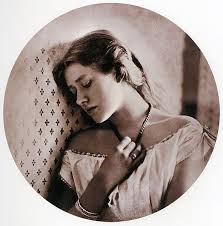
The young people gathered today for a sing at the meeting house.  Oakes Angier and his brothers, perhaps, accompanied Orinthia, her friend Frances, and Cousin Lavinia to the church for an evening that was probably more lively and joyous than the two sermons they had listened to earlier. They sang and socialized.

Evelina was neither lively nor joyous. She was “down hearted,” and no singing or June sunshine seemed to make it better. Where did her blues come from? Was she upset with Oakes for some reason? Did she reconsider her friendship with Orinthia and find their age difference suddenly unbridgeable? Was she tired from the spring cleaning? She doesn’t mention a particular instance that could have set off a mild depression.

In 1851, Evelina was in her early forties, an age subject to the physical effects of “change of life,” a condition that 19th century women wouldn’t have known much about, much less admitted to if they did. The formal and fastidious norms of the day abhorred words that alluded to specific female conditions. The word “pregnancy,” for instance, was indelicate; if they said anything at all, it was that a woman was “in the family way.” Some described childbirth as “being taken ill.” Menopause, a word that even some 21st century women are reticent to use, was not in Evelina’s vocabulary.

Yet a lack of understanding and the absence of social acceptance couldn’t obviate a real female condition.  Evelina was at a stage in her life when the onset of menopause could begin to influence her mental and physical state. The chemistry of her body could have made her feel down-hearted without her knowing why.

*  “Sadness” evoked by 19th century actress Ellen Terry.  Photograph by Julia Margaret Cameron.

May 25, 1851

Cemetery


25 May Sunday  Have been to church all day. Went to Mr

Whitwells at noon with Mother and Mrs Whitwell

made us take a cup of tea Also Mrs Elijah Howard & Miss

Louisa H.  Had quite a spirited chat about Mr

Wm Reed & Mr Dean. After meeting Mr Ames & Oliver

& wife rode to the burying grounds  Cannot 

feel reconciled to having it where it is. Oakes A Susan

& Orinthia went to a sing & Oakes carried Orinthia home.


A cup of tea and good, “spirited chat” among the women during intermission brightened Evelina’s Sunday.  Who were Mr. Reed and Mr. Dean that they evoked such consideration from the female population?  There were several men of either name who lived in Easton at the time.

When church was over, Evelina, Oakes, Oliver Jr. and Sarah Lothrop Ames drove together to look at the new cemetery in South Easton. Created by the Easton Cemetery Corporation, it was one of almost thirty graveyards in the town.  For reasons lost to history, this newest burial-ground had been deemed desirable and consequently established by men well-known to the Ameses, including Elijah Howard and Dr. Caleb Swan.  Perhaps their intention had been to create at burial place that would be tended to as time passed, as many smaller, family graveyards throughout the town were not. Perhaps they were responding to personal inclinations to group Unitarians together for eternity.

Whatever the thinking behind the new burial-ground, Evelina was dubious.  Did she look at it and think she and Oakes might be buried there someday?  Did she wish instead to be buried near her son Henry, wherever that was? Or did she think of another graveyard where her father and certain siblings were buried? Little could she imagine that twenty-five years hence, the Village Cemetery of North Easton would be created behind a Unitarian Church that hadn’t yet been built, both projects funded by Oliver Jr, and that there she, her husband, and all her children would eventually be laid to rest.


May 18, 1851

DCF 1.0 *

1851

Sun 18st  Went to church this morning and heard our

new Organ for the first time  Mr Roach

does not understand playing on it very well,

but it is a fine toned one I should think.  Came

home at noon with Mr Ames got some violet

roots for my garden […] Went

back to meeting this afternoon  Since have been

reading & visiting   Orinthia & OAA called on S E Williams


Albert A. Roach, later spelled “Rotch,” was pretty well known throughout Easton.  A resident of the Furnace Village section of town and a manufacturer of cotton thread, Rotch held several civic offices and even moderated at Town Meeting.  But his pride must have been particularly gratified when, back in 1841, he had been chosen as the very first leader of Easton’s very first military band. According to historian William Chaffin, the band’s first performance – or gig, as we might say today –  was playing for the Norton Artillery in May, 1842, where “their remuneration was one dollar each, the band members paying their own expenses.”**  First known as the Easton Brass Band, they later became known at the Second Brigade Brass Band.

Unfortunately, Mr. Rotch’s talent on the horn or trumpet evidently didn’t turn him into an effective organist.  Evelina’s polite assessment of his inaugural performance on the new church organ suggests that Mr. Rotch’s notes did not hit their target.  The tone, evidently, was fine but the pitch, perhaps, was uncertain.  The congregation, including Evelina, soldiered on, however, and returned to church for the afternoon service, despite the discordant sound from the new instrument.

The thought of pretty little violets eventually growing in her garden must have offered strong consolation.


*blog.thbfarm.com

**William Chaffin, History of Easton, 1886, pp. 607 -608.