May 17, 1852

180px-Beekman_greenhouse

Mid-19th century American Greenhouse*

1852

Monday May 17  Finished planting my flower seeds

Mr Blodget here to dine from Boston

This afternoon have been to Mr Kinsley with

Mr Ames.  Miss Nevill there from Salisbury.

Brought home twelve pots of flowers from

their green house.  The grapes & flowers look

finely  Had a very pleasant visit got home

about dark

Evelina enjoyed herself today. It was lovely outside, for “the sun shined about half the day + was pritty warm wind west + south west.”** She gardened for much of the morning and in the afternoon, rode with her husband, Oakes, to Canton to call on the Kinsley family.

Lyman and Louisa Kinsley, whom we’ve heard of before in Evelina’s diary, were about the same age as Oakes and Evelina. They had two children, Lucy Adelaide and Edgar Lyman, who were twelve years apart, suggesting that there may have been other children born between the two. Lucy was close in age to Oakes Angier, and Edgar was a year or so younger than Susie.

The Kinsleys were prosperous; Mr. Kinsley ran an iron business that had been started by his father and had long supplied material for Ames shovels. The Kinsley Iron and Machine Company would eventually be bought by the Ameses and managed by Frank Morton Ames. That being some years in the future, the Ameses could sit and admire the Kinsley place with little thought of acquisition – perhaps. Certainly, Evelina was much taken with the Kinsley greenhouse and the “twelve pots of flowers” she got to take home.

Greenhouses such as Mr. Kinsley’s were becoming more popular in the mid-19th century, particularly in England after the government there did away with the heavy tax on window glass. Hothouses had been known previously on this size of the Atlantic, also, appearing in the colonies as early as 1737, when wealthy Bostonian Andrew Faneuil built one. George Washington, too, had one built at Mt. Vernon to grow pineapple. Greenhouses would increase in size, status, and grandeur as the century progressed. Easton would see its share when the next generation of wealthy men reached maturity. Frederick Lothrop Ames, Edwin Williams Gilmore and probably others would raise orchids and more in the glass-walled wonders.

*Greenhouse from Beekman Estate in Manhattan, circa 1850

**Oliver Ames, Journal, Stonehill College Archives, Arnold Tofias Collection
February 4, 1852

8mmIdeas_instagram

Mending

1852

Wednesday 4th Feb  Have been mending shirts and have

done up some collars & sleeves &c This evening

have been to Alsons with Mr Ames, met the 

Pools Mr & Mrs A Howard & Harvey  had a 

pretty lively time.  Edwin & Augustus with their

wives were also there  It is a beautiful moonshiny

night and have had a pleasant ride.  O A & Oliver

went to a ball to Canton.

Evelina sat with her sewing and mending for most of the day, catching up on some of the more ordinary aspects of keeping her family well-clothed. She was motivated in part by the need to prepare her son Oliver (3)’s clothes for his return to college.  Her diligence was rewarded; she got a lot of work done, and at the end of the day she and Oakes went out for the evening. Right next door, in the other part of the house, Oakes’s youngest brother William Leonard was visiting, yet Evelina doesn’t mention him.

She and Oakes rode south to her brother’s farm, where they met with family and friends for “a pretty lively time.” They saw some of the Pools, an extended family in the area, and Asa and Henrietta Howard, another farming family. (A year earlier, Evelina had sewn a shroud for one of the Howard’s children.) The Harveys, from whom Evelina bought butter, were present as well.

The beautiful moon, not quite full, shone down from a starry sky on other winter gatherings.  Oliver Ames (3) turned 21 years old today, after all; he celebrated the occasion with his older brother, Oakes Angier, by attending a dance in Canton. One imagines that they had a good time, too.


November 27, 1851

Turkey


Nov 27  Thanksgiving day we have passed in the other

part of the house.  Our sons & Helen went this evening

to a ball in Canton  Father Mrs Witherell Mr Ames &

self had a game of cards.  Mr & Mrs H Lothrop

A[u]gustus & wife Cyrus & Sarah Lothrop

spent the day at Olivers

In 1844, Lydia Maria Child, a Massachusetts mother, author and abolitionist, published the original six verses of a poem about Thanksgiving. The poem was put to music, and verses were added or modified over time. We know it, and everyone sitting around the Ames’s dinner table would have known it:


The New-England Boy’s Song About Thanksgiving Day
Over the river, and through the wood,
To Grandfather’s house we go;
the horse knows the way to carry the sleigh
through the white and drifted snow.
Over the river, and through the wood,
to Grandfather’s house away!
We would not stop for doll or top,
for ’tis Thanksgiving Day.
Over the river, and through the wood—
oh, how the wind does blow!
It stings the toes and bites the nose
as over the ground we go.
Over the river, and through the wood—
and straight through the barnyard gate,
We seem to go extremely slow,
it is so hard to wait!
Over the river, and through the wood—
When Grandmother sees us come,
She will say, “O, dear, the children are here,
bring a pie for everyone.”
Over the river, and through the wood—
now Grandmother’s cap I spy!
Hurrah for the fun! Is the pudding done?
Hurrah for the pumpkin pie!

– Lydia Maria Child


Happy Thanksgiving, everyone.

November 8, 1851

Vegetables

Sat Nov 8th  Jane is still in Mansfield and Bridget

sick consequently I have to do the housework and

I have scarcely sat down for one moment  Alson

came up with a load of vegitables and Hannah

called and I left my work while they stopped

Mrs Witherell came home this evening and I have been

in there  Mr Ames went to Boston stopt at Canton to a

whig meeting.  Oakes & Frank brought him home.

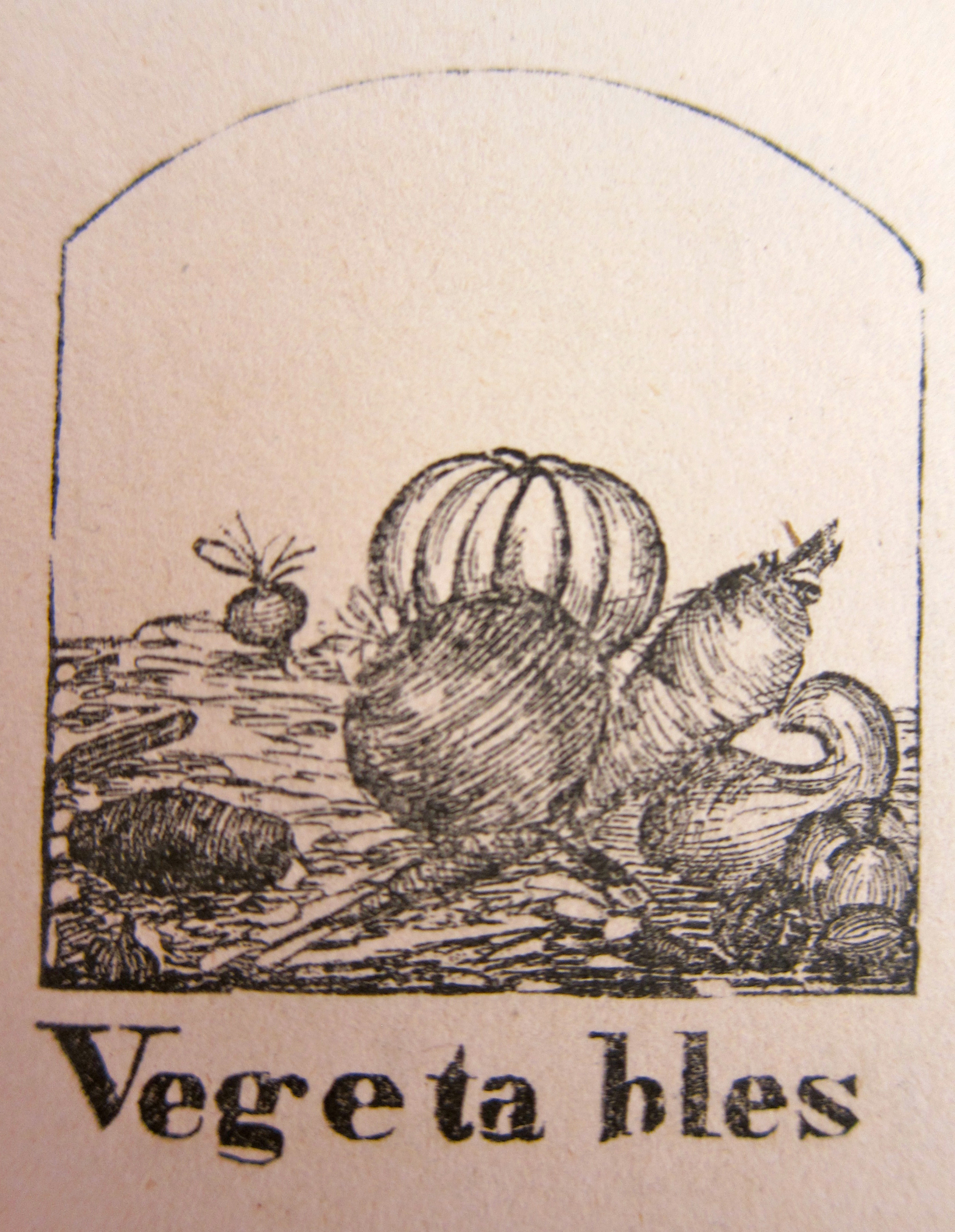
Not only was the dependable Jane McHanna away, but the Ames’s second servant, Bridget O’Neil, was sick.  Dr. Ephraim Wales had checked in on Bridget the previous evening but she was still laying low.  Evelina, capable if disinclined, was faced with doing her own housework. She spent most of the day choring, as she called it.

Her brother, Alson Gilmore, drove a wagon up from the Gilmore family farm to deliver a “load of vegitables” to the Ameses. His daughter-in-law, Hannah Lincoln Gilmore, who lived right in the village, came to call and for those visits, Evelina paused to chat.  Once they left, however, she must have plunged into sorting and storing the vegetables that Alson had brought. By this time of year, they would most likely have been root vegetables such as turnips, parsnips, carrots and potatoes. She would have stored them somewhere cool, dry and varmint-free: the cellar, if it wasn’t too wet, or the buttery or even the shed. Sharp-eyed housewife that she was, Evelina would have made sure everything was put away safely.

Oakes Ames, meanwhile, went to Boston as usual on this Saturday, but also “stopt at Canton to a whig meeting.”  The following Monday was Election Day and the party faithfuls were gathering in anticipation. This is the first mention in Evelina’s diary of Oakes’s participation in local politics. Their son, Oakes Angier, had shown interest earlier in the year, running unsuccessfully for the Easton school superintending committee, and attending the Whig convention in Springfield.  But her husband’s interest, although it had probably existed prior to this moment, had not drawn comment. Evelina mentions the meeting most likely because of the impending vote, but the statement coming so close on the heels of an undisclosed agreement she and Oakes had made only one week earlier gives creedence to the possibility that their agreement had something to do with Oakes’s waxing interest in politics.

September 1, 1851

000100849[1]

*

Sept 1st Monday  Jane & Ellen washed and have done most

of the housework and I have been to work on Olivers

clothes have sewed pretty steady to day.  Pauline has

been sewing on a pr of Muslin undersleeves that

I gave her but has not finished them.  Mrs Stevens

covered some button and sewed them with Olivers vest

& mended the buttonholes


Sewing was “pretty steady” today as the date of her son Oliver (3)’s departure for college loomed nearer. Evelina was mending everything and making new items like collars and dickeys. She tried to mark Oliver’s clothes so that they wouldn’t get lost – a time-honored effort by many a mother when a child leaves for college. How did she mark the clothes, though, in those days before indelible ink markers?  There were certainly no “iron-ons” and probably no manufactured name-tags that would have been sewn in by hand, either.  Her most likely solution would have been to embroider Oliver’s initials or name on the inside or underside of each piece of apparel. That sounds like a lot of work.

Houseguest Pauline Dean accompanied Evelina and sewed some on a pair of new undersleeves while another guest, Mrs. Stevens, helped cover the buttons of a vest belonging to Oliver. Clothes must have been everywhere, as laundry was being washed while all this sewing went on. It was Monday, and Jane McHanna and another servant named Ellen had the stove going and the tubs full. The “fair day” and north east wind that Old Oliver noted in his journal would have helped dry the clothes.

Old Oliver also noted that he “went to Canton to day with Mr Clark + others to put in the stone bridges below the shop.” Can any of our local historians identify these bridges?  Are they still in place? The shop, which was originally built in 1847 to supplement the factory in North Easton, is no longer standing. The image above was taken circa 1965.

* Ames Shovel Shop on Bolivar Street, Canton, Canton Historical Society, from Arthur Krim’s Historical Buildings of Canton, Vol. II.

August 25, 1851

il_570xN.69597337

*

Monday Aug 25  Did not wash this morning on account 

of having so much company  Warren left in the stage

cousin Jerry went to Mr Thesis with Oakes Angier

and Frank on their way fishing.  Alson dined here.

We Ladies all called at Mr Torreys & on Elisha

at the Boot shop.  Mr & Mrs & Miss Kinsley & Miss

Billings from Canton were here to tea – came

about 6 Oclock went to the shop with them

Another Monday and for the second time that summer, washing day got deferred.  Tidying up from “having so much company” took precedence over routine. The young relatives, Jerry and Warren Lothrop, left in the morning.  Another visitor, Pauline Dean, remained.

Oakes Angier and Frank Morton Ames left to go fishing, a trip they had deferred from last week. They had waited then for the imminent death of Dewitt “Clinton” Lothrop, which hadn’t happened.  Clinton, though deathly ill with typhus, was hanging on. The boys decided to wait no further, and departed.

Evelina and “We Ladies” – which could only mean Pauline and probably niece Lavinia – went to see Col. John Torrey in the village and called on Elisha Andrews at the boot factory. Elisha, who was 27 years old and single, had started up the factory with Augustus Gilmore and Oakes Angier Ames. In recounting the visit to the boot shop in her diary, Evelina underlined Elisha’s name. Why? The visit was significant in some way; perhaps one of the women – Lavinia? – was romantically interested in Elisha.

More socializing continued late in the day when the Kinsley family visited.  Lyman Kinsley, his wife Louisa, daughter Lucy Adelaide and a Miss Billings (a niece of Louisa, most likely) came for tea. Mr. Kinsley ran an iron and machine shop in Canton, an enterprise that the Ameses would eventually own. After tea, they all walked over to the factory.

* Currier and Ives, “Starting Out,” print, ca. 1852

April 22, 1851


images

1851

Tuesday April 22d  This morning it is quite pleasant & I went

to the store & got the print for Susans dress

that I returned last week have made the 

skirt & cut the sleeves called into the other part

of the house awhile & have staid three or four

hours in Olivers, she is quite sick so that

she does not sit up at all.  Mary Middleton buried

in Canton 17 carriages went to the grave

A[u]gustus went to New York last night with Henry Gilmore

Evelina spent several hours today in the bed chamber of Sarah Lothrop Ames, who was so sick in bed that she did “not sit up at all.”  That kind of illness was worrisome, especially as Sarah had been sick for several days and wasn’t getting better.

Sewing wasn’t forgotten amid her concern for her sister-in-law.  Evelina picked out some printed cloth for a new dress for Susie, the same print or dress at the company store that she had rejected previously.  She began cutting and sewing and had the skirt finished and the sleeves underway while otherwise occupied with checking in on both sisters-in-law. She was speedy with the needle.

Meanwhile, a local woman named Mary Middleton was buried in Canton.  Evelina was quite impressed at the number of carriages that followed the casket to the cemetery.  Miss or Mrs. Middleton must have been a personage of some importance, or someone with countless relatives. Evelina could have no way of knowing that when her own husband Oakes would die in 1873, a crowd of 3,000 people would attend his funeral. How many carriages would he draw to his service?


March 24, 1851

canton-ma-landscaping

/51

March 24 Monday  It was so unpleasant this morning

that Jane could not put her clothes out but

about noon it cleared up and she has got

them all dry  I have cut out a shirt for Oliver 

of fine unbleached cloth and have sewed

some of it & mended Mr Ames coat & vest

He went to Canton this afternoon.  Mr Whitwell

called.  Mrs Witherell passed an [illegible] this evening

Perhaps wearing one of his new shirts, or at least wearing a mended one, Oakes Ames traveled to neighboring Canton today.  Named for Canton, China, because some imaginative citizen believed the Chinese city to be its geographical twin on the opposite side of the world, the Massachusetts city had manufacturing interests much like Easton. Since before the American Revolution, the Kinsley family had operated an ironworks there. Like the shovel works, the Kinsley business had started small and grown well. Initially, it produced farm implements and was entirely family-run. It had a forge, a large rolling mill and the capability of producing steel.

In 1851, Lyman Kinsley was its sole operator; by 1858, the company would be owned by the Ameses. Oliver Ames Jr. would become its first Ames president, with others to follow (Frederick Lothrop Ames would be next, and after him, his son Oliver.) Frank Morton Ames would be its General Manager. Perhaps Oakes’s visit to Canton today, although certainly having something to do with getting steel for shovels, was also quietly prompted by some foreknowledge that the Ameses were interested in acquiring this complementary business.

Once the Ames owned it, the Kinsley Iron and Machine Company would eventually develop to produce wheels and axles for railroad cars, another product that would fit nicely with Ames business interests.

February 5, 1851

OLYMPUS DIGITAL CAMERA

Feb 5th Wednesday  This forenoon made a head dress trimmed

with cherry colour, ribbon & flowers.  Cannot say

much for my days work.  Have been doing a little

of everything & not much of any.  Jane has done

part of the ironing  Oakes Angier has been to Canton

to mark Iron  have been reading in David Copperfield

this evening.  I have been looking over my accounts

It is very warm for the season but cloudy

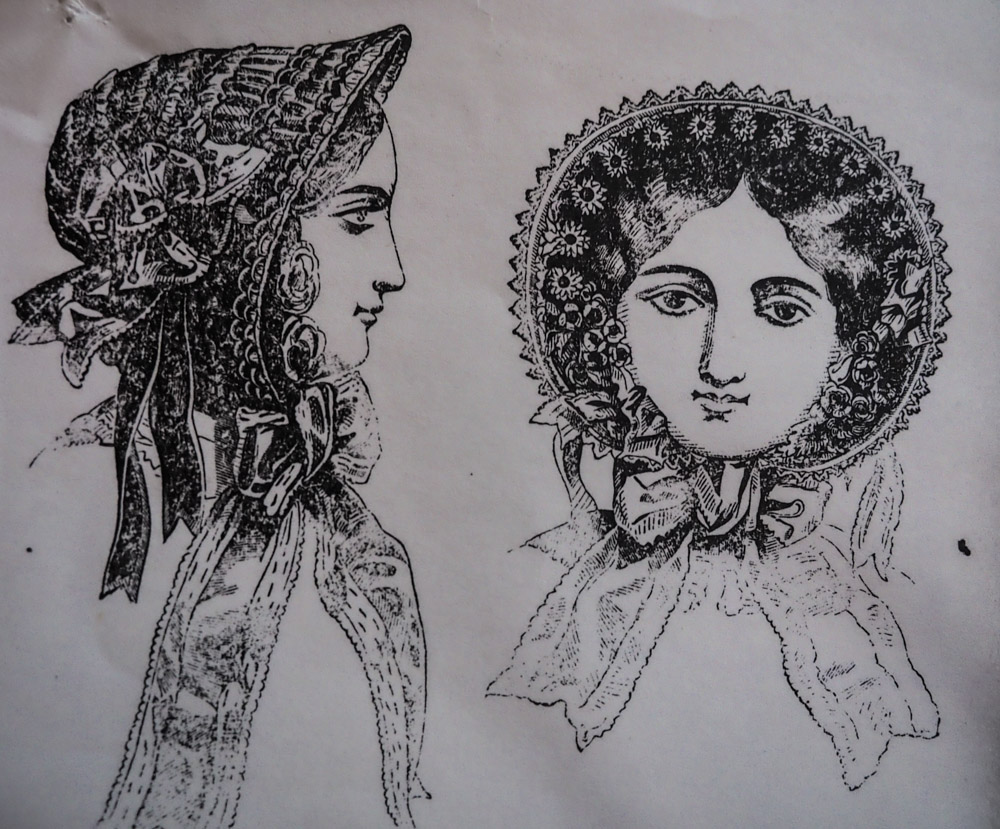
A ho-hum day for Evelina, warm but gray, and she still partly sidelined by a sore foot.  Small wonder that she chose a colorful project for the morning: trimming a head-dress, more commonly referred to as a bonnet.  She used red ribbons and fabricated flowers and although she deprecated her own handiwork, the task must have been a nice change of occupation.

In the 19th century, no lady’s outfit was complete without a bonnet; it played the accessorizing role that shoes and purses play today in women’s fashion.  Given that a woman’s form was covered from neck to toe by a voluminous dress or cloak, the bonnet was an inevitable point of interest atop the whole outfit.  Not only did it stand out like the star on a Christmas tree, it also served to cover hair that was seldom washed.  It rarely kept a head warm, however – that’s what cloaks with hoods were for.

Most women had at least two bonnets, one for winter and one for summer.  Winter bonnets were made of wool, silk or even horsehair, while bonnets for warm weather were typically made of straw or “chip,”  a fine wood splint.  As the 19th century progressed, the transition from winter to summer bonnet solidified around Easter, thus introducing the notion of the Easter bonnet and competition for the prettiest headdress on that important Sunday.

In other news of the day, Oakes Angier Ames rode to Canton on shovel business to “mark Iron.”  Does this mean he looked through a supply of smelted ingots to select the best for the Ames shovels? Anyone out there care to elaborate on what Oakes Angier did?  Was the Kinsley Iron Company the forge that he visited?  Certainly probable.

January 16, 1851

Muff & Tippet B & W

1851

Jan 16 Thursday  Went to Boston with S Ames.  Oakes A carried 

us over to the stage.  We found it very bad walking 

could scarcely cross the street without going over

shoe in snow & water but otherwise a delightful day

We bought some druggett & Sarah a muff & tippet

for herself & cuff & tippet for Helen.  We got us some

oysters at Vintons.  Called at Mr Orrs about four thirty

that we should have time to reach the cars but we were left.

Boys went to an assembly at Canton

Alson & Augustus dined here.

O, joy, a trip to Boston, an event that Evelina typically finds “delightful” no matter what the weather.  After two days of sadness about the death of Lewis Carr, Evelina and Sarah Lothrop Ames headed into the city via stage coach on a shopping excursion.  The railroad, which they called “the cars,” did not yet reach North Easton, but did stop in Stoughton.  The women intended to return by train at nightfall, and be carried home from Stoughton by one son or other, but missed the train and had to stay overnight.  They may not have been disappointed to have to stay in town.

Sloppy weather didn’t prevent the successful acquisition of goods.  Evelina bought some drugget, or carpeting, while Sarah found accessories for herself and her daughter.  Muffs and tippets, naturally, were very much in fashion for winter wear.  Dining on oysters was another highlight, as was a visit to an old family connection, Mr. Orr.

The homefront in Easton was busy, too.  Evelina’s brother, Alson, and his oldest son, Augustus, took midday dinner with Oakes and his children.  Little Susie would have been the only girl at the table.  In the evening, Oakes Angier, Oliver (3) and Frank Morton headed to Canton to a dance.  Everyone’s spirits seemed brighter today.

Photo of muff and tippet, ca. 1840,  from Minnesota Historical Society