November 21, 1852

IMG_0404

Lady’s Cloak**

Sunday Nov 21st  have been to church and at

intermission went with Mother into Mrs John

Howards.  Have invited Mr & Mrs Whitwells

family to dine here Thanksgiving

After church read & heard Susan practice

her lesson a while  Edwin & wife came

in this evening and I went to Augustus with 

them


This Sunday before Thankgiving “was a fair sunny day wind northerly + cool.”* The Ames contingent headed to church as usual and at intermission spread out to different informal gatherings. We don’t know where the men of the family went, or what Susie did, but we do know that Evelina took her elderly mother to the home of John and Caroline Howard, where they would have been offered a cup of tea and a piece of pie or cake.

After church, Evelina heard her daughter practice the piano. Like yesterday, the friction and anxiety between the two over the piano lessons seemed to have dissipated. At least, Evelina doesn’t mention having to force Susan to practice.

Evelina also did a little reading. If she picked up her copy of the November issue of Godey’s Lady’s Book, she would have noticed, among many essays, stories and poems, a short article on women’s cloaks:

Never was there a season in which there was so great a variety of graceful cloaks to choose from. Not the heavy, cumbrous garment that once enshrouded and hid all grace or outline in the female figure, but light, yet ample costumes, that answer every purpose of warmth for walking or driving...**

Cloaks were in. If Evelina needed proof that her sister-in-law Sarah Lothrop Ames had a nose for fashion, there it was. Only a week earlier, Sarah had been in Boston buying a cloak for her daughter Helen. There were many styles to be seen, including the one in the illustration, in the Alboni style. Will Evelina get one for herself or her daughter?


*Oliver Ames, Journal, Stonehill College Archives, Arnold Tofias Collection

** Godey’s Lady’s Book, , Cloaks and Mantles, November 1852, pp. 476 – 477

November 20, 1852

700px-Boston_music_hall

Boston Music Hall, 1852*

1852

Sat Nov 20th  I have been puttering about

house all day again  scoured the solar lamp

with acid & whiting and it took a long

while to get the varnish off  Miss Sarah

& Jane Burrell came here with their 

brother and stopt about two hours I

went with them to the new shop

The solar lamp that Evelina polished today was probably the most modern lighting in the whole house. Solar lamps, so called because their “illumination was thought to be comparable to sunlight”**, had a “central draft Argand burner with a spiral wick raiser” and a deflector cap that drew more oxygen to the flame. These were fine points for table lamps that still used whale oil but would soon use Kerosene, and which had pretty well replaced candlesticks in the homes of most settled communities.

Many solar lamps were made by Henry N. Hooper & Company of Boston.  Hooper ran a foundry that made lighting fixtures and bells and, during the Civil War, also made artillery for the Union Army. As a young man, Hooper had begun his career working in a foundry for Paul Revere. What changes he saw!

Other changes were afoot. The Boston Music Hall opened in the city on this date on Winter Street and Hamilton Place. It was paid for by the Harvard Musical Association, a group of Harvard graduates dedicated to promoting music. The Handel and Haydn Society played the inaugural concert and, three decades later, the site became the first home of the Boston Symphony Orchestra. The hall was also used for lectures, and hosted a huge gathering of abolitionists on December 31,1862 to celebrate the enactment of the Emancipation Proclamation. Frederick Douglass, Wendell Phillips, Harriet Beecher Stowe, William Lloyd Garrison and Harriet Tubman were among the many who attended.*

*Wikipedia, accessed November 16, 2015

**Gerald T. Gowitt, 19th Century Elegant Lighting, Schiffer, 2002


November 15, 1852

Flying-Cloud

“Flying Cloud”

Monday Nov 15  Catharine & Ann have washed

and Catharine has finished cleaning 

the front entry  I have got the 

stair carpet down and the entry

looks clean & nice  we get ahead

rather slowly in cleaning house

“[T]his was a fair cold day the coldest we have had this fall the ground froze considerable last night”.* As winter approached, the Ames family turned their focus indoors. Like Evelina, housewives and husbands across New England were looking to get their houses in order and the last outdoor chores finished before winter weather arrived.

Even as the Ameses and others turned inward, more adventurous spirits took to the sea. In fact, throughout 1852, captains and their crews had been making long-distance sailing trips from various ports in the Northeast around the Horn to California. Even as Evelina was beating her carpets, a group of clippers were racing one another over the deep blue to see who could make the best time to San Francisco from Boston or New York. Some newspapers called it The Deep Sea Derby.**

Clipper ships, such as the famous Flying Cloud in the illustration above (which, at 89 days and 8 hours from New York to San Francisco, independently set the record for the fastest trip of any clipper ship) were the vessels of choice for speedy deliver of passengers and cargo. They were thin, full-sailed and sea-worthy, tending to “clip” along rather than plough through the waves. Originally designed to accelerate the tea trade from China, clippers became the ideal ship for ferrying folks to California while the Gold Rush was on.

Donald McKay, a master shipbuilder in East Boston, designed and built many of the finest clipper ships of the day. He designed Flying Cloud, and had several vessels participating in the Deep Sea Derby as well, including Westward Ho, Sovereign of the Seas, and Flying Fish, the latter of which won the contest by making the journey in 92 days. Most ships took more than 100 days to make the journey.

Though the race was spirited, and not without danger, its future was limited. The railroad would push west within a score of years, cutting into the sailing trade, and the creation of the Panama Canal at the turn of the next century would obviate the need to sail around the Horn.

*Oliver Ames, Journal, Stonehill College Archives, Arnold Tofias Collection

**Extensive information about this race can be found at http://www.maritimeheritage.org. 


November 13, 1852

Turnip

Sat Nov 13th  Have cleaned the parlour

but did not take up the carpet

gave it a thourough sweeping and

washed the paint  Miss Alger has

been here and given the girls their

eleventh lesson  Mrs Oliver Ames

has been to Boston  got Helen a cloak


Evelina stayed indoors today, perhaps envious that her sister-in-law Sarah Lothrop Ames was shopping in Boston. Sarah bought her daughter Helen a cloak. Do we imagine that Evelina might soon head for the city to buy one for her daughter Susan?

Old Oliver, meanwhile, was still busy outdoors on several fronts, including the harvesting of turnips, as he reported: “this was a fair day but pritty chilly we got in some [of] our turnips to day*”. Turnips were an important vegetable crop that kept well over the winter, making it a staple in most households. Botanist Judith Sumner notes that “as early as 1609, colonists […] cultivated turnips. […] Cold weather improved their flavor, so it may not be coincidental that a November 1637 letter from John Winthrop to his wife instructed her to harvest their crop while he was away.”** Native Americans adopted the vegetable themselves, preferring it to other edible roots that they had previously gathered.

Turnips were still standard fare at the 19th century New England dinner table, typically prepared just as Sarah Josepha Hale suggests:

Turnips should be pared; put into boiling water, with a little salt; boiled till tender; then squeeze them thoroughly from the water, mash them smooth, add a piece of butter and a little pepper and salt.***

Surely there would be mashed turnips served at Thanksgiving.


*Oliver Ames, Journal, Stonehill College Archives, Arnold Tofias Collection

**Judith Sumner, American Household Botany, Portland, Oregon, 2004, p. 30

*** Sarah Josepha Hale, The Good Housekeeper, 1841, p. 74


November 11, 1852

alcott_lou

Louisa May Alcott

(1832 – 1888)

Thursday Nov 11th

Ann & Catharine has cleaned the shed chamber

and sitting room chamber & I have been 

putting draws & closets in order.

Mr Ames & self at Olivers to tea  Mr &

Mrs Swain & Mrs Meader there

Commenced Susan an Angola yarn stocking


For Evelina, this was a productive day. Her servants, Ann Shinkwin and Catharine Murphy, cleaned the shed and the sitting room, while she herself reorganized “draws & closets”. She must have felt quite satisfied having put two key rooms in order. Come evening, she and her husband went next door to tea where they visited not only with the Oliver Ameses, but also with Ann and John Swain and Ann’s mother, Sarah Bliss Meader. Mrs. Meader was from Nantucket; she must have been visiting in the wake of the death of little John Swain.

For Louisa May Alcott, a 19th century author who should need no introduction, this was an important day. Some literary sources have it that Miss Alcott, using the name “Flora Fairfield,” published her first story, The Rival Painters: A Story of Rome, on this exact date, when the author was barely twenty years old. However, closer examination suggests that The Rival Painters first appeared back on May 8 in The Olive Branch, a periodical published in Boston from 1836 through 1857.  A second story, easily confused with the first, was The Rival Prima Donnas, which was published on this date in 1854 in The Saturday Evening Gazette, earning the author five dollars.

Regardless of the scholastic disagreement over the first appearance in print of Louisa May Alcott, we can imagine that Evelina was exposed to her writing at various times from this year onward. Surely Evelina read other short stories and novels by this increasingly famous author. If she developed an affection for the author’s work, Evelina would have read Little Women, Little Men, and Jo’s Boys and been as familiar with the triumphs and travails of the March family as devoted readers still are 160 years later.

*A fine resource for readers wanting to know more about Louisa May Alcott is “Louisa May Alcott: The Woman Behind Little Women,” by Harriet Reisen, New York, 2009.


November 5, 1852

Oliver Ames, Jr.

Oliver Ames, Jr.

(1807 – 1877)

Friday Nov 5th Susan has taken her ninth lesson

in music and I fear she is rather dull

does not call her letters well at all

Mrs Swain called this afternoon to settle

with me about her things and to night sent

me as a present as much as a half bushel […]

quinces  We passed the evening in Olivers

After stopping by to pay for the mourning apparel Evelina had picked up in Boston, Ann Swain sent Evelina two pecks of quinces to further thank her for her kindness. This thoughtful gesture may have distracted Evelina from her ongoing annoyance at her daughter’s “dull” piano playing. Susan had not yet learned her scales. At night, Evelina and Oakes, and perhaps other family members, “passed the evening” next door at Oliver Ames Jr’s.

Today, in fact, was Oliver Ames Jr.’s 45th birthday. He and his wife, Sarah Lothrop Ames, lived next door to Oakes and Evelina. At this juncture, Oliver Jr. was serving his first term as State Senator; he would serve a second term in 1857. According to Reverend William Chaffin, who knew the Ames family well, “Oliver Ames stood among the foremost in his reputation for a manly and unblemished character and for business ability…a strong, substantial, able, and honorable man.”****

The third of Old Oliver’s eight children, Oliver Jr. had originally been the brother who tinkered with the possibility of a career away from the shovel factory. In his teens, he suffered a “severe fall,”**** and was unable to work. He was sent to the Franklin Academy in North Andover after which he began to read law with William Baylies, Esq., of West Bridgewater. Reading and debating – good lawyering skills, both – had always been sources of pleasure for Oliver, but “[t]he confinement of office proving unfavorable to his health, together with the increasing demands of business at home,”**** he returned to North Easton. In 1833, he married Sarah Lothrop, the daughter of the Honorable Howard Lothrop and Sally Williams Lothrop. They had two children, Frederick Lothrop and Helen Angier Ames.

Relative to his brother, Oakes, Oliver Jr was reckoned to be “pretty dignified, and takes a good deal after his father, but Oakes is always ‘hail fellow well met.”** Another contemporary acquaintance of both men said simply that Oliver Jr. was “the conservative one.”***They made a good business pair. Over time, Oliver Jr. and Oakes, under the watchful eye of their father, turned the shovel shops into an industrial powerhouse, even as they groomed the next generation, Oakes Angier, Oliver (3) and Fred, to take over when the time was right. They invested in technological improvements and hired more help, especially from the newly arrived Irish population. They improved supply and delivery; in 1855, Oliver Jr. helped create the Easton Branch Railroad spur from Stoughton to North Easton.  In 1863, he oversaw the creation of a railroad line through the Great Cedar Swamp to Raynham. His interest in railroads led him to join his brother in the plan to build a transcontinental railroad when Oakes, by that time a U. S. Congressman, was tapped by Lincoln to lead the way.

The rest, as they say, is history. Both brothers became “deservedly famous”*****for their involvement with the Union Pacific. More than one contemporaneous historian has noted: “In 1866, Oliver Ames was elected president of that railroad, an office he held with significant ability until March, 1871.  During this time the road passed through some of its stormiest days and severest trials. His sound judgment, great business capacity, and inflexible integrity were of immense service in carrying this great enterprise safely through difficulty and peril to final success.”*****

On this dark autumn night in 1852, the “difficulty and peril [and…] success” lay ahead for both brothers as they sipped tea with their wives and watched “a few flakes of snow” fall.*

*Oliver Ames, Journal, Stonehill College Archives, Arnold Tofias Collection

**“Ames at Easton: The Shovel Makers and Their Works. Life and Habits of the Congressman. Cursed Abroad – Applauded at Home,” The Boston Times, February, 1873

***Josiah Bushnell Grinnell, Reminiscences of Forty Years, 1891, Boston, p. 137

****William Chaffin, History of Easton, Massachusetts, 1886, p. 655.

*****Duane Hamilton Hurd, History of Bristol County, Massachusetts, Vol. II, 1883, pp. 430 – 431 (also Chaffin, p. 656)

November 2, 1852

490px-William_Rufus_DeVane_King_1839_portrait

William R. King

(1786 – 1853)

Tuesday Nov 2d  Sewed on cambric sleeves for

Susan this forenoon very quietly with

Miss Alger  It has rained since Saturday

morn but this afternoon has cleared 

off Mrs Ames & self have been to Mr

Swains & called at Doct Wales & Augustus

Miss Alger & O Angier took tea in Olivers


Back from her quick day trip into Boston, Evelina spent the morning “very quietly” in her sitting room, sewing. The piano teacher, Miss Alger, was still visiting.  Outside, “it rain[ed] by spells […] wind north east it stormd all the forenoon and was cloudy about all day – there has bin one inch + a quarter of water fell since Sunday”*

After midday dinner, when the storm had stopped, Evelina and her sister-in-law, Sarah Lothrop Ames, went out to check on Ann and John Swain, whose infant son had died on Saturday. Evelina would have taken with her the mourning accoutrements she had purchased for Ann in the city. No doubt the Ames women continued to comfort the forlorn parents. From the Swains they paid other calls in North Easton, to the home of Ephraim and Maria Wales and to see Evelina’s nephew, Alson “Augustus” Gilmore and his wife Hannah. Hannah had lost her infant son Willie back in the summer. The women would have had much to talk about.

On the national scene, the day was momentous. As we have read previously in this blog, General Franklin Pierce, a Democrat, was elected President of the United States, defeating Whig candidate General Winfield Scott (incumbent Whig Millard Fillmore hadn’t been renominated) and Free Soil candidate John P. Hale. Easton historian William Chaffin writes: “In 1852 the vote for President was one hundred and seventy-one for Winfield Scott, one hundred and forty-three for John P. Hale, forty-nine for Franklin Pierce, and four for Daniel Webster, who was dead. This vote shows the political complexion of the town, and confirms the statement of the adoption of the Free Soil position by many Democrats.”**

The vice-president-elect was William R. King, a senator from Alabama who believed strongly in the Union. He had helped draft the Compromise of 1850. Unfortunately, King was suffering from tuberculosis and would soon die in office, one of the shortest-termed vice-presidents and the only Alabaman. He was also the only vice-president to take the oath of office on foreign soil; he was in Cuba taking the cure when he was inaugurated.


*Oliver Ames, Journal, Stonehill College Archives, Arnold Tofias Collection

**William L. Chaffin, History of Easton Massachusetts, 1886, p. 630


November 1, 1852

Rain

Monday Nov 1st  Went to Boston for Mrs Swain

to purchase mourning  Dined at Mr Orrs

Julia left there this morning  Miss Alger

came home with me  It is very bad walking

in Boston and my clothes covered with

mud rained all the forenoon  Mrs

S Ames & Helen here this evening


Even on a somber errand, Evelina never seemed to mind going into Boston. Still, given her recent lack of sleep and the rainy weather, she was kind to take on this sad business. Her goal was “to purchase mourning” clothes for her young friend, Ann Swain. Mrs. Swain had just lost her one-year old son and, as per the mores of the day, needed proper black apparel to mark her loss. If she followed convention, she would dress in mourning clothes for one whole year. She could ask advice from Sarah Witherell if she needed, for Sarah would still have been dressing in black or gray from the death of her own son back in the spring.

Different from her usual extended shopping trip into the city, Evelina went in and came out all in the same day, stopping only long enough to take supper with family friends, the Orrs. Surely the bad weather hurried her along on her errand. Evelina is emphatic about the misery wrought by the rain she endured while shopping, her outfit “covered with mud.”  Back home in Easton, her father-in-law Old Oliver was, as usual, less ruffled about the precipitation: “it raind some last night + has bin misty all day. wind north east.”* We should presume that more rain hit Boston than North Easton.

*Oliver Ames, Journal, Stonehill College Archives, Arnold Tofias Collection

October 30, 1852

Nurse

Sat Oct 30th Mr Dawes & Miss A[l]ger left for

Boston this morning  Mrs S Ames watched 

last night with Mr Swains child and Mrs Witherell

is there to day  I have been very busy about

house to day and wish I was able to do

a great deal more as it is much out of order

Yesterday the Ames women visited Ann and John Swain’s house to see their ailing infant son. Today Sarah Lothrop Ames and Sarah Ames Witherell were back, taking turns watching. The outlook for the one-year old wasn’t good, evidently. Evelina would go over to the Swains for the night, being too busy during the day to help.

Evelina was straightening up her house after the departure of the latest houseguests, Mr. Dawes and Miss M. J. Alger. It was the first time in days that her home was back to normal, with only family in residence.  She found everything to be “much out of order,” and no doubt she and her servants bustled about choring and setting things to rights. She seemed too busy even to worry about whether or not her daughter Susie was practicing the piano.

In unrelated news from the Pacific Northwest, this 1852 date marks the first time that the name “Seattle” appeared in print, in a pair of advertisements in The Columbian, a nascent newspaper in Olympia. The city we know today, then just a small settlement, had been known informally as Duwamps, but had been recently renamed after Chief Seattle, a leader of the local Suquamish tribe. How remote and unconnected Evelina would have considered the beginnings of a city so far from her kin and beyond her ken.


October 29, 1852

255px-Daniel_Webster_-_circa_1847

Daniel Webster

(1782 – 1852)

1852 Friday Oct 29th  Mr Dawes came from Boston

about ten Oclock  Miss Alger expected

him before and began to feel uneasy

They went to the shops after dinner

Helen Susan & Emily went to the shop

& then rode to call at Mr Roachs

They were all in here this evening to

hear Mr Dawes play on the guitar  Mrs S

Ames & self called Swains, to see their child

Mrs Lothrop & Brett called with her babe


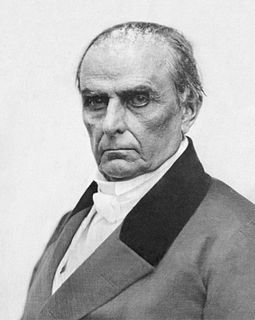
Old Oliver must have been an admirer of Daniel Webster, else why would he mention the man in his daily weather journal? He wrote, “the 29th was a verry plesant warm day. it clouded up some toward night – Daniel Webster was buried to day”.

Daniel Webster, lawyer, diplomat, statesman, orator and Whig leader, was indeed buried on this day. He had died three days earlier after a fall from a horse and was buried with “impressive ceremonies”* at Marshfield, about 35 miles east of Easton. Considered by many to be one of the finest senators ever, Webster had also been a Secretary of State, U.S. representative, constitutional lawyer par excellence, and a devoted preservationist of the union. To the latter end, he co-authored and spoke eloquently on behalf of the Compromise of 1850, which included the controversial Fugitive Slave Act. As a result, he lost the support of many New Englanders; abolitionists washed their hands of him.

On this day in Boston, however, it would have been hard to find his enemies. According to a newspaper account the next day, a united citizenry mourned:

Boston never before presented – probably never will present – such a funeral aspect as was worn in her streets yesterday. Most of the stores and shops were closed, as well as the institutions, offices, and markets, and a large proportion of the city was dressed in the habiliments of wo. [sic] Though the work was only voluntarily the act of individuals, it was very general – Washington, Hanover, and many other streets being covered in black, interspersed with mottoes, flags, portraits, and other mementoes, as the taste of each led him to adopt and carry out.  It was one of the last acts which Boston can perform to express her sorrow for the loss of the great statesman, and it is praise enough to say that it was well and appropriately done. The streets were thronged nearly all the day, crowds of people being present from other places, – and our young men wore the insignia of mourning which had been adopted, and grieved countenances were observed at every turn of the street…*


*New York Times, October 28, 1852