July 28, 1852

Sharps

Sharp’s Pistol, 1848-1850


July 28th, 1852

Wednesday Julia Mahoney has been here

to work to day on my travelling dress

but I have sewed but very little

Was about house all the forenoon 

making cake & pies &c &c  Mrs Ames &

Witherell have been to Dover  Horatio

Ames Jr came last night & I expected

him & father to dine but they went to

Olivers  Horatio went with Mr Ames

to Canton this afternoon & was here to tea

Horatio Ames Jr., a grandson of Old Oliver and nephew of Oakes, had come to the other part of the house for a short visit. By contemporary accounts, he was a troubled young man. The second child of Horatio and Sally Ames, he was born in Albany when his father was working there, but grew up in Connecticut.  In 1849 and 1850, he attended Rensselaer Polytechnic Institute in Troy, New York, but evidently left after just one year.

Early in 1853, Horatio Jr. was in Boston where he married Sophronia Eliot Hill of Salem. He worked as an iron monger at that time, but by 1858 was working as a clerk. On October 27, 1858, he killed himself.

What happened between his year in college and his suicide less than a decade later may pivot on the scandalous divorce of his parents, proceedings for which got underway late in 1852. His mother cited her husband’s multiple infidelities and harsh treatment to herself and her children. Horatio Jr. sided with his mother during and after the breakup. A 20th century account reports that Horatio Jr:

left home shortly after his parents’ divorce and so was out of touch with his father for some years. But he returned home in 1856 following his father’s remarriage. During an argument, he fired at his father in an attempt to kill him. Newspaper accounts of the incident, based on Horatio Sr.’s version of the events, depict him winning a heroic struggle for his life, but then magnanimously letting his son leave. Only after further warnings from his younger son, Gustavus, did Horatio finally have his son arrested. Horatio called his son ‘the worst hardened villain I have ever seen’, but then dropped the charges once Horatio Jnr. became contrite, begging forgiveness.*

The newspaper accounts on which this summation is based present only Horatio Sr.’s side of the story. We simply can’t know exactly what transpired between father and son, but we can know that the son eventually took his own life.  According to some 19th century records, Horatio Jr. is buried in Salem.

*John Mortimer, Zerah Colburn the Spirit of Darkness,2007


July 9, 1852

201000506-lemonpie-500

July 9th Friday  This day I was in hopes to pass quietly

and sew but quite early Mr Jessop & Linds 

from Sheffield and Fullerton from Boston came

and were here to dinner & tea and so

I had to go to cooking instead of sewing  Made

some Lemon & custard pies &c  It has been

excessively warm and the flies have come

in swarms  Frank went to carry the gentleman to

S Bridgewater


“[T]he thermometer was up to 96,”* recorded Old Oliver Ames in his daily journal.  “[E]xcessively warm,” indeed.  It was certainly disagreeable for Evelina to be in the kitchen baking pies on such a day, wearing an apron and a long-sleeved, full-length dress over a chemise and petticoat. Hot.

Many 19th century cookbooks carry recipes for lemon custard, lemon pie, and the like, indicating that lemons were a familiar and reliable ingredient, either imported like coffee, tea and sugar or shipped north from the southern-most states. The Shakers of Ohio, in fact, had a famous recipe for lemon pie that was more or less a tart marmalade within a crust. Evelina probably followed a recipe that was more like lemon custard inside a crust, such as the one suggested by Sarah Josepha Hale:

Boil in water, in a closely covered sauce-pan, two large lemons till quite tender; take out the seeds, and pound the lemon to a paste; add a quarter of a pound of pounded loaf sugar, the same of fresh butter heated to a cream, and three well-beaten eggs; mix all together and bake it in a tin lined with puff paste; take it out, strew over the top grated loaf sugar.*

We can imagine that the pies met the approval of the gentlemen from Sheffield and Boston who came to dinner and tea.

*Oliver Ames, Journal, Stonehill College Archives, Arnold Tofias Collection

**Sarah Josepha Hale, The Good Housekeeper, 1841, p.80

July 8, 1852


IMG_7790

1852

July 8th Thursday  This forenoon cut out a night dress

from Mrs Ames pattern and was busy in my 

chamber made some cake & ginger snaps and 

baked them in Mrs Witherells oven  This

afternoon Mrs Witherell S Ames & A Ames were

here & Helen & Emily  The gentlemen came to 

tea  Mrs Augustus Gilmore passed the evening

This was a hot day for baking, but Evelina nonetheless made “cake & ginger snaps” in her sister-in-law’s brick oven. No doubt she served some of the goodies later in the day when the Ames clan gathered for tea. There didn’t seem to be any special occasion for the tea, except that a cousin, Almira Ames, was visiting. Rather, it was perhaps Evelina’s turn to entertain the family. As Evelina’s grandson, Winthrop Ames, later pointed out, “[e]very week at least, and usually oftener, one household would invite the others and their visitors to tea; and the whole Ames family might assemble…”*

Ginger snaps were pretty standard fare at such occasions. Evelina baked them regularly. In recipes from that time, they’re often referred to as hard gingerbread. Sarah Josepha Hale includes a “receipt” for them in The Good Housekeeper from 1841:

Rub a half a pound of butter into a pound of flour; then rub in half a pound of sugar, two table-spoonfuls of ginger, and a spoonful of rose water; work it well; roll out, and bake in flat pans in a moderate oven. It will take about half an hour to bake. This gingerbread will keep good some time.**


Winthrop Ames, The Ames Family of Easton, Massachusetts, 1937, p. 128

**  Sarah Josepha Hale, The Good Housekeeper, 1841, p, 99


July 3, 1852


500

Catharine Hayward Copeland Ames and Frank Morton Ames*


July 3d Sat  Was about house the greater part of the 

forenoon.  Made cake Mrs Ames Tumbler rule

After dinner helped do up the work for Hannah

to go to Bridgewater afterwards mending Susans

dresses.  Was expecting Augustus wife here & Orinthia

but they did not come.  About 5 Oclock went

into Mrs Witherells & stoped to tea.  Frank has

gone a ride to Middleboro with Cate Copeland

The bad news today was that “this was a fair cold day wind verry high a verry bad day to git in hay.”** Evelina’s father-in-law, Old Oliver, was clearly not pleased with this year’s haymaking, at least not to date. Not enough rain in the beginning to have the hay grow well and, today, too much cold wind to bring it in properly.

The regular news today included mending and baking. Evelina evidently tried a new cake recipe, using the “Tumbler rule” that she got from Mrs. Ames – probably Almira Ames, who was visiting. A tumbler was a common word for a drinking glass, which suggests that at least one of the cake’s ingredients – flour, perhaps – was measured by filling a tumbler.  Hard to say, but it must have been fun to try a new recipe for an old standard.

We get a peek into the family’s future with Evelina’s notation that her 18-year-old son, Frank Morton, went “a ride” with a girl named Cate Copeland. Cate was Catharine Hayward Copeland, daughter of Hiram Copeland, a farmer, and his wife Lurana – and a future daughter-in-law to Evelina. Cate was all of 15, but not too young to be of interest to Frank. Four years later, the couple would marry. Over the course of their lives together, in North Easton, Canton, and Boston, they would produce seven children, six of whom would survive to adulthood.

* Image of Catharine Hayward Copeland Ames and Frank Morton Ames courtesy of ancestry.com

**Oliver Ames, Journal, Stonehill College Archives, Arnold Tofias Collection


June 26, 1852


  • hentzcl

Caroline Lee Hentz

(1800 – 1856)

1852

June 26th Saturday  Was assisting Hannah about house

most of the forenoon  Made pies & cake baked

in the small new tins  Have been mending

this afternoon and finished Marcus Warland

by Mrs Caroline Lee Hentz

Mr Ames brought home 1/4 lb black sewing

silk from Boston  I have a bad cough

Although her “bad cough” presaged an oncoming cold, Evelina managed to accomplish many domestic tasks today. Perhaps the best part of the day, however, came after the choring, baking and mending. She finished reading Marcus Warland; or, The Long Moss Spring. Tale of the South. by Caroline Lee Hentz.

Caroline Lee Hentz was an immensely popular novelist, “well known and much esteemed.”* In the 1850s, the Boston Library listed her as one of the three top writers of the day. A major literary figure, now largely forgotten, Mrs. Hentz described herself as a “Northerner who traveled and worked throughout the South for nearly thirty years.”** Though born and raised in Lancaster, Massachusetts, only fifty-odd miles from North Easton, Caroline and her teacher husband spent married life in various Southern states, opening and closing schools as they went along. They lived in Chapel Hill, North Carolina; Covington, Kentucky (across the Ohio River from Cincinnati, where they met Harriet Beecher Stowe); Alabama; Georgia; and Florida.

Unlike Mrs. Stowe, Mrs. Hentz was an apologist for slavery. In the Introduction to Marcus Warland, she wrote:

“We believe, if the domestic manners of the South were more generally and thoroughly known at the North, the prejudices that have been gradually building up a wall of separation between these two divisions of our land would yield to the irresistible force of conviction.”*** She believed not only that the institution of slavery was essential to the South’s livelihood, but that blacks were a lesser race who needed to be looked after. She was hardly alone in the latter belief.

After Mrs. Stowe’s Uncle Tom’s Cabin was published to both huge acclaim and vehement dissent, Mrs. Hentz penned a rebuttal novel entitled The Planter’s Northern Bride.  It came out in 1854 and found a wide audience. We can imagine that Evelina might have read it out of curiosity.

But today, while Evelina reclined with Marcus Warland, her old father-in-law was dependably keeping his eye on the sky and his finger to the wind.  The weather entry for today read “the 24 – 25 + 26 were fair cool days for the season + windy drying days wind north west + west most of the time.”**** This bode well for haying.

Anonymous, Southern Quarterly Review, circa 1851, quoted by Karen Tracey, Plots and Propsals, University of Illinois, 2000.

** “Caroline Lee Hentz,” Wikipedia, accessed June 24, 2015

*** Caroline Lee Hentz, Marcus Warland, 1852, p, 2

****Oliver Ames, Journal, Stonehill College Archives, Arnold Tofias Collection


June 8, 1852

capture31200573857_pm


Patent drawing for Nancy Johnson’s Hand-cranked Ice Cream Machine, 1843


June 8th Tuesday  Baked in the brick oven pies

cake & brown bread and have been to work

about the house all day untill the stage

came and brought Mr & Mrs Orr  It rains

quite hard and I did not expect them

Mrs S Ames & Mrs Witherell called this

evening  Had some ice cream frozen in 

the new freezer

Evelina baked and did indoor chores all day, but as active as she was she must have been attentive to the arrival of much-needed rain.  Old Oliver certainly was, recording that “towards night there was considerable rain, wind south west.”* It was so rainy, in fact, that Evelina imagined that her expected houseguests wouldn’t come.  But Robert and Melinda Orr braved the elements and arrived from Boston via stagecoach.

The Orrs were the couple with whom Evelina often stayed when she went into the city.  She and Melinda were good friends, but the connection between the two families ran even deeper, all the way back to Bridgewater and the days of ironwork there when Robert Orr’s ancestor, also named Robert, was a maker of scythes and other tools. The Ameses and the Orrs had often crossed paths.

Evelina was ready to welcome Robert and Melinda to her home and had prepared ice cream for the occasion. The ice cream would have been made in a hand-cranked freezer and probably kept cold in the new ice closet. Although it was a specialty that took time and elbow-grease to prepare, it was not quite the novelty that we might imagine.

Ice cream had been around since Colonial days, brought in by the Quakers and quickly adopted by the likes of Ben Franklin and George Washington.  By 1813, it was served at the inauguration of James Madison. In 1836, an African-American and former White House chef named Augustus Jackson – also known as the Father of Ice Cream – created a variety of ingredients and improved the over-all techniques. Less than ten years later, in 1843, a Philadelphian named Nancy Johnson received the first patent for a hand-cranked ice cream freezer. Americans took to it in droves, and the frozen dessert only got better as time went by.

When did someone think to serve ice cream with pie? Did Evelina?


May 29, 1852

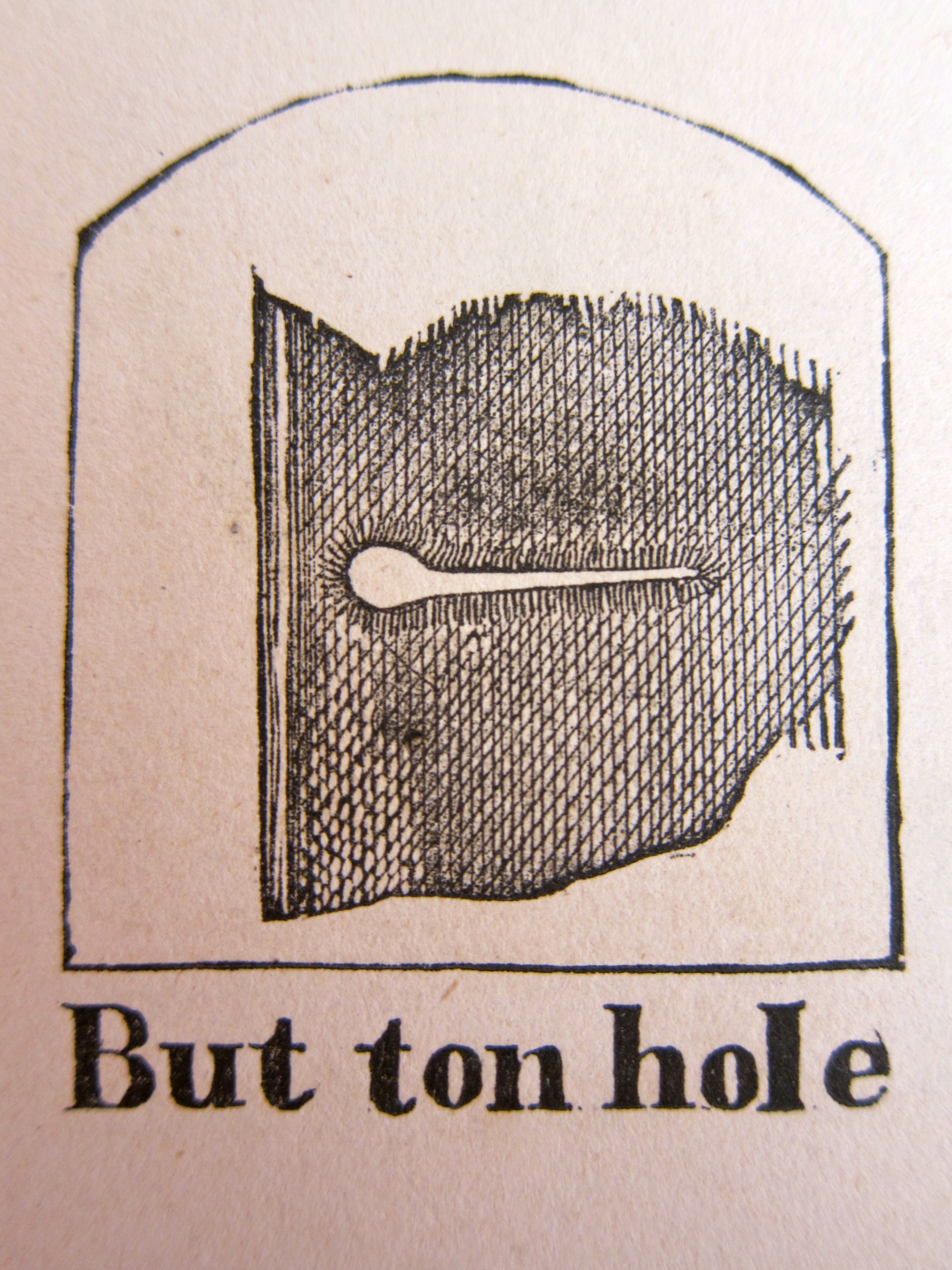
Buttonhole

1852

Sat May 29th  Have had the woodhouse cleaned of the old

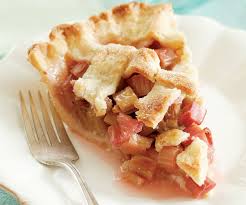
chips ready for the ice closet  Baked rhubarb and 

custard pies and this afternoon Mrs Patterson has

cleaned the tin.  Mr Scott painted the china closet

over the second time between the shelves and the 

walls of the porch  I have varnished the oil cloths and 

desks tables &c &c  finished Augustas button holes

Baking, sweeping, scrubbing, painting, varnishing, and sewing were each on the domestic agenda today. Last year’s spring cleaning, which had been steady enough, seemed lackluster compared to the fierce pace of this year’s effort. Evelina didn’t necessarily complete each task personally – Jane McHanna, Mrs. Patterson, Mr. Scott and others helped – but she oversaw each piece of it. She was right in there. Today, it looks as if the only time she sat down was when she helped Augusta Pool Gilmore with her buttonholes.

Evelina excelled at making buttonholes and, at one time or another, helped other women, like Sarah Lothrop Ames next door, sew them. She must have taken pride in that particular skill, just as she must have had a real sense of accomplishment at all the tasks that were dealt with today. The to-do list got shorter.

As Evelina helped her young neighbor with needle and thread, the aroma from the baking would have competed with the fumes of the varnish.  Happily, it was fair and warm outside and hopefully, she opened the windows to let fresh air in.


May 28, 1852

images-1

1852  May 28th

Friday  This forenoon cleaned the shed chamber  Mrs

Patterson assisted me and helped about house

down stairs  I baked cake & brown bread

in Mrs Witherells oven and Mrs McHanna

made a custard & some rhubarb pies.

Augusta brought her dress in and I partly

made the button holes  Oakes A went to Boston

yesterday returned to night

Time for rhubarb. The edible plant, with its long red stalks, was coming up in the garden and needed to be harvested and cooked. Household advisor Lydia Maria Child had this to say about it:

“Rhubarb stalks, or the Persian apple, is the earliest in gradient for pies, which the spring offers. The skin should be carefully stripped, and the stalks cut into small bits, and stewed very tender.  These are dear pies, for they take an enormous quantity of sugar.  Seasoned like apple pies Gooseberries, currants, &c., are stewed sweetened and seasoned […] in proportions suited to the sweetness of the fruit; there is no way to judge but by your own taste.  Always remember it is more easy to add seasoning than to diminish it.”*

Jane McHanna made today’s pies and a custard, too. Evelina baked her usual cake and brown bread. Spring cleaning was not forgotten, however, as Evelina and Mrs. Patterson cleaned out the shed. One wonders what they found in there after the long winter.

The younger generation, meanwhile, was stirring. Augusta Pool Gilmore came over from across the street to get Evelina’s help on a dress she was making.  Oakes Angier Ames struck farther afield, going into Boston for the night.  The 23-year-old was there on shovel business, presumably, and, being conscientious, he would have accomplished whatever task he was sent in to do. But he was young, too, and may have enjoyed the freedom of being on his own in the big city.

*Lydia Maria Child, The American Frugal Housewife, 1829, p. 51


April 29, 1852

images-1

Peter Mark Roget

(1779 – 1869)

1852

Thurs April 29 Baked twice in the brick oven.

Mince pies, cake bread &c   Mr & Mrs 

Kinsley with their family made quite a long

call  They are very pleasant.  After they left went

to Mr Torreys  Augustus, wife & her sister  Augusta

& Rachel there, brought home some rose slips

The aroma of baking filled the Ames house today as Evelina produced pies, cakes, bread and more. Or should we say that the smell, or the scent, or the fragrance, or the odor of baking bread was apparent to anyone who stepped into the house? Roget’s Thesaurus would offer us any one of those synonyms for the word aroma.

The first edition of Roget’s Thesaurus was published on this date in 1852. Peter Mark Roget, a British physician, inventor and theologian, began to compile synonyms as a young man as one way of combatting the depression that plagued him for much of his life.  Beginning the work in 1805, not long after he had completed his medical studies, he spent nearly fifty years bringing the publication to fruition.  The first edition had approximately 15,000 words; it has been continually expanded, updated regularly ever since.

The Kinsleys of Canton came to visit in the afternoon and, no doubt, they could smell the fresh baked bread. Lyman Kinsley was an iron trader who had many dealings with the Ames family; within the decade, his business would be owned by the Ameses and overseen by Frank Morton Ames. That was in the future, however. On this day, he, his wife, Louisa, daughter Lucy and younger sons, perhaps, all came for “quite a long call.”  Evelina enjoyed their company, but after they left she bounced right out of the house to go into the village to visit relatives and bring home rose slips. The garden!


March 19, 1852

moms_white_cake_2

March 19th Friday  Have heat the brick oven baked

mince & dried apple pies & Jenny Lind cake  Amelia

went to Mr Torreys this morning and Orinthia

afternoon & self this evening, when we returned

found Edwin & wife here.  Mr Whitwell called

had called at Edwins for the first time

Jenny Lind, international opera star, was so famous at mid-century that many things were named in her honor: A street in North Easton, for one, and more. The “Swedish Nightingale,” young, pretty and gifted, was promoted to the hilt by master showman P. T. Barnum. Happy fans and clever merchandisers attached her name to a bed, a bonnet, a steamer trunk, a pudding, a saloon in Brooklyn and a gold-rush town on the Calaveras River in California. She also had a cake named after her.

Evelina baked a Jenny Lind cake today.  Perhaps she took the “receipt” from a popular cookbook by Mrs. A. L. Webster titled The Improved Housewife. The result was a real departure from the usual fruitcake:

Stir together 2 cups white sugar and 1 butter.  Add 10 egg-whites, well beaten. Just before setting in , add half a teaspoonful soda dissolved in cup of cold milk and 1 and half cream tartar mixed with 4 cups flour.  Flavor with vanilla, or to taste. Line pans with buttered paper, and bake in moderate oven fifteen or twenty minutes.  Frost it. – Or: the 10 yolks with the other ingredients as above, and the grated rind of 2 lemons for the flavoring, make a nice cake.”