March 12, 1852

192_600_Red_Doll_Bed

1852  

March 12th Friday.  Spent most of the forenoon about

the house gave the sitting room a thorough

sweeping  This afternoon & evening have

spent at Mr Torreys  Amelia came home

with me.  Called to see Hannah in bed

almost sick with the canker & has weaned her babe.


Poor Hannah Lincoln Gilmore, wife of Alson Augustus Gilmore and mother of two little boys, 3-year old Eddie and 7-month old Willie, had been feeling poorly for more than a week.  Her complaint was canker sores, a common enough ailment but one that struck her unusually hard. As Evelina points out, Hannah was “in bed almost sick.”

As most of us know, a canker sore is a benign but painful sore located inside the mouth and lips or at the base of the gums. Known medically as aphthous stomatitis, a canker is not contagious and has no cure. It is often caused by stress; perhaps Hannah’s recent efforts to wean Willie had set them off. A canker sore can last from seven to ten days, and can be painful enough to make talking and eating difficult. Hannah must really have felt crummy.

Meanwhile, at the shovel shop, reconstruction was continuing.  Old Oliver noted that “the 12th + 13th were both good fair days for our work.”*

*Oliver Ames, Journal, Stonehill College Archives, Arnold Tofias Collction


March 8, 1852

Carpenter

March 8th

1852 Monday  To day is town meeting.  George brought

sister Amelia here this afternoon  Have got

the carpet down in the front entry and 

the chamber carpet partly down

S Ames sent for the entry lamp for fear

I suppose that I should keep it but

she […] might not been alarmed

Carpenters have come to rebuild the shops

A new week signaled a fresh start. It had only been six days since the fire at the shovel factory, but the clean-up had gone quickly. The ruins were “dismal,” as Evelina noted yesterday, but the debris was mostly gone, hacked down, shoveled up and carted away. Carpenters had arrived to begin rebuilding, as Old Oliver, too, noted in his diary:  “some of the carpenters came on to day to build up our shops + Mr Phillips + his son came.”*

Life in the village was returning to normal.  Housewives, some with servants, tended to washing day. Children went to school and men went to town meeting.  As at church, the fire must have been part of the conversation as the men gathered to decide on town affairs and expenditures for the coming year. People must have wondered how soon the shovel shop would be up and running.

At the meeting, a new moderator, Alson Augustus Gilmore, presided. Not yet thirty years old, it was his first time holding the gavel; he would repeat the performance twenty-four times over the coming decades.  According to William Chaffin, Gilmore and his predecessor, Elijah Howard, Jr., “served with signal ability.”**

Evelina and her sister-in-law, Sarah Lothrop Ames, had a minor set-to over “the entry lamp,” which appears to have been a luminary that was shared by both houses. Sarah was evidently skittish about not having it, and Evelina was annoyed to have it commanded away.  No cause for alarm, she might have said. She wouldn’t have been annoyed for long, however, as a favorite family member, Amelia Gilmore, arrived for a visit. Amelia was the young widow of Evelina’s younger brother, Joshua Gilmore, Jr. She had lately been working as a private nurse.

*Oliver Ames, Journal, Stonehill College Archives, Arnold Tofias Collection.

**William Chaffin, History of Easton, 1886, p. 637

February 24, 1852

img_0630-copy

A modern version of a mid-19th century specialty: Kossuth cakes*

Feb 24 Tuesday

1852  Heat the brick oven twice & baked Kossuth

plain & currant cake ginger snaps, mince &

dried apple pies  Afternoon Mrs Homan &

Ann Clarke came to the other part of the house

I went in to see them and staid to tea.  Spent

the evening at Willard Lothrops.  Called at Mr

Torreys & Augustus

It was a big baking day, with Evelina preparing a typical selection of pies, cakes – “plain and currant” –  and ginger snaps.  New to her repertoire was a Kossuth cake, a baked sponge cake with a creme center.

The Kossuth cake was named after the Hungarian political figure (and, briefly, president,) Lajos Kossuth, who was then taking refuge in the United States while trying to raise support for a return to power. During Kossuth’s visit to Maryland, a street vendor in Baltimore named a new baked confection after the hero, who was much feted as a champion of freedom.

The dessert became popular but is largely forgotten today, though the confection can still be found in parts of the south. Naturally, additions and variations to the recipe arose almost immediately, most involving the addition of chocolate poured over the top. A typical modern recipe looks more like a double sugar cookie filled with whipped cream and chocolate frosting than a creme-filled loaf cake.


*http://dwellinginmiddleburg.com/2014/05/06/kossuth-cakes/


February 8, 1852

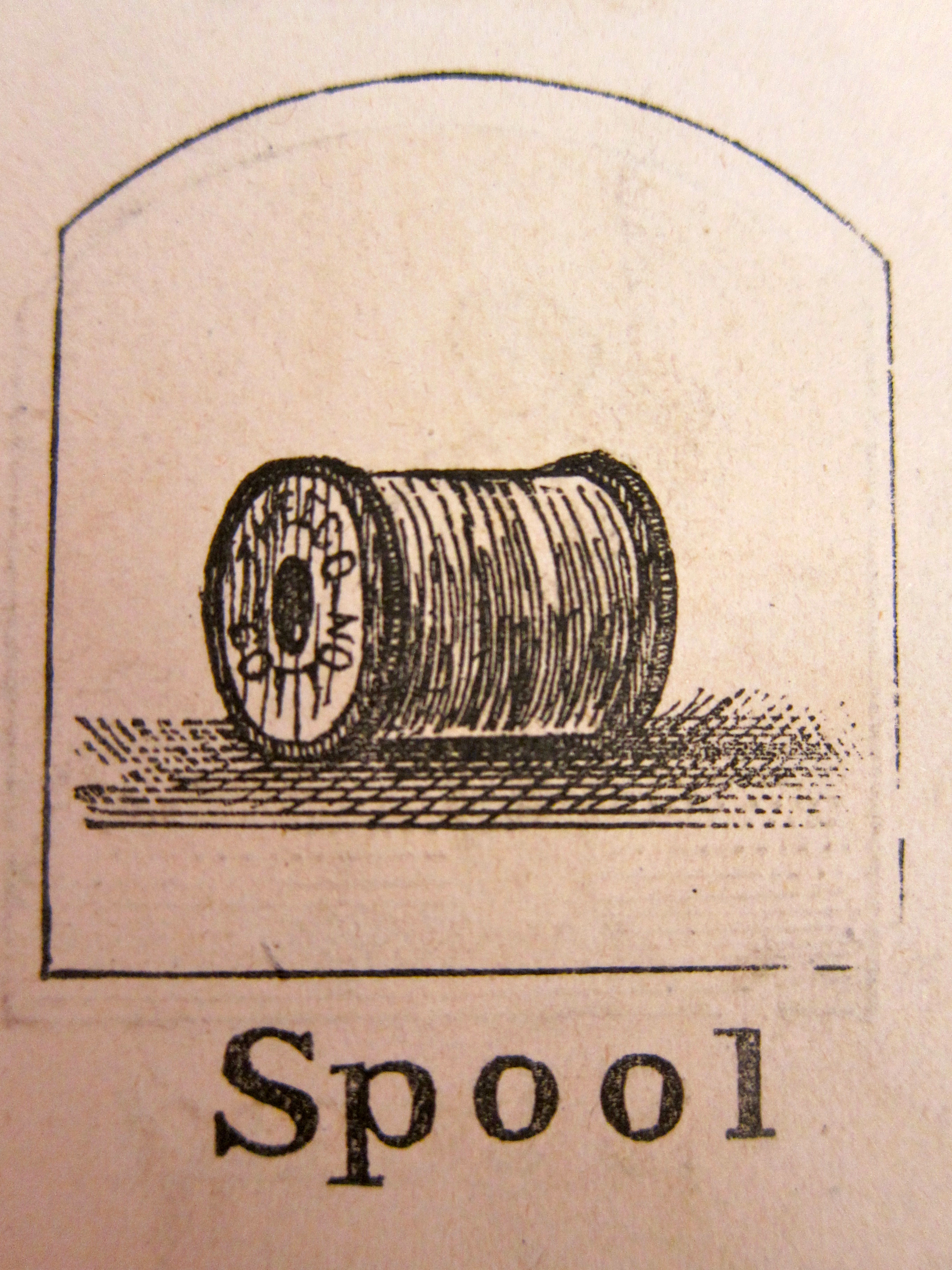
Spool

1852

Feb 8th  Sunday,  Have been to meeting to day and at 

noon went into Mrs J Howards with Mrs E Howard &

others  had a pleasant call   Augustus called this evening

and staid untill quite late and I have

not read but very little to day  Mr Ames

came in about eight but too late to go out as 

intended  Mr Ames brought me 12 spools of cotton

yesterday

It was an ordinary winter Sunday for the Ames family. They went to church and visited with friends during the intermission between the morning and afternoon services. Back home, Evelina’s nephew Augustus came to call and seems to have overstayed his welcome; Evelina barely got to read. She probably sat looking at the new spools of cotton thread that Oakes had brought her the day before and wished that she could at least do some sewing. But sewing and other work was forbidden on the Sabbath.

The laws that the Puritans had established in the 17th century that forbid work or play on the Sabbath still held sway in Massachusetts in 1850. Businesses weren’t open, mail wasn’t delivered, and many people wouldn’t travel. People in Evelina’s generation had been taught to put down their daily work – except for chores which were essential, such as milking the cows – and spend Sundays quietly, at church and at home in contemplation and worship. No sewing, no housework, no shovel-making was permissible.

As the tempo of 19th century life picked up, however, that restrictive pattern was changing. Rail travel, for instance, was impossible to harness to a Puritan timetable. Many of the old ways were beginning to break down, and the advent of the Civil War would effectively demolish most of the lingering vestiges of Puritanism. The “blue laws,” however (so named by Connecticut preacher Samuel Peters) would continue to influence state laws, especially around commerce.  For much of the 20th century, retail stores could not open on Sundays, and in many places, alcohol couldn’t be sold.  Even today, in 2015, several states – Maine and Colorado, for two – forbid car dealerships to operate on Sundays.


I


February 4, 1852

8mmIdeas_instagram

Mending

1852

Wednesday 4th Feb  Have been mending shirts and have

done up some collars & sleeves &c This evening

have been to Alsons with Mr Ames, met the 

Pools Mr & Mrs A Howard & Harvey  had a 

pretty lively time.  Edwin & Augustus with their

wives were also there  It is a beautiful moonshiny

night and have had a pleasant ride.  O A & Oliver

went to a ball to Canton.

Evelina sat with her sewing and mending for most of the day, catching up on some of the more ordinary aspects of keeping her family well-clothed. She was motivated in part by the need to prepare her son Oliver (3)’s clothes for his return to college.  Her diligence was rewarded; she got a lot of work done, and at the end of the day she and Oakes went out for the evening. Right next door, in the other part of the house, Oakes’s youngest brother William Leonard was visiting, yet Evelina doesn’t mention him.

She and Oakes rode south to her brother’s farm, where they met with family and friends for “a pretty lively time.” They saw some of the Pools, an extended family in the area, and Asa and Henrietta Howard, another farming family. (A year earlier, Evelina had sewn a shroud for one of the Howard’s children.) The Harveys, from whom Evelina bought butter, were present as well.

The beautiful moon, not quite full, shone down from a starry sky on other winter gatherings.  Oliver Ames (3) turned 21 years old today, after all; he celebrated the occasion with his older brother, Oakes Angier, by attending a dance in Canton. One imagines that they had a good time, too.


January 29, 1852

Teeth

1852

Jan 29th Thursday  Mrs Witherell Oliver 3rd & Fred & George went

to Bridgewater this morning for Mrs Witherells temporary

set of teeth.  Father & Mrs S Ames & Emily here to dine

Mrs S Ames came about half past eleven and spent

the rest of the day.  Have written a letter to Harriet

Ames [of] Burlington.  Went after mother in a sleigh to night

Augustus & wife spent the evening Three evenings this week


Sarah Ames Witherell traveled to Bridgewater today to pick up a “temporary set of teeth” to replace the real ones that had been pulled out earlier this month. It turned out that they weren’t ready, so she had to return home without them. As before, she was accompanied by several family members including her son George Oliver Witherell and two of her nephews, first cousins and good friends Oliver (3) and Frederick Lothrop Ames, who were still home on a recess from college.

Evelina, meanwhile, fed midday dinner to all the family members who stayed behind in Easton.  Sarah’s daughter, Emily, didn’t go with her mother this time; unlike Oliver and Fred, she and Susie Ames may well have been back in school. Evelina may have been feeling the strain of so much company.  She notes that her nephew Augustus and his wife, Hannah Lincoln Gilmore, had come to call “Three evenings this week.” Augustus, who did a lot of work for Oakes and Oliver Jr., often made himself at home at the Ames’s.

Harriet Ames of Burlington, Vermont, to whom Evelina wrote today, was a spinster cousin. Her mother was the widow of Old Oliver’s brother, John.*

*not the same John Ames who manufactured paper in Springfield

January 27, 1852

TMM03FOOD10_a_237278c

1852

Jan 27  Tuesday.  Mrs S Ames & Frederick were to dinner  had a roast

goose.  This afternoon Mr & Mrs Whitwell, Mr & Mrs

John Howard & Miss Jarvis    Mrs Witherell Augustus

& Hannah came this evening    Frederick went after the

ladies. Oliver & George carried them all home this

evening.  Baked some tarts in the other house stove

Have sewed but very little  Mr Wm Brown was also here.

Quite a sociable day for the Ameses, full of company.  Midday dinner was attended by Sarah Lothrop Ames and her son Frederick. (The absence of Oliver Jr. and Helen Angier Ames suggests that the former might have been away on business while the latter had returned to school.) Fred, like Oliver (3), was home from the Ivy League; their conversation at the dinner table probably provided some fresh subject matter. Perhaps they entertained family members with a modified description of life on campus.

Evelina served a roast goose (that Jane McHanna had cooked), a dish that normally denoted a special occasion such as Christmas or New Year’s. Were they serving it in anticipation of Oliver (3)’s 21st birthday, or was it just a whim? Either way, serving roast goose on an odd weekday signified wealth behind the larder.

Sarah Josepha Hale offered a recipe for roast goose in her popular household guide, The Good Housekeeper, suggesting that it be stuffed and roasted on a spit over a “brisk” fire for at least two hours. Otherwise, she had a qualified opinion of the dish:

“Geese seem to bear the same relationship to poultry that pork does to the flesh of other domestic quadrupeds; that is, the flesh of goose is not suitable for, or agreeable to, the very delicate in constitution. One reason doubtless is, that it is the fashion to bring it to table very rare done; a detestable mode!”*

Mrs. Hale would likely have approved of the baked tarts, however, that Evelina served for tea later in the day to the Whitwells and others.  It’s a happy note that Sarah Witherell ventured over at the very end of the day; she must have been feeling better after the extraction of her teeth some days back.  She was comfortable enough to let Evelina’s nephew Augustus and his wife Hannah see her face, which had been swollen for days.


*Sarah Josepha Hale, The Housekeeper’s Guide, 1841, p. 52


January 9, 1852

Cake

1852 Friday Jan 9th

[…]Have had about 30 here this evening and

quite a pleasant time though the weather not

pleasant.  Lavinia came here with Augustus last

night and we ladies have had a nice time making

cake and getting ready for them  Helen & Lavinia

made the bed in the front chamber to suit themselves

Oakes and Evelina Ames hosted a wedding reception at their house for newlyweds Edwin and Augusta Pool Gilmore, attended by members of the extended Gilmore and Pool families who traveled through inclement weather to get there. The celebration, complete with cake and tea – but no wine – was “quite a pleasant time.” What a special occasion for a cold, dark time of year.

The preparations for the party had been fun, too.  Lavinia Gilmore, sister of the groom, had been driven back to Evelina’s, carried by her brother Augustus Gilmore, to help with the cake. More cake! Helen Angier Ames had walked over from next door, again. The two young unmarried women had a sleep-over at their Aunt Evelina’s.

What might the cake have been made of? Sarah Josepha Hale offers up quite a recipe for a wedding cake in her 1841 The Good Housekeeper:

Take two pounds and a half of dried and sifted flour, allow the same quantity of fresh butter washed with rose water, two pounds of finely pounded loaf sugar, three pounds of cleaned and dried currants, one pound of raisins stoned, one nutmeg grated, half a pound of sweetmeats cut small, a quarter pound of blanched almonds pounded with a little rose water, and twenty eggs, the yolks and whites separately beaten.  

The butter must be beaten by hand till it becomes like cream; then add the sugar, and by degrees the eggs; after these, the rest of the ingredients, mixing in at last the currants, with nearly a tea-cupful of rose or orange flower water.  This mixture must be beaten together rather more than half an hour, then put into a cake-pan, which has previously been buttered and lined with buttered paper; fill it rather more than three quarters full.  It should be baked in a moderate oven for three hours, and then cooled gradually, by at first letting it stand some time at the mouth of the oven.

If you fear the bottom of the cake may burn, put the pan on a plate with saw-dust between.”*

*Sarah Josepha Hale, The Good Housekeeper, 1841, p. 100

January 1, 1852

OLYMPUS DIGITAL CAMERA

The Four Seasons, from Godey’s Lady’s Book, 1851

1852

Jan 1st Thursday.  It being very stormy last night Alson &

wife came home with us from Olivers & spent the night

and forenoon.  Cooked a turkey for dinner.

Went with them to Augustus this afternoon and 

evening called on Mrs J C Williams, found her

making some shop shirts for Oakes Angier.  The weather

is very warm & unpleasant


The new year began with rain and high water in the ponds, pleasing Old Oliver Ames.  He may have been retired from the shovel shop, but he kept close watch on how the business was doing, and how the business was doing depended heavily on how the water power was running. Evelina herself found the rain “unpleasant.”

Evelina and her family marked the day with a turkey dinner, making it an occasion. Evelina’s brother, Alson Gilmore, and his wife, Henrietta, had stayed the night, unable to get back to their farm in the driving rain. They were rewarded with a feast. After the midday meal ended, Evelina went with them to see Alson’s eldest son, Alson Augustus Gilmore, and his young family.

Back in the village, Evelina visited a seamstress about making shirts for her son, Oakes Angier Ames. Mrs. Williams, who was probably a widow, would sew a number of work or shop shirts for the Ames men over the course of the year.  Evelina herself had sewn multiple shirts the previous spring, a task that took her weeks to finish. Much as she enjoyed sewing, she must have been thrilled to pass the chore on to someone else. This would free her up to concentrate on dresses and accessories, as well as tend to the mending basket that always had work in it.

December 27, 1851

imgres-1

Sat Dec 27th  Have put more sugar lemon & ginger to the syrup

of the citron  swept and dusted the rooms got

the lining ready to quilt to Susans hood quilted

the lining to Susans bonnet and fixed the collar

to my cloak  A[u]gustus Lothrop brought me a 

bushel of cranberries.  A Augustus called to bring

soap shoes &c that he got me in Boston


The cold temperature continued, Old Oliver noting in his diary that “the thermometer according to the papers was down to 8 in some places.”* Such temperatures wouldn’t have harmed the bushel of cranberries that Evelina received today. As author Mrs. Cornelius advised in her 1846 household guide, “cranberries keep well in a firkin of water. If they freeze, so much the better.”**

Cranberries were common in New England.  There is debate over whether they were served at the earliest Thanksgiving dinners, but there’s no debate that both Native Americans and English settlers consumed the fruit in season. Botanist Judith Sumner notes that: “Wild cranberries were originally hand-picked, but efficient New-Englanders soon crafted scoops that could be used to rake the berries from the lax stems.  During the nineteenth century, bogs carpeted with wild cranberries transformed into cultivated sites that were raked systematically each fall.”***  Augustus Lothrop, the youngest brother of Sarah Lothrop Ames, evidently cultivated cranberries at his farm in Sharon.

Henry David Thoreau enjoyed cranberries, finding them in the wild and eating them raw.  He considered them “a refreshing, cheering, encouraging acid that literally puts the heart in you and sets you on edge for this world’s experiences.”***

*Oliver Ames, Journal, Stonehill College Archives, 1848-1863

**Mrs. Cornelius, The Young Housekeeper’s Friend, New York, 1846

*** Judith Sumner, American Household Botany, Portland, Oregon, 2004, p. 124


Ed. note:  Horace “Augustus” Lothrop was the youngest brother of Sarah Lothrop Ames.  He lived in Sharon.

Alson “Augustus” Gilmore was a nephew of Evelina Gilmore Ames, son of her brother Alson. He lived in Easton.