May 2, 1851

1528

Globe Amaranth

1851

May 2nd Friday.  Susan started with several other children

about 6 Oclock maying and did not get back

untill half past nine.  They went over three miles

to the “West Shire”  I made cake & ginger snaps to

bake with Mrs Witherell. Jane made some pies and 

bread.  Mr & Mrs Whitwell and Mrs William Reed

called. Afterward planted some globe seed and 

carried my stockings to mend in the other part of the house

Today’s good weather gave Susie Ames and her friends the opportunity they missed yesterday. Leaving early in the morning, they walked west to deliver May baskets to friends and family, or perhaps even to strangers. It sounds as if the children walked a long way on their little legs. Readers in Easton, where exactly is the “West Shire?”  By the Bay Road?

Baking was in order today. Evelina and her sister-in-law Sarah Witherell baked cake and ginger snaps, while Jane McHanna prepared the usual pies and brown bread. Did the children get any ginger snaps when they returned home? Certainly, Reverend and Mrs. Whitwell would have been offered some to eat, as would Abigail Reed, wife of the Reverend William Reed. Guests who dropped in, whether or not they were expected, were always offered refreshments such as tea and fruit or biscuits. Cider was a common refreshment, too, but not at the Ames’s house; it was too close to alcohol.

Once the guests had departed, Evelina went out to her garden and began to plant globe seed. Did she have a specific plan in mind for the garden, or was her planting haphazard and spontaneous? If she consulted any of the publications she read, like The Massachusetts Ploughman, or the ladies’ periodicals, she probably found suggestions for arranging her flower beds.



May 1, 1851

Basket


1851

May 1st Thursday  Have cleaned the shed chamber to

day and a long dirty job it is  there is so much in it.

I got through just in time to go to Mr Torreys

after some plants when Orinthia came out of

school.  She went with me and we brought home

three baskets full and have set them out in

the garden This morning it was quite unpleasant

and Susan was disappointed in her walk

May Day! In our modern world, the first day of May means many things to many people, among them International Workers’s Day, the Roman Catholic Celebration of the Blessed Virgin Mary Day, even a day for the 21st century Occupy Movement. May Day has ancient iterations, too, most of them having to do with pagan rites of spring.

In 1851, the first of May meant “maying.” Young people like nine-year old Susie Ames filled small baskets with flowers, ribbons, or other little treats and left them, anonymously, on doorsteps around the town. The game was to leave a basket, ring the doorbell, and run away.  If the recipient caught you, he or she was allowed to chase you for a kiss; at least, that was one version. Another version was to leave the basket as a surprise at the home of an elderly person. On this particular May Day, the weather was too disagreeable for the traditional maying walk, so Susie and her friends were unable to deliver their baskets.

Evelina dealt with baskets, too. She and Orinthia Foss filled three of them with plants from John Torrey and put them in her garden. It was her reward for having spent most of the day cleaning out the “shed chamber.”  Spring cleaning was still underway.

April 30, 1851

Boot

1851

April 30 Wednesday  Hannah came with Augustus in the stage

and Eddy came with them  I fear she did not 

have a pleasant visit Eddy was not well and very

troublesome. We called at the shoe shop and

at Mr. Torreys.  Abby came home with us to tea

I have sewed some on Susans borage dress but

have not been able to do much. The weather is

pleasant but rather windy


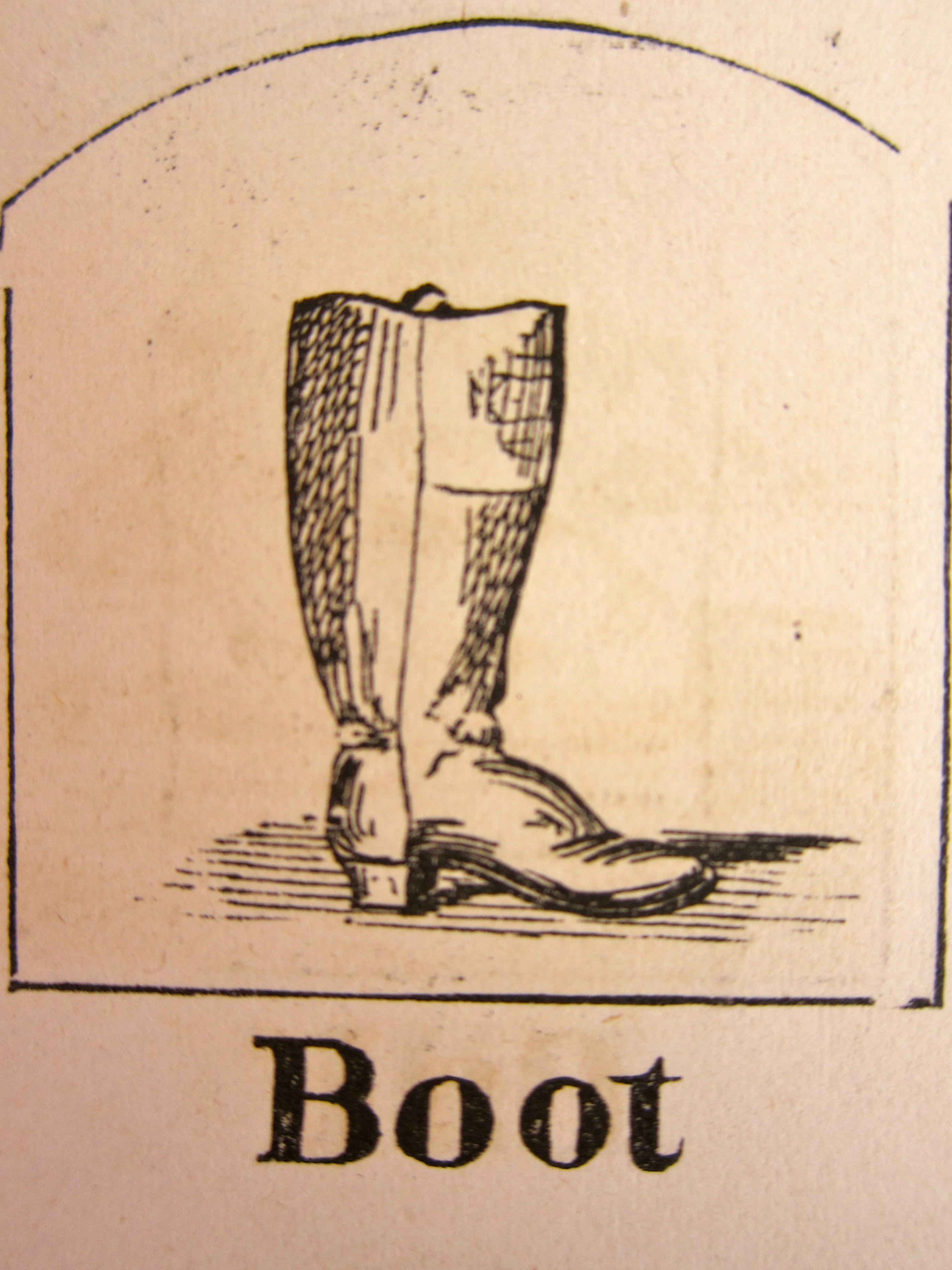
The reason for Augustus Gilmore’s continued presence at the Ames home became clearer today. The boot factory (or shoe shop, as Evelina called it) that Augustus had been working to establish was now up and running. Oakes Angier was an original partner, according to Chaffin’s History of Easton:

“In 1851 there was organized in North Easton the firm of A.A. Gilmore & Co., the other members of the firm being Elisha T. Andrews and Oakes A. Ames. They manufactured fine calf-skin boots in a building owned by Cyrus Lothrop. Oakes Ames succeeded to the interest first owned by Oakes A. Ames. In 1870, Messrs Gilmore and Andrews bought out Oakes Ames. This firm, which for some time did quite an extensive business, gave up the manufacture of boots in 1879; but the firm did not dissolve until death broke up the long partnership, Mr. Andrews dying in 1883.” *

The manufacture of shoes was an important industry in southeastern Massachusetts, particularly in the nearby towns of Randolph and North Bridgewater (soon to be known as Brockton). One theory is that shoe-making grew out of a cottage industry begun in the late 18th century, a thrifty, small, household-by-household effort to augment the meager income from subsistence farming by making shoes. It was one way to use the leather from the farm animals who were slaughtered.

New England as a whole was a major producer of shoes throughout the nineteenth century, “with Massachusetts alone responsible for over 50% of the nation’s total shoe production through most of the period.”** The trade continued well into the 20th century, with organizations such as the New England Shoe and Leather Association and the Boston Boot and Shoe Club championing the industry. Some leather manufacturing continues today in the region.

It only made sense that Easton, bustling as it was with the manufacture of goods such as shovels, mathematical instruments and, soon, hinges, would participate in the regional trade of shoe-making. That members of the Ames family were involved seemed to make sense, too.


* p.598

**http://www.albany.edu/history/ej/origins.html


April 29, 1851

CultivationToolsBP

April 29 Tuesday  Frank has finished the beds in the flower

garden and I have set out some plants that Henrietta

gave me and some that I bought of Edwin Manly paid

him one dollar Julia here finishing the dresses for

Susan & my blue Delaine dress.  Mrs George Ames

& I went to Sharon and spent the afternoon

Had a pleasant ride with Dominic


Three spheres of activity informed Evelina’s day. First was gardening, made possible by Frank Morton Ames finally finishing tilling the soil in the flower beds.  He and others had been loosening the soil off and on for several days, which raises the question of how many flower beds Evelina had, and how large they were, and where they were situated relative to the house. Evelina “set out” some plants that she got on Saturday. One group came from her sister-in-law, Henrietta Lincoln Gilmore, at the Gilmore farm; she probably got those for free.  The other group from Edwin Manley, however, she had to pay one dollar for.

The second sphere of action was sewing, of course, which always seemed to be going on in center ring at the Ames house. Today Julia Mahoney, the dressmaker of choice, worked on a dress for Susan and a blue delaine, or light wool, dress for Evelina. The warm weather would soon arrive and the lighter dresses would be needed.

The last sphere was a nice change of pace – literally – for Evelina and her cousin-in-law, Almira Ames. With Dominic, a horse, pulling them along, the two women drove the carriage (or were driven) to nearby Sharon. Whom did they visit? Did they shop in the town?  The ride was pleasant, whatever the errand.


April 28, 1851

CarumCarvi


1851

April 28th Monday  Have had Mrs Connors here to help

about washing, Janes finger being sore  She came

at half past 6 and left about half past two charged

42 cts.  I helped about the washing  Willard Randall

came this afternoon to work over the earth in the

flower garden.  Frank came from the shop about

five and worked some on the beds.  I have set out

some carraway roots that Alson gave me.  Helen came

home with Cyrus


According to some calculations, the 42 cents that Mrs. Connors was paid to do the Ames’s laundry translates to a labor value of $13.20 today. Mrs. Connors was paid little better than a nickel an hour. Evelina worked on the washing today, too, much as she disliked it.

Once the laundry was set out to dry, Evelina got back to the garden.  Her son Frank Morton helped her when he got home from work; he seemed to enjoy being in the garden as much as she did. That, or helping his mother till the soil was his assigned chore. Willard Randall, another shovel shop employee and member of the extensive Randall clan, came up again to continue working “over the earth.”  Was Willard pleased to walk up to the Ames’s yard to turn over the soil in the boss’s wife’s flower garden? Did he have a garden of his own at home that needing tending?

The caraway roots that Evelina picked up on Saturday at the Gilmore farm went into the ground today, probably in an area close to the kitchen, a time-honored location for every housewife’s herb garden.  The rhubarb and horseradish would go in there too.

Helen Angier Ames, the niece who lived next door, returned home today from boarding school in New Bedford.  Her uncle, Cyrus Lothrop, “carried her” home, as the phrase went.


April 27, 1851

Asleep

1851

Sunday April 27th  Have had a bad head ache all day and

was not able to attend church Laid down and

slept until about two Oclock which relieved

me very much After church Miss Foss & self

called into Olivers and met Harriet there.

Sarah Lothrop spent the day there. This

evening commenced a letter to Pauline C Dean

It has been a very pleasant day


Perhaps all that riding around Easton yesterday was responsible for Evelina’s headache today. She had pushed herself on Saturday, and the jostling along the washboard roads in bright sunlight may have been a factor in her feeling ill today. That, or she was catching what Sarah Lothrop Ames had. She felt so poorly that she didn’t even try reading, which was often her refuge on a Sunday. Her remedy, just to lie down and sleep, made her feel much better. Sleep was probably a better cure than the Wistar’s Balsam she took a few weeks ago.

Evelina felt well enough in the afternoon to call next door to check on Sarah Ames. There, she and Orinthia bumped into Harriet Mitchell. Harriett was hopefully feeling more settled after her first week back in North Easton. Who was watching her children? Sarah Witherell?

Who is the Sarah Lothrop that Evelina mentioned as spending the day next door?  She must have been a relative – a niece or cousin – of Sarah Lothrop Ames, who was still ailing.


April 26, 1851

Spade

Sat Apr 26th  This morning a man came from the shops 

to spade my flower garden & hoe the currant

bushes Miss Foss Susan & self rode to Edwin Manlys

to speak for some plants and then went to Mothers

got there about half past twelve. Brought

home some Horseradish, Carraway roots & some

few plants Made the skirt to Susans green 

borage Delaine Miss Foss has finished the two shirts.

At last, gardening in earnest. A shovel shop employee was taken off his usual task to go up to the Ames homestead to turn over the soil in Evelina’s flower beds.  He used an Ames shovel, no doubt, and also an Ames hoe to loosen the dirt around the currant bushes behind the house.

Evelina celebrated the spring day with her daughter Susie and boarder Orinthia Foss; the three took a wagon, most likely, north to the home of Edwin Manly.  At the time, Manly lived close to the town line with Stoughton, and was employed at the shovel shop. He was obviously interested in plants and kept an informal nursery on his farm, raising flowers to sell.  His green thumb brought in customers like Evelina. Not too long after this, however, he hurt his hand and had to leave his job at O. Ames & Sons. Fascinated by biology, chemistry and science in general, he studied medicine at Harvard, became a physician and set up an office in North Easton in the early 1860s. Later he moved to Taunton, where he worked as the town librarian for a number of years. Eventually, he moved to California.

Flowers weren’t all that the women brought home in the wagon.  They drove south to the other end of Easton to visit Evelina’s mother, Hannah Gilmore, at the Gilmore farm, where they picked up the horseradish and caraway roots and “some few plants.”   That Evelina and Orinthia had time to sew after all that riding around says a lot about their stamina and work ethic.

April 25, 1851

Coat

1851

Friday April 25  Have done some mending and been putting

things in order about the house Made Mrs

S Ames bed and stoped with her awhile

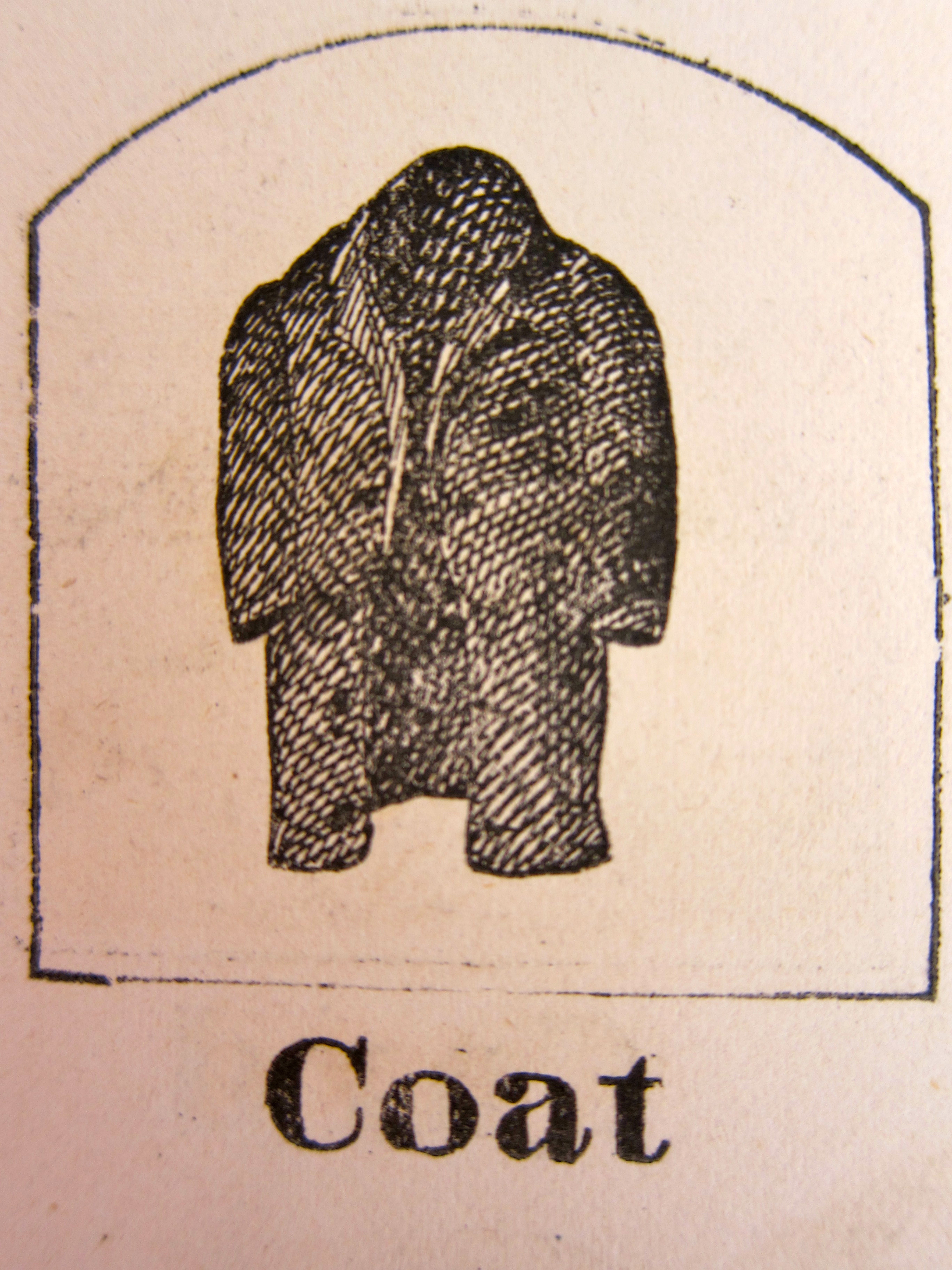
This afternoon mended Oakes Angier two coats.

dirty things they were! Met Mis[s] Foss coming from

school and called with her at Mrs Holmes & Mrs 

Connors spent the evening with Mrs S Ames

Mr Harrison Pool & wife & Mrs Horace Pool called

Sarah Lothrop Ames was still sick and unable to get up and around. Once again, Evelina went next door to visit and helped out by making Sarah’s bed up fresh.  Later in the day, Sarah had a companion, Mrs. Connors, sit with her. Was she being “watched” or was she on the mend? Who made the decision to have someone sit with her?  Her husband or her female relatives?

Mending and housework otherwise took up Evelina’s time today. She and Jane McHanna were still carrying on with spring cleaning, but the effort was sporadic lately, with mending taking over much of Evelina’s time. In the transition from cold to warm weather, all the spring and summer wardrobes had to be brought up to snuff, “dirty things” that some of them were.

The Pools came to call this evening.  Harrison and Horace Pool were brothers, fifteen years apart in age, who lived in the south eastern section of Easton, near the Raynham line and the Gilmore farm.  They made mathematical instruments: surveyors’ tools, levels, compasses and thermometers, among other items. Harrison’s wife was Mary J Pool, a young wife close in age to Oakes Angier.  Horace’s wife was Abby A. Pool, identical in age (43) to Evelina.  Mary and Abby were members of Evelina’s Sewing Circle, two of the women who didn’t attend the meeting that Evelina held back in February. Evelina would have grown up knowing the Pool (also sometimes spelled Poole) family.

April 24, 1851

Slave_kidnap_post_1851_boston

1851 Thursday  April 24th  Julia here to finish Susans dresses

She is very slow We have got the waist done

to her Delaine & finished the print dress & cut

the lining to my dress This afternoon called 

at Augustus’ & Mr Whitwell with Mrs Peckham

A[u]gustus returned from New York this morning

and is here again to dine Hannah went to

Alsons while he was gone Pleasant weather


Evelina and Julia Mahoney sewed today, perhaps trying to make up for time lost yesterday. Evelina’s nephew, Augustus, returned to the Ames’s dinner table after a business trip to New York. Meanwhile, his expectant wife, Hannah Lincoln Gilmore, and son Eddie were staying out at the Gilmore farm with his parents, Alson and Henrietta.

Had Augustus run into any abolitionist fervor while in New York?  Probably not as great as in Boston, where controversy continued in the aftermath of the Fugitive Slave Act and the capture and rescue of Shadrach Minkins. While some of the most prominent abolitionists of the day, like William Lloyd Garrison, lived in Boston, the city was nonetheless home to many citizens who were less adamant about the issue.  They might not have liked slavery, but they feared the radicalism of the anti-slavery rhetoric more.  They were law-abiding, and the law said that slaves were property and had to be returned to their owners. Daniel Webster had decreed it, and they supported the law accordingly. The controversy pulled at everyone.

When another escaped slave, Thomas Simms, was caught in Boston, the Mayor of Boston, John P. Bigelow, ordered him sent back south. The aldermen and the police supported the move, and the black population of the city became even more nervous than before, as the poster above illustrates. Have TOP EYE Open!

April 23, 1851

Thumb

1851

Wednesday April 23d  Julila Mahoney here again to day making

Susans dark plaid print & borage delaine dresses.  I have

been sewing with her but have had many interruptions

Mr Whitwell called, Jane has cut her thumb very

bad, the nail is most off  have done it up in

borax  Carried my work awhile & sat with Mrs S Ames

Susans print dress most done It is quite pleasant

after so much bad weather

Abraham Lincoln coined an adjective that didn’t outlast his use of it, but it seems apt for the kind of day that Evelina had: “interruptious.”  While wanting only to sew, Evelina had to cope with unanticipated diversions throughout the morning. Julia Mahoney, the dressmaker, sat in a chair and sewed, surrounded by various cuts of cloth from two different dresses. Jane McHanna, probably while in the kitchen preparing food, almost cut the nail off her thumb, causing bleeding that would not have been easy to stop, and putting her out of commission for the day, at least. Reverend Whitwell called – probably instantly wishing he had chosen a different day to pay a visit.  The scene would be farcical were it not for the pain Jane obviously suffered with her thumb.

Evelina treated Jane’s thumb with borax, a mineral that we might think more properly used in detergent. To Evelina, borax was evidently a familiar way to stop bleeding and bind a cut.  Other home remedies for cuts, according to Lydia Maria Child, respected author and consummate advisor on household concerns, suggested treatment with an application of salt or molasses. In her book, The American Frugal Housewife, Child also recommended “Balm-of-Gilead buds bottled up in N.E. rum” as “the best cure in the world for fresh cuts and wounds. Every family should have a bottle of it.”

After the domestic drama of the morning, Evelina had a quieter afternoon. She spent some time with her sister-in-law, Sarah Lothrop Ames, who was still quite sick.  She probably took a deep breath of sweet spring air as she walked next door to see the invalid, welcoming the sunny change from all the recent rain.