February 25, 1852

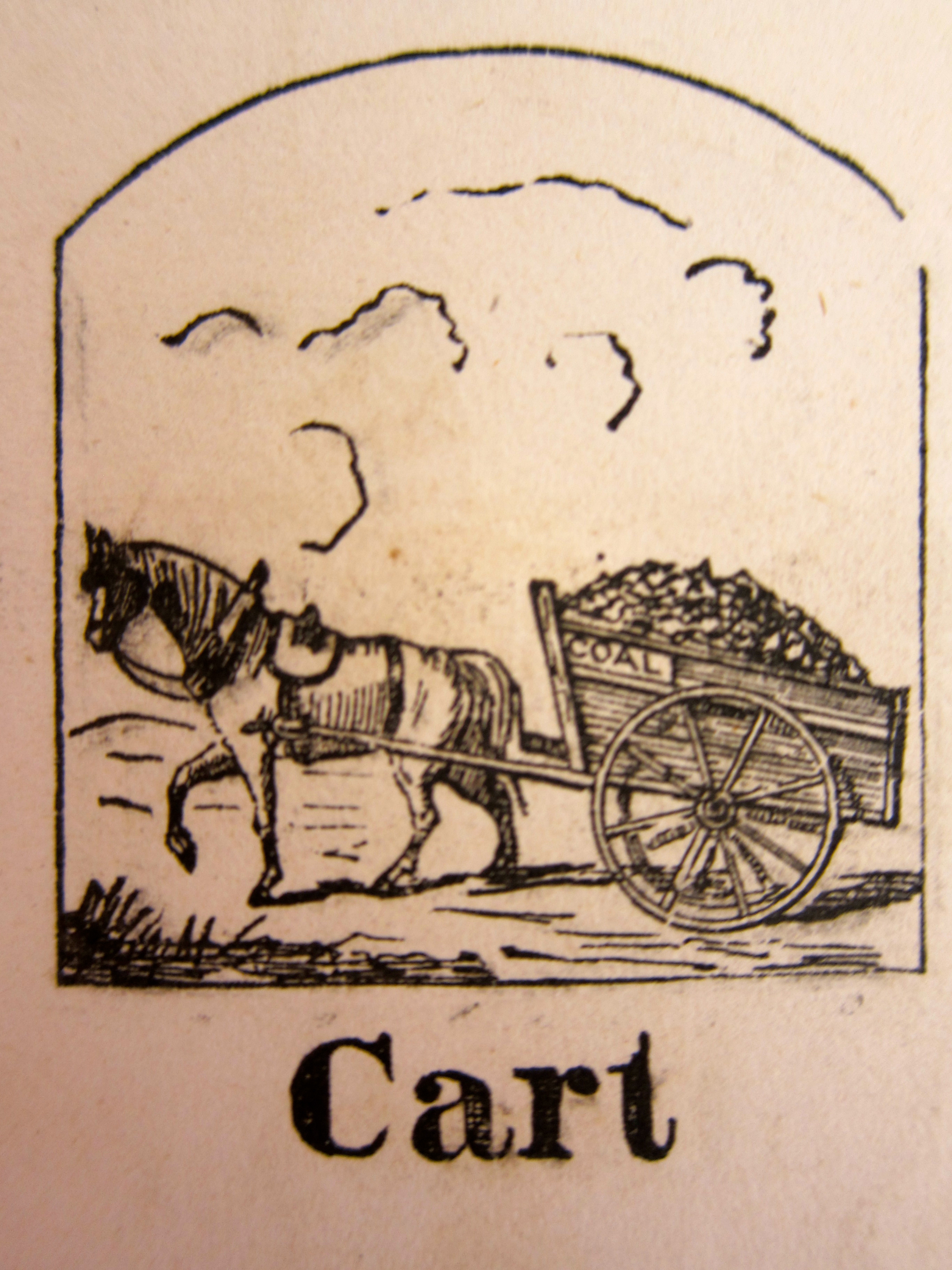
Cart

1852 Feb 25 Wednesday Was at work about the house untill

about ten and had just got seated at my sewing

when Mother & Alson came  They were here to 

dinner and this afternoon mother & self spent

at Willards. The young folks had company

Oakes & Frank are there this evening and were

having a lively time when we came away  Elizabeth

Williams was here this forenoon.  She & Susan went to

Emeline Haleys party this afternoon & evening


“[T]his was a warm day and thawd so much that it made the carting bad,” grumbled Old Oliver in his daily journal.  Despite the soft road bed, however, Evelina’s brother Alson Gilmore traveled by wagon or carriage to bring their mother into town from the family farm. The two came to midday dinner at the Ames’, after which Alson presumably went on his way. Mother and daughter went on to visit Willard Lothrop – Evelina had been seeking his company quite a bit lately. Under his influence, was she becoming a Spiritualist?

While the notion of communicating with the dead intrigued her, Evelina’s interest in Willard Lothrop may have been more sociable than religious.  She comments on the “young folks,” – her sons Oakes Angier and Frank Morton Ames among them – “having a lively time.” All ages seemed to be moving around today attending various gatherings that must have helped dispel some mid-winter gloom. Never mind the mud; the hint of warmth in the air must have been preferable to more snow.

February 24, 1852

img_0630-copy

A modern version of a mid-19th century specialty: Kossuth cakes*

Feb 24 Tuesday

1852  Heat the brick oven twice & baked Kossuth

plain & currant cake ginger snaps, mince &

dried apple pies  Afternoon Mrs Homan &

Ann Clarke came to the other part of the house

I went in to see them and staid to tea.  Spent

the evening at Willard Lothrops.  Called at Mr

Torreys & Augustus

It was a big baking day, with Evelina preparing a typical selection of pies, cakes – “plain and currant” –  and ginger snaps.  New to her repertoire was a Kossuth cake, a baked sponge cake with a creme center.

The Kossuth cake was named after the Hungarian political figure (and, briefly, president,) Lajos Kossuth, who was then taking refuge in the United States while trying to raise support for a return to power. During Kossuth’s visit to Maryland, a street vendor in Baltimore named a new baked confection after the hero, who was much feted as a champion of freedom.

The dessert became popular but is largely forgotten today, though the confection can still be found in parts of the south. Naturally, additions and variations to the recipe arose almost immediately, most involving the addition of chocolate poured over the top. A typical modern recipe looks more like a double sugar cookie filled with whipped cream and chocolate frosting than a creme-filled loaf cake.


*http://dwellinginmiddleburg.com/2014/05/06/kossuth-cakes/


February 23, 1852

Looking glass

Monday 23d Feb 1852  Worked about the house this forenoon

dusted the chambers and washed around the

windows &  doors.  Susan washed the dishes. Am

trying to have her learn to knit, improves some

but rather slowly  This afternoon have been mending

some and have put one new sleeve into my

blue & orange Delaine  The looking glass came

out from Boston to night

We might call it a mirror, but Evelina and most of her contemporaries called her new purchase a looking glass. (Think of “Through the Looking Glass and What Alice Found There,” Lewis Carroll’s 1871 sequel to his 1865 “Alice’s Adventures in Wonderland.”) Like the framed prints Evelina had recently bought for her walls, the looking glass was a fashionable piece of decor. She must have been tickled to have one hanging in her parlor.

New “methods of mass-producing large, flat panes of glass had been perfected and, by combining them with heatless, chemical-coating technologies,”* mirrors had become easy to manufacture – and affordable.  At mid-century they became stylish and ubiquitous, symbolic of the new taste and purchasing power of the middle class. In a home like Evelina’s which, 50 years earlier, might have boasted no more than a small, courting-type mirror, a big, new looking glass, hung on braided silk roping from molding above it, had become de rigeur.

Other than this exciting upgrade in the parlor, today was a Monday like any other. Jane McHanna did the laundry, Susie Ames washed the breakfast dishes, and Evelina took to her needlework.  She was teaching her daughter to knit.


*Wikipedia, Mirrors, accessed February 19, 2015.

February 22, 1852

georgewashington

1852

Feb 22nd Sunday Quite a snow storm this morning but

most all went to church.  I came home at noon on

account of a violent tooth ache and did not return.  Mrs

S Lothrop & son spent this afternoon, Frank carried

Orinthia home after meeting. Read in Grahams

Magazine  Mr Ames & self passed the evening at Edwins

It has cleared off very pleasant this evening

“It was a snowing this morning + all the forenoon and fell 2 or 3 inches deep wind southerly + thawd some  was clear at night,” according to Ames patriarch, Old Oliver. Yet the family rode through the snow to get to church. Poor Evelina got “a violent tooth ache” and had to go home after the first service. She must have felt better as the day progressed, for in the evening she and her husband, Oakes, went across the way to visit newlyweds Edwin and Augusta Gilmore.

Today was George Washington’s birthday. Born in 1732, he died in 1799, when Old Oliver was twenty years old. After Washington’s death, the young Congress of the day, whose partisanship between Federalists and the Jeffersonian Democrat-Republicans rivaled the divide we see in our modern Congress, came together to pass a resolution honoring the first president’s birthday. February 22, 1800 was dedicated to him and by 1832, the centennial of Washington’s birth, some type of observance of the holiday was customary.  The holiday did not become federal law until the 1879, and at the time was qualified as a “bank holiday.”

Old Oliver would have remembered the hero of the American Revolution and probably revered him, as most Americans did. Old Oliver was a child when the Constitution was written and ratified, and lived to see 16 presidents take office. For his generation, no American leader would be more heroic than General Washington.


February 21, 1852

 21621-004-0B1C48DE

Angelina Grimke (1805-1879)

1852

Feb 21st Sat  Spent all the forenoon mending Mr Ames

shopcoat.  Cut Susan a pink long sleeve apron and

Orinthia sewed on it  Have finished Mr Ames another

dickey which makes seven that I have made lately

This afternoon carr[i]ed Mrs Solomon Lothrop &

Orinthia to mothers.  Orinthia stopt at a sing at

the Schoolhouse near Doct Swans  Frank went and

brought her back.  Mrs S Ames called this evening to 

settle and paid me 1,70 cts which makes us even

Normal wintertime activities went on under a sky that Old Oliver described as “fair in the fornoon + cloudy afternoon + much warmer.”*  Evelina mended, sewed and socialized with her friend and former boarder, Orinthia Foss; she also settled accounts with her sister-in-law, Sarah Lothrop Ames. Per usual, Oakes Ames went into Boston.

It was in Boston, in fact, on this date fourteen years earlier that for the first time ever in the United States, a woman addressed a legislative body. On February 21, 1838, abolitionist Angelina Grimke presented the Massachusetts Legislature with an anti-slavery petition signed by 20,000 Massachusetts women. In a speech that was lauded by abolitionists, deplored by traditionalists and parsed by all, she not only called for the abolition of slavery, but declared the right of women to act politically. “We are citizens of this republic and as such our honor, happiness, and well-being are bound up in its politics, government and laws.”**

Daughter of a southern slave-holder, Angelina (known as “Nina” in her family) and her older sister, Sarah Grimke, also an active abolitionist, faced predictable opposition as they transgressed convention. Angelina’s speeches in Boston and elsewhere drew taunts, outrage, disbelief, and disrespect. The Congregational clergy of Massachusetts condescended together one Sunday and, across pulpits, accused Grimke of jeopardizing “the female character with widespread and permanent injury.” Others – men and women – were impressed. One member of the audience at the statehouse said, “Angelina Grimke’s serene, commanding eloquence [she spoke for two hours] enchained attention, disarmed prejudice and carried her hearers with her.”**

How might the Ames clan have reacted?


*Oliver Ames, Journal, Stonehill College Archives, Arnold Tofias Collection

**www.massmoments.org


February 20, 1852

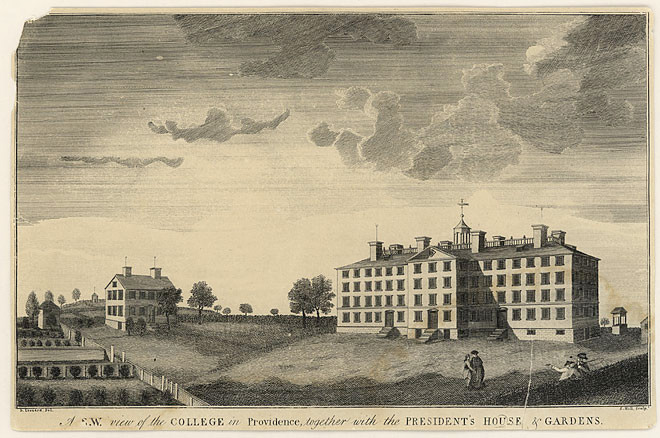
View of the College 1792

Brown University

1852

Friday Feb 20th Oliver returned to Brown University this

morning  Have given the sitting room a thourough

sweeping & have made the front chamber bed

and put the room in order.  Also the entry.

After dinner called into Olivers to see her mother

Mrs Solomon & Willard Lothrop spent the afternoon 

Willard said he wanted to come to tea but the spirits

would not let him.  Orinthia came this evening

The house was quieter this morning than it had been for some time.  Evelina’s middle son, Oliver (3), had returned to college. She tidied up, putting away at least some of the sewing things that had been pulled out for mending Oliver’s clothes. She swept and put various rooms “in order.” She must have felt a sense of accomplishment and, perhaps, that contradictory combination of relief, satisfaction and sadness that follows the departure of a child for school.

After midday dinner, Evelina walked next door to greet Sally Williams Lothrop, mother of Sarah Lothrop Ames. A different Lothrop came to call (whether at Evelina’s or Sarah’s is unclear): Mrs. Solomon Lothrop and her son Willard. Willard was invited to stay for tea but declined. As a medium and a follower of Spiritualism, he felt that “the spirits would not let him.”

Willard Lothrop was not alone in his belief that the possibility of communication exists between the living and the dead.*  William Chaffin makes note of the existence of Spiritualism in Easton, where “interest in this subject first appeared on the Bay road. In 1850 Asahel Smith, Amos Hewett, Willard Lothrop, and others became much interested in the matter. Several Easton people soon displayed mediumistic powers.” Evelina was clearly intrigued by the premise.

See also June 13, 1851.

*William L. Chaffin, History of Easton, Massachusetts, 1866, p. 370.

February 19, 1852

images-1


1852

Thursday Feb 19th  Have been to work on Olivers clothes getting

them ready to go back to school  Have spent the

whole afternoon mending a coat for him which he

has spoiled wearing it in the shop  Augusta was

here this afternoon did not stop to tea.  Lavinia called

came up to bring Mrs Lothrop & son to Willards

Susan & self have spent the evening at Willards

Oliver came after us about nine Oclock

Finally, Oliver Ames (3) was going back to Brown. He had been home in North Easton, on a break, since January 21st. Evelina had her hands full mending a coat “which he has spoiled” so he could take it back to Providence. He wore it while working at the shovel factory and damaged it somehow. There was no time – and probably little inclination – to get a new one made for him. His mother had to fix it.

As Caroline Healey Dall, a contemporaneous female in Boston during this era, commented at one point in her mid-19th century diary, it was “a lonely, dull day – stitch, stitch, stitch.”* For most of the 19th century, all women sewed, and sewed often. Sometimes sewing was fun or companionable or rewarding; sometimes it wasn’t.  It was more often a necessity, a chore, and for Evelina today, the uninteresting and obligatory side of sewing prevailed.

Fortunately, Evelina had a few visits today from her younger female friends and relatives to help the time pass. Augusta Pool Gilmore visited in the afternoon – possibly with her own needle in hand – and niece Lavinia Gilmore called, having come into town from the family farm. In the evening, Evelina and her daughter Susan spent the evening with one of Easton’s more eccentric characters,Willard Lothrop, a medium. Oliver Ames (3) “came after” them after dark, probably anxious that all was ready for his return to college in the morning.

*Caroline Healey Dall, Daughter of Boston: The Extraordinary Diary of a Nineteenth Century Woman , ed. Helen R. Deese, Boston, 2005, p. 314

February 18, 1852

Hoof


1852

Wednesday 18 Feb  Augusta Emily Susan & self have

spent the day at Rachels.  Mother Henrietta & Lavinia

were there  Had a pleasant visit.  Went to

carry mother home with Charley had some trouble

with him about starting it was so cold.  Mrs Solomon

Lothrop & son Willard came to Alsons this afternoon 

Made two dickeys for Mr Ames and cut out two more


Just like the day before,”this was a fair day wind north west + cold”* as Old Oliver, family patriarch, noted in his daily journal. It was so cold that one of the family horses, Charley, didn’t want to leave the premises. But Evelina needed to take her elderly mother, Hannah Lothrop Gilmore, back to the family farm, so Charley was harnessed up and made to trot out. Evelina and her mother probably didn’t enjoy the frigid temperatures, either, but at least they could cover themselves with blankets or robes.

Evelina spent most of the day in the company of female relatives at the home of her niece, Rachel Gilmore Pool, who lived near the Gilmore farm.  Her daughter, Susan, and niece, Emily Witherell, were with her, as was new bride Augusta Pool Gilmore.**  Rachel’s unmarried sister, Lavinia, was there, along with their mother, Henrietta.  It was a multi-generational gathering of women from ages 9 to 79.

The women must have spent some time sewing as they all sat together, for Evelina managed to complete two dickeys, or shirt fronts, for her husband. The companionship would have made the handiwork fun to do.

*Oliver Ames, Journal, Stonehill College Archives, Arnold Tofias Collection

**Rachel Gilmore Pool was married to Augusta’s brother, John Pool, while Augusta Pool Gilmore was married to Rachel’s brother, Edwin Gilmore. One family’s sister and brother married a neighboring family’s brother and sister.

February 17, 1852

imgres

Example of mid-19th century headdress*

1852

Tuesday Feb 17th  This forenoon made me a headdress of Satin

ribbon of the colour of my hair and lace  Alsons

wife came to Augustus this forenoon and to Edwins this

afternoon  Called here awhile after dinner

Mrs Witherell S Ames & self spent the afternoon & evening

at Mr John Howards with Mr & Mrs Whitwell

Mr & Mrs Reed & Mrs Elizabeth Lothrop  Frederick

carried us down & [came] after us this evening

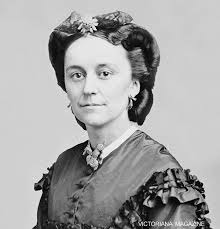
Bonnets may have been the most common covering for the heads of well-dressed mid-century females, but head gear of other persuasions was not to be ignored.  A fore-runner of today’s fascinators, light, decorative headdresses such as the one in the illustration above were very popular for certain indoor or evening outfits. Evelina must have enjoyed sewing one for herself, taking extra pleasure in how well it matched her own coloring.

Evelina’s father-in-law, Old Oliver, noted that this “was a fair day wind north west + cold.” The wind would have been somewhat behind them when the three sisters-in-law, Sarah Ames Witherell, Sarah Lothrop Ames, and Evelina were driven south in the afternoon by Fred Ames. The women visited a group of friends at the home of fellow Unitarians John and Caroline Howard.  The tea they must have been served there perhaps helped stoke them up for the cold drive back home into the wind.


*Courtesy of Library of Congress

February 16, 1852

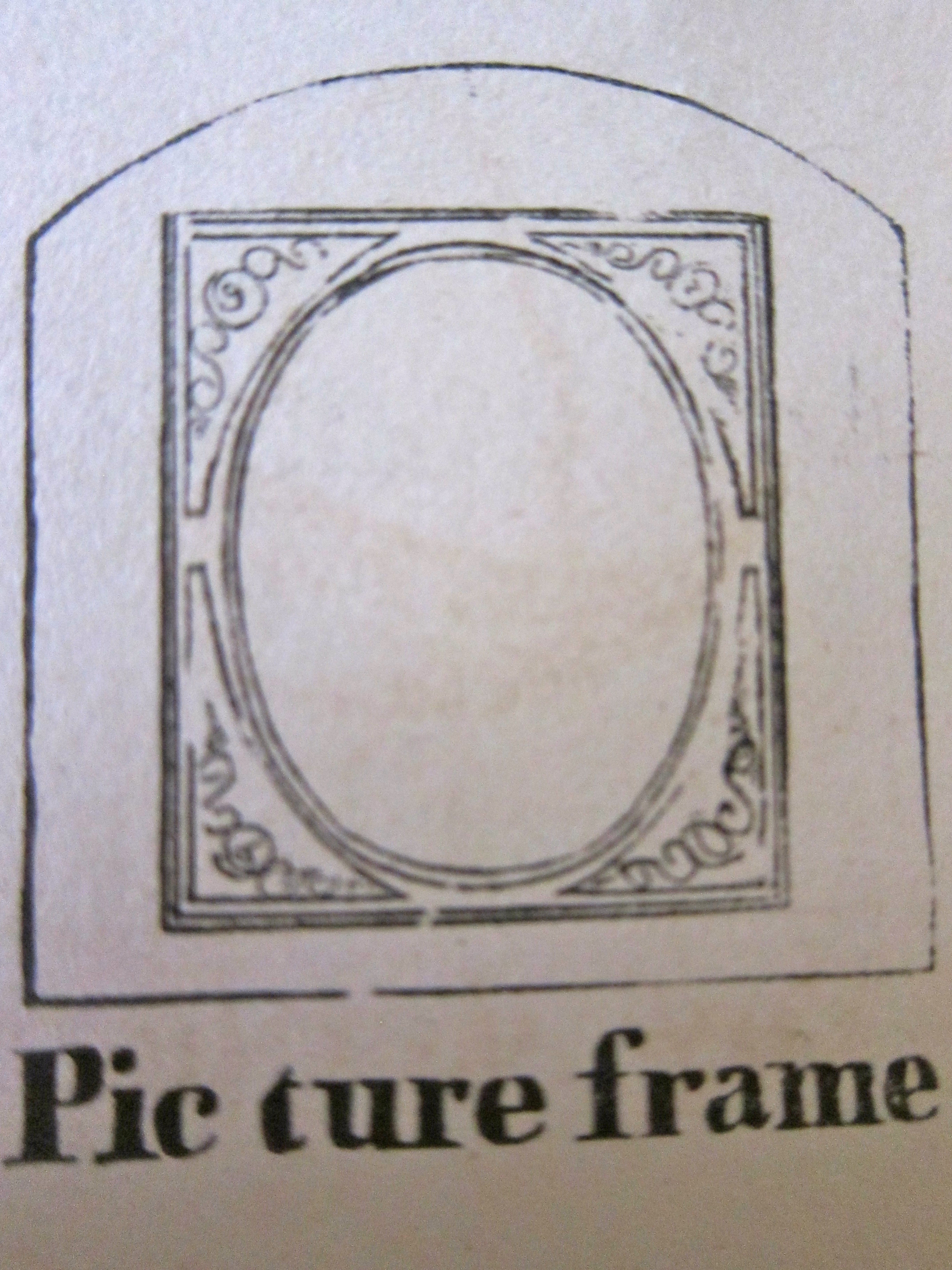
Picture frame

Monday Feb 16th

1852

Susan washed the dishes this morning and I was

at work about the house most of the forenoon

Mrs Mary Williams came about eleven Oclock and 

staid to dinner  Called into Olivers and Edwins

with her  She returned to Joshua C Wm about three

and went home in the stage  Oliver tried to get

the coloured engraving smooth in the frame but could 

not  Mended Oakes Angier a vest


The new week opened with the usual domestic arrangements: Jane McHanna doing laundry, Susie Ames washing dishes and Evelina choring “about the house” in the morning.  A visitor, Mary Williams, arrived and stayed for midday dinner, then departed mid-afternoon on the local stagecoach .

With her son Oliver’s help, Evelina finished hanging the prints she had bought the week before in Boston. The new pieces of art were quite au courant; etchings, lithographs, and engravings were appearing on parlor walls across the country.  New printing technology – the same that promoted the appearance of so many new periodicals and serial novels – made the production and distribution of art prints easy. The subject matters varied from historical (like the famous image by Emanuel Gottlieb Leutze of Washington Crossing the Delaware, first painted in 1851) to religious to geographical to sentimental.  They were decorative and affordable, and the middle class flocked to buy them.

Subject matter, of course, was important; Evelina had purchased one print about Halloween (or All Hallows Eve as it was known). The prints had to be attractive and look handsome on the wall. But the decorative frames that went around the art work counted, too, and “were often considered more important than the prints themselves.”* It’s too bad that Oliver was having difficulty making one new print fit properly in its frame.

* Pierre-Lin Renie, The Image on the Wall: Decoration in the Nineteenth Century Interior, Nineteenth Century Art Worldwide