September 23, 1852

IMG_2471

Sarah Lothrop Ames

(1812 – 1890)


Thursday Sept 23th [sic] Have not sewed at all to day Starch

the clothes and ironed some fine shirts

Lavinia washed the clothes that Oliver brought

from Providence & Mr Rathbourne from 

Providence came this afternoon to visit […]

Oliver  He went to Stoughton after him

Mrs Holmes & sister came after some plants


It’s unusual to read of Evelina and her servants doing a wash on a Thursday, but so it was. Son Oliver (3) had returned from a trip to Providence with dirty laundry in tow and, more than that, a houseguest headed their way. Evelina had to finish up the laundry and prepare for company. She evidently had help from her twenty-year-old niece, Lavinia Gilmore, who, by washing the clothes of her twenty-one-year-old cousin, demonstrates not only the strict division of labor of the day, but the then-unexamined destiny of spinster daughters and nieces to serve the men of their family.

Next door, Sarah Lothrop Ames celebrated her 40th birthday which, in those times, was the front door to old age. It was her destiny to grow up in Easton, the only daughter of the Honorable Howard Lothrop and his wife, Sally Williams Lothrop. She had nine brothers, which makes us wonder if she, as a singleton girl, was doted on, or depended on, or both. On June 11, 1833, Sarah married Oliver Ames, Jr., third son of Old Oliver and Susannah Angier Ames. In social terms, it was a marriage between two of the town’s important families. The couple moved into their own house, built for them by Old Oliver, next door to the family homestead. They would eventually tear that house down and build a grander one, known to us as Unity Close.

Sarah and Oliver Jr had only two children, Frederick Lothrop and Helen Angier, at a time when a larger family was more typical. We can’t know if their decision to stop at two was happenstance, voluntary, or imposed by medical circumstances. Fred, they raised to go into the family shovel business, much as Oakes and Evelina did with their three sons. Fred was given a full college education, however, as his cousins were not. Helen and her younger cousin, Susan, meanwhile, were raised to be proper young ladies with fine dresses, piano lessons, and good schooling. It is doubtful that Helen ever had to wash her brother’s clothes. There were servants for that.

Like her sisters-in-law Evelina and Sarah Ames Witherell, Sarah Lothrop Ames was a regular church-goer and a conscientious neighbor. She did her duty with the elderly and infirm in the village, and she was a loving daughter to the end with her parents. Her mother, once widowed, developed dementia and incontinence, yet Sarah cared for her until her death. She was close to her children and grandchildren, of whom she had five.

A widow herself by 1877, Sarah would live until 1890, outlasting her husband, brothers-in-law, sisters-in-law and all but one brother, Cyrus, to whom she left the use of Unity Close for his lifetime. After his death, it passed to her eldest grandson, Oliver Ames (1865-1929).


September 22, 1852

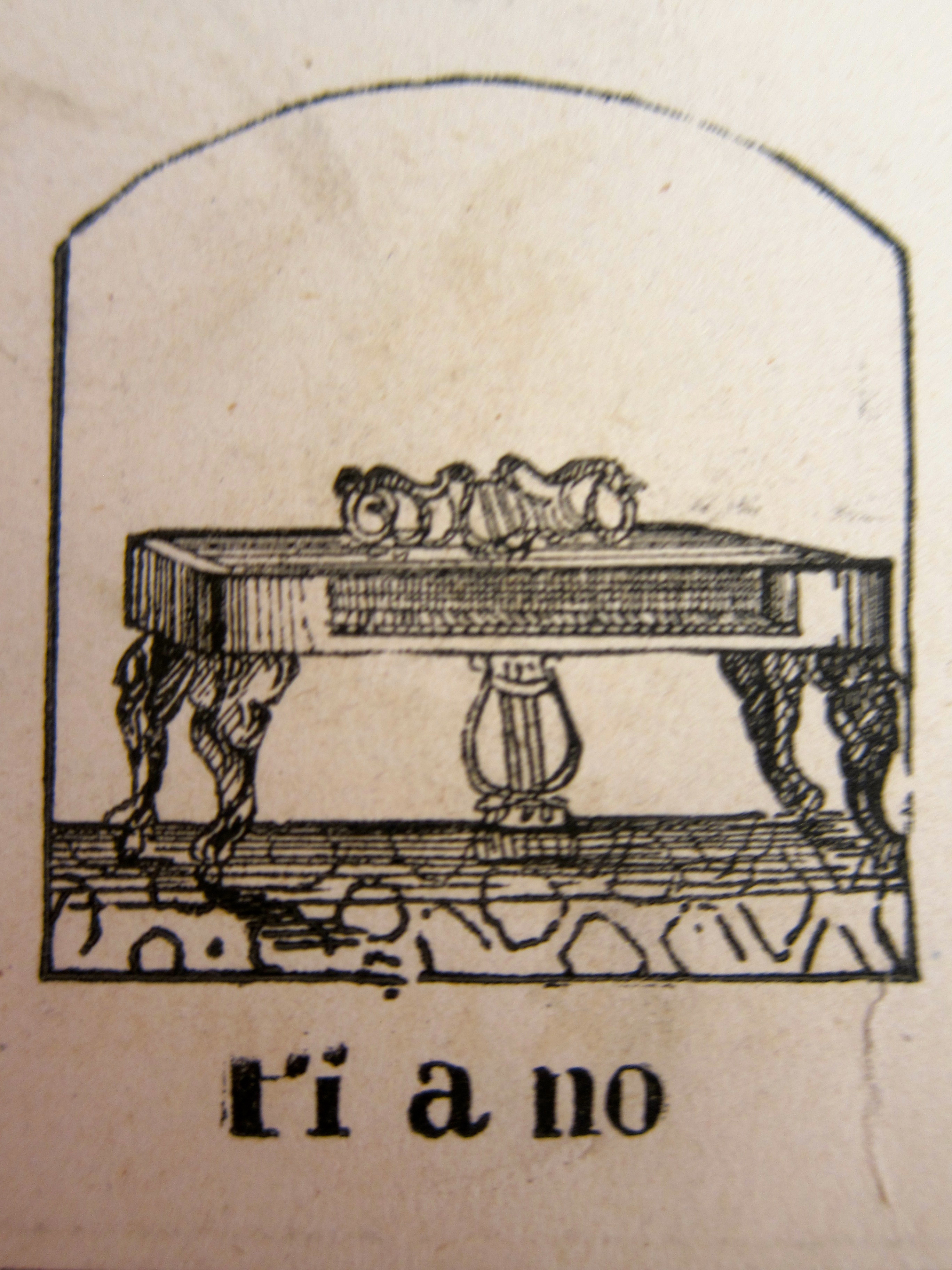
Piano

Wednesday Sept 22d Have been to Boston with Mrs

Witherell to get a Pianno  Have got to have

them made  Mrs Kinsley called to see them with

us  Met Mrs Wilson at Lintons to go to select

them. Dined at Mr Orrs while Mrs Witherelll

called on Mrs Dorr  Bought a Piano cloth

and gold thimble for Mrs Ames & C Hobart

and a ring for Helen  Oliver came from Providence


A piano! And not one piano, but two, one for each side of the house. Both Susan Ames and Emily Witherell would be learning to play the instrument. Each girl would have her own piano to practice on. What luxury. What gentility. What fun.

With advice from friends such as Louisa Kinsley, Evelina and Sarah Ames Witherell selected and ordered the instruments in a Boston store. Spending money liberally, Evelina went on to purchase gifts. For her other sister-in-law, Sarah Lothrop Ames, she bought a cloth to go on top of the piano that those Ameses already owned. For Catharine Hobart, a young family friend who had caught the eye of her son Oakes Angier Ames, she bought a gold thimble. And for her niece Helen Angier Ames – Catharine’s classmate – she bought a ring.

Did her husband Oakes know that Evelina was spending so much money? Did her father-in-law? While her husband must have given his approval, it’s unlikely that Old Oliver would have approved of such a spree. Yet both those men were often generous within the family; in that respect, Evelina was just following suit.

We note today, too, that Oliver (3) returned from a few days at a fair in Providence, where he no doubt saw friends and former classmates from his two semesters at Brown University. We might imagine that he was missing school.


September 21, 1852

Funeral

Tuesday Sept 21st  Have been almost sick to day and

not able to do much  Got a quilt into the

new chamber for Catharine to work upon

Went to the funeral of Mrs Savage at

one Oclock.  Called with Mrs Witherell at

Augustus,  Mr Swains & on Mrs Wales.  She

is confined to her bet yet and has been for weeks

It appears to have been Evelina’s turn to be ill, as she describes herself as unable “to do much.”  We readers know how hard she usually worked, so not doing much might mean that she only accomplished four or five tasks today instead of a dozen. Despite feeling “almost sick,” Evelina managed to arrange sewing for her servant Catharine, attend the funeral of Hannah Savage and, with her sister-in-law, Sarah Ames Witherell, call on several households in the village. It’s hard to know if Evelina was spreading germs or picking them up as she went along, but she meant well.

According to Old Oliver Ames, “this was a fair day + pritty warm wind northerly,”* in other words a pleasant day to be out and about. Yet, in two of the homes that Evelina and Sarah visited, people were ailing. At the Swains’, their infant son was teething and fussy. At the home of Ephraim and Maria Wales, the latter was “confined to her bed yet,” an expression which hints at a recent or impending childbirth. Mrs. Wales was of childbearing age, yet census records show no children for this young couple. Perhaps Maria would lose or had lost an infant, or was simply ill with any one of a myriad of possible ailments.

*Oliver Ames, Journal, Stonehill College Archives, Arnold Tofias Collection

September 20, 1852

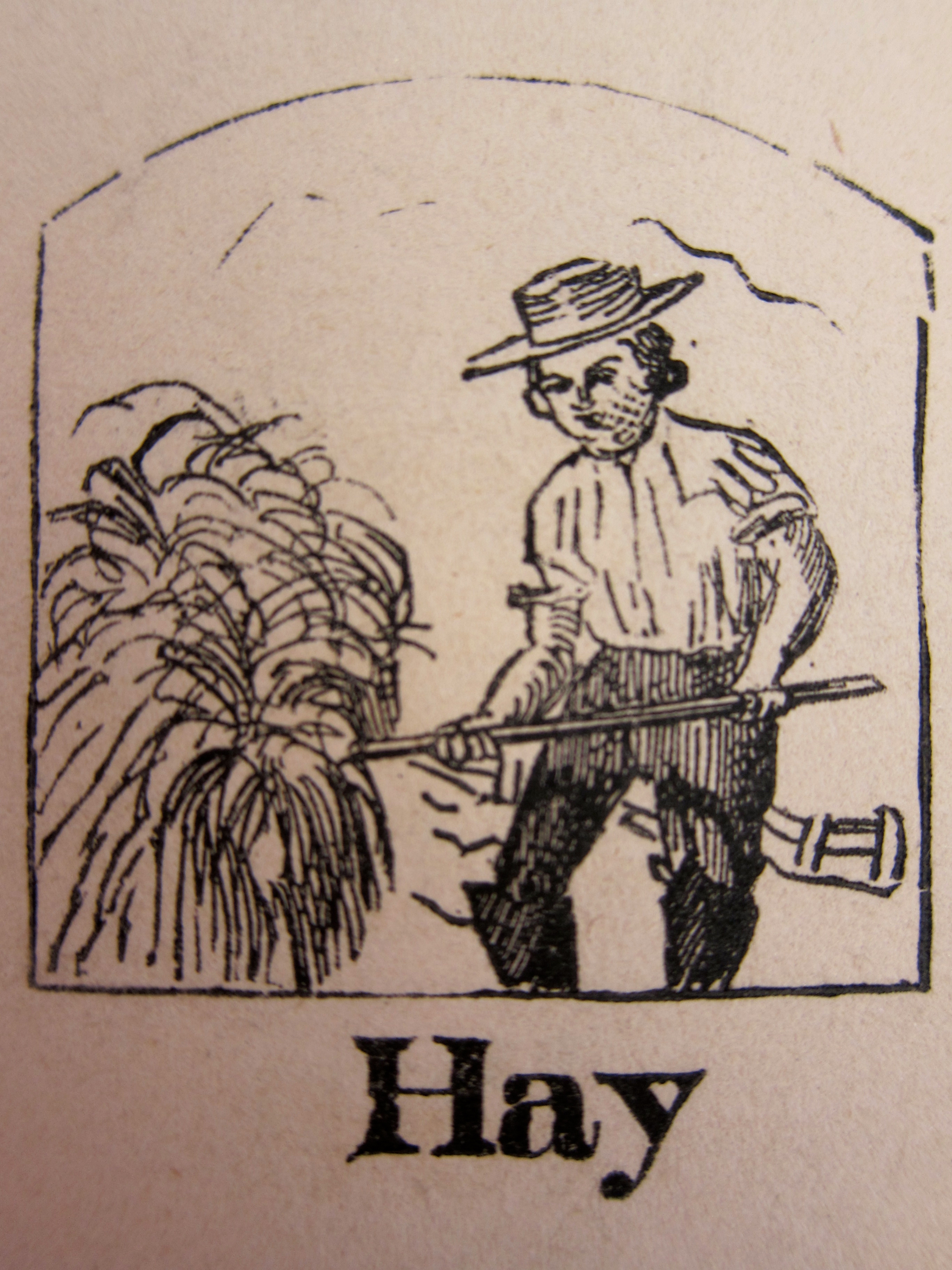
Hay


Monday Sept 20th  Staid at Edwins last night

and slept with Emeline as I did not like

to leave them alone  Augusta rested very

well and is much better to day.  Hannah

left this morning & Louisa McAvoy came

and she & Catherine have washed  I have

worked hard all day  Augustus’ wife called

here this afternoon


Worried about her neighbor, Evelina spent the night at the Edwin Gilmore house in case Augusta took a turn for the worse. Also staying there was fourteen-year old Emeline Pool, Augusta’s youngest sibling, who may have been sent up by the Pool family to sit with her ailing sister. Everyone was unnerved by Augusta’s continued illness, but in the morning Evelina was able to report that Augusta had improved.

At the Ames house, of course, and, indeed, all over town, it was washday. Servant Hannah Murphy departed, as anticipated, but the new servant, Louisa McAvoy and the remaining servant, Catharine Middleton, were on task. The washtubs were out. Evelina did her usual Monday choring and tidying, and the house stirred with activity.

Also on task were men who worked for Evelina’s father-in-law, Old Oliver Ames. They were mowing. Old Oliver reported that “this [was] a fair day part of time + cloudy a part wind southerly + midling warm  began to mow second crop to day.”*  The hay that had been sown in early August was being cut, each worker mindful of the importance of the crop. “[T]he most important matter connected with American agriculture,” declared one farming expert a decade later, “the hay crop is of more value than the cotton, the corn, or the wheat crop, or any single article of farm produce upon which the lives of three fourths of all the horses, cattle, and sheep depend from November to April.[…] Farmer! Have you thought how much depends upon the four weeks of haying time?”** Old Oliver could have answered that question with alacrity.

*Oliver Ames, Journal, Stonehill College Archives, Arnold Tofias Collection

** Solon Robinson, Facts for Farmers, January 1865, pp. 772-773

September 19, 1852

Abbott H. Thayer, Angel, 1887, oil Smithsonian American Art Museum Gift of John Gellatly

Abbott H. Thayer, Angel, 1887, oil
Smithsonian American Art Museum
Gift of John Gellatly


Sunday 19th Sept  Have been to meeting as usual, rode

home at noon alone with Alson  Rode in

our new carriage for the first time & like it

very well  Mr Dawes & Miss M J Alger called

since meeting  Augusta is more unwell again

and is in great pain and sick to her stomach

Edwin came in after me and I have been there

since Mr Dawes went away

The new carriage took various Ameses to church this morning, and the ride went “very well.” Was it Oakes’s horse Kate who pulled the reins? Evelina herself came home at noon with her brother; perhaps they had something about their mother to attend to. Perhaps Evelina was preparing for company later in the day, or was tending to serious matters in the village.

Hannah Savage, a neighbor, died today after months of illness. Surely, those who knew her were grateful that she was finally out of her misery. Her slow decline from tuberculosis had taxed not only her body and soul, but the goodwill and resources of her family and friends. Consumption was truly a wasting disease.

There was more illness nearby. Augusta Pool Gilmore still hadn’t gotten the best of a gastrointestinal disorder that had kept her in bed for almost three weeks, and today she had a serious relapse. She was in her second trimester of pregnancy, too, which had to have everyone worried. As soon as Evelina said goodbye to her guests, she hurried over to tend to poor Augusta.

September 18, 1852

imgres-1

Elizabeth Cochrane Seaman, a/k/a “Nellie Bly”

(1864 – 1922)

Sat Sept 18  Mrs Stevens returned to Boston this

morning and I fear she has had a miserable visit

there has been no quiet since she has been here

I have engaged a new girl Louisa McAvoy

but do not believe she will stay long. Went

to see Mrs Southworth about her & to tell her not

to come back but she has gone after her clothes and I 

must try her

Evelina saw Mrs. Stevens off this morning with what were probably mixed feelings. She liked the woman, and worried that Mrs. Stevens’ visit had been “miserable,” because there had been so much housework and lack of rest for her guest. Yet she may also have been ready to see her go. At one point, Evelina had been a little jealous of her friend. She also probably felt the relief that most hostesses feel when guests depart; however likable the company has been, the return to familiar routine is nearly always welcome.

A new servant, Louisa McAvoy, was on the scene. Evelina evidently used the services of a Mrs. Southworth to find the new girl. Was Mrs. Southworth part of an employment agency for household help, or was she simply someone who knew where and how to find Irish servants? The latter option seems more likely. While commercial recruitment agencies did exist in urban areas, North Easton would have been too small to sustain one. But the question remains: who was Mrs. Southworth?

In another few decades, the intrepid Nellie Bly would report on the issue of employment difficulties for women. A reporter for The New York World, Bly was famous for her stories and exploits, including traveling around the world by herself in 72 days, and feigning madness in order to get inside an insane asylum to report on conditions.  In 1889, she explored the scheming of various employment outfits in New York City. The headline ran:

Nellie Bly Exposes a Snare for Swindling Poor Women; A Contemptible Scheme to Rob Needy Girls Who Seek Employment; Heartless Women Who Promise to Find Work for Scarf-Makers and Lure Them Into Their Clutches; Demanding Pay for Instruction They Never Give, and, After Taking the Last Penny, Turning Them Out with No Effort to Secure Employment; Sad Stories of the Wretched Swindle from the Lips of Helpless Girls and Bereaved Mothers.*

Let us hope that Mrs. Southworth was both reliable and honest with the women she placed, unlike the tricksters that Nellie Bly exposed.

*The New York World, February 3, 1889


September 17, 1852

Brig

*

Friday Sept 17  Mrs Stevens has done some ironing to

day and I have been busy about house ironing

and one thing and another & have seen but very

little of her since she came  It has been hurry

burly all the time  We were at tea at Olivers

Abby came here but as we were there she

stopt & in the evening Mr Torrey came

Mrs S Ames has gone to watch with Mrs Savage

With the help of Mrs. Stevens, a houseguest, ironing continued, along with Evelina’s usual choring and “one thing and another.” According to Evelina’s misspelled expression, the household was all hurly-burly, full of commotion and tumult.  Later in the day, the two women – and other family members, presumably – enjoyed tea next door with Sarah Lothrop and Oliver Ames Jr. And even later, Col. Torrey stopped in for another visit.

In a California newspaper, there was an article about a missing ship, the Schooner Penelope. The vessel bore no direct relation to the Ames family (although an Ames relative, Cyrus Lothrop, would eventually own ships, including one named for Helen Angier Ames), but the article’s conclusion that the ship had been lost at sea was very much indicative of the perils of travel at the time. The Penelope had last been seen the year before by a sister ship as both headed into a bad storm.

Newspapers in coastal cities like San Francisco or Boston often carried such reports of ships that set sail and were never heard of again, much as our modern television and internet news sources carry coverage of airline disasters like the Malaysian flight that went missing over the Pacific. We may have our own disasters in the air and at sea, but the latter hazards were naturally more common in the 19th century, and the means of discovering, much less communicating, the fates of the vessels that disappeared were limited. After a certain amount of time had passed with no word of a particular ship, people had to assume the worst, and know that their sailor sons or husbands, or passengers for whom they waited, had drowned. The following from the Daly Alta California in San Francisco conveys the demise of the Penelope:

The American schooner Penelope, Capt. Austin K. Dodge, cleared from this port on the 14th of October, 1851, for San Juan del Sud, with 40 passengers. It is believed that she sailed the next day. Capt. Mann, of the brig Lowell, which sailed from this port on the same day, reports having seen the Penelope about the 5th of November, off Cape St. Lucas, just previous to a terrific hurricane, which lasted but a quarter of an hour. After the driving mist which accompanied the gale had lighted up, the Penelope was not visible. Capt Mann felt confident at the time that the vessel had foundered.

After arriving at San Juan he remained there some weeks, but received no tidings as to her fate. As nothing has yet been heard of her there is every reason to apprehend that she was lost at that time, and every soul on board perished. […]

Both the Penelope and Lowell were fitted out and sailed from Pacitic Wharf. Captain A. K. Dodge, of Beverly, Mass.; 1st mate, F. H. Choate; 2d mate, Thomas J. Fisher; the first mate from Salem, Mass., and the second from Boston. W. H. Nicolsen’ cook, from New York, aud James Brickley, John Smith, Manuel Silva, Joseph Frank and George Covell, seamen.**

The relatives of anyone who went to sea always had to worry.


*A brigantine is a type of schooner, distinguished by its sail configuration.


**http://www.maritimeheritage.org/ships/Schooner-Penelope-1852


September 16, 1852

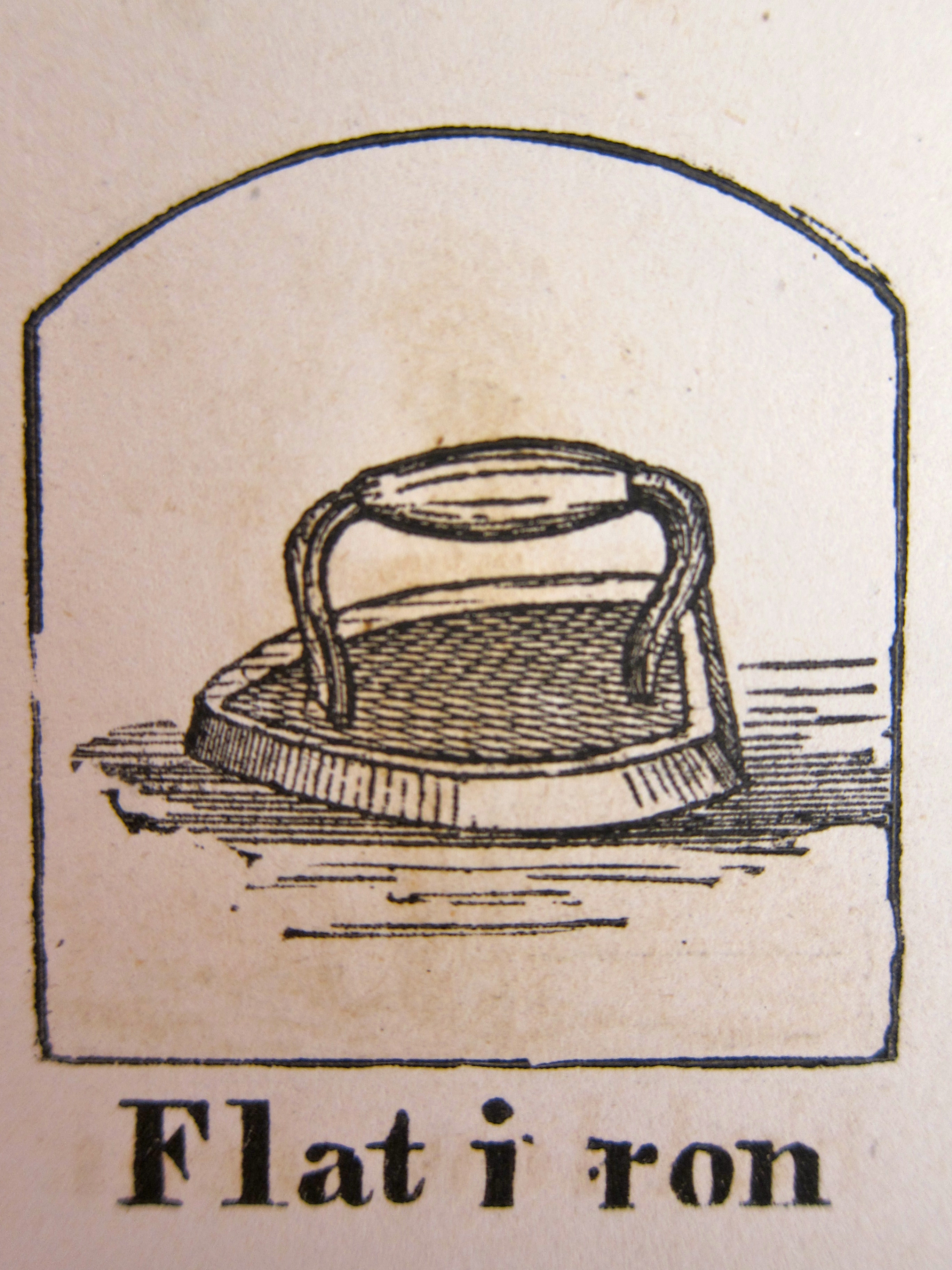
Flatiron

1852

Thursday Sept 16  Watched with Mrs Savage last night

came home at half past five went to bed

and laid untill past eight  Starched some

more shirts that were washed yesterday  We

have 20 fine shirts this week in the wash

Miss Elizabeth Capen called & Mrs Stevens was

with Mrs Witherell to tea  I was ironing & did not go

Oakes A went to carry Helen & C Hobart to Bridgewater

Today we have proof positive that Oakes Angier Ames, back from his recuperative rest in Vermont, was spending time with Catherine Hobart, the girl who would become his wife. For several days, Catherine had been staying next door with her classmate, Helen Angier Ames, but the time had come to return home to Bridgewater. Whether Oakes Angier volunteered to carry the girls or was assigned the duty, we don’t know, but we can believe that he enjoyed the trip. Was Evelina aware of their mutual attraction? Did Helen stay for a visit with Catherine, or did she return to Easton? Did the two girls discuss Oakes Angier after he left them off?

Evelina may have been too busy with all the shirts that needed starching and ironing to attend to her eldest son’s romantic inclination. Having spent most of the night before sitting up with Hannah Savage, she was only operating on three hours sleep. She positioned herself at the kitchen or dining table and covered it with a protective blanket and sheet, kept “on purpose for ironing.”* Using thick cloth to protect her hand from the hot handle, she lifted and pushed the heavy implement across each one of those new cotton shirts. Back and forth, back and forth, putting away one iron when it cooled to pick up another one that had heated up. It was hot, heavy work. She didn’t break her stride, either, not even for tea in the other part of the house.

* Lydia Maria Child, The American Frugal Housewife, 1832, p. 11

September 15, 1852

Cake

Wednesday Sept 15th  Mr & Mrs Oliver Ames Helen & Miss Hobart

here to tea  Made cake & baked it in the stove

Mr Torrey made a long call here just after

dinner  He is quite neighbourly about this

time  Mrs Stevens need not take the credit of it

Augusta is not quite as well  sent for me to

come there & has had the Dr again

Oliver went to Providence this morning to the fair


Evelina baked a cake in her new cast-iron stove, something she was proud to note.  That was a real change for her, as before this she had used the family’s old, built-in brick oven for her baking. New technology in the kitchen was changing her ways.

The cake must have been a success; she served it at tea. Her husband and sons, minus Oliver (3), were present. Sarah Lothrop Ames and Oliver Ames Jr. came over from next door, too, bringing their daughter Helen Angier Ames and her friend, Catherine Hobart, with them. This was the last night of Catherine’s visit and it was sweet that her host and hostess took her next door for tea. Was there a conscious design behind the invitation and acceptance? Had the elders noticed a spark between Catherine and Oakes Angier Ames? Had Evelina contrived to make this happen? Were the young folks self-conscious on the occasion? Or was it just an average family gathering that inadvertently portended something more?

Catherine wasn’t the only guest. Mrs. Stevens was still visiting the Ameses and, inadvertently or otherwise, had made Evelina a little jealous. Col. Torrey, Evelina’s former brother-in-law – now a widower – had been calling more often than usual, and Mrs. Stevens had evidently volunteered the possibility that his attention was directed at her. Evelina, however, as we read from her rather ungracious entry, is reluctant to let her guest get any “credit.” Generous as she could sometimes be, Evelina was not inclined to share her friendship.

Across the street, meanwhile, young Augusta Pool Gilmore had had a relapse of her intestinal disorder, known in that day as “Cholera Morbus.” Certainly, her family and friends were worried about her.


September 14, 1852

Grapes

Tuesday Sept 14th  Alson came this forenoon and carried

mother home  I have ironed 13 fine shirts made

grape jelly and have been hard at work all

day  Mr Torrey came and staid a long while

talking over the news of the neighborhood

Mrs Stevens & self called on Augustus & wife and

went over [to] Mr Carrs where they have commenced

mowing  Mr Torrey & Abby were away, door fastened

New carriage & Buggy chaise came to night


Evelina didn’t stop moving today. She saw her mother depart for home, ironed a baker’s dozen of shirts, made grape jelly, did her usual picking up around the house, entertained guests, and paid a call on her nephew and others. It’s hard to imagine that her kitchen could accommodate the ironing of white shirts and the boiling of purple jelly at the same time, yet we read that this was so.

We readers should also note that for once, it’s Evelina, and not her father-in-law, who tells us that there is mowing going on in the neighborhood. The men were working quickly, one imagines, as “there was Some frost last night.”* Officially, it was still summer, but winter was on the far horizon, and preparations were underway.

And there was new equipage! A carriage and a buggy or chaise arrived. Who had just bought them?  Old Oliver?  Oakes or Oliver, Jr., or one of the sons, or all of the above? How, exactly, might the ownership of the vehicles have worked?


*Oliver Ames, Journal, Stonehill College Archives, Arnold Tofias Collection