July 21, 1852

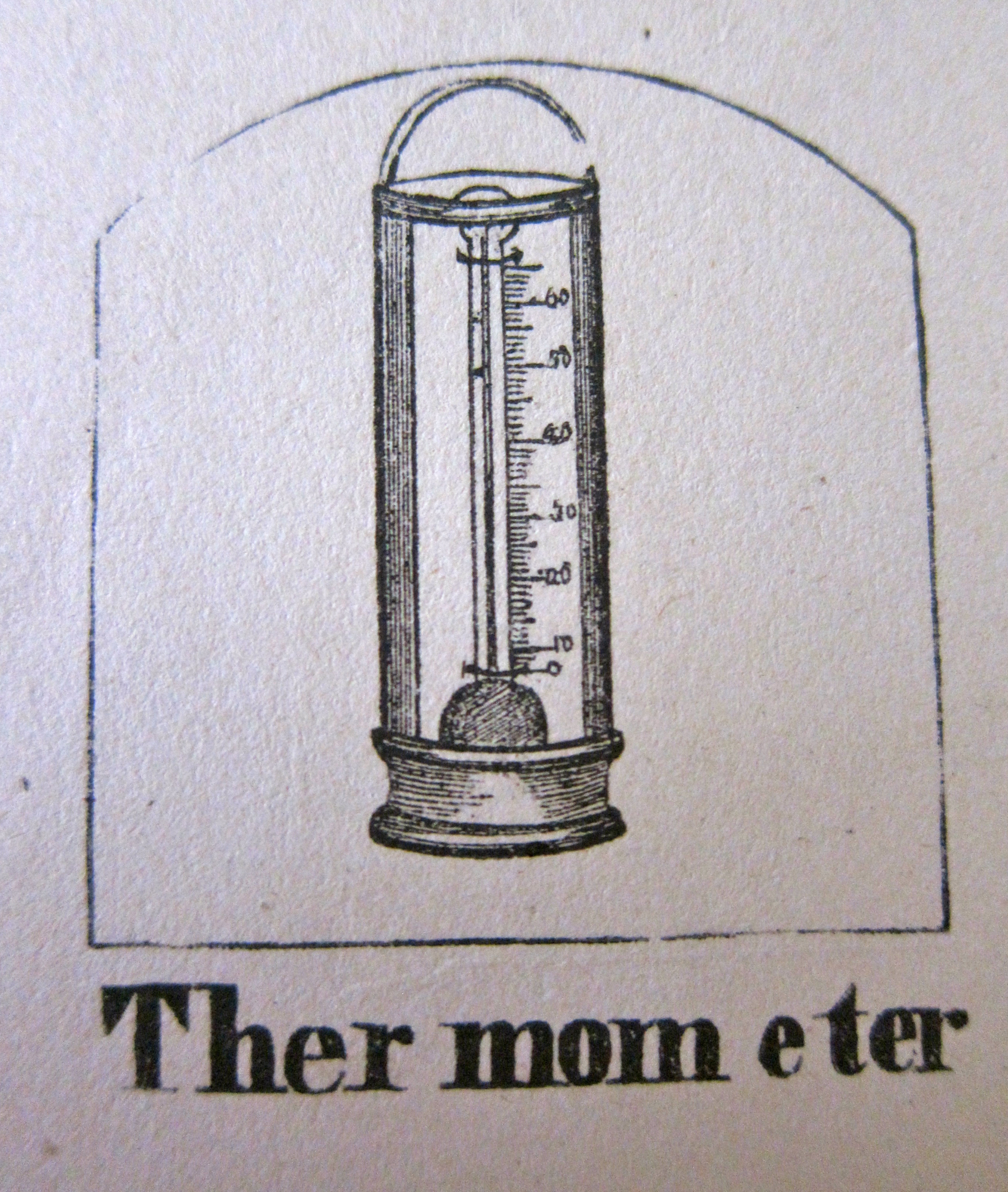
Thermometer

July 21st Wednesday  Have been at work on my

borage dress  what time I have sewed

The weather is very hot and I can

work but little  Julia & Elizabeth Pool

are at Edwins having some dresses

made by Julia Mahoney  I called 

to see them carried my work and

stoped awhile  Have been to see

Augustus this evening he is quite feverish


“This was a verry warm day and the most scorching sun I ever felt […] it was warm all day and the night following verry,” reported Evelina’s father-in-law, Old Oliver Ames. She, herself, was enervated by the heat; she could “work but little.”  She was alone, too, as Julia Mahoney, her usual dressmaker, was across the street at Edwin and Augusta Pool’s. Augusta had two sisters visiting who were having dresses made. Evelina walked over to join them for a time.

Alson Augustus Gilmore,Evelina’s nephew, was having no fun. He had a fever and in the heat must have felt as if he had landed in Hades. He was indoors, presumably, out of the direct sun at least. Old Oliver and his field hands, on the other hand, may have been outdoors haying in the blasting sunlight, the heat rising in waves around them. We can imagine that they stayed hydrated by drinking water ladled from buckets or a nearby well.  No thermoses or bottled Dasani or Fuji or Poland Spring water for them.

July 20, 1852

imgres

Pre-Civil War Ames Shovel with “D” wooden handle*

1852

July 20th Tuesday  I was in hopes to do something this

week but did not commence right yesterday

In the first place yesterday afternoon Mr

Whitwell called & Mr Ames took him & Oliver

to Bridgewater  Then uncle Ephraim called and I

must needs run in to laugh at Mrs Ames and

found Mrs Sheldon there and to day I

have not done much but talk over yesterdays affairs.


According to Old Oliver, the day was “fair with a verry hot sun wind easterly.”** Full summer, in other words. Everyone would begin to feel the heat, including the factory workers putting in their ten hour days at: “hammering, plating, drawing (backstraps), welding, smoothing, setting, opening, filing, riveting, finishing (handles), [and] handling”*** the shovels. Unlike workers elsewhere in the state, these workers seemed content with the hours they worked and the pay they received. “The relationship between the Ames family and shovel shop workers appears to have been amicable, for much of the business’s history.” ****

To date, no one had ever gone on strike at the shovel works, while in Amesbury to the north, textile workers had walked off their jobs in June. They were striking for better hours, having become fed up with twelve hour days for everyone, including children. They lost that strike at the woolen mill, which was owned by the Salisbury Corporation, but gained the support of their town government and launched the career of George McNeill, a fourteen year old carder who became the father of the eight-hour movement. Working out of Boston, McNeill would spend his life advocating and agitating for more humane conditions for factory workers.

In 1853, a limited strike took place at O. Ames and Sons. As Old Oliver noted on June 16, 1853, “Our outdore men struck for the 10 hour system to day and we settled with them and lett them go.” Evidently the men who worked outside the factory proper – those who would have been responsible for transporting the shovels, for instance – wanted the same hours as those who worked in the production line. Historian Greg Galer interprets this record to mean that the workers were granted their ten hour limit and were sent home for the day. Winthrop Ames, in his family history, on the other hand, interpreted that sentence to mean that the men were fired.

On a lighter note, Evelina was getting a lot of mileage out of Uncle Ephraim’s interest in Almira Ames. She seemed to spend most of her day doing little more than “talk over yesterdays affairs.”

* Image courtesy of etsy.com

** Oliver Ames, Journal, Stonehill College Archives, Arnold Tofias Collection

*** Gregory Galer, Forging Ahead, MIT, 2002, p. 263.

**** Ibid., p. 265
July 19, 1852

OLYMPUS DIGITAL CAMERA

1852

July 19th Monday  Hannah & Mary both washed again

to day and I was fussing about house all

the forenoon  How is it that I do not accom

plish more? I try but somehow I get but

very little done.  I have commenced trimming

the sleeves to my borage dress.  It is going

to be something of a job to finish my dress

yet   Uncle Ephraim called to see about Mrs Ames again

After a string of warm days, this start to a new week “was fair rather cool.”*  While the servants did the laundry, Evelina was “fussing about house.” She also fussed at herself for not getting things done. “I try” she writes in frustration, feeling that she failed to meet her own standards. Her response to this perception was typical: she picked up her sewing needle and went to work.

Who was this Uncle Ephraim who called? There were at least two men in the Bridgewater area at this time named Ephraim Ames, and none named Ephraim Gilmore or Ephraim Lothrop. It appears that a distant Ames relative may have been the man who kept calling “to see about Mrs Ames again.” The Mrs. Ames in question was most likely the visiting Almira Ames, widow of cousin George Ames. Had she sparked a romantic interest in this eager caller?


*Oliver Ames, Journal, Stonehill College Archives, Arnold Tofias Collection

July 18, 1852

Church

July 18th Sunday  Have been to meeting as usual

Mr Whitwell preached well.  Went to Mr

Whitwells with Mother & Henrietta at noon

When we came from church Mr Ames

& self rode up to the ponds, found Oliver &

Fred there  Called this evening with Mr

Ames at Augustus found him threatened

with a fever & quite unwell.  Called on Lavinia

Williams a moment and Mrs Savage who is quite ill.

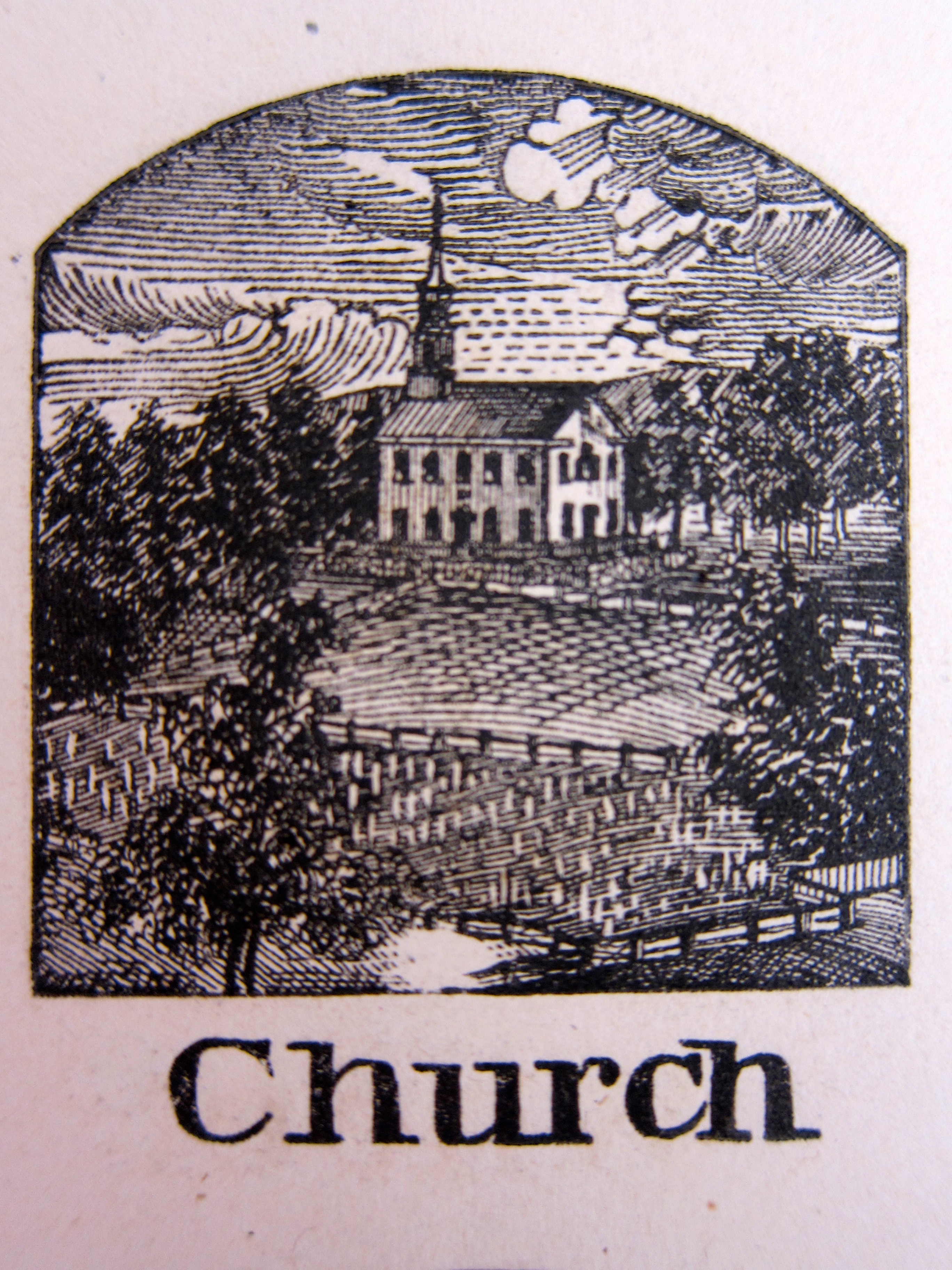
The good news today was that Evelina was comfortably back in her own pew at her own church, listening to her favorite minister preach. During the intermission between sermons, she even took her mother and sister-in-law, Henrietta Williams Gilmore, to the parsonage for tea. After church she and Oakes “rode up to the ponds,” meaning that they may have ridden not just to Shovel Shop Pond, but also beyond to Flyaway or Great Pond. There they ran into Oliver (either their son or Oakes’s brother-in-law) and Fred Ames.*

The not-so-good news was a run of illness among family and friends. Evelina’s nephew, Alson “Augustus” Gilmore, was suffering from some kind of fever. This was not an uncommon ailment during the hottest weeks of summer; many infants, especially, were prone to dehydration when the thermometer went up. Evelina had to be concerned that Augustus was so ill so suddenly. Hannah Savage (her near neighbor for whom her old servant, Jane McHanna, was now working) had been ill for some time. Hannah was thought to be dying; a watch would soon begin for her.

*It seems likely that it was Oliver (3) and not Oliver Jr with  Fred “up to the ponds.”  If it had been Oliver Jr., it’s probable that Sarah Lothrop Ames would have been with them.  She wasn’t. And it’s equally likely that the two young college men would be enjoying their familiar camaraderie, now that each was home from school.

July 17, 1852

Wine glass

July 17th Sat  Hannah & Mary picked some currants

yesterday and to day I have made some

currant wine had four quarts of juice

Have done but very little sewing. Have

mended some.  Oliver returned from

school to night He is not looking very well

He brought home his pictures & all his things

is in hopes to go back again but it is uncertain

Evelina’s diary entry today poses two questions for us readers. First, why was she, wife of a strict tee-totaler, making wine? The answer is that from time to time, even a temperance household needed wine for medicinal purposes. It may be, also, that the occasional dish, such as mincemeat, required some alcohol as an ingredient. Even Lydia Maria Child, who abhorred liquor, nonetheless included a recipe for currant wine in her household guide:

Break and squeeze the currants, put three pounds and a half of sugar to two quarts of juice and two quarts of water. Put in a keg or barrel. Do not close the bung tight for three or four days, that the air may escape while it is fermenting.  After it is done fermenting, close it up tight…It should not be used under a year or two. Age improves it.*

The second question is almost unanswerable. Why wasn’t Oliver (3) able to return to Brown University? He wanted to, but clearly the decision wasn’t his to make, nor did it appear to be the school’s choice. Rather, the decision to cease attendance lay with Oliver (3)’s father, Oakes Ames, who had been against his son attending college in the first place. Oakes was once described as having “inherited some measure of that Puritanical contempt for the liberal arts…”**. He had first put his foot down against Oliver going, finally relented for one year, and now was again saying no.

If we can move past Oakes’s prejudice against higher education, we can imagine that he wanted his middle son back at the factory. So much had happened at the shovel works during Oliver (3)’s absence. The old factory had burned down and a temporary one had been quickly rebuilt. A new, state-of-the-art stone factory was being raised, requiring extra supervision. And the manufacture and sale of shovels had had to continue as if nothing had happened. Quite likely, Oakes needed his son’s help. Studying was over.

It’s also possible that an additional factor may have influenced Oakes’s decision, a factor that he couldn’t yet share – at least not with Evelina. Oakes may have been privy to a concern about his son Oakes Angier’s health, a condition that would soon be apparent to all.


*Lydia Maria Child, The American Frugal Housewife, p. 59

** Hon. Hosea M. Knowlton, Address at the Dedication Ceremony for the Oliver Ames High School, December 12, 1896, published  Boston, 1898, p.98


July 16, 1852

FullSizeRender

Traveling dresses*

1852

July 16th  Have been to Boston & Mt Auburn with

Mrs Witherell, S Ames & A L Ames had a 

very pleasant time  Returned from Mt

Auburn about one or two called on Mrs 

Stevens and the rest of the day shopping

bought me a travelling dress &c &c

Did not see any of Mr Orrs family except

Mr Norris  Mrs N is at Newburyport


The Ames women went to town today. Apparently they headed first to Mt.  Auburn, probably to take a turn around the cemetery, then on to Boston. It sounds as if the four women rode in a carriage or wagon all the way from Easton. One of the women may have driven the vehicle, but it’s more likely that a man, such as Old Oliver’s coachman Michael Burns, drove. Whoever held the reins guided the horse along what is today’s Route 138.  The carriage would have traveled a short distance east to get out of Easton, then headed straight north through Canton and Milton into the outskirts of the big city. Normally the vehicle would have taken Washington Street as it veered northeast into Boston, but today they went instead via Jamaica Plain to cross the Charles River.

After their tour of Mt. Auburn Cemetery, a popular destination for many pedestrians and riders, the Ames women crossed back across the Charles River into Boston, where they spent “the rest of the day shopping.” Evelina purchased material and a pattern, perhaps, for a “travelling dress,” such as the one in the illustration. She will spend the next few weeks making this new outfit at home.

Back in Easton, meanwhile, Old Oliver reflected on the week going by and noted that “the 14 – 15 + 16th were all warm good hay days + verry drying.”** He was satisfied with the weather.


Godey’s Lady’s Journal, November, 1852

**Oliver Ames, Journal, Stonehill College Archives, Arnold Tofias Collection

July 15, 1852

imgres-1

1852

Thursday July 15  Mary had to pick out all the work

she did while I was at Canton and it has

taken her a long while  I shall not get much

of my sewing done by her Im thinking.  I have been

to work on my borage and there is a great 

deal to do with it   Have spent the afternoon 

at Fathers with Olivers family and mine

at tea

Sarah Ames Witherell, two months bereft of her eldest son, was entertaining again, if only for the family. She and her father, Old Oliver, had everyone in for tea. This must have been a good sign for the entire clan, as they could only have wished to see Sarah able to pick up her life again.

Evelina was dissatisfied with sewing done by her servant, Mary, and had her take out every stitch from a piece she had been working on in Evelina’s absence. No servant yet had been able to meet Evelina’s standard for needlework. She was too good at it, and seemed frustrated that she couldn’t rely on anyone else to accomplish what she herself was able to do. And she was doubly frustrated to find herself paying for a sequence of poor work being done, then undone, then redone. Not good for a Yankee. She would have to lower her standards, find someone who could do the work, or do it herself.


July 14, 1852

1852

P1070606-X2

High water (flood level) mark in canal in Lowell, Massachusetts


Wedns July 14th  Julia came again this morning

but we have not got along very fast

on my dress  Have no trimming for the

sleeves have written for Mrs Stevens to

get me some   There is a great deal to

do to finish my dress  Hannah & Mary 

have both been ironing all day and 

have it all done

Evelina was indoors, sewing a new dress with the help of dressmaker Julia Mahoney. Old Oliver was out haying, “jawing” orders at local men gathering up this year’s meager crop. Oakes Angier, Frank Morton and probably Oliver (3), now that he was home from college, were each posted in some area of the factory, making shovels alongside the workers. Oakes and Oliver Jr. were supervising, perhaps striding around the shovel complex watching the new building go up or sitting in the office looking at accounts.

If we modern readers want to find a day that typifies life in North Easton in the middle of the 19th century, we couldn’t do better than this ordinary summer day in 1852. In other years and in other places, July 14th has hosted more momentous events: the storming of the Bastille, the first ascent of the Matterhorn, the shooting of Billy the Kid, the day Jane Goodall arrived in Tanzania to study chimpanzees. Nonesuch in North Easton; according to Old Oliver’s record, July 14, 1852 was simply a “warm good hay”* day. Routine ruled.

This is not to say that history wasn’t happening. It was. Yet as Evelina noted, “we have not got along very fast,” a phrase that is applicable to so much of history. Change often quietly accumulates, transforming what we know in a stealthy fashion. Evelina’s hand-sewing, Old Oliver’s oxen-driven hay-wagons, Oakes’ and Oliver Jr.’s water-powered shovel machinery: all have since disappeared, replaced by modern equipment invented over time. The life that the Ameses lived was already altering, irrevocably, bit by bit.

Oliver Ames, Journal, Stonehill College Archives, Arnold Tofias Collection


July 13, 1852

Hay


1852

Tuesday July 13  Julia Mahoney came to work this

morning and cut the waist to my borage

dress and went home at noon.  Mr Ames

went to Canton and I begged the chance

to go with him & we called at Mr Kinsleys

Saw the ladies of the family & two Mr Peabodys

of Boston  Called on Mrs Atherton

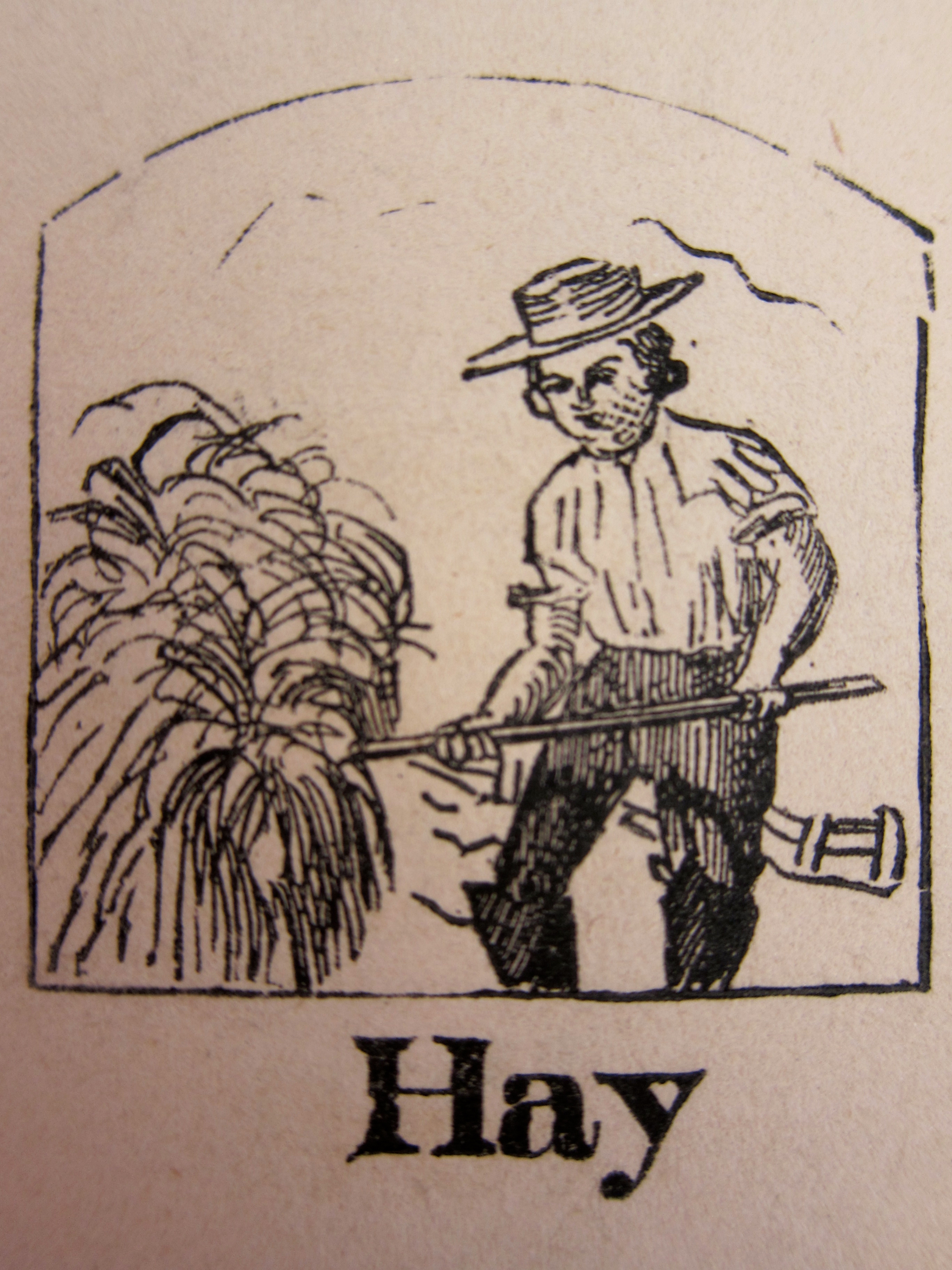
The first few days of this particular week were proving be “verry warm days. + pritty good hay days.”* Old Oliver had to be pleased.

After a morning of sewing a new barege dress with her dressmaker, Evelina “begged the chance” to ride east and north with her husband to Canton, where they visited Lyman and Louisa Kinsley. The Kinsleys, of course, were business associates but also friends, and they and their twenty-one year-old daughter, Lucy, happened to be entertaining visitors from Boston, “two Mr Peabodys.”

The Peabody brothers had called on the Kinsleys to be sociable, certainly, but one of them had a romantic motive. Francis Howard Peabody, also aged twenty-one, was courting Miss Lucy; the two would wed in 1854. They would have three children, a boy followed by two girls. Their little boy, Frank Everett Peabody, would become a founding member of a famous Boston brokerage firm, Kidder and Peabody.

*Oliver Ames, Journal, Stonehill College Archives, Arnold Tofias Collection

July 12, 1852

Furnace

July 12th Monday  Mary & Hannah both washed and I

was about house most of the forenoon 

Have cut the sleeves & skirt to my borage

dress and cut a waist for Susan

Carried my work into Olivers and stopt

some time  Edwin & Augusta rode to the

furnace & carried my pot to Mr Harveys to

get some butter but it was not ready for me

When Edwin and Augusta Gilmore “rode to the furnace,” they probably went south to an area of Easton known as Furnace Village or Easton Furnace. This was one of the oldest areas in town, its early homes today recognized as a National Historic District. First settled around 1715, it was a site for industry in a landscape that was otherwise quite agrarian. Using Mulberry Brook to turn its wheel, a sawmill was established there well before the American Revolution. Later industries included a tannery and a blast furnace for ironmaking, the latter giving the area its name. Historian Edmund Hands notes, “Once Easton Furnace possessed the highest degree of industrialization in town, but that industry never grew large enough to transform Furnace Village the way the Shovel Shop created the urbanized landscape of North Easton.”*

Back in the urbanized landscape to the north of Furnace Village, Evelina’s servants, Hannah Murphy and a woman named Mary, were doing the weekly laundry. Evelina was choring, sewing and waiting for Edwin and Augusta to return with some butter, which they were unable to do.  In the fields around North Easton, Old Oliver and his men were cutting hay. The agrarian life still held sway despite mills, foundries and factories.

*Edmund C. Hands, Easton’s Neighborhoods, 1995, p. 105